Will SK Hynix’s U.S. Listing Hurt Micron? SKHY vs. MU: Which Stock Is the Better Buy?




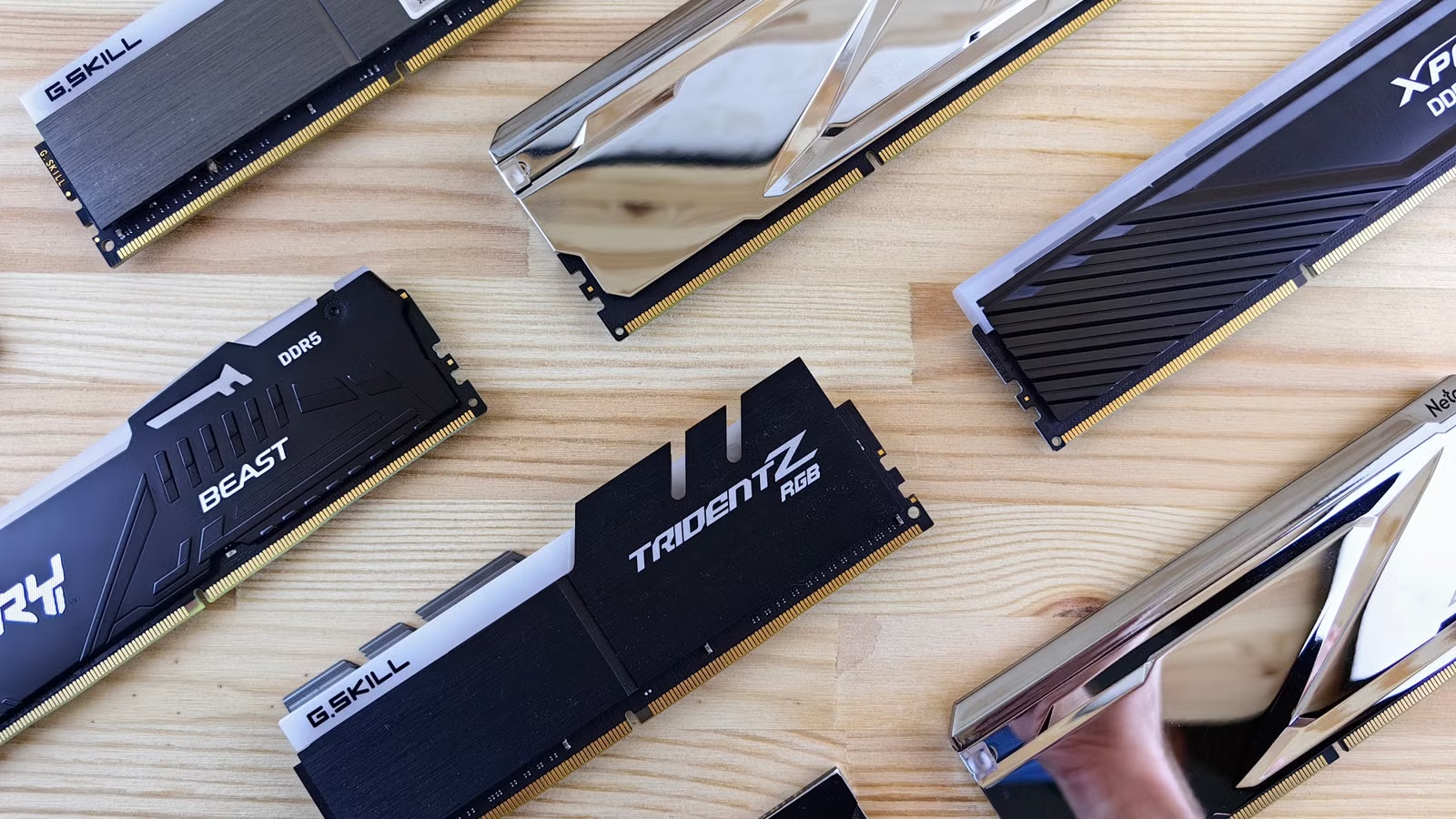
SK Hynix’s Nasdaq listing could temporarily divert some AI-memory investment away from Micron and force the market to reassess the two companies’ HBM technology, earnings, and valuations. That does not mean Micron’s fundamentals have deteriorated. SKHY offers more direct exposure to an HBM market leader and a potential valuation rerating, while MU benefits from an established U.S. listing, strong cash flow, growing HBM4 shipments, and a U.S. manufacturing premium.
Key Takeaways
- SKHY’s near-term pressure on MU mainly comes from capital rotation and valuation comparisons.
- SK Hynix leads in HBM scale, customer relationships, and mass-production experience.
- Micron is already shipping HBM4 at scale, so the technology gap is not irreversible.
- SKHY trades at a lower valuation but carries ADR-premium and dilution risks.
- Long-term performance will depend on HBM4 share, cash flow, and expansion efficiency.
Will SK Hynix’s U.S. Listing Hurt Micron? Separate Share-Price Effects From Fundamentals

SKHY’s listing could temporarily reduce investor attention and valuation support for MU, but it will not immediately reduce Micron’s HBM orders, revenue, or production capacity. The main change is that U.S. investors now have more direct access to SK Hynix and no longer need to treat MU as one of the few major listed vehicles for AI-memory exposure.
According to the Nasdaq trading schedule, SK Hynix initially began when-issued trading under SKHYV on July 10, before switching to the permanent ticker SKHY on July 13. The listing expands the number of directly tradable memory-chip companies in the U.S. market and gives portfolio managers a simpler way to compare SK Hynix with Micron.
The short-term effects can be divided into three areas:
- Capital rotation: Some semiconductor funds may reduce MU positions to establish exposure to SKHY.
- Valuation comparison: SK Hynix has historically traded at a lower valuation despite holding a larger HBM market share, potentially reducing MU’s scarcity premium.
- Sector supply: The market must absorb approximately $26.5 billion of newly issued semiconductor equity.
SK Hynix priced each ADS at $149, with demand exceeding the available offering by more than seven times. Ten ADSs represent one Korean ordinary share, and the proceeds are intended to support new manufacturing facilities and equipment.
That capital can strengthen SK Hynix’s future competitiveness, but it cannot immediately create qualified HBM4 capacity. Wafer fabrication, advanced packaging, customer qualification, and yield improvement all require time.
| Impact Channel | Near-Term Effect on MU | Fundamental Negative? |
|---|---|---|
| Institutional capital moves to SKHY | MU’s trading activity or valuation may weaken | No |
| Direct access to an HBM leader | MU may lose some scarcity premium | No |
| SK Hynix expands production | Limited immediate effect | Potentially, over time |
| More attention on AI memory | Could attract new sector capital | Potentially positive |
| HBM supply becomes excessive | Pricing and margins could fall | Yes |
Institutional reactions to the SKHY listing were not uniformly negative for Micron. Some investors argued that the listing could narrow SK Hynix’s valuation discount and encourage a broader reassessment of the memory sector. Others warned that semiconductor exposure had already become a crowded trade.
Summary: SKHY’s direct impact on MU comes primarily from portfolio reallocation and a new valuation benchmark, not from an immediate loss of Micron orders. The listing would become a lasting fundamental negative only if SK Hynix uses the proceeds to expand qualified capacity, win more next-generation HBM customers, and contribute to lower industry pricing and margins. Short-term relative weakness in MU around the listing does not by itself prove that the competitive landscape has changed.
SKHY vs. MU Business Models: Which Stock Offers Better HBM Exposure?
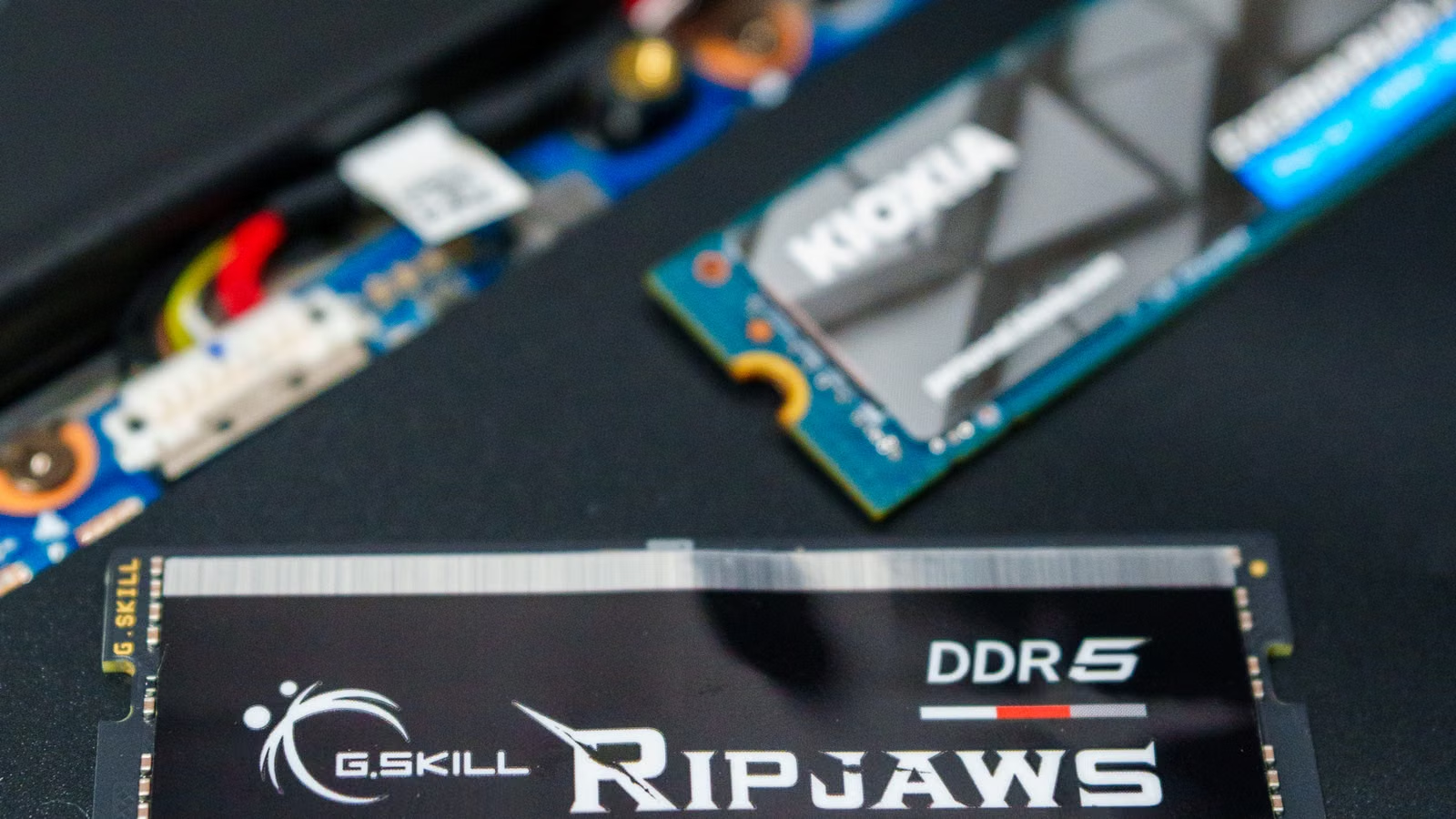
SKHY offers more concentrated exposure to an established HBM leader. MU provides broader exposure across HBM, server DRAM, data-center SSDs, mobile devices, and automotive memory. Both companies benefit from AI infrastructure investment, but their growth concentration and risk profiles are different.
SK Hynix Offers a More Direct HBM Leadership Thesis
SK Hynix established large-scale HBM3 and HBM3E production earlier than many competitors. Its lead has been supported by customer cooperation, advanced packaging, and manufacturing-yield experience.
Its 2026 memory-market outlook cited Counterpoint data indicating that SK Hynix accounted for approximately 62% of HBM shipment volume in the second quarter of 2025 and around 57% of market revenue in the third quarter. These figures were compiled in company materials and should still be compared with subsequent third-party estimates.
The company has also completed HBM4 development and mass-production preparations. It continues to use MR-MUF packaging to manage chip-stack warpage, thermal performance, and production stability.
For investors, SKHY provides relatively concentrated exposure to HBM market share, relationships with major AI-chip customers, and premium DRAM pricing.
Micron Has Moved From Catch-Up to Commercial-Scale Shipments
Micron is no longer benefiting only from the traditional DRAM cycle. The company began high-volume production of HBM4 for Nvidia’s Vera Rubin platform in the first quarter of 2026.
Its 36GB, 12-layer product delivers more than 2.8TB/s of bandwidth, and Micron stated that energy efficiency improved by more than 20% compared with the previous generation.
According to Micron’s HBM4 specifications, the product uses a 2,048-bit interface and delivers more than 11Gb/s per pin. Micron’s advantages include performance, energy efficiency, advanced DRAM processes, U.S. manufacturing exposure, and a more diversified product portfolio.
| Comparison | SKHY | MU |
|---|---|---|
| Core investment theme | HBM leader and AI memory | U.S. memory leader and HBM challenger |
| Main strengths | Market share, production experience, customer ties | Efficiency, HBM4 ramp, U.S. manufacturing |
| Business concentration | More concentrated in DRAM, HBM, and NAND | Broader exposure across data center, mobile, and automotive |
| Earnings sensitivity | More direct exposure to HBM upcycles | HBM and traditional memory contribute together |
| Main risks | Customer concentration and ADR premium | Execution risk and a higher relative valuation |
Summary: SKHY is more suitable for investors who prioritize HBM market leadership, customer relationships, and premium-memory pricing. MU may suit investors seeking HBM4 growth alongside server DRAM, SSD, mobile, and automotive demand. SK Hynix currently has the scale advantage, but Micron has entered the commercial HBM4 shipment stage and should no longer be treated as an uncompetitive third-place supplier.
Which Company Has Stronger Earnings Quality: SK Hynix or Micron?
Both companies are experiencing rapid earnings growth, but their reported figures should not be compared using absolute amounts alone. They use different reporting currencies, fiscal calendars, and accounting frameworks. A more useful comparison focuses on product mix, margins, operating cash flow, capital expenditure, and order visibility.
SK Hynix’s first-quarter 2026 results showed revenue of KRW 52.5763 trillion, operating profit of KRW 37.6103 trillion, and net profit of KRW 40.3459 trillion. Each represented a quarterly record. The company attributed the performance mainly to AI demand and sales of higher-value products.
Micron’s fiscal third-quarter 2026 results showed revenue of $41.46 billion, GAAP net income of $28.24 billion, and operating cash flow of $25.39 billion.
Its quarterly financial presentation also reported more than $1 billion in HBM4 revenue, adjusted free cash flow of $18.3 billion, and net capital expenditure of $7.1 billion.
| Financial Area | What to Watch at SKHY | What to Watch at MU |
|---|---|---|
| Revenue growth | HBM mix and average selling prices | HBM, cloud memory, and data-center growth |
| Margins | Whether leadership supports premium pricing | Whether unusually high margins survive expansion |
| Cash flow | Whether expansion pressures free cash flow | Whether cash generation continues to exceed capital spending |
| Capital expenditure | Korean fabs and advanced packaging | U.S. manufacturing and global expansion |
| Earnings visibility | Customer qualification and HBM allocation | Long-term agreements and quarterly guidance |
| Shareholder returns | Dividends and potential buybacks | Dividends, buybacks, and cash reserves |
SK Hynix currently offers greater HBM earnings concentration, meaning that rising HBM share can translate more directly into better product mix and operating profit.
Micron’s advantage is that its disclosure frequency, cash-flow reporting, and business-segment information are easier for U.S. investors to track. Its long U.S. listing history also allows investors to test the investment thesis through regular quarterly guidance.
Summary: SK Hynix’s earnings strength is primarily driven by HBM market share, customer relationships, and premium product pricing. Micron has demonstrated commercial execution through HBM4 revenue, operating cash flow, and free cash flow. SKHY may offer greater HBM earnings purity, while MU may be easier to evaluate for investors who prioritize disclosure quality, quarterly validation, and cash-flow visibility. The main risk for both companies is that high-cycle capital spending eventually weakens supply discipline and free cash flow.
Which Stock Is Cheaper, SKHY or MU? Consider the ADR Premium and Trading Costs
At the time of SKHY’s listing price, SK Hynix traded at a lower expected valuation than Micron. That does not mean SKHY is cheaper at every market price. Investors are buying a dollar-denominated ADS and must compare SKHY with the Korean ordinary share before accounting for dilution, exchange rates, depositary costs, and any listing premium.
At the time of pricing, Reuters estimated that SK Hynix and Micron traded at approximately 5.5 and 6.66 times expected earnings over the following 12 months. This valuation gap was one of the main arguments supporting SK Hynix’s U.S. listing.
These multiples will change with share prices and earnings forecasts, so they should not be treated as permanent valuation levels.
According to the SK Hynix U.S. registration filing, ten ADSs represent one ordinary share. A simplified parity calculation is:
Theoretical SKHY value ≈ Korean ordinary share price ÷ USD/KRW exchange rate ÷ 10
| Valuation Scenario | SKHY Appeal | MU Appeal |
|---|---|---|
| SKHY trades close to parity | Leadership and lower valuation stand out | Must rely on faster growth to support valuation |
| SKHY trades at a moderate premium | Depends on whether earnings justify the premium | Relative value improves |
| SKHY trades at a large premium | Low-valuation thesis weakens | May become the cheaper alternative |
| HBM earnings estimates rise | Scale leader may benefit more | Catch-up upside remains meaningful |
| Memory cycle approaches a peak | Concentration creates volatility | Diversification may not fully offset the cycle |
Trading Costs Also Affect the Valuation Comparison
The cost of investing in SKHY or MU may include platform fees, external institution charges, bid-ask spreads, currency-conversion costs, and potential ADS depositary fees. SKHY may also have different market depth and spreads from the more established MU during its early trading period.
Using Biya’s U.S. stock fee structure as an example, U.S. stock commissions are $0. The platform fee is $0.005 per share, subject to a minimum of $0.99 per order and a maximum of 1% of the transaction value. External institution and trading activity fees total $0.00396 per share.
For fractional-share orders, the platform fee is 1% of the transaction value, capped at $1. Actual charges are subject to the fee center and order confirmation.
Summary: SK Hynix had a lower expected price-to-earnings ratio at the time of its U.S. offering, but SKHY’s real attractiveness depends on its premium to the Korean ordinary share. A strong listing rally can quickly eliminate the apparent valuation advantage. Investors should compare earnings forecasts, exchange rates, dilution, trading spreads, and total fees rather than relying on two static valuation multiples.
SKHY vs. MU: Which Stock Is the Better Buy?
There is no universal winner. Investors who prioritize HBM leadership, customer relationships, and valuation rerating may prefer to research SKHY. Those who value an established U.S. listing, cash-flow validation, HBM4 execution, and domestic manufacturing exposure may prefer MU. The most important variables are entry price, holding period, and risk tolerance.
SKHY May Be More Suitable When You:
- Want more concentrated exposure to an HBM market leader.
- Expect SK Hynix to retain strong relationships with major AI-chip customers.
- Believe the Korean valuation discount will narrow after the U.S. listing.
- Can monitor the Korean won and the gap between the ADS and ordinary shares.
- Can tolerate the volatility of a newly listed ADS.
MU May Be More Suitable When You:
- Prefer a company with a long Nasdaq trading history.
- Expect HBM4, server DRAM, and SSD demand to grow together.
- Value U.S. manufacturing and domestic supply-chain exposure.
- Want to test the investment thesis through frequent quarterly reports.
- Prefer to avoid additional Korean-share and ADR-premium calculations.
| Investor Preference | Better Match | Main Reason |
|---|---|---|
| HBM market leadership | SKHY | Share, production experience, and customer ties |
| U.S. manufacturing and policy support | MU | Domestic investment and supply-chain positioning |
| Valuation rerating | SKHY | Potential narrowing of the discount to U.S. peers |
| Disclosure and trading maturity | MU | Long U.S. listing history and clear quarterly guidance |
| Reducing company-specific execution risk | SKHY and MU | Exposure to both the leader and challenger |
| Reducing memory-cycle risk | Neither fully achieves this | Both remain cyclical memory stocks |
Holding both companies may reduce risks tied to a single customer qualification, yield problem, or product delay. It will not eliminate the memory cycle. SKHY and MU are both exposed to AI capital expenditure, DRAM pricing, and industry capacity growth, so they should not be treated as unrelated assets.
Summary: SKHY’s advantages are HBM leadership and potential valuation normalization. Its risks include an ADR premium, currency exposure, customer concentration, and volatility following the listing. MU benefits from an established U.S. trading ecosystem, commercial HBM4 revenue, cash flow, and U.S. manufacturing exposure, but it faces a higher relative valuation and the challenge of gaining market share. SKHY may offer more value when it trades close to Korean parity. MU may offer a better risk-reward profile when the SKHY premium becomes excessive.
Which Indicators Could Change the SKHY vs. MU Investment Conclusion?
The relative attractiveness of SKHY and MU will change with HBM4 customer qualification, shipment volume, AI capital expenditure, memory pricing, production expansion, and free cash flow. A technology announcement is not the same as commercial-scale revenue. A company gains a durable advantage only when customer adoption, manufacturing yields, and cash generation improve together.
Six indicators deserve continued attention:
- HBM4 and HBM4E customer qualification: Which company wins positions in more GPU and custom-ASIC platforms?
- Actual HBM revenue and market share: Separate samples and qualification announcements from commercial shipments.
- DRAM and NAND average selling prices: Determine whether the memory cycle is approaching a peak.
- Capital expenditure and new capacity: Monitor when supply begins to catch up with demand.
- Free cash flow: Confirm that high accounting profits translate into shareholder value.
- SKHY’s ADR premium: Compare SKHY dynamically with the Korean ordinary share and MU.
| Future Development | Effect on SKHY | Effect on MU |
|---|---|---|
| SK Hynix expands HBM4 share | Strengthens the leadership thesis | Increases competitive pressure |
| Micron wins more customers and allocation | Could reduce SKHY’s leadership premium | Supports higher earnings forecasts |
| AI capital expenditure slows | HBM concentration creates pressure | Data-center exposure also suffers |
| New capacity enters the market quickly | Prices and margins may decline | Faces the same cyclical pressure |
| SKHY’s premium keeps expanding | Expected returns decline | Relative appeal improves |
| Cash flow continues to exceed expectations | Supports valuation | Supports valuation |
Current shortages and longer-term supply agreements improve visibility but do not eliminate the cycle. A Reuters Breakingviews analysis of long-term memory contracts noted that take-or-pay arrangements may cushion demand changes but cover only a limited portion of sales. As new capacity comes online, pricing pressure could still emerge around 2028.
Summary: The most important factors are not the first-day price movements of SKHY, but HBM4 customer coverage, commercial revenue, production yields, and margins. Investors should also track AI data-center capital expenditure, conventional DRAM pricing, and additional supply. A company’s advantage becomes more durable only when earnings growth, free cash flow, and valuation all remain favorable. A thesis based only on product announcements or temporary shortages is less resilient.
When comparing or trading SKHY and MU, you can use Biya’s U.S. stock information to verify ticker and market details, then review order prices, position sizes, and transaction charges through Biya. Long-term investors should also record SKHY’s premium to the Korean ordinary shares, Micron’s quarterly guidance, and their own maximum position size. Service availability depends on location, identity-verification results, platform rules, and applicable laws. Newly listed stocks and cyclical memory companies can experience significant volatility. The information above does not constitute investment advice.
FAQ
Does Holding MU Still Count as Investing in the HBM Theme After the SKHY Listing?
Yes. Micron is already shipping HBM4 at scale and benefits from AI investment through cloud memory, server DRAM, and data-center storage. The SKHY listing simply adds a more concentrated way to invest in an HBM market leader. It does not change Micron’s exposure to the sector.
Can Buying Both SKHY and MU Diversify Memory-Cycle Risk?
Not completely. Holding both can reduce risks linked to one company’s customers, product qualification, or manufacturing execution. However, both companies remain exposed to HBM demand, DRAM pricing, AI capital expenditure, and industry expansion, so their share prices may remain highly correlated.
How Large an SKHY Premium to the Korean Ordinary Share Should Concern Investors?
There is no fixed threshold that applies in every market environment. Investors should calculate parity using the Korean share price, the USD/KRW exchange rate, and the 10-to-1 ADS ratio at the same point in time. They can then assess whether the premium is justified by growth, liquidity, and trading convenience.
Is SKHY or MU Better for a First Investment in AI Memory Stocks?
MU may be easier to analyze for investors who prefer an established U.S. listing, regular quarterly reports, and detailed cash-flow data. SKHY may be more suitable for investors who can monitor the Korean ordinary share, the won exchange rate, the ADS structure, and cross-market premiums.
Will SK Hynix’s Fundraising Quickly Create an HBM Supply Glut?
No, not immediately. New fabs, EUV equipment, and advanced packaging capacity require substantial time before reaching commercial production. Continued expansion could still change supply conditions later, so customer demand, yields, and industry-wide capital expenditure must be monitored.
Does Buying SKHY Involve Costs That MU Investors May Not Pay?
Potentially. In addition to ordinary U.S. stock trading costs, SKHY may involve depositary service charges, dividend-conversion costs, and related taxes because it is an ADS. The timing and amount of these charges depend on the deposit agreement, platform rules, and actual account statements.
*This article is provided for general information purposes and does not constitute legal, tax or other professional advice from BiyaPay or its subsidiaries and its affiliates, and it is not intended as a substitute for obtaining advice from a financial advisor or any other professional.
We make no representations, warranties or warranties, express or implied, as to the accuracy, completeness or timeliness of the contents of this publication.
Related Blogs of

What Should You Listen for in AI Earnings Calls? Four Keywords: CAPEX, HBM, ROI, and Guidance


Why Did APT Satellite’s Share Price Surge? Business, Valuation, and Risks in the Commercial Space Boom


Why Do AI Stocks Fall After Strong Earnings? Understanding Expectation Gaps and “Sell the News”


What Is AI CAPEX, and Why Does It Determine Technology Stock Valuations in 2026?

Choose Country or Region to Read Local Blog
 Australia
 Austria
 Belgium
 Canada
 Cyprus
 Czech Republic
 Denmark
 Estonia
 Finland
 France
 Germany
 Greece
 Hong Kong
 India
India Indonesia
 Ireland
 Italy
Italy Japan
Japan Latvia
 Lithuania
 Luxembourg
 Malaysia
 Malta
Malta Morocco
 Nepal
Nepal Netherlands
 New Zealand
 Norway
 Pakistan
 Philippines
 Poland
 Portugal
 Romania
 Singapore
 Slovakia
 Slovenia
 South Africa
 South Korea
 Spain
Spain Sweden
 Thailand
 The United States
 Turkey
 United Arab Emirates
 United Kingdom
 Vietnam
Contact Us




BIYA GLOBAL LLC is registered with the Financial Crimes Enforcement Network (FinCEN), an agency under the U.S. Department of the Treasury, as a Money Services Business (MSB), with registration number 31000218637349, and regulated by the Financial Crimes Enforcement Network (FinCEN).
BIYA GLOBAL LIMITED is a registered Financial Service Provider (FSP) in New Zealand, with registration number FSP1007221, and is also a registered member of the Financial Services Complaints Limited (FSCL), an independent dispute resolution scheme in New Zealand.