
Why Is ASML a Core Company in the AI Chip Supply Chain? EUV Equipment Cycles and Advanced Process Demand




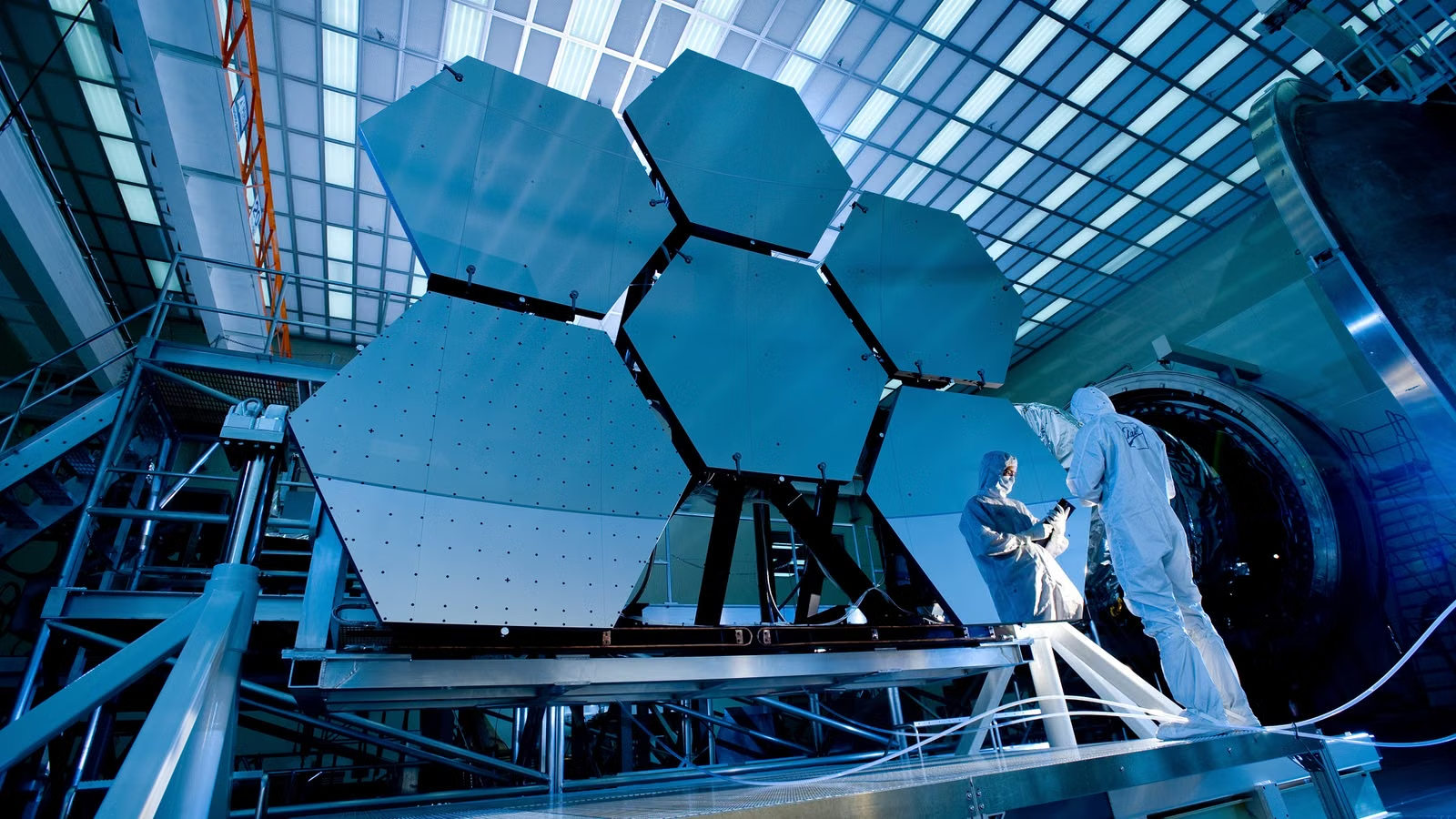
ASML is a core company in the AI chip supply chain not because it directly manufactures GPUs, but because advanced AI chips cannot be made without lithography equipment. Performance improvements in AI GPUs, AI ASICs, advanced CPUs, HBM, and high-end DRAM all depend on smaller line widths, higher transistor density, and more complex manufacturing steps. ASML’s leading position in EUV, High-NA EUV, DUV, metrology, and computational lithography makes it a key upstream company in the advanced process expansion plans of TSMC, Samsung, Intel, and other chipmakers.
Key Takeaways
- ASML’s core value comes from the scarcity of EUV lithography in advanced processes.
- AI chip demand flows into ASML equipment orders through foundry CAPEX.
- EUV order cycles are long, so one quarter of order volatility does not define the long-term trend.
- High-NA EUV is an important long-term variable for processes beyond 2nm.
- China exposure and export restrictions may affect DUV revenue and valuation stability.
- ASML analysis should cover orders, backlog, gross margin, and customer expansion plans.
Why Has ASML Become a Core Equipment Company in the AI Chip Supply Chain?
ASML is a core company in the AI chip supply chain because AI GPUs, advanced CPUs, AI ASICs, and high-end memory chips all depend on advanced processes, and advanced processes cannot move forward without lithography. ASML does not directly sell AI chips, but it occupies one of the most important positions in chip manufacturing capital expenditure. EUV lithography, in particular, determines whether foundries can achieve higher transistor density, lower power consumption, and higher performance at smaller nodes.
The way AI chip demand flows into ASML is usually not a straight line, but an industrial chain. Cloud companies increase AI CAPEX, which drives demand for Nvidia, AMD, Broadcom, and in-house ASICs. Chip design companies then place manufacturing orders with foundries such as TSMC, Samsung, and Intel. To meet advanced process capacity demand, foundries need to buy EUV, DUV, metrology, inspection, and computational lithography systems. ASML’s value lies at the source of advanced process expansion.
| Company | Position in the AI chip chain | Relationship with ASML |
|---|---|---|
| Nvidia | AI GPUs and system platforms | Indirect beneficiary through TSMC’s advanced processes |
| TSMC | Advanced foundry manufacturing | Direct buyer of EUV, DUV, and related equipment |
| Samsung | Memory and foundry manufacturing | Buys EUV for logic and DRAM |
| Intel | Internal manufacturing and foundry | Key early customer for High-NA EUV |
| ASML | Lithography equipment supplier | Provides core equipment for advanced processes |
Lithography matters because chip manufacturing is fundamentally about transferring extremely fine circuit patterns onto wafers. The more advanced the process node, the smaller the pattern, the higher the overlay accuracy required, and the more complex the exposure process becomes. DUV still supports a large amount of mature process production and some advanced process steps, but as chips move to smaller nodes, multiple patterning becomes expensive and complex. The value of EUV lies in its ability to reduce some multiple-exposure steps on critical layers and improve the manufacturability of advanced processes.
In its long-term financial targets, ASML states that it sees an opportunity for annual sales of around €44 billion to €60 billion and gross margin of around 56% to 60% by 2030. This target does not rely only on AI. It is based on the combined growth of advanced logic, memory upgrades, mature process demand, service revenue, and system upgrades.
From an investment perspective, ASML is closer to a “manufacturing gatekeeper” in the AI chip chain. Nvidia’s core strength lies in GPUs and system platforms. TSMC’s core strength lies in advanced processes and advanced packaging. ASML’s core strength lies in enabling advanced processes to happen. The more AI applications pursue lower power consumption, higher compute power, and higher memory bandwidth, the stronger the dependence on lithography systems becomes.
Summary: ASML’s core position comes from manufacturing barriers, not from direct AI application exposure. The more AI chips pursue performance, energy efficiency, and transistor density, the more they require advanced processes. The faster advanced process capacity expands, the more it depends on EUV, DUV, metrology, and computational lithography working together. ASML may not have a direct revenue relationship with Nvidia, but it is a key equipment supplier in the advanced capacity expansion of TSMC, Samsung, and Intel, making it an unavoidable core company in the AI chip supply chain.
How Do EUV Equipment Cycles Affect ASML Revenue and Orders?
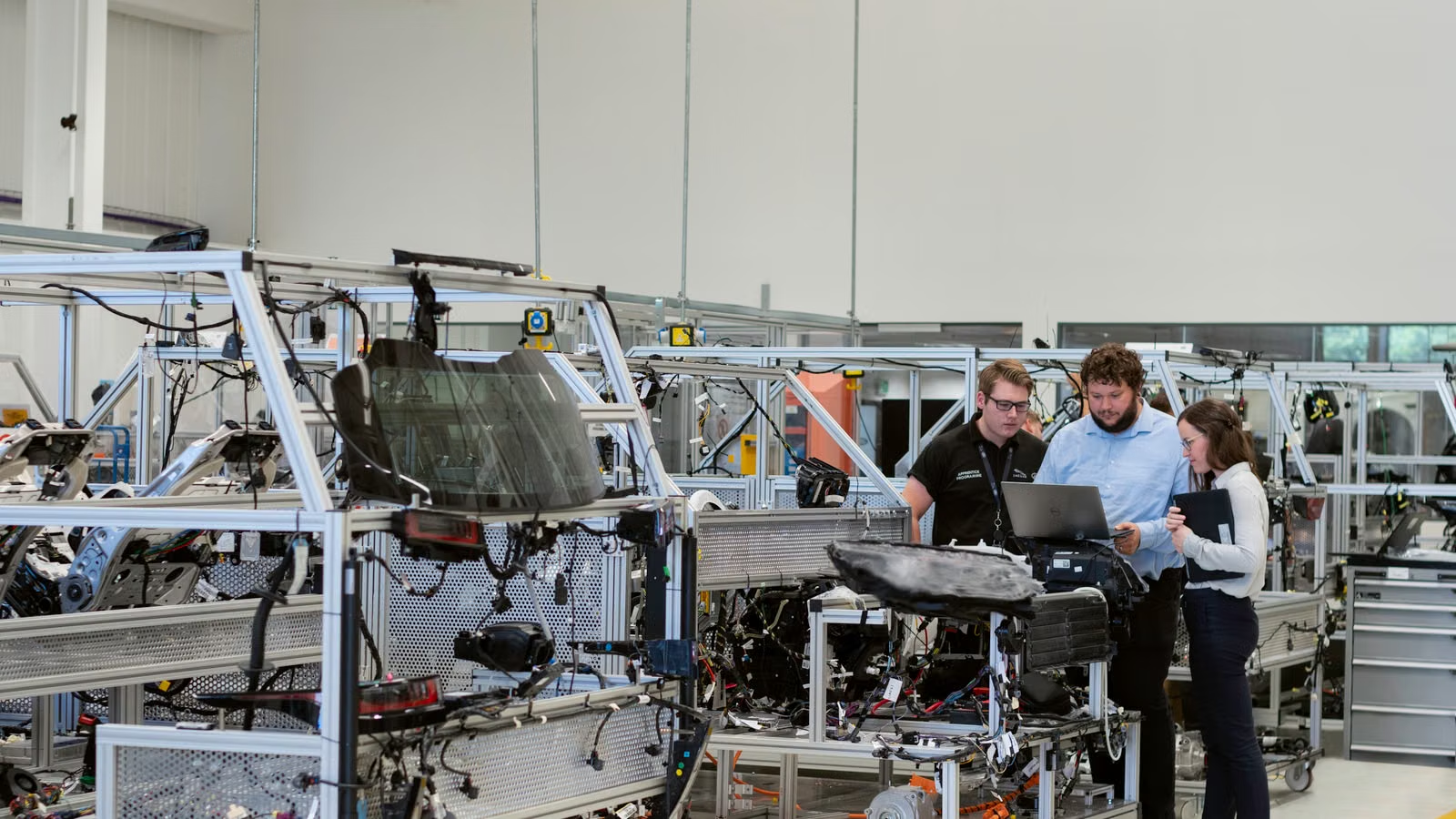
ASML’s revenue does not move in real time with AI chip demand because EUV equipment has long order, manufacturing, delivery, and acceptance cycles. When customers see AI demand growing today, they usually need to plan fab capacity, equipment orders, installation, debugging, and yield ramp-up in advance. Quarterly orders can fluctuate sharply, but as long as the advanced process expansion trend has not reversed, the EUV equipment cycle still has medium- to long-term support.
ASML’s revenue structure can be divided into several categories: EUV systems, DUV systems, Installed Base Management, metrology, and computational lithography. EUV systems have high unit value and long cycles, mainly serving advanced logic and high-end memory. DUV has broader applications, covering mature processes, specialty processes, and some multi-patterning steps in advanced processes. Installed Base Management includes services, upgrades, and maintenance, and is usually more stable.
| Revenue source | Main meaning | Cycle characteristics |
|---|---|---|
| EUV systems | For advanced logic and high-end memory | High unit price and long delivery cycle |
| DUV systems | For mature processes and some advanced processes | Broad applications, more affected by China exposure |
| Installed Base Management | Services, upgrades, and maintenance | Linked to installed equipment base |
| Metrology and computational lithography | Improves process control and yield | Becomes more important as nodes grow more complex |
ASML’s 2025 full-year net sales reached €32.7 billion, with net income of €9.6 billion, showing that the company holds an extremely high-value position in the semiconductor equipment chain. At the end of 2025, backlog stood at €38.8 billion. Q4 2025 net bookings were €13.2 billion, including €7.4 billion in EUV bookings. These data points are more useful than one quarter of revenue alone when assessing future revenue visibility.
In 2026, ASML reported Q1 net sales of €8.8 billion, gross margin of 53.0%, and net income of €2.8 billion. It also raised its full-year net sales outlook to €36 billion to €40 billion, with expected gross margin of 51% to 53%. Management noted that AI infrastructure investment is driving customers to accelerate capacity expansion for 2026 and beyond.
This is also why ASML is often described as an AI “picks-and-shovels” company. AI training and inference demand first show up in cloud CAPEX, then in demand for GPUs, ASICs, and high-end memory, and finally in foundry expansion. ASML’s revenue recognition may lag, but once customers enter an advanced process expansion cycle, equipment orders and backlog provide longer visibility.
When tracking ASML, you should not only ask whether bookings were high in a single quarter. A more complete checklist includes:
- Whether net bookings continue to support future revenue;
- Whether the share of EUV bookings remains strong;
- Whether backlog is sufficient to support future deliveries;
- Whether DUV demand is affected by China and mature process cycles;
- Whether Installed Base Management continues to grow steadily;
- Whether full-year revenue and gross margin guidance is raised or lowered.
Summary: ASML’s equipment cycle has the characteristics of “orders first, delivery later, and revenue recognized in stages.” AI demand does not immediately translate proportionally into ASML’s current-quarter revenue. It is reflected gradually through customer expansion plans, EUV orders, equipment delivery, installation acceptance, and installed base upgrades. To judge ASML’s business cycle, watch net bookings, backlog, EUV share, DUV demand, Installed Base Management, and full-year guidance together, rather than focusing only on quarterly order volatility.
What Is the Difference Between EUV, DUV, and High-NA EUV?
ASML’s core technology is not just a single EUV machine. It is a full lithography ecosystem covering DUV, EUV, High-NA EUV, metrology, computational lithography, and service upgrades. DUV still serves many mature processes and parts of advanced nodes. EUV is the core of today’s advanced logic manufacturing. High-NA EUV targets the longer-term manufacturing needs of sub-2nm processes and next-generation DRAM.
| Technology route | Main use | Advantage | Limitation |
|---|---|---|---|
| DUV | Mature processes and some advanced multi-patterning | Broad applications and large installed base | Rising cost and complexity at advanced nodes |
| Low-NA EUV | Current advanced logic and high-end memory | Simplifies multi-patterning and improves patterning capability | Expensive equipment and limited capacity |
| High-NA EUV | Future smaller nodes and high-end DRAM | Higher resolution and better fit for next-generation scaling | High cost and mass-production ramp still needs validation |
DUV should not be treated as a synonym for “outdated equipment.” Automotive chips, industrial chips, power management chips, analog chips, sensors, and mature logic still rely heavily on DUV. Even in advanced processes, DUV may still be used through multiple patterning in certain layers. Therefore, ASML’s DUV business has broad demand, but it is also more exposed to mature process cycles and changes in the China market.
The core value of EUV lies in its shorter wavelength. EUV uses a 13.5nm wavelength, making it possible to print finer patterns on critical layers and reduce some DUV multiple-patterning steps. For advanced logic chips, this helps lower process complexity, reduce overlay errors, shorten cycle time, and maintain the possibility of continued node scaling. Competition among TSMC, Samsung, and Intel at advanced nodes all depends on EUV.
High-NA EUV is the next major focus. ASML’s TWINSCAN EXE:5000 is the first 0.55 NA High-NA EUV system. Its 8nm resolution allows chipmakers to print features 1.7 times smaller than NXE systems in a single exposure, with around 2.9 times transistor density potential. ASML positions High-NA EUV as a way to extend chip scaling, not as a simple replacement for all existing Low-NA EUV systems.
However, High-NA EUV will not immediately become ASML’s main revenue contributor. The reason is practical: customers need to complete equipment installation, process validation, mask development, photoresist readiness, metrology, yield ramp, and line adaptation. imec has already received an advanced High-NA system in 2026 and expects the EXE:5200 High-NA EUV system to become fully qualified in Q4 2026, but moving from R&D validation to large-scale manufacturing still takes time.
Summary: ASML’s competitiveness is not based on a single technology point, but on a continuous roadmap from DUV to EUV and then to High-NA EUV. DUV supports mature processes and parts of advanced processes. EUV supports the advanced logic manufacturing needed by current AI chips. High-NA EUV determines the long-term potential of smaller nodes and next-generation memory. When investing in ASML, DUV should not simply be viewed as outdated equipment, and High-NA EUV should not be viewed as a fully mature product that will immediately contribute all revenue. Different technology routes correspond to different customers, cycles, and risks.
How Does Advanced Process Demand From AI Chips Support ASML’s Long-Term Cycle?
The long-term support that AI chips provide to ASML comes from three directions: advanced logic processes, HBM/DRAM advancement, and high-end capacity expansion by foundries serving AI customers. Rising training and inference demand drives upgrades in GPUs, ASICs, CPUs, HBM, and networking chips. To improve performance and energy efficiency, these chips must continue relying on advanced processes, more complex lithography steps, and stronger process control.
Advanced logic is the most direct transmission path. Nvidia, AMD, and cloud companies’ in-house ASICs drive TSMC, Samsung, Intel, and other foundries to add high-end node capacity. The more advanced the node, the more complex the critical lithography layers become, and the stronger the dependence on EUV, metrology, and computational lithography. TSMC has disclosed that its N2 technology entered volume production in Q4 2025 as planned, using its first-generation nanosheet transistor technology. This shows that advanced node migration is still moving forward.
Memory chips are also an important variable. AI servers need not only GPUs, but also HBM to provide high-bandwidth memory. HBM bottlenecks are often understood as advanced packaging and stacking issues, but the DRAM dies behind HBM also need continued scaling and improved energy efficiency. As high-end DRAM uses more EUV layers, AI demand can expand EUV demand and transmit from logic manufacturing into memory manufacturing.
| Observation dimension | What it represents | Impact on ASML |
|---|---|---|
| Wafer starts | Wafer input volume | Determines the base level of equipment demand |
| Lithography intensity | Exposure steps per wafer | Determines equipment capacity needed per wafer |
| Critical layers | Number of key lithography layers | Affects EUV usage intensity |
| Yield learning | Yield ramp-up process | Drives demand for metrology, computational lithography, and upgrades |
| Node migration | Transition to new process nodes | Drives new equipment orders and customer qualification |
However, AI does not eliminate the semiconductor cycle. Foundries are still affected by inventory cycles, customer demand adjustments, financing costs, consumer electronics recovery, and geopolitics. AI is a structural growth driver, but equipment company revenue can still fluctuate with customer CAPEX timing. ASML’s high 2030 target range reflects a long-term opportunity, not linear growth every quarter.
For investors, the most common mistake is to equate AI demand directly with unlimited ASML order growth. A more reliable approach is to observe whether AI demand is truly turning into foundry expansion: whether TSMC’s advanced nodes remain highly utilized, whether Samsung and Intel maintain advanced process investment, whether HBM manufacturers increase EUV layer usage, and whether customers are willing to lock in equipment capacity years in advance.
Summary: The logic behind AI chip demand supporting ASML is not “AI is hot, so ASML must rise.” The stronger logic is that AI requires higher compute power, higher memory bandwidth, and better energy efficiency, which push advanced logic, HBM/DRAM, and high-end networking chips to keep upgrading. The deeper the upgrade, the higher the lithography intensity, and the more important EUV, High-NA EUV, metrology, and computational lithography become. But the semiconductor industry still has inventory and CAPEX cycles, so structural demand should not be confused with growth that has no volatility.
How Will Export Restrictions and the China Market Affect ASML?
Export restrictions are one of the most important uncertainties in ASML’s investment logic. ASML’s EUV systems have long not been sold to customers in mainland China. The focus of restrictions is more on certain advanced DUV systems, services, maintenance, and possible future policy spillover. AI demand supports advanced process expansion, but changes in China revenue and policy coordination among the US and Europe can still affect orders, revenue structure, and valuation volatility.
The China market matters to ASML mainly through DUV, mature processes, and service revenue. Mature process expansion, domestic semiconductor supply-chain buildout, and some pull-in orders previously pushed China customer revenue share higher. ASML previously stated that after the impact of restrictions, it still expected China business to account for around 20% of total net sales in 2025. This shows that China is important, but it should not be confused with EUV-driven advanced process demand.
| Area of impact | Possible result | Meaning for investors |
|---|---|---|
| EUV | Mainland Chinese customers cannot obtain advanced EUV | Long-term advanced process competitiveness is limited |
| DUV | License restrictions on some models | China revenue share may decline |
| Services and maintenance | Uncertainty around installed-base support | Could affect Installed Base revenue |
| Customer CAPEX | Customers may delay purchases or shift to local alternatives | Order visibility may fluctuate |
| Geopolitics | Changes in US-Europe policy coordination | Valuation discount or volatility may increase |
In 2026, US lawmakers again proposed further restrictions targeting China’s chipmaking capabilities, including technologies such as immersion DUV lithography, which China still relies on importing. If such policies move forward, they may affect the boundaries of ASML’s sales and services to China, and may also lead investors to reassess the sustainability of China revenue.
Still, export restrictions are not a one-way negative. They may pressure ASML’s DUV orders and service revenue from China, but they may also strengthen the technology moat of overseas advanced process customers. If TSMC, Samsung, Intel, and other customers continue building advanced nodes, long-term demand for EUV and High-NA EUV can still be supported. The key point is that policy risk may change revenue mix and valuation volatility, but it does not directly erase ASML’s technological position in advanced lithography.
Summary: The impact of export restrictions on ASML needs to be viewed in layers. EUV export bans and DUV restrictions are not the same issue, and China mature process demand is not the same cycle as global advanced process demand. Restrictions may reduce China revenue and some DUV orders, but they may also strengthen overseas advanced process customers’ dependence on ASML EUV. For investors, the key is not to label restrictions simply as “positive” or “negative,” but to watch changes in China revenue share, licensing policy, service revenue, customer CAPEX shifts, and management guidance.
How Can You Judge Whether ASML Stock Can Still Benefit From the AI Chip Cycle?
To judge whether ASML can still benefit from the AI chip cycle, it is not enough to say “AI demand is strong” or “EUV is scarce.” A better approach is to watch orders, backlog, EUV share, High-NA EUV production timing, gross margin, customer CAPEX, China revenue share, and valuation together. ASML is a high-quality equipment leader, but even high-quality companies can see share-price volatility when orders are revised down or valuations become too demanding.
| Stock | Core driver | Main risk | Key indicators to watch |
|---|---|---|---|
| ASML | EUV equipment and advanced process expansion | Order volatility, export restrictions, valuation | Bookings, backlog, gross margin |
| TSMC | Advanced processes and advanced packaging | CAPEX, customer concentration, geopolitics | HPC revenue, N2 / CoWoS progress |
| Nvidia | AI GPUs and system platforms | Competition, supply chain, valuation | Data-center revenue, gross margin, inventory |
| HBM makers | AI memory bandwidth demand | Cycle, yield, pricing | HBM shipments, ASP, CAPEX |
Investors should focus on eight major indicators: quarterly net bookings, EUV bookings, backlog, EUV and DUV revenue mix, Installed Base Management, gross margin, customer CAPEX, China revenue share, and High-NA EUV qualification progress. ASML’s scarcity is strong, but its share price often reflects long-term expectations in advance. If orders or guidance fall short of market expectations, short-term volatility can be significant.
If you follow AI chip-chain companies such as ASML, TSM, and NVDA, industry logic is not the only factor to consider. Actual trading costs also matter. US stock trading costs may include not only commissions, but also platform fees, external institutional fees, trading activity fees, and fractional-share order fees. For example, Biya US stock trading fees state that US stock commission is $0, while platform fees, external institutional fees, and other costs are subject to the fee schedule and order-page display. Public market information, company financial reports, and fee structures are suitable only for pre-trade evaluation and do not constitute investment advice.
ASML’s investment scenarios can be divided into three categories:
| Scenario | Core assumption | Impact on ASML | Signals to verify |
|---|---|---|---|
| Strong AI advanced process cycle continues | Customers continue expanding EUV / High-NA capacity | Orders and gross margin receive stronger support | Bookings, EUV share, customer CAPEX |
| Short-term order volatility but long-term trend unchanged | Inventory and CAPEX timing cause disruption | Share-price volatility exceeds fundamental change | Backlog, full-year guidance, service revenue |
| Export restrictions and customer CAPEX cuts | China revenue falls and overseas expansion slows | Valuation comes under pressure | DUV orders, China revenue, guidance cuts |
When using US stock research tools to track ASML, TSM, NVDA, AMD, MU, and related names, it is better to put earnings, orders, customer CAPEX, and supply-chain news into one monitoring framework rather than focusing only on one-day price changes. ASML’s core advantage is its long-term technology moat, but its short- to medium-term share price can still be affected by order timing, market risk appetite, and policy news.
Summary: ASML remains one of the most important equipment companies in the AI chip advanced process cycle, but investment judgment should not stop at the phrase “EUV monopoly.” Orders, backlog, EUV/DUV mix, High-NA progress, gross margin, customer CAPEX, and export restrictions should be assessed together. ASML has strong long-term scarcity, but its share price can still be affected by order timing, policy risk, and valuation levels. A useful framework is “long-term technology moat plus short- to medium-term equipment cycle.”
If you continue tracking the AI chip chain, ASML, TSMC, NVDA, AMD, Samsung, Intel, Micron, and SK Hynix should be analyzed within the same framework: equipment and materials upstream, advanced processes, advanced packaging, and HBM in the middle, and cloud AI CAPEX plus data-center deployment downstream. Through Biya, you can follow US stocks, Hong Kong stocks, and digital asset markets while combining market prices, earnings, and supply-chain developments. For multi-currency fund evaluation, real-time exchange rates may also be used as a reference. Biya is a global multi-asset trading wallet, and related services depend on user location, identity verification results, platform rules, and applicable laws and regulations. AI chip-chain stocks can be volatile, so investors should understand fee structures, order types, company fundamentals, and their own risk tolerance before trading.
FAQ
Why Does ASML Benefit From AI Chip Demand If It Is Not an AI Company?
ASML benefits from AI chip demand because AI chips require advanced processes, and advanced processes require EUV lithography. AI demand flows from Nvidia, AMD, and cloud companies’ in-house chips to capacity expansion at TSMC, Samsung, and Intel, and then into ASML equipment orders.
Why Is EUV Lithography Equipment So Scarce?
EUV lithography equipment is scarce because it involves light sources, mirrors, vacuum systems, mechanical control, software, and metrology working together at extremely high complexity. Its scarcity comes from technical barriers, supply-chain capability, customer qualification cycles, and long-term R&D accumulation, not merely from a high price tag.
Will High-NA EUV Immediately Boost ASML Revenue?
High-NA EUV is a long-term growth variable, but it will not immediately replace all Low-NA EUV revenue. Customers still need to complete process validation, yield ramp-up, and production introduction. In the short term, it is more of a strategic technology node; over the medium to long term, it may contribute more revenue in advanced logic and high-end DRAM.
How Much Do Export Restrictions Affect ASML’s China Business?
The impact on ASML’s China business is mainly concentrated in DUV, mature processes, and service revenue, while EUV has long not been sold to mainland Chinese customers. The actual impact depends on license scope, equipment models, service restrictions, and customer purchasing schedules, and should not be equated with a decline in ASML’s long-term competitiveness.
How Are ASML, TSMC, and Nvidia Stock Logic Different?
ASML is an equipment company, so the key variables are orders and the EUV cycle. TSMC is a manufacturing company, so the focus is advanced processes and packaging capacity. Nvidia is a chip and system company, so the focus is data-center revenue and product competitiveness. All three benefit from AI demand, but their profit models and risk sources are different.
What Should Individual Investors Watch in ASML Earnings?
Individual investors should focus on net bookings, EUV bookings, backlog, gross margin, full-year guidance, China revenue share, High-NA EUV progress, and customer CAPEX. Do not look only at whether quarterly revenue beat expectations. It is also important to judge whether orders can support revenue over the next several quarters.
*This article is provided for general information purposes and does not constitute legal, tax or other professional advice from BiyaPay or its subsidiaries and its affiliates, and it is not intended as a substitute for obtaining advice from a financial advisor or any other professional.
We make no representations, warranties or warranties, express or implied, as to the accuracy, completeness or timeliness of the contents of this publication.
Related Blogs of

International Wire Transfer Time: What Affects Delivery?


Choosing a Stock Trading App: Beginner Checklist


Wire Transfer Requirements: Sender and Beneficiary Details Checklist



Choose Country or Region to Read Local Blog
 Australia
 Austria
 Belgium
 Canada
 Cyprus
 Czech Republic
 Denmark
 Estonia
 Finland
 France
 Germany
 Greece
 Hong Kong
 India
India Indonesia
 Ireland
 Italy
Italy Japan
Japan Latvia
 Lithuania
 Luxembourg
 Malaysia
 Malta
Malta Morocco
 Nepal
Nepal Netherlands
 New Zealand
 Norway
 Pakistan
 Philippines
 Poland
 Portugal
 Romania
 Singapore
 Slovakia
 Slovenia
 South Africa
 South Korea
 Spain
Spain Sweden
 Thailand
 United States
 Turkey
 United Arab Emirates
 United Kingdom
 Vietnam