HBM, NAND, or HDD: Which AI Storage Route Is the Most Direct? A Business Purity Comparison




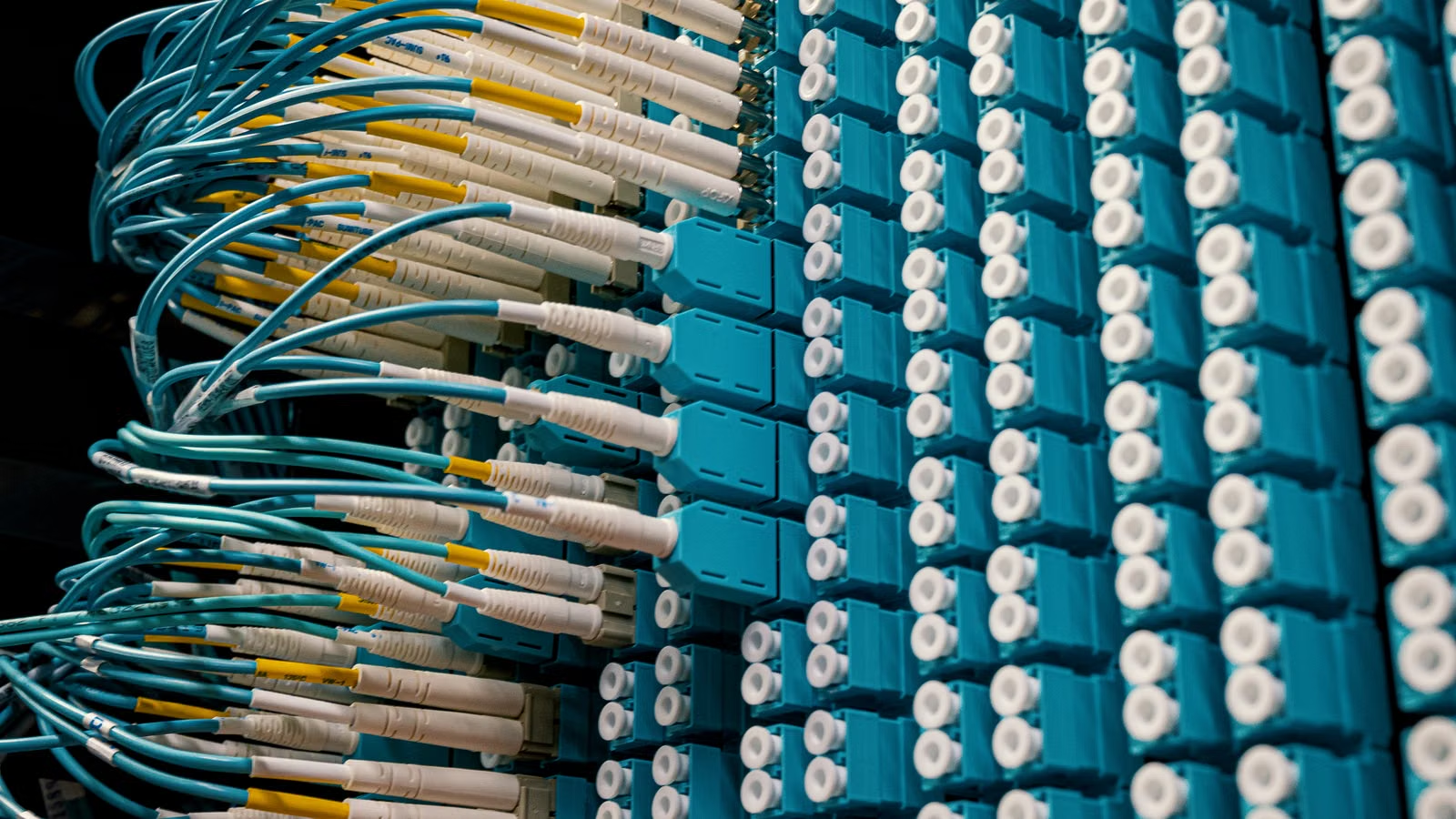
If you only ask which AI storage route is the most direct, the answer is HBM. If you ask which route has the broadest exposure to AI data growth, NAND/enterprise SSDs and HDDs also have clear roles. HBM sits closest to GPUs and AI accelerators. NAND/SSDs support model loading, caching, and high-speed data access. HDDs handle massive cold data, logs, backup, and long-term archiving. To judge investment value, you cannot only ask whether a company benefits from AI. You also need to compare business purity, pricing power, customer structure, supply constraints, and valuation expectations.
Key Takeaways:
- HBM is closest to AI compute nodes and is the most direct AI storage route.
- NAND/enterprise SSDs sit in the middle layer, with broad demand but more complex cycles.
- HDDs benefit from AI data accumulation and are more tied to long-term capacity growth.
- Business purity depends on revenue sources, not just whether a company mentions AI.
- HBM has the strongest upside sensitivity, but also higher packaging, yield, and customer concentration risks.
- Investors should track ASP, gross margin, inventory, and cloud customer orders together.
AI Storage Is Not One Single Line, but a Layered System
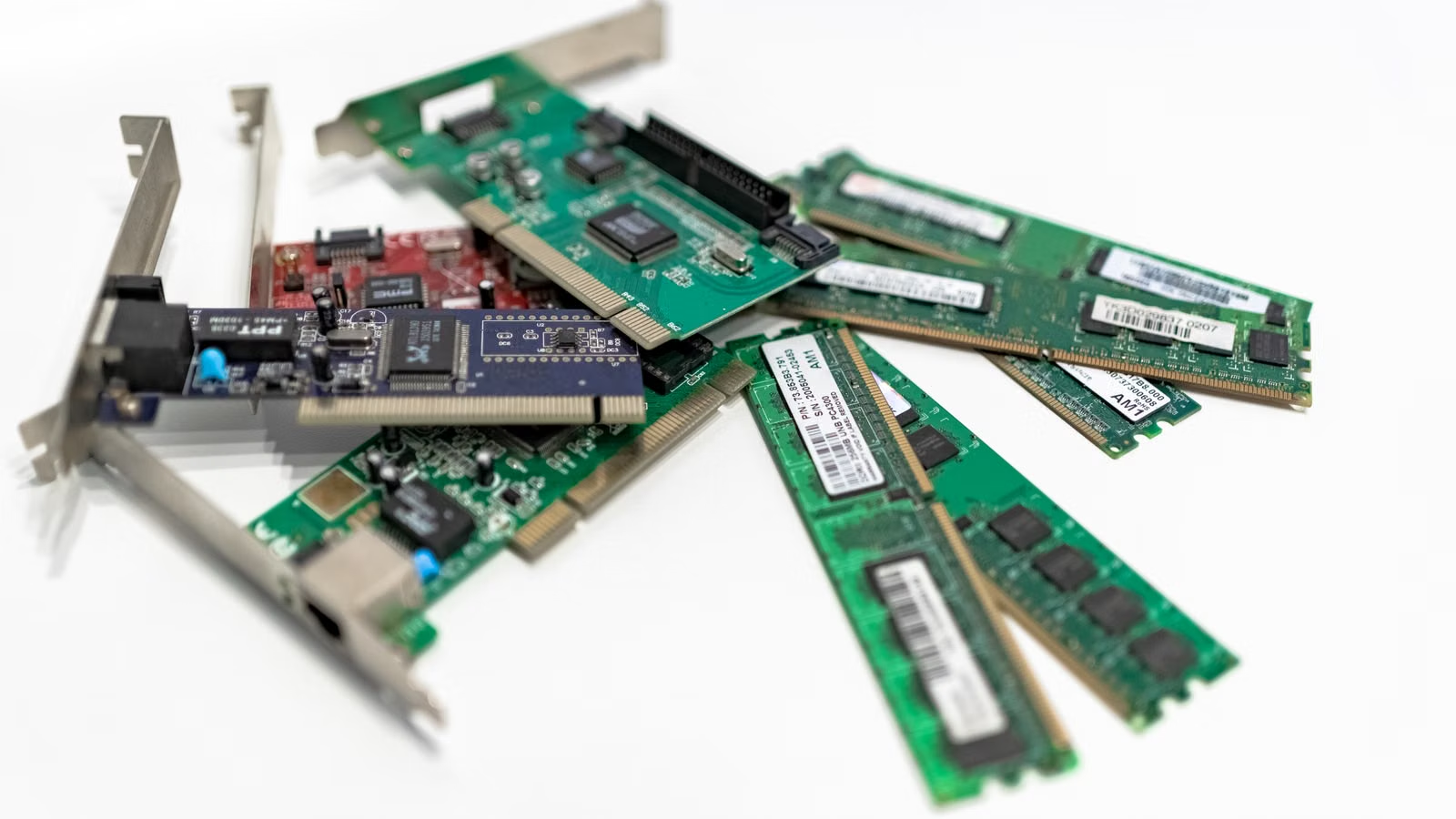
AI storage should not be reduced to “buying hard drives” or “buying memory.” A more accurate view is that an AI data center relies on a full memory hierarchy. Closest to compute are HBM and DDR. The middle layer includes NVMe SSDs, enterprise SSDs, and CXL memory expansion. Further out are nearline HDDs, object storage, and archive systems. To compare HBM, NAND, and HDD, you first need to understand where each one sits in AI training, inference, and long-term data retention.
Where HBM, NAND, and HDD Sit in AI Data Centers
HBM stands for High Bandwidth Memory. It is high-bandwidth DRAM, not a traditional storage drive. It usually works next to GPUs, AI accelerators, or custom ASICs, solving the memory bandwidth bottleneck in model training and inference. NAND Flash usually appears as SSDs, providing larger-capacity, lower-latency data reading, model weight loading, checkpointing, and caching. HDDs are slower, but they offer low cost per terabyte and are suitable for storing massive amounts of data.
In NVIDIA’s technical explanation of the Blackwell Ultra GPU, HBM capacity and bandwidth are presented as part of the AI Factory capability framework. This shows that HBM is no longer just a component. It is part of the AI compute platform design. By contrast, NAND and HDD belong to different layers of the broader data center storage architecture.
| AI Stage | Most Relevant Medium | Core Requirement | Distance from AI Demand |
|---|---|---|---|
| Large model training | HBM, DDR, SSD | Bandwidth, throughput, dataset reading | Closest |
| Large model inference | HBM, DDR, SSD | Latency, capacity, KV cache | Close to medium |
| Model deployment | SSD, object storage | Model loading, caching, logs | Medium |
| Data accumulation | HDD, object storage, tape | Cost per TB, long-term retention | Medium to distant |
Training, Inference, and Long-Term Storage Drive Different Needs
AI training most directly drives HBM demand because large model training is often constrained by memory bandwidth. Inference also depends on HBM, especially in long-context, high-concurrency, and high-throughput scenarios. But inference also expands SSD demand because model weights, vector indexes, RAG data, and logs all need efficient access. Over the long run, AI will generate large volumes of new data, including training data, synthetic data, user interaction logs, images, and video. This part of the demand is more likely to flow into HDDs and object storage.
That is why “most direct” does not mean “only beneficiary.” HBM solves the bandwidth problem inside the compute node. NAND/SSDs solve high-speed data access. HDDs solve massive capacity and low-cost retention.
Summary: If you use a single line to understand AI storage, you can easily misread the supply chain. HBM is the route closest to AI accelerators. NAND/enterprise SSDs are the middle layer of AI data movement. HDDs are the capacity foundation after AI data accumulates. All three may benefit from AI capex, but through different mechanisms. HBM depends on GPU/ASIC shipments and high-bandwidth memory configuration. NAND depends on enterprise SSDs, QLC/TLC, model loading, and inference caching. HDD depends on hyperscaler nearline capacity purchases, long-term data retention, and cost per terabyte. To compare business purity, the first question is not how many times a company mentions AI, but how close its products are to AI compute nodes and how much of its revenue is tied to that demand.
HBM Is the Most Direct Route, Driven by GPUs, ASICs, and High-Bandwidth Memory
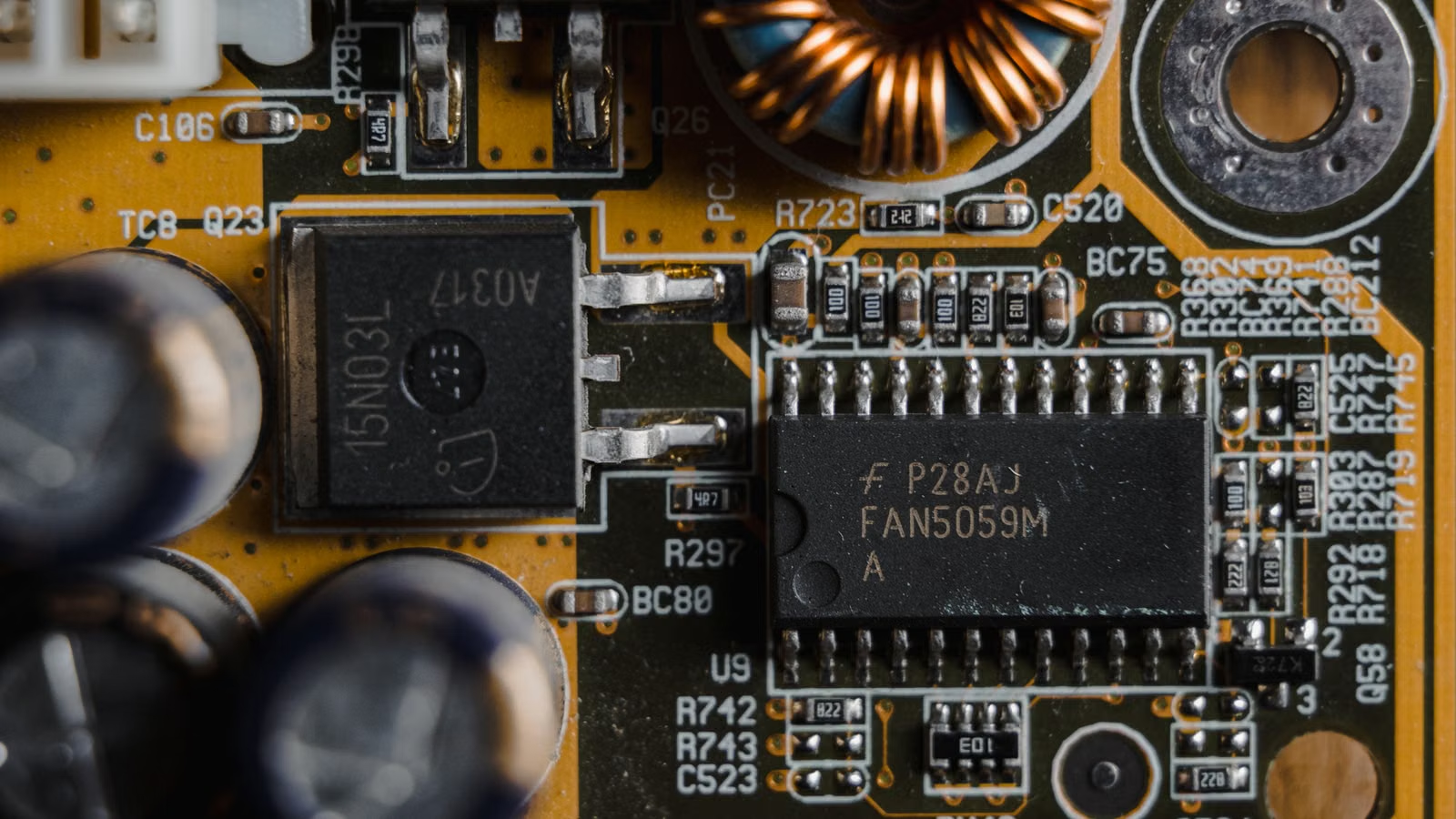
HBM is the most direct AI storage beneficiary among the three routes because it is packaged around AI GPUs, AI accelerators, or custom ASICs. It directly affects memory bandwidth, capacity, and power efficiency in model training and inference. You can think of HBM as the high-speed memory pool sitting next to the AI chip. As AI chips continue to increase compute density, HBM capacity, stack height, bandwidth, and advanced packaging demand rise with them.
Why HBM Is Closest to AI Compute
AI model parameters, activations, KV cache, and intermediate computation results all require high-speed read and write access. The more powerful the GPU, the more easily compute units can sit idle if memory bandwidth fails to keep up. That is where HBM matters: through 3D stacking, TSV, wide I/O, and advanced packaging, it places higher bandwidth closer to the compute core.
Micron’s HBM3E product description highlights bandwidth of more than 1.2TB/s and AI use cases. JEDEC’s JESD270-4 HBM4 standard also positions higher bandwidth, higher power efficiency, and higher capacity as key upgrades for AI and HPC. Samsung’s HBM4 disclosure expects 2026 HBM sales to grow by more than three times from 2025, showing that HBM has developed a stronger AI-driven demand curve separate from the traditional memory cycle.
| Dimension | HBM Route Assessment |
|---|---|
| Distance from AI compute | Closest; directly enters GPU/ASIC compute nodes |
| Demand driver | AI accelerator shipments, model scale, inference concurrency |
| Key technologies | HBM3E, HBM4, TSV, CoWoS, advanced packaging |
| Representative companies | SK hynix, Micron, Samsung |
| Main risks | Yield, packaging capacity, customer qualification, stretched pricing expectations |
How to Assess HBM Business Purity
SK hynix, Micron, and Samsung are all important HBM suppliers, but their business purity differs. SK hynix has a market narrative more concentrated on HBM, server DRAM, and AI memory. After increasing sales of HBM and high-capacity server DRAM, the impact of AI demand on SK hynix’s results is easier for the market to identify. Micron’s AI exposure comes from HBM, DRAM, and data center SSDs, so it is not a single-route company, but it offers broader AI storage coverage. Samsung is much larger and spans DRAM, NAND, smartphones, displays, foundry, and consumer electronics, which dilutes its AI storage sensitivity.
When assessing HBM purity, focus on three points: the share of HBM revenue within DRAM revenue, whether HBM is tied to NVIDIA, AMD, Google TPU, or other ASIC customers, and whether advanced packaging, yield, and supply qualification are stable.
Summary: HBM is the most direct AI storage route because it forms part of the compute node alongside AI GPUs, ASICs, and advanced packaging. Its growth does not come from a vague idea that “data is increasing.” It comes from larger models, higher inference concurrency, and stronger requirements for memory bandwidth and capacity in AI accelerators. But the more direct the route, the more concentrated the risks. Customer qualification, packaging capacity, yield, pricing, and valuation expectations can all amplify volatility. You should not only focus on HBM’s high upside sensitivity. You also need to recognize that it is a high-barrier, capital-intensive, customer-concentrated segment. For investors, HBM is better viewed as a key indicator of AI compute momentum, not simply as a low-risk storage asset.
NAND/Enterprise SSDs Are the Middle Layer, with Broader Demand but More Complex Purity
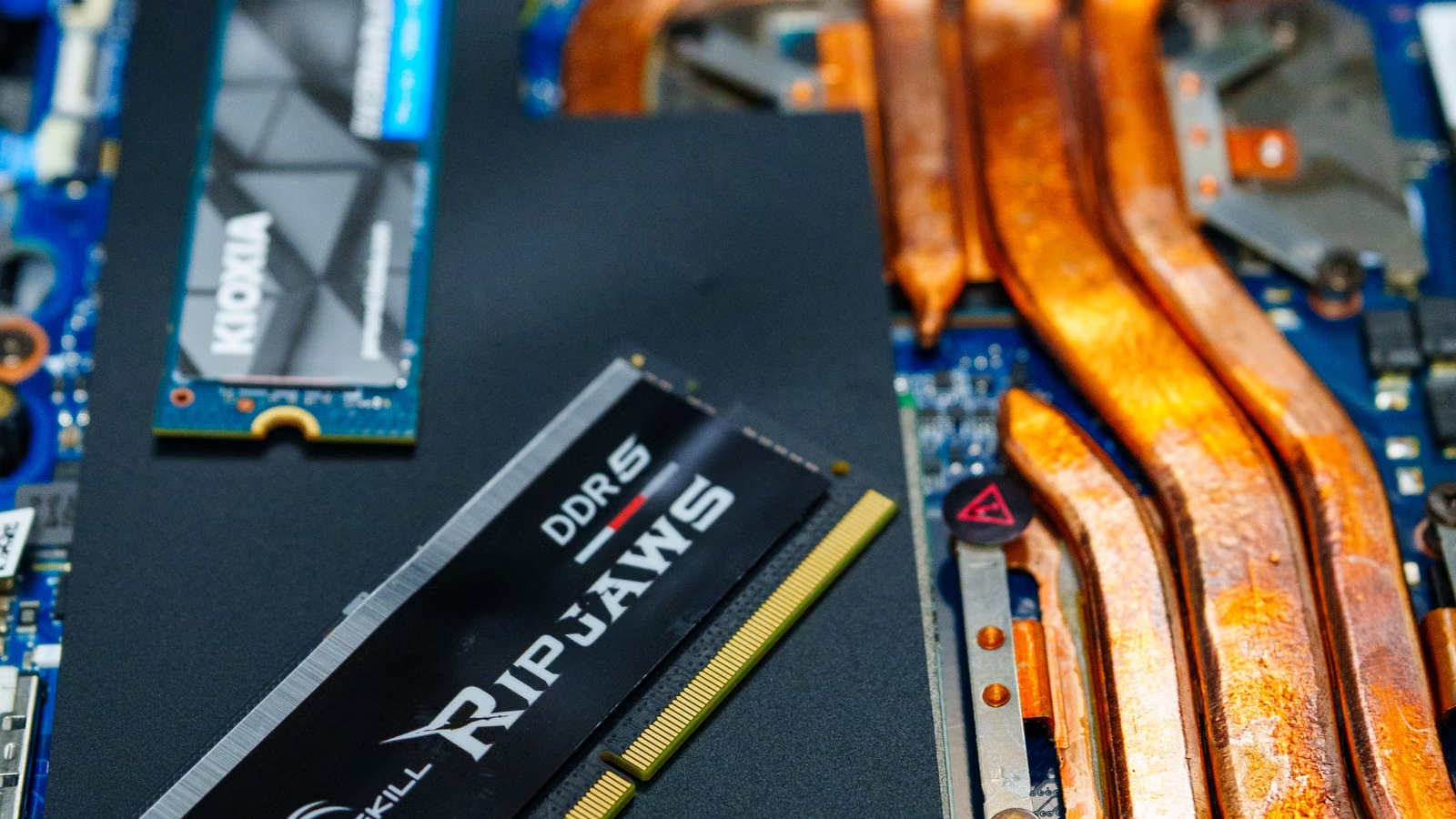
NAND/enterprise SSDs are not the most direct AI storage route, but they may offer the broadest exposure to AI data movement. They do not sit directly beside the GPU, yet they support model weight loading, training data reads, checkpointing, vector databases, inference caching, and warm storage. If you care about AI moving from training to large-scale inference, the importance of NAND/SSDs rises sharply. However, this route is still affected by consumer electronics, PCs, smartphones, and traditional enterprise IT cycles.
What NAND Solves in AI Data Centers
Generative AI needs more than HBM. It also needs large amounts of low-latency, non-volatile storage. During training, SSDs support high-throughput dataset reads and checkpoint storage. During inference, SSDs support model loading, hot data caching, vector indexes, logs, and user context retention. McKinsey’s analysis of enterprise SSDs points out that generative AI adoption is driving demand for SSDs in servers and data storage units.
Micron’s performance also shows that NAND is no longer only an extension of the consumer electronics cycle. In Fiscal Q3 2026, Micron reported record revenue, and its earnings materials noted that data center SSD revenue exceeded $5 billion, more than doubling sequentially. SanDisk reported in its fiscal second quarter 2026 results that data center revenue grew 64% sequentially, driven by AI infrastructure builders and large-scale AI deployment by technology customers.
| Dimension | HBM | NAND/Enterprise SSD | HDD |
|---|---|---|---|
| Distance from AI compute | Closest | Middle | Further away |
| Main value | Bandwidth and capacity | Low latency, high throughput, non-volatility | Low-cost large capacity |
| Cost per TB | Highest | Medium | Lowest |
| AI use cases | GPU/ASIC memory | Model loading, caching, checkpointing | Cold data, backup, archive |
| Cycle exposure | DRAM/HBM supply-demand | NAND plus consumer electronics | Cloud storage orders and capacity cycle |
Why NAND Business Purity Is More Complex
NAND companies may also benefit from AI, but their purity is less clear than HBM. NAND is used in many markets: smartphones, PCs, consumer SSDs, storage cards, enterprise SSDs, and data center storage. This means overall revenue and ASP are affected by more than AI. SanDisk is closer to a high-purity Flash/NAND company. Micron and Samsung are mixed DRAM, HBM, and NAND companies. When you see improving results at a NAND company, you need to separate whether data center SSDs are the real driver or whether the improvement is mainly due to NAND price recovery.
NAND sits between HBM and HDD. It is cheaper and larger-capacity than HBM, but cannot replace HBM’s bandwidth. It is much faster than HDD, but its cost per terabyte is higher. As AI inference scales and model services move deeper into production, the value of SSDs becomes more visible.
Summary: NAND/enterprise SSDs are the middle layer of the three AI storage routes. They are not as close to the compute core as HBM, but they become critical as AI shifts from training experiments to production deployment. Model loading, vector databases, caching, checkpointing, logs, and warm storage all depend on high-speed non-volatile storage. To judge the NAND route, you cannot only say “AI demand is strong.” You need to look at enterprise SSD share, data center customer growth, QLC/TLC product mix, NAND ASP trends, and drag from consumer electronics. NAND’s strength is broad applicability. Its risk is also broad applicability: it can capture AI data center growth, while still being affected by traditional end-market cycles.
HDDs Are More Tied to Long-Term Data Accumulation, Cloud Customers, and Cold Data
HDDs are not the most direct AI storage route, but they can still be long-term beneficiaries of AI data growth. The reason is simple: AI does not only consume training data. It continuously generates new data, including inference logs, images, video, synthetic datasets, business records, backups, and compliance archives. HDDs are not about speed. Their core advantages are cost per terabyte, capacity density, and large-scale deployment economics. They are better understood as the long-term capacity foundation of AI data centers.
Why HDDs Still Matter
The larger the AI infrastructure becomes, the more data must be tiered. Hot data and frequently accessed data sit in HBM, DRAM, SSDs, or high-performance object storage. Low-access, long-retention, cost-sensitive data is more suitable for HDDs. Western Digital’s AI Data Cycle framework emphasizes that AI workloads require a combination of different storage media rather than a single medium solving every problem.
After completing its Flash business planned separation, Western Digital’s business boundary became more focused on HDDs and data center infrastructure. In its discussion of tiered storage, WD noted that tiered storage has become a practical architecture for hyperscale and AI infrastructure. Seagate is a more concentrated representative of mass-capacity storage. Its Fiscal Q3 2026 results showed revenue of $3.11 billion and GAAP gross margin of 46.5%, reflecting how an improving nearline HDD cycle can magnify profitability.
| Company | AI Storage Route | Business Purity Assessment | Key Variables to Watch |
|---|---|---|---|
| Seagate | Nearline HDD, mass capacity | High HDD purity | Exabyte shipments, high-capacity drives, cloud customer long-term agreements |
| Western Digital | HDD, data center platforms | Higher HDD focus after separation | Gross margin, AI/cloud revenue, tiered storage |
| SanDisk | NAND/Flash | High Flash purity | Data center SSDs, NAND ASP, enterprise customers |
| Micron | HBM, DRAM, NAND | Broad AI storage coverage | HBM, data center SSDs, DRAM/NAND supply-demand |
HDD Investment Logic Looks More Like a Capacity Cycle
HBM follows AI accelerator shipments. NAND/SSDs follow high-speed data access demand. HDDs follow cloud capacity procurement and long-term data retention cycles. The key question for Seagate and WD is not whether a single hard drive is “more AI.” It is whether hyperscalers continue to increase nearline HDD purchases, whether high-capacity drives take a larger share, whether pricing discipline holds, and whether order visibility improves.
WD’s Fiscal Q3 2026 results reported revenue of $3.337 billion, up 45% year over year, with GAAP gross margin of 50.2%. This kind of data shows that HDD is not an obsolete technology. It continues to play a role in the capacity layer of cloud data centers. However, HDD risks are also clear: high cloud customer concentration, slower technology upgrades than semiconductors, lower demand sensitivity than HBM, and stock price volatility around orders, margins, and valuation.
Summary: HDD is the least glamorous of the three AI storage routes, but it is not irrelevant. The more data AI creates, the greater the need for long-term retention, backup, archiving, and low-cost capacity. That supports nearline HDD demand. Its weakness is that it is further away from the AI compute node, so stock price sensitivity is usually lower than HBM. Its strength is a more focused business model, strong cost-per-terabyte competitiveness, and potential margin recovery from large-scale cloud purchasing. When judging the HDD route, you should not compare its bandwidth with HBM. You should look at exabyte shipments, high-capacity drive mix, hyperscaler long-term agreements, gross margin, and supply discipline.
Business Purity Comparison: Who Looks Like a True AI Storage Stock, and Who Is Only Being Pulled by the AI Cycle?
To decide whether a storage company is a “real AI storage stock,” do not only look at whether it publishes AI-related news. A more useful method is to examine five factors: whether its product enters AI compute nodes, how high its data center revenue share is, whether AI customers purchase directly, whether pricing is mainly driven by AI supply-demand, and whether the company is diluted by consumer electronics, smartphones, PCs, or traditional enterprise IT cycles. By directness, the order is HBM > NAND/enterprise SSD > HDD. By long-term data-scale exposure, all three routes have roles.
Building an AI Storage Purity Framework
AI storage purity can be split into technical purity and revenue purity. Technical purity measures how close the product is to the AI compute core. Revenue purity measures how much AI-related products contribute to total revenue and profit. For example, HBM has the highest technical purity. But if a company has many non-storage businesses, investors may feel less direct AI exposure. Conversely, Seagate’s HDDs do not sit near GPUs, but its business is concentrated, so the cloud capacity cycle has a clearer impact on its results.
| Scoring Dimension | HBM | NAND/SSD | HDD |
|---|---|---|---|
| AI compute directness | Highest | Medium | Lower |
| Revenue sensitivity | High | Medium to high | Medium |
| Pricing cycle sensitivity | High | High | Medium |
| Supply barrier | High | Medium to high | Medium to high |
| Business purity visibility | High | Medium | Medium to high |
| Main drag factors | Yield, packaging, customer qualification | Consumer electronics cycle, NAND pricing | Cloud customer concentration, capacity procurement timing |
The Purest Route Is Not Always the Best Buy
Markets trade expectation gaps, not just business purity. HBM is the most direct route, but valuation may already reflect much of the upside. NAND/SSDs have broad exposure, but consumer electronics weakness can still weigh on results. HDDs have focused businesses, but their stocks often depend on cloud customer orders, gross margin, and cycle position. Recent market concerns around AI and memory pricing in Korean chip stocks also show that strong results do not always lead to further share price gains. The key question is whether the market believes the pricing cycle and AI capex can continue.
A practical way to frame the three routes:
- Most direct route: HBM, useful for tracking AI accelerator momentum.
- Broadest route: NAND/enterprise SSDs, useful for tracking AI production deployment and inference expansion.
- Capacity route: HDDs, useful for tracking hyperscaler data accumulation and long-term storage.
- Highest purity does not mean lowest risk: Valuation, customers, supply, and pricing cycles still matter.
- AI storage is not a single-winner market: Different layers solve different problems.
Summary: Business purity is not simply about which company “looks most AI.” It is the result of product position, revenue structure, customer structure, and pricing drivers. HBM is technically the purest because it directly serves GPUs and ASICs. NAND/enterprise SSDs are broader in application because they support AI data movement. HDDs may be more concentrated at the business level because cloud capacity purchasing has a clearer impact on revenue. For investment decisions, you should not rank the three routes as absolutely good or bad. Instead, ask: how much AI expectation is already reflected in the share price? Is revenue already materially driven by AI customers? Is margin improvement sustainable? Could supply expansion weaken pricing? These questions matter more than simply labeling a company as an AI storage stock.
How Investors Can Build a Watchlist Across the Three Routes
Retail investors comparing HBM, NAND, and HDD do not need to become semiconductor engineers first. What they need is a structured watchlist. For HBM, track AI chip attachment, HBM3E/HBM4 shipments, advanced packaging, and customer qualification. For NAND/SSDs, track data center SSDs, NAND ASP, QLC/TLC mix, and inference demand. For HDDs, track nearline HDDs, exabyte shipments, high-capacity drive mix, and hyperscaler long-term agreements. Then add valuation, trading costs, and execution risk.
What to Watch for Each Route
For the HBM route, focus on four indicators: HBM shipments, HBM revenue share within DRAM, customer qualification, and advanced packaging capacity. For the NAND route, watch enterprise SSD revenue, data center customer share, NAND ASP, and consumer electronics demand. For the HDD route, watch nearline HDD shipments, unit capacity pricing, high-capacity drive penetration, cloud customer orders, and supply discipline.
| Route | Key Indicators | Best Question It Answers |
|---|---|---|
| HBM | HBM3E/HBM4, customer qualification, packaging capacity, gross margin | Is AI chip demand still driving high-bandwidth memory? |
| NAND/SSD | Data center SSDs, NAND ASP, QLC/TLC, inference caching | Is AI data access scaling into production? |
| HDD | Nearline HDD, exabyte shipments, high-capacity drives, cloud long-term agreements | Is AI data accumulation creating long-term capacity growth? |
Trading Costs and Rules Also Matter
When you add SK hynix, Micron, Samsung, SanDisk, Seagate, Western Digital, or related ETFs to your watchlist, do not look only at price movement. You also need to consider actual trading costs. U.S. stock trading costs may include more than commissions. They may also include platform fees, external institution fees, transaction activity fees, and other charges. Biya charges $0 commission for U.S. stock trading, while platform fees, external institution fees, and other costs are subject to the U.S. stock trading fee structure and the order page. Service availability depends on the user’s location, identity verification result, platform rules, and applicable laws and regulations.
If you are used to monitoring U.S. stocks, Hong Kong stocks, and crypto markets together, Biya can help you keep AI storage-related companies, semiconductor ETFs, and market news within one trading view. But storage stocks are volatile, especially around earnings, customer orders, memory pricing, and changes in AI capex expectations.
Summary: When building an AI storage watchlist, it is better to separate companies by route rather than putting every name into one “AI storage concept stock” basket. HBM tracks AI accelerators and high-bandwidth memory. NAND/SSDs track inference, caching, and high-speed data access. HDDs track cloud providers’ long-term capacity procurement. Each route should be examined from the demand side, supply side, pricing side, and financial side. At the trading level, fee structures, order rules, local regulatory requirements, and personal risk tolerance also matter. Storage is a deeply cyclical industry. AI can change the demand slope, but it cannot eliminate cycle volatility. The goal is not to bet on one absolute answer, but to continuously verify whether the momentum in each route is still improving.
If you follow the AI storage supply chain, you do not need to focus only on one leader or one technical term. A more balanced approach is to place HBM, NAND/enterprise SSDs, and HDDs on the same industry map: first identify which route is most direct, then compare which company has the purest revenue exposure, and finally assess whether valuation already reflects the expectation. Users who meet the relevant service conditions can register an account to monitor U.S. stocks, Hong Kong stocks, and related ETFs, or download the app to check trading access and account features. Public market information, trading rules, and fee structures are for research purposes only and do not constitute investment advice. Before placing any trade, you should review the order page, statement details, platform rules, and local regulatory requirements.
FAQ
Is HBM the Most Direct AI Storage Route?
Yes. Based on proximity to AI compute nodes, HBM is the most direct route. It usually works with GPUs, AI accelerators, or custom ASICs to solve memory bandwidth bottlenecks in model training and inference. However, HBM is high-bandwidth DRAM, not a traditional hard drive, so it should not be compared with SSDs or HDDs using the same performance metrics.
Why Do NAND Enterprise SSDs Benefit from AI Storage Demand?
NAND enterprise SSDs benefit from AI because AI training, inference, and model deployment all require high-speed, low-latency, non-volatile storage. SSDs are commonly used for model weight loading, checkpointing, vector databases, inference caching, and warm storage. However, NAND is also affected by smartphones, PCs, and consumer electronics cycles, so its AI purity is less clear than HBM.
Why Are HDDs Still Needed in AI Data Centers?
HDDs are still needed in AI data centers because AI continuously creates massive amounts of data, and not all data needs to remain in high-speed storage. Inference logs, backup, archives, compliance records, cold data, and object storage are more sensitive to cost per terabyte and capacity scale. HDDs cannot replace HBM or SSDs, but they remain useful as a long-term capacity layer.
How Can Retail Investors Compare HBM, NAND, and HDD Business Purity?
Retail investors can compare four dimensions: whether the product enters AI compute nodes, whether data center revenue is rising as a share of total revenue, whether AI customers purchase directly, and whether pricing is mainly driven by AI demand. HBM has the highest technical purity, NAND/SSDs have broader application coverage, and HDDs may offer more focused capacity-cycle exposure while sitting further away from compute.
What Are the Biggest Risks for AI Storage Stocks?
The biggest risks for AI storage stocks are excessive expectations and cycle reversal. Even if AI demand remains strong, share prices may fall if memory price growth slows, cloud capex weakens, supply expands too quickly, or earnings miss market expectations. Storage is cyclical, so investors should track valuation, gross margin, inventory, and customer concentration.
Can a Storage ETF Replace a Single AI Storage Stock?
A storage ETF can reduce single-company risk, but it cannot fully replace individual stock research. ETFs may hold a mix of HBM, NAND, HDD, equipment, server, and semiconductor index names, which can dilute business purity. Before investing, review the ETF’s holdings, expense ratio, underlying index, and your own risk tolerance.
*This article is provided for general information purposes and does not constitute legal, tax or other professional advice from BiyaPay or its subsidiaries and its affiliates, and it is not intended as a substitute for obtaining advice from a financial advisor or any other professional.
We make no representations, warranties or warranties, express or implied, as to the accuracy, completeness or timeliness of the contents of this publication.
Related Blogs of

2026 AI Earnings Season: Understanding the Tech Stock Narrative Through CAPEX, HBM, and CoWoS


Tesla Q2 Earnings Preview: Can Robotaxi, Energy Storage Growth, and AI Investment Support Its Valuation?


ASML Q2 Earnings Preview: Can AI Chip Demand Continue to Support EUV Orders?


What to Watch in Tesla Earnings: After Delivery Declines, Will the Market Reprice TSLA?

Choose Country or Region to Read Local Blog
 Australia
 Austria
 Belgium
 Canada
 Cyprus
 Czech Republic
 Denmark
 Estonia
 Finland
 France
 Germany
 Greece
 Hong Kong
 India
India Indonesia
 Ireland
 Italy
Italy Japan
Japan Latvia
 Lithuania
 Luxembourg
 Malaysia
 Malta
Malta Morocco
 Nepal
Nepal Netherlands
 New Zealand
 Norway
 Pakistan
 Philippines
 Poland
 Portugal
 Romania
 Singapore
 Slovakia
 Slovenia
 South Africa
 South Korea
 Spain
Spain Sweden
 Thailand
 The United States
 Turkey
 United Arab Emirates
 United Kingdom
 Vietnam
Contact Us




BIYA GLOBAL LLC is registered with the Financial Crimes Enforcement Network (FinCEN), an agency under the U.S. Department of the Treasury, as a Money Services Business (MSB), with registration number 31000218637349, and regulated by the Financial Crimes Enforcement Network (FinCEN).
BIYA GLOBAL LIMITED is a registered Financial Service Provider (FSP) in New Zealand, with registration number FSP1007221, and is also a registered member of the Financial Services Complaints Limited (FSCL), an independent dispute resolution scheme in New Zealand.