
Will SpaceX Join the Nasdaq-100 or S&P 500? Index Inclusion Rules and ETF Flow Impact




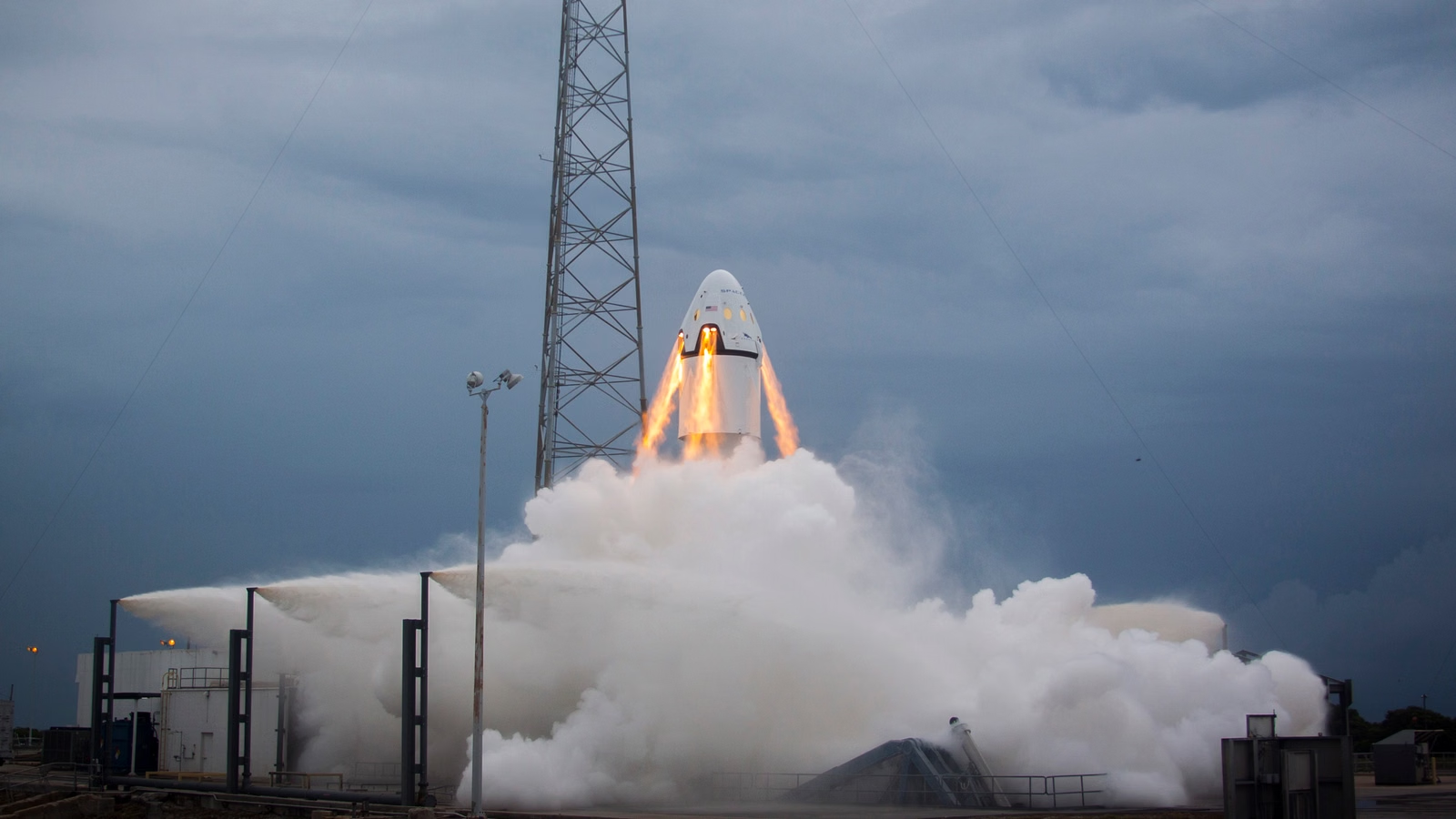
Whether SpaceX will enter the Nasdaq-100 or the S&P 500 cannot be judged by market capitalization alone. You also need to consider trading history, exchange eligibility, free float, trading activity, profitability, index committee rules, and official rebalancing announcements. Based on current rules, the Nasdaq-100 may offer a faster potential inclusion path because it has an IPO Fast Entry mechanism. The S&P 500 is more restrictive and usually requires profitability, free-float market capitalization, and IPO trading-history conditions. For investors, the key value of index inclusion lies in ETF passive flows, constituent weight changes, and capital-flow adjustments, but this does not mean the stock price will only move upward.
Key Takeaways
- SpaceX’s index inclusion depends on more than market capitalization.
- The Nasdaq-100 has an IPO Fast Entry mechanism, so its path may be shorter.
- The S&P 500 places more weight on profitability, liquidity, and trading history.
- ETF flow impact depends on weight, free float, and rebalancing mechanics.
- QQQ and S&P 500 ETFs follow different capital-flow logic.
- Index inclusion expectations cannot replace valuation and position-size analysis.
Does SpaceX Have the Basic Conditions to Enter Major Indexes?

SpaceX has the basic profile to be discussed for major index inclusion, but whether it will actually enter the Nasdaq-100 or the S&P 500 must be determined by index methodology and official announcements. You cannot simply infer “immediate index inclusion” from “large enough market capitalization.” Index providers usually evaluate company type, listing venue, free-float ratio, trading value, financial performance, trading history, and index representativeness. SpaceX’s strengths are its market capitalization and market attention, while potential constraints are concentrated in profitability, free float, and post-listing trading history.
The reason SpaceX quickly triggered index-inclusion discussion after its listing is its sheer scale. According to reports on SpaceX’s first trading week, SPCX attracted strong attention from retail investors, institutional capital, and the options market during its first week on Nasdaq, with its market capitalization once entering the ranks of the world’s largest companies. For index investors, if such a mega-cap new listing remains outside major indexes for a long time, it may create a gap between index composition and the actual market structure.
However, an index is not simply a market-cap ranking list. The Nasdaq-100 focuses more on large non-financial companies listed on Nasdaq, while the S&P 500 emphasizes representation of the U.S. large-cap equity market. SpaceX’s SEC S-1/A prospectus disclosed its business, ownership structure, risk factors, and offering arrangements. These details affect how investors assess free float, control structure, financial viability, and index weight. Dual-class shares, a limited public float, and early post-listing volatility may all affect how index providers decide on timing and weight treatment.
You can first understand the basic logic of index inclusion through this table:
| Evaluation Factor | What the Nasdaq-100 Focuses On | What the S&P 500 Focuses On | Meaning for SpaceX |
|---|---|---|---|
| Market capitalization | Whether it ranks among large Nasdaq companies | Whether it meets the large-cap threshold | SpaceX’s market cap is the starting point |
| Listing exchange | Whether it trades on an eligible exchange | Whether it is listed on an eligible U.S. exchange | Nasdaq listing favors the Nasdaq-100 path |
| Company type | Non-financial companies better fit the index | U.S. company status and common-share structure matter more | Index classification and structure need review |
| Free float | Affects weight and investability | Affects float-adjusted market cap and IWF | Low float may limit index weight |
| Financial performance | Not as profitability-focused as the S&P 500 | Profitability is an important threshold | If unprofitable, the S&P path may be delayed |
| Official announcement | Published by Nasdaq Indexes | Published by S&P DJI | Rumors cannot replace announcements |
You should pay special attention to the gap between “index inclusion discussion” and “official index inclusion.” Media, brokers, and social platforms may trade expectations early, but what truly determines whether ETFs must rebalance is the index provider’s announcement and effective date. Even if SpaceX meets some criteria, inclusion may still be delayed because of free float, profitability, liquidity assessment, or index committee judgment.
Summary: SpaceX’s market capitalization and market influence naturally put it within the observation range of both the Nasdaq-100 and the S&P 500, but index inclusion is not automatic. The Nasdaq-100 focuses more on Nasdaq listing eligibility, market-cap ranking, trading activity, and Fast Entry rules. The S&P 500 focuses more on U.S. company status, profitability, free-float market capitalization, trading history, and committee judgment. You should treat SpaceX’s market capitalization as the starting point, not the conclusion. What truly matters is tracking rules, time windows, public filings, index announcements, and ETF holding changes.
How to Understand SpaceX’s Path Into the Nasdaq-100

SpaceX’s potential path into the Nasdaq-100 is relatively clearer because the Nasdaq-100 has created a fast-inclusion mechanism for mega-cap IPOs. According to the Nasdaq-100 Index Methodology, an IPO company may be evaluated using the seventh trading day as the reference date. If it meets applicable security eligibility requirements and ranks within the top 40 of current constituents by full market capitalization, it may generally be included after the fifteenth trading day. This mechanism means SpaceX may not necessarily need to wait for the traditional annual reconstitution.
The Nasdaq-100 is designed to reflect the performance of large non-financial companies listed on Nasdaq. The regular annual reconstitution usually takes place in December, when eligible companies are ranked by Full Market Capitalization. The methodology also includes retention rules for existing constituents, meaning a new company must not only be “large” but also rank sufficiently high to enter the index framework.
Fast Entry is central to the SpaceX index-inclusion discussion. Under Nasdaq methodology, the IPO Reference Date mechanism provides that an IPO company is evaluated after the close of its seventh trading day on an eligible exchange and must meet applicable security eligibility criteria other than seasoning. If it qualifies for Fast Entry, the announcement is usually made after market close on the tenth trading day, with inclusion typically occurring after the fifteenth trading day. For a mega-cap company, this significantly shortens the waiting period.
The Nasdaq-100 path can be divided into three mechanisms:
| Inclusion Path | Trigger | Timing Feature | Meaning for SpaceX |
|---|---|---|---|
| Annual reconstitution | Year-end screening by market cap and eligibility | Usually concentrated in December | More traditional, but involves a longer wait |
| Quarterly or interim replacement | Triggered by constituent replacement needs | Depends on events and reference dates | Not the most direct path |
| IPO Fast Entry | IPO enters top 40 by full market cap and meets eligibility | Seventh trading day evaluation, potential inclusion after the fifteenth trading day | The most closely watched path for SpaceX |
Free float is also a key variable. Nasdaq-100 methodology states that there is no minimum free-float standard, but low-float securities may have their Modified Market Capitalization limited for weighting purposes. In other words, even if SpaceX qualifies for inclusion discussion because of its large total market cap, its index weight may not fully reflect that total market cap. If the IPO float is small, the actual ETF buying demand may be lower than market estimates based purely on total market capitalization.
CME Group’s analysis of the SpaceX mega-IPO also highlights that new Nasdaq-100 rules have weakened traditional seasoning and minimum free-float constraints, allowing mega-cap IPOs to enter index discussions more quickly. For investors, however, faster does not mean guaranteed. Fast Entry still requires ranking, security eligibility, trading activity, and compliance with index methodology.
Summary: The key question for SpaceX’s Nasdaq-100 inclusion is not whether it is a popular company, but whether it satisfies Nasdaq-100 Fast Entry requirements after its IPO. You should watch the seventh trading-day evaluation, the tenth trading-day announcement window, potential effective inclusion after the fifteenth trading day, and whether SpaceX ranks within the top 40 by full market capitalization among current constituents. Insufficient free float may not necessarily prevent inclusion, but it may lower the final weight. For ordinary investors, the most important signal is an official Nasdaq Indexes announcement, not market speculation.
How to Understand SpaceX’s Path Into the S&P 500
SpaceX’s path into the S&P 500 is usually more complex than its path into the Nasdaq-100. The S&P 500 does not simply select the 500 largest companies by market capitalization. Instead, S&P Dow Jones Indices determines inclusion based on U.S. large-cap representativeness, investability, liquidity, profitability, and index committee judgment. Even if SpaceX has a very large market capitalization, it may not quickly enter the S&P 500 if profitability, trading history, or free-float market capitalization does not meet the requirements.
The S&P 500 is defined by S&P DJI as an important measure of U.S. large-cap equities, covering about 500 leading companies and representing a significant portion of the investable U.S. equity market. This positioning means it is not a list of the fastest-growing companies, but an index emphasizing representativeness, replicability, and investability.
S&P DJI’s June 2026 consultation results on the treatment of MegaCap companies show that the IPO seasoning period will not be shortened from 12 months to 6 months, the minimum IWF requirement will not be waived for MegaCap companies, and no financial-viability exception will be granted for MegaCap companies. This is important for SpaceX because it shows that “extremely large market capitalization” alone is not enough for the S&P 500 to create a special path for a mega-cap IPO.
The key S&P 500 conditions to watch include:
| Condition | What the S&P 500 Focuses On | What SpaceX Needs to Show |
|---|---|---|
| U.S. company status | Whether it meets S&P DJI’s definition of a U.S. company | Incorporation, operations, listing venue, and company structure |
| Eligible exchange | Whether it is listed on an exchange recognized by S&P U.S. Indices | Nasdaq, NYSE, Cboe, or other eligible exchanges |
| Market-cap threshold | Whether it meets the minimum large-cap company market value | Stable post-listing market cap, not a one-day spike |
| Free-float market cap | Whether public float supports index replication | IPO float, lock-up schedule, and secondary offering plans |
| IWF | Whether the investable weight factor meets the minimum | Whether the publicly investable share ratio is too low |
| Liquidity | Whether trading volume and value remain sufficient | Six months of post-listing trading data |
| Profitability | Recent quarter and last four quarters’ earnings | GAAP net income from continuing operations |
| Trading history | Whether the IPO meets seasoning requirements | At least 12 months of trading history |
The S&P U.S. Indices eligible exchanges methodology update also shows that S&P DJI explicitly defines which U.S. exchanges qualify as eligible exchanges. Exchange eligibility is only the first step and does not mean a company satisfies all inclusion requirements. If SpaceX trades on Nasdaq, the exchange requirement may not be the largest obstacle; the more important constraints may still be profitability, free float, and IPO trading history.
Financial viability is one of the main uncertainties for SpaceX’s S&P 500 inclusion. The consultation results mention that the S&P Composite 1500 has clear GAAP net income requirements from continuing operations: the most recent quarter must be positive, and the sum of the most recent four consecutive quarters must also be positive. If SpaceX remains in a high-capex and unprofitable stage after listing, it may be excluded from near-term S&P 500 inclusion despite its large market capitalization.
Summary: The difficulty for SpaceX entering the S&P 500 is not market capitalization, but the completeness of rule compliance. The S&P 500 requires a company to satisfy multiple conditions, including U.S. company status, eligible exchange listing, free-float market capitalization, IWF, liquidity, profitability, and IPO seasoning. S&P DJI’s 2026 consultation results show that MegaCap IPOs will not automatically receive exemptions from the 12-month trading-history requirement, IWF requirement, or financial-viability standard simply because they are large. Therefore, even if SpaceX enters the Nasdaq-100 relatively quickly, that does not mean it will enter the S&P 500 at the same time.
Which Index Is More Likely to Include SpaceX First: Nasdaq-100 or S&P 500?
From a rules perspective, SpaceX may enter the Nasdaq-100 earlier than the S&P 500. The reason is that the Nasdaq-100 allows qualified mega-cap IPOs to enter through Fast Entry, while the S&P 500 still maintains stricter requirements on IPO trading history, profitability, and investability. You can think of the Nasdaq-100 as an index that more quickly reflects changes among mega-cap non-financial companies listed on Nasdaq, while the S&P 500 places greater emphasis on U.S. large-cap market representation and sustainable investability.
The key differences between the two indexes are as follows:
| Comparison Factor | Nasdaq-100 | S&P 500 | Implication for SpaceX |
|---|---|---|---|
| Index positioning | Large non-financial companies listed on Nasdaq | Representative U.S. large-cap index | Coverage logic differs |
| IPO fast track | Has Fast Entry | No similar direct exemption | Nasdaq-100 may be faster |
| Profitability requirement | Not the central threshold | Financial viability is explicit | S&P 500 depends more on profitability |
| Trading history | Fast Entry can bypass seasoning | IPOs usually need 12 months | S&P 500 has a longer time threshold |
| Free float | Affects weight | Affects eligibility and weight | Low float matters for both |
| Decision mechanism | Methodology-driven rules are more visible | Index committee judgment matters more | S&P path is harder to predict |
Based on these differences, three scenarios can be considered:
| Scenario | Possible Path | ETF Flow Impact | Investor Focus |
|---|---|---|---|
| Fast scenario | SpaceX enters through Nasdaq-100 Fast Entry first | QQQ, QQQM, and other Nasdaq-100 products may rebalance | Watch announcement date, effective date, and final weight |
| Base scenario | Nasdaq-100 waits for rebalancing; S&P 500 waits for 12 months of data | Passive flows gradually price in expectations | Market may trade expectations early, increasing volatility before inclusion |
| Delayed scenario | Free float, profitability, or governance structure delays inclusion | ETF buying falls below market expectations | Do not use a single event as the sole buying reason |
For investors, the most common mistake is interpreting “Nasdaq-100 may be faster” as “SPCX must rise.” Index inclusion is a flow event, but the stock price may already reflect expectations in advance. If the market has already bought heavily before the announcement, the official announcement may trigger “good news already priced in” volatility. Conversely, if the index provider does not include SpaceX as the market expects, disappointment-driven trading may also pressure the share price in the short term.
You also need to distinguish between active capital and passive capital. Active funds can buy SpaceX in advance based on fundamentals, valuation, index expectations, or trading sentiment. Passive ETFs usually act closer to index rule execution and rebalance between the announcement date and effective date according to index weight. These two types of capital operate on different timelines and should not be conflated.
Summary: The Nasdaq-100 and S&P 500 have asymmetric inclusion paths for SpaceX. Because of its Fast Entry mechanism, the Nasdaq-100 may theoretically include a mega-cap IPO sooner. The S&P 500 places more emphasis on profitability, trading history, investability, and index committee judgment. A more reasonable base case is “Nasdaq-100 inclusion may come first, while S&P 500 inclusion requires further observation.” However, the final decision still depends on official announcements from Nasdaq Indexes and S&P DJI. Index expectations can be treated as a flow variable, but they should not be used as the sole basis for buying.
How ETF Flows May Affect SpaceX’s Stock Price and Portfolio Allocation
If SpaceX enters the Nasdaq-100 or the S&P 500, ETF flow impact mainly comes from passive fund rebalancing, not from the index name itself. Nasdaq-100 impact is more concentrated in products such as QQQ and QQQM, which have stronger technology and growth exposure. S&P 500 impact is broader and involves major core ETFs such as SPY, VOO, and IVV. The actual buying amount depends on index weight, free-float adjustment, fund assets under management, replication method, and rebalancing schedule.
Invesco QQQ tracks the Nasdaq-100. Therefore, if SpaceX is added to the Nasdaq-100, QQQ-like products would theoretically need to adjust their holdings based on index weight. The key here is “index weight,” not SpaceX’s total market capitalization. If low float limits Modified Market Capitalization, the number of shares ETFs need to buy may be lower than market estimates based purely on total market capitalization.
The logic for S&P 500 ETFs is broader. SPY tracks the S&P 500 Index, VOO tracks the investment performance of the S&P 500, and IVV also aims to track the S&P 500. If SpaceX is eventually added to the S&P 500, these funds and other S&P 500 index funds may need to rebalance. Because the S&P 500 has a broader pool of assets, the potential impact may cover more long-term passive capital, but only if SpaceX actually meets S&P conditions and is officially included.
ETF flow impact can be divided into four layers:
| Flow Layer | Source of Capital | Possible Stock-Price Impact | What to Watch |
|---|---|---|---|
| Expectation-driven capital | Active funds, hedge funds, short-term traders | May push prices up or down in advance | Whether expectations are already priced in |
| Passive ETFs | QQQ, SPY, VOO, IVV, and others | Rebalance between announcement and effective date | Weight, effective date, replication method |
| Arbitrage capital | Index arbitrage and liquidity providers | May increase short-term volume and spread changes | Trading volume on rebalance day |
| Long-term allocation capital | Pension funds, institutional portfolios, funds of funds | Gradually changes allocation structure | Whether index products hold long term |
If you follow trading opportunities after popular IPOs, you also need to pay attention to actual trading costs in addition to index flows. U.S. stock trading costs usually include more than commissions. They may also include platform fees, external institution fees, trading activity fees, settlement fees, and FX costs. Using Biya as an example, U.S. stock trading has a commission of USD 0, while platform fees, external institution fees, and other charges are subject to the fee center and the order page. Availability of related services depends on the user’s location, identity verification results, platform rules, and applicable laws and regulations.
Passive ETF buying does not equal long-term price support. SpaceX’s long-term performance will still depend on business execution, revenue growth, profitability, cash flow, capital expenditure, and market risk appetite. In particular, Reuters’ report on SpaceX debt financing shows that the market is also watching the company’s cash balance, financing structure, and expansion spending. These fundamental factors affect valuation beyond index inclusion alone.
Summary: SpaceX’s index inclusion would affect ETF holdings and passive flows, but the flow impact should not be exaggerated. Nasdaq-100-related ETFs may react earlier, while S&P 500 ETF assets are larger but subject to stricter inclusion conditions. Actual buying demand depends on final weight, free float, rebalancing date, and fund replication method. Investors should not interpret passive ETF buying as a guarantee that the share price can only rise. If expectations have already been priced in, the final weight is lower than expected, or fundamentals are questioned, official inclusion may still come with volatility.
How Ordinary Investors Can Track SpaceX’s Index Inclusion Progress
For ordinary investors tracking SpaceX’s potential index inclusion, the most important framework is “rules—dates—data—announcements.” Do not rely only on social media rumors, and do not focus solely on one-day price moves. You should prioritize Nasdaq Indexes, S&P Dow Jones Indices, SpaceX’s subsequent SEC filings, ETF holding disclosures, and index rebalancing schedules. Index inclusion is a rules-based event. Trading expectations may appear early, but final execution must come back to official announcements.
Recommended signals to track include:
| Tracking Item | Relevant Index | Why It Matters |
|---|---|---|
| Nasdaq Indexes announcements | Nasdaq-100 | Confirms Fast Entry or rebalancing inclusion |
| S&P DJI announcements | S&P 500 | Confirms S&P 500 inclusion or continued waiting |
| SpaceX SEC filings | Both | Shows changes in share count, profitability, risks, and float |
| ETF holding files | QQQ, SPY, VOO, IVV | Shows whether passive capital has actually bought |
| Lock-up arrangements | Both | Affect free float and weight |
| Trading volume and value | Both | Affect liquidity and investability assessment |
| Earnings disclosures | More important for S&P 500 | Determines whether profitability requirements are met |
You can split the analysis into two timelines. For the Nasdaq-100, the key dates are the seventh, tenth, and fifteenth trading days after the IPO, as well as quarterly and annual rebalancing windows. For the S&P 500, the timeline is better tracked quarterly, especially GAAP profitability for the most recent quarter, aggregate profitability over the last four quarters, free-float market capitalization, IWF, and 12 months of trading history.
If you follow SPCX, QQQ, SPY, VOO, IVV, Hong Kong stocks, and digital assets at the same time, you can use the Biya App to record multi-asset holdings, order fees, and FX costs. You can also use Biya currency conversion to check funding costs in USD, HKD, and other currencies. Index rebalancing is often not just a single-stock issue; it is a portfolio-allocation issue.
You can also use a simple tracking process:
- First confirm whether SpaceX meets Nasdaq-100 Fast Entry ranking and eligibility requirements.
- Then watch whether Nasdaq releases an official inclusion announcement.
- At the same time, observe holding changes in QQQ, QQQM, and other Nasdaq-100 products.
- Track SpaceX profitability, free float, and trading history quarterly.
- Wait for official S&P DJI announcements on S&P 500 constituent changes.
- Use an account review table to record each trade’s price, fees, FX rate, and position change.
Summary: Tracking whether SpaceX will enter the Nasdaq-100 or S&P 500 should not rely on a single rumor. For the Nasdaq-100, focus on Fast Entry and rebalancing announcements. For the S&P 500, focus on profitability, the 12-month IPO trading-history requirement, free-float market capitalization, and S&P DJI decisions. ETF holding changes are the result, not the precondition. You need to put rules, dates, company disclosures, ETF files, and personal position sizing into one observation table to judge the real impact of index inclusion on your account.
If you follow SpaceX index inclusion, QQQ rebalancing, and S&P 500 ETF holding changes, the priority is not to chase a single headline. It is to manage stocks, ETFs, FX costs, and trading fees within one framework. Biya is a global multi-asset trading wallet that supports U.S. stocks, Hong Kong stocks, and cryptocurrency trading, and also supports exchanging USDT into major fiat currencies such as USD or HKD. You can use U.S. stock search to track basic information on U.S. stock targets and then check trading fees through your account order page. Biya’s U.S. stock trading commission is USD 0, while platform fees, external institution fees, and other charges are subject to the fee center and order page. Public market information, trading rules, and fee structures are for decision support only and do not constitute investment advice. Popular IPOs and index rebalancing periods may involve significant price volatility, so investors should fully understand order types, fee structures, and risks before trading.
FAQ
What Are the Core Conditions for SpaceX to Enter the Nasdaq-100?
The core conditions for SpaceX to enter the Nasdaq-100 include Nasdaq listing eligibility, market-cap ranking, security eligibility, trading activity, and Fast Entry or rebalancing rules. A high market capitalization helps, but it is not the only condition. The final decision should still be based on official Nasdaq Indexes announcements.
Why Might SpaceX Take Longer to Enter the S&P 500?
SpaceX may take longer to enter the S&P 500 because the index usually requires profitability, free-float market capitalization, IWF, liquidity, and at least 12 months of IPO trading history. Even if SpaceX has a very large market capitalization, that does not mean it can skip these requirements.
Would SpaceX Inclusion in QQQ Create Passive Buying?
If SpaceX is added to the Nasdaq-100, QQQ-like products would theoretically need to adjust their holdings according to index weight. The actual buying size depends on final weight, free float, fund assets under management, and replication method. It should not be estimated simply from SpaceX’s total market capitalization.
Would SpaceX Inclusion in the S&P 500 Affect SPY and VOO?
If SpaceX is added to the S&P 500, ETFs such as SPY, VOO, and IVV that track the S&P 500 may need to rebalance. The actual impact depends on the S&P DJI announcement, effective date, index weight, and fund execution method. It does not mean the stock price will necessarily rise.
Can SpaceX Index Inclusion Expectations Be Used as a Buying Signal?
SpaceX index inclusion expectations can only be treated as a capital-flow variable, not as a standalone buying signal. You still need to evaluate valuation, profitability, cash flow, capital expenditure, position size, and risk tolerance, and avoid treating a rebalancing event as a guaranteed source of returns.
How Can Ordinary Investors Track SpaceX Index Announcements?
Ordinary investors should prioritize Nasdaq Indexes, S&P Dow Jones Indices, SpaceX SEC filings, and ETF holding disclosures. Social media, broker commentary, and market rumors can only serve as supplementary information. Trading decisions should be based on rules, official announcements, and account-level risk controls.
*This article is provided for general information purposes and does not constitute legal, tax or other professional advice from BiyaPay or its subsidiaries and its affiliates, and it is not intended as a substitute for obtaining advice from a financial advisor or any other professional.
We make no representations, warranties or warranties, express or implied, as to the accuracy, completeness or timeliness of the contents of this publication.
Related Blogs of

Choosing a Stock Trading App: Beginner Checklist


Wire Transfer Requirements: Sender and Beneficiary Details Checklist




Choose Country or Region to Read Local Blog
 Australia
 Austria
 Belgium
 Canada
 Cyprus
 Czech Republic
 Denmark
 Estonia
 Finland
 France
 Germany
 Greece
 Hong Kong
 India
 Indonesia
 Ireland
 Italy
 Japan
 Latvia
 Lithuania
 Luxembourg
 Malaysia
 Malta
 Morocco
 Nepal
 Netherlands
 New Zealand
 Norway
 Pakistan
 Philippines
 Poland
 Portugal
 Romania
 Singapore
 Slovakia
 Slovenia
 South Africa
 South Korea
 Spain
 Sweden
 Thailand
 United States
 Turkey
 United Arab Emirates
 United Kingdom
 Vietnam