
Crypto Exchange Fees Comparison: Trading Fees, Spreads, and Withdrawals





Why might you end up buying and withdrawing less crypto even when the trading fee is lower? The explanation may lie in execution prices, payment methods, and withdrawal charges. A fee schedule shows only part of the cost, and an exchange's instant-buy service may follow different rules from its order-book platform. Before comparing exchanges, fix the amount, trading pair, and final destination of your funds. Then check your account's fee rates, executable quotes, and transfer costs. This lets you assess the complete cost of a funding and withdrawal route instead of deciding solely on an advertised minimum rate.
Key Takeaways
- Compare specific trading interfaces first, as different products on the same platform may charge differently.
- A limit order can immediately take liquidity, so it does not automatically qualify for maker fees.
- A platform charging no added quote spread does not eliminate the order book's bid-ask spread or execution slippage.
- On-chain withdrawals and bank withdrawals follow different routes and require separate checks of charges and net receipts.
- Keep the amount, asset, and final destination consistent to avoid missing or double-counting costs.
How Can You Compare Different Exchanges' Fees in One Table?
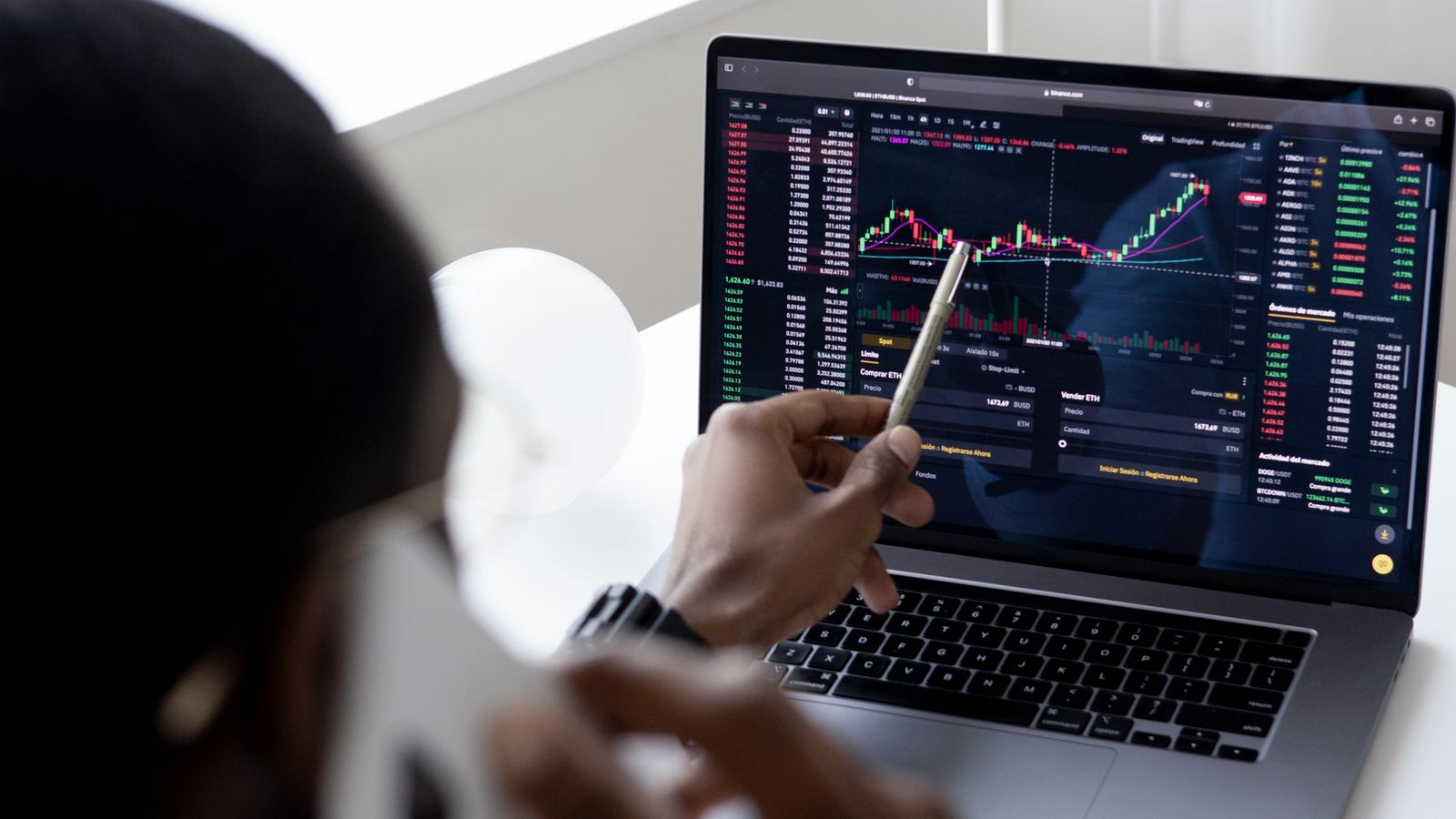
Identify the specific trading product behind each platform name before comparing rates under equivalent conditions. Kraken Pro, Coinbase Advanced, and Gemini ActiveTrader all offer order-book trading, but their account tiers, special trading pairs, and withdrawal rules differ. Order-book fees also cannot simply be applied to instant-buy quotes. Specify the spot market, base tier, buy or sell direction, and payment method, then list withdrawals separately. This avoids using one product's discount to explain another product's actual charges.
| Spot trading interface | Published base-tier maker / taker fees | Additional conditions to check |
|---|---|---|
| Kraken Pro | The current public Spot Crypto table lists 0.40% / 0.80% | Higher tiers have separate trading-volume or platform-asset requirements; check special pairs separately |
| Coinbase Advanced | Sign in to check current rates; do not substitute another product's fees | Review the Fees, Tier requirements, and Stablecoin pairs categories |
| Gemini ActiveTrader | The schedule dated September 1, 2026, lists 0.600% / 1.200% | The base tier applies to standard spot trading; stablecoin pairs have separate rates |
These figures represent base tiers in the specified products' public schedules. They are not final quotes for every account and exclude funding and withdrawal costs. Availability also depends on account eligibility, location, and applicable rules. Being able to open a fee schedule does not mean you can use every service it describes.
Beyond the table, save order previews for the same trading pair at approximately the same time. Differences in prices and the currencies used to deduct fees can change how much you buy. If you first need to convert funds into a supported quote currency, include that step. A route starting with dollars already available is not directly comparable to one requiring an additional currency conversion.
How Do Maker, Taker, and Account Tiers Affect Trading Fees?

Actual fees depend on whether each fill provides or takes liquidity, its executed value, and your account's applicable rate. The order name is only a starting point: a limit order can take liquidity immediately or wait on the order book. Fee tiers also have rules governing when they apply. Do not assume that a large order reaching a higher volume threshold will automatically be recalculated entirely at the new rate. Review individual fills to establish what you paid on both purchases and sales, and which assets were used to deduct fees.
Why Can a Limit Order Incur Taker Fees?
A maker leaves an order on the order book and provides liquidity. A taker immediately matches an existing order and consumes liquidity. For example, if the lowest ask is 100 and you submit a buy limit order at 101, it can immediately match a sell order and incur taker fees. If only part fills immediately and the remainder rests on the book, subsequent fills may be treated as maker trades.
Under Coinbase's Post Only settings, an order that would execute immediately may be rejected in full to avoid taker fees. However, the setting guarantees neither a fill nor a more favorable market price after waiting. Chasing prices or repeatedly canceling orders to obtain lower fees can offset the intended savings.
How Do Trading Volume, Asset Balances, and Discounts Change Your Rate?
Platforms use different tier criteria, which may involve rolling trading volume, balances in particular assets, or total assets held on the platform. Check which trades count, when tiers update, and whether a discount covers your intended pair. Do not generate unnecessary trades simply to qualify for a higher tier: additional fees and price risk may outweigh the discount.
Calculate buy and sell fees separately from their actual executed values, then convert them into a common unit for comparison. Fees deducted from the purchased asset reduce the quantity available to sell; fees deducted from the quote currency require a balance reserve. Coinbase's order-funding requirements cover the order value and applicable fees, so you cannot allocate all available funds solely to the nominal purchase amount.
For subscription benefits, check the monthly charge, eligible interfaces, trading allowance, and excluded fees. Waiving trading fees does not waive quote spreads, payment-processing charges, or crypto withdrawal fees. Compare subscriptions using the trading volume that actually qualifies for benefits, rather than treating all turnover as eligible savings.
Why Can Lower Trading Fees Still Lead to Higher Execution Costs?

Trading fees are explicit charges, while the execution price determines how much of an asset the same funds can buy. Distinguish a platform's quote markup from the order book's bid-ask spread and from slippage. The first may be embedded in the platform's quoted price; the others relate to market quotes and actual execution. A lower fee paired with a worse executable price can still leave you with less crypto. Compare executable quotes on the same side of the market, specify the reference price and time, and avoid relying solely on the latest price displayed on a market overview.
Distinguish Platform Quote Markups From the Order Book's Bid-Ask Spread
Coinbase's pricing and fee disclosures distinguish simple trades from Advanced. Simple trades may include a spread in the quote, while Advanced interacts directly with the order book and does not include the same platform-added quote markup. This does not mean the best bid and best ask on Advanced are identical.
For example, if the best bid is 99.90 and the best ask is 100.10, the bid-ask spread is 0.20. An immediate purchase generally faces the ask, while an immediate sale faces the bid. Relative to a midpoint of 100, the deviation on each side is 0.10. Do not add both the full spread and the half-spread to the same purchase. Once you calculate the asset quantity using the execution price, do not deduct a quote spread already embedded in that price again.
How Do Slippage, Order Size, and Market Depth Change the Result?
Only a small quantity may be available at the best ask, so a larger order can continue consuming sell orders at higher prices. Assess order-book depth and slippage in relation to order size. High historical volume and a narrow current spread cannot guarantee that the entire order will fill at the displayed price.
When comparing completed trades, use the average execution price weighted by filled quantity. Before submitting an order, check a preview for the relevant size instead of looking only at the first price level. Market volatility, latency, and changing orders can make actual results differ from the preview.
Kraken's Market Price Protection may cancel market orders when spreads become unusually wide. Such limits do not guarantee that an entire trade will complete as expected. A limit order constrains the acceptable execution price but may fill only partially or not at all. Assess both price and execution needs.
Summary: Low fees are only a starting point. For instant quotes, check the included markups. For order-book trading, examine quotes on the relevant side and depth at your order size. After execution, review actual prices and fees. Spreads and slippage may already be reflected in execution prices. A consistent calculation method helps prevent the same cost from being deducted twice.
Which Costs Apply to On-Chain and Bank Withdrawals?
Sending crypto to a wallet and withdrawing cash to a bank involve different cost structures. On-chain withdrawals require checks of the asset, network, platform charges, and minimum amount. Bank withdrawals generally involve selling the asset first, then transferring fiat through a specified currency and payment channel. In both cases, compare the final net amount received and establish whether fees are charged separately to your balance or deducted from the requested amount. A “free withdrawal” label alone does not establish how much the recipient will receive.
Withdrawing to a Wallet: Check the Asset, Network, Minimum, and Net Receipt
Kraken's crypto withdrawal fees and minimums note that published figures may change and that final fees are shown at confirmation. Platforms may use fixed, dynamic, or percentage-based charges. One withdrawal record should not be treated as a permanent fee rate.
OKX's withdrawal charging mechanism explains that charges may include operating costs and differ from real-time on-chain fees because of network conditions and update timing. The amount charged to a user therefore does not necessarily equal the transaction fee shown by a block explorer.
Before selecting a network, confirm that the recipient supports the same asset and network. Check the token version and Memo/Tag where necessary. Assets sharing a name can exist on different networks, so do not switch simply because one network has lower fees. A small test transfer must meet the minimum deposit requirement, and the budget should include fees for both the test and the subsequent withdrawal.
Withdrawing to a Bank: Check the Payment Channel and External Charges
Calculate the trading cost of selling an asset separately from the fiat-transfer cost. Kraken's cash withdrawal options list minimums, fees, and estimated times by currency, region, and processing channel. One channel's charges do not represent every account's costs.
Gemini's transfer fees also distinguish ACH, wires, and other payment methods, and note that banks may charge separately. A free transfer on the platform's side does not eliminate receiving-bank, intermediary-bank, or currency-conversion costs. Establish which currency the destination bank requires and whether it will perform another automatic conversion.
If you are comparing the complete funding cycle, revisit the initial deposit fees and when the funds become withdrawable. A balance available for trading is not necessarily available for withdrawal. A route selected for its lower fees must also fit your funding timeline.
How Can You Compare Total Costs for Your Trade Size and Withdrawal Habits?
Start with the same funds, fix the target asset, comparison time, and receiving method, then calculate the net receipt step by step. Buying and holding on the platform has a different cost endpoint from buying and withdrawing to a wallet. Selling and withdrawing to a bank requires additional allowance for fiat-transfer and applicable external charges. When fees are denominated in different assets, use consistent conversion prices and times while retaining the original quantities, so exchange-rate changes do not obscure the differences.
Calculate the Final Amount Received Under Consistent Conditions
Assume two routes each start with 1,000 USD, charge no deposit fee, and purchase ETH before withdrawing it to a wallet on the same network. Trading fees are deducted separately from the dollar balance, so the executed purchase value plus trading fees cannot exceed 1,000 USD. All conditions below are hypothetical and do not represent any platform's quotes:
| Item | Route A | Route B |
|---|---|---|
| Starting funds | 1,000 USD | 1,000 USD |
| Deposit fee | 0 USD | 0 USD |
| Purchase trading fee | 0.10% | 0.30% |
| Average execution price | 2,020 USD/ETH | 2,000 USD/ETH |
| Amount available for the purchase, excluding fees | Approximately 999.0010 USD | Approximately 997.0090 USD |
| ETH purchased | Approximately 0.494555 | Approximately 0.498504 |
| Withdrawal fee deducted from the purchased asset | 0.001 ETH | 0.001 ETH |
| Net ETH received in the wallet | Approximately 0.493555 | Approximately 0.497504 |
Calculate the executed purchase value as “1,000 ÷ (1 + trading fee rate),” then divide it by the average execution price. Route A has a lower trading fee, but its higher execution price leaves less ETH after withdrawal. The prices already reflect execution differences, so no additional spread or slippage deduction is made. Actual calculations also need to account for trading precision and residual balances.
If the destination is a bank, use the following relationship:
Net bank receipt = Actual sale proceeds − Trading fees not yet included − Withdrawal fees − Applicable external charges
If “sale proceeds” already means the amount after fees, do not deduct trading fees again. Where currency conversion is involved, identify the currency of each charge and follow the actual conversion sequence.
What Matters for Small Purchases, Frequent Trading, and Occasional Large Withdrawals?
Small purchases are more sensitive to fixed charges and minimum amounts. Kraken's cash deposit methods distinguish bank transfers, cards, and other channels, showing that cost differences can arise before trading begins. With the same fixed fee, a smaller transaction bears a larger percentage cost.
Frequent traders need to focus on cumulative fees across purchases and sales, alongside execution quality. Occasional large withdrawals place greater emphasis on market depth, limits, and payment routes. For subscriptions or discounts, subtract fixed spending from the savings you can actually obtain instead of comparing percentage fee reductions alone.
Before submitting, check five items: the trading interface, applicable tier, quote for your intended quantity, fee-deduction method, and recipient's net receipt. Assess costs alongside platform security, custody risks, and service availability. Lower spending alone should not determine where you send your funds.
Frequently Asked Questions
Does a Crypto Exchange Advertising “Zero Fees” Mean There Are No Trading Costs?
No. An offer may waive trading fees only for specified interfaces, pairs, or volumes. Quote spreads, payment-processing charges, withdrawal fees, and subscription costs may remain. Check the amounts you will actually pay and receive in the order preview, then verify the offer's scope instead of relying solely on its headline.
Are Maker Fees Always Lower Than Taker Fees for Crypto Trading?
Not necessarily. Rates depend on the platform, trading pair, and account tier, and may sometimes be identical. Even when maker fees are lower, an order can remain unfilled for a long time. Assess price changes while waiting and the effects of subsequently chasing a fill alongside the difference in fees.
Do All USDT or USDC Trading Pairs Qualify for Stablecoin Fee Discounts?
No. Platforms define specific stablecoin-pair categories. A standard crypto trading pair containing USDT or USDC does not necessarily qualify. Check each pair and the rate displayed for your account. Do not apply a stablecoin-to-stablecoin conversion rate to every market that uses a stablecoin as its quote currency.
Why Does the Sender Pay a Fee When a Crypto Deposit Is Free?
The receiving platform's deposit charge and the sending platform's or wallet's transfer cost are separate. A recipient charging no deposit fee does not eliminate the sender's exchange withdrawal fee or the wallet's on-chain fee. Also check the minimum deposit amount so deductions do not leave too little for the transfer to be credited normally.
Why Do Crypto Withdrawal Charges Differ From the On-Chain Fee Shown by a Block Explorer?
They do not necessarily use the same calculation basis. A platform may charge an estimated fee, batch multiple withdrawals, or include applicable processing costs. The fee shown for an entire blockchain transaction cannot automatically be assigned to one user's withdrawal. Verify the actual charge against the platform's confirmation record.
How Can You Tell Whether Moving Crypto Between Exchanges to Save Fees Is Worthwhile?
Add the original platform's withdrawal charge, extra conversions, destination-platform trading fees, and final withdrawal costs. Then consider price changes during transfer, network compatibility, and withdrawal holds. For a small trade, fixed charges may offset a lower trading rate. Account eligibility and applicable rules must also be satisfied.
*This article is provided for general information purposes and does not constitute legal, tax or other professional advice from BiyaPay or its subsidiaries and its affiliates, and it is not intended as a substitute for obtaining advice from a financial advisor or any other professional.
We make no representations, warranties or warranties, express or implied, as to the accuracy, completeness or timeliness of the contents of this publication.
Related Blogs of

Wire Transfer Requirements: Sender and Beneficiary Details Checklist

Crypto Wallet to Fiat Wallet: Conversion Steps, Fees, and Withdrawals


Choose Country or Region to Read Local Blog
 Australia
 Austria
 Belgium
 Canada
 Cyprus
 Czech Republic
 Denmark
 Estonia
 Finland
 France
 Germany
 Greece
 Hong Kong
 India
 Indonesia
 Ireland
 Italy
 Japan
 Latvia
 Lithuania
 Luxembourg
 Malaysia
 Malta
 Morocco
 Nepal
 Netherlands
 New Zealand
 Norway
 Pakistan
 Philippines
 Poland
 Portugal
 Romania
 Singapore
 Slovakia
 Slovenia
 South Africa
 South Korea
 Spain
 Sweden
 Thailand
 United States
 Turkey
 United Arab Emirates
 United Kingdom
 Vietnam