What Fee Traps Do Beginners Easily Fall Into When Buying U.S. Stocks? From Commission to Platform Fees, Explained Clearly




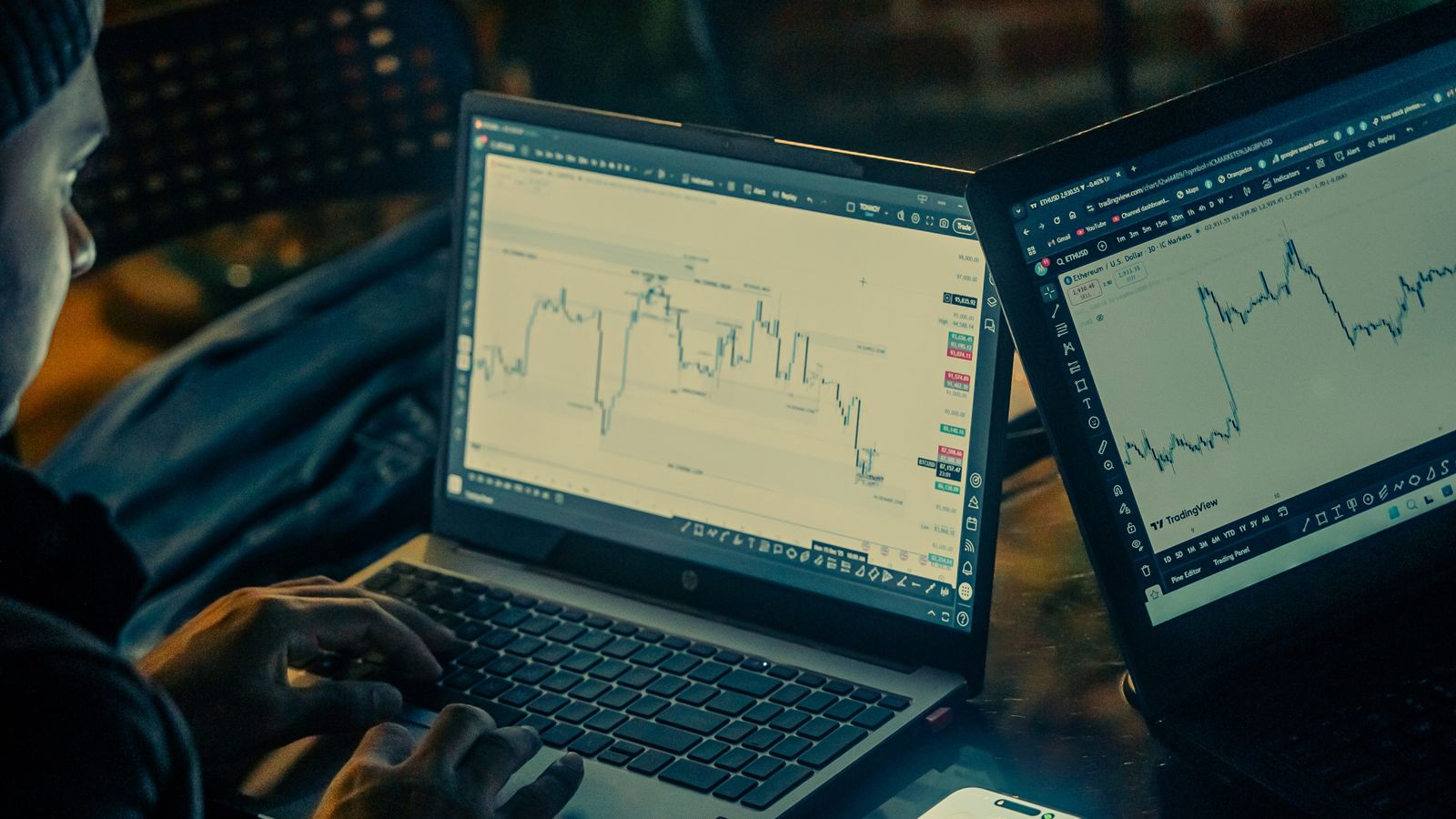
The most common fee trap for beginners buying U.S. stocks is not that fees are completely invisible, but that they only notice the most eye-catching “zero commission” message while overlooking platform fees, regulatory fees, FX conversion costs, ADR depositary fees, margin interest, deposits, withdrawals, and stock transfer fees. U.S. stock trading costs are usually spread across fee disclosures, order pages, trade confirmations, and account statements. They cannot be judged only by promotional pages. If you are opening an account for the first time, placing a small trial order, buying fractional shares, funding across currencies, or planning to hold U.S. stocks for the long term, you should first build a fee-checking process before deciding whether to trade.
Key Takeaways
- Zero commission does not mean zero cost; commission is only one fee item.
- Platform fees, minimum charges, and fee caps affect small-order costs.
- Selling U.S. stocks, ADRs, margin, and transfers may trigger extra fees.
- FX conversion, deposits, withdrawals, and order execution also affect real costs.
- Beginners should check fees in stages: before opening an account, before placing an order, and after execution.
Why Do Beginners Easily Underestimate U.S. Stock Trading Fees?

Beginners tend to underestimate U.S. stock trading fees mainly because they start from the wrong place. Many people first see promotional phrases such as “zero commission,” “low threshold,” or “fractional shares supported,” and assume trading costs are already clear. But real costs are often scattered across fee schedules, order estimates, trade confirmations, account statements, and funding paths. Commission is only one possible charge in securities trading; it does not cover every scenario involving platform fees, regulatory fees, FX conversion, margin, ADRs, deposits, withdrawals, or stock transfers.
Looking Only at “Zero Commission” and Ignoring the Full Cost Structure
“Zero commission” is the easiest concept for beginners to understand, but it does not mean all costs are zero. Investor.gov’s explanation of investment fees reminds investors that fees generally include transaction fees and ongoing fees, and both types reduce the overall value of an investment portfolio. For stock trading, commission is only one starting point. Platform service fees, account service fees, account transfer fees, wire transfer fees, and margin interest may also appear at different stages.
The real question is not simply “Is this platform zero commission?” but “Will this specific order trigger other fees?” If you only look at advertising language, it is easy to mistake a platform’s marketing highlight for a complete fee disclosure.
Looking Only at the Single-Trade Rate and Ignoring Minimum Charges and Trading Frequency
Many beginners start with small trial orders when buying U.S. stocks for the first time, such as buying a few dozen or a few hundred dollars’ worth of shares. The problem is that small orders are especially sensitive to minimum charges. If a platform has a fixed minimum charge per order, the effective fee rate may look higher for small orders even if the headline rate is low.
FINRA’s explanation of fees and commissions points out that buying and selling stocks, bonds, and other investment products usually involves costs, and these costs vary depending on account type, service, and product. For beginners, a small fee on one trade may not look significant, but if you frequently place trial orders or rebalance often, accumulated costs can change your real trading cost.
Looking Only at Successful Order Placement and Ignoring Trade Confirmations and Statement Review
A successful order does not mean the fee check is complete. What you see on the order page is usually an estimate. After execution, you still need to check the execution price, executed quantity, fee deductions, and cash balance changes. Investor.gov’s explanation of trade confirmations notes that confirmations disclose information such as transaction price, commission, broker capacity, and possible mark-up or mark-down when the broker acts as principal.
If beginners only check whether the position appears and do not review trade confirmations and statements, it becomes difficult to know whether the actual charges match expectations. It also becomes difficult to distinguish whether a fee comes from the platform, regulators, external institutions, or the funding path.
| Common Beginner Misconception | Potentially Overlooked Fees | Materials to Check | Typical Scenario |
|---|---|---|---|
| Assuming zero commission means no cost | Platform fees, regulatory fees, external fees | Fee disclosure, order page | First U.S. stock purchase |
| Looking only at the per-share rate | Minimum charges, fee caps | Fee schedule, order estimate | Small trial orders, fractional shares |
| Looking only at buy-side costs | Sell-side regulatory fees, trading activity fees | Sell order page, statement | Selling U.S. stocks |
| Looking only at trading fees | FX conversion, deposits, withdrawals | Funding rules, bank charges | Cross-currency funding |
| Looking only at position P/L | Execution spread, statement deductions | Trade confirmation, account statement | Post-trade review |
Summary: Beginners underestimate U.S. stock trading fees mainly because they treat the most visible promotional message as the full cost structure. Zero commission can lower the barrier to understanding, but it cannot replace fee schedules, order estimates, trade confirmations, and account statements. The real factors affecting your cost may include minimum charges, platform fees, sell-side regulatory fees, FX spreads, ADR depositary fees, margin interest, and transfer fees. A more reliable approach is to break trading costs into three levels: what can be seen before trading, what is estimated at order entry, and what is actually deducted after execution. Checking each level can significantly reduce fee misjudgment.
Commission, Platform Fees, and Minimum Charges: The First Three Costs Beginners Should Understand

Commission, platform fees, and minimum charges are the first three types of costs beginners should understand when buying U.S. stocks. Commission is usually a trading fee charged by a broker for buying or selling securities. Platform fees are usually related to platform services, trading systems, or order processing. Minimum charges affect the real cost of small orders. Looking at only one of these items can lead you to misjudge whether a platform fits your trading habits, especially in small trial orders, fractional share trading, and frequent trading.
What Is Commission, and Why Does Zero Commission Not Mean No Fees?
Commission usually refers to the fee a broker charges when acting as an agent to execute buy or sell trades for you. The problem is that U.S. stock trading costs are not reflected only through commission. Investor.gov’s explanation of trade confirmations notes that when a broker acts as an agent, the customer’s fee is usually called commission; when a broker acts as principal, compensation may appear as a mark-up or mark-down. This means “fees” do not always appear under the name of commission.
Therefore, when beginners see zero commission, they should still check platform fees, external fees, order execution, exchange rates, and account service rules. If these items are not clear, you cannot simply conclude that the trade is low-cost.
Why Platform Fees Can Make Small Orders More Expensive
Platform fees may be calculated based on share quantity, per order, transaction amount, or a mixed method. Their impact varies by order size. Large orders may be more sensitive to fee caps, while small orders are more sensitive to minimum charges. Fractional share orders require special attention to whether separate rules apply.
If you plan to start buying U.S. stocks with small amounts, the key number is not only “how much per share,” but also “what is the minimum charge per order.” The same fixed minimum fee has completely different effects on a $100 order and a $5,000 order. If beginners split orders frequently, minimum charges may also be triggered repeatedly.
Minimum Charges and Fee Caps Should Be Read Together
Minimum charges and fee caps are often overlooked in fee schedules, but they have a major impact on real costs. Minimum charges determine the cost floor for small orders, while fee caps determine the upper limit for large orders. Looking only at a per-share rate or percentage rate cannot show the full result.
If you care about U.S. stock trading fee transparency, you can review Biya U.S. stock trading fees. Biya charges $0 commission for U.S. stock trading, with a platform fee of $0.005 per share, a minimum of $0.99 per order, and a maximum of 1% of trade value. External institution fees and trading activity fees total $0.00396 per share. The fee center also states that for fractional share orders with executed quantity below 1 share, only a 1% platform fee on the total transaction amount is charged, capped at $1. Platform fees, external institution fees, and other charges are subject to the fee center and order page.
| Fee Item | Common Calculation Method | Impact on Small Orders | Impact on Large Orders | Where to Check |
|---|---|---|---|---|
| Commission | Per order, per share, or by amount | If zero, it lowers the basic threshold | Other fees still need checking | Fee disclosure, order page |
| Platform fee | Per share, by amount, or mixed | Minimum charges may raise the cost ratio | Fee caps affect total amount | Fee center, order estimate |
| Minimum charge | Minimum amount per order | Significant impact on small orders | Smaller impact | Fee schedule details |
| Fee cap | Capped by trade value ratio | Usually smaller impact | Limits large-order fees | Fee disclosure |
| Fractional share rules | By amount or special rules | Easy for beginners to overlook | Depends on executed share quantity | Fractional share rules, order page |
Summary: The first step to understanding U.S. stock trading fees is not memorizing every technical term, but distinguishing commission, platform fees, minimum charges, and fee caps. Zero commission only means the commission item is zero. Platform fees may be calculated by share quantity, per order, or transaction amount. Minimum charges can raise the cost ratio for small orders, while fee caps affect large orders. The easiest mistake for beginners is using one single rate to judge all orders. A more reasonable approach is to apply fee rules to your own order amount, share quantity, trading frequency, and whether you are buying fractional shares, then check whether the estimated fee on the order page is consistent.
Regulatory Fees and External Fees: Why Might Selling U.S. Stocks Involve Additional Charges?

Selling U.S. stocks may involve additional charges because some fees are related to regulation, trading activity, or external institutions, and are not the same as platform-set commissions. A common beginner misunderstanding is assuming that if buying seemed inexpensive, selling will be the same. In reality, certain regulatory transaction fees, trading activity fees, or external charges are more common on the sell side. Whether they are passed on to customers, how they are displayed, and how they are rounded should be based on the platform’s fee disclosure, order page, and statement.
SEC Fee / Section 31 Fee Is Often Related to the Sell Side
The U.S. stock market has regulatory transaction fees. The SEC has published the fiscal year 2026 Section 31 fee rate, under which most securities transactions are subject to a rate of $20.60 per million dollars from April 4, 2026. This amount is usually not large, but it shows that U.S. stock trading costs are not determined only by a broker’s promotional page.
Beginners need to note two points. First, this type of fee rate changes over time. Second, whether a platform passes it on to customers and how it appears on the order page and statement depends on the platform’s rules. Therefore, before selling stocks, you should not judge sell-side costs only based on your buy-side experience.
FINRA TAF Is a Regulatory Trading Activity Fee
FINRA’s explanation of the Trading Activity Fee shows that TAF is one of the regulatory fees assessed on FINRA members to cover costs related to examinations, financial monitoring, policy development, rule interpretation, and enforcement. It is generally assessed on transactions in covered securities, with specific applicability and exemption rules.
For beginners, there is no need to memorize every rule, but you should understand one principle: trading activity fees, regulatory fees, clearing-related fees, and platform fees are not the same type of fee. They may appear under different names in statements, or be displayed as external fees, regulatory fees, or other charges on the order page.
External Fees Are Not Necessarily Set by the Platform Itself
External institution fees, regulatory fees, exchange fees, or clearing-related fees are usually different from platform-set commissions and platform fees. A platform can decide how to display, collect, or pass through certain fees, but the source and calculation logic may come from regulators, self-regulatory organizations, exchanges, or clearing systems.
| Fee Name | Common Trigger Scenario | Set Independently by Platform? | Applies to Every Trade? | Where to Check |
|---|---|---|---|---|
| SEC fee / Section 31 fee | Often seen in sell transactions | No, rate is determined by regulatory rules | Not necessarily | Fee schedule, sell order, statement |
| FINRA TAF | Covered securities transactions | No, regulatory-related fee | Not necessarily | Fee disclosure, statement |
| External institution fee | Trading, clearing, or external services | Usually not fully determined by platform | Depends on platform rules | Fee center, order page |
| Trading activity fee | Specific trading activity | Depends on fee source | Not necessarily | Order estimate, statement |
| Platform fee | Use of platform trading services | Usually set by platform | Depends on platform rules | Fee disclosure, order page |
Summary: Additional charges when selling U.S. stocks do not necessarily mean the platform suddenly raised fees, nor do they necessarily indicate an abnormal transaction. Some costs come from regulatory transaction fees, trading activity fees, external institution fees, or clearing-related charges, and they are not the same as commission. The easiest mistake for beginners is applying the cost seen on a buy order directly to a sell order. A safer approach is to check the order page before selling to see whether there is a fee estimate, and then verify the trade confirmation and statement after execution. If a fee name looks unfamiliar, first return to the fee disclosure to check its source, calculation method, applicable trade direction, and rounding rules before deciding whether to contact the platform.
FX Conversion, Deposits, Withdrawals, and Transfers: Costs Can Also Arise Outside Trading
Costs outside trading are often more important than beginners expect. Buying U.S. stocks usually requires thinking about where your funds come from, which currency you fund with, whether FX conversion is needed, whether withdrawals have fees, and whether you may transfer positions in the future. Even if per-trade fees are low, FX spreads, bank wire fees, intermediary bank fees, withdrawal fees, account transfer fees, or securities transfer fees may change your real cost. For international investors, the funding path itself is part of fee checking.
Cross-Currency U.S. Stock Purchases May Involve FX Costs
U.S. stocks are usually priced in U.S. dollars. If your funds are not in U.S. dollars, FX conversion may be involved. FX costs do not always appear as “fees”; they may also be reflected in buy rates, sell rates, and spreads. A common beginner mistake is comparing only trading commissions while overlooking the exchange rate difference when converting from local currency to USD and later from USD back to local currency.
If you use a multi-currency account, you also need to check which currencies the platform supports, when conversion occurs, which currency is credited, whether automatic conversion is used, and whether you can manually choose the exchange rate and settlement currency. For small users, FX spreads may not feel obvious. For larger amounts or frequent conversions, differences in funding paths matter more.
Deposit, Withdrawal, and Wire Transfer Fees Should Be Checked in Advance
Investor.gov’s materials on brokerage miscellaneous fees state that miscellaneous fees may appear under different names, such as mailing and handling fees, administrative service fees, clearing and transfer fees, execution facilities fees, office expenses, supervision fees, or third-party fees. For beginners, deposits and withdrawals are among the easiest steps to overlook.
You should confirm deposit minimums, arrival time, whether intermediary banks are involved, withdrawal fees, refund rules, bank-side charges, and whether different currencies use different paths. If funding rules are not checked before trading, funds may arrive slowly, the credited amount may be lower than expected, or you may only discover costs when withdrawing.
Transfers and Security Holding Methods May Also Involve Fees
If you may switch platforms in the future, you also need to consider transfer fees and how your securities are held. Investor.gov’s explanation of ways to hold securities reminds investors that before opening an account or trading, they should understand broker fees, including securities transfer fees and physical certificate request fees.
For long-term holders, transfer fees may not occur for years. But once they do occur, the amount may be more noticeable than a single trading commission. If beginners only look at trading fees when opening an account, they may only discover account service costs later when switching platforms, transferring out stocks, or closing an account.
| Cost Type | When It Occurs | Common Trigger Action | Easily Overlooked? | How to Check in Advance |
|---|---|---|---|---|
| FX conversion cost | Before funding, before trading, before withdrawal | Local currency to USD, USD back to local currency | Very easy | Check rates, spreads, and settlement currency |
| Deposit fee | When funds enter the account | Bank transfer, wire, third-party route | Easy | Check both platform and bank rules |
| Withdrawal fee | When funds leave the account | Withdrawal to bank or another account | Easy | Check currency, amount, and intermediary fees |
| Account transfer fee | When switching platforms | Transferring securities or cash | Very easy | Check transfer rules before account opening |
| Account closing fee | When closing or emptying an account | Account closure or asset withdrawal | Easy | Check account service fee disclosure |
Summary: Buying U.S. stocks is not only about calculating order fees, because trading is only one part of the whole funding process. What beginners really need to check is the full path: funds entering the account, FX conversion, order placement, holding, selling, withdrawing, or transferring. Low commission does not mean cheap funding. Clear platform fees do not mean low FX costs. Low order fees do not mean future transfers will be free. In cross-currency trading and long-term holding scenarios, funding paths, account services, and transfer rules all affect the final experience. Checking these items before opening an account is more effective than trying to fix problems after trading.
ADRs, Margin, and Special Orders: Advanced Fee Traps Beginners Often Miss
ADRs, margin, and special orders may not be encountered immediately by every beginner, but once they appear, they can easily lead to fee misjudgment. ADRs may involve depositary service fees. Margin accounts may generate interest and amplify losses. Pre-market and after-hours trading, market orders, low-liquidity stocks, and low-priced stocks may involve bid-ask spreads, slippage, and partial fills. These costs may not all be labeled as “fees,” but they affect real trading results.
Buying ADRs May Involve Depositary Service Fees
An ADR is a U.S. depositary receipt representing an interest in a non-U.S. company’s shares. SEC investor materials on American Depositary Receipts explain that an ADR depositary bank may charge ADR holders a custody fee, also called a depositary services fee, under the deposit agreement. These services may include registration, compliance, dividend payment, communication, and record maintenance.
What often confuses beginners is that ADR fees may not appear immediately at purchase. They may appear during the holding period, when dividends are paid, or on a specific charge date. Fees may be deducted from dividends or passed through to customers via brokerage accounts. Therefore, before buying an ADR of a foreign company, you should check whether the ADR has depositary fees, how often they are charged, and how they appear on statements.
Margin Accounts Involve Interest and Forced Liquidation Risk
The core of a margin account is borrowing money to invest. Investor.gov’s explanation of margin accounts states that a broker lends cash to an investor to buy securities, using the account as collateral. Margin increases buying power, but it also exposes investors to greater losses.
Margin accounts also involve financing interest, minimum margin, maintenance margin, margin calls, and forced liquidation. FINRA’s explanation of margin calls reminds investors that brokers may set house requirements higher than minimum regulatory requirements and may raise those requirements. If beginners only look at increased buying power without understanding interest and forced liquidation rules, they may mistake leverage for free credit.
The Cost of Special Orders Does Not Only Come from Explicit Fees
Pre-market and after-hours trading, market orders, low-liquidity stocks, low-priced stocks, and highly volatile stocks all make execution price more important. Even if explicit fees are low, wider bid-ask spreads, partial fills, price deviation, and failed cancellations may make the actual cost higher than expected.
Beginners should understand the difference between market orders and limit orders. Market orders prioritize quick execution, but the execution price may be worse than expected. Limit orders can control the maximum buying price or minimum selling price, but they do not guarantee execution. Pre-market and after-hours trading usually has weaker liquidity and potentially greater price volatility.
| Special Scenario | Possible Fee or Cost | Why It Is Easily Overlooked | Pre-Trade Check | Post-Trade Check |
|---|---|---|---|---|
| ADR | Depositary service fee | Not necessarily charged at purchase | Check ADR documents and fee disclosure | Check statement fee name |
| Margin account | Financing interest, forced liquidation risk | Easy to focus only on buying power | Check interest rate and maintenance margin | Check interest and margin status |
| Pre-market / after-hours | Spread, slippage, liquidity risk | Not necessarily shown as a fee | Check trading session and quote | Check execution price and partial fills |
| Market order | Execution price deviation | Fast execution but uncertain price | Compare bid-ask and volatility | Check actual average execution price |
| Low-priced stock | Large-share regulatory fees, spread | Low share price but large share quantity | Check share quantity and fee estimate | Check fee ratio |
Summary: Advanced fee traps are characterized by the fact that they may not appear as “commission” or “platform fee.” ADR depositary fees come from depositary bank services and may be deducted during the holding period. Margin account interest and forced liquidation risk come from the account structure of borrowing to invest. The cost of special orders may appear through bid-ask spreads, slippage, partial fills, and execution prices. Beginners do not necessarily need to use these features immediately, but they must know whether they have entered a special scenario before trading. Once ADRs, margin, pre-market or after-hours trading, or market orders are involved, you can no longer judge costs only by the standard stock buy fee rate.
How Can Beginners Build a U.S. Stock Fee-Checking Process?
The most effective way for beginners to avoid U.S. stock fee traps is to build a “three-stage fee check” process: review full fee rules before opening an account, check funding paths and order estimates before funding and trading, and review confirmations and account statements after execution. This process is not complicated, but it connects promotional pages, fee disclosures, order pages, and statements. It is especially important to complete the full process when buying for the first time, selling for the first time, buying fractional shares for the first time, or trading ADRs for the first time.
Before Opening an Account: Check Fee Schedules, Account Rules, and Service Availability
Before opening an account, you should first confirm commission, platform fees, regulatory fees, fractional share rules, ADR fees, margin rates, deposits, withdrawals, transfers, account maintenance, service availability by region, and identity verification requirements. If the platform provides Form CRS or similar disclosures, you can also use them to understand the service scope, fee relationship, and potential conflicts of interest.
If you are still screening stocks, you can use U.S. stock search to review basic information about different securities before returning to trading fees, risks, and order rules for assessment. Being able to look up a stock does not mean it is suitable for immediate trading. Clear trading fees also do not reduce investment risk.
Before Placing an Order: Check Order Estimates, Order Types, and Fee Breakdown
Before placing an order, make fee checking a fixed routine: confirm the ticker, company name, buy/sell direction, share quantity or amount, order type, account currency, estimated fees, exchange rate, trading session, and order validity. The order page is closer than a promotional page to the real cost of a single trade, because it shows an estimate based on your specific trade conditions.
If you use a global multi-asset trading wallet such as Biya, you can check trading fees and funding paths together. Biya supports converting USDT into major fiat currencies such as USD or HKD, and supports U.S. stock trading, Hong Kong stock trading, and cryptocurrency trading. Availability of related services depends on user location, identity verification results, platform rules, and applicable laws and regulations.
After Execution: Review Trade Confirmations and Account Statements
After execution, check at least three things: whether the execution price matches expectations, whether the executed share quantity is complete, and whether fees and cash balance changes can be explained. Trade confirmations are suitable for verifying a single order, while account statements are better for reviewing total fees, cash flows, and holding changes over a period.
If you want to review supported markets, assets, and account features on mobile, you can further explore the Biya App. Biya charges $0 commission for U.S. stock trading. Platform fees, external institution fees, and other charges are subject to the fee center and order page.
| Check Stage | Materials to Review | Core Question | Suggested Action |
|---|---|---|---|
| Before account opening | Fee disclosure, account rules | How does the platform charge, and is the service available? | Do not open an account if fees are unclear |
| Before funding | Funding path, exchange rate, arrival rules | How will the money enter the account, and what will it cost? | Confirm currency and intermediary fees first |
| Before placing an order | Order page, fee estimate | How much is this trade expected to deduct? | Pause if the fee is unclear |
| After execution | Trade confirmation, trading record | Are execution price and fees consistent? | Check abnormal items one by one |
| Monthly review | Account statement, cash activity | Is total cost higher than expected? | Record real trading costs |
| Abnormal fees | Fee schedule, customer support records, statement | Is the fee source explainable? | Check rules before contacting support |
Summary: Beginners do not need to master every complex rule to avoid U.S. stock fee traps, but they do need to develop a fixed checking process. Reviewing fee disclosures and account rules before opening an account helps avoid being influenced only by marketing language. Checking the funding path before deposits helps prevent overlooking FX conversion, wire transfer, and withdrawal costs. Reviewing the order estimate before trading helps confirm the actual cost of that trade. Checking confirmations and statements after execution helps verify real deductions. This process is suitable for small trial orders, long-term holding, and cross-currency trading. Fees are not an afterthought after trading; they should be part of the core decision before trading.
Beginners Should Understand the Fee Structure Before Buying U.S. Stocks
For beginners buying U.S. stocks, the real priority is not only finding “zero commission” promotions, but understanding the fee structure and where fees appear. Commission, platform fees, regulatory fees, external institution fees, FX conversion costs, ADR depositary fees, margin interest, deposits, withdrawals, and transfer rules may appear separately in fee disclosures, order pages, trade confirmations, and account statements. The earlier you build a fee-checking process, the less likely you are to be surprised when selling, withdrawing, transferring, or holding special products.
If related services are available in your location, you can further review Biya’s U.S. stock trading fee disclosures, order page, and account details. Biya is a global multi-asset trading wallet that supports converting USDT into major fiat currencies such as USD or HKD, and supports U.S. stock trading, Hong Kong stock trading, and cryptocurrency trading. Biya charges $0 commission for U.S. stock trading. Platform fees, external institution fees, and other charges are subject to the fee center and order page. The information above only explains public market information, trading rules, and fee structures, and does not constitute investment advice.
FAQ
Is It Enough for Beginners to Look Only at Commission When Buying U.S. Stocks?
It is not enough for beginners to look only at commission when buying U.S. stocks. Commission is only one trading cost. You should also check platform fees, regulatory fees, external institution fees, FX conversion costs, deposit and withdrawal fees, ADR depositary fees, and margin interest. Specific fees should be based on the platform’s fee disclosure, order page, and account statement.
What Is the Difference Between U.S. Stock Platform Fees and Commission?
U.S. stock commission is usually related to brokerage trading, while platform fees are usually related to platform services, trading systems, or order processing. Different platforms may calculate these fees per share, per order, or by transaction amount. Beginners should also check minimum charges, fee caps, and order estimates.
Why Are There Extra Charges When Selling U.S. Stocks?
Extra charges when selling U.S. stocks may come from regulatory transaction fees, trading activity fees, or external institution fees. A buy order with little visible fee does not mean the sell order will be identical. The specific amount, applicable direction, and display method should be based on the platform’s fee schedule, order page, trade confirmation, and statement.
What Fees Should Beginners Watch for When Buying Fractional U.S. Shares?
When buying fractional U.S. shares, beginners should pay attention to minimum charges, percentage-based charges, executed share quantity rules, and order estimates. Fractional shares can be useful for small allocations, but the fee ratio may be higher for small orders. Before placing an order, confirm whether the platform has separate rules for orders below one share.
Why Do U.S. Stock ADRs Have Depositary Fees?
U.S. stock ADRs may have depositary fees because ADRs are issued by depositary banks to represent interests in foreign shares. Depositary service fees may be deducted from dividends or charged through a brokerage account. The amount, timing, and display method should be checked in ADR documents and account statements.
What Fee Risks Come With U.S. Stock Margin Accounts?
U.S. stock margin accounts may generate financing interest and amplify losses. Beginners should first understand minimum margin, maintenance margin, margin calls, and forced liquidation rules. Whether margin is suitable depends on risk tolerance, account rules, and applicable local regulations.
*This article is provided for general information purposes and does not constitute legal, tax or other professional advice from BiyaPay or its subsidiaries and its affiliates, and it is not intended as a substitute for obtaining advice from a financial advisor or any other professional.
We make no representations, warranties or warranties, express or implied, as to the accuracy, completeness or timeliness of the contents of this publication.
Related Blogs of

Why Frequent U.S. Stock Traders Should Pay More Attention to Platform Fees and External Fees


5 Costs U.S. Stock Trading Beginners Most Often Overlook: Commissions, Platform Fees, FX Rates, and Slippage


Buying U.S. Stock ETFs vs. Individual Stocks: How Are the Trading Fees Different?


What Should You Do If Extra Fees Appear on Your U.S. Stock Trading Statement? A Beginner’s Guide
Choose Country or Region to Read Local Blog
 Australia
 Austria
 Belgium
 Canada
 Cyprus
 Czech Republic
 Denmark
 Estonia
 Finland
 France
 Germany
 Greece
 Hong Kong
 India
India Indonesia
 Ireland
 Italy
Italy Japan
Japan Latvia
 Lithuania
 Luxembourg
 Malaysia
 Malta
Malta Morocco
 Nepal
Nepal Netherlands
 New Zealand
 Norway
 Pakistan
 Philippines
 Poland
 Portugal
 Romania
 Singapore
 Slovakia
 Slovenia
 South Africa
 South Korea
 Spain
Spain Sweden
 Thailand
 The United States
 Turkey
 United Arab Emirates
 United Kingdom
 Vietnam
Contact Us




BIYA GLOBAL LLC is registered with the Financial Crimes Enforcement Network (FinCEN), an agency under the U.S. Department of the Treasury, as a Money Services Business (MSB), with registration number 31000218637349, and regulated by the Financial Crimes Enforcement Network (FinCEN).
BIYA GLOBAL LIMITED is a registered Financial Service Provider (FSP) in New Zealand, with registration number FSP1007221, and is also a registered member of the Financial Services Complaints Limited (FSCL), an independent dispute resolution scheme in New Zealand.