What Is the Difference Between SpaceX and Rocket Lab? A Comparison of Commercial Space Companies




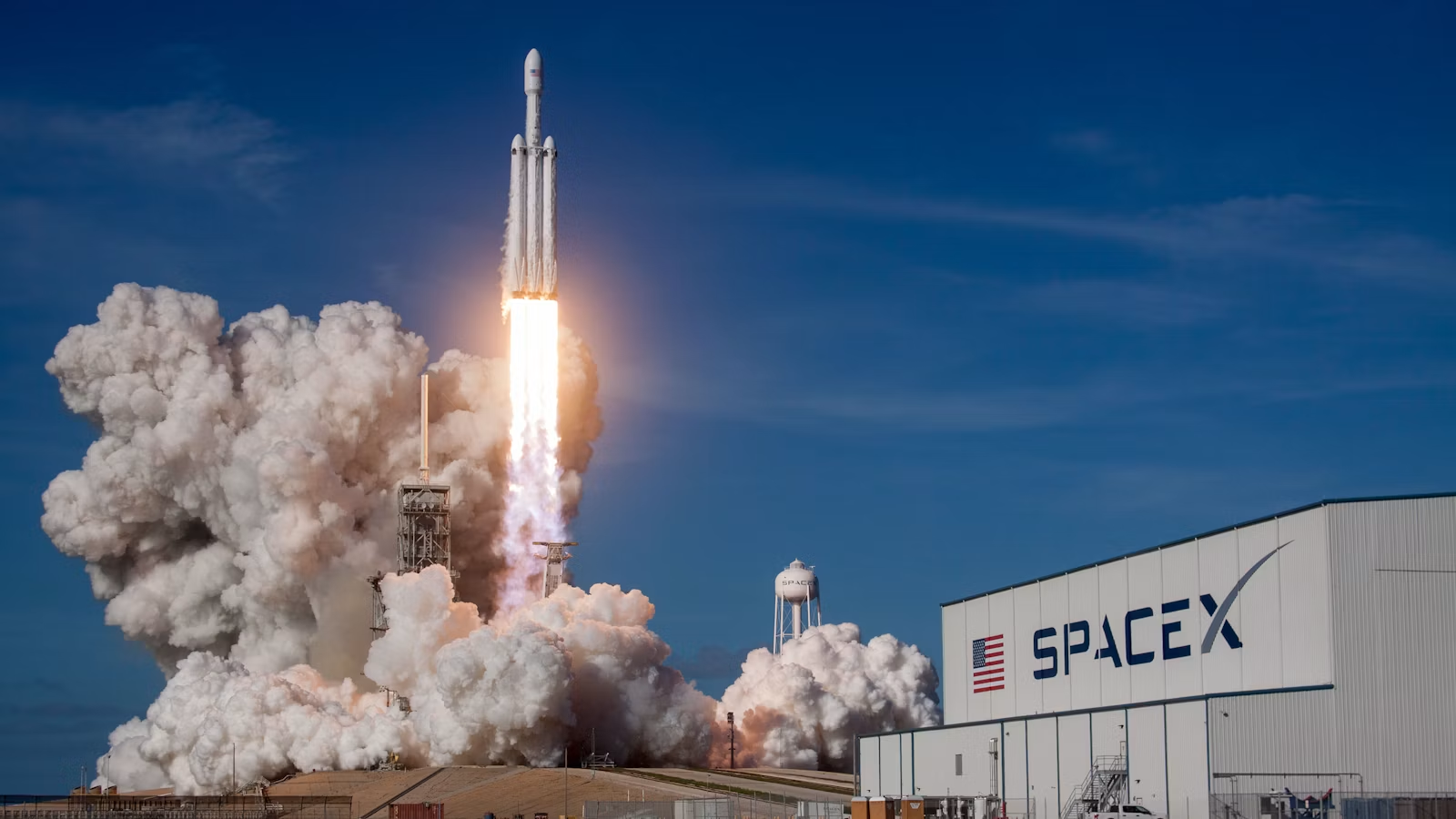
SpaceX and Rocket Lab are both commercial space companies, but they are not simple peers of the same scale or business model. SpaceX is more like an integrated space infrastructure company built around “heavy-lift launch + Starlink satellite internet + human spaceflight + deep-space transportation.” Rocket Lab is more like a public-market commercial space company built around “small and medium launch + space systems + satellite platforms.” When comparing the two, you should focus on rocket capability, business model, customer structure, financial stage, listing status, and risk boundaries, rather than simply asking which company is “more like SpaceX.”
Key Takeaways
- SpaceX is larger in scale and covers launch, Starlink, and human spaceflight.
- Rocket Lab focuses more on small launch, Neutron, and space systems.
- SpaceX is tied to an IPO narrative, while Rocket Lab is already publicly traded.
- Starlink makes SpaceX closer to a communications infrastructure company.
- Rocket Lab’s strengths are vertical integration and small-satellite services.
- The two companies have different risks and should not be compared by asking “which is better.”
What Is the Core Difference Between SpaceX and Rocket Lab?
The core difference between SpaceX and Rocket Lab lies in business scale, rocket capacity, and business model. SpaceX has developed a multi-business portfolio that includes Falcon, Starship, Dragon, and Starlink, covering heavy-lift launch, satellite internet, human spaceflight, and deep-space missions. Rocket Lab began with the Electron small launch vehicle and has expanded toward the Neutron medium-lift rocket and space systems. In simple terms, SpaceX is more like a space infrastructure platform, while Rocket Lab is more like a vertically integrated commercial space manufacturing and launch company.

SpaceX’s Positioning: An Integrated Space Infrastructure Company
SpaceX should not be understood only as a company that “launches rockets.” Its underlying logic is to first reduce the cost of reaching orbit through rockets, and then build a broader space infrastructure narrative through its own satellite network, human spaceflight, government missions, and future deep-space transportation.
At the rocket level, Falcon 9 has become the representative product of SpaceX’s high-frequency launch and reusability capability. SpaceX describes Falcon 9 as the world’s first orbital-class reusable rocket, which is an important foundation for its cost and cadence advantages in the commercial launch market. At the next-generation capacity level, Starship is designed as a fully reusable transportation system, with the goal of carrying more than 100 tons of payload to orbit in a fully reusable configuration.
More importantly, SpaceX also has Starlink. Starlink extends SpaceX from “launching satellites for customers” to “operating its own satellite communications network.” This step makes SpaceX more than a launch service provider and moves it closer to a low-Earth orbit communications infrastructure company.
Rocket Lab’s Positioning: Small Launch and Space Systems
Rocket Lab started from a different position than SpaceX. It entered the market with the Electron small launch vehicle, mainly serving small satellites, dedicated orbits, government missions, and commercial customers. Electron is designed for small payloads to low-Earth orbit, and official materials indicate a low-Earth orbit payload capacity of about 300 kg. This positioning differs from Falcon 9’s medium- and heavy-lift launch market and is better suited for customers that want to send small satellites to specific orbits with more flexible mission arrangements.
Rocket Lab has not remained only a small-launch company. It is developing Neutron, a medium-lift reusable rocket. Official materials indicate a low-Earth orbit payload capacity of about 13,000 kg, with target markets including constellation deployment, cargo resupply, and interplanetary missions. At the same time, Rocket Lab is also developing its Space Systems business, providing satellite platforms, components, and spacecraft solutions, so its growth is not dependent only on launch frequency.
Why Rocket Lab Should Not Simply Be Called a “Small SpaceX”
Rocket Lab is often called a “small SpaceX” by the market. This description helps explain that both companies compete in the commercial space sector, but it can also create misunderstanding. SpaceX has Starlink, Dragon, Starship, human spaceflight, and deep-space transportation narratives; Rocket Lab’s key points are Electron launch records, space systems revenue, public-market transparency, and Neutron’s medium-lift commercialization.
Both companies are trying to solve the question of “how to access space more efficiently,” but their target markets, revenue structures, and capital-market attributes are very different. SpaceX is expanding from launch capability into communications networks and deep-space infrastructure. Rocket Lab is expanding from small launch into space systems manufacturing and medium-lift launch.
| Comparison Dimension | SpaceX | Rocket Lab |
|---|---|---|
| Company Positioning | Integrated space infrastructure company | Launch and space systems company |
| Core Rockets | Falcon 9, Falcon Heavy, Starship | Electron, Neutron |
| Business Extensions | Starlink, Dragon, human spaceflight, deep-space missions | Space systems, satellite platforms, components |
| Market Status | IPO / listing narrative under attention | Publicly traded company |
| Main Highlights | Scale, LEO network, heavy-lift capacity | Small launch, vertical integration, Neutron |
Section Summary: The difference between SpaceX and Rocket Lab is not simply about “which is more advanced,” but about different stages of development and different commercial models. SpaceX represents a larger integrated space infrastructure narrative, combining rocket launch, Starlink satellite internet, human spaceflight, and deep-space transportation within one business system. Rocket Lab represents a more typical vertically integrated commercial space company in the public market. It entered through small launch and is expanding into space systems and medium-lift rockets. When comparing the two, you should first distinguish rocket capacity, business boundaries, revenue sources, and capital-market status before discussing investment value or industry position. Calling Rocket Lab a “small SpaceX” may be intuitive, but it overlooks key differences such as Starlink, a proprietary satellite network, human spaceflight, and overall business scale.
Rocket Capability Comparison: How Are Falcon, Starship, Electron, and Neutron Different?
The most obvious difference between SpaceX and Rocket Lab lies in rocket capability. SpaceX’s Falcon 9 has already achieved high-frequency reuse, while Starship targets super-heavy launch and deep-space transportation. Rocket Lab’s Electron is designed for dedicated small-satellite launches, while Neutron attempts to enter the medium-lift reusable rocket market. In short, SpaceX covers mature medium- and heavy-lift launch as well as next-generation super-heavy capacity, while Rocket Lab is expanding from small launch toward medium-lift capacity.

Falcon 9 vs. Electron: Differences in Mature Launch Capability
Falcon 9 and Electron are both rockets already used in commercial missions, but they serve different markets. Falcon 9 is a medium- to heavy-lift launch vehicle that can support commercial satellites, NASA missions, defense missions, Starlink deployment, and human spaceflight-related missions. SpaceX’s Falcon user guide also presents reusability as an important feature, reflecting the maturity of the Falcon family in reflights, mission adaptation, and commercial launch.
Electron represents the small-launch market. Rocket Lab disclosed in its 2025 annual report that by the end of 2025, Electron had delivered more than 200 spacecraft to orbit through 75 successful missions, with customers including NASA, DARPA, NRO, and multiple commercial spacecraft operators. This shows that Electron’s value is not in large payload capacity, but in providing relatively flexible and dedicated launch services for small-satellite customers.
Starship vs. Neutron: Next-Stage Capacity Comparison
Starship and Neutron are both important next-stage variables for their respective companies, but they are not rockets in the same class. Starship is SpaceX’s super-heavy fully reusable target. If it achieves stable commercialization, it could affect next-generation Starlink deployment, lunar missions, deep-space transportation, and the future cost structure of orbital infrastructure.
Neutron is Rocket Lab’s key to entering the medium-lift launch market. Its goal is not to directly copy Starship, but to fill the market space between Electron and larger rockets, serving constellation deployment, government missions, and medium commercial payloads. For Rocket Lab, whether Neutron can be commercialized successfully will determine whether it can move from a small-launch company into a more scalable launch service provider.
Reusability Is Not the Same-Level Comparison
Reusability is a keyword both companies emphasize, but it cannot be reduced to whether a rocket can return. SpaceX’s Falcon 9 reuse has already been highly commercialized and has created real advantages in launch cadence and cost. Starship’s full reusability is still undergoing testing and validation, offering greater technical upside but also higher execution risk. Rocket Lab is exploring Electron recovery and Neutron’s reusable architecture. Rocket Lab’s reusable rockets materials show that Neutron uses a design in which the first stage and fairing return together.
The meaningful comparison of reusability is not whether the rocket can come back, but success rate, refurbishment cost, reflight cycle, launch price, and whether customers are willing to pay for that capability.
| Rocket | Company | Main Positioning | Key Highlight | Risk Point |
|---|---|---|---|---|
| Falcon 9 | SpaceX | Mature medium- and heavy-lift commercial launch | High-frequency reuse, mission experience | Competition and regulation |
| Starship | SpaceX | Super-heavy, deep-space, and large-scale deployment | Massive capacity, full reusability target | Testing, regulation, technical execution |
| Electron | Rocket Lab | Dedicated small-satellite launch | Flexible orbits, dedicated missions | Small-launch market size |
| Neutron | Rocket Lab | Medium-lift reusable rocket | Constellation deployment, government missions | Commercialization not yet proven |
Section Summary: Rocket capability is the first major difference between SpaceX and Rocket Lab. SpaceX has already proven high-frequency reuse with Falcon 9 and is using Starship to pursue greater capacity and lower unit launch costs. Rocket Lab has built a record in the small-launch market through Electron and is using Neutron to enter the larger medium-lift market. When comparing the two, avoid looking only at rocket size. Mission type, reuse maturity, launch cadence, customer demand, and whether future capacity can be delivered are equally important. Falcon 9’s strength lies in mature commercialization, while Starship’s strength lies in long-term upside. Electron’s strength lies in dedicated small-satellite launch, while Neutron’s key question is medium-lift commercialization. These four rockets operate in different market layers and cannot be judged by a single metric.
Business Model Comparison: How Does SpaceX Make Money, and How Does Rocket Lab Grow?
The biggest business model difference between SpaceX and Rocket Lab is that SpaceX has expanded from launch services into Starlink satellite internet, human spaceflight, government contracts, and future space infrastructure. Rocket Lab has expanded from launch services into space systems, satellite platforms, component manufacturing, and future Neutron launch services. SpaceX’s revenue story is larger and more complex, while Rocket Lab’s revenue logic is easier to break down into two lines: launch and space systems.

SpaceX: Launch Services + Starlink + Government Missions
SpaceX’s core is not single-launch revenue, but a combination of “launch capability + proprietary satellite network + government and commercial missions.” Falcon 9 provides high-frequency launch capability for external customers and Starlink. Dragon participates in NASA crewed and cargo missions. Starship carries the narrative of next-generation heavy-lift capacity and lunar / Mars missions, while Starlink converts satellite deployment into ongoing communications services.
Starlink is one of the clearest business model differences between SpaceX and Rocket Lab. Starlink’s network update shows that SpaceX plans to begin launching third-generation Starlink satellites in the first half of 2026, with the new generation designed to increase network capacity. This means SpaceX does not only earn launch service fees; it may also generate recurring service revenue from global broadband, enterprise connectivity, aviation and maritime communications, and direct-to-cell scenarios.
Rocket Lab: Launch Services + Space Systems
Rocket Lab’s growth path can be more clearly divided into two lines: Launch Services and Space Systems. Launch Services centers on Electron and future Neutron. Space Systems includes satellite platforms, components, propulsion systems, solar, power, structures, and mission solutions. Rocket Lab’s Spacecraft Solutions include Photon, Pioneer, Lightning, Explorer, and other spacecraft solutions, showing that it is no longer just a rocket launch company.
The significance of Space Systems is revenue diversification. If a company relies only on launch frequency, revenue can be affected by mission cycles, weather, customer scheduling, and launch windows. Space Systems can serve a wider range of satellite manufacturing, government programs, and commercial constellation customers. According to Rocket Lab’s 2025 full-year results, its 2025 revenue reached $602 million, up 38% year over year, with growth driven by increased Electron launches and the expansion of its Space Systems business.
Customer Structure: Government, Commercial Customers, and Constellation Operators
Both SpaceX and Rocket Lab have government and commercial customers, but their structures differ. SpaceX’s customers include NASA, the U.S. government, defense customers, commercial satellite customers, and Starlink users. It operates across B2B, B2G, and consumer / enterprise communications markets, making its business more complex.
Rocket Lab’s customer structure is more focused on government agencies, commercial satellite operators, defense and intelligence customers, and space systems customers. Its 2025 annual report listed customers including NASA, DARPA, NRO, BlackSky, Canon, Kinéis, Capella Space, Planet, OHB Group, and Synspective. This customer structure shows that Rocket Lab’s growth depends on launch missions, space systems orders, and the continuity of government / commercial customer programs.
| Business Model Dimension | SpaceX | Rocket Lab |
|---|---|---|
| Launch Services | Falcon high-frequency launch; Starship expands heavy-lift capacity | Electron small launch; Neutron enters medium-lift market |
| Proprietary Network | Starlink low-Earth orbit satellite internet | No proprietary global communications network of the same scale |
| Space Systems | Internal synergy through Starlink, Dragon, and Starship | Space Systems provides satellite platforms and components to external customers |
| Government Missions | NASA, defense, human spaceflight, lunar missions | NASA, NRO, defense, and commercial small-satellite missions |
| Revenue Upside | Launch, communications, government contracts, and future infrastructure | Launch growth, Space Systems, and Neutron commercialization |
Section Summary: SpaceX’s business model is more like “proprietary infrastructure + launch capability + long-term service revenue,” while Rocket Lab’s model is more like “launch services + space systems manufacturing + medium-lift rocket expansion.” Because of Starlink, SpaceX has a stronger recurring service revenue narrative, but it also faces higher business complexity, capital expenditure, and technology execution pressure. Rocket Lab’s advantages lie in public-market transparency, vertical integration, and clearer business segments. When comparing the two, do not only look at which company launches more rockets; look at how they convert technical capability into orders, revenue, and cash flow. SpaceX’s upside comes from the synergy among networks, launch capacity, and infrastructure, while Rocket Lab’s key variables are stable Electron launches, continued Space Systems growth, and whether Neutron can successfully open a larger medium-lift launch market.
Capital Market Comparison: Why Is Rocket Lab Tradable While the SpaceX IPO Draws More Attention?
Rocket Lab is already a publicly traded company, while SpaceX has long been in the private market. This is why the SpaceX IPO is more likely to become a valuation event for the commercial space sector. Rocket Lab’s financial reports, share price, and announcements can be tracked continuously by investors. If SpaceX goes public, it may provide a larger public valuation anchor for the entire commercial space industry and affect related ETFs, index funds, and thematic stocks.
Rocket Lab Has Stronger Public-Market Attributes
Rocket Lab is already traded in the public market, so investors can continuously track its financial reports, orders, launch records, cash flow, financing arrangements, and share price performance. This is important for ordinary investors because commercial space is technically complex and information gaps are large. Continuous disclosure helps the market evaluate business progress more concretely.
Rocket Lab’s advantage is not that it is “more like SpaceX,” but that it already provides an observable, tradable, financially analyzable commercial space sample. Investors can review its annual reports, quarterly results, launch mission announcements, backlog, and Space Systems progress before judging whether its valuation is reasonable.
The SpaceX IPO Is More Like an Industry Repricing Event
The SpaceX IPO draws more attention because its scale, Starlink network, and Starship’s long-term space infrastructure narrative could affect the valuation framework for the commercial space industry. According to SpaceX’s public SEC S-1 registration statement, the market has begun to see more complete business and risk disclosures. At the same time, Reuters reporting on SpaceX IPO progress has kept the market focused on its listing timing, offering size, valuation, and trading arrangements.
The impact of such an IPO is not limited to SpaceX itself. Rocket Lab, commercial space ETFs, satellite communications theme stocks, and defense space companies may all receive attention as the market reassesses industry valuation. But this attention is not a guaranteed positive. Capital flows may amplify volatility, and valuation comparisons may also pressure some companies.
How ETFs, Indices, and Thematic Stocks May Be Affected
After SpaceX lists, commercial space ETFs, innovation technology ETFs, and defense space ETFs may be searched again, and Rocket Lab may also attract attention as a “tradable SpaceX comparison sample.” But the two are not equivalent, and investors should not automatically assume that Rocket Lab will benefit just because SpaceX IPO attention rises.
Index inclusion, ETF rebalancing, and thematic capital may affect short-term trading sentiment, but they do not automatically improve company fundamentals. What determines Rocket Lab’s long-term performance is still Electron launch history, Space Systems revenue, Neutron progress, cash flow, and financing capacity. What determines SpaceX’s post-listing performance is pricing, free float, Starlink growth, Starship execution, and risk disclosures.
| Capital Market Dimension | SpaceX | Rocket Lab |
|---|---|---|
| Listing Status | IPO / listing process under attention | Publicly traded |
| Information Disclosure | IPO filings and company disclosures gradually becoming public | Continuous financial reports, announcements, annual reports |
| Market Impact | May become an industry valuation anchor | Public-market commercial space observation sample |
| ETF Impact | May affect indices and thematic ETFs after listing | May already appear in related thematic allocations |
| Investor Misunderstanding | Treating IPO heat as guaranteed returns | Treating Rocket Lab directly as a SpaceX substitute |
If you only want to first check publicly traded U.S. stocks related to commercial space, you can use U.S. stock search to review companies, sectors, and trading information, then combine that with financial reports, prospectuses, and ETF holdings for further judgment. A stock search tool can help you understand public-market information, but it cannot replace independent research and risk assessment.
Section Summary: The capital-market difference between Rocket Lab and SpaceX is just as important as the business difference. Rocket Lab already provides a continuously observable public-market sample, allowing investors to track its business progress through financial reports, announcements, and share price performance. The SpaceX IPO could become a repricing event for the commercial space industry because its scale, Starlink, Starship, and low-Earth orbit infrastructure narrative may affect how the market compares valuations across the sector. Investors should avoid two misunderstandings: treating SpaceX IPO heat as a broad guaranteed positive for all commercial space stocks, and treating Rocket Lab directly as a SpaceX substitute. A better approach is to analyze financial disclosure, valuation, business relevance, and risk structure separately, then determine the different roles the two companies play in the industry chain and in an investment portfolio.
From an Investment Perspective, What Opportunities and Risks Do SpaceX and Rocket Lab Each Have?
From an investment perspective, SpaceX’s opportunities lie in scale, Starlink, heavy-lift capacity, government contracts, and future space infrastructure. Its risks lie in high valuation, technology execution, regulation, Starship testing, and capital expenditure. Rocket Lab’s opportunities lie in public-market transparency, Electron’s launch record, Space Systems expansion, and Neutron commercialization. Its risks lie in smaller scale, loss pressure, Neutron execution, financing needs, and competition in small launch.
SpaceX’s Opportunities: Scale, Starlink, and Starship
SpaceX’s biggest advantage is business synergy. It can use Falcon and, in the future, Starship to deploy its own Starlink network, then use Starlink to generate long-term service revenue. At the same time, it can serve NASA, defense customers, commercial satellite customers, and deep-space missions. Compared with companies that only provide launch services, SpaceX’s business is closer to an “infrastructure platform.”
SpaceX’s opportunity also comes from Starship. If Starship can successfully increase payload capacity and reduce unit launch costs, it may affect next-generation Starlink deployment, lunar missions, Mars missions, and future orbital infrastructure. But Starship is still in ongoing testing, and Reuters reporting on FAA oversight investigations also reminds the market that technology progress, regulatory review, and launch safety remain important risk boundaries.
Rocket Lab’s Opportunities: Public-Market Sample, Electron, and Space Systems
Rocket Lab’s opportunity lies in the fact that it is already a publicly trackable commercial space company. Electron has built a record in small launch, Space Systems has increased revenue diversification, and Neutron is the key variable for entering a larger market. For investors, Rocket Lab is more analyzable than SpaceX before a formal public listing because it already has continuous financial reports and trading data.
Rocket Lab’s strength also lies in vertical integration. It does not only launch rockets; it also provides satellite platforms, components, and mission solutions, which can help improve customer stickiness and business coverage. But its risks are also direct: it remains far smaller than SpaceX, profitability still needs to be observed, Neutron has not yet been fully commercialized, and long-term R&D and manufacturing investment may create financing needs.
Risks Shared by Both Companies
Both SpaceX and Rocket Lab operate in an industry with high capital expenditure, high technical barriers, and heavy regulatory constraints. Technology risks include launch failure, mission delays, reusability falling short of expectations, satellite failure, and new vehicle development delays. Regulatory risks include launch licenses, space debris, spectrum, national security review, and access to international markets.
Capital expenditure is also a shared risk. Rockets, satellites, ground equipment, manufacturing facilities, and testing processes all require long-term investment, and commercial space companies often need years to validate their business models. Market risk should not be ignored either: when commercial space is hot, valuations can rise quickly; when sentiment cools or technology milestones disappoint, stock volatility can also increase.
| Risk / Opportunity | SpaceX | Rocket Lab |
|---|---|---|
| Main Opportunities | Starlink, Starship, scale effects | Electron, Space Systems, Neutron |
| Main Risks | High valuation, Starship execution, regulation | Smaller scale, Neutron execution, financing |
| Revenue Quality | Launch + communications + government missions | Launch + space systems |
| Technology Variables | Full reusability, heavy-lift launch, satellite network | Small-launch reliability, medium-lift commercialization |
| Investor Focus | IPO pricing, risk factors, index impact | Financial reports, orders, cash flow, launch record |
Section Summary: From an investment perspective, SpaceX and Rocket Lab each have opportunities and risks. SpaceX’s strengths are scale, Starlink, and business synergy. Rocket Lab’s strengths are public-market transparency, Electron’s record, and vertical integration. SpaceX’s risks are more concentrated in high valuation, Starship execution, regulatory boundaries, and capital expenditure. Rocket Lab’s risks are more concentrated in Neutron commercialization, profitability, financing needs, and competition in small launch. Neither company can be summarized only by labels such as “commercial space leader” or “SpaceX substitute.” A more reasonable approach is to examine each company’s business structure, technical milestones, customer quality, cash flow, and valuation expectations separately. The commercial space industry has large long-term potential, but it is not a low-risk industry. There is still a gap between technical success and commercial success.
How Should Ordinary Investors Compare SpaceX and Rocket Lab?
When comparing SpaceX and Rocket Lab, ordinary investors should first clarify their purpose. If you want to understand the commercial space industry chain, focus on business model, rocket capability, customer structure, and technology roadmap. If you want to research a tradable asset, focus on Rocket Lab’s financial reports, valuation, orders, and risks. If you are watching the SpaceX IPO, focus on the prospectus, listing price, free-float ratio, index inclusion, and trading costs. The two companies should not be compared only by share price or fame.
Look at Industry Logic First, Then Capital Market Logic
Industry logic answers the question: what task does the company solve? SpaceX solves high-frequency launch, low-Earth orbit satellite internet, human spaceflight, heavy-lift launch, and future deep-space transportation. Rocket Lab solves dedicated small-satellite launch, space systems manufacturing, and future medium-lift launch.
Capital market logic answers the questions: is this company tradable? Is disclosure continuous? Does valuation depend more on current revenue or future expectations? Rocket Lab is already listed and can be observed continuously through financial reports and share price. SpaceX’s focus lies in IPO filings, offering price, early listing volatility, and index capital impact.
Comparison Checklist: Do Not Only Ask Which Company Is Stronger
When comparing SpaceX and Rocket Lab, you should not only ask “which company is stronger.” You should ask “which company is better suited to answer your question.” If you care about the structure of the commercial space industry, SpaceX better represents large-scale space infrastructure. If you care about a tradable commercial space company in the public market, Rocket Lab is easier to track. If you care about rocket technology routes, you need to compare the positioning of Falcon, Starship, Electron, and Neutron separately.
You can use the following checklist:
- Rocket capability: payload, reuse, launch cadence
- Business model: launch revenue, service revenue, space systems revenue
- Customer structure: government, commercial, consumer, enterprise
- Financial condition: revenue growth, losses, cash, capital expenditure
- Risk boundaries: technology, regulation, financing, valuation
- Trading conditions: tradability, trading costs, order rules
Check Costs, Accounts, and Rules Before Trading
If you are interested in trading Rocket Lab or a future SpaceX IPO, you need to look not only at the business comparison but also at actual trading costs. U.S. stock trading costs may include not only commissions, but also platform fees, external agency fees, trading activity fees, currency conversion costs, funding costs, order spreads, and pre-market / after-hours trading rules. Hot IPOs or commercial space theme stocks may experience large volatility in the early listing stage, and order types and execution spreads can directly affect the actual trading experience.
BiyaPay is a global multi-asset trading wallet that supports U.S. stocks, Hong Kong stocks, and crypto trading. According to its fee description, BiyaPay charges $0 commission for U.S. stock trading, while platform fees, external agency fees, and other fees are subject to the fee center and order page. Whether related services are available depends on the user’s location, identity verification results, platform rules, and applicable laws and regulations. Information about public markets, trading rules, and fee structures does not constitute investment advice.
| Comparison Question | Better Reflected by SpaceX | Better Reflected by Rocket Lab |
|---|---|---|
| Which company has the larger business scale? | Yes | No |
| Which company is easier to trade publicly and track through financial reports? | No, depends on IPO progress | Yes |
| Which company has its own satellite internet network? | Yes, Starlink | No |
| Which company is a public-market small-launch sample? | No | Yes |
| Which company depends more on future heavy-lift execution? | Starship has major impact | Neutron has major impact |
| Whose trading costs are easier to check in advance? | Depends on post-listing platform rules | Can be checked under existing U.S. stock trading rules |
Section Summary: When ordinary investors compare SpaceX and Rocket Lab, they should first look at industry-level differences and then capital-market differences. SpaceX is more like a large-scale space infrastructure platform, while Rocket Lab is more like a public-market commercial space sample. The useful question is not “which is better,” but “which better answers your question.” To understand the industry structure, look at SpaceX. To study a tradable commercial space company, look at Rocket Lab. To evaluate trading opportunities, also consider fees, rules, and risk tolerance. SpaceX’s strengths are scale and long-term narrative, while Rocket Lab’s strengths are tradability and trackability. Both have growth potential, and both have technology, financial, and regulatory risks. Comparing them in the same framework helps you distinguish commercial space industry trends from specific asset risks.
When Following Commercial Space Companies, Understand Market Information and Trading Costs
Comparing SpaceX and Rocket Lab is not only about deciding which company is stronger. It is also about understanding the different paths within the commercial space industry: one represented by SpaceX as an integrated space infrastructure platform, and the other represented by Rocket Lab as a public-market commercial space sample. Before entering the trading stage, you also need to confirm whether market information is sufficient, whether the fee structure is clear, and whether order rules are suitable for you.
BiyaPay can serve as one entry point for understanding U.S. stocks, Hong Kong stocks, and multi-asset trading information. You can use the BiyaPay app to check whether related services are available for your region and identity conditions, or use web trading to learn about orders and market information. BiyaPay supports U.S. stocks, Hong Kong stocks, and crypto trading, and also supports converting USDT into major fiat currencies such as USD or HKD. Its U.S. stock trading commission is $0, but platform fees, external agency fees, and other fees should be subject to the fee center and order page. For the SpaceX IPO, Rocket Lab, or other commercial space targets, it is more appropriate to combine public filings, financial reports, fee details, and personal risk tolerance before making a judgment, rather than participating in trading based only on market hype.
FAQ
What Is the Biggest Difference Between SpaceX and Rocket Lab?
The biggest difference between SpaceX and Rocket Lab is scale and business model. SpaceX covers heavy-lift launch, Starlink, human spaceflight, and deep-space missions, while Rocket Lab focuses more on Electron, Neutron, and space systems. The two cannot simply replace each other.
Can Rocket Lab Be Viewed as a Substitute for SpaceX?
Rocket Lab should not simply be viewed as a substitute for SpaceX. It is a public-market commercial space sample, but its business scale, rocket capability, Starlink exposure, and customer structure are different from SpaceX. It should be analyzed as an independent company.
What Is the Difference Between SpaceX’s Starship and Rocket Lab’s Neutron?
Starship is a super-heavy vehicle targeting full reusability, while Neutron is a medium-lift reusable rocket. They serve different payload classes, mission scales, and commercialization stages. Starship has larger long-term imagination, while Neutron is more closely tied to medium-lift market expansion.
What Advantages Does Rocket Lab Have Compared With SpaceX?
Rocket Lab’s advantages include public trading, information disclosure, Electron’s launch record, Space Systems business, and Neutron growth potential. It is easier for investors to track through financial reports and orders, but its scale and profitability still need continued observation.
Is Investing in Rocket Lab the Same as Investing in the SpaceX IPO Theme?
Investing in Rocket Lab is not the same as investing in the SpaceX IPO theme. Rocket Lab may be affected by SpaceX IPO sentiment, but its stock price ultimately depends on its own financial reports, orders, launch record, Neutron progress, and valuation level.
What Trading Costs Should Be Considered When Comparing SpaceX and Rocket Lab?
When comparing SpaceX and Rocket Lab, trading costs to consider include commissions, platform fees, external agency fees, currency conversion costs, funding fees, order spreads, and pre-market / after-hours rules. Actual costs should be based on platform rules and account statements.
*This article is provided for general information purposes and does not constitute legal, tax or other professional advice from BiyaPay or its subsidiaries and its affiliates, and it is not intended as a substitute for obtaining advice from a financial advisor or any other professional.
We make no representations, warranties or warranties, express or implied, as to the accuracy, completeness or timeliness of the contents of this publication.
Related Blogs of

Why Is It Hard to Buy U.S. IPOs at an Ideal Price on the First Trading Day? Matching, Liquidity, and Slippage Explained


How Long Should You Observe a Newly Listed U.S. Stock? Understanding the IPO Volatility Cycle Through the SpaceX IPO


How to Trade a U.S. IPO After Listing? Basic Rules Ordinary Investors Should Know

What Should You Check Before Buying Hot U.S. Stocks? Price Volatility, Order Types, and Company Fundamentals All Matter

Choose Country or Region to Read Local Blog
 Australia
 Austria
 Belgium
 Canada
 Cyprus
 Czech Republic
 Denmark
 Estonia
 Finland
 France
 Germany
 Greece
 Hong Kong
 India
India Indonesia
 Ireland
 Italy
Italy Japan
Japan Latvia
 Lithuania
 Luxembourg
 Malaysia
 Malta
Malta Morocco
 Nepal
Nepal Netherlands
 New Zealand
 Norway
 Pakistan
 Philippines
 Poland
 Portugal
 Romania
 Singapore
 Slovakia
 Slovenia
 South Africa
 South Korea
 Spain
Spain Sweden
 Thailand
 The United States
 Turkey
 United Arab Emirates
 United Kingdom
 Vietnam
Contact Us




BIYA GLOBAL LLC is registered with the Financial Crimes Enforcement Network (FinCEN), an agency under the U.S. Department of the Treasury, as a Money Services Business (MSB), with registration number 31000218637349, and regulated by the Financial Crimes Enforcement Network (FinCEN).
BIYA GLOBAL LIMITED is a registered Financial Service Provider (FSP) in New Zealand, with registration number FSP1007221, and is also a registered member of the Financial Services Complaints Limited (FSCL), an independent dispute resolution scheme in New Zealand.