Who Is Stronger, SpaceX or Blue Origin? How Should You Understand the Commercial Space Competition?




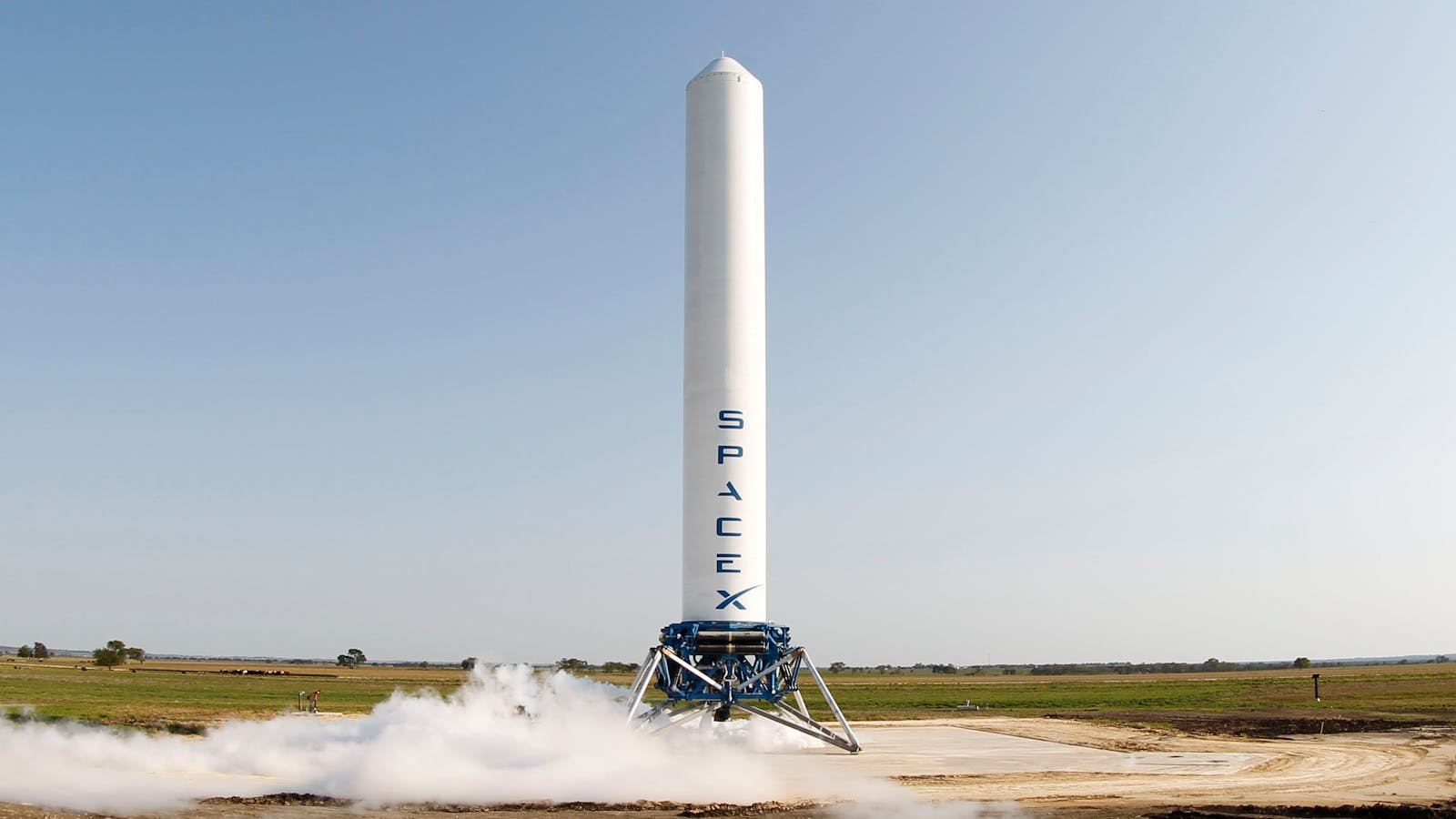
If you are asking “who is stronger, SpaceX or Blue Origin,” the current answer leans clearly toward SpaceX. SpaceX has already built a mature operating loop across high-frequency launches, reusable rockets, crewed spaceflight, Starlink satellite internet, and government mission delivery. Blue Origin is not without competitiveness. Its focus lies in New Glenn, Blue Moon, BE-series engines, and long-term lunar infrastructure. A more accurate judgment is this: SpaceX is stronger in current commercialization and execution, while Blue Origin is more worth watching for its long-term deep-space infrastructure potential.
Key Takeaways
- SpaceX currently leads because of launch frequency, reuse experience, and its commercial flywheel.
- Blue Origin is more focused on long-term bets, especially New Glenn and Blue Moon.
- Falcon 9 is already operationally mature, while New Glenn still needs to prove high-frequency delivery.
- Starship could reshape the cost curve, but testing and regulatory uncertainty remain.
- NASA’s lunar missions show that commercial space is not a one-company winner-takes-all market.
- When following commercial space themes, you also need to consider trading fees, rules, and risk disclosures.
What Is the Core Difference Between SpaceX and Blue Origin?
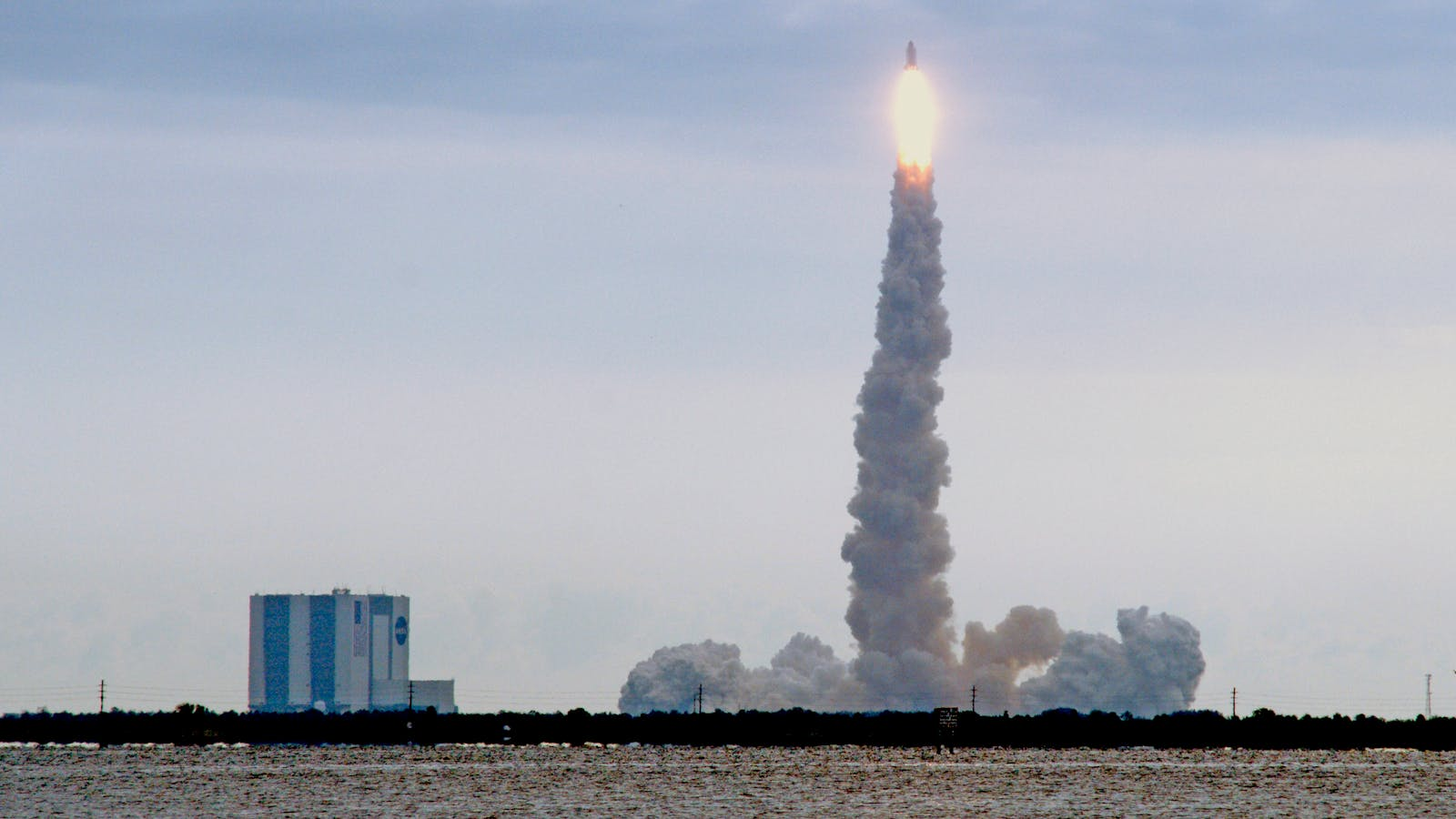
SpaceX is currently stronger because it has already turned rocket launches, crewed spacecraft, satellite internet, and government missions into a continuous operating system. Blue Origin, by contrast, is more like a company still accelerating the conversion of long-term infrastructure ambitions into real delivery. When comparing the two companies, you should not only look at founder influence or rocket specifications. The real question is who can deliver consistently, launch frequently, win customers, and build a recurring revenue cycle.
SpaceX’s core logic is “rapid iteration + high launch frequency + internal demand.” Falcon 9 is currently its most mature launch vehicle. Dragon supports crewed and cargo missions, while Starlink is both a satellite internet business and an internal customer that continuously absorbs SpaceX’s launch capacity. In other words, SpaceX is not merely selling launch services. It also creates launch demand through its own satellite constellation.
Blue Origin’s path is more long-term oriented. It accumulated suborbital human spaceflight experience through New Shepard, entered the orbital heavy-lift launch market through New Glenn, and competes for lunar missions through Blue Moon. Its problem is not a lack of technical assets. The issue is that its commercialization pace, launch frequency, and mission delivery record are still less clear than SpaceX’s.
| Comparison Dimension | SpaceX | Blue Origin | What Readers Should Watch |
|---|---|---|---|
| Current commercialization | Multi-business flywheel already formed | Still accelerating execution | Revenue and delivery |
| Main rockets | Falcon 9, Falcon Heavy, Starship | New Shepard, New Glenn | Launch frequency |
| Deep-space missions | Starship HLS, Mars vision | Blue Moon, lunar infrastructure | NASA milestones |
| Business flywheel | Launch, spacecraft, Starlink, government missions | Launch, engines, lunar missions | Customer continuity |
| Main risks | Starship testing, regulatory review, mission delays | New Glenn scaling, Blue Moon delivery | Execution validation |
Put more simply, SpaceX looks like a commercial space platform that is already running at high speed, while Blue Origin looks like an infrastructure company with strong capital, technology, and long-term vision that still needs to convert key projects into scaled delivery. SpaceX’s advantage lies in what it has already achieved. Blue Origin’s appeal lies in whether it can achieve what it has set out to do.
Summary: SpaceX and Blue Origin differ most not in “who can build better rockets,” but in who has already connected rockets, customers, missions, and commercial revenue into a flywheel. SpaceX currently leads because Falcon 9 already performs high-frequency commercial, government, and internal Starlink missions, while Dragon adds trust in crewed and cargo missions. Blue Origin’s value is not in short-term launch counts, but in New Glenn, Blue Moon, BE-series engines, and long-term lunar infrastructure. If you look at current competitiveness, SpaceX is stronger. If you look at the future deep-space economy, Blue Origin remains a long-term competitor that cannot be ignored. When judging the commercial space landscape, it is better to separate “proven operational capability” from “long-term technical potential,” rather than drawing conclusions based only on corporate vision or a single product announcement.
How Do Their Launch Capabilities Compare? Where Do Falcon 9, Starship, New Glenn, and New Shepard Stand?

If you only look at current sustainable launch capability, SpaceX’s Falcon 9 clearly leads. Its advantage is not just eye-catching single-launch specifications, but the long-term proof of reusability, high launch cadence, and commercial delivery. Blue Origin’s New Glenn has strong lift potential, but it still needs more successful missions to prove stability. New Shepard is a suborbital system, so its strategic meaning is not on the same level as Falcon 9 in orbital commercial launch competition.
Falcon 9’s strength is maturity. In the Falcon user guide, SpaceX emphasizes that reused boosters and fairings help improve reliability, optimize processes, and absorb flight experience. For commercial space, this type of reuse experience is more important than paper specifications, because customers care most about whether a mission can be completed safely, predictably, and on schedule.
Starship is SpaceX’s next major variable. Starship is designed as a fully reusable transportation system intended for missions to Earth orbit, the Moon, Mars, and beyond. Once mature, it could change the cost structure of heavy-lift launch. But Starship should not yet be treated as a mature commercial rocket. In May 2026, Reuters reported that the FAA required SpaceX to investigate a Starship Super Heavy booster incident, and further flights would depend on investigation and corrective actions. This shows that Starship remains in a high-risk testing phase.
Blue Origin’s key variable is New Glenn. Blue Origin says New Glenn can carry more than 45 metric tons to low Earth orbit and more than 13 metric tons to geostationary transfer orbit. This gives it the conditions to enter the heavy commercial launch market, especially for large satellites, deep-space missions, and national security launch demand. But New Glenn needs to move from “can fly” to “can fly frequently” before it can truly become a stable competitor to Falcon 9.
New Shepard was once Blue Origin’s signature product, mainly serving suborbital tourism and experimental missions. But in 2026, Blue Origin announced that New Shepard flights would pause for at least two years as the company shifts resources toward human lunar capabilities. This means Blue Origin’s short-term focus has moved away from suborbital tourism and toward heavier orbital and lunar missions.
| System | Company | Current Position | Main Strength | Main Uncertainty |
|---|---|---|---|---|
| Falcon 9 | SpaceX | Mature commercial launch workhorse | High frequency, reuse, broad customer base | Launch cadence and regulatory review |
| Starship | SpaceX | Next-generation super-heavy system | Full reuse and major lift potential | Testing, regulation, and technical complexity |
| New Glenn | Blue Origin | Orbital heavy-lift rocket | Large fairing and heavy-lift capability | Short flight history |
| New Shepard | Blue Origin | Suborbital tourism and research platform | Human suborbital experience | Paused flights, lower short-term contribution |
For readers, launch capability should be viewed in three layers. The first is mature commercial launch, where SpaceX clearly leads. The second is next-generation heavy lift, where both Starship and New Glenn are worth watching. The third is suborbital experience, where Blue Origin has accumulated experience, but its impact on orbital commercial competition is limited.
Summary: The conclusion on launch capability is clear: SpaceX wins in current proven capability, while Blue Origin wins in long-term heavy-lift imagination. Falcon 9 has already proven that reusable rockets can enter high-frequency commercial operation, which is SpaceX’s core moat. Although Starship may bring lower costs and larger payload capacity, it still needs to pass testing, regulation, and mission certification. New Glenn has strong paper capabilities and is the key entry point for Blue Origin to catch up with SpaceX. But only through continuous successful launches, stable recovery, and commercial customer delivery can its potential become real competitiveness. The pause in New Shepard flights also shows that Blue Origin has shifted its resources toward lunar and heavy orbital capability. In the short term, SpaceX is stronger. In the long term, Blue Origin’s catch-up speed depends on how quickly New Glenn can scale.
Which Business Model Is More Mature? How Do Starlink, Government Contracts, and Customer Structure Shape the Competition?
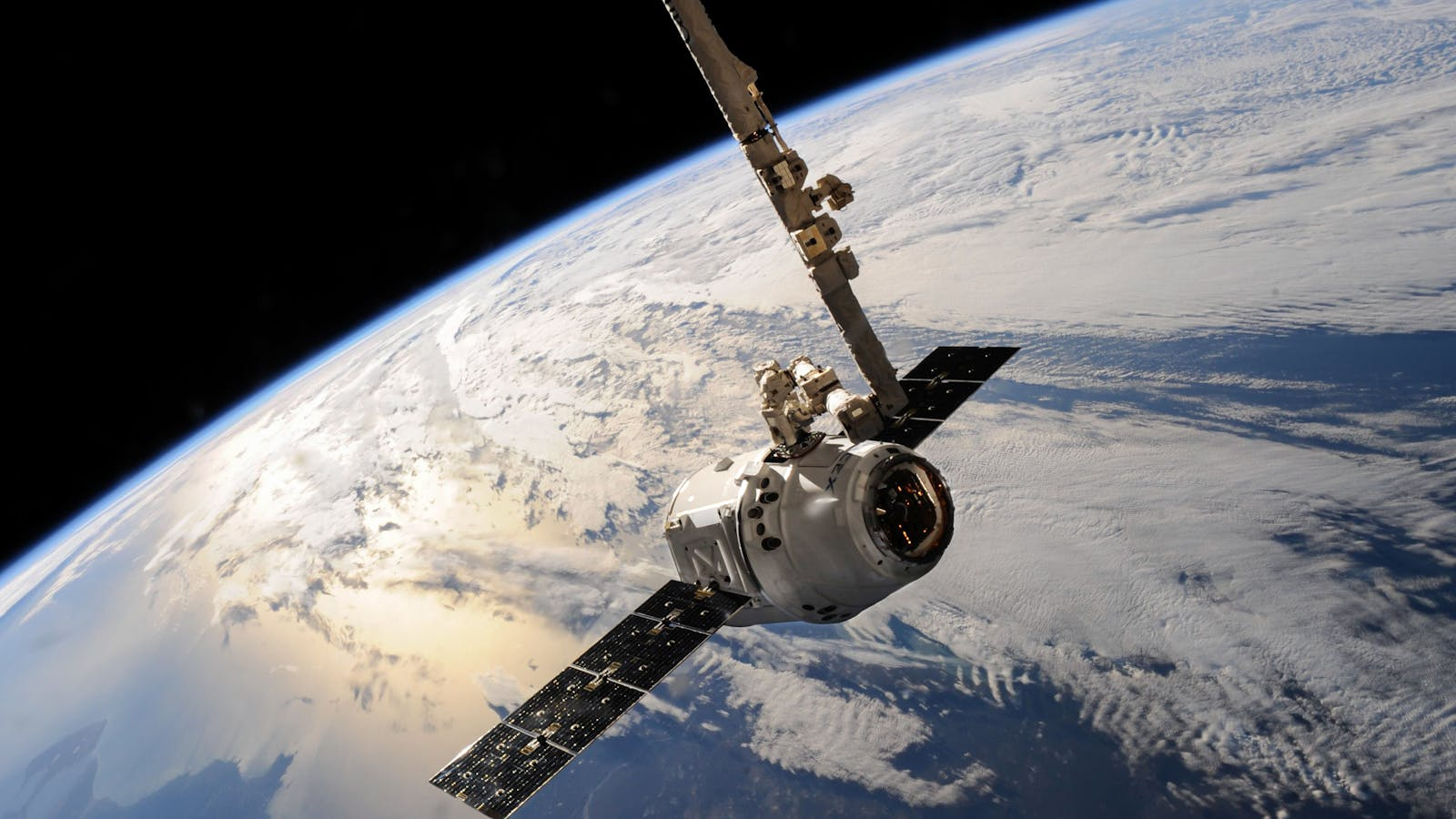
SpaceX has the more mature business model because it is not only a launch services provider; it also owns Starlink, a satellite internet business. Falcon 9 can launch payloads for external customers and also expand Starlink. Starlink user growth then creates more launch demand in return. Blue Origin currently depends more on the scaling of New Glenn, NASA lunar missions, and future infrastructure contracts. Its commercial flywheel is still forming.
What makes SpaceX special is its strong “internal customer.” A typical rocket company needs to wait for customers to buy launch services, while SpaceX’s Starlink continuously needs satellite deployment, replenishment, and upgrades. This makes it easier for SpaceX to build launch cadence and gives reusable rockets more real missions for validation.
Government contracts are also an important support for SpaceX. Crewed spaceflight, cargo resupply, satellite launches, and national security projects all improve the quality of SpaceX’s customer base. Starshield, which is designed for government missions, further shows how SpaceX connects Starlink technology, launch capability, and secure communications demand.
Blue Origin’s business model is more “long-term project driven.” In 2023, NASA selected Blue Origin as the second provider of an Artemis crewed lunar lander. The Blue Origin Artemis lunar lander contract was worth $3.4 billion. This shows that NASA does not want lunar missions to depend entirely on SpaceX, and it also shows that Blue Origin still has strategic value in lunar missions.
Commercial maturity can be judged through the following dimensions:
| Judgment Dimension | SpaceX | Blue Origin |
|---|---|---|
| Stable customers | Commercial satellites, NASA, defense, internal Starlink demand | NASA, commercial satellites, future lunar customers |
| Repeatable delivery | Falcon 9 already operates at high cadence | New Glenn still needs more mission validation |
| Recurring revenue | Starlink strengthens recurring revenue potential | Still more dependent on project-based and future infrastructure revenue |
| Multi-business support | Launch, spacecraft, satellite internet, government networks | Launch, engines, lunar lander |
| Impact of delays | Starship delays can still be supported by Falcon 9 and Starlink | New Glenn or Blue Moon delays have larger impact |
From a business model perspective, SpaceX looks more like a “platform company,” while Blue Origin looks more like an “engineering and infrastructure company.” The advantage of a platform company is that its businesses can reinforce one another. The advantage of an infrastructure company is that the future opportunity can be large, but the upfront investment is heavy and the payback cycle is long.
Summary: Business model is where the gap between SpaceX and Blue Origin is most obvious. SpaceX’s lead does not come from rockets alone. It comes from the multi-business support formed by Falcon 9, Dragon, Starlink, Starshield, and government missions. Starlink is especially important because it is both a revenue source and a launch demand source. Blue Origin has not yet reached this level of commercial flywheel. Its value is more tied to whether New Glenn, Blue Moon, and NASA lunar missions can be successfully delivered. In other words, SpaceX currently looks like a commercial system that has already been proven, while Blue Origin looks like a long-term investment-type space company waiting for key projects to scale. When judging who is stronger, you should not only look at whether a rocket is advanced. You should also look at whether customers are stable, missions are frequent, revenue can repeat, and the company still has support if a core project is delayed.
Which Technical Route Has More Advantage? How Should Reusable Rockets, Engines, and Lunar Landers Be Compared?
The technical routes cannot be judged simply as “one is absolutely stronger.” SpaceX’s advantage lies in rapid iteration, reusability, and scalable manufacturing, with a focus on putting technology into real missions as quickly as possible. Blue Origin’s advantage lies in heavy-lift rockets, hydrogen upper stages, BE-series engines, and a lunar infrastructure path, with a focus on long-term deep-space missions. The two companies do not operate at the same tempo, nor do they share the same risk preference.
SpaceX’s route is more aggressive. Falcon 9 has already proven the commercial value of first-stage reuse, while Starship aims for full-system reusability. If Starship matures, the cost, payload capacity, and mission structure of commercial space could all be redefined. But rapid iteration also means test failures, regulatory investigations, and schedule volatility may appear more frequently.
Blue Origin’s technical route is more focused on deep-space infrastructure. New Glenn’s hydrogen upper stage suits high-energy orbital missions, while Blue Moon targets lunar transportation and long-term presence. Blue Origin describes Blue Moon lander variants as providing cargo and crew access to the Moon and Mars, forming a different technical path from SpaceX’s Starship HLS.
The difference between their lunar routes is especially clear:
| Technical Dimension | SpaceX Route | Blue Origin Route | What to Watch |
|---|---|---|---|
| Reuse target | Falcon 9 first-stage reuse; Starship aims for full reuse | New Glenn first-stage reuse | Reuse frequency and maintenance cost |
| Engine system | Merlin, Raptor | BE-3, BE-4, BE-7 | Reliability, production capacity, mission fit |
| Lunar lander | Starship HLS | Blue Moon HLS | NASA milestones and certification progress |
| Development pace | Rapid testing and rapid improvement | More steady, long-term system approach | Delay risk and regulatory impact |
| Commercial validation | Falcon 9 validated; Starship not fully mature | New Shepard has experience; New Glenn and Blue Moon still need scaling | Number of real missions |
NASA’s Human Landing Systems program also shows that both SpaceX and Blue Origin are important commercial lander providers in the Artemis architecture. SpaceX’s Starship HLS emphasizes large payload capacity and complex in-orbit refueling, while Blue Origin’s Blue Moon emphasizes hydrogen technology, lunar landers, and coordination with long-term infrastructure.
Technology comparisons are prone to misunderstanding. Some people treat “more aggressive” as “more advanced,” while others treat “more cautious” as “less advanced.” A better method is to look at whether the technology has been validated by missions. If you only look at proven operations, SpaceX is stronger. If you look at long-term deep-space infrastructure, Blue Origin still holds a distinct position.
Summary: SpaceX’s technical route is strong in execution speed, reuse experience, and scalable trial-and-error. Blue Origin’s technical route is strong in hydrogen technology, heavy-lift rockets, and long-term lunar infrastructure. SpaceX is more like a company that continuously improves systems through large numbers of real missions, while Blue Origin is more like a company building core capabilities around the future lunar economy. Starship and Blue Moon are not just rocket products; they are part of future deep-space transportation systems. For ordinary readers, comparing technical routes requires separating three things: technologies already in mature operation, technologies still being tested, and technologies still in the long-term vision stage. SpaceX currently leads in mature operation, while Blue Origin remains worth watching in lunar infrastructure.
How Will NASA, Lunar Missions, and National Security Projects Change the Competitive Landscape?
NASA and government projects make commercial space competition look more like a “multi-supplier structure” rather than a one-company winner-takes-all market. SpaceX has already entered high-value government missions through Falcon, Dragon, Starlink, and Starshield. Although Blue Origin’s commercial launch cadence is slower, NASA’s selection of Blue Origin for an Artemis lunar lander shows that the U.S. space system needs redundancy, competition, and long-term alternatives.
NASA does not want critical lunar missions to depend on only one commercial company. Lunar missions involve crew safety, rendezvous and docking, landers, logistics, communications, energy, and long-term base construction. A delay in any one link can affect the entire plan. For that reason, the coexistence of SpaceX and Blue Origin actually fits NASA’s risk management logic.
NASA’s recent investment in commercial lunar infrastructure has also brought Blue Origin more attention. Reuters reported that NASA awarded lunar project contracts to multiple companies in 2026, with Blue Origin receiving a lunar lander contract for its Mark 1 uncrewed cargo lunar lander. Such missions may not immediately change a company’s revenue structure, but they can strengthen its strategic position in lunar logistics and infrastructure.
National security projects also amplify the advantages of leading companies. Commercial space is not only about sending satellites into orbit. It also includes secure communications, remote sensing, orbital mobility, defense launches, and rapid constellation replenishment. SpaceX’s Starlink and Starshield already show a combination of “launch + satellite network + government demand.” If Blue Origin can make New Glenn serve national security launches reliably, it may also win higher-value customers.
Government projects affect the competitive landscape mainly in these ways:
- They provide long-term orders and reduce dependence on purely commercial market cycles.
- They raise certification barriers, helping proven companies expand their advantages.
- They promote a multi-supplier system and avoid locking key missions into one company.
- They add regulatory, review, and safety requirements, extending project timelines.
- They accelerate commercialization of lunar, deep-space, and national security infrastructure.
- They make launch success rates, mission records, and compliance capability more important.
For SpaceX, government projects are an important source of trust and cash flow. For Blue Origin, government projects are a key entry point for catching up with SpaceX. Especially in lunar missions, Blue Origin does not need to surpass SpaceX in every area. It may still occupy an important share in certain mission types.
Summary: NASA, defense, and national security projects shift commercial space competition from “whose rocket is stronger” to “who can enter long-term mission systems.” SpaceX currently has a clear advantage in government missions because it already has mature launch capability, crewed spaceflight experience, satellite networks, and secure communications capability. Blue Origin’s opportunity lies in NASA’s reluctance to over-rely on a single supplier for lunar missions, which gives Blue Moon and New Glenn strategic meaning. Future commercial space competition may not end with SpaceX completely overwhelming Blue Origin. A more likely outcome is that SpaceX continues to lead in low Earth orbit, high-frequency launch, and satellite internet, while Blue Origin competes for heavy-lift launch, lunar logistics, and long-term deep-space infrastructure. Readers should focus on contract value, mission milestones, certification progress, and actual delivery, rather than only looking at corporate visions.
What Will Commercial Space Competition Look Like in the Next Few Years? Can Blue Origin Catch Up With SpaceX?
Over the next one to three years, SpaceX is likely to remain ahead. The reasons are clear: Falcon 9 is mature, Starlink continues to create internal launch demand, and Dragon plus government missions strengthen trust. For Blue Origin to catch up, the key is not one successful launch. It needs New Glenn to perform missions frequently, Blue Moon to advance according to NASA milestones, and long-term vision to become stable commercial delivery.
SpaceX’s biggest variable is Starship. If it smoothly enters stable testing and commercialization, it will significantly strengthen SpaceX’s position in heavy-lift launch, lunar missions, and next-generation Starlink deployment. But if Starship is dragged down for a long time by test failures, regulatory investigations, or technical complexity, some of SpaceX’s growth expectations will also be delayed.
Blue Origin’s biggest variable is New Glenn. It needs to prove three things: first, that it can launch reliably; second, that it can build a customer schedule; and third, that it can reduce long-term costs through reuse. If New Glenn only launches occasionally, it will be difficult to challenge Falcon 9’s commercial position. If it can scale quickly, it may open opportunities in large satellites, national security launch, and lunar logistics.
Ordinary readers can watch the following signals to understand the commercial space landscape:
| Signal to Watch | Why It Matters | More Favorable to SpaceX If… | More Favorable to Blue Origin If… |
|---|---|---|---|
| Launch frequency | Reflects execution capability | Falcon 9 remains frequent and stable | New Glenn mission density rises quickly |
| Reuse performance | Affects long-term cost | Starship reuse makes breakthroughs | New Glenn first-stage recovery matures |
| NASA milestones | Affects government trust | Starship HLS advances smoothly | Blue Moon testing and delivery progress |
| Commercial customers | Reflects market acceptance | Starlink and external customers grow | Large satellite customers increase |
| Regulatory status | Affects launch cadence | Starship investigations and licenses progress | New Glenn certification accelerates |
| Cash flow structure | Determines risk resistance | Multi-business revenue supports R&D | Long-term contracts cover R&D investment |
If you are following commercial space-related stocks, ETFs, or trading opportunities after hot IPOs, you should look beyond company technology and industry structure and also pay attention to actual trading costs. U.S. stock trading costs usually do not only include commissions. They may also include platform fees, external agency fees, trading activity fees, foreign exchange costs, and fractional-share rules. Users who meet the applicable service conditions can use BiyaPay to understand U.S. stock, Hong Kong stock, and multi-asset trading access. BiyaPay’s U.S. stock trading commission is $0, while platform fees, external agency fees, and other costs are subject to the fee center and order page.
Summary: Blue Origin has the opportunity to narrow the gap, but catching up with SpaceX in the short term will not be easy. SpaceX’s advantage comes from long-term accumulation: Falcon 9’s high-frequency launches, Starlink’s internal demand, Dragon’s crewed mission experience, and trust from government projects. Blue Origin’s catch-up path is clear: New Glenn needs to scale, Blue Moon needs to deliver, and NASA plus commercial customers need to keep increasing. Future commercial space competition may not be a single champion monopolizing every market. It may become more segmented: SpaceX continues to dominate low Earth orbit launch, satellite internet, and high-frequency missions, while Blue Origin competes for key positions in heavy-lift launch, lunar logistics, and deep-space infrastructure. To judge changes in the landscape, watch launch records, reuse performance, customer orders, and regulatory progress rather than hype alone.
What Else Should Ordinary Users Pay Attention to When Following Commercial Space Opportunities?
When commercial space becomes a hot topic, ordinary users most often overlook the gap between “industry trend” and “trading decision.” The competition between SpaceX and Blue Origin can help you understand the space industry, but it does not mean that all related stocks are worth buying, nor does it mean that any hot IPO has guaranteed returns. You need to consider company fundamentals, public disclosures, trading rules, fee structures, and your own risk tolerance at the same time.
The commercial space supply chain is long. It includes rocket manufacturing, satellite communications, ground stations, remote sensing data, defense contractors, semiconductors, materials, insurance, and launch services. The assets that can actually be traded in public markets are often not SpaceX or Blue Origin themselves, but related suppliers, satellite communications companies, space ETFs, or listed companies with business exposure. Their relationships with SpaceX and Blue Origin vary in strength. You should not assume that any “space concept” automatically benefits.
You can judge opportunities across three levels:
| Judgment Level | What to Watch | Common Mistake |
|---|---|---|
| Industry level | Launch frequency, NASA missions, satellite demand, policy support | Treating industry growth as equal to stock gains |
| Company level | Revenue, orders, cash flow, customer concentration, technical progress | Looking only at news hype, not financials and disclosures |
| Trading level | Commission, platform fees, FX cost, liquidity, order types | Watching only share price while ignoring actual transaction costs |
For trading costs, platform rules and billing details matter more than slogans. BiyaPay’s U.S. stock trading commission is $0. The platform fee is $0.005 per share, with a minimum of $0.99 per order and a maximum of 1% of trade value. External agency fees and trading activity fees are $0.00396 per share. The fee center also states that fractional-share orders with less than one share filled are charged only 1% of the total transaction value as the platform fee, capped at $1. Actual fees should still follow the live order page, fee center, and applicable rules.
If your region, identity verification result, and platform rules meet the relevant service conditions, you can further check market access through web trading, or use the U.S. stock screening tool to understand publicly traded market names. Please note that service availability depends on the user’s location, identity verification result, platform rules, and applicable laws and regulations. Any content related to hot industries does not constitute investment advice.
Summary: Following the competition between SpaceX and Blue Origin can help you understand commercial space industry trends, but it cannot directly replace investment judgment. When making real decisions, you need to separate “long-term industry potential,” “company execution capability,” and “personal transaction costs.” Commercial space companies may benefit from NASA contracts, satellite internet, national security demand, and lunar infrastructure, but they may also face technical failures, regulatory investigations, heavy cash burn, and project delays. For ordinary users, a more careful approach is to first understand the supply chain and publicly tradable assets, then check trading fees, order rules, liquidity, and risk disclosures. BiyaPay can serve as one entry point for understanding U.S. stock markets and multi-asset trading fee structures, but before trading, users should still rely on platform rules, billing details, and personal risk tolerance.
If you continue to follow SpaceX, Blue Origin, commercial space IPOs, or related U.S. stock supply chains, it is better to separate “industry judgment” from “trading preparation.” For industry judgment, look at launch records, NASA missions, orders, and technical milestones. For trading preparation, look at account eligibility, fee structure, order types, FX costs, and risk disclosures. Users who meet the applicable service conditions can use the BiyaPay download to learn about its multi-asset trading wallet, U.S. and Hong Kong stock trading, digital asset trading, and cross-border fund-related features. This content is only for introducing public market information, trading rules, and fee structures, and does not constitute investment advice. Hot IPOs or space-related concepts may experience significant volatility in early trading. Before trading, you should fully understand the platform rules, fee center, order page, and local regulatory requirements.
FAQ
Is SpaceX or Blue Origin more representative of the commercial space leader?
SpaceX is currently more representative of the commercial space leader because it is more mature in launch frequency, reusable rockets, Starlink commercialization, and crewed spaceflight. Blue Origin remains an important competitor, but its value is more concentrated in New Glenn, Blue Moon, and long-term lunar infrastructure.
Can Blue Origin’s New Glenn catch up with SpaceX’s Falcon 9?
New Glenn has heavy-lift potential, but to catch up with Falcon 9, it needs to prove high-frequency launch, stable reuse, and commercial customer delivery. Falcon 9 has accumulated extensive flight and reuse experience, while New Glenn is still in the stage of mission validation and scaling.
Will SpaceX’s Starship change the commercial space landscape?
If Starship achieves stable reuse and high-frequency launch, it could significantly change the cost structure and heavy-lift landscape of commercial space. But it still faces testing, regulatory, safety certification, and mission delay risks, so its technical vision should not be treated as a mature commercial result.
Why can Blue Origin still win NASA lunar mission support?
NASA supports Blue Origin to build multi-supplier lunar landing capability and reduce the risk of relying on a single company. Blue Moon HLS targets later Artemis missions. Whether it strengthens Blue Origin’s position depends on development progress, test results, and mission delivery capability.
How should ordinary investors understand the SpaceX vs. Blue Origin competition?
Ordinary investors should understand the SpaceX and Blue Origin competition as an industry trend, not as a simple bet on one company. They should pay attention to publicly listed assets, supply chain companies, ETFs, trading fees, regulatory risks, and disclosures. Actual trading should follow platform rules and personal risk tolerance.
What fees and risks matter when following commercial space stocks?
When following commercial space-related stocks, you should consider trading commissions, platform fees, external agency fees, FX costs, fractional-share rules, and liquidity risks. Fees should follow the broker or platform bill. Industry popularity does not mean certain returns and does not constitute a buy recommendation.
*This article is provided for general information purposes and does not constitute legal, tax or other professional advice from BiyaPay or its subsidiaries and its affiliates, and it is not intended as a substitute for obtaining advice from a financial advisor or any other professional.
We make no representations, warranties or warranties, express or implied, as to the accuracy, completeness or timeliness of the contents of this publication.
Related Blogs of

What Does Pre-Market and After-Hours Trading in U.S. Stocks Mean? Why Are Hot Stocks Like SpaceX More Closely Watched?


How to Trade a U.S. IPO After Listing? Basic Rules Ordinary Investors Should Know


Can You Buy SpaceX IPO on the First Trading Day? Understand U.S. IPO Trading Rules First

What Is a U.S. Stock IPO? What Is the Difference Between the IPO Price, Opening Price, and First-Day Trading Price?

Choose Country or Region to Read Local Blog
 Australia
 Austria
 Belgium
 Canada
 Cyprus
 Czech Republic
 Denmark
 Estonia
 Finland
 France
 Germany
 Greece
 Hong Kong
 India
India Indonesia
 Ireland
 Italy
Italy Japan
Japan Latvia
 Lithuania
 Luxembourg
 Malaysia
 Malta
Malta Morocco
 Nepal
Nepal Netherlands
 New Zealand
 Norway
 Pakistan
 Philippines
 Poland
 Portugal
 Romania
 Singapore
 Slovakia
 Slovenia
 South Africa
 South Korea
 Spain
Spain Sweden
 Thailand
 The United States
 Turkey
 United Arab Emirates
 United Kingdom
 Vietnam
Contact Us




BIYA GLOBAL LLC is registered with the Financial Crimes Enforcement Network (FinCEN), an agency under the U.S. Department of the Treasury, as a Money Services Business (MSB), with registration number 31000218637349, and regulated by the Financial Crimes Enforcement Network (FinCEN).
BIYA GLOBAL LIMITED is a registered Financial Service Provider (FSP) in New Zealand, with registration number FSP1007221, and is also a registered member of the Financial Services Complaints Limited (FSCL), an independent dispute resolution scheme in New Zealand.