What Makes Starlink Different from Traditional Telecom Companies? Explaining the Satellite Internet Business Model




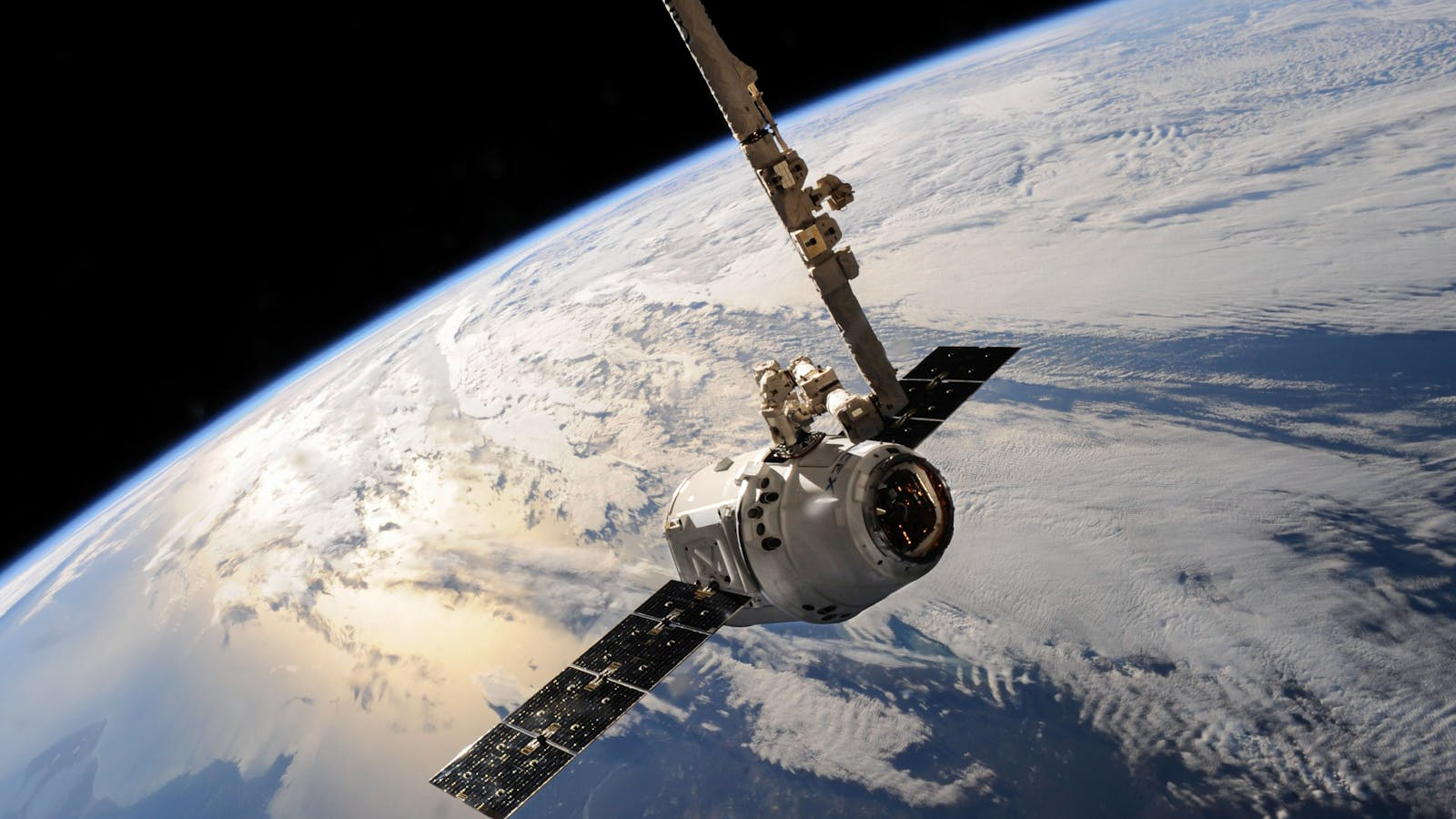
The biggest difference between Starlink and traditional telecom companies is not simply which one is “more advanced,” but where the network infrastructure is located and how the business logic works. Starlink relies on low Earth orbit satellites, user terminals, ground stations, and SpaceX’s launch capability to extend internet coverage to places where ground networks are difficult to build economically. Traditional telecom companies rely on base stations, fiber, spectrum licenses, and local operating systems to provide stable services for cities, high-density users, and mobile communications. When you understand Starlink, it is better to see it as a space-based internet layer that “extends the boundary of connectivity,” rather than a broadband company that simply replaces telecom operators.
Key Takeaways
- Starlink uses LEO satellites to supplement ground networks, with advantages in remote and mobile scenarios.
- Traditional telecom companies still control spectrum, base stations, fiber, phone numbers, and local user access.
- Starlink’s business model combines terminal hardware, monthly subscriptions, and high-value industry customers.
- Direct to Cell will improve mobile coverage in dead zones, but it will not replace operators in the short term.
- Satellite internet expansion is limited by capacity, terminal costs, spectrum approval, and regulation.
- When following Starlink-related opportunities, separate industry trends from trading decisions.
What Is the Core Difference Between Starlink and Traditional Telecom Companies?

Starlink’s core difference is that it “places part of the network infrastructure in space,” while traditional telecom companies mainly build networks on the ground. Starlink provides connectivity through low Earth orbit satellites, user terminals, ground stations, and laser links. Traditional operators serve users through base stations, fiber, submarine cables, core networks, spectrum licenses, and local channels. The two are not simply substitutes; they compete and complement each other in different coverage scenarios.
Starlink is more like a space-based internet service provider. Its coverage logic is not to lay fiber and build base stations first, then design plans around local users. Instead, it first uses a satellite constellation to cover large areas, then lets users connect through receiving terminals. For remote villages, islands, mountains, ships at sea, and temporary camps, this model can avoid a large amount of ground infrastructure cost.
Traditional telecom companies work in the opposite way. They have stronger advantages in cities and densely populated areas because fiber, base stations, and spectrum resources can be shared by a large number of users. The more users a base station serves within its coverage area, the easier it is to spread the unit access cost. The more homes and businesses a fiber network covers, the clearer the commercial return becomes. Mobile plans, home broadband, enterprise leased lines, cloud-network integration, IoT connectivity, and 5G private networks remain the main territory of traditional telecom companies.
Starlink’s commercialization also relies more on “hardware + subscription.” Users usually need to buy or rent a terminal, then pay a monthly fee based on residential, commercial, mobile, maritime, aviation, or other usage scenarios. Traditional operators rely more on SIM cards, mobile numbers, home broadband, enterprise lines, contract plans, and local customer service networks. Starlink’s service now covers residential, travel, business, maritime, and aviation scenarios. Starlink is no longer positioned merely as “satellite broadband” in the traditional sense, but as cross-regional connectivity infrastructure.
| Comparison Dimension | Starlink | Traditional Telecom Companies | What to Focus On |
|---|---|---|---|
| Network foundation | LEO satellites, ground stations, user terminals | Base stations, fiber, spectrum, core networks | Coverage scenario |
| Main customers | Remote areas, maritime, aviation, enterprises, governments | Urban residents, mobile users, home broadband, enterprises | User density |
| Revenue model | Terminal devices, monthly subscriptions, scenario-based plans | Mobile plans, fixed broadband, enterprise services | Retention and ARPU |
| Core moat | Satellite constellation, launch capability, terminal ecosystem | Licenses, spectrum, local networks, channels | Regulation and assets |
| Suitable scenarios | Weak coverage, cross-region, mobile scenarios | Dense urban areas, local services, mobile communications | Cost and experience |
This also explains why Starlink may not be suitable for every urban user. In cities, fiber broadband and mobile networks are usually cheaper, more stable in latency, easier to install, and not affected by the line-of-sight requirements of satellite terminals. Starlink’s real advantage is bringing internet access to places where traditional operators are unwilling to build, find it difficult to build, or face excessively high construction costs.
Summary: Starlink and traditional telecom companies differ fundamentally in network infrastructure and business model. Starlink is a space-based internet service provider that uses LEO satellites, launch capability, and user terminals to bring connectivity to areas where ground networks are difficult to serve economically. Traditional telecom companies are local ground-network operators that rely on spectrum licenses, urban base stations, fiber networks, and user plans to provide low-cost, stable, and mature services in high-density areas. Starlink solves problems such as “where there is no internet,” “where it is difficult to deploy ground networks,” and “where cross-regional mobile connectivity is needed.” Traditional telecom companies solve the problem of “how urban users can access stable internet at low cost and high density over the long term.” When you understand their relationship, you should not simply ask who will replace whom. You should look at use cases, capacity, regulation, pricing, and user density.
Why Can Starlink Build a Different Business Model?
Starlink can build a different business model because it does not rely on a single satellite to sell internet service. Instead, it combines a LEO satellite constellation, SpaceX’s launch capability, user terminals, ground stations, and service licenses into one system. LEO satellites reduce latency, launch capability lowers deployment barriers, user terminals allow ordinary households and businesses to connect directly, and multiple scenario-based plans sell the network to different user groups.
Traditional satellite internet has often relied on geostationary satellites. These satellites cover large areas, but latency is higher and capacity is limited. Starlink uses low Earth orbit satellites, which are closer to Earth and therefore theoretically better able to provide a broadband-like experience. However, a single LEO satellite has a smaller coverage area, so many satellites are needed to form a constellation and maintain service continuity through satellite handoffs, ground stations, laser links, and network scheduling.
SpaceX’s launch system behind Starlink is the key factor that separates it from many satellite internet companies. When traditional telecom companies expand their networks, they mainly deploy base stations, fiber, equipment rooms, and spectrum. When Starlink expands its network, it needs to continuously manufacture, launch, and replenish satellites. Falcon 9’s high launch cadence allows Starlink to expand capacity and replenish the constellation more quickly, forming a loop of “rocket launches—satellite deployment—user growth—more launch demand.”
User terminals also determine whether Starlink can truly enter real consumer scenarios. Traditional broadband users usually only need a router and modem, with relatively simple installation requirements. Starlink users also need a satellite receiving terminal, an unobstructed sky view, power supply, and a suitable installation location. Terminal price, installation convenience, mobility, and after-sales experience directly affect user growth. Starlink’s Business Mobile service emphasizes connectivity in mobile scenarios, showing that it is not only home broadband, but also expanding toward fleets, temporary sites, emergency teams, and mobile work environments.
For Starlink’s business model to work, at least the following conditions are needed:
| Key Condition | Significance to the Business Model | Possible Limitation |
|---|---|---|
| LEO satellite constellation density | Determines coverage and capacity | Requires continuous launches and maintenance |
| SpaceX launch capability | Lowers deployment and replenishment barriers | Launch cadence and regulation can affect expansion |
| User terminal cost | Affects household and enterprise adoption | Device price and installation conditions limit adoption |
| Ground stations and laser links | Improve network transmission efficiency | Affected by local approvals and infrastructure |
| Service-region licenses | Determine sellable markets | Regulatory differences vary widely across countries |
| Scenario-based plans | Improve revenue layers | Service requirements vary across customer types |
Starlink’s advantage lies in fast coverage expansion. For traditional operators to enter remote areas, they may need to lay fiber, build towers, connect power, perform maintenance, and consider whether user density can support the return on investment. Starlink can first provide coverage through satellites, then sell terminals and plans based on local demand. But its disadvantages are also clear: satellite capacity is not unlimited, both terminals and satellites require capital investment, and spectrum and communications regulation in different countries determine whether the service can be launched.
Summary: Starlink’s business model is different because it packages LEO satellites, SpaceX’s launch capability, user terminals, and multi-scenario subscriptions into a connectivity system. LEO satellites make satellite internet closer to broadband experience. SpaceX’s launch capability allows faster constellation deployment and replenishment. User terminals allow homes, businesses, ships, aircraft, and temporary sites to access the network. Traditional telecom companies build networks around ground base stations, fiber, and spectrum, while Starlink moves part of the network layer into space. This model has the advantage of fast cross-regional coverage, especially in places where ground networks are difficult to build economically. Its limitations include capacity, terminal cost, launch cost, weather and obstruction effects, and regulatory approvals. To judge Starlink’s commercial value, do not only look at the idea of “internet from satellites.” Look at satellite numbers, launch cadence, terminal costs, service regions, and user growth.
Which Use Cases Are Better Suited for Starlink and Traditional Telecom Companies?

Starlink is better suited for scenarios where ground networks are difficult to cover, where cross-regional mobility is needed, or where temporary deployment is required. Traditional telecom companies are better suited for cities, high-density users, and everyday mobile communications. In simple terms, remote areas, maritime use, aviation, mining zones, farms, and emergency communications are better suited for Starlink. Urban home broadband, mobile plans, enterprise campuses, 5G private networks, and large-scale local services remain better suited for traditional operators.
Remote areas are where Starlink can most easily demonstrate its value. Mountains, farms, islands, ranches, mining areas, and energy sites usually have low user density, high fiber and base-station construction costs, and more difficult maintenance. Starlink can provide internet connectivity first through satellite coverage, reducing the pressure of ground network deployment. For these users, even if terminal and monthly fees are not low, the ability to obtain usable internet may still have commercial value.
Maritime and aviation are high-value Starlink scenarios. Ships are far from land-based base stations, and aircraft constantly move across regions along flight routes, making continuous coverage difficult for traditional ground communications. Starlink’s LEO satellite network can improve connectivity in mobile scenarios, so airlines and maritime customers may be willing to pay for higher-quality connectivity. American Airlines announced in 2026 that it would install Starlink in-flight Wi-Fi on more than 500 narrowbody aircraft starting in 2027, showing that aviation internet is becoming an important commercial use case for satellite internet.
Traditional telecom companies still dominate cities. In cities, user density is high, base stations are dense, and fiber has already been deployed, resulting in lower unit network costs. For most urban households, fiber broadband is often cheaper, more stable, and does not require users to install a satellite terminal. For mobile users, mobile operators provide numbers, plans, roaming, customer service, payment channels, and local compliance. In the short term, these are still difficult for satellite internet to replace overall.
| Use Case | Starlink Fit | Traditional Telecom Fit | Main Reason |
|---|---|---|---|
| Urban home broadband | Medium | High | Low fiber cost, high capacity, simple installation |
| Remote households | High | Medium to low | High ground network construction cost |
| Ships at sea | High | Medium | Satellite coverage is more flexible |
| Aviation Wi-Fi | High | Medium | LEO satellites fit cross-regional mobile connectivity |
| Everyday mobile communication | Low to medium | High | Ground cellular networks remain the main system |
| Disaster emergency response | High | Medium | Can quickly provide temporary connectivity |
| Enterprise remote sites | High | Medium | Suitable for mining, energy, construction, and temporary operations |
Disaster response is also an important Starlink scenario. Earthquakes, floods, fires, or wars may damage base stations and fiber, while satellite terminals can restore basic communications more quickly. However, emergency use does not mean Starlink has no limitations. Terminal delivery, power supply, local authorization, network capacity, and security review can all affect actual use.
For enterprise users, Starlink is more suitable for remote sites and mobile operations, rather than replacing all enterprise leased lines. Financial institutions, cloud service providers, hospitals, and large campuses may still require low-latency, highly available, compliance-controlled ground leased lines. Starlink is more suitable as a backup link, a primary link for remote sites, or a temporary construction network.
Summary: Starlink is most suitable for scenarios where ground networks are difficult to cover economically, while traditional telecom companies are most suitable for cities and high-density users. Remote areas, maritime, aviation, mining zones, and disaster response scenarios often involve dispersed users, complex terrain, and long payback cycles for fiber and base stations, making LEO satellite coverage more advantageous. Urban housing, mobile communications, enterprise campuses, and large-scale mobile users remain the advantage areas of traditional telecom companies, because ground networks have greater capacity, more common terminals, more mature plans, and lower costs. In the future, the two are more likely to complement each other: Starlink fills ground-network blind spots, while traditional operators continue to dominate high-density local services. Satellite internet is not a full replacement for mobile networks; it expands the boundary of internet connectivity.
Will Direct to Cell Change the Relationship Between Starlink and Traditional Telecom Companies?
Direct to Cell will change the relationship between Starlink and traditional telecom companies, but it will not allow Starlink to replace mobile operators in the short term. Its key change is that ordinary mobile phones can connect to satellites outside terrestrial cellular coverage, mainly for remote areas, emergency communications, and network dead zones. Starlink still needs operator spectrum, cooperation agreements, and regulatory approval, while traditional operators still control user numbers, plans, and local service access.
In the past, Starlink users generally needed dedicated terminals. The significance of Direct to Cell is that it lowers the access barrier by allowing ordinary phones to potentially obtain basic connectivity when there is no ground signal. In its 2025 update, Starlink said SpaceX had completed deployment of its first-generation Direct to Cell constellation, with more than 650 related satellites. Starlink Direct to Cell shows that satellite internet is expanding from fixed broadband into mobile supplemental networks.
However, phone-to-satellite connectivity does not mean “phones no longer need operators.” These services typically need to use mobile operators’ spectrum arrangements and comply with power limits, interference rules, and local regulation. In 2024, the U.S. FCC approved SpaceX and T-Mobile to provide supplemental coverage from space through Starlink satellites. The phrase itself shows that this is more like supplemental coverage for terrestrial cellular networks, not a full replacement.
For traditional operators, Direct to Cell is both competitive pressure and a cooperation opportunity. Operators can use Starlink to expand coverage in remote areas and reduce blind spots in rural regions, mountains, islands, and disaster scenarios. Starlink can also use operators’ spectrum, numbers, billing, customer service, and user access to expand phone-to-satellite services. In the future, three types of relationships may appear:
| Relationship Type | Typical Scenario | Impact on Users |
|---|---|---|
| Direct competition | Remote home broadband, enterprise connectivity | Users can choose between satellite broadband and ground broadband |
| Wholesale cooperation | Mobile dead-zone coverage, base-station backhaul, emergency communications | Operator plans may integrate satellite capability |
| Hybrid bundles | Aviation, maritime, fleets, cross-regional enterprises | Users buy integrated connectivity services |
Direct to Cell will also create new regulatory issues. Satellite signals cross borders, while mobile spectrum is highly localized. Different countries have different requirements for communications security, data transmission, spectrum interference, and national security. Once the service expands from residential broadband to phone-to-satellite connectivity, Starlink will face not only the broadband market, but also the more sensitive mobile communications market.
Summary: Direct to Cell will not allow Starlink to replace operators in the short term, but it will deepen the integration between satellite internet and traditional cellular networks. Its value lies in giving ordinary phones supplemental connectivity outside terrestrial networks, especially in remote areas, emergency scenarios, maritime environments, and mobile-network dead zones. Starlink needs operator spectrum, cooperation agreements, and regulatory approval, while traditional operators can also use Starlink to extend coverage. The FCC’s approval of SpaceX and T-Mobile’s direct-to-phone service shows that regulators are beginning to accept the integration of satellite and terrestrial cellular networks. However, spectrum interference, power limits, user experience, cross-border regulation, and national security remain key constraints. In the future, the relationship between the two will become more complex: some scenarios will involve competition, some will involve cooperation, and some markets will face strict regulation.
Where Are the Opportunities and Limits of Starlink’s Business Model?
Starlink’s opportunities come from global coverage, use-case expansion, and high-value industry customers. But its limitations are also clear: satellite capacity is not unlimited, terminal costs still affect adoption, and spectrum and communications regulation in each country determine whether service can be launched. Traditional telecom companies still have local spectrum, channels, user relationships, and mobile ecosystems. Starlink is more likely to become an additional connectivity layer rather than completely replacing ground communications networks.
Starlink’s growth opportunity first comes from residential users. Starlink’s 2025 progress update showed that it added more than 4.6 million active customers and expanded to 35 countries and regions. The 2025 Progress Report indicates that satellite internet is moving from early adopters toward larger-scale service. For households without reliable broadband, Starlink provides an option outside traditional operators.
The second opportunity is high-value industry customers. Aviation, maritime, energy, mining, remote construction, disaster response, government, and defense scenarios have a higher willingness to pay for connection stability and coverage. Starlink’s Maritime service targets offshore connectivity, and its aviation services are entering more airline procurement plans. Compared with ordinary home broadband, these scenarios may bring higher average revenue per customer and stronger customer stickiness.
The third opportunity is cooperation with traditional operators. Direct to Cell, base-station backhaul, remote-area coverage, and disaster response may turn Starlink from an “operator competitor” into a “capability supplement for operators.” If this type of cooperation scales, Starlink’s business model will no longer depend only on users directly purchasing terminals. It may also generate revenue through wholesale, bundled plans, and enterprise services.
But the limitations are equally important. Satellite internet capacity is allocated by region, and not all locations can support unlimited users. If there are too many urban users, LEO satellite networks may also become congested. User terminals require an unobstructed sky view, and weather, buildings, trees, and power supply can all affect the experience. National regulators may also require local licenses, spectrum coordination, data security, and security reviews.
Discussions in markets such as the European Union around mobile satellite spectrum and local technological sovereignty also show that Starlink’s international expansion will be affected by policy. Reuters reported that European operators received the majority of mobile satellite spectrum allocation, while non-EU competitors were restricted. Such mobile satellite spectrum arrangements can directly affect the localization space of satellite internet companies.
Traditional telecom companies also still have strong moats. The GSMA’s Mobile Economy 2026 shows that in 2025, mobile technologies and services contributed $7.6 trillion to the global economy, equivalent to 6.4% of global GDP. This shows that the traditional mobile ecosystem remains enormous. User relationships, phone number systems, billing capabilities, customer service networks, enterprise customers, and government relationships held by operators will not disappear simply because Starlink exists.
| Business Opportunity | Meaning for Starlink | Main Limitation |
|---|---|---|
| Remote residential broadband | Expands the basic user base | Terminal cost and local licensing |
| Aviation and maritime | High ARPU and high-value use cases | Industry certification and customer cycles |
| Direct to Cell | Lowers mobile connectivity barriers | Spectrum, power, and operator cooperation |
| Government emergency response | Raises strategic value | Security review and procurement cycles |
| Enterprise remote sites | Provides stable connectivity | Cost, capacity, and service levels |
| International expansion | Expands market size | Local regulation and data compliance |
Summary: Starlink’s opportunities are large, but there is still a ceiling. It can serve areas that traditional networks struggle to cover, enter high-value scenarios such as aviation, maritime, government, emergency response, and enterprise remote sites, and expand mobile supplemental coverage through Direct to Cell. But satellite internet is affected by capacity, terminal cost, installation conditions, weather obstruction, spectrum licensing, national security, and cross-border regulation. Traditional telecom companies still have local networks, spectrum licenses, user access, customer service systems, and large-scale mobile ecosystems. These are not things Starlink can fully replace in the short term. A more reasonable judgment is that Starlink will redefine the “boundary of connectivity,” extending global internet coverage from ground networks to space-based networks. Traditional telecom companies will continue to dominate cities, high-density areas, and local mobile communications. The future relationship between the two will involve competition, cooperation, and regulatory constraints at the same time.
What Signals Should You Watch If You Follow Starlink Commercialization and Related Investment Opportunities?
To judge Starlink’s commercialization, you should not only look at the “satellite internet concept.” You should look at active users, launch cadence, service regions, terminal costs, Direct to Cell progress, aviation and maritime customers, government contracts, and regulatory approvals. Industry buzz can show market attention, but what truly affects commercial value is revenue quality, capacity expansion, customer structure, and compliance implementation.
The first signal is user growth and service regions. More users indicate stronger market acceptance; more service regions indicate more mature local approvals, channels, and operations. But user growth also needs to be viewed together with network capacity. If user growth is faster than satellite expansion, experience in some regions may decline.
The second signal is launch cadence. Starlink’s network capacity and coverage quality depend on continuous satellite launches, replacements, and upgrades. If SpaceX’s launch cadence remains stable, Starlink has stronger expansion capacity. If launches are affected by regulation, accidents, or supply chains, network deployment will also be affected.
The third signal is high-value customers. Aviation, maritime, energy, mining, government, and enterprise customers better reflect commercialization depth than ordinary residential users. They are usually less price-sensitive, but they have higher requirements for service level, stability, compliance, and security. If Starlink can win more long-term contracts in these scenarios, its revenue structure will become healthier.
The fourth signal is its relationship with operators. Direct to Cell is not only a technical breakthrough. It also involves spectrum, licenses, and partners. If more mobile operators integrate Starlink into supplemental coverage, satellite internet may shift from an independent broadband service into part of traditional mobile networks.
| Signal to Watch | Why It Matters | Possible Impact |
|---|---|---|
| Active user growth | Reflects market acceptance | Affects revenue scale |
| Launch cadence | Determines constellation capacity and coverage | Affects service experience |
| Direct to Cell progress | Affects the mobile direct-to-device market | Changes operator relationships |
| Aviation and maritime customers | Represent high-value use cases | Improves revenue quality |
| Regulatory approvals by country | Determine serviceable markets | Affects international expansion |
| Terminal cost | Determines adoption speed | Affects households and SMEs |
| Trading fee structure | Affects investors’ actual costs | Influences trading decisions |
If you follow Starlink, SpaceX, satellite internet, commercial space, or related communications supply chains, you should look not only at user growth, service regions, launch cadence, and regulatory progress, but also at the fee structure of public-market trading. Satellite internet trends do not mean that any stock will definitely rise, and commercial space hype does not mean trading costs can be ignored.
Users who meet the applicable service conditions can use BiyaPay to learn about U.S. stock, Hong Kong stock, and multi-asset trading access. BiyaPay is a global multi-asset trading wallet that supports U.S. and Hong Kong stock trading as well as digital asset trading. Its U.S. stock trading commission is $0, while platform fees, external agency fees, and other costs are subject to the fee center and order page. Service availability depends on the user’s location, identity verification results, platform rules, and applicable laws and regulations.
Summary: When following Starlink commercialization, you should not only look at concept-driven popularity. You should look at user growth, launch cadence, service regions, terminal costs, Direct to Cell progress, aviation and maritime customers, government contracts, and regulatory approvals. The more mature Starlink’s business model becomes, the more it will move from “satellite broadband for remote areas” toward “global connectivity infrastructure.” But it will also be more affected by spectrum, national security, data compliance, and operator relationships. If you follow related public-market opportunities, you still need to separate industry analysis from trading decisions. Satellite internet trends do not mean a certain stock will rise, and commercial space popularity does not mean costs can be ignored. Before trading, you should check public disclosures, fee centers, order pages, platform rules, and your own risk tolerance.
If you continue to follow Starlink, SpaceX, satellite internet, commercial space, or related U.S. communications supply chains, it is better to separate “industry judgment” from “trading preparation.” For industry judgment, look at launch records, user growth, service regions, Direct to Cell, aviation and maritime customers, and regulatory approvals. For trading preparation, look at account eligibility, order types, foreign exchange costs, platform fees, and risk disclosures. Users who meet the applicable service conditions can use web trading to explore market access, and they can use the U.S. stock screening tool to look up publicly traded market names. BiyaPay’s U.S. stock trading commission is $0. The platform fee is $0.005 per share, with a minimum of $0.99 per order and a maximum of 1% of the trade value. External agency fees and trading activity fees are $0.00396 per share. The fee center also states that fractional-share orders with less than one share filled are charged only 1% of the total transaction value as the platform fee, capped at $1. Actual fees should still follow the fee center, order page, and applicable rules. This content does not constitute investment advice.
FAQ
Will Starlink satellite internet replace traditional broadband?
Starlink is unlikely to fully replace traditional broadband. It is more likely to supplement areas where ground networks are difficult to cover. Cities and high-density areas are still better suited for fiber and mobile networks, while remote areas, maritime, aviation, and emergency scenarios are more suitable for satellite internet. Actual experience depends on plans, capacity, and local approvals.
What is the relationship between Starlink and traditional mobile operators?
Starlink and traditional mobile operators may both compete and cooperate. Home broadband and enterprise connectivity may create competition, while Direct to Cell, remote-area coverage, disaster response, and base-station backhaul are more likely to create cooperation. The actual relationship depends on spectrum, licenses, and commercial agreements.
Can Starlink Direct to Cell let phones work without mobile operators?
Starlink Direct to Cell cannot fully free phones from mobile operators in the short term. It is more like supplemental coverage outside terrestrial networks. It requires mobile operator spectrum, regulatory approval, and technical adaptation. Its main value lies in remote areas, emergency communications, and mobile-network dead zones.
What is the biggest risk in Starlink’s business model?
The risks in Starlink’s business model include satellite capacity limits, terminal costs, launch and maintenance costs, spectrum licensing, national security reviews, and service restrictions in different countries. The faster user growth becomes, the more Starlink needs continuous capacity expansion and more complex local compliance capabilities.
How can ordinary users judge whether Starlink is suitable for home use?
Ordinary users should judge whether Starlink is suitable for home use by checking whether the service is available in their location, whether they have an unobstructed installation position, whether monthly fees and terminal costs are acceptable, and whether local fiber or mobile broadband is cheaper and more stable. Remote areas are usually more suitable for considering Starlink first.
What should investors watch when following Starlink-related stocks?
When following Starlink-related stocks, investors should first confirm whether the tradable asset is SpaceX itself, a supply chain company, a telecom company, or an ETF. Industry popularity does not mean certain returns. You should also consider public disclosures, trading fees, liquidity, regulatory risks, and your own risk tolerance.
*This article is provided for general information purposes and does not constitute legal, tax or other professional advice from BiyaPay or its subsidiaries and its affiliates, and it is not intended as a substitute for obtaining advice from a financial advisor or any other professional.
We make no representations, warranties or warranties, express or implied, as to the accuracy, completeness or timeliness of the contents of this publication.
Related Blogs of

OpenAI API Billing and Prepaid Credits: Setup, Top-Up and Payment Failures


Remitly Transfer Fees and Limits: How Much You Can Send and What It Costs


Remitly vs Wise: Fees, Limits, Exchange Rates and Best Use Cases


What to Do When Your OpenAI API Balance Is Not Enough? Top-Up Amount, Billing Rules, and Budget Control

Choose Country or Region to Read Local Blog
 Australia
 Austria
 Belgium
 Canada
 Cyprus
 Czech Republic
 Denmark
 Estonia
 Finland
 France
 Germany
 Greece
 Hong Kong
 India
India Indonesia
 Ireland
 Italy
Italy Japan
Japan Latvia
 Lithuania
 Luxembourg
 Malaysia
 Malta
Malta Morocco
 Nepal
Nepal Netherlands
 New Zealand
 Norway
 Pakistan
 Philippines
 Poland
 Portugal
 Romania
 Singapore
 Slovakia
 Slovenia
 South Africa
 South Korea
 Spain
Spain Sweden
 Thailand
 The United States
 Turkey
 United Arab Emirates
 United Kingdom
 Vietnam
Contact Us




BIYA GLOBAL LLC is registered with the Financial Crimes Enforcement Network (FinCEN), an agency under the U.S. Department of the Treasury, as a Money Services Business (MSB), with registration number 31000218637349, and regulated by the Financial Crimes Enforcement Network (FinCEN).
BIYA GLOBAL LIMITED is a registered Financial Service Provider (FSP) in New Zealand, with registration number FSP1007221, and is also a registered member of the Financial Services Complaints Limited (FSCL), an independent dispute resolution scheme in New Zealand.