- More
- Download
Will SpaceX Enter the Nasdaq-100? IPO, Index Inclusion, and ETF Fund Flow Impact Explained




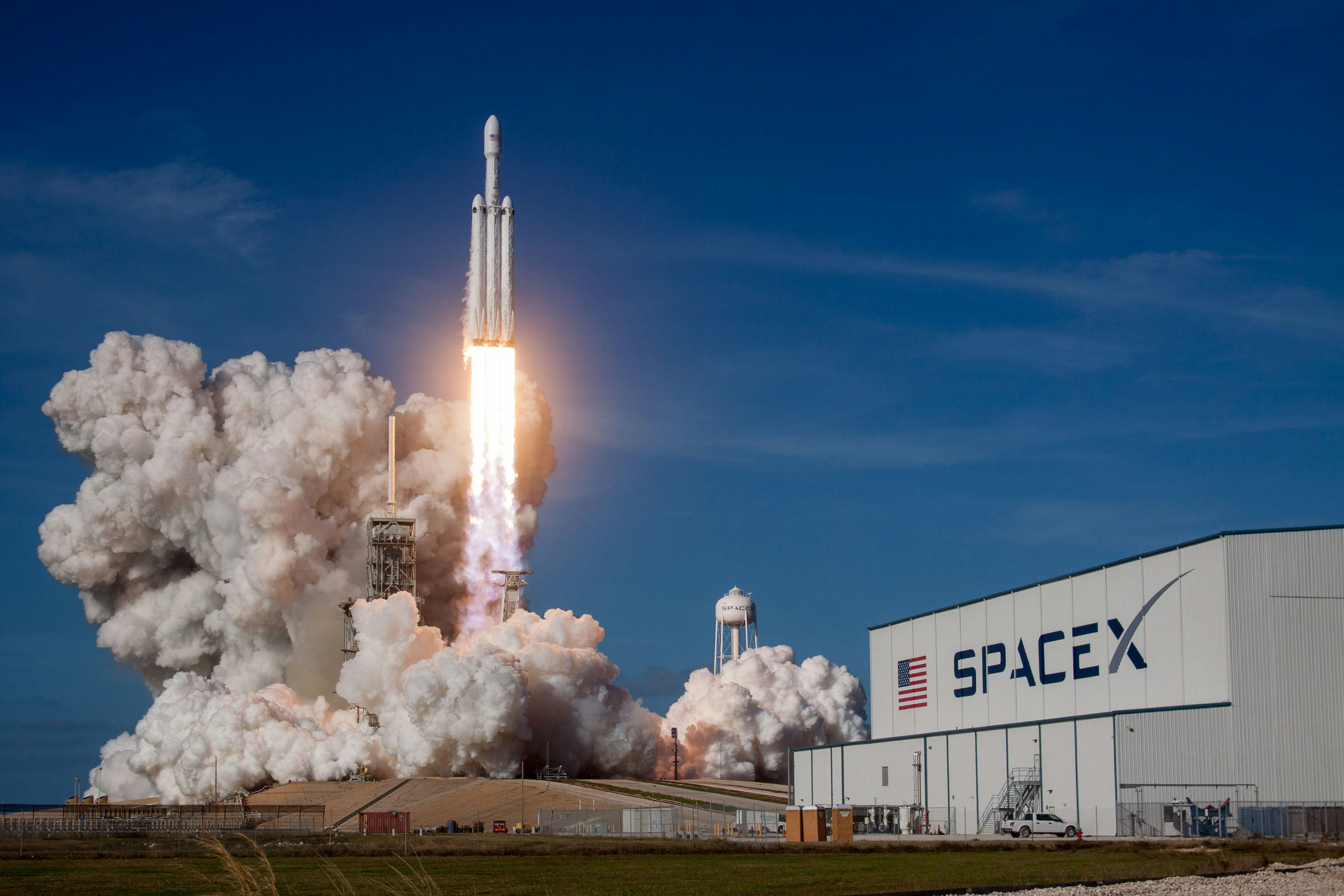
SpaceX may enter the Nasdaq-100, but only after it completes a Nasdaq listing and meets requirements related to market capitalization ranking, industry classification, liquidity, and Fast Entry rules. Listing itself does not mean immediate index inclusion, and index inclusion does not mean the stock price will definitely rise. What you really need to understand is whether SpaceX meets the Nasdaq-100 methodology after its IPO, how quickly it may be evaluated, whether ETFs such as QQQ may passively rebalance, and how an index event may affect trading expectations, fees, and risk assessment.
Key Takeaways
- Whether SpaceX enters the Nasdaq-100 depends on listing venue, market capitalization, industry classification, and liquidity.
- The Nasdaq-100’s new Fast Entry mechanism may allow mega IPOs to be evaluated more quickly.
- Passive ETF funds may rebalance with the index, but this does not guarantee a stock price increase.
- A large valuation does not necessarily mean a large index weight; low public float and weighting rules matter.
- Index inclusion is a market structure variable and should not be treated as a standalone buy signal.
- Before trading, investors should also confirm order types, fee structures, service availability, and risks.
Does SpaceX Meet the Basic Conditions for Entering the Nasdaq-100?

To judge whether SpaceX will enter the Nasdaq-100, you cannot only look at the company’s popularity or IPO valuation. The Nasdaq-100 is a rules-based index. The core questions include: whether SpaceX is officially listed on a qualified Nasdaq exchange, whether it is classified as a non-financial company, whether post-listing trading is sufficiently active, and whether its market capitalization ranking meets the methodology requirements. Only when these conditions form a closed loop does “entering the Nasdaq-100” move from market speculation to a trackable index event.
Based on public information, SEC EDGAR already shows an S-1 filing record for Space Exploration Technologies Corp., indicating that the SpaceX IPO has entered the public registration filing stage. Meanwhile, Reuters reported that SpaceX plans to list on Nasdaq, intends to use the ticker “SPCX,” and has a roadshow, pricing, and listing timeline. The wording should remain cautious here: public filings and media reports can indicate IPO progress, but they do not directly mean the final listing has been completed, nor do they directly imply that the company will definitely enter the index.
The basic positioning of the Nasdaq-100 can be understood from the Nasdaq-100 Index description: it includes the 100 largest non-financial companies listed on Nasdaq and covers sectors such as technology, communications, retail, wholesale, and biotechnology. In other words, if SpaceX ultimately lists on Nasdaq, its business narratives around aerospace, satellite internet, and AI infrastructure are not obstacles in themselves. What truly matters is eligibility assessment and market capitalization ranking under the index methodology.
SpaceX’s initial eligibility can be broken down as follows:
| Assessment Dimension | Currently Observable Information | Meaning for Nasdaq-100 Inclusion |
|---|---|---|
| Listing venue | Reported to plan a Nasdaq listing | A Nasdaq listing is the prerequisite for discussing Nasdaq-100 inclusion |
| Ticker | Reported to plan to use SPCX | Makes it easier to track quotes, index announcements, and ETF holdings |
| Industry classification | Related to aerospace, satellite internet, and AI infrastructure | The key is that it must not be classified as a financial company |
| Market capitalization | Reported valuation is at mega IPO level | May draw attention for Fast Entry evaluation |
| Trading liquidity | Must be observed after listing | Affects whether liquidity requirements are met |
| Final announcement | Still requires confirmation from the company, exchange, and index provider | Market expectations cannot replace rule-based results |
When users search “Will SpaceX enter the Nasdaq-100?”, their real intent usually falls into three categories. The first group wants to know whether QQQ will buy SpaceX after the IPO. The second wants to judge whether index inclusion will push up the stock price. The third wants to track trading opportunities after SPCX lists. These three questions do not have the same answer. Index inclusion depends on rules, ETF buying depends on weight, and stock price performance depends on whether the market has priced in the event in advance, whether the valuation is reasonable, and whether the public float is sufficient.
Summary: SpaceX has the basic conditions to be discussed as a potential Nasdaq-100 candidate, but it cannot yet be described as a confirmed fact. A more accurate judgment is this: if SpaceX ultimately completes its Nasdaq listing and meets requirements related to being a non-financial company, liquidity, market capitalization ranking, and other eligibility conditions, it may become a Nasdaq-100 candidate. Company size and market attention will increase its visibility, but index inclusion is not determined by media heat. It is determined by the Nasdaq-100 methodology, index evaluation dates, and formal announcements. For ordinary investors, the first step is not to bet that it “must enter the index,” but to track the S-1, final prospectus, ticker, listing status, and index announcements.
Fast Entry Rules: Why Might SpaceX Not Need to Wait for the Annual Reconstitution?

The reason SpaceX is frequently discussed as possibly “quickly entering the Nasdaq-100” is the 2026 Fast Entry change in the Nasdaq-100 methodology. In the past, even if a newly listed company was very large, it might still need to wait for a longer observation period and the annual reconstitution. The new rules give very large newly listed companies the opportunity to be included more quickly if they meet the conditions. This is especially important for a giant IPO such as SpaceX.
Under the Nasdaq-100 methodology, the key Fast Entry threshold is that a non-current component security may be fast-tracked into the index if its Full Market Capitalization ranks among the top 40 current index constituents. For IPO companies, the evaluation is usually conducted at the close of the 7th trading day after listing, announced after the close of the 10th trading day, and added after the 15th trading day. The methodology also states that Fast Entry does not require removing another component, so the number of index constituents may temporarily exceed 100.
This means that if SpaceX lists on Nasdaq with a very large market capitalization, it theoretically may not need to wait for the annual reconstitution. But “theoretically possible” still does not mean “certain.” Fast Entry still requires the company to meet all applicable security eligibility standards, including listing venue, non-financial industry classification, liquidity, and not being in bankruptcy or subject to major disqualifying events. Nasdaq’s methodology update note states that public market structure is changing, with more companies choosing to list when they are more mature and larger in scale, so the index methodology needs to reflect large newly listed companies more promptly.
A possible timeline for SpaceX can be understood as follows:
| Time Point | Possible Event | Important Wording |
|---|---|---|
| IPO first day | SPCX begins trading on Nasdaq | Subject to final listing and trading status |
| 7th trading day | Evaluated as the IPO Reference Date | Must meet all applicable eligibility requirements |
| After the 10th trading day | A Fast Entry announcement may appear | Not every IPO will trigger an announcement |
| After the 15th trading day | Eligible companies may be added to the index | Still depends on the index provider’s official arrangement |
| Subsequent quarterly adjustments | Weight and index shares may change | Watch low public float, price, and rebalancing |
Fast Entry also changes how the market trades IPO timelines. Previously, investors might have focused on whether a company could be included during the annual reconstitution. Now, the market may begin trading expectations around “whether it will enter the index after the 15th trading day” before and shortly after the IPO. For a company as highly watched as SpaceX, index inclusion expectations themselves may become a source of short-term volatility. Some funds may position in advance, some may wait for the official announcement, and others may trade only the gap between expectations and confirmation.
The Nasdaq-100 methodology change FAQ also emphasizes that Fast Entry candidates must still meet a minimum average daily trading value requirement of at least US$5 million from the time of listing. This detail matters: a large market capitalization does not automatically satisfy all conditions. The index provider will still consider tradability and investability.
Summary: Fast Entry is the most important rule change in the relationship between SpaceX and the Nasdaq-100. It allows large IPOs to avoid waiting entirely for the annual reconstitution and, if eligible, enter the index evaluation process shortly after listing. Under the methodology, IPO companies are usually evaluated after the 7th trading day, announced after the 10th trading day, and may be added after the 15th trading day. But this path is not “listing equals index inclusion.” The company still needs to meet exchange, industry, liquidity, market capitalization ranking, and other eligibility requirements. For investors, Fast Entry increases the density of potential events and may also amplify expectation-driven trading and short-term volatility.
If SpaceX Enters the Nasdaq-100, How Will ETF Funds Flow?

If SpaceX enters the Nasdaq-100, the most direct market impact is not that the index “endorses” the company, but that ETFs and index funds tracking the index need to adjust their holdings according to rules. The most familiar example for investors is QQQ. According to Invesco QQQ, QQQ tracks the Nasdaq-100 Index and provides exposure to the 100 largest non-financial companies listed on Nasdaq. The fund and index rebalance quarterly and reconstitute annually.
The logic of passive ETFs is not to actively judge whether SpaceX is worth buying, but to replicate index performance as closely as possible. Once SpaceX is included in the index and receives a weight, ETFs, index funds, and some derivative products tracking the Nasdaq-100 need to adjust their holdings according to the rules. This creates passive buying demand and may also lead to the redistribution of weights among existing constituents. For the market, index inclusion would turn SpaceX from a “popular IPO stock” into a “component stock that index funds must handle.”
However, the impact of passive funds should not be simplified as “ETF buying means the stock must rise.” The market often trades expectations in advance, especially for a giant IPO such as SpaceX. If many investors already expect QQQ and other funds to buy before formal inclusion, the stock price may have already partially reflected that demand. When the official announcement appears, short-term traders may instead take profits. An index event is more like a fund-flow variable than a guaranteed source of returns.
Fund types can be broken down as follows:
| Fund Type | Possible Action | Impact on SpaceX |
|---|---|---|
| Nasdaq-100 ETFs | Buy or adjust holdings according to index weight | Increases passive allocation demand |
| Index funds | Rebalance according to index methodology | Creates rule-driven buying |
| Enhanced index funds | May position in advance or deviate from the index | Adds trading complexity |
| Active funds | Still judge based on valuation and fundamentals | May not follow passive funds |
| Short-term funds | Trade index inclusion expectations and announcement gaps | May amplify volatility around announcements |
| Existing constituent funds | Adjust passively due to weight redistribution | May create a crowding-out effect |
Business Insider analyzed the SpaceX IPO and major index ETFs, noting that SpaceX may affect different types of funds such as QQQ, VTI, and SPY, but the degree of impact will vary by index methodology. The Nasdaq-100, CRSP, Russell, and S&P 500 have different requirements for IPOs, free float, profitability history, and inclusion timing. Therefore, even if people say “SpaceX enters an index,” different ETFs may face different timing, weighting, and rebalancing pressure.
Investors should also note that ETF rebalancing is not an isolated one-day event. What may truly affect price are three stages: first, expectation-driven trading before and after the IPO; second, passive fund preparation around the index announcement date and effective date; and third, liquidity, valuation, and subsequent rebalancing after the stock actually enters the index. Often, the market prices back and forth among “expectation—confirmation—execution—digestion,” and prices do not move in a simple straight line.
Summary: If SpaceX enters the Nasdaq-100, ETFs such as QQQ that track the index may indeed generate passive allocation demand. This is why the market pays close attention to index inclusion. But ETF buying does not mean the stock price will definitely rise, especially if the market has already traded the expectation in advance. ETF fund impact depends on the final inclusion timing, initial weight, public float, trading depth, index fund scale, and market sentiment. A more reasonable understanding is this: index inclusion can change fund structure and attention, but it cannot replace analysis of valuation, financials, liquidity, and risk.
Valuation, Public Float, and Weight: Why Does Large Market Cap Not Equal Large Weight?
The higher SpaceX’s valuation, the easier it is for people to assume that once it enters the Nasdaq-100, it will immediately become a very high-weight stock. But index weight is not calculated directly from a media-reported valuation. The Nasdaq-100 methodology distinguishes between Full Market Capitalization and Modified Market Capitalization. The former is more relevant to eligibility and ranking, while the latter is more relevant to weight calculation. This difference directly affects the size of ETF fund flows after SpaceX enters the index.
According to the Nasdaq-100 methodology, component selection considers Full Market Capitalization. Modified Market Capitalization, used for weight calculation, only considers eligible listed share classes. To maintain the investability of low-float securities, the methodology limits the Total Shares Outstanding of low-float securities. It also clearly states that there is currently no minimum free float requirement, but Modified Market Capitalization will limit the weight of low-float securities.
This is SpaceX’s “low public float issue.” If the IPO fundraising size is large but only a small portion of shares is released to the public market, the percentage of publicly tradable shares relative to total share capital may be low. Low public float usually has two effects: first, the supply of tradable shares is smaller, making the price more vulnerable to concentrated order impact; second, index providers and ETFs need to consider investability when allocating, not just the company’s total valuation.
| Variable | Impact on Inclusion Eligibility | Impact on ETF Funds |
|---|---|---|
| Total market capitalization | Determines whether the company may enter the top 40 | Increases market attention and candidate probability |
| Free float | Affects the actual size of tradable shares | Affects buying difficulty and price impact |
| Modified Market Capitalization | Affects index weight calculation | Determines initial weight and passive fund size |
| Trading activity | Affects liquidity eligibility | Affects rebalancing execution cost |
| Weight constraints | Prevents excessive concentration in a single stock | Limits extreme weights |
| Rebalancing | Adjusts weight and index shares later | Creates secondary fund-flow changes |
Weight constraints should also not be ignored. The Nasdaq-100 uses modified market capitalization weighting, not pure free-float market cap weighting. The methodology sets company-level and security-level weight constraints. For example, when a single company or the largest securities account for too much weight, adjustments are made to reduce concentration. This is intended to maintain index investability and prevent the index from being overly dominated by a few mega companies.
If SpaceX lists with an extremely high valuation and a low public float, it may create an apparent contradiction: it may rank very high by Full Market Capitalization and therefore be eligible to trigger Fast Entry, but under Modified Market Capitalization and low-float limits, its initial weight may not be as extreme as the total valuation suggests. For ETFs, the final buying size depends on index weight, not the media-reported valuation itself.
Summary: SpaceX’s large valuation will increase discussion about its possible entry into the Nasdaq-100, but it does not guarantee an extremely high initial index weight. The Nasdaq-100 uses different measures for inclusion eligibility and weight calculation: Full Market Capitalization affects ranking, while Modified Market Capitalization affects weight. Low public float, listed share count, trading activity, and weight constraints can all change the size of ETF purchases. When judging the impact of index fund flows, investors should not only look at valuation numbers such as “US$1.75 trillion” or “US$2 trillion.” They should also look at public float, index methodology, and the actual weight announcement.
Index Inclusion Is Not a Buy Signal: How Should Investors View the SpaceX Index Event?
If SpaceX enters the Nasdaq-100, it will indeed increase market visibility and force more passive funds and index products to handle the stock. But index inclusion is essentially a rule-based result, not an investment rating. A company entering an index means it meets standards related to size, listing venue, industry classification, and liquidity. It does not mean its valuation is cheap, that the stock will rise in the short term, or that long-term risks have disappeared.
The positive effects of index inclusion are relatively clear: institutional research coverage may increase, ETF passive funds may flow in, derivatives and arbitrage trading may become more active, and the market may more frequently compare SpaceX with other large technology growth stocks. These changes can improve liquidity and attention, and may also make SpaceX a core topic in technology growth-style allocation.
But the risks are equally obvious. First, the market may price in index inclusion expectations in advance, so the stock may not necessarily keep rising after the official announcement. Second, public float may be limited in the early IPO stage, so prices may be amplified by short-term orders. Third, ETF rebalancing is a rule-based action with a time window, not unlimited continuous buying. Fourth, SpaceX’s long-term value will still depend on revenue, profitability, capital expenditure, debt structure, governance arrangements, competitive environment, and regulatory risks.
| Common Misunderstanding | Why It Is Inaccurate | More Reasonable Judgment |
|---|---|---|
| Entering the Nasdaq-100 means the stock must rise | The market may trade the expectation in advance | Look at valuation, weight, and liquidity |
| QQQ buying means unlimited buying pressure | ETFs rebalance once or in stages according to rules | Watch the actual weight and execution timing |
| The larger the market cap, the higher the weight | Low public float and weight constraints may limit it | Look at Modified Market Capitalization |
| Index inclusion means the company is low risk | The index reflects size, not guaranteed quality | Still read the prospectus risk factors |
| First-day moves determine the long-term trend | IPO early-stage sentiment and fund flows have a large impact | Separate short-term events from long-term fundamentals |
For investors, a more reasonable approach is to place the SpaceX index event into a judgment framework:
- First confirm whether the IPO has been completed, and whether the final ticker and exchange have been confirmed;
- Then confirm whether the Nasdaq-100 has released a Fast Entry or subsequent adjustment announcement;
- Next observe the weight, ETF holding changes, and trading volume;
- Finally decide whether to participate based on your own risk tolerance, order type, and trading costs.
Popular IPOs may experience significant price volatility in the early listing stage, so investors should fully understand order types, fee structures, and risks before trading. Public market information, trading rules, and fee structures can only help you understand the event; they do not constitute investment advice. Whether related services are available also depends on the user’s location, identity verification results, platform rules, and applicable laws and regulations.
Summary: If SpaceX enters the Nasdaq-100, it will be an important market event, but it is not an independent buy signal. Index inclusion may bring passive funds, institutional attention, and improved liquidity, but it may also produce volatility if expectations have already been priced in. What truly affects investment results remains valuation, fundamentals, public float, trading price, order execution, and risk control. For ordinary investors, “whether it will enter the index” should be treated as an information variable, not simplified into “ETFs will buy, so the stock must rise.”
How to Track SpaceX Index Inclusion Progress and Prepare for Trading
To track whether SpaceX enters the Nasdaq-100, it is best to layer your information sources. IPO progress should be checked through SEC and company filings. Listing timing should be checked through the exchange and mainstream media. Index rules should be checked through Nasdaq Global Indexes. ETF impact should be checked through QQQ and other fund holdings, as well as index adjustment announcements. Do not rely only on social media screenshots or secondhand interpretations, because a high-attention event such as SpaceX can easily produce clickbait headlines, wrong tickers, fake timelines, and excessive speculation.
You can track in the following order:
| Question You Care About | Preferred Information Source | Key Judgment Point |
|---|---|---|
| Is SpaceX advancing its IPO? | SEC EDGAR, S-1, final prospectus | Whether filings are updated and offering terms are confirmed |
| Has SPCX listed? | Nasdaq, trading platform quotes | Ticker, listing date, and trading status |
| Has Fast Entry been triggered? | Nasdaq Global Index Watch, index announcements | 7th, 10th, and 15th trading day milestones |
| Will QQQ buy? | Invesco QQQ holdings, index weight | Constituent changes and weight percentage |
| Can you trade? | Trading platform, account permissions | Region, KYC, order types, and fees |
| How much does it cost? | Fee disclosures, order page | Commission, platform fees, external fees, and fractional share rules |
At the trading level, actual costs also matter. If you are following trading opportunities after the SpaceX IPO, you should pay attention not only to index inclusion and ETF buying, but also to actual trading costs. U.S. stock trading costs usually include not only commissions, but also platform fees, external agency fees, trading activity fees, settlement fees, and other charges. BiyaPay’s U.S. stock trading commission is US$0, the platform fee is US$0.005 per share, with a minimum of US$0.99 per order and a maximum of 1% of the trade value; external agency fees and trading activity fees are US$0.00396 per share; fractional share orders below one share are charged a platform fee equal to 1% of the total transaction amount, capped at US$1.
If your region meets the relevant service eligibility conditions, you can further review the BiyaPay U.S. stock trading fee explanation. BiyaPay is a global multi-asset trading wallet that supports U.S. and Hong Kong stock trading as well as crypto trading, and also supports converting USDT into major fiat currencies such as U.S. dollars or Hong Kong dollars. However, these capabilities should be understood as account and trading preparation tools, not as a recommendation to buy SpaceX.
During the market tracking stage, you can use U.S. stock information to observe market securities. During the trading preparation stage, you can use BiyaPay Invest to understand the trading entry point and account status. Before actually placing an order, you also need to confirm whether the relevant stock has listed, whether trading is supported, how order types take effect, whether fractional share rules apply, and whether local laws, regulations, and platform rules allow the relevant services.
Summary: Tracking whether SpaceX enters the Nasdaq-100 should not only focus on media predictions. Instead, you should build an information chain of “IPO filings—exchange status—index methodology—ETF holdings—trading costs.” SEC EDGAR is suitable for prospectuses and offering documents, Nasdaq is suitable for index rules and adjustment announcements, Invesco QQQ is suitable for ETF holding changes, and trading platforms are used to confirm whether the stock can be searched, traded, and how fees are calculated. BiyaPay can be one tool for observing U.S. market quotes, understanding fees, and preparing for trading, but whether related services are available depends on the user’s location, identity verification results, platform rules, and applicable laws and regulations.
FAQ
Will SpaceX Immediately Enter the Nasdaq-100?
Not necessarily. Even if SpaceX completes a Nasdaq listing, it must still meet the Nasdaq-100 eligibility requirements and go through Fast Entry or an index adjustment process. Listing on the IPO first day does not mean immediate index inclusion. The final result depends on Nasdaq’s official announcement.
How Quickly Can Fast Entry Take Effect?
According to the Nasdaq-100 methodology, IPO companies are usually evaluated after the close of the 7th trading day, announced after the 10th trading day, and may be added after the 15th trading day. However, this depends on meeting all applicable eligibility requirements.
Will QQQ Buy SpaceX?
If SpaceX is included in the Nasdaq-100 and receives an index weight, funds such as QQQ that track the index usually need to adjust their holdings according to the rules. The actual buying size depends on final weight, liquidity, rebalancing timing, and fund size.
Will SpaceX Have a High Weight?
Not necessarily. SpaceX’s total valuation may be high, but its weight also depends on Modified Market Capitalization, free float, low-float limits, and index weight constraints. A large market capitalization does not necessarily equal a large weight.
Will Index Inclusion Make the Stock Price Rise?
There is no guarantee. Index inclusion may bring passive funds and greater attention, but the market may price it in advance, and volatility may also appear after the announcement. The stock price still depends on valuation, earnings, liquidity, and the broader market environment.
Which Information Sources Should You Watch?
Prioritize SEC EDGAR, SpaceX’s final prospectus, Nasdaq Global Index Watch, Nasdaq-100 methodology, QQQ holding disclosures, and mainstream financial media. Before trading, also review platform order rules and fee structures.
Whether SpaceX enters the Nasdaq-100 is indeed worth watching, but investors should not focus only on “whether QQQ will buy.” A more complete judgment chain is: whether SpaceX officially completes its IPO, whether it lists on a qualified Nasdaq exchange, whether it meets Fast Entry requirements for market capitalization and liquidity, whether the index provider issues an announcement, what the final weight is, and whether ETF rebalancing has already been priced in by the market. Only by connecting these steps can you more accurately understand how index inclusion may affect fund flows and trading sentiment.
If you are following U.S. stock opportunities after the SpaceX IPO, you can first use the BiyaPay APP to track market information, understand account preparation, and review fee rules before deciding whether to take further action. BiyaPay’s U.S. stock trading commission is US$0. Platform fees, external agency fees, and other fees are subject to the fee center and order page display. A more prudent approach is not to chase orders immediately because of a popular IPO or index inclusion expectations. Instead, first confirm service availability in your region, identity verification results, stock trading status, order types, fractional or whole-share fees, and then combine public information with your own risk tolerance before deciding whether to participate.
*This article is provided for general information purposes and does not constitute legal, tax or other professional advice from BiyaPay or its subsidiaries and its affiliates, and it is not intended as a substitute for obtaining advice from a financial advisor or any other professional.
We make no representations, warranties or warranties, express or implied, as to the accuracy, completeness or timeliness of the contents of this publication.
Related Blogs of

Stripe and Advent Bid for PayPal: Offer Price, Financing, and Deal Probability Explained


Where Will IBM Stock Go After Q2 Earnings? Three Scenarios Based on Revenue, Red Hat, and Free Cash Flow


Which AI Hardware Stocks Benefit More Under IBM’s Warning? Comparing the Sensitivity of NVDA, DELL, MU, and HPE


Can Bank of America Sustain $31.6 Billion in Revenue? Assessing Net Interest Margin, Loan Growth, and Credit Costs

Choose Country or Region to Read Local Blog
 Australia
 Austria
 Belgium
 Canada
 Cyprus
 Czech Republic
 Denmark
 Estonia
 Finland
 France
 Germany
 Greece
 Hong Kong
 India
India Indonesia
 Ireland
 Italy
Italy Japan
Japan Latvia
 Lithuania
 Luxembourg
 Malaysia
 Malta
Malta Morocco
 Nepal
Nepal Netherlands
 New Zealand
 Norway
 Pakistan
 Philippines
 Poland
 Portugal
 Romania
 Singapore
 Slovakia
 Slovenia
 South Africa
 South Korea
 Spain
Spain Sweden
 Thailand
 United States
 Turkey
 United Arab Emirates
 United Kingdom
 Vietnam
Contact Us




BIYA GLOBAL LLC is registered with the Financial Crimes Enforcement Network (FinCEN), an agency under the U.S. Department of the Treasury, as a Money Services Business (MSB), with registration number 31000218637349, and regulated by the Financial Crimes Enforcement Network (FinCEN).
BIYA GLOBAL LIMITED is a registered Financial Service Provider (FSP) in New Zealand, with registration number FSP1007221, and is also a registered member of the Financial Services Complaints Limited (FSCL), an independent dispute resolution scheme in New Zealand.