
What to Do After Converting USDT to HKD? Full Overview of Mainstream Scenarios for Payment, Transfer, and Hong Kong Stock Funding





If you are searching for “how to buy Hong Kong stocks after converting USDT to HKD,” what you really want to solve is usually not the instant of “how to convert,” but whether the HKD after conversion can continue to be used for payment, transfer, funding, and placing orders. For Chinese users, this is a complete fund connectivity chain, not an isolated currency conversion. Especially in 2026, Hong Kong’s regulatory framework for stablecoin issuers and virtual asset platforms is clearer. When comparing paths, users can no longer look only at exchange rates — they must also consider the landing form of the HKD, subsequent uses, review requirements, and whether the path is sustainable.
Key Takeaways
- What you truly need to judge is not “whether USDT can be converted to HKD,” but “where the HKD lands after conversion and what it can do.”
- Payment, transfer, and Hong Kong stock funding all use HKD, but their subsequent requirements and judgment criteria are not the same.
- In 2026, Hong Kong regulation is more transparent, and the importance of licensed platforms and regulated paths has clearly increased.
- Buying Hong Kong stocks requires not only HKD, but also getting the HKD into an investable account and turning it into usable funds.
- The truly smoother path is reasoned backward from the final use, rather than converting first and then thinking about the next step.
Why Are People Searching “How to Buy Hong Kong Stocks After Converting USDT to HKD”? First Understand the Real Intentions Behind These Searches
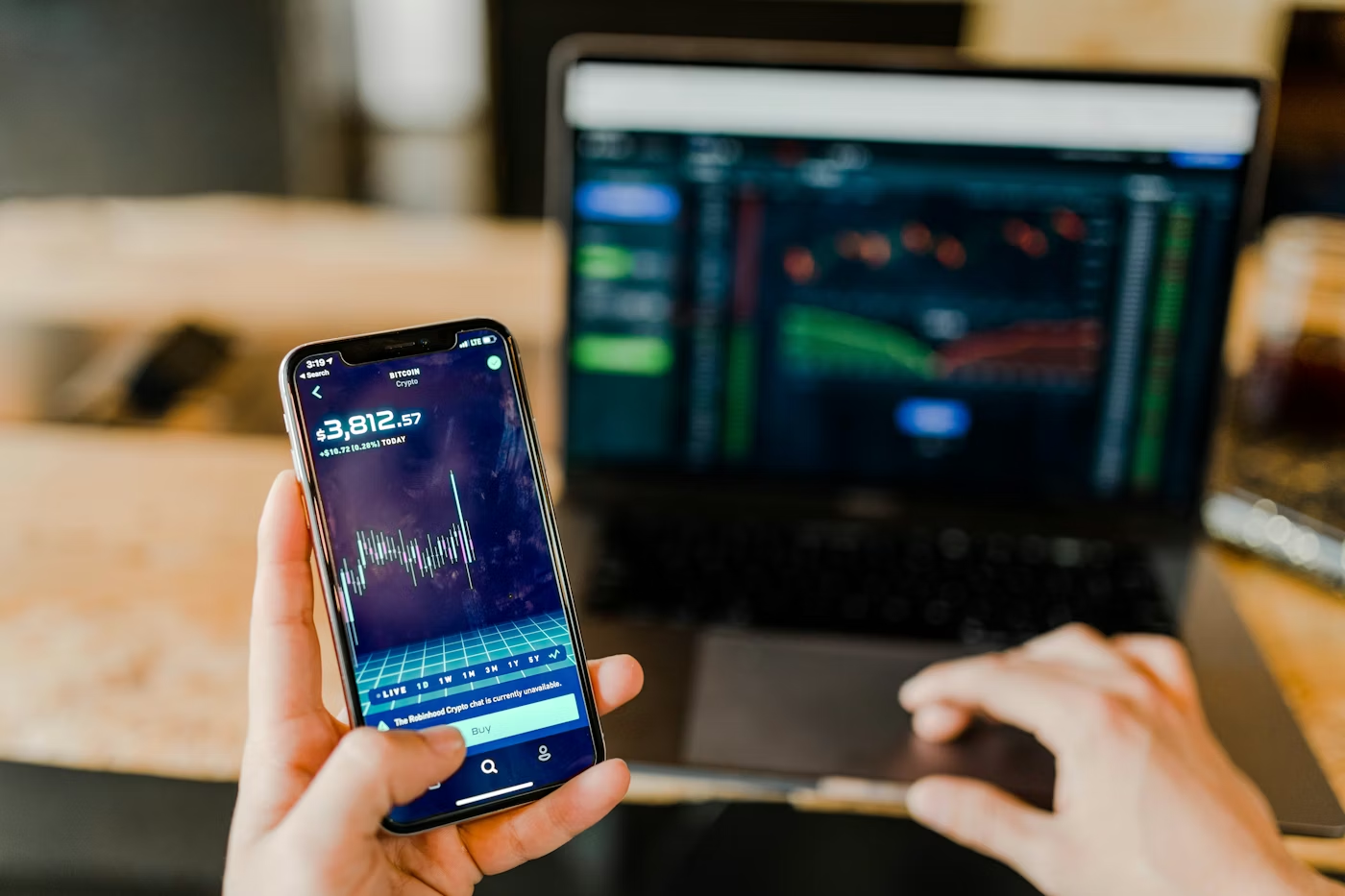
How Chinese Users Typically Search for This Question in 2026
Such searches in the Chinese context are usually not written academically, but very directly:
“USDT to HKD then how to buy Hong Kong stocks,” “Can USDT converted to HKD be withdrawn,” “Can USDT converted to HKD be used for funding,” “How to transfer after converting USDT to HKD,” “Is it safe to buy Hong Kong stocks with USDT.” Behind these expressions are actually four mixed questions: first, how to get the HKD out; second, where the HKD lands after conversion; third, whether this HKD can continue to flow; fourth, whether it can truly enter the Hong Kong stock trading system.
In other words, users are not asking about a technical action, but whether a fund chain can be connected. This search intent is very important, because it means the article cannot only cover “conversion methods,” but must explain “how the funds after conversion are diverted for different uses.”
The 3 Most Common Usage Scenarios for This Type of Demand
The first type of users are typical investment-type users: you convert USDT to HKD first, then hope to turn that money into funds for buying Hong Kong stocks.
The second type are mixed-type users: you may first need to make payments, transfers, or hold HKD for a period of time before entering investment.
The third type are cross-border fund scheduling-type users: you use USDT as a bridge, with HKD as only an intermediate stop, and will later connect to other fiat currencies, investment accounts, or global receipts and payments.
These three types of users all search “how to buy Hong Kong stocks after converting USDT to HKD,” but the problems they actually want to solve are not the same. The first type cares about funding accessibility, the second about usability, and the third about reusability.
Why 2026 Requires More Attention to “How to Use After Conversion” Than Before
The biggest change in 2026 is not that users understand crypto better, but that the regulatory environment is clearer. The Hong Kong Monetary Authority states that the regulatory regime for stablecoin issuers took effect on August 1, 2025; the Hong Kong Securities and Futures Commission continues to distinguish between fully licensed, in-application, and other status platforms. For you, this means “able to convert one transaction today” and “able to stably use this path in the future” are no longer the same thing.
Therefore, when discussing USDT to HKD conversion in 2026, you cannot just ask “which one is cheaper,” but must ask “which path has less friction in subsequent payment, transfer, and funding.”
Questions You Should Really Ask Yourself First
- What is the first thing I want to do after converting to HKD — spend, transfer, or invest?
- Do I need book-balance HKD, or HKD that can continue to flow?
- Will I reuse this path repeatedly, or is it just a one-time action?
- Do I need the HKD to continue converting to other currencies or entering investment accounts?
- Am I more afraid of handling fees, or more afraid of subsequent path interruptions?
Core Summary
“How to buy Hong Kong stocks after converting USDT to HKD” is not a single-point exchange issue, but a fund usage issue. What you truly need to understand is: after the HKD is converted, which layer it enters, what functions it has, and whether it can continue to connect with payment, transfer, or investment. Only by first clarifying the full intent behind this search can your later path choices avoid deviation.
After Converting USDT to HKD, Where Does It Usually Land? First Distinguish the 4 Types of Receipt Forms
Receipt to Platform Balance: Looks Fastest, But Not Necessarily the Most Flexible
Many users see “HKD credited” and assume they have completed the next step. In fact, platform balance-type receipt only means the HKD has formed an accounting balance within a certain system — it is not necessarily directly equal to usable for payment, transfer, or investment. The biggest advantage of platform balance is short conversion action and clear interface; the biggest limitation is that subsequent freedom depends on what the platform allows. If you do not distinguish this first, it is easy to mistake “having HKD on the books” for “this HKD can now be used to buy Hong Kong stocks.”
Receipt to Electronic Wallet or Intermediate Account: Suitable for Circulation, But Depends on Subsequent Restrictions
The second common form is that HKD first lands in some intermediate account, electronic wallet, or transition layer. The advantage of this method is convenience for circulation and further processing; but it often creates a misconception: you think “you are only one step away from final use,” but there may actually be several more steps. Because different intermediate layers support different functions — some lean toward internal transfers, some toward consumption, and some toward continued exchange. In other words, intermediate accounts are more like “transportation hubs” than destinations.
Receipt to Accounts That Can Support Investment or Payment: More Suitable for Subsequent Use
For the topic of “how to buy Hong Kong stocks after converting USDT to HKD,” the most critical point is not whether you have HKD, but whether the HKD ultimately enters an account that can continue to execute actions. If your later goal is Hong Kong stock trading, the ideal state is not staying in an intermediate layer, but letting the HKD land in a form that can smoothly connect with trading accounts, funding logic, and fund usability. If your main focus afterward is consumption or transfer, then you should prioritize payment and outbound receipt/payment capabilities.
Differences in Uses of the 4 Receipt Forms
| Receipt Form | Typical Advantages | Main Limitations | Better for Payment or Investment | What You Should Focus On |
|---|---|---|---|---|
| Platform Balance | Fast conversion, clear interface | Not necessarily directly usable externally | Neutral | Whether it supports further transfer out |
| Electronic Wallet / Intermediate Layer | Flexible, suitable for transition | Functions depend on the specific system | Leans toward payment/transfer | Whether it supports external flow |
| Payable Account | Clearer usage scenarios | Not necessarily suitable for investment connection | Leans toward payment | Whether it supports consumption and payment |
| Investable or Connectable Account | Convenient for subsequent funding | Higher path requirements | Leans toward investment | Whether it becomes usable investment funds |
Why Receipt Form Is More Important Than “Receipt Speed”
In real usage, speed is certainly important, but receipt form is usually more important. Because a path that arrives instantly today but gets stuck in usage tomorrow is not necessarily better than one that is slightly slower but smoother afterward. Especially for Chinese users, much friction does not occur at the “currency conversion” moment, but in the segment of “preparing to continue using after conversion.” This is exactly why tools like BiyaPay — which simultaneously support digital asset and fiat exchange, global receipts/payments, and Hong Kong/US stock trading connectivity — make it easier to clearly explain “what to do after conversion” than single exchange tools.
Core Summary
After converting USDT to HKD, the first thing to judge is not “whether it has arrived,” but “what layer the HKD has landed in.” Platform balance, intermediate accounts, payable accounts, and investable accounts all sound like “HKD receipt,” but what you can do afterward is completely different. If you do not first distinguish the receipt form clearly, your later payment, transfer, and Hong Kong stock funding will all be mixed into one problem.
What Can You Do After Converting USDT to HKD? Payment, Transfer, and Hong Kong Stock Funding Are Actually Three Different Paths

Scenario 1: Using HKD for Payment — The Key Is Whether It Can Truly Connect to Consumption Scenarios
Payment-type usage is different from what many users imagine. It is not complete just because “HKD is in the account,” but whether you can let this HKD truly enter consumption scenarios, such as local Hong Kong consumption, service payments, cross-border use, or forming a closed loop with card scenarios. For this type of users, the most important thing is not trading depth, but landing capability: whether it can be spent, where it can be spent, and whether another layer is still needed when spending.
If your goal is payment, when evaluating paths you should prioritize spendability rather than investment connectivity. Many paths can generate HKD, but not every path is suitable for “using it directly.”
Scenario 2: Using HKD for Transfer — The Key Is Outbound Flow Capability and Path Clarity
Transfer-type usage looks similar to payment, but the judgment criteria are actually different. Payment focuses more on scenario access, while transfer focuses more on outbound flow capability, receipt/payment matching, and clarity of documents and paths. Especially for Chinese users, if cross-border receipts and payments are only a temporarily pieced-together path, problems of “not knowing how to continue” often arise later.
Therefore, if you convert HKD for transfer, do not only look at “whether it can be transferred out,” but also whether this path is suitable for repeated use, whether it supports global receipts and payments, and whether it can be clearly explained. What is more important than “exchange rate 0.1% lower” is whether the entire fund chain can be smoothly connected.
Scenario 3: Using HKD for Hong Kong Stock Funding — The Key Is Whether It Can Smoothly Enter an Investment Account
This is the core part of this article. Many users directly equate “converting to HKD” with “already able to buy Hong Kong stocks,” but there is actually at least one more layer in between: your HKD needs to enter an investable account system and become usable funds at the trading level. As long as this step is not completed, you are still in the “fund preparation stage,” not the real “able to buy Hong Kong stocks.”
In other words, USDT → HKD is only translating the fund language from one form to another; HKD → usable Hong Kong stock buying power is another threshold.
The Most Important Questions Each of the Three Types of Uses Should Prioritize
- Payment type: Can it be directly consumed? Can it connect to cards or wallets?
- Transfer type: Does it support outbound flow? Is the path and traceability clear?
- Investment type: Can the HKD enter an investment account? Can it become usable buying power?
Why You Cannot Use the Same Set of Standards to Choose Paths for All Three Types
Because the endpoints of the three paths are different. Payment wants spendability, transfer wants flowability, and investment wants buyability. If you use the “whether it can buy Hong Kong stocks” standard to choose a payment path, you will find many paths too complicated; conversely, if you use the “whether it can be consumed immediately” standard to choose an investment path, you will miss solutions that are truly suitable for funding. The most common mistake users make in 2026 is mixing these three sets of standards.
Core Summary
Payment, transfer, and Hong Kong stock funding may all start from “converting USDT to HKD,” but they are not the same path. Payment looks at consumption access, transfer looks at outbound flow, and Hong Kong stock funding looks at investment account connectivity. Only by first clarifying exactly which result you want can you select the truly suitable path.
If Your Goal Is to Buy Hong Kong Stocks, What Additional Steps Do You Need to Understand After Converting USDT to HKD
Having HKD Does Not Mean You Have Completed Hong Kong Stock Funding
This is the layer most easily misunderstood in the entire topic. HKD is only the currency; funding is an account action; and tradable funds are a trading status. The three are not the same thing. Converting to HKD only means you have completed the currency conversion; but to buy Hong Kong stocks, you still need to get this HKD into an account that can buy Hong Kong stocks and make it usable funds in that account. Otherwise, what you have is only “HKD balance,” not “Hong Kong stock buying power.”
Why Hong Kong Stock Trading and Settlement Affect Your Fund Arrangements
The Hong Kong Exchanges and Clearing settlement page clearly states that the current settlement of stocks and cash positions in the Hong Kong securities market is still based on T+2; at the same time, HKEX issued a discussion paper in 2025 on shortening the spot market from T+2 to T+1, but the existing design of the spot market at this stage still revolves around T+2.
What does this mean for you? It means that “seeing that trading is possible today” and “funds have been fully settled” are not the same point in time under the system. If you do not understand the settlement rhythm, it is easy to misjudge fund arrangements, especially when you plan to trade continuously, adjust positions, or make multiple fundings.
Why Hong Kong Stock Trading Details Will in Turn Affect Your Funding Path Choice
Hong Kong stocks cannot be bought with any amount or any number of shares casually. First, the Hong Kong market generally uses board lot as the trading unit; portions less than one board lot are odd lots with different trading mechanisms. Second, the Hong Kong Exchanges and Clearing FAQ clearly states that the trading system’s automatic matching does not accept odd lots — odd lots must go through a special odd lot market.
In addition, the Hong Kong Exchanges and Clearing minimum spread adjustment shows that the second phase of narrowing bid-ask spreads has been advanced in 2026. This means quotation units in certain price ranges are finer, and trading experience and order details will change.
Both points will in turn affect your fund preparation: if your HKD amount is already tight, or you are targeting stocks with higher board lot thresholds, what you need is not “just enough HKD for one transaction,” but a more complete preparation “sufficient to cover the trading unit, fees, and subsequent fund occupation.”
Necessary Judgment Nodes from “HKD Receipt” to “Able to Buy Hong Kong Stocks”
| Judgment Node | What You Need to Confirm | Common Misconception | Why It Matters |
|---|---|---|---|
| Whether HKD lands in an investable account | Not just looking at balance | Mistaking intermediate balance for buying power | Determines whether it can enter the trading system |
| Whether the account has completed review | Whether account capabilities are complete | Thinking having an account means it can be used directly | Determines whether normal funding and trading are possible |
| Whether funds are in usable status | Tradable and received are not synonyms | Ignoring settlement and usability rhythm | Affects actual order placement timing |
| Target stock’s board lot threshold | Whether funds are enough to cover board lots | Estimating only by share price, not by board lot | Affects whether a trade can be executed |
| Order details and spread rules | Whether you understand minimum spread changes | Thinking Hong Kong stock orders are exactly the same as US stocks | Affects order experience and execution expectations |
Why Using an Integrated Path from the Beginning Makes It Easier to Reduce Redos
If your goal is originally “buy Hong Kong stocks after converting USDT to HKD,” then path design is best to serve this endpoint from the start. That is, you are not casually converting some HKD and then temporarily figuring out how to connect to trading, but reasoning the path backward from “this money ultimately needs to become Hong Kong stock buying power.” Modes like BiyaPay web trading that connect digital assets, fiat exchange, and Hong Kong/US stock trading together will save more steps than segmented paths of “convert first, then transfer, then find a funding method.” And if you still need to research targets first, you can directly use its stock inquiry for preparation.
Core Summary
If your goal is to buy Hong Kong stocks, converting USDT to HKD is only the first step. What is truly critical is: the HKD must enter an investable account, become usable funds, and be sufficient to cover the target stock’s trading units and related fees. The earlier you understand Hong Kong stock settlement rhythm, board lot mechanism, and trading details, the less likely you are to misjudge “HKD receipt” as “already able to buy.”
Risks, Restrictions, and Misconceptions Most Easily Overlooked by Chinese Users in 2026
Misconception 1: Thinking “Converting to HKD” Equals “Anything Can Be Done Afterward”
This is the most common and most dangerous misconception. Many users think that as long as the HKD is out, subsequent payment, transfer, and funding are just “a few clicks.” In reality, many paths only solve the first half of currency conversion but do not naturally solve the second half of functional connectivity. If you do not first distinguish where the HKD lands, whether it can continue to move, and whether it is suitable for investment, every later step may require finding a new way.
Misconception 2: Looking Only at Whether It Can Be Converted, Not at Whether the Platform or Path Is Under a Clear Regulatory Framework
In 2026 you can no longer treat “usable” as “sufficiently reliable.” The Hong Kong Securities and Futures Commission’s virtual asset trading platform list clearly reminds that fully licensed platforms, applicant lists, and unregulated platforms are not the same concept; the Hong Kong Monetary Authority has also established a page for the stablecoin issuer regulatory regime.
For you, this is not a game of legal terminology, but a question of path reliability. The clearer the platform status, the easier it is for you to make long-term arrangements for payment, transfer, and investment afterward.
Misconception 3: Treating This Only as One Currency Exchange, Not as a Fund Chain
The real loss for many users is not the single handling fee, but repeated hassle. Today you convert and find it cannot be used for payment, so you change the path tomorrow; the day after tomorrow you find it cannot fund smoothly, so you redo it again. Thus, on the surface the exchange rate looks good, but the total cost is actually very high. What explanatory articles should most remind you of is this point: what you are doing is not a single exchange, but a fund chain design.
Risk Screening Checklist for Chinese Users Before “Buying Hong Kong Stocks After Converting USDT to HKD”
| Risk Point | Common Manifestation | Where It Gets Stuck | How to Avoid in Advance |
|---|---|---|---|
| Unclear platform regulatory status | Only looking at promotion, not lists | Subsequent use and reuse | Prioritize checking licensed/regulated status |
| Restricted use of HKD after receipt | Can only stay in intermediate layer | Payment, transfer or funding | Check receipt form first before deciding |
| Funding path does not match investment account | Have HKD but cannot enter investment account | Before Hong Kong stock trading | Reason path backward from investment endpoint |
| Looking only at exchange rate, not subsequent costs | Surface cheap, high total cost | Entire process | Calculate handling fees, time, and redo costs together |
| Lack of document and logic retention | Can convert but cannot explain clearly | Transfer or subsequent arrangements | Develop habit of traceability and path review |
Original Insight We Can Provide: The Most Valuable Thing Is Not “Cheaper Once,” But “Fewer Redos Three Times”
This article does not fabricate data such as “three funding tests in a certain month of 2026,” because unverified tests should not be written as facts. But we can provide a more useful judgment framework than competitors:
For Chinese users, the total cost of buying Hong Kong stocks after converting USDT to HKD = conversion cost + receipt cost + path redo cost.
Many articles only cover the first two items. What really costs you time and efficiency is often the third item. As long as you reason the path backward from the endpoint from the beginning, many invisible costs can actually be avoided in advance.
Core Summary
In 2026, the pit Chinese users most easily fall into under this topic is not “not knowing how to convert,” but treating exchange, receipt, payment, transfer, and Hong Kong stock funding as unrelated steps. The truly more reliable thinking is to start from the final use and view these steps as one continuous fund chain.
If You Want to Make the Chain USDT → HKD → Hong Kong Stocks / Payment / Transfer Smoother, What Logic Should You Use for Planning
First Determine Your Endpoint: Do You Want Consumption, Turnover, or Hong Kong Stock Investment
Whether a path is smooth does not start with choosing a tool, but with first defining the endpoint. Are you doing it for daily consumption, Hong Kong payments, cross-border transfers, or buying Hong Kong stocks? This step seems basic, but it actually determines all later judgment criteria. Because even though it is “HKD receipt,” consumption-type users want spendability, transfer-type users want flowability, and investment-type users want buyability.
Then Reason the Path Backward: Where Should the HKD Land to Reduce Subsequent Redos
Once the endpoint is clear, the path becomes easy to reason backward.
If it is for payment, prioritize spendability.
If it is for transfer, prioritize global receipts/payments and path clarity.
If it is for Hong Kong stock investment, prioritize connectivity with investment accounts.
This backward reasoning approach may not feel as straightforward as “convert first and figure it out later,” but it is exactly what helps you reduce the most expensive later cost: redos.
Why Integrated Fund Paths Make It Easier to Reduce Friction in 2026
Users in 2026 are increasingly unsuitable for “changing tools at every step.” The reason is simple: the regulatory environment is clearer, reviews emphasize consistency more, and user needs are more complex. If you need both digital asset and fiat exchange, international remittances, global receipts and payments, and continued access to Hong Kong stocks, US stocks, or card scenarios, then integrated paths are usually more worry-free. Global multi-asset trading wallets like BiyaPay can put USDT to HKD conversion, cross-border fund flows, Hong Kong/US stock trading, and some payment capabilities under the same logic, which will be obviously more user-friendly for high-frequency users.
5 Questions to Ask Yourself Before Path Planning
- What exactly is the first thing I want to do after converting to HKD?
- Will I continue with transfers, payments, or converting to other currencies afterward?
- Am I doing this to buy Hong Kong stocks, not just to hold HKD?
- Will I reuse this path in the future?
- Do I want to save a bit on handling fees, or do I want to take fewer detours?
Core Summary
The smoothest path does not start from thinking “which one can convert now,” but from reasoning backward from “what is the first thing to do after the HKD is converted.” The earlier you treat payment, transfer, and investment as one continuous fund chain, the easier it is to reduce redos, shorten connection time, and find solutions suitable for long-term use.
FAQ
Can I directly buy Hong Kong stocks after converting USDT to HKD?
It cannot be simply equated. What you complete first is currency conversion; afterward you still need to get the HKD into an investable account and turn it into usable buying power before you truly enter the Hong Kong stock trading stage.
Can I withdraw HKD after receipt?
It depends on which layer the HKD lands in. Platform balances, intermediate accounts, or payable accounts have very different capabilities for subsequent withdrawal, transfer, and continued use — they cannot be generalized.
Is HKD receipt the same as investable funds?
No. Receipt means the funds have arrived at a certain layer; investable funds mean they have entered the corresponding investment account and meet trading usability conditions.
Why care about settlement rhythm when buying Hong Kong stocks?
Because Hong Kong stocks are still designed around T+2 settlement arrangements. If you do not understand the rhythm of trading and settlement, it is easy to misjudge when funds are truly usable.
Is it safe to buy Hong Kong stocks with USDT?
A more accurate way to say it is: you need to judge whether the entire path is clear, whether the platform status is explicit, and whether the HKD after landing is suitable for investment connectivity, rather than just asking “whether it can be bought.”
Why can’t payment and funding use the same standard to choose paths?
Because the endpoints are different. Payment looks at spendability, while funding looks at investment account connectivity. Using the same set of standards often leads to paths that look smooth on the surface but are not smooth later.
What is truly worth understanding is not “whether USDT can be converted to HKD,” but how the HKD after conversion can more smoothly enter payment, transfer, and Hong Kong stock investment scenarios. For Chinese users, the most effective thinking is not to convert first and then think, but to determine the endpoint first and then reason the path backward. In this way, what you get is not a one-time solution, but a fund chain that can be reused longer-term.
*This article is provided for general information purposes and does not constitute legal, tax or other professional advice from BiyaPay or its subsidiaries and its affiliates, and it is not intended as a substitute for obtaining advice from a financial advisor or any other professional.
We make no representations, warranties or warranties, express or implied, as to the accuracy, completeness or timeliness of the contents of this publication.
Related Blogs of

Online Bank-to-Bank Transfers: Account Linking, Steps, and Limits

Crypto Trading Bots: Types, Costs, and Security Risks




Choose Country or Region to Read Local Blog
 Australia
 Austria
 Belgium
 Canada
 Cyprus
 Czech Republic
 Denmark
 Estonia
 Finland
 France
 Germany
 Greece
 Hong Kong
 India
India Indonesia
 Ireland
 Italy
Italy Japan
Japan Latvia
 Lithuania
 Luxembourg
 Malaysia
 Malta
Malta Morocco
 Nepal
Nepal Netherlands
 New Zealand
 Norway
 Pakistan
 Philippines
 Poland
 Portugal
 Romania
 Singapore
 Slovakia
 Slovenia
 South Africa
 South Korea
 Spain
Spain Sweden
 Thailand
 United States
 Turkey
 United Arab Emirates
 United Kingdom
 Vietnam