If You Want to Make Cross-Border Investing a Long-Term Habit, Don’t Just Focus on Opening an Account — Build Your Funding Route First





When many Chinese investors first look into U.S. stocks, the first things they usually research are “which broker is easiest to open,” “how to fill in the signup link,” or “whether KYC will pass.” But once you actually try to turn investing into a long-term habit, you quickly realize that what determines your experience ceiling is usually not the account itself, but your funding route: how your money gets in, how you add to positions, how you sell, how funds flow back, and how you reallocate. Over the past period, international brokers have continued to keep clear requirements around same-name funding, third-party transfers, memo information, and proof of source of funds; at the same time, some institutions have also started offering new options such as stablecoin deposits. For you, opening an account is only the entry point. The funding route is the real underlying infrastructure of long-term cross-border investing.
Key Takeaways
- In long-term cross-border investing, the real bottleneck is usually not account opening, but deposit and fund return routes.
- Traditional bank wires, stablecoin funding, and hybrid routing each suit different users and come with different limits.
- What brokers care about most is usually not whether you want to trade, but whether your funding path is clear and explainable.
- The value of stablecoin routes is not only about speed, but also about reducing friction in FX conversion and cross-border transfers.
- If you want investing to become a long-term habit, you need to treat buying, selling, withdrawing, and reallocating as one connected line.
Why Many Chinese-Speaking Investors Can Open an Account but Still Struggle to Sustain Long-Term Cross-Border Investing

You Think You’re Stuck at Account Opening, but What’s Really Blocking You Is Funding and Fund Return
Many people assume that the first major barrier in U.S. stock investing is account opening. In reality, opening an account only solves one problem: whether you have a brokerage account. It does not solve whether that account can operate smoothly and sustainably over the long run. The moment you are actually ready to enter the market, the issues immediately become concrete: how the money gets in, whether it must come from an account in the same name, how the memo should be filled in, how long it takes to become available for investing after arrival, how proceeds flow back after selling, and whether you must repeat the whole process again the next time you add funds.
That is why quite a few people finish opening a brokerage account but still delay sending their first dollar. For long-term investing, the account is only a container; the funding route is the mechanism that makes that container actually work. What you are building is not just a one-time trading opportunity, but a repeatable cross-border capital capability.
The Four Real Obstacles Chinese-Speaking Users Often Face: Slow, Expensive, Troublesome, and Risky
If you break down the real pain points, they usually fall into four areas: slow, expensive, troublesome, and risky.
“Slow” shows up in the uncertainty of traditional wire arrival times. Once cross-border banks, intermediary banks, holidays, or review procedures are involved, it becomes hard to predict when your money will truly be ready to invest.
“Expensive” is not just about fees, but also intermediary bank charges, FX losses, and time costs.
“Troublesome” mainly comes from complex information requirements, fragmented currency conversion, and incomplete account infrastructure.
“Risky” is even more critical: unclear funding paths, third-party transfer issues, difficulty getting funds back out later, and even potential scrutiny on the banking side.
| Common Obstacle | Surface Symptom | Real Problem |
|---|---|---|
| Slow | Uncertain arrival time, missed buying opportunities | Low responsiveness of the funding path |
| Expensive | Fees, intermediary charges, FX loss | Total cost is underestimated |
| Troublesome | Too many steps, fragmented process | Funding chain lacks continuity |
| Risky | Hesitation to move large amounts or move money frequently | Path is not clear enough or explainable enough |
If you focus only on opening the account, it is easy to feel that half the problem is already solved. But once you factor in how money goes in and comes out, you realize the real challenge has only just begun.
Why a “Long-Term Habit” Requires You to Look at the Entire Route, Not Just a Single Purchase
If you are making a one-off investment, of course you can focus only on “how to buy in.” But the moment you intend to allocate to U.S. stocks, Hong Kong stocks, or U.S. dollar assets over the long term, your mindset has to change. Because investing is not a single transfer. It is a cycle: funding, buying, holding, adding, selling, settlement, withdrawal, and reallocation.
The U.S. securities market currently operates on a T+1 settlement cycle, which means settlement is completed on the next business day after the trade. That is faster than before. But this only improves settlement efficiency inside the securities market itself. It does not mean your cross-border funding chain automatically becomes faster too. Broker-available cash, bank arrival times, and withdrawal efficiency still depend on the route you choose.
So for long-term investors, the first thing to build is not just a way to “get in,” but a route that can work in both directions.
Who This Article Is For
If you already hold USDT, or are considering moving part of your digital assets into U.S. stocks, Hong Kong stocks, or other USD-based asset allocations, this article is for you.
If you have already opened a brokerage account but still have not formed a stable deposit and return-of-funds plan, this article is also for you.
If you have already made a few cross-border investments, but every time it still feels like you are piecing together a temporary process and you still do not feel confident afterward, then you especially need to re-examine this from the perspective of route design.
What Are the Main Funding Routes for Getting Money into the U.S. Stock Market?

In cross-border investing, the funding routes you can truly use over the long term generally fall into three categories: traditional bank wire transfers, stablecoin deposits, and multi-step hybrid routes. None of them is absolutely superior. The key is what kind of funds you hold, what account infrastructure you have, and how much you value efficiency versus stability.
| Route | Core Logic | Advantages | Challenges | Best For |
|---|---|---|---|---|
| Traditional bank wire | Transfer directly from a bank account into the broker or clearing account | Mature rules, familiar to brokers | Slower, more paperwork, possible intermediary fees | People who already have overseas banking access |
| Stablecoin funding | Use stablecoins as a USD funding rail, then move into the brokerage system | More flexible, faster arrival, lower cross-border friction | Limited support scope, still requires compliant records | People who already hold USDT and care about efficiency |
| Hybrid route | Move funds first to an intermediate account or multi-currency platform, then into the broker | Better suited to real-world account constraints | Longer route, higher explanation cost | People whose account setup is incomplete |
Traditional Bank Wire Route: The Classic Option, but Not Necessarily the Easiest
Traditional wire transfers are the most common and standardized route used by international brokers. Both Charles Schwab International and Firstrade provide clear funding instructions and emphasize that you must transfer according to the specified currency, routing information, account name, and memo format. In some cases, brokers also require the remitting account owner to exactly match the brokerage account owner.
The issue is not that this route does not work. The issue is that it is not especially lightweight for Chinese-speaking users. You may need ready access to overseas banking, you may need to understand SWIFT, ABA, FFC, and other wire fields, and you need to accept that arrival times are not always fully predictable. For first-time cross-border investors, all of these layers together can turn “investing” into what feels like a wire transfer exam.
Stablecoin Funding Route: Why It Has Become More Worth Watching in 2026
Stablecoin deposits are attracting more attention not because “on-chain” sounds trendy, but because they genuinely solve a number of old problems in practice. In January 2026, Interactive Brokers announced that eligible clients could fund brokerage accounts using stablecoins, emphasizing this as a near real-time, around-the-clock, lower-cost account funding method. Its official page also describes stablecoins as a faster and more flexible way to move USD-denominated capital into brokerage accounts.
For Chinese-speaking users, this means something very practical: if you already hold USDT, you do not necessarily have to route back through the traditional banking system layer by layer before moving funds into a broker. You begin to have the possibility of stringing together “digital asset to fiat conversion,” “multi-currency exchange,” and “broker funding” into a more direct route. Products like BiyaPay, which support global payments, multi-currency exchange, USDT-to-USD conversion, and U.S./Hong Kong stock trading, naturally fit this kind of demand because they are not just handling a single transfer action; they are serving an entire funding flow.
Intermediate Accounts and Multi-Step Routes: Why Many People Actually Use a “Hybrid Route”
In reality, many people do not move money from a local account directly into a broker in one jump. Instead, they often pass through an intermediate layer first. That layer may be a multi-currency account, a digital asset wallet, a global payments platform, or another funding node that functions better as a bridge.
The reason is simple: your account setup, banking access, fund type, and usage habits rarely all align perfectly with the broker’s ideal funding method. So you need a bridge.
But the key here is that more bridges are not always better. Every extra layer in the route is an extra relationship that may need to be explained. A hybrid path can absolutely be useful, but it must have logic. You must understand what each step is solving: currency conversion, fund movement, aggregation, or final brokerage funding. As long as the logic is clear, a hybrid route can work well. If the logic is messy, it becomes a long-term source of risk.
How to Choose a Route: Don’t Compare Only Fees — Compare the Cost of the Entire Chain
When choosing a route, many people first ask, “Which one has the lowest fee?” That question is not wrong, but it is too shallow. What you really need to compare is the total cost of the entire chain, including explicit fees, hidden FX losses, arrival efficiency, failure probability, and long-term reusability.
You can start with the following framework:
- Speed: Can funds reach investable status when you need them?
- Stability: Can you follow the same route next time?
- Cost: Beyond fees, are there intermediary charges and FX loss?
- Clarity: Can you clearly explain the path of funds?
- Reusability: Can the same logic be used for selling, topping up, and withdrawing?
From a long-term investing perspective, these five dimensions matter more than “saving $20 on one transaction.” Because a route that looks cheap but is unstable will eventually recover that cost from you over many future operations.
Why the Real Value of Using USDT to Fund U.S. Stocks Is Not Whether You Can, but Whether It Is Worth Using Long Term
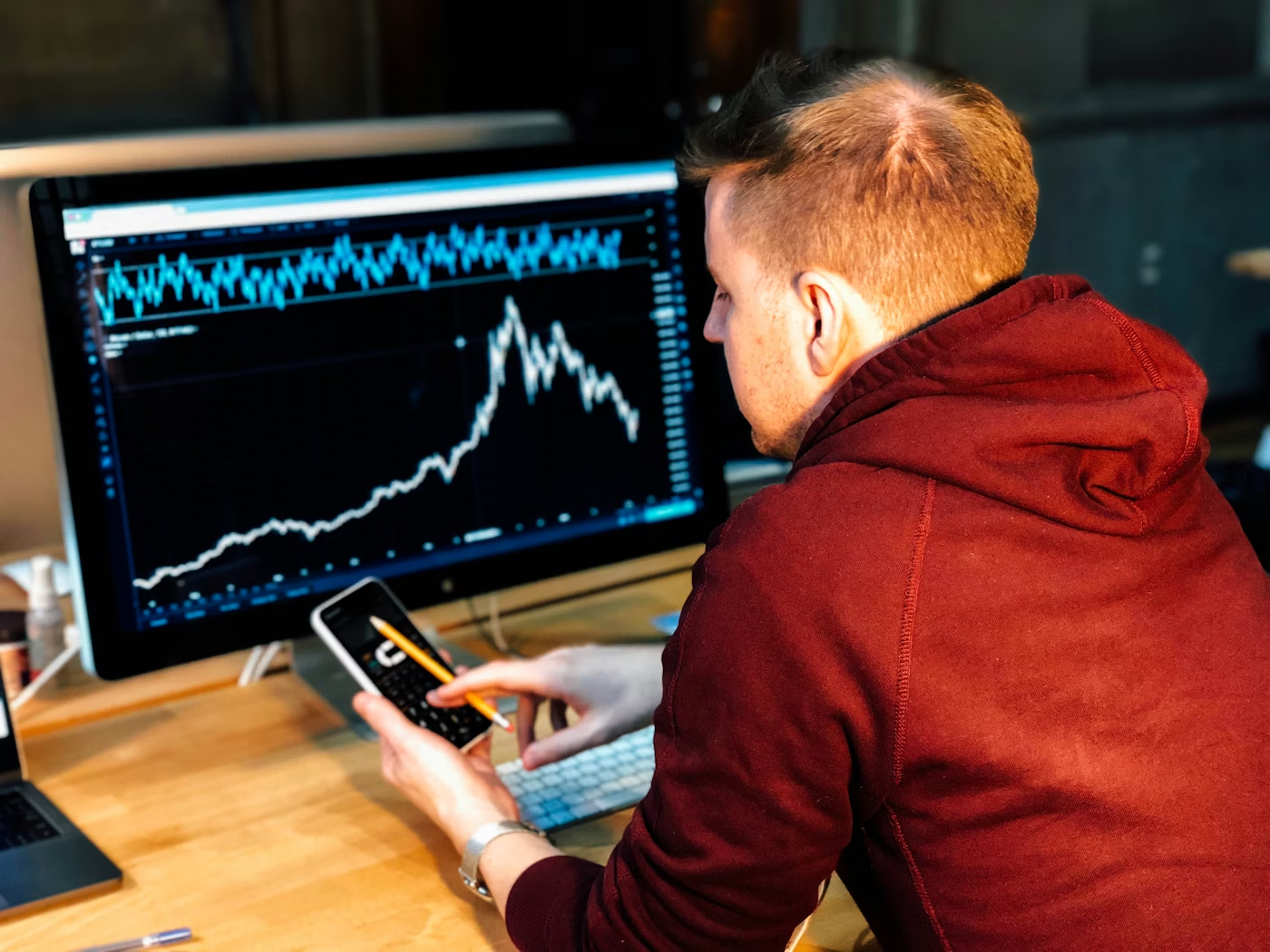
The First Problem the USDT Route Solves Is Timing: Getting Capital into the Market Faster
Many discussions around using USDT to fund U.S. stocks stop at the question of whether it is possible. But for long-term investors, the better question is whether this route can get your money into the market at the right time. When IBKR promoted stablecoin funding, its core language centered around “moving capital at the speed of opportunity.” At its core, this is about funding efficiency, not conceptual novelty.
For you, that distinction matters. Because long-term investing does not mean timing never matters. Many long-term allocations still depend on earnings windows, market pullbacks, or staged entry plans. If every top-up requires you to restart the entire FX and cross-border transfer process, then even a good strategy can be slowed down by poor execution.
The Second Problem It Solves Is Compressing “FX Conversion + Funding” into a Shorter Chain
In the traditional route, foreign exchange conversion and brokerage funding are often two separate actions. You first convert your money into USD, then separately figure out how to move that USD into a brokerage account. That means you are not only dealing with the market; you are also dealing with banks, settlement rails, and timing windows.
The core value of a stablecoin route such as USDT is that it can make the movement of “USD-denominated value” more compact. You no longer have to split the entire process into multiple disconnected actions. Instead, you can try to keep fund conversion, cross-border movement, and investment preparation on one line. For people who need to regularly move among digital assets, fiat, and investment accounts, that compression is highly practical.
That is also why, if you care not only about one deposit but about future top-ups, outflows, and switching between markets, tools such as BiyaPay Web Trading that connect funding conversion with the investment scenario itself are easier to turn into long-term habits than isolated single-purpose tools.
But the USDT Route Is Not a Magic Key — It Is a More Efficient Funding Tool
At this point, one misconception also needs to be cleared up. Using USDT to fund U.S. stocks is not a magic shortcut. It does not make compliance requirements disappear, and it does not make source-of-funds explanations irrelevant. What international brokers still care about is whether you fall within their supported scope, whether your source of funds is clear, whether the path is explainable, and whether the linked accounts match appropriately.
So the right way to understand it is not “USDT is freer, so I can do anything I want.” The right understanding is: “USDT gives me a more flexible capital tool, but I still need to understand the rules.” Only then does it become an accelerator for a long-term route rather than the starting point of future problems.
If You Want to Build Long-Term USD Asset Allocation, What Does This Route Really Mean?
Once you zoom out, you realize that the real value of the USDT route is not “I successfully deposited this time,” but “Would I be willing to keep using this route in the future?” The thing long-term investors fear most is not spending an extra hour learning a route. It is having to rebuild a new one every single time money moves.
If one route allows you to convert USDT into USD, enter U.S. or Hong Kong stocks, later move funds back out, and even support global payments when needed, while also letting you check target stock information in the same ecosystem — for example, using stock search to confirm the asset first and then handling funding and trading within the same framework — then its value has already gone beyond that of a mere “funding tool.” It becomes part of your long-term asset allocation infrastructure.
In Long-Term Funding Routes, What Usually Fails First Is Not Return Potential, but Rules and Risk
Why Same-Name Restrictions, Third-Party Funding, and Memo Information Are So Often Overlooked
What new investors most often overlook is not the market, but the rules. Firstrade’s wire instructions are very clear: they only accept wires from an account whose name exactly matches the securities account owner, they do not accept third-party transfers, and they require the account number and account holder’s English full name to be included in the memo. Schwab’s funding instructions likewise repeatedly emphasize accurate account number and name information.
You may think these are minor details, but brokers do not see them that way. To them, the memo is not a casual note; it is part of the identification basis. Same-name matching is not formality; it is an important element in determining fund ownership. In long-term cross-border investing, the real danger is not that there are many rules. It is that you do not know where the rules are.
Freezes, Unusual Flows, and Explanation Problems Often Come from an Unclear Path
When people talk about risk, many think only of whether digital assets themselves are “risky.” In practice, the more frequent issue is often that the path is unclear. In other words, the problem is not necessarily the tool you used, but the fact that you yourself cannot clearly explain why each step exists.
Every extra layer in the path adds another relationship that may need to be explained. Where did the money come from? Why did it pass through this node? Why did it eventually land in the brokerage account? Are all these accounts yours? Is the fund trail complete? All of this affects the long-term stability of your operations. For long-term users, what is most worth pursuing is not “the fastest one-time move,” but “the route that remains easiest to explain over time.”
Do Not Confuse “Stablecoin Funding” with “Tokenized U.S. Stocks”
This misunderstanding is especially common now. Using stablecoins as a funding rail to move money into a brokerage account and then buy traditional U.S. stocks is one thing. Directly buying so-called “stock tokens” or “tokenized equities” on-chain is another.
In its 2026 statement on tokenized securities, the U.S. SEC made clear that the legal structure and holder rights of tokenized securities are not automatically equivalent to those of traditional securities. Some market participants also state directly in their FAQs that these products do not automatically give you the same rights as direct holders of the underlying shares.
So you must distinguish clearly between the two: the former is about how money gets in, while the latter is about what you actually end up holding. Mixing them up is one of the easiest ways for people to make flawed judgments.
If You Want to Reduce Risk, What Should You Check First?
If you want to make your long-term funding route more stable, start by checking these five things:
- Whether the ownership relationship between the originating account and the investment account is clear
- Whether there are any intermediate nodes in the path that even you cannot clearly explain
- Whether each node is serving a distinct function such as conversion, collection, aggregation, or investment
- Whether key records are fully retained, including memos, account details, and timestamps
- Whether you have already thought through the return route after selling
You will find that a lot of so-called “risk control” is not about learning something complicated. It is about drawing the funding route clearly. Once the path is clear, the execution usually becomes much more stable.
Truly Mature Cross-Border Investors Treat Buying, Selling, Withdrawing, and Reallocating as One Closed Loop
Getting Money In Is Only the First Step — What Matters Just as Much Is How It Gets Out
Many people making their first U.S. stock investment focus only on “how this money gets in.” But if you truly plan to allocate over the long term, you will inevitably face selling, rebalancing, and capital return. Designing only the deposit route without designing the withdrawal route means you are really building only half a system.
Experienced cross-border investors usually think this through in advance: if I need to reduce positions, realize profits, withdraw dividends, or move funds to another market in the future, will I have to relearn the whole process again? If the answer is yes, then your route is not really built yet.
Why You Need to Include Top-Ups, Dividends, Withdrawals, and Reallocation in the Route from the Start
Long-term investing is not a one-time action. It is repeated use of the same capital rail. You enter today, but you will add funds again in the future; you may buy U.S. stocks now, but later also allocate to Hong Kong stocks, digital assets, or other USD assets; you may only be sending money in today, but later you will also care about getting it out efficiently.
That means what you need is not just a “deposit tutorial,” but a funding route that can be reused again and again. The earlier you understand that, the lower your operating cost will be in the future. That is also why many users, once they begin long-term allocation in earnest, start preferring platforms that can support payments, FX conversion, investing, and account coordination together rather than splitting every action across different tools.
What Characteristics Should a Good Route Have?
A funding route that is suitable for long-term use usually has five characteristics:
- Stable: It does not just work this time; it works again next time
- Explainable: You know why each step exists
- Efficient enough: It does not drag every action past the point of opportunity
- Cost-controlled: Not just low fees, but manageable total cost
- Symmetrical in and out: The logic for getting funds in also connects with getting them out
If you evaluate your current setup through this lens, many issues become much clearer. A truly mature route is not necessarily the flashiest one, but it is the one that is easiest to execute over the long run.
If You Want to Make Cross-Border Investing a Long-Term Habit, How Should You Assess Your Current Situation?
You can start by asking yourself four questions:
- Do you already have a brokerage account, but no stable way to fund it?
- What form is your capital currently in — local currency, USD, or USDT?
- Will you likely need to top up, withdraw, or reallocate frequently in the future?
- Is your current route only usable temporarily, or is it something you can keep using over time?
If you have not yet figured out the first two questions, then what you most need right now is not to push yourself to place a trade quickly, but to build the funding route first.
If the latter two questions have already appeared, that means you are no longer just in the “account-opening stage.” You are entering the stage of true long-term asset allocation.
At that point, the value of a platform like BiyaPay, which can connect global payments, multi-currency exchange, USDT-to-USD or HKD conversion, U.S. and Hong Kong stock trading, and digital asset trading within one more coherent framework, becomes much more obvious. What you are seeking is not a cooler entry point, but less friction for every future movement of capital.
FAQ
Is using USDT to fund U.S. stocks always better than wiring money?
Not necessarily. It is better understood as another funding rail. For people who already hold USDT and care about cross-border efficiency and speed of arrival, it can have stronger advantages. For people who already have mature overseas banking access, the traditional wire route may still be more straightforward.
Why do many people still hesitate to fund their account even after opening it successfully?
Because opening an account solves the account problem, while funding solves the capital path problem. At this stage, many people encounter same-name restrictions, memo requirements, timing issues, and return-of-funds planning for the first time.
What is the first thing you should solve if you want to invest in U.S. stocks long term?
Solve the funding route first. That means knowing where your money comes from, how it goes in, how you add more, how it comes out, and how it gets reallocated. If that line is unclear, every later action becomes heavier.
What is the problem with choosing a funding route based only on fees?
You may ignore time cost, failure probability, FX loss, intermediary charges, and explanation costs. A route that looks cheaper on the surface is not always cheaper in the long run. For long-term investors, stability and reusability often matter more.
Why should you plan the withdrawal route before you even sell?
Because long-term investing inevitably involves selling, rebalancing, and returning funds. If you only plan how to deposit and not how to withdraw, every later action becomes unnecessarily complicated. A mature route must work in both directions.
Is stablecoin funding the same thing as buying tokenized U.S. stocks?
No. The former is about the funding rail, while the latter is about the product you ultimately hold and the rights attached to it. You need to distinguish clearly between “how the money gets in” and “what you end up owning.”
*This article is provided for general information purposes and does not constitute legal, tax or other professional advice from BiyaPay or its subsidiaries and its affiliates, and it is not intended as a substitute for obtaining advice from a financial advisor or any other professional.
We make no representations, warranties or warranties, express or implied, as to the accuracy, completeness or timeliness of the contents of this publication.
Related Blogs of

What Is the Difference Between DRAM Contract Price and Spot Price? Which Indicator Should Investors Watch?


What Are NOR Flash, SLC NAND, and EEPROM? Why They Help Explain Hong Kong-Listed Memory-Related Stocks


How Should SSDs and HDDs Work Together in AI Data Centers? Performance, Capacity, Cost, and Hot vs. Cold Data Compared


Is SMIC 0981.HK a Memory Chip Stock? The Relationship Between Foundry Manufacturing and the Memory Supply Chain

Choose Country or Region to Read Local Blog
 Australia
 Austria
 Belgium
 Canada
 Cyprus
 Czech Republic
 Denmark
 Estonia
 Finland
 France
 Germany
 Greece
 Hong Kong
 India
India Indonesia
 Ireland
 Italy
Italy Japan
Japan Latvia
 Lithuania
 Luxembourg
 Malaysia
 Malta
Malta Morocco
 Nepal
Nepal Netherlands
 New Zealand
 Norway
 Pakistan
 Philippines
 Poland
 Portugal
 Romania
 Singapore
 Slovakia
 Slovenia
 South Africa
 South Korea
 Spain
Spain Sweden
 Thailand
 The United States
 Turkey
 United Arab Emirates
 United Kingdom
 Vietnam
Contact Us




BIYA GLOBAL LLC is registered with the Financial Crimes Enforcement Network (FinCEN), an agency under the U.S. Department of the Treasury, as a Money Services Business (MSB), with registration number 31000218637349, and regulated by the Financial Crimes Enforcement Network (FinCEN).
BIYA GLOBAL LIMITED is a registered Financial Service Provider (FSP) in New Zealand, with registration number FSP1007221, and is also a registered member of the Financial Services Complaints Limited (FSCL), an independent dispute resolution scheme in New Zealand.