- More
- Download
Telegraphic transfer fraud is high, and it is recommended to read this security checklist before making large remittances





If you are preparing to make a large transfer soon—whether for overseas tuition, a home purchase, supplier payments, or cross-border investment funding—the first thing you should focus on is usually not the exchange rate or whether the funds arrive a few hours faster. What matters more is whether this transfer could turn into a costly problem because of incorrect account details, third-party accounts, scam tactics, or unclear payment purpose explanations.
Regulatory guidance and consumer protection information related to international transfers repeatedly emphasize one point: once a large wire transfer goes wrong, fixing it is usually much harder than you expect. The safest approach is not “send first and figure it out later,” but to complete a safety checklist first and then proceed with the transfer.
Key Takeaways
- Before sending a large transfer, first verify these five items: recipient, account, purpose, route, and supporting documents
- Last-minute account changes, refusal to confirm by callback, and screenshot-only instructions are all high-risk signs
- Third-party accounts, proxy payments, and vague payment notes are among the easiest ways to trigger risk
- Proof of source of funds and payment purpose explanations are not obstacles, but protective layers
- A truly secure large transfer is not just about whether it arrives, but whether it can be clearly explained
- Spending ten extra minutes reviewing before you transfer is often more valuable than trying to recover funds afterward
Why Large Wire Transfers Are More Likely to Become Targets for Scams and Risk Controls
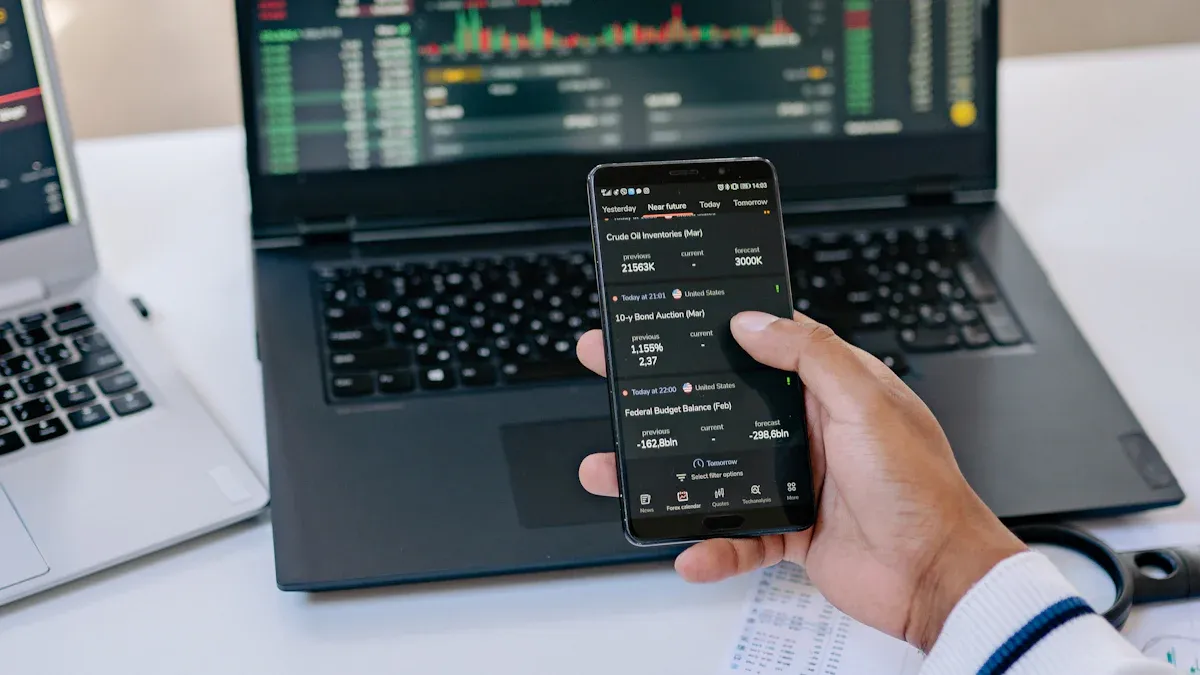
The risks of a large transfer are not just about “getting scammed”
When you hear “large wire transfer,” your first reaction is usually to worry about fraud. But in real-world scenarios, there are at least three kinds of risk involved at the same time. The first is scam risk, such as an impersonated email address, a swapped beneficiary account, or a situation where you think you are paying a legitimate party when the money is actually going to a fraudster. The second is review risk, where a bank, remittance provider, or receiving institution asks you for additional proof of transaction purpose, source of funds, contracts, or other supporting materials.
The third is operational risk, such as a misspelled account name, an incorrect SWIFT/BIC code, the wrong currency selection, or a mismatch between the payment recipient and the actual transaction party. For small transfers, many of these mistakes may just be inconvenient. For a large wire transfer, however, a single small error can lead to delays, freezes, returns, or even losses that cannot be recovered. The CFPB also makes it clear in its international transfer guidance that cross-border transfers involve error resolution and consumer rights, but only if the information you provide is as accurate as possible.
What scammers are best at exploiting is not technology, but your anxiety
Wire transfer scams are difficult to prevent not because scammers are financial experts, but because they understand human decision-making weaknesses. In large payment scenarios in particular, they usually do not ask for money out of nowhere. Instead, they wait until the moment when you are already supposed to make a payment, then impersonate a boss, finance staff member, school, lawyer, agent, supplier, or brokerage-related contact, and ask you to immediately send funds to a new account or claim that the original account is temporarily unavailable.
The FBI’s definition of business email compromise is very clear: these schemes often rely on email or similar communication channels to impersonate trusted parties, and the targets are usually people or organizations that were already planning to send a wire transfer. In other words, the truly dangerous part is not that you do not understand the process, but that you think you are following a normal one.
Why reviews and manual checks increase significantly once the amount gets larger
Many people interpret “manual review” as “Have I been flagged?” In reality, stricter review for large cross-border transfers is entirely normal from a rules perspective. China’s foreign exchange administration has long emphasized authenticity reviews in personal foreign exchange business and related cross-border fund movements.
The focus is not only on the amount, but also on transaction background, source of funds, purpose explanation, and consistency of supporting documents. U.S. remittance transfer rules also stress that international transfer providers must meet obligations related to disclosures and error resolution. The larger the amount, the less likely an institution is to approve a transfer based on nothing more than one account number and one amount, because once something goes wrong, the consequences are more serious both for the consumer and for compliance responsibility.
Learn to judge first: what looks like a normal review, and what looks more like a scam signal
For you, the most practical thing is not memorizing a pile of regulatory terms, but building a judgment framework. Normal reviews usually have three characteristics. First, the notice comes from an official channel, such as a bank app, official website customer service, official email, or a phone number you can independently call back. Second, the requested documents are related to your real transaction background, such as contracts, tuition bills, invoices, or proof of income.
Third, the process is clearly explained to you instead of pressuring you to immediately transfer funds to a new account. Scam signals, by contrast, are also quite typical: sudden account changes, refusal to confirm by phone, account information sent only through chat apps or email screenshots, claims about a “safe account” or “fund protection account,” or warnings that “this must be completed today or there will be serious consequences.” The FTC has explicitly warned that scammers often insist on wire transfer payment because once the money is sent, it is usually very difficult to recover.
A quick table to help you judge fast
| Situation | More like a normal review | More like a scam / abnormality |
|---|---|---|
| Asked to provide more documents | Requested through official channels and related to the transaction background | A private message with a link, pressuring you to act immediately |
| Beneficiary account changed | A formal notice is provided and can be independently verified by callback | Unilaterally changed through a last-minute email or chat |
| Asked to explain payment purpose | Questions focus on authenticity and compliance | You are told to transfer to an unfamiliar account “to protect the funds” |
| Payment timing is pressured | You are given a reasonable amount of time to review and confirm | You are told “right now” and that verification is not possible |
| Beneficiary arrangement | Matches the contract, invoice, or actual service provider | Third-party account, private account, proxy collection/payment |
From an execution standpoint, you do not need to become an anti-fraud expert. You only need to remember one sentence: the larger the transfer, the more you should put confirmation ahead of speed.
The First Checklist You Must Review Before a Large Transfer: Recipient, Account, and Transfer Route

First verify the “person”: is the recipient really the party you intend to pay?
When making a wire transfer, many people focus most of their attention on the account number and bank name while overlooking a more fundamental question: are you actually paying the correct party? For example, if you are paying overseas tuition, the receiving account should match the school’s official billing entity. If you are funding an overseas brokerage account, the receiving account should comply with the broker’s funding rules and entity consistency requirements. If you are paying a supplier, the account holder should normally match the contract, rather than some suddenly introduced “partner company,” “related account,” or an individual finance contact’s personal account. This step looks basic, but in reality it is the most important first gate. That is because BEC-type fraud does not usually try to make you send a completely unfamiliar payment—it quietly swaps out the party you were already supposed to pay.
Then verify the “account”: one wrong character can make the follow-up cost very high
The account details for a large wire transfer usually include the beneficiary name, account number or IBAN, receiving bank name, SWIFT/BIC, bank address, country/region, currency, and sometimes intermediary bank information. The problem is that many people only do a “visual check” rather than a field-by-field verification. The safest approach is to break down every item and compare it one by one against formal documents, rather than relying on chat records, screenshots, forwarded images, or verbal instructions. The CFPB’s public guidance on money transfers and error resolution rules keeps pointing to one thing: if the information you provide is itself incorrect, the room for correcting the problem later becomes much smaller. With a large transfer, you are not operating on a “close enough” basis—you are operating on a “no detail can be guessed” basis.
The most dangerous step is usually the “last-minute account change”
In real cases, many losses do not happen when you first receive the account details, but in the last few hours before payment is sent. The other party suddenly tells you that “the old account has been suspended,” “we’ve switched settlement accounts,” or “our finance system was upgraded, please use this new account from now on.” At that moment, many people instinctively continue by asking, “So what is the new account?” In fact, the first thing you should do is pause the payment and verify it using an independent contact method you already have, rather than continuing the conversation through a communication chain that may already have been compromised. The FBI has clearly warned that scammers often use spoofed domains that look extremely close to legitimate email addresses, or exploit a legitimate account that has already been compromised so everything appears normal.
The route also needs review: the more “roundabout” the path, the higher the risk
You also need to look at whether the entire fund route is clear. What does an unclear route mean? For example, the contractual counterparty is company A, but you are told to pay company B. Or you are funding a brokerage account, but told to wire the money to an intermediary first. Or someone tells you to “send it to a personal account first and we’ll handle it internally later.” Or the process includes proxy payment, proxy collection, or third-party bridge accounts. These arrangements are not necessarily scams 100% of the time, but they always significantly increase two kinds of risk: scam risk and compliance/documentation risk afterward. Especially for large transfers, a truly safe route should have three characteristics: a clear receiving entity, a clearly explained purpose, and a clear flow of funds. If you want to keep cross-border remittance, currency exchange, and later fund management on a clearer path, a platform like BiyaPay that emphasizes global payments and international remittance may be a more useful reference point when evaluating a transfer route than simply focusing on “who has the lowest fee today.”
You can use this checklist directly
| Check item | What you need to verify | Risk signal |
|---|---|---|
| Receiving entity | Whether it matches the contract, school, broker, or service party | Inconsistent name, unclear entity change |
| Receiving account | Whether account name, number, SWIFT, and currency are complete and correct | Only screenshots provided, missing fields, handwritten forwarding |
| Source of notification | Whether it comes from the official website, contract, or a channel you can independently call back | Only sent through chat tools, no phone confirmation allowed |
| Route arrangement | Whether there is any third-party account or proxy collection/payment involved | You are asked to pay an individual or intermediary account |
| Change explanation | Whether the account change is supported by formal documents | Last-minute account change, vague reason, pressure to pay quickly |
The core principle of this step is simple: first confirm the right party, then confirm the right account, and finally confirm the right route.
The Second Checklist You Must Review Before a Large Transfer: Purpose, Supporting Documents, and Explainability
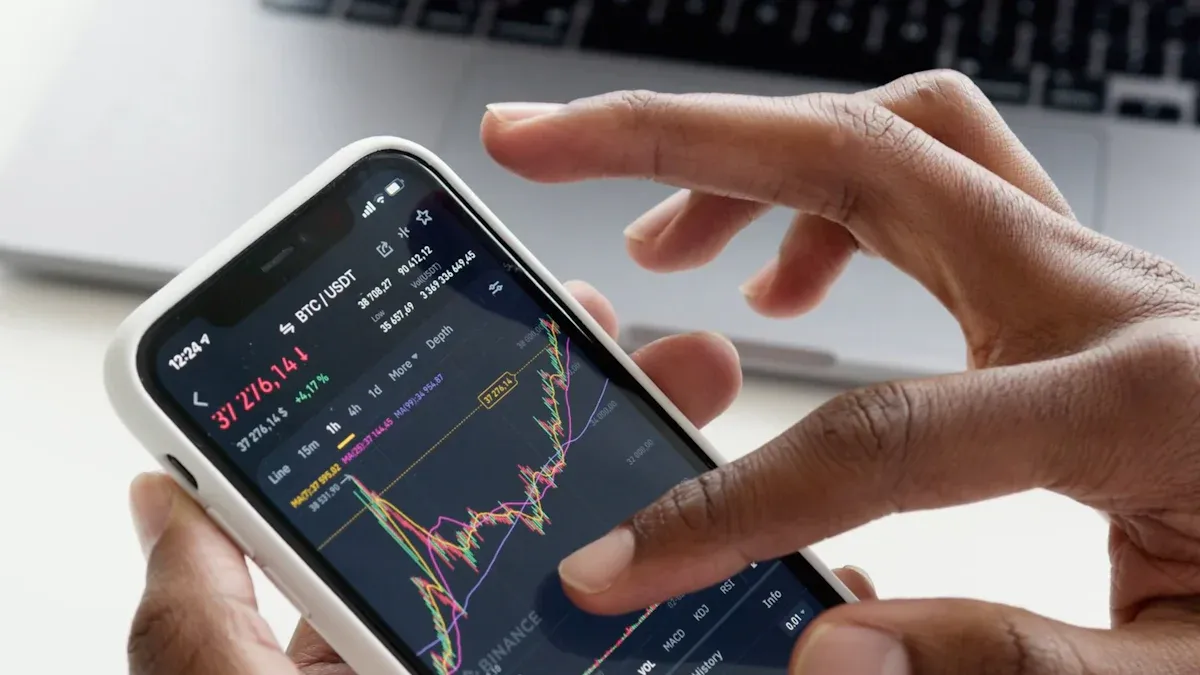
A large transfer is not just about “being able to send it,” but also about “being able to explain it clearly”
Many people think of a large transfer as a technical action: I have the money, the other side has an account, and I just need to fill in the information as required. But from a review perspective, a large transfer is more like a full story of funds. Institutions do not mainly care whether you can fill out a form. They care whether you can explain whose money it is, why it is being sent, who it is being sent to, and which documents support it. The core of authenticity review requirements in foreign exchange administration is exactly this: the transaction background must be clear, the documents must be real and verifiable, and the purpose explanation must be consistent. This is why the larger the amount, the more cross-border the nature, and the more it involves education, real estate, business payments, or investment funding, the less you should take a “just send it first” mindset.
Different purposes require completely different supporting document logic
If you are paying tuition, the key documents are usually the admission letter, payment notice, and the school’s official receiving account details. If it is a property-related payment, the core documents are usually the purchase contract, legal documents, and property transaction files. If it is a corporate payment for goods or services, invoices, contracts, statements, and service descriptions are often more important. If you are funding your own overseas investment account, account ownership, funding purpose, and source-of-funds explanation will receive more attention. What really matters here is not piling up as many documents as possible, but making sure they all align with each other. For example, if the contract is with A, the invoice is from B, and the receiving account belongs to C, that structure itself will make review more complicated. Before sending the money, it is best to ask yourself one question: if customer service, the bank, or the platform asks me, “Why are you sending this money, why to this account, and why at this time,” can I explain it clearly in two minutes?
Proof of source of funds is not making things difficult for you—it is protecting this transfer
Many users instinctively resist the idea of providing proof of source of funds, thinking that if the money is already in their account, the source should not matter. In reality, that is not how it works. The larger the cross-border amount, the more important it is to establish a clear and reasonable source-of-funds chain. Your money may come from salary income, business income, long-term savings, asset sales, investment redemptions, or family financial arrangements. Each source calls for a different type of supporting evidence. What makes proof effective is not the number of documents, but the coherence of the logic. If you say the funds come from salary accumulation, then bank statements, payroll deposits, tax documents, or proof of income should support one another. If the funds come from an asset sale, then the contract, deposit records, and corresponding bank transactions should connect clearly. Doing this is not “submitting homework”—it is reducing the likelihood of later follow-up questions, returns, or delays.
The more truthful, concise, and consistent your payment note and purpose explanation are, the safer they are
Another often overlooked point is the payment note and purpose description. Many people try to be “less likely to be questioned” by making the note vague or by using inconsistent wording at different stages. That usually backfires. In large transfer scenarios, the most reliable approach is never to be clever, but to make your description truthful, concise, and matched to the documents. You do not need to make it complicated or dress it up. You only need to make it easy for the reviewer to immediately understand what the funds are for, why they are being sent, and which real transaction they correspond to.
The table below is useful as a quick check before you submit:
| Scenario | Core materials recommended | Key point for note/purpose explanation |
|---|---|---|
| Overseas tuition | Admission letter, payment notice, school account information | Tuition, term, and student details should match clearly |
| Property payment | Purchase contract, legal documents, beneficiary details | Explain clearly whether it is house payment, deposit, or transaction stage |
| Business payment | Contract, invoice, statement, service description | The payee should match the service content |
| Investment funding | Your own account information, funding rules, source-of-funds materials | Own account, own funds, clear purpose |
| Family support | Proof of relationship, purpose explanation, account information | Real purpose, avoid vague wording |
If you are making a large currency exchange, cross-border remittance, or later investment fund arrangement, and want to keep fiat exchange, outbound transfer, and asset allocation within a more complete process, it may also be worth understanding the integrated-tool approach behind international remittance and multi-currency exchange. Its value is not that it “looks more advanced,” but that the route is clearer and the operation is easier to explain.
The Third Checklist You Must Review Before a Large Transfer: Scam Detection and Final-Step Error Prevention
If someone urges you to “transfer immediately,” pause for 10 minutes first
What makes large wire transfers risky is not that you know nothing, but that you know just enough, are in a hurry, and end up making the wrong call based on habit. So you can set a simple but highly effective rule for yourself: whenever a large transfer involves urgency, last-minute changes, account replacement, or incomplete information, pause for 10 minutes before submitting anything. During those 10 minutes, do only three things. First, verify through an independent callback rather than continuing in the original chat thread. Second, check the account against the original documents rather than relying on screenshots. Third, ask a second person to review the critical fields for you. The advice from both the FTC and the FBI ultimately points to the same thing: scammers fear a break in momentum. As soon as you step out of the pressure they created, many problems reveal themselves on their own.
These 6 warning signs mean you should raise your guard if you see two or more
You can treat the following six signs as a practical early warning system. First, the other party suddenly changes the receiving account and gives only a vague reason. Second, they refuse phone confirmation and insist on communicating only by email or chat. Third, they repeatedly emphasize “now,” “today,” or “immediately,” creating time pressure. Fourth, they ask you to send money to a personal account, a third-party account, or say “just send it here first and we’ll handle it internally later.” Fifth, the account details are sent only as screenshots, photos, or chat captures, with no formal document. Sixth, they say that for “account security,” “fund protection,” or “regulatory requirements,” you need to transfer your money to some so-called “safe account.” The FTC has made it clear that any instruction telling you to move money “to protect it” should be treated with very high suspicion.
On the final screen, focus only on these key items
Many mistakes do not happen when you are preparing the documents. They happen in the final moment before you click confirm. At this stage, the most effective approach is not to reread everything, but to focus on the most critical fields: beneficiary name, account number or IBAN, SWIFT/BIC, receiving bank name, currency, payment purpose, fee-bearing method, and destination region. If you are funding an investment account, add one more item: whether the account holder is the same as yourself. Do not submit while chatting, and do not confirm while taking a call. With large amounts of money, one minute of full concentration at the end is usually more valuable than spending an extra half hour earlier reading guides.
If you have already sent the money and realize something is wrong, move fast
If you have already completed the transfer and then realize the receiving account is wrong, the information was tampered with, or you suspect fraud, the first step is not to go online asking for help. It is to contact your bank or remittance provider immediately and ask them to reach out to the receiving institution as soon as possible to attempt a hold, trace, recall, or follow-up investigation. FBI guidance also clearly advises that if you suspect BEC or wire fraud, you should contact the financial institution immediately and file a complaint or report through appropriate channels as soon as possible. At the same time, preserve all evidence immediately, including emails, chat records, payment receipts, timestamps, account details, and contact information. The sooner you act, the higher the probability of disrupting any further movement of funds.
A final pre-transfer checklist you can execute directly
- Have you independently confirmed the receiving account through a separate channel?
- Have you verified that the receiving entity matches the transaction party?
- Have you confirmed that no third-party proxy payment or collection is involved?
- Have you prepared the purpose explanation and supporting documents?
- Have you confirmed the currency, amount, and fee-bearing method are correct?
- Has a second person reviewed the critical fields?
- Can you clearly explain the source and purpose of the funds?
If you cannot confidently answer two or more of these seven questions, then this large transfer is probably not ready to be sent yet.
How to Judge Whether a Large Transfer Route Is More Trustworthy
Do not focus only on fees and speed—look at verification mechanisms and issue handling
When choosing a transfer route, many people compare only fees, exchange rates, and arrival times. That may still be barely workable for small payments, but for large transfers it is far from enough. A truly trustworthy route should have at least several capabilities. First, clear information requirements so you know what to prepare. Second, transparent procedures so you know which step may involve review. Third, a defined issue-handling mechanism so that if something goes wrong, you can trace it, ask questions, submit additional documents, and resolve errors. Fourth, human intervention when something abnormal appears, rather than forcing the user to guess. The CFPB’s explanation of cross-border transfer services is essentially a reminder that international remittance should not be treated as “once sent, just hope for the best,” but should come with disclosures, records, and error-resolution frameworks.
Why you should be especially cautious of third-party accounts, proxy payments, and vague routes
When sending a large transfer, what you should not underestimate most is the cost of an unclear route. A mismatch of entities may seem like just one extra layer of arrangement. But once something goes wrong, you lose three things at the same time: a clear party to hold accountable, a logic of funds that can be explained, and a transaction background that institutions can understand quickly. In investment funding, cross-border service payments, overseas property transactions, and education-related payments in particular, third-party accounts often mean greater uncertainty. Remember one judgment principle: the harder it is to clearly explain the money route, the less suitable it is for a large transfer.
Some “manual reviews” are actually helping block risk for you
From a user experience perspective, manual review is certainly less pleasant than instant approval. But for large amounts of money, a process that is too easy is not necessarily a good thing. Truly reliable routes often include extra checks at key points, such as whether account details look abnormal, whether the purpose matches the documents, whether the source of funds makes sense, and whether the receiving entity is reasonable. These steps may slow the process slightly, but they help block the most expensive risks in advance. For users who regularly handle international remittance, currency exchange, investment funding, or broader fund allocation, a platform like BiyaPay, which combines global payments, fiat and digital asset exchange, and later-stage asset flow scenarios, may be more useful as a reference for “route completeness.” The reason is not simply that it has more functions, but that a more complete and more explainable route is usually better suited for large transfers.
You can save this “large transfer safety checklist” directly
| Check item | What you need to confirm | What to do if it fails |
|---|---|---|
| Recipient identity | Whether it matches the real transaction party | Pause the transfer and verify the entity again |
| Receiving account | Account name, number, SWIFT, and currency are correct | Ask for formal documents and re-check |
| Purpose explanation | Whether it corresponds to the contract, notice, and transaction background | Prepare additional materials first |
| Source of funds | Whether you can explain the source and provide supporting proof | Organize statements and documentation first |
| Transfer route | Whether any third-party account or proxy payment/collection is involved | Switch to a clearer route first |
| Submission action | Whether independent callback verification and secondary review are complete | Do not confirm until completed |
| Follow-up arrangement | Whether the arrival purpose and later fund use are clear | Plan the full route first |
If you are not only making one transfer but also thinking about later currency exchange, funding, asset management, or stock trading, it can save you a lot of trouble to plan “how the money will be used after it arrives” at the same time. For example, you may later want to follow U.S. and Hong Kong stock quotes or continue using the BiyaPay App for multi-asset allocation. These are all part of planning for “what happens after large funds land safely,” rather than scrambling for solutions after the transfer is complete.
FAQ
What should you verify first before a large wire transfer?
First verify whether the receiving entity is the correct one. An incorrect account number is dangerous, of course, but a more common high-risk scenario is sending money to an account that “looks reasonable” but is not actually the real transaction counterparty.
If the other party changes the receiving account at the last minute, can you still send the payment?
It is not absolutely impossible, but you should absolutely not send it directly. You should first confirm through an independent callback and verify it against the contract, official website, or formal notification. Changing an account based only on email or chat screenshots is very risky.
Is it risky if the receiving account is under a third party’s name?
Usually yes, the risk is higher. Once something goes wrong, it becomes very difficult to explain why the money was sent to a third party. In investment funding scenarios, a third-party route may also directly trigger rejection or extra review.
Does manual review mean there is something wrong with the money?
Not necessarily. Large transfers naturally require stronger emphasis on authenticity, purpose, and source-of-funds explanations. In many cases, manual review is simply reducing the risk of misdirected transfers, fraud, and later disputes.
If you already sent the money to the wrong account, is there still time to fix it?
You need to act immediately. Contact your bank or remittance provider right away and ask them to contact the receiving institution to attempt a hold, trace, or recall. Preserve all evidence and report or file a complaint as soon as possible. The faster you act, the better your chances.
How should you write the purpose of a large transfer more safely?
The core principles are just three: truthful, concise, and consistent with your documents. Do not deliberately make it vague, and do not use inconsistent wording. If the reviewer can immediately understand what the money is for, why it is being sent, and who it is being sent to, that is usually the safest approach.
*This article is provided for general information purposes and does not constitute legal, tax or other professional advice from BiyaPay or its subsidiaries and its affiliates, and it is not intended as a substitute for obtaining advice from a financial advisor or any other professional.
We make no representations, warranties or warranties, express or implied, as to the accuracy, completeness or timeliness of the contents of this publication.
Related Blogs of

Where Will IBM Stock Go After Q2 Earnings? Three Scenarios Based on Revenue, Red Hat, and Free Cash Flow


JPM, BAC, GS, MS, and Citi: Which Bank Stock Is More Worth Buying? A Comparison of Valuation, Dividends, and Business Structure


Under the IBM Shock, Which Has the Highest Enterprise IT Budget Exposure: NOW, CRM, ADBE, or ORCL? A Risk Ranking


What Does ASML’s Guidance Upgrade Mean for TSMC, Nvidia, and U.S. Semiconductor Equipment Stocks?

Choose Country or Region to Read Local Blog
 Australia
 Austria
 Belgium
 Canada
 Cyprus
 Czech Republic
 Denmark
 Estonia
 Finland
 France
 Germany
 Greece
 Hong Kong
 India
India Indonesia
 Ireland
 Italy
Italy Japan
Japan Latvia
 Lithuania
 Luxembourg
 Malaysia
 Malta
Malta Morocco
 Nepal
Nepal Netherlands
 New Zealand
 Norway
 Pakistan
 Philippines
 Poland
 Portugal
 Romania
 Singapore
 Slovakia
 Slovenia
 South Africa
 South Korea
 Spain
Spain Sweden
 Thailand
 United States
 Turkey
 United Arab Emirates
 United Kingdom
 Vietnam
Contact Us



