
Is Two-Factor Authentication (2FA) Enough? Future Financial Accounts May Introduce Liveness Detection and Behavioral Biometrics




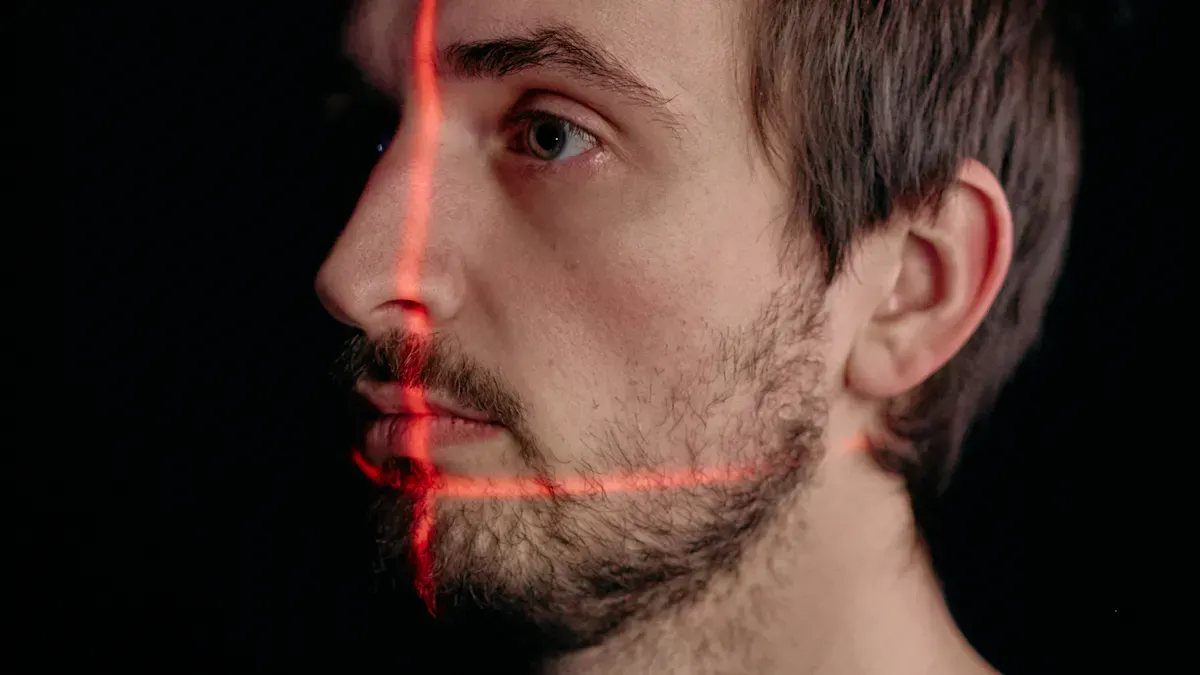
Image Source: pexels
You frequently use two-factor authentication for financial account security, but this method cannot completely eliminate risks. Attackers can still bypass verification through phishing, SMS hijacking, and other means. Banks and financial institutions are increasingly emphasizing multi-factor authentication, and adopting multiple verification methods significantly reduces the probability of unauthorized access. Emerging technologies such as liveness detection and behavioral biometrics continue to enhance security capabilities. You need to understand these trends to better protect your accounts.
Key Takeaways
- Although two-factor authentication improves security, it still carries risks of being bypassed and should be combined with multi-factor authentication for stronger protection.
- Multi-factor authentication (MFA) significantly reduces the risk of unauthorized access by requiring multiple identity verification methods and is suitable for high-risk operations.
- Liveness detection technology analyzes biometric features to ensure the authenticity of identity verification, effectively preventing account impersonation.
- Behavioral biometrics technology monitors user operation habits and identifies abnormal behavior in real time, further enhancing account security.
- Users should proactively take measures such as implementing multi-factor authentication and monitoring account activity to respond to upgrades in financial security technology.
Principles and Limitations of Two-Factor Authentication
Common Methods of Two-Factor Authentication
You often encounter two-factor authentication when logging into financial accounts. Two-factor authentication requires you to provide two different identity verification factors, typically a password and an additional dynamic code. This can significantly improve account security. Common two-factor authentication methods include:
- SMS One-Time Password (SMS OTP): The system sends a one-time code to your mobile phone. It is simple to operate but relies on mobile signal and SIM card security.
- Push Notifications: You receive an access confirmation notification through a banking or financial app. It is convenient and suitable for mobile devices.
- Biometric Authentication: You can use fingerprints or facial features for identity verification. It offers high security but requires supported devices.
- Time-based One-Time Password (TOTP): You use a dedicated app (such as Google Authenticator) to generate codes. It offers high security and does not depend on network connectivity.
- Hardware Security Keys: You complete verification through a physical device (such as YubiKey). It provides an extremely high security level but comes at a higher cost.
- QR Codes: You scan a QR code to complete financial transaction verification, suitable for multi-device scenarios.
- Behavioral Authentication: The system analyzes your device interaction patterns, such as typing rhythm or mouse trajectory, to enhance anti-spoofing capabilities.
When using two-factor authentication at licensed banks in Hong Kong or international financial platforms, you usually first enter your password and then complete the second step through the methods mentioned above. Even if an attacker obtains your password, they cannot complete authentication without the second factor. This layered protection mechanism is very important for financial account security.
Security Risks Facing 2FA
You may think two-factor authentication is already sufficiently secure, but in practice, it still carries risks of being bypassed. Attackers can obtain your verification code or circumvent the verification process using social engineering, SIM swapping, phishing attacks, and other methods. The main security risks include:
- Social Engineering: Hackers impersonate bank staff or security personnel to trick you into providing verification codes. Data shows that social engineering attacks have a success rate of up to 50%.
- SIM Swapping: Attackers deceive mobile operators into transferring your phone number to their SIM card, allowing them to directly receive SMS verification codes.
- Session Cookie Theft: Hackers steal cookies from your logged-in account through technical means, bypassing two-factor authentication.
- Recovery Setting Vulnerabilities: Some financial platforms do not implement second-layer verification in the account recovery process, allowing hackers to gain access directly through security questions or email resets.
- Software Vulnerabilities: Some two-factor authentication solutions have flaws that hackers can exploit to bypass verification.
| Attack Method | Description | Success Rate |
|---|---|---|
| Social Engineering | Hackers obtain verification codes through social engineering, such as impersonating security inspectors. | Up to 50% |
| SIM Swapping | Deceiving mobile carriers to transfer the target's phone number to the hacker's SIM card. | N/A |
| Session Cookie Theft | Stealing browser cookies of logged-in users to bypass 2FA. | N/A |
| Recovery Setting Vulnerabilities | Exploiting weaknesses in recovery settings, such as security questions, to gain access. | N/A |
When performing financial account operations, you must remain vigilant against the above risks. Although two-factor authentication improves security, it is not foolproof. You need to combine multi-factor authentication and emerging technologies to effectively defend against sophisticated attack methods and protect the security of your account funds.
Comparison Between Multi-Factor Authentication (MFA) and 2FA
Security Advantages of MFA
In financial account security management, you often hear about multi-factor authentication (MFA) and two-factor authentication. While two-factor authentication has already improved security, MFA further increases security layers by combining multiple verification methods. You can refer to the table below to intuitively understand the main differences between the two:
| Feature | Multi-Factor Authentication (MFA) | Two-Factor Authentication (2FA) |
|---|---|---|
| Security Layers | Provides multiple security layers | Provides two security layers |
| Applicability | Suitable for more complex security needs | Suitable for basic security needs |
| User Experience | May be complex but more secure | Simpler but lower security |
When adopting MFA, the system requires you to pass two or more identity verification methods. For example, in addition to entering a password and SMS code, you may also need fingerprint recognition or a hardware key. MFA's multi-layer security measures significantly reduce the risk of unauthorized access. Even if an attacker obtains one of your verification factors, it remains difficult to break through the other security layers. Research shows that implementing MFA can prevent 99.9% of account attacks.
- MFA significantly enhances the security of accounts or devices by requiring two or more factors.
- MFA significantly reduces the risk of unauthorized access through multiple identity verification forms.
- Multi-layer security measures make it difficult for attackers to gain access even if one factor is compromised.
For users, judging whether a financial service is secure should not depend only on whether it offers 2FA or MFA, but also on whether the platform clearly separates verification, permissions, and high-risk actions. A service such as BiyaPay, positioned as a multi-asset wallet, covers cross-border payments, fund management, and trading-related scenarios; when international remittances, multi-currency transfers, or trading actions are involved, consistency between authentication strength, function entry points, and permission boundaries is itself an important security signal.
The point of this kind of design is not to stack more verification steps, but to place high-risk actions inside a clearer control chain. BiyaPay holds relevant financial registrations in jurisdictions including the United States and New Zealand; before moving funds, users can also use its exchange rate comparison tool or stock information page to confirm the correct function entry, reducing account risk caused by spoofed pages or the wrong entry path.
Practical Application Differences Between 2FA and MFA
In actual operations, you will find that after financial institutions adopt MFA, account security is significantly improved. For example, licensed banks in Hong Kong often require you to complete triple or even quadruple identity verification when handling international remittances and large transactions. You need to enter a password, receive a one-time code, perform biometric recognition, and even insert a hardware key.
Taking an international bank as an example, a large bank adopts MFA combined with existing credentials and additional verification factors when protecting SWIFT systems and SAML-compatible systems, significantly reducing the risk of credential abuse. When using these services, you can clearly feel the improvement in account security.
You can choose the appropriate authentication method according to your own needs. For high-risk operations, it is recommended to prioritize MFA to maximize account security.
Principles and Applications of Liveness Detection

Image Source: pexels
Facial and Fingerprint Recognition Technology
When performing financial account operations, you often encounter biometric technologies such as facial recognition and fingerprint recognition. These technologies collect your unique biometric features, establish exclusive templates, and achieve identity verification. Facial recognition typically uses convolutional neural networks to analyze facial structure, while fingerprint recognition relies on high-precision imaging technology to capture fingerprint details. Each person's fingerprints and facial features are unique and difficult to replicate or forge, so they are widely used in the financial services field. When you use BiyaPay for global payments and collections, international remittances, or digital currency exchange, the system prioritizes fingerprint or facial recognition to ensure that every transaction is authorized by the real user. Biometric authentication not only improves transaction authenticity but also effectively meets compliance requirements such as KYC and AML, significantly reducing the risks of unauthorized access and fraud.
Liveness Detection Anti-Spoofing Mechanism
You may worry that someone could impersonate your biometric features using photos, recordings, or 3D models. Liveness detection is designed precisely for this purpose. It analyzes thousands of signals such as reflections, facial 3D depth, lighting changes, and subtle movements to determine whether you are a real living person. Passive liveness detection does not require your active cooperation—the system automatically captures and analyzes relevant data. Active liveness detection may require you to perform specific actions, such as blinking or turning your head, to further enhance security. Advanced financial platforms and payment tools, such as BiyaPay, have already integrated liveness detection into the identity verification process. When you perform deposits and withdrawals for U.S. stocks, Hong Kong stocks, or USDT-to-USD/HKD exchange, the system performs multi-level analysis of your biometric features to prevent physical forgery and digital injection attacks. Liveness detection technology complies with the ISO/IEC 30107 standard and maintains consistency across different devices and scenarios to ensure account security. Through these multiple anti-spoofing mechanisms, you can effectively prevent sophisticated fraud methods and protect the security of your funds and account information.
Behavioral Biometrics Technology
Keystroke Rhythm and Mouse Trajectory Analysis
When using financial services, the system not only focuses on your login credentials but also analyzes your operation habits. Behavioral biometrics technology collects and analyzes data such as your keystroke rhythm, mouse movement trajectory, and touch gestures to establish a unique behavioral profile. Everyone exhibits unique rhythm and paths when entering passwords, filling out forms, or operating the mouse. Platforms such as BiyaPay for global payments and collections and digital currency exchange have already integrated these behavioral feature analysis technologies into their risk control systems. When you perform deposits and withdrawals for U.S. stocks or Hong Kong stocks, or USDT-to-USD/HKD exchange, the system monitors your operation patterns in real time and identifies abnormal behavior. For example, the system detects the speed at which you enter verification codes, the frequency of mouse clicks, and movement trajectories to determine whether the operation is performed by you. Even if an attacker steals your account credentials, as long as their operation habits differ from your usual patterns, the system can promptly issue a risk alert.
| Feature | Description |
|---|---|
| Body Movement | Includes gait, posture, and holding method, used to securely identify individuals. |
| Voice Recognition | Identifies identity by analyzing an individual's voice patterns, divided into text-dependent and text-independent methods. |
| Browsing Patterns | Analyzes keystroke dynamics and mouse movements during online banking sessions to continuously verify user identity. |
Security Advantages of Behavioral Recognition
After adopting behavioral biometrics, your account security will see significant improvement. Behavioral biometric technology can continuously verify your identity after login and monitor abnormal operations in sessions in real time, reducing the risk of account theft. The system performs silent background analysis without requiring additional actions from you and only triggers secondary verification when strong anomalies are detected. This approach not only enhances security but also optimizes user experience. When you perform international remittances or digital currency transactions on platforms such as BiyaPay, behavioral recognition technology works in coordination with traditional authentication methods to form multiple layers of protection. Even if an attacker obtains your password and verification code, as long as their operation habits deviate from your usual patterns, the system can automatically block suspicious transactions. You can regard behavioral biometrics as a powerful supplement to traditional authentication. Combined with machine learning and risk assessment, it helps financial institutions effectively reduce fraud and protect fund security.
Improvements to Financial Account Security from New Technologies
Image Source: unsplash
Effectiveness of Multi-Layer Verification Systems
In financial account security management, you have already discovered that single two-factor authentication cannot cope with increasingly complex cyber attacks. New technologies such as multi-factor authentication, liveness detection, and behavioral biometrics build a layered protection system for financial accounts. You can intuitively understand the comprehensive security effects of various authentication technologies through the following comparison:
| Verification Method | Security Level | Risk of Being Bypassed | Applicable Scenarios |
|---|---|---|---|
| Two-Factor Authentication | Medium | Exists | Basic account login, low-risk operations |
| Multi-Factor Authentication (MFA) | High | Extremely low | Large transactions, international remittances, sensitive operations |
| Liveness Detection | Very high | Extremely low | Digital currency exchange, identity verification |
| Behavioral Biometrics | Very high | Extremely low | Continuous session monitoring, abnormal risk interception |
When adopting multi-factor authentication, the system requires you to provide simultaneously "something you know" (such as a password), "something you have" (such as a phone or hardware key), and "something you are" (such as a fingerprint or face). This layered approach significantly improves account security. Even if an attacker obtains your password, they still need to break through other verification steps to access the account. Data shows that after enabling multi-factor authentication, the success rate of hacker attacks drops sharply, and financial institutions can effectively prevent potential thefts worth up to 736 million USD.
When performing global payments and collections, international remittances, or digital currency exchange on the BiyaPay platform, the system combines multi-factor authentication, liveness detection, and behavioral biometrics to dynamically assess the risk of each operation. For example, when you perform deposits and withdrawals for U.S. stocks or Hong Kong stocks, the platform requires you to enter a password, complete fingerprint recognition, and continuously monitor the operation process through behavioral analysis. Even if an attacker masters part of your credentials, as long as their behavior pattern does not match your usual one, the system will automatically block suspicious transactions and protect fund security.
You can see that traditional passwords can no longer meet financial security needs. Approximately 80% of data breaches originate from weak passwords. The combination of multi-factor authentication and biometric technology provides financial accounts with a unique and difficult-to-forge security barrier. In actual operations, you can clearly feel the improvement in account security, especially in high-risk scenarios where the layered verification system effectively resists various types of fraud and unauthorized access.
Balancing User Experience and Security
While enjoying the security improvements brought by new technologies, you will also pay attention to the convenience of operations. Although multi-layer verification systems enhance protection, too many verification steps may make you feel cumbersome. Data shows that 67% of IT professionals believe that adding extra security measures complicates user experience. When using MFA, you may encounter multiple code entries, device switching, or waiting for biometric responses, which can easily cause "authentication fatigue" and even affect your security awareness.
The multi-layer verification system you experience on platforms such as BiyaPay has already struck a balance between security and convenience. Through intelligent risk control, the platform applies high-intensity authentication to large transactions and sensitive operations while using simplified processes for low-risk operations. For example, when performing small-amount digital currency exchanges, the system may only require one biometric recognition to complete; for large international remittances, it automatically stacks multi-factor authentication and behavioral biometrics to ensure every step is authorized by you personally.
You will also find that some financial institutions still rely on traditional passwords in account recovery processes, leading to increased operational costs and higher fraud risks. 59% of identity verification practitioners are dissatisfied with current account recovery capabilities. When your account is locked or you forget your password, it is recommended to prioritize financial services that support multi-layer verification and biometrics to improve the security and convenience of account recovery.
As a user, you need to understand the balance between security and experience. Although multi-layer verification systems may add operation steps, they provide stronger protection for your funds and account information. You can reasonably choose authentication methods based on your needs, enjoying convenient services while ensuring account security.
Future Trends and User Recommendations
Development Directions of Financial Security Technology
You will find that financial account security technology is evolving rapidly. Future trends mainly focus on the following aspects:
- Continuous Authentication: The system continuously verifies your identity throughout the entire session to prevent unauthorized access and improve account security.
- Zero-Trust Authentication: The system does not trust users or devices by default and requires multiple identity verifications for each sensitive operation, reducing internal and external threats.
- Multimodal Biometrics and Multi-Factor Authentication: You can use multiple biometric features such as fingerprints and faces simultaneously, combined with hardware keys or dynamic passwords, to form a stronger security barrier.
- Wearable Device Authentication: Devices such as smartwatches and health trackers will provide continuous authentication and personalized experiences, further improving convenience and security.
The new technologies such as liveness detection and behavioral biometrics that you experience at licensed banks in Hong Kong or global payment and collection platforms have already significantly improved fraud detection capabilities through artificial intelligence and encryption methods, reducing false positive rates. The industry is also strengthening data encryption and template protection to ensure that your biometric and behavioral profiles are not abused. Compliance requirements are driving financial institutions to continuously upgrade authentication measures, protect customer data security, and reduce fraud risks.
How Users Can Respond to Security Upgrades
When facing upgrades in financial security technology, you can take the following practical measures to proactively enhance your account protection capabilities:
| Step | Description |
|---|---|
| Conduct Risk Assessment | Regularly evaluate access and identity verification risks in digital banking and information systems. |
| Implement Multi-Factor Authentication | For high-risk accounts, prioritize enabling multi-factor authentication combined with biometrics and hardware keys. |
| Periodically Evaluate Controls | Review and optimize your access and identity verification controls to ensure they remain effective. |
| Monitor and Log Activity | Use the platform's real-time monitoring features to promptly detect and track abnormal account activity. |
| Increase User Awareness | Continuously learn about identity verification risks and stay informed about fintech security developments. |
You should also pay attention to the following points:
- Choose financial services that support biometric and behavioral recognition to improve account security.
- For high-risk operations, adopt risk-based dynamic authentication to prevent account misuse.
- Regularly update applications and systems to fix potential vulnerabilities and prevent security threats.
- Properly manage personal permissions and data sharing settings to protect account privacy.
- Focus on disaster recovery and business continuity to ensure quick account recovery in emergencies.
By proactively taking the above measures, you can effectively respond to the challenges brought by upgrades in financial security technology and protect the security of your funds and information.
You now understand that although two-factor authentication improves account security, it still has limitations. Emerging technologies such as multi-factor authentication, liveness detection, and behavioral biometrics bring higher protection to financial accounts. By continuously paying attention to data security, compliance, and technological developments, you can proactively adopt more advanced verification methods. Financial institutions continue to introduce biometric and behavioral authentication, dynamically adapting to threats and improving user experience. You need to maintain risk awareness, regularly evaluate security measures, and enhance the protection capabilities of your financial accounts.
FAQ
What is the essential difference between two-factor authentication and multi-factor authentication?
In two-factor authentication, you usually only need two identity elements. Multi-factor authentication requires more than two elements, offering higher security and is suitable for high-risk financial operations.
How does liveness detection prevent account impersonation?
Through liveness detection, the system can identify forged means such as photos and videos. Only real users can pass verification, effectively preventing account impersonation.
Does behavioral biometrics affect user experience?
During normal operations, you hardly notice it. The system automatically analyzes behavioral features in the background and only triggers additional verification when anomalies are detected, balancing security and convenience.
Why do financial accounts recommend adopting multi-layer verification systems?
By adopting multi-layer verification systems, you can significantly reduce the risk of account theft. Even if an attacker obtains partial credentials, it remains difficult to break through multiple layers of protection.
How do financial platforms protect your biometric and behavioral data?
When using financial services, platforms adopt encryption and isolated storage technologies to strictly protect your biometric and behavioral data, preventing data leaks and misuse.
*This article is provided for general information purposes and does not constitute legal, tax or other professional advice from BiyaPay or its subsidiaries and its affiliates, and it is not intended as a substitute for obtaining advice from a financial advisor or any other professional.
We make no representations, warranties or warranties, express or implied, as to the accuracy, completeness or timeliness of the contents of this publication.
Related Blogs of

Wire Transfer Requirements: Sender and Beneficiary Details Checklist


Cheapest Way to Transfer Money Internationally: Small vs. Large Transfers



Choose Country or Region to Read Local Blog
 Australia
 Austria
 Belgium
 Canada
 Cyprus
 Czech Republic
 Denmark
 Estonia
 Finland
 France
 Germany
 Greece
 Hong Kong
 India
India Indonesia
 Ireland
 Italy
Italy Japan
Japan Latvia
 Lithuania
 Luxembourg
 Malaysia
 Malta
Malta Morocco
 Nepal
Nepal Netherlands
 New Zealand
 Norway
 Pakistan
 Philippines
 Poland
 Portugal
 Romania
 Singapore
 Slovakia
 Slovenia
 South Africa
 South Korea
 Spain
Spain Sweden
 Thailand
 United States
 Turkey
 United Arab Emirates
 United Kingdom
 Vietnam