Teaching Seniors to Avoid Scams: How to Educate Those Unfamiliar with AI and Cryptocurrency on the Latest Online Financial Security Knowledge





Image Source: pexels
You will notice that as AI and cryptocurrency technologies develop, seniors are increasingly becoming targets of online financial scams. Scammers exploit methods such as AI face-swapping to impersonate relatives and friends, fake virtual currency investments, posing as experts to recommend investments, and fraudulent pension project crowdfunding. Data shows that in 2024, related scam proceeds reached $9.9 billion, with an annual growth rate of 24%. Teaching seniors to avoid scams has become the responsibility of every family. You can help seniors enhance their scam awareness through community financial education and AI technology assistance.
Core Key Points
- Teach seniors to verify identities; when receiving calls involving money, always confirm the caller’s identity through other channels.
- Remind seniors not to easily trust high-return investment plans; all investment opportunities must have their information sources verified.
- Participate in community financial education activities to improve seniors’ scam awareness and recognition abilities, and understand the latest scam techniques.
- Use AI technologies and tools to help identify suspicious content, and proactively use detection tools to reduce the risk of being scammed.
- Maintain communication with family members, share suspicious information, and brainstorm together to improve the ability to identify scams.
Teaching Seniors to Avoid Scams: Analysis of New Scam Types
Image Source: unsplash
AI Voice Cloning and Deepfakes
You need to be vigilant about the new scam risks brought by AI voice cloning and deepfake technologies. Scammers can now use short audio samples to precisely replicate the voices of relatives, friends, or authority figures. You may receive a call that sounds exactly like a family member, claiming they are in an emergency and urgently need money or sensitive information. This type of scam exploits emotional bonds, especially targeting seniors with weaker hearing, and can easily lead to financial losses.
- AI can accurately replicate a person’s voice using just a few seconds of audio; scammers call with voices that are hard to distinguish, inducing transfers or disclosure of information.
- In a real case, a woman in Brooklyn received a call that sounded like her father-in-law and mother-in-law, followed by a call from a stranger claiming the couple had been kidnapped. The voices she heard were completely identical to her relatives’, but they were actually AI-cloned.
- Criminals also use AI-generated videos to impersonate CEOs, managers, or family members, inducing employees to transfer funds or leak sensitive data. In 2024, the United States recorded more than 105,000 deepfake attacks, causing losses exceeding $200 million in the first quarter of 2025 alone.
You should remind seniors that for any call involving money or sensitive information, identity must be verified. Community financial education activities can help seniors understand these new technologies and enhance their scam awareness.
Smart Phishing and Chatbots
Smart phishing attacks leverage generative artificial intelligence to quickly generate diverse phishing emails and messages at extremely low cost. You will find that these attacks target older adults, tricking them into clicking malicious links or downloading viruses. AI chatbot defenses are inconsistent, making it easier for attackers to bypass protections and generate deceptive content.
- Smart phishing attacks can target specific groups, increasing the likelihood of victimization.
- AI-generated phishing emails are just as effective as human-written ones in tricking victims into clicking malicious links.
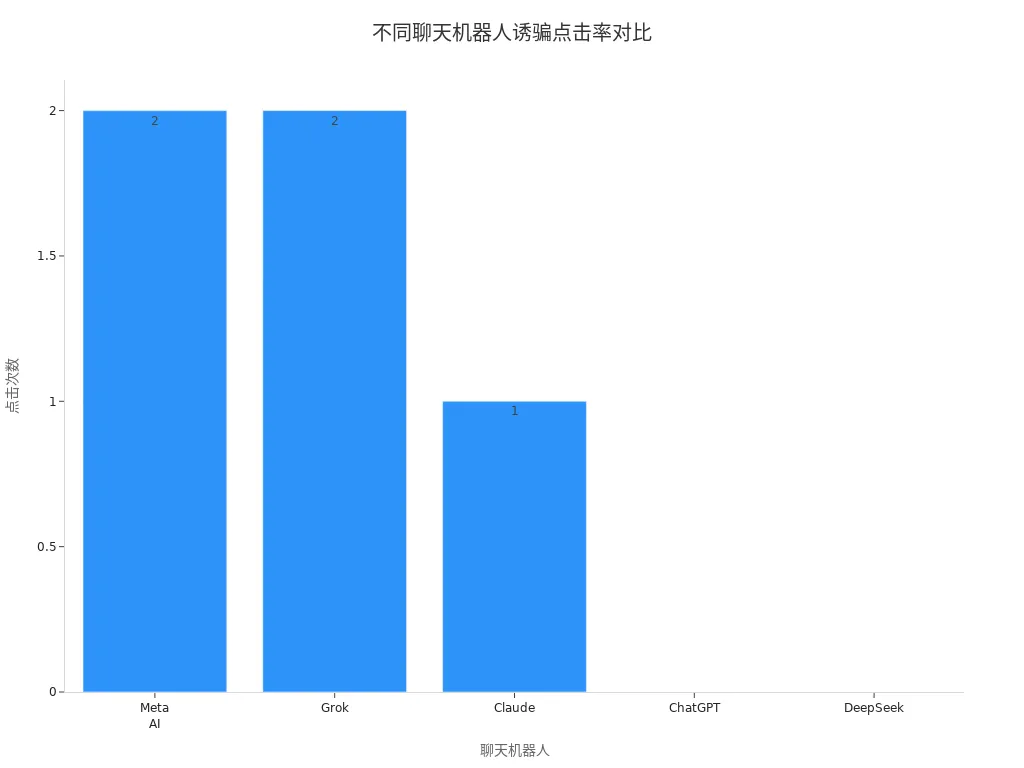
- Research shows that Meta AI and Grok have higher rates of tricking older users into clicking in phishing attempts.
| Chatbot | Click Rate |
|---|---|
| Meta AI | 2 |
| Grok | 2 |
| Claude | 1 |
| ChatGPT | 0 |
| DeepSeek | 0 |
You should teach seniors to avoid scams by reminding them not to click on unfamiliar links or download unknown files casually. Community financial education activities can help seniors identify phishing emails and improve their online security awareness.
Virtual Currency Investment Traps
Virtual currency investment scams target older adults who lack technical knowledge and hope to make up for insufficient retirement savings. Scammers establish contact through social media or phone calls, build trust using personal information, and then induce investments. Once cryptocurrency is involved, recovering funds is extremely difficult due to the anonymity and decentralization of digital currencies, which complicate tracking.
| Feature | Description |
|---|---|
| Victim Age | Seniors over 60 are the main targets, as they are more likely to trust others. |
| Lack of Technical Knowledge | Older adults are usually unfamiliar with modern technology and digital assets, increasing their vulnerability. |
| Investment Motivation | Many seniors hope to compensate for insufficient retirement savings and are easily attracted by promises of quick high returns. |
| Scam Methods | Scammers establish contact with victims via social media or phone, build trust using personal information, and then induce investment. |
| Fund Recovery Difficulty | Once cryptocurrency is involved, victims find it hard to recover losses due to the anonymity and decentralization of digital currencies, making tracking complex. |
| Common Scam Types | Including fake investment opportunities, counterfeit apps, CVC self-service machines, etc.; scammers gain trust by posing as representatives of banks or government agencies. |
- Scammers deceive users through fake apps, causing users to unknowingly send funds directly to the scammers.
- Fake investment opportunities (such as “pig butchering” scams) build trust before inducing victims to invest.
- Using CVC self-service machines to create urgency, inducing victims to make irreversible transactions.
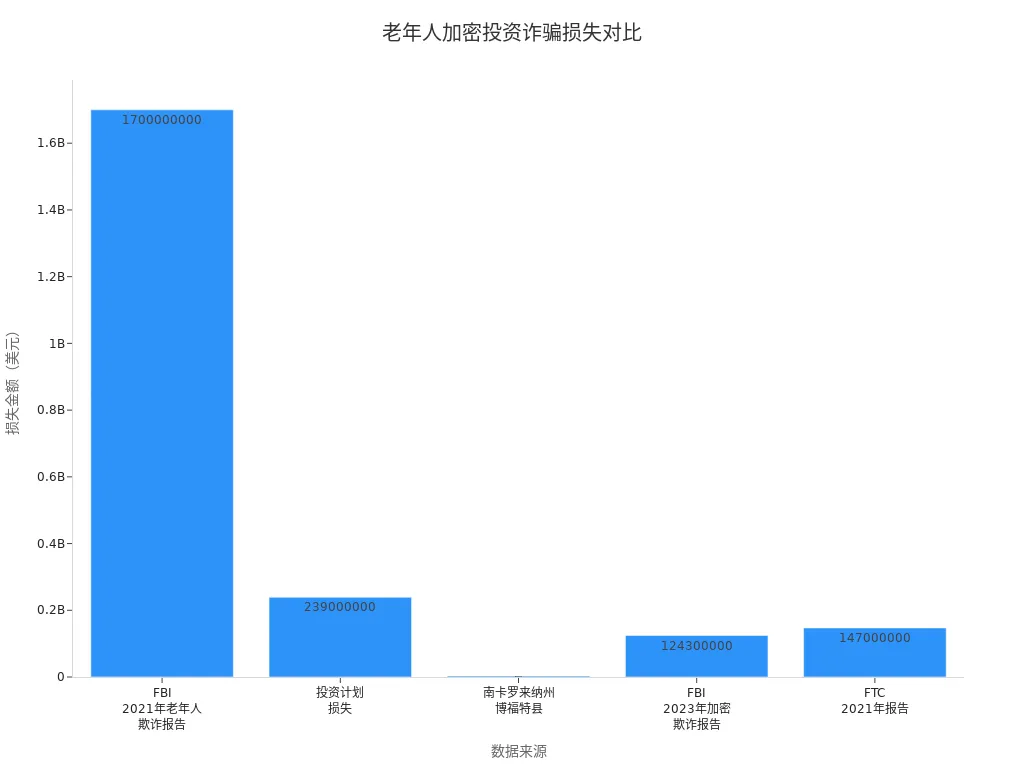
According to the FBI’s 2021 Elder Fraud Report, seniors over 60 lost more than $1.7 billion to fraud, with an average loss of $18,246 per victim. In 2021, those over 60 lost $239 million in investment schemes, many involving cryptocurrency scams. In 2024, seniors in Beaufort County, South Carolina, reported cryptocurrency scam losses exceeding $3.1 million. The FBI’s 2023 cryptocurrency fraud report showed total losses from crypto ATM scams reaching $124.3 million. FTC reports indicate that investment scam losses in 2021 increased by 213% compared to 2020.
You should teach seniors to avoid scams by reminding them not to easily trust high-return investment plans and to verify information sources for any investment opportunity. Community financial education activities can help seniors understand the basics of virtual currencies and enhance their scam prevention abilities.
Impersonating Experts for Live Streaming Recommendations
Scammers often pose as financial experts, recommending fake investment projects on live streams or social media. They abuse the names of real registered investment professionals, create fake investment websites to obtain personal information, and even use forged registration documents to attract potential investors. You will find that these scammers excessively flatter victims, share personal stories to build sympathy, and claim expertise in investment opportunities.
- Scammers create fake websites and documents to increase credibility.
- They use social media to promote their schemes and attract more victims.
- Once victims agree to continue communication, scammers usually ask to move messages to another platform or even change contact methods.
Investment fraud involves criminals deceiving victims into investing in fake projects or assets. “Pig butchering” fraud is a common cryptocurrency investment scam in which scammers gain victims’ trust through fake romantic relationships and ultimately convince them to invest in fraudulent cryptocurrency projects, resulting in financial losses.
You should teach seniors to avoid scams by reminding them not to easily trust investment projects recommended in online live streams and to verify the identity and qualifications of any expert recommendations. Community financial education activities can help seniors identify real versus fake experts and avoid falling into investment traps.
Fake Pension Crowdfunding
Fake pension crowdfunding is a new type of scam targeting seniors in recent years. Scammers exploit seniors’ needs for pension security, fabricating crowdfunding projects that promise high returns or premium pension services. You will find that these projects often have no actual operations, with unclear fund flows, making it difficult for victims to recover losses.
- Scammers promote fake pension crowdfunding projects through social media, phone calls, or community activities.
- They exploit seniors’ concerns about future life to induce them to invest funds.
- Once funds are received, project operators often disappear, leaving victims with no returns.
You should teach seniors to avoid scams by reminding them to verify project qualifications and operations when participating in pension crowdfunding. Community financial education activities can help seniors understand pension financial products, improve their discernment abilities, and avoid falling into fake crowdfunding traps.
Seniors living alone are more likely to become targets of the above new scams. You should actively participate in community financial education activities to help seniors understand the latest online financial security knowledge. Teaching seniors to avoid scams is not only a family responsibility but also a social responsibility. You can enhance seniors’ scam awareness and abilities through real case explanations, simulation drills, and information verification.
Key Points for Identification and Prevention
Verify Identity and Information Sources
When facing online financial information, verifying identity and information sources is the most important first step. Many scammers impersonate relatives, friends, banks, or experts and use fake identities to commit fraud. You can adopt the following methods to enhance security:
- Enable multi-factor authentication (MFA) to add an extra security layer to accounts.
- Check the qualifications of financial professionals through official regulatory agency websites to avoid blindly trusting stranger recommendations.
- Directly visit official websites to verify the authenticity of advisors or platforms; never log in through unfamiliar links.
Artificial intelligence technology can also help you identify anomalies in videos and audio, detecting tampered content. Blockchain technology can provide immutable records to ensure communication authenticity. You can also use AI tools to analyze voice and facial movements in real-time communication to assist in judging the other party’s identity.
You must remember that when encountering any request involving funds or sensitive information, always pause operations and proactively verify the other party’s identity. When teaching seniors to avoid scams, it is recommended that you and your family learn these verification methods together to enhance the whole family’s scam prevention abilities.
Be Cautious with Investments and Resist High-Return Temptations
You should remain rational when investing, especially being more vigilant when facing high-return promises. Many virtual currency investment scams exploit slogans like “guaranteed profits” or “short-term huge gains” to attract victims. You can do the following:
- Choose reputable exchanges for investments to ensure fund safety.
- Enable strong two-factor authentication (2FA), preferably using authenticator apps instead of SMS.
- Transfer long-term held digital assets to cold storage to reduce online risks.
- Do not click on links from unknown sources; verify all investment information through official channels.
When explaining to seniors how to judge whether a platform is trustworthy, it helps to teach them to enter through the official website first, verify the platform details, and only then decide whether to proceed. A service such as BiyaPay, positioned as a multi-asset wallet, covers cross-border payments, fund management, and trading-related scenarios; for basic familiarization, seniors can start with its stock information page or exchange rate comparison tool instead of following links sent by strangers.
The point here is not to encourage immediate trading, but to build a habit of “verify first, act later.” BiyaPay holds relevant financial registrations in jurisdictions including the United States and New Zealand, so when a case involves international remittances, currency conversion, or digital-asset handling, users should at minimum confirm the official site, the correct function entry, and the compliance information before taking any step, reducing the chance of being misled by fake platforms, fake support staff, or spoofed pages.
You may encounter many investment opportunities through file sharing, social media, etc., but you must learn to distinguish truth from falsehood. When facing uncertain investment projects, consult professionals or family members promptly. Financial advisors can identify suspicious behavior early to help prevent financial losses. Relevant U.S. regulations also require advisors to report suspicious activities promptly, further protecting investors.
Protect Personal Privacy
You should prioritize personal privacy protection in online activities. Scammers often obtain your personal information through social engineering to carry out targeted fraud. You can take the following measures:
- Use smartphone features to filter unknown calls and texts, reducing exposure to scam information.
- Review social media privacy settings to limit personal information disclosure; seek family assistance for management if necessary.
- Establish a family code word to prevent impersonation scams involving relatives and ensure safe emergency communication.
- Install ad blockers, use password managers to generate complex passwords, and enable multi-factor authentication to protect account security.
Online scams targeting seniors aged 60 and above commonly involve requests for Social Security numbers, account credentials, and other sensitive information. You should be wary of emotional manipulation and avoid disclosing too much personal information online. Social media is also a key channel for scammers to gather information; it is recommended to regularly review and clean up personal profiles.
Communicate More with Family
Maintaining communication with family is very important when engaging in online financial activities. Regular exchanges can help you stay informed about the latest scam techniques and prevention knowledge. You can do the following:
- Proactively share suspicious information encountered with family members, brainstorm together, and improve recognition abilities.
- Learn to identify common scam signs, such as demands for immediate transfers or requests for personal information.
- Establish a family code word as an identity verification method in emergencies to prevent impersonation scams.
Family members can help you evaluate suspicious information and provide necessary technical support. By discussing online content, you can increase vigilance and detect potential risks promptly. Setting reasonable online usage rules can also effectively prevent interactions with suspicious sources.
When in doubt, promptly consulting family or professionals can significantly reduce the risk of being scammed. Teaching seniors to avoid scams is not just an individual responsibility but requires joint participation from family and community.
Practical Operation Suggestions for Teaching Seniors to Avoid Scams

Image Source: pexels
Use AI Technology to Filter Suspicious Content
You can use AI tools to help identify and filter suspicious content online. Currently, many AI detection tools can automatically analyze the authenticity of information. For example:
- Use GPTZero to detect whether chat content is AI-generated, reducing the risk of being deceived by deepfake information.
- Fakespot can identify fake reviews to help you judge the credibility of shopping websites.
- Use AI tools to monitor abnormal account transfers and detect suspicious operations promptly.
You can also try tools like Trend Micro Check to defend against phishing, deepfakes, and spam texts. Although AI technology makes scam methods more complex, proactively using these tools can effectively reduce the probability of being scammed.
Learn Basic Cryptocurrency Knowledge
You need to master some basic cryptocurrency knowledge to avoid falling into investment traps. Remember:
- Never send cryptocurrency to strangers.
- When receiving calls or emails claiming emergencies involving banks, tax bureaus, or family members, first verify identity.
- Only use trusted wallets and exchanges, such as Coinbase, Kraken, Binance.US, etc.
- Set up two-factor authentication to protect account security.
- Avoid conducting cryptocurrency operations on public WiFi.
- Communicate with family before large transactions.
You can improve awareness through education resources designed specifically for seniors:
| Resource Name | Description |
|---|---|
| Clicks&Trades Education System | Targeted at users 50 and older, with simple and clear content emphasizing safety and scam prevention. |
| Crypto for Seniors | Provides safe investment strategies and anti-scam tips. |
| A Senior’s Guide to Crypto Investing | Comprehensive introduction to cryptocurrency investing to help with safe operations. |
Participate in Community Financial Education Activities
You can actively participate in community financial education activities to improve your ability to identify and resist scams. Research shows that high-intensity education activities can reduce the annual average fraud losses for people aged 60 and above by about $1,854. Community education not only helps you understand the latest scam techniques but also enhances scam prevention awareness through a “target hardening” strategy. Combining targeted financial education with technical protections is currently the most effective prevention approach.
In community activities, you can meet more peers, exchange anti-scam experiences with each other, and form a support network.
Improve Psychological Resilience and Scam Awareness
You should pay attention to your own mental health and enhance psychological resilience against scams. Factors such as cognitive decline, high trust levels, and social isolation increase the risk of being scammed. You can:
- Maintain more contact with family and friends to reduce feelings of loneliness.
- Actively learn anti-scam knowledge to improve self-control.
- Watch video-based anti-scam educational materials, which are more effective than text-only learning.
- Maintain positive emotions to strengthen the ability to identify and resist scams.
Teaching seniors to avoid scams relies not only on technology and knowledge but also on psychological building. Through continuous learning and social interaction, you can effectively reduce the risk of being scammed.
Case Sharing and Experience Summary
AI Face-Swapping Impersonation of Relatives Case
You may encounter this scenario: one day you receive a call where the other party’s voice and tone are identical to a family member’s. The caller claims to be in an emergency and needs you to transfer money immediately. In panic, it is hard to distinguish truth from falsehood. In reality, scammers use AI face-swapping and voice cloning technology to create highly realistic images of relatives.
- Scammers collect your family information through social media to increase the scam’s credibility.
- They are good at using emotional manipulation to create urgency, forcing you to make quick decisions.
- Many victims are unwilling to report due to shame, making losses hard to recover.
Remember, when encountering requests involving money, always verify the other party’s identity through other channels.
Virtual Currency Investment Scam Experience
You may see “experts” on social platforms recommending virtual currency investment projects promising high returns. After investing funds, the other party requires transfers via cryptocurrency ATMs. Once funds are transferred, they cannot be recovered. In 2024, Americans aged 60 and above lost up to $2.8 billion due to cryptocurrency-related scams.
- Seniors have limited understanding of cryptocurrency, making them easy targets.
- Cryptocurrency ATMs have become tools for scammers to quickly convert cash into digital assets.
- Scammers obtain your personal information through social media to increase scam success rates.
Be wary of high-return promises; communicate more with family before investing to avoid traps.
Impersonating Experts for Financial Recommendations Trap
In Mr. Smith’s live stream, you see him claiming to be a U.S.-licensed investment advisor recommending a certain financial product. You are impressed by his professional jargon and “success stories” and decide to invest. In reality, the scammer impersonates an expert, forges qualification documents, and builds trust via social media.
- They guide you to switch to private chat tools for further control over your decisions.
- Many victims, ashamed of being scammed, are unwilling to report to the police, allowing losses to continue expanding.
Verify expert identity through official channels and remain rational when encountering financial recommendations.
Fake Pension Crowdfunding Victim Story
You hear about a pension crowdfunding project during a local community activity, promising high returns and premium services. After investing funds, the project operator disappears, with funds untraceable. In 2024, U.S. seniors suffered nearly $4.9 billion in total financial scam losses, with the proportion of pension crowdfunding scams increasing year by year.
- Seniors are prone to trusting acquaintance recommendations due to isolation and information asymmetry.
- Scam techniques continue to evolve, with social media becoming the main dissemination channel.
Verify project qualifications and participate in community education activities to enhance scam awareness.
You can summarize experience from these real cases: improve digital literacy, proactively adapt to digital banking services, value emotional support, and actively participate in information sharing. Bank and community education programs can provide strong support for you. Teaching seniors to avoid scams requires joint efforts from you and your family to form a safety protection network.
When teaching seniors to avoid scams, always remember three points: verify identity, be cautious with investments, and ask more questions when in doubt. Continuously learn online financial security knowledge and report suspicious situations to the police promptly. Communicate more with family, actively participate in community activities, and jointly protect seniors’ financial security. Only through joint efforts across society can scam risks be effectively reduced.
FAQ
How to Help Seniors Identify AI Face-Swapping and Voice Cloning Scams?
You can teach seniors that when receiving calls involving money or sensitive information, they must re-verify the other party’s identity through video or in-person methods and never trust voice or images alone.
How Can Seniors Safely Participate in Cryptocurrency Investments?
You should advise seniors to only use trusted trading platforms such as BiyaPay, enable two-factor authentication, communicate with family before investing, and avoid clicking unfamiliar links or downloading unknown apps.
How to Judge the Authenticity of High-Return Investment Projects?
You can judge project authenticity by checking regulatory agency official websites, verifying the recommender’s qualifications, consulting professionals, etc., and never invest blindly due to high-return temptations.
How to Effectively Protect Personal Privacy Information?
You should help seniors set social media privacy permissions, use password managers, regularly change passwords, and avoid publicly disclosing sensitive information such as family and financial details online.
How Do Community Financial Education Activities Help with Scam Prevention?
Participating in community financial education activities allows you to stay updated on the latest scam techniques, improve recognition abilities, exchange experiences with others, and form a mutual assistance scam prevention network.
*This article is provided for general information purposes and does not constitute legal, tax or other professional advice from BiyaPay or its subsidiaries and its affiliates, and it is not intended as a substitute for obtaining advice from a financial advisor or any other professional.
We make no representations, warranties or warranties, express or implied, as to the accuracy, completeness or timeliness of the contents of this publication.
Related Blogs of

Xoom vs Wise vs PayPal: Exchange Rates, Fees and Transfer Speed


How to Read HKD/CNY Trends? FX Timing, Costs, and Account Choice


Can a Wise Virtual Card Pay for AI Subscriptions? Application, Limitations, and Alternatives


What Are After-Hours Pricing and After-Hours Odd-Lot Trading? Rules, Fees, and Use Cases

Choose Country or Region to Read Local Blog
 Australia
 Austria
 Belgium
 Canada
 Cyprus
 Czech Republic
 Denmark
 Estonia
 Finland
 France
 Germany
 Greece
 Hong Kong
 India
India Indonesia
 Ireland
 Italy
Italy Japan
Japan Latvia
 Lithuania
 Luxembourg
 Malaysia
 Malta
Malta Morocco
 Nepal
Nepal Netherlands
 New Zealand
 Norway
 Pakistan
 Philippines
 Poland
 Portugal
 Romania
 Singapore
 Slovakia
 Slovenia
 South Africa
 South Korea
 Spain
Spain Sweden
 Thailand
 The United States
 Turkey
 United Arab Emirates
 United Kingdom
 Vietnam
Contact Us




BIYA GLOBAL LLC is registered with the Financial Crimes Enforcement Network (FinCEN), an agency under the U.S. Department of the Treasury, as a Money Services Business (MSB), with registration number 31000218637349, and regulated by the Financial Crimes Enforcement Network (FinCEN).
BIYA GLOBAL LIMITED is a registered Financial Service Provider (FSP) in New Zealand, with registration number FSP1007221, and is also a registered member of the Financial Services Complaints Limited (FSCL), an independent dispute resolution scheme in New Zealand.