- More
- Download
The Boundary Between Automation and Manual Review: Why Licensed Institutions Must Be Involved in Large Fiat Deposits and Withdrawals





Image Source: unsplash
When conducting large fiat deposits and withdrawals, you cannot rely solely on automated systems. Although automation combined with manual review improves efficiency, in the face of complex fund flows and compliance regulations, automated processes can easily miss anomalies and high-risk factors. Only licensed institutions can provide you with legal protection, compliance review, and risk control, ensuring the authenticity of fund sources and the legitimacy of fund destinations, thereby safeguarding your interests.
Key Points
- During large fiat deposits and withdrawals, automated systems improve efficiency, but manual review can identify hidden risks in complex transactions.
- Licensed institutions provide legal safeguards, ensuring transparent and legitimate fund flows, helping you avoid legal and financial risks.
- Combining automation with manual review achieves a balance between efficiency and compliance, securing fund safety.
- Understanding regulatory requirements and choosing compliant platforms can effectively protect your reputation and avoid significant fines.
- Dynamic risk management and continuous monitoring are important measures to ensure compliance, helping you identify suspicious transactions in a timely manner.
Division of Labor Between Automation and Manual Review
Application Scenarios for Automated Processes
You often encounter automated systems in financial transactions. Automated processes can handle large volumes of transactions, significantly improving efficiency. Systems standardize data to reduce errors caused by manual operations. Automation can also accelerate exception management and enhance customer service quality. For example, licensed banks in Hong Kong use automated systems to monitor fund flows in real time, helping you stay informed about bank transaction status at any time. Automated review provides clear audit trails to ensure compliance requirements are met. You can quickly identify transactions requiring attention through automated systems, avoiding important discrepancies being overlooked.
- Automated systems can handle large volumes of transactions, significantly improving efficiency.
- The data standardization process reduces manual errors.
- Exception management is accelerated through automation, improving customer service quality.
- Automated review provides real-time cash flow visibility, helping financial leaders stay informed about bank transaction matching at any time.
- Automated systems can quickly identify transactions requiring attention, preventing important discrepancies from being buried.
Scenarios Where Manual Review Applies
When facing complex, anomalous, or large-amount transactions, automated processes often cannot fully meet compliance and risk control needs. Manual review is irreplaceable in these scenarios. Human judgment is crucial for resolving discrepancies in high-transaction-volume situations. When transactions fail to match automatically, you need human intervention to investigate and resolve anomalies. In the logistics industry, payment disputes are common and time-sensitive, requiring prompt identification, review, and resolution of these disputes. Manual review enables in-depth analysis of complex situations, ensuring fund security and compliance.
- In high-transaction-volume financial transactions, human judgment is crucial for resolving discrepancies.
- When transactions fail to match automatically, human intervention is needed to investigate and resolve anomalies.
- In the logistics industry, payment disputes are common and time-sensitive, requiring prompt identification, review, and resolution of these disputes.
| Feature | Automated Review | Manual Review |
|---|---|---|
| Accuracy | Improves accuracy and reduces human errors | Prone to errors, may lead to compliance risks |
| Real-time Visibility | Provides real-time visibility to view bank transaction status at any time | Only viewable at month-end, no real-time monitoring |
| Risk Management | Reduces financial loss risk by quickly flagging suspicious transactions | Low efficiency in handling anomalous transactions, may delay resolution |
| Audit Trail | Provides clear audit trails to ensure compliance requirements are met | Easily overlooks important transactions, increasing compliance risks |
Combining automation with manual review ensures that during large fiat deposits and withdrawals, you achieve efficient processing while meeting complex compliance and risk control requirements. You need to reasonably allocate the division of labor between automation and manual review based on transaction scenarios and amounts, safeguarding fund security and compliance.
Advantages and Limitations of Automation
Improving Efficiency and Reducing Costs
When handling large fiat deposits and withdrawals at financial institutions, automated systems can significantly increase processing speed. Automated reconciliation software can replace manual processes, helping you quickly complete bank reconciliations and internal financial record verifications. Transactions that previously took days to reconcile can now be completed in a few hours or even minutes. Automated systems can also leverage artificial intelligence technology to precisely match data, reduce risks, and improve accuracy. You can detect anomalies early through automated systems, address issues promptly, and enhance the overall customer service experience. Automated processing of large volumes of transactions without increasing headcount directly reduces operating costs.
- Automated reconciliation software increases processing speed and shortens transaction cycles.
- The system can handle multiple bank statements and financial records simultaneously, ensuring efficient operations.
- Automated systems improve data matching accuracy through artificial intelligence technology.
- You can process more transactions without increasing headcount, reducing operating costs.
Boundaries in Compliance and Risk Control
Although automated systems excel in improving efficiency and reducing costs, they still have clear limitations in compliance and risk control. When facing complex anti-money laundering and counter-terrorism financing requirements, automated processes often fail to identify hidden high-risk transactions. Automated systems rely on preset rules and models, making it difficult to handle new fraud methods or complex fund paths. You need manual review intervention to conduct in-depth analysis of anomalous transactions, ensuring the legitimacy of fund sources and uses. Only by combining automation with manual review can a balance be achieved between efficiency and compliance, safeguarding your fund security.
Automated systems can help you improve efficiency, but in compliance and risk control, manual review remains indispensable. You need to reasonably configure automation and manual review processes based on actual business scenarios, ensuring every large fiat deposit and withdrawal complies with regulatory requirements.
The Role of Manual Review

Image Source: pexels
Risk Identification and Judgment
When handling large fiat deposits and withdrawals, manual review helps you detect risks that automated systems struggle to identify. Facing complex transaction structures and variable fund flows, automated systems often only screen based on established rules. You need to rely on manual review to identify hidden anomalous behaviors. For example, some transactions may appear compliant on the surface but actually involve high-risk features such as fund splitting or circular transfers. Through manual analysis, you can combine transaction context, customer history, and industry experience to judge the reasonableness of fund flows. Manual review can also promptly detect suspicious signals that the system failed to capture, preventing potential fraud and money laundering activities.
Compliance Assurance in Complex Scenarios
When facing high transaction volumes or cross-border fund flows, manual review provides stronger compliance assurance. The combination of automation and manual review compensates for the shortcomings of single processes. Although manual review may introduce some human errors, it remains indispensable in complex scenarios. You need human intervention to resolve discrepancies and anomalies that automated processes cannot handle. Unresolved reconciliation discrepancies may trigger significant compliance issues, even leading to regulatory penalties. In the logistics industry, erroneous reconciliations may cause duplicate payments or fraud, affecting financial team decision-making and cash flow management. Through manual review, you can ensure every large fiat deposit and withdrawal complies with regulatory requirements, safeguarding fund security and compliance.
Compliance and Regulation for Large Fiat Deposits and Withdrawals
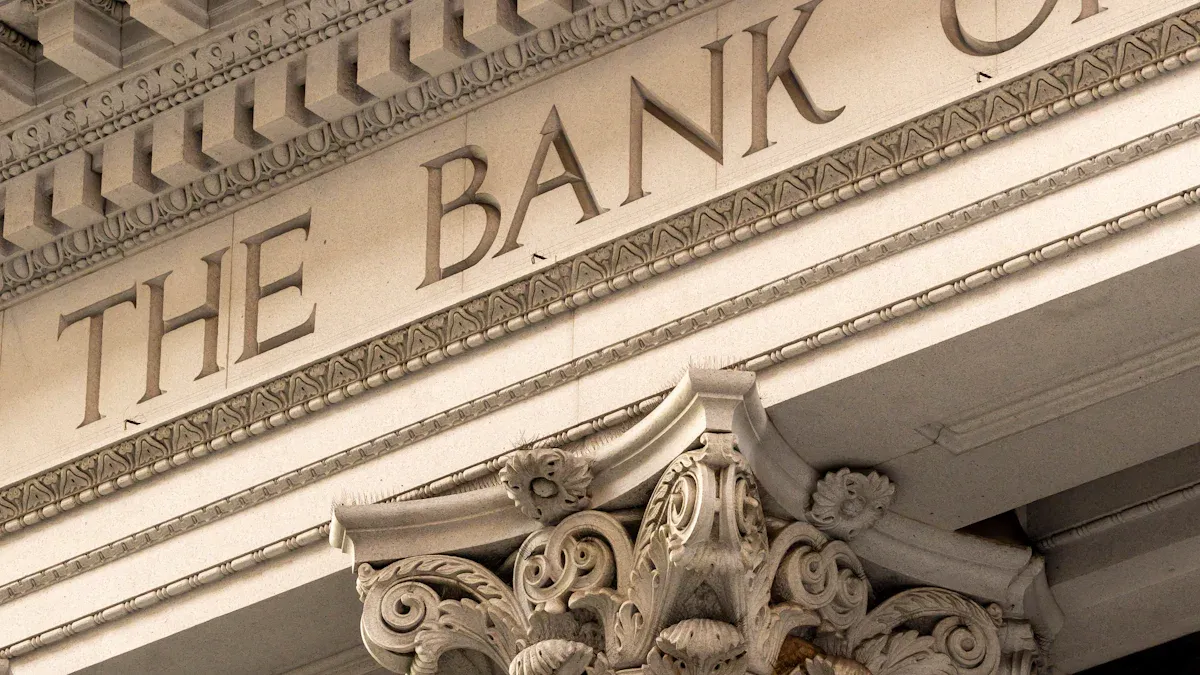
Image Source: unsplash
Anti-Money Laundering and Term Financing Requirements
When conducting large fiat deposits and withdrawals, you must strictly comply with anti-money laundering and counter-terrorism financing regulatory requirements. Regulators explicitly stipulate that all large fiat transactions must be completed through licensed institutions to ensure the legitimacy and transparency of fund flows. You need to understand that combining automation and manual review can improve efficiency, but at the compliance level, the involvement of licensed institutions is indispensable. Taking Hong Kong licensed banks as an example, systems conduct real-time monitoring of every large transaction and immediately trigger manual re-review upon detecting suspicious fund flows. BiyaPay as a global collection, payment, and international remittance service platform, strictly implements fund source review to ensure every fiat and digital currency exchange, USDT to USD or HKD exchange, and US stock and Hong Kong stock transaction deposits and withdrawals comply with international anti-money laundering standards.
- The U.S. Department of Justice is investigating Signature Bank's cooperation with crypto clients, focusing on whether sufficient measures were taken to detect potential money laundering activities.
- Banks must conduct strict review of fund sources when handling crypto clients to ensure compliance.
- Insufficient transparency may expose banks to risks in anti-money laundering compliance, especially when handling large fiat transactions.
You need to understand that transparency of fund sources and labeling are at the core of compliance regulation, and any negligence may bring legal and financial risks.
At this point, whether a platform holds relevant licenses often determines whether large fund flows can enter a controllable compliance process. A multi-asset trading wallet such as BiyaPay, when used for global payments, international remittance, and real-time conversion between fiat and digital assets, is better understood as part of a compliant execution layer rather than a channel that should clear large transactions through automation alone.
Its role is not to “replace review,” but to provide a clearer basis for identity verification, fund-path validation, and risk segmentation in large fiat deposits and withdrawals. Especially when cross-border flows involve currencies such as USD or HKD, the presence of relevant registrations such as U.S. MSB and New Zealand FSP directly shapes how users assess compliance, traceability, and the safety boundaries of fund movement.
Customer Due Diligence and Continuous Monitoring
During large fiat deposits and withdrawals, you must undergo customer due diligence (CDD) and continuous monitoring by licensed institutions. Licensed institutions adopt differentiated due diligence measures based on customer risk levels. BiyaPay , when providing US stock, Hong Kong stock deposits/withdrawals and digital currency exchange services to Chinese-speaking users, always adheres to a risk-based approach, implementing enhanced due diligence (EDD) for high-risk customers, regularly reviewing customer information, monitoring transaction activities, and promptly identifying abnormal or suspicious patterns.
- Risk-based approach: Adjust due diligence measures according to customer risk levels.
- Enhanced due diligence (EDD): Conduct additional investigation and verification for high-risk customers.
- Continuous monitoring: Regularly review customer information and monitor transaction activities to identify abnormal or suspicious patterns.
Only by going through the compliance processes of licensed institutions can you ensure the authenticity of fund sources and legitimacy of destinations for large fiat deposits and withdrawals, avoiding potential legal risks.
The Necessity of Licensed Institutions
Legal and Compliance Safeguards
During large fiat deposits and withdrawals, you must rely on licensed institutions for legal and compliance safeguards. Licensed institutions strictly adhere to international financial regulations such as the Bank Secrecy Act (BSA), ensuring timely reporting of every currency transaction exceeding USD 10,000. This mechanism helps identify large-scale money laundering activities and protects your fund security. Banks and money service businesses proactively identify and verify your identity when you transact over USD 3,000 with unhosted wallets. When transaction amounts exceed USD 10,000, the system automatically triggers reporting processes to ensure all fund flows comply with national security and counter-terrorism requirements.
You can see that licensed institutions improve compliance efficiency through the combination of automation and manual review. Automated systems monitor transactions in real time, while manual review conducts in-depth analysis of complex or anomalous transactions. Hong Kong licensed banks adopt compliance solutions to automate compliance processes and generate real-time compliance reports. During your transactions, institutions conduct regular internal audits to identify compliance gaps and promptly correct weaknesses in processes. Employees receive ongoing training to master the latest regulations and ethical practices, ensuring every large fiat deposit and withdrawal meets international standards.
- Licensed institutions provide you with legal safeguards, ensuring transparent and legitimate fund flows.
- Combining automation with manual review improves compliance efficiency and reduces human risks.
- Regular audits and employee training, strengthening the compliance system and safeguarding your interests.
When selecting deposit and withdrawal channels, you must prioritize licensed institutions. Only licensed institutions can provide you with comprehensive legal protection and compliance safeguards, avoiding potential legal risks.
Risk Control and Responsibility Bearing
During large fiat deposits and withdrawals, you face multiple risks. Licensed institutions provide comprehensive risk control and responsibility bearing through robust risk management systems. Institutions conduct risk assessments on every transaction, analyzing the maturity of financial crime risk management frameworks and ensuring sufficient regulatory strength in the relevant country. During your transactions, institutions supervise the implementation of anti-money laundering and counter-terrorism financing (AML/CFT) frameworks, ensuring all fund flows comply with regulatory requirements.
| Strategy/Principle | Description |
|---|---|
| Risk Assessment | Assess the maturity of the issuer's overall financial crime risk management framework, including the regulatory strength of the country where it is located. |
| Supervision and Compliance | Ensure the strength and appropriateness of the issuer's AML/CFT framework. |
| Senior Management Involvement | Engage with the board or senior management to set policies and risk appetite. |
| Third-Party Reliance | Assess the degree of reliance by the issuer on third parties in risk management procedures. |
| Cooperation and Enforcement | Establish cooperation procedures with law enforcement agencies. |
| Monitoring and Reporting | Design monitoring and reporting procedures to ensure specific activities are identified and reported to relevant authorities. |
| Transparency | Comply with standard payment transparency regulations, such as the "Travel Rule." |
| Internal Audit | Emphasize the importance of internal testing and supervision, including the role of internal audit teams. |
| Training and Education | Provide ongoing training and education to employees to strengthen risk awareness. |
| Risk Management Integration | Integrate financial crime risk management procedures with the institution's risk management and supervision methods. |
When using BiyaPay and other global collection, payment, and international remittance service platforms, institutions implement differentiated risk management for Chinese-speaking users. Platforms identify high-risk customers through automated monitoring and manual review, implement enhanced due diligence (EDD), and regularly review customer information. During US stock, Hong Kong stock deposits/withdrawals and digital currency exchanges, platforms continuously monitor transaction activities, promptly identify abnormal or suspicious patterns, and prevent high-risk behaviors such as fund splitting and circular transfers.
Licensed institutions must also address strict anti-money laundering (AML) and know-your-customer (KYC) requirements, the complexity of sanctions enforcement, tax and reporting obligations, and constantly changing regulatory environments. During your transactions, institutions implement customer due diligence equivalent to traditional financial institutions and transaction monitoring based on the characteristics of new financial products such as stablecoins. Platforms strengthen risk control through internal audits, employee training, and compliance reporting, ensuring every large fiat deposit and withdrawal complies with international regulatory standards.
During large fiat deposits and withdrawals, only licensed institutions can bear legal responsibility for you, safeguard fund security, and prevent legal and financial risks arising from compliance oversights. You must choose licensed institutions with robust risk management systems and compliance capabilities to ensure authentic fund sources and legitimate destinations, protecting your own interests.
Risks and Case Analysis
Risks of Lacking Licensed Institutions
When conducting large fiat deposits and withdrawals, if you choose channels without licensed institution involvement, you will face serious legal and financial risks. Many jurisdictions require financial institutions to have robust anti-money laundering (AML) systems. Without licensed institution involvement, the risk profile of fund flows closely resembles that of unhosted wallets, making them highly susceptible to exploitation by criminals. You cannot obtain multiple protective measures such as due diligence, transaction monitoring, and suspicious activity reporting, and platforms may inadvertently become conduits for illegal activities, ultimately bearing legal responsibility.
| Evidence Type | Content |
|---|---|
| Legal Risk | In certain jurisdictions, wallets hosted by financial institutions lacking effective anti-money laundering (AML) systems have risk profiles similar to unhosted wallets. Financial institutions prevent money laundering through due diligence, transaction monitoring, and suspicious activity reporting under effective AML systems. |
| Financial Risk | In the absence of regulation, financial institutions may inadvertently facilitate illegal activities, thereby facing potential legal consequences. |
You also need to pay attention to direct losses for individuals and platforms. Common loss types for users and platforms without licensed institution oversight include:
- Privacy and monitoring: Large tech companies may collect your transaction data, leading to privacy breaches.
- Errors and fraud: When encountering erroneous or fraudulent transactions, you often cannot effectively defend your rights, with higher risks for the elderly and active military personnel.
- Account freezes: You may lose access to payment apps without notice, affecting daily life.
Typical Violation Cases
You can see from industry cases that lack of licensed institution involvement leads to huge fines and regulatory penalties. The following are typical violation cases in recent years:
- A certain cryptocurrency company was fined tens of millions of dollars due to deficiencies in its transaction monitoring system, failing to detect 9 billion USD in suspicious payments.
- Another cryptocurrency company, after being fined billions of dollars in 2023, was fined again in 2024 for failing to report transactions exceeding regulatory thresholds.
- A certain fintech company was fined tens of millions of dollars due to deficiencies in anti-money laundering compliance measures.
- In the gambling industry, a company was fined approximately 70 million USD for allowing high-risk customers to conceal fund sources.
- A U.S. casino was penalized by regulators for lacking basic anti-money laundering controls and failing to file suspicious activity reports and currency transaction reports.
When selecting deposit and withdrawal channels, you must prioritize licensed institutions. Only licensed institutions can provide you with compliance safeguards, preventing legal and financial losses due to regulatory gaps.
Process Recommendations for Automation and Manual Review
Process Design for Different Amounts
When handling large fiat deposits and withdrawals, you need to flexibly design automation and manual review processes based on transaction amounts and risk levels. For small and routine transactions, automated systems can efficiently complete identity verification, basic compliance checks, and anomaly detection. For large or high-risk transactions, you must introduce manual review to ensure compliance of fund sources and uses. The table below shows common process design methods:
| Processing Flow | Description |
|---|---|
| Dynamic Risk Scoring | Establish a "normal" activity baseline for each customer, dynamically adjust rule thresholds, and reduce false positives. |
| Automatic Anomaly Detection | Use median and standard deviation to fine-tune user thresholds, ensuring high-risk transactions are flagged promptly. |
| User-Specific Behavior Baseline | Learn customer normal patterns to identify significant anomalous transactions, avoiding limitations of fixed rules. |
You can experience risk-based process design through platforms like BiyaPay. The system automatically adjusts review intensity based on your transaction history and behavior characteristics, improving efficiency and reducing false positive rates. For transactions exceeding USD 10,000, the platform automatically triggers manual re-review to ensure compliance and fund security.
Effective Ways to Combine for Efficient Compliance
While pursuing efficiency and compliance, you need to pay attention to the latest industry trends in combining automation and manual review. Hong Kong has established a stablecoin licensing framework, providing a compliant foundation for regulated scenarios such as B2B payments and cross-border remittances. AI-driven payment systems are gradually integrating stablecoins as underlying infrastructure, promoting automation and programmable economy development. In the future, compliance systems will feature the following:
- 1:1 high-liquidity reserve support, ensuring fund security.
- Predictable par redemption mechanisms to enhance user confidence.
- Strict anti-money laundering and risk control measures to meet regulatory requirements.
- Information disclosure and audit obligations to enhance transparency and trust.
When selecting deposit and withdrawal services, you should prioritize platforms with automation and manual review capabilities. Compliant platforms like BiyaPay can flexibly configure processes based on different scenarios and amounts, ensuring both efficiency and regulatory compliance. In the future, with the improvement of regulatory frameworks in places like Hong Kong, automated compliance systems will become industry standards, helping you complete large fiat deposits and withdrawals safely and efficiently.
When conducting large fiat deposits and withdrawals, you must rely on licensed institutions to ensure compliance and security. Reasonable division of labor between automation and manual review can improve efficiency and prevent risks.
- Compliance helps you stay away from illegal transactions, reducing legal risks
- Prioritizing compliance protects your reputation and avoids significant fines
- Understanding the regulatory environment helps you maintain competitiveness in complex markets
| Evidence Type | Content |
|---|---|
| Compliance Framework | Future development focuses on cross-border transactions, anti-money laundering, and KYC regulations |
| Role of Stablecoins | Evolution of stablecoins drives financial innovation; industry cooperation is crucial |
| Regulatory Guidance | Clear regulation helps align operational controls with compliance |
FAQ
Can automated systems completely replace manual review for large fiat deposits and withdrawals?
You cannot rely solely on automated systems. Automation can improve efficiency, but in complex transactions and high-risk scenarios, manual review can identify hidden risks and ensure compliance.
Why must large fiat deposits and withdrawals go through licensed institutions?
You need licensed institution involvement to meet regulatory requirements such as anti-money laundering and counter-terrorism financing. Licensed institutions provide legal safeguards, ensuring transparent and legitimate fund sources and destinations.
How do licensed institutions safeguard your fund security?
When handling deposits and withdrawals at licensed institutions, the institution implements customer due diligence, continuous monitoring, and risk assessments to prevent money laundering and fraud, reducing legal and financial risks.
What are the advantages of combining automation and manual review?
You can achieve efficient processing and compliance safeguards. Automated systems increase speed, while manual review supplements judgment in complex scenarios; the combination reduces false positives and missed detections.
What elements should you focus on when choosing a compliant platform?
You should pay attention to whether the platform is licensed, whether its compliance system is robust, and whether it has dynamic risk management and manual re-review mechanisms. This can effectively prevent legal and financial risks.
*This article is provided for general information purposes and does not constitute legal, tax or other professional advice from BiyaPay or its subsidiaries and its affiliates, and it is not intended as a substitute for obtaining advice from a financial advisor or any other professional.
We make no representations, warranties or warranties, express or implied, as to the accuracy, completeness or timeliness of the contents of this publication.
Related Blogs of

JPM, BAC, GS, MS, and Citi: Which Bank Stock Is More Worth Buying? A Comparison of Valuation, Dividends, and Business Structure


What Does ASML’s Guidance Upgrade Mean for TSMC, Nvidia, and U.S. Semiconductor Equipment Stocks?


ASML Q2 2026 Earnings Analysis: What Signals Did Orders, EUV Demand, and Full-Year Guidance Release?

Is ASML’s Valuation Overextended After Earnings? Backlog and 2026 Guidance Risks

Choose Country or Region to Read Local Blog
 Australia
 Austria
 Belgium
 Canada
 Cyprus
 Czech Republic
 Denmark
 Estonia
 Finland
 France
 Germany
 Greece
 Hong Kong
 India
India Indonesia
 Ireland
 Italy
Italy Japan
Japan Latvia
 Lithuania
 Luxembourg
 Malaysia
 Malta
Malta Morocco
 Nepal
Nepal Netherlands
 New Zealand
 Norway
 Pakistan
 Philippines
 Poland
 Portugal
 Romania
 Singapore
 Slovakia
 Slovenia
 South Africa
 South Korea
 Spain
Spain Sweden
 Thailand
 United States
 Turkey
 United Arab Emirates
 United Kingdom
 Vietnam
Contact Us



