- More
- Download
Turn Your Local Computer into a Money Printer: OpenClaw Automatically Captures Arbitrage Opportunities and BiyaPay Settlement





Image Source: unsplash
You only need to use OpenClaw together with BiyaPay to turn your local computer into a money printer, achieving automated arbitrage and settlement. Data shows that the average arbitrage window is only 2.7 seconds, and the vast majority of profits are captured by extremely fast-reacting bots. By continuously capturing a median arbitrage spread of 0.3% through an automated system, you have the opportunity to join the ranks of only the top 0.51% profitable wallets. At the same time, you must also pay attention to risks such as security vulnerabilities, network crises, and market volatility, while maintaining a balance between costs and returns.
Core Points
- Using the OpenClaw automated system can significantly improve arbitrage efficiency and capture market opportunities.
- Pay attention to market volatility and security risks to ensure a balance between costs and returns and avoid unnecessary losses.
- Regularly audit API permissions and use security tools to protect fund safety and reduce network risks.
- Set appropriate arbitrage strategies based on your own capital scale, flexibly respond to market changes, and enhance profitability.
- Achieve automated settlement through BiyaPay to ensure efficient and secure fund flow and simplify the operation process.
The Path to Turning Your Local Computer into a Money Printer

Image Source: unsplash
OpenClaw Arbitrage Principle
You can turn your local computer into a money printer through the OpenClaw automated system. OpenClaw continuously monitors real-time liquidity and price dynamics on Phemex, analyzes odds in the Polymarket prediction pools, and uses fast execution capabilities to capture market price differences. An automated arbitrage system far surpasses manual operations, with significantly improved efficiency and profitability.
- Monitor exchange price changes
- Analyze prediction market odds
- Quickly execute arbitrage trades
The table below shows the efficiency comparison between automated and manual trading:
| Trading Method | Daily Trades | Daily Profit | Monthly Profit |
|---|---|---|---|
| OpenClaw Automated | 6,823 | ~$7,000 | ~$400,000 |
| Manual Trading | N/A | N/A | N/A |
Small Probabilistic Edge and Continuous Profitability
You can use a small probabilistic edge to achieve continuous profitability. Historical cases show that when market efficiency is lacking, arbitrageurs have the opportunity to obtain huge returns. For example, during the 2008 financial crisis, Volkswagen stock experienced a sharp price surge due to sudden news, many analysts misjudged, and arbitrageurs faced short-term squeezes. Through an automated system, you can continuously capture these small-probability opportunities and increase the probability of profitability.
- Sudden market events bring arbitrage opportunities
- Automated systems can respond quickly
- Accumulation of small probabilistic edges can achieve long-term profitability
Local Deployment and Environment Requirements
You only need to meet basic hardware and software conditions to turn your local computer into a money printer. OpenClaw deployment requirements are as follows:
| Component | Minimum Requirement |
|---|---|
| Node.js | 22+ |
| RAM | 2 GB |
| Disk Space | 20 GB |
| VPS Budget | $5-20 per month |
Many beginners make mistakes during deployment. You need to pay attention to the following points:
- Verify each skill and check the GitHub repository information.
- Use ClawSecure or ClawScan for security audits.
- Isolate wallets and create dedicated robot wallets.
- Deploy using Docker containers and restrict access permissions.
- Monitor the market first, then make trading decisions.
- Regularly audit API permissions.
By simply following these processes, you can efficiently and securely turn your local computer into a money printer.
OpenClaw Arbitrage Operation Process
Environment Setup and Software Installation
You need to complete the environment setup and software installation first to turn your local computer into a money printer. OpenClaw supports multiple operating systems, and the installation process is simple, but common issues cannot be ignored. You can refer to the table below to quickly locate and resolve typical errors encountered during installation:
| Error Message | Solution |
|---|---|
| "ANTHROPIC_API_KEY invalid or expired" | Verify that your key starts with sk-ant- and ensure it has not been revoked in the Anthropic console. |
| "EACCES permission denied" | On Linux, run the installer with sudo, or change the ownership of the target directory. |
| "Port 18789 already in use" | Identify and stop the process occupying the port, or configure OpenClaw to use a different port via the GATEWAY_PORT environment variable. |
| "429 Too Many Requests" | Wait a few minutes and retry, or see how to resolve rate limit errors in OpenClaw. |
| "WebSocket connection failed" | Test with a different network, or configure OpenClaw to use long polling mode as a fallback. |
You can obtain the latest installation guidance through official documentation and community resources. It is recommended to use Docker container deployment to improve security and isolation. You also need to regularly audit API permissions to ensure fund safety.
Strategy Setting and Market Monitoring
You need to set appropriate arbitrage strategies based on your own capital scale and risk preference. Different strategies have a huge impact on profitability. The table below shows several common strategies and their characteristics:
| Strategy Type | Description |
|---|---|
| Weather Data Arbitrage | Monitor NOAA forecast updates and trade weather markets before price adjustments; the arbitrage window has shrunk from 12.3 seconds in 2024 to 2.7 seconds in 2026. |
| Exchange Price Latency Arbitrage | Due to Polymarket introducing dynamic fees and eliminating latency, this strategy is basically ineffective at scale. |
| Market Making | Provide liquidity in 15-minute BTC/ETH/SOL markets; market makers receive 20% fee rebates and need to execute within 100 milliseconds. |
You can combine market monitoring tools to improve strategy execution efficiency. Common tools are as follows:
| Tool Name | Function Description |
|---|---|
| Price Difference Scanner | Identify the top five cryptocurrencies with the largest price differences between spot and futures trading to find arbitrage opportunities |
| Volatility Ranking | Determine the cryptocurrencies with the highest volatility in the past 24 hours as a short-term opportunity screening tool |
You need to continuously monitor market dynamics and adjust strategies in a timely manner. Market volatility and liquidity changes directly affect arbitrage windows and profit margins. Through automated monitoring tools, you can capture opportunities in real time and increase returns.
Tip: Strategy setting not only affects profitability but also determines risk exposure. You should regularly backtest strategies and optimize parameters using historical data.
Heartbeat Mechanism and Cost Control
You need to understand the important role of the heartbeat mechanism in cost control. OpenClaw adopts a production-grade heartbeat loop to ensure the determinism and simplicity of task processing. The heartbeat mechanism can effectively manage task execution, reduce unnecessary processing, and avoid resource waste. You can refer to the table below to understand the specific functions of the heartbeat mechanism:
| Mechanism | Description |
|---|---|
| Task Execution Management | The heartbeat mechanism effectively manages task execution and reduces unnecessary processing. |
| Resource Usage | Reduces token consumption by limiting tool usage. |
| Production-Grade Heartbeat Loop | Ensures determinism and simplicity of task processing and avoids resource waste caused by excessive instructions. |
You need to pay attention to operating costs. The monthly cost of OpenClaw agents ranges from $10 to $200, far lower than the $3,000 to $5,000 for traditional human assistants. Some users spent $12 in a short test over 3 hours; based on this, the cost for normal operation over a full month is approximately $1,584. By optimizing the heartbeat mechanism and strategy parameters, you can further reduce costs and improve profit efficiency.
You can turn your local computer into a money printer to achieve automated arbitrage and efficient cost control. You need to continuously learn and optimize to remain competitive in complex market environments.
BiyaPay Settlement Mechanism
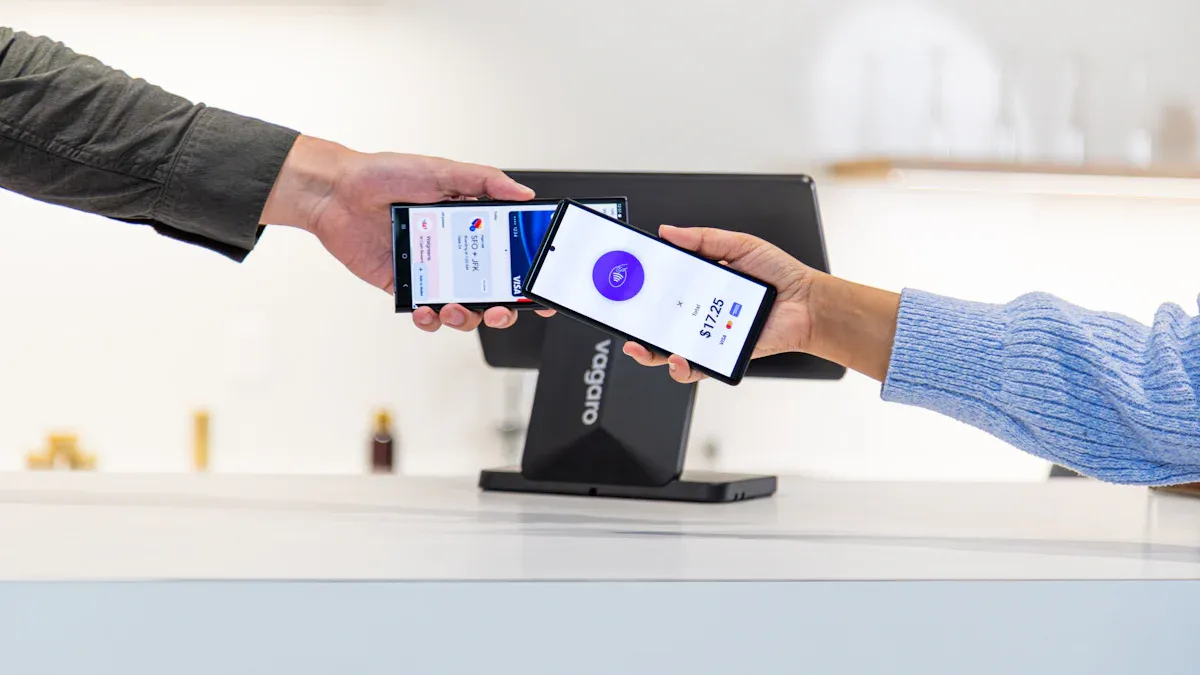
Image Source: unsplash
Settlement Process and Fund Security
You can achieve automated settlement through BiyaPay to ensure efficient and secure fund flow. After OpenClaw completes arbitrage, BiyaPay automatically handles fund transfers and conversions. You do not need manual operations; the system transfers profit funds to your dedicated wallet according to preset rules. BiyaPay supports global payments and real-time conversions to meet the fund needs of Chinese-speaking users in different markets. You can choose to convert USDT to USD or HKD, with funds flowing directly into Hong Kong licensed bank accounts, making it convenient for you to participate in US stocks or Hong Kong stocks trading.
In this kind of setup, it is usually safer to separate signal discovery from fund execution. OpenClaw can be used for spread monitoring and execution alerts, while the actual settlement step can go through a compliant channel such as BiyaPay for remittance or fiat conversion, with its exchange rate comparison tool used first to check transfer cost and FX friction. As a multi-asset wallet covering cross-border payments, trading, and treasury movement, BiyaPay fits more naturally into the settlement layer; with relevant financial licensing and registration in markets including the U.S. and New Zealand, it works better as the execution and fund-routing tool rather than as the source of trading judgment itself.
Fund security is your greatest concern. BiyaPay adopts multiple security measures to protect your assets:
- Hardware security key compatibility to prevent account theft
- Biometric authentication to ensure only you can operate funds
- Multi-layer encryption to protect data and transaction security
- Protection against phishing, SIM swapping, and wallet hacking attacks to reduce network risks
Through these measures, you can confidently conduct fund settlement and transfers. BiyaPay regularly audits system permissions to ensure every fund flow meets security standards.
OpenClaw and BiyaPay Collaboration
You can seamlessly integrate OpenClaw with BiyaPay to achieve a closed loop of automated arbitrage and settlement. OpenClaw is responsible for capturing market opportunities and executing trades, while BiyaPay handles real-time settlement and conversion of funds. You only need to set strategies and fund flow rules; the system automatically completes arbitrage, fund transfers, and conversions without human intervention.
The table below shows the OpenClaw and BiyaPay collaboration process:
| Step | Description |
|---|---|
| Arbitrage Execution | OpenClaw automatically captures market price differences and completes trades |
| Profit Transfer | BiyaPay automatically transfers profit funds to the dedicated wallet |
| Fund Conversion | BiyaPay converts USDT to USD or HKD in real time |
| Bank Deposit | Funds flow into Hong Kong licensed bank accounts, supporting US and Hong Kong stocks |
Through this collaboration mechanism, you can improve fund flow efficiency and reduce settlement risks. BiyaPay provides global payment and multi-currency conversion services to help you achieve continuous profitability in complex market environments.
Returns and Risks
Actual Returns and Influencing Factors
You can turn your local computer into a money printer to continuously obtain automated arbitrage returns. Historical data shows that the OpenClaw automated system can achieve monthly profits of up to USD 400,000 in highly liquid markets. Actual returns are influenced by multiple factors, including market volatility, strategy execution speed, heartbeat mechanism costs, and the size of arbitrage windows. You need to pay attention to the operating costs of the heartbeat mechanism; some users spent USD 12 in short-term tests over 3 hours, and if run continuously for a month, the cost is approximately USD 1,584. By optimizing strategies and adjusting heartbeat frequency, you can reduce operating costs and increase net returns. Small probabilistic edges also affect your long-term profitability; automated systems can continuously capture these opportunities and accumulate returns.
Tip: You should regularly backtest strategies and optimize parameters using historical data to improve profit efficiency.
Risk Types and Prevention Measures
You will encounter various risks during automated arbitrage. The table below summarizes the main risk types and prevention measures:
| Risk Type | Description |
|---|---|
| Investment Advisor Classification | Selling or distributing AI trading bots for compensation may require SEC or state registration as an investment advisor. |
| SEC “AI Washing” Enforcement (2026 Focus) | Falsely claiming strategies use “AI” or “deep learning” when actually running simple rules constitutes fraud. |
| Polymarket US Access | Now requires KYC and licensed brokers; multiple states have challenged this. Direct crypto wallet trading is no longer open to US users. |
| No Deposit Insurance | Cryptocurrencies held by bots have no FDIC protection; funds will be lost if compromised. |
| CFTC Attention to Automated Trading Systems | Regulators focus on compliance, supervision, and enforcement of algorithmic trading. |
| Proposed Rules for Automated Trading | CFTC-approved proposed rules mark a comprehensive regulatory response to the evolution of automated trading. |
| Decentralization Does Not Equal No Regulation | Prediction market platforms operate in gray areas, and regulatory frameworks are rapidly evolving. |
You can reduce risks through the following measures:
- Use ClawSecure or ClawScan for security audits.
- Isolate wallets and create dedicated robot wallets.
- Regularly audit API permissions and restrict access.
- Monitor changes in compliance policies and adjust operational strategies in a timely manner.
Strategy Optimization Suggestions
You can adopt various optimization techniques to improve arbitrage strategy performance:
- Utilize flash loan skills to achieve capital-efficient arbitrage.
- Use natural language processing libraries for accurate sentiment scoring to assist decision-making.
- Integrate with decentralized computing platforms to run complex simulations and enhance strategy adaptability.
- Add rug-pull detectors for contract code to guard against malicious behavior.
- Use persistent memory to continuously evolve strategies based on past performance.
You should continuously learn and adjust strategies, combining market dynamics and historical data to improve the profitability of automated systems. By turning your local computer into a money printer, you can achieve automated arbitrage and efficient risk control while maintaining long-term competitiveness.
You can achieve automated arbitrage and efficient settlement using your local computer. Continuous profitability depends on automated systems, risk prevention, and strategy optimization. You need to verify the security of each skill, use dedicated tools for scanning, isolate wallets, and run OpenClaw in containers. You should start by monitoring the market and regularly audit API permissions. Regulatory agencies pay close attention to automated trading compliance. Only with technical knowledge and trading strategies can you achieve long-term returns in complex markets. You can follow technical updates and community resources to continuously improve your capabilities.
FAQ
What hardware and software conditions are required for OpenClaw deployment?
You need a computer with at least 2 GB of RAM and 20 GB of disk space. You must install Node.js version 22 or above. It is recommended to use Docker containers to improve security and isolation.
How does BiyaPay ensure fund security?
You can protect accounts through hardware security keys and biometric authentication. BiyaPay uses multi-layer encryption technology to prevent data leaks. The system regularly audits permissions to reduce network risks.
How to control costs during automated arbitrage?
You can reduce resource consumption by optimizing the heartbeat mechanism and strategy parameters. The monthly cost of OpenClaw agents is usually between USD 10 and USD 200. You should regularly monitor operating expenses and adjust strategies to improve net returns.
How can Chinese-speaking users achieve fund settlement and conversion?
You can use BiyaPay to convert USDT to USD or HKD in real time. Funds can flow into Hong Kong licensed bank accounts, making it convenient for you to participate in US stocks or Hong Kong stocks trading. BiyaPay supports global payments and multi-currency conversions.
Does the integration of OpenClaw and BiyaPay require manual intervention?
You only need to set strategies and fund flow rules. The system automatically completes arbitrage, fund transfers, and conversions. You do not need manual operations; the entire process achieves an automated closed loop.
*This article is provided for general information purposes and does not constitute legal, tax or other professional advice from BiyaPay or its subsidiaries and its affiliates, and it is not intended as a substitute for obtaining advice from a financial advisor or any other professional.
We make no representations, warranties or warranties, express or implied, as to the accuracy, completeness or timeliness of the contents of this publication.
Related Blogs of

Are SMH, SOXX, and Hardware Leaders Absorbing Outflows from Software Stocks?


AI Revenue Quality at IBM, Oracle, and ServiceNow: Breaking Down Subscription, Cloud, and Consulting Businesses


Understanding Net Interest Margin and Provision Changes Through JPM, BAC, and Citi

How Does Venmo Make Money? How Payments, Credit Cards, and Merchant Services Affect PayPal’s Valuation

Choose Country or Region to Read Local Blog
 Australia
 Austria
 Belgium
 Canada
 Cyprus
 Czech Republic
 Denmark
 Estonia
 Finland
 France
 Germany
 Greece
 Hong Kong
 India
India Indonesia
 Ireland
 Italy
Italy Japan
Japan Latvia
 Lithuania
 Luxembourg
 Malaysia
 Malta
Malta Morocco
 Nepal
Nepal Netherlands
 New Zealand
 Norway
 Pakistan
 Philippines
 Poland
 Portugal
 Romania
 Singapore
 Slovakia
 Slovenia
 South Africa
 South Korea
 Spain
Spain Sweden
 Thailand
 United States
 Turkey
 United Arab Emirates
 United Kingdom
 Vietnam
Contact Us



