
Cross-Border Transfer Instructions on WhatsApp: Exploring Future AI Payment Security Verification Mechanisms




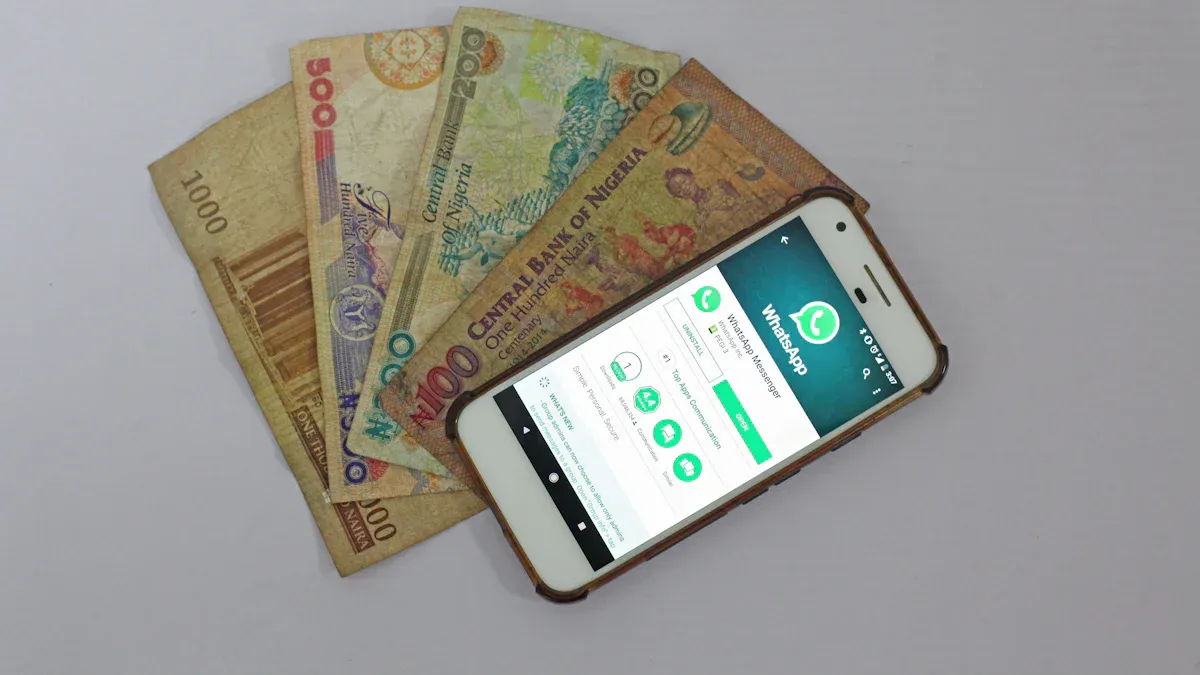
Image Source: unsplash
When you use WhatsApp to issue cross-border transfer instructions, AI technology can effectively prevent account hijacking and phishing attacks. AI analyzes your identity information and ensures transaction security through multi-factor verification mechanisms. You can rely on AI’s ability to detect fraud in social trust chains, thereby reducing financial losses caused by false information. During operations, you should always pay attention to account security, verify the authenticity of every transaction, and avoid risks caused by operational negligence.
Key Takeaways
- When using WhatsApp for cross-border transfers, enabling two-step verification can significantly improve account security and prevent unauthorized access.
- AI technology can monitor transaction behavior in real time, identify abnormal activities, promptly block potential fraud, and protect fund safety.
- During transfers, always verify the identity of the transaction counterparty and pay attention to information sources to avoid financial losses due to false information.
- Regularly check privacy and security settings to ensure the account is in optimal condition and promptly report suspicious accounts and messages.
- Stay vigilant, monitor abnormal transaction indicators such as frequent requests for one-time passwords, and promptly report suspicious activity to protect your own fund security.
Current Status of Cross-Border Transfer Instructions
Image Source: pexels
WhatsApp Payment Process
When you use WhatsApp to issue cross-border transfer instructions, you typically go through the following steps:
- You initiate a transfer request via WhatsApp, enter the recipient’s information and amount.
- The system generates a payment link and sends it to your chat window.
- After clicking the link, you are redirected to a digital banking app or third-party payment platform to complete the transaction.
BiyaPay provides Chinese-speaking users with global payment & collection and international remittance services. On the BiyaPay platform, you can achieve real-time conversion between fiat and digital currencies, such as converting USDT to USD or HKD. BiyaPay also supports funding/withdrawal for US stocks and Hong Kong stocks, as well as digital currency trading services, meeting diverse capital flow needs. In cross-border e-commerce, international investment, asset allocation, and other scenarios, you can combine WhatsApp with BiyaPay to achieve efficient and secure fund transfers.
Common application scenarios include:
- Cross-border e-commerce customer service, real-time order tracking and customer feedback collection.
- Handling customs clearance delay notifications, ensuring you are always ready to answer calls.
- Sending delivery completion confirmation messages and collecting customer satisfaction feedback.
- Lost item investigations and timely notification of follow-up plans.
- Automated file transmission for quick responses to invoice and other document requests.
Security Verification Methods
When you operate cross-border transfer instructions, WhatsApp adopts multiple security verification measures:
- The system verifies your phone number by sending an SMS code or making a phone call.
- You can set a PIN code and enable two-step verification to enhance account security.
- The platform uses authentication codes and public-key encryption keys to ensure only you can access the account.
If this kind of instruction will eventually connect to a real cross-border fund movement, then clarity of the payment path matters just as much as identity verification. Before acting, it is useful to cross-check the intended remittance route together with the exchange rate comparison tool, so the sending currency, settlement method, and conversion cost are all clear before execution. That makes the convenience of a chat-based workflow easier to anchor in something reviewable and traceable.
In this context, BiyaPay is better understood as part of the execution layer for cross-border payments rather than as the AI agent inside the chat tool itself. It functions as a multi-asset trading wallet covering cross-border payments, investing, trading, and fund management, while supporting conversion between multiple fiat currencies and digital assets; when payment security, path transparency, and later reconciliation all matter, that role fits naturally into a standardized transfer workflow.
These measures provide basic protection for your fund security, but limitations still exist. For example, verification code scams occur frequently, where attackers induce you to disclose the six-digit verification code through urgent requests. Risks such as cryptocurrency investment scams, impersonation of relatives, QR codes and malicious software links are constantly evolving. You need to stay alert to romance and phishing scams, fake lottery and giveaway messages, call forwarding attacks, fake employer scams, and various other methods to prevent account hijacking and financial losses.
Assurance of Information Authenticity
During the cross-border transfer instruction process, the platform verifies account authenticity through automated data processing and manual review. WhatsApp adopts standard contractual clauses and adequacy decisions to ensure the security of cross-border data transfers. An adequacy decision means the European Commission recognizes that certain countries and regions provide a sufficient level of personal information protection. During operations, you should pay attention to information sources, verify the identity of the transaction counterparty, and avoid financial risks caused by false information.
AI Security Verification Mechanisms

Image Source: unsplash
Identity Recognition Technology
When you use cross-border transfer instructions, AI identity recognition technology provides a solid foundation for payment security. AI and machine learning technologies can automatically analyze your identity information and identify counterfeit or abnormal accounts. Behavioral biometrics analyzes your typing speed, touchscreen habits, device usage patterns, and other data to determine whether you are the legitimate account holder. In global payment & collection and international remittance scenarios, BiyaPay adopts multi-factor identity verification mechanisms combined with AI algorithms to monitor account login and operation behavior in real time. When you perform real-time fiat-to-digital currency conversion, USDT-to-USD or HKD conversion, or funding/withdrawal for US stocks and Hong Kong stocks, the system automatically detects identity anomalies to prevent account hijacking. AI systems can adapt to new threats, update models in real time, and improve the effectiveness of identity verification. You no longer need to worry about traditional verification codes being exploited through phishing attacks—AI dynamically adjusts verification methods based on your behavioral characteristics and device information to protect fund security.
- AI and machine learning technologies improve payment fraud detection efficiency.
- Behavioral biometrics enhances identity verification security.
- AI systems update models in real time to adapt to new threats.
Behavioral Analysis and Risk Assessment
When you operate cross-border transfer instructions, AI behavioral analysis technology continuously monitors your transaction behavior. The system records your frequent recipients, transaction amounts, operation times, and other data to build a personal behavioral profile. The BiyaPay platform uses AI algorithms to analyze your capital flow patterns and identify abnormal operations. For example, if you suddenly transfer a large amount of USD to an unfamiliar account, the system automatically triggers a risk assessment and requires additional identity verification. AI can judge transaction risk levels based on historical data and real-time behavior, reducing the burden of manual review. In digital currency trading service scenarios, AI monitors your asset flow paths to prevent funds from being used for illegal purposes. AI systems can identify potential fraudulent behavior in real time, promptly block high-risk transactions, and protect your fund security.
You can promptly detect abnormal transactions through AI behavioral analysis and avoid financial losses caused by social trust chain fraud. AI systems can identify personalized phishing attacks, impersonate your contacts, or tailor lures based on scraped data, improving protection capabilities.
Anomaly Detection and Transaction Monitoring
When you use cross-border transfer instructions, AI-driven anomaly detection and transaction monitoring systems provide comprehensive protection for fund security. The system can analyze your transaction data in real time and detect irregular patterns. For example, when you conduct international remittances on the BiyaPay platform, AI automatically identifies abnormal indicators such as transaction frequency, amount changes, and recipient geographic location. According to the PwC report, AI solutions reduce the detection time for suspicious activities by 30–50%, significantly improving response efficiency. AI’s pattern recognition capability reduces false positive rates and saves financial institutions 20–30% of time and resources. In funding/withdrawal scenarios for US stocks and Hong Kong stocks, AI systems monitor capital flows, promptly detect abnormal transfers, and prevent accounts from being exploited by worms or becoming unintentional distributors. AI can not only address traditional fraud but also identify new social trust chain attacks that combine digital and physical attack methods, maximizing protection effectiveness.
- AI real-time transaction monitoring detects irregular patterns.
- Suspicious activity detection time reduced by 30–50%.
- False positive rate reduced by 20–30%, improving financial institution efficiency.
In regions where economic digitization is accelerating—especially among Chinese-speaking users facing complex cyberattack environments—AI security verification mechanisms can effectively address new threats such as personalized phishing and social trust chain fraud. Every time you operate a cross-border transfer instruction, the AI system automatically analyzes transaction risk, ensures secure capital flows, and improves user experience.
Advantages and Challenges of Security Mechanisms
Security Improvements
When using AI security verification mechanisms, you can clearly feel the enhancement of fund security. AI technology provides end-to-end encryption for cross-border transfer instructions, ensuring only you and the recipient can access message content. Independent payment channels keep your payment information isolated during processing, preventing the platform from accessing your sensitive data. You can also use one-time passwords (OTP) for two-factor authentication, ensuring only you can initiate payment operations. These measures collectively reduce the risk of account hijacking and phishing attacks. AI systems can analyze transaction behavior in real time, automatically identify abnormal operations, help you detect potential threats promptly, and improve the overall payment experience.
- End-to-end encryption protects communication content
- Independent payment channels isolate sensitive information
- OTP two-factor authentication prevents account impersonation
Data Privacy and False Positives
While enjoying the convenience brought by AI security mechanisms, you also need to pay attention to data privacy protection and false positive issues. AI systems need to collect and analyze large amounts of personal behavioral data to build accurate risk models. You may worry about personal information being misused or leaked. Platforms usually adopt strict data encryption and access control measures to reduce privacy leakage risks. When identifying abnormal transactions, AI models occasionally produce false positives, causing normal transactions to be blocked. You need to promptly communicate with the platform, verify identity, and restore account operations. When selecting services, prioritize platforms with compliant qualifications and privacy protection commitments.
You should understand that data privacy protection and false positive handling capabilities directly affect your user experience and fund security.
Technical Risks
While relying on AI security mechanisms, you also need to be cautious of technical risks. While AI technology enhances security, it also provides fraudsters with new attack tools. Research shows that fraud losses in e-commerce continue to grow, with AI-driven card enumeration and deepfake techniques making fraud more efficient. Solutions such as Visa Protect use real-time risk scoring to help financial institutions prevent fraud, but AI and bots also make brute-force attacks more frequent. When using real-time payment services, you need to pay attention to the evolution of new fraud methods and update security measures promptly. 41% of respondents believe that real-time payment fraud will become the most difficult problem in the coming years. You should continuously learn the latest security knowledge and improve your own protection capabilities.
User Security Recommendations
Two-Step Verification and Protective Measures
When operating cross-border transfer instructions, you must prioritize enabling two-step verification. Follow these steps to set it up:
- Enable two-step verification in WhatsApp settings: Go to “Settings > Account > Two-step verification > Enable”, choose a strong PIN, and store it securely.
- When logging into WhatsApp Web, it is recommended to connect to home Wi-Fi and keep the browser tab active for at least 15 minutes to establish a “known good” session.
- In WhatsApp Web settings, disable “Auto-lock” and temporarily set it to “Never” to prevent session timeout during travel.
- Ensure WhatsApp on your phone is updated to the latest version to avoid false positives caused by missing certificates or imperfect geofencing logic.
- Set your phone’s time zone and date/time to “Automatic” to prevent time offset from affecting session verification.
You can also take the following measures to enhance account security:
- Set a secret PIN code and never share it with others.
- Always use the official WhatsApp to avoid privacy risks from fake versions.
- Regularly check privacy and security settings to ensure the account is in optimal condition.
- Report suspicious accounts and messages to help the platform maintain a safe environment.
Preventing Social Engineering Attacks
In cross-border payment scenarios, you need to stay alert to social engineering attacks. Common attack methods are summarized in the table below:
| Attack Method | Description |
|---|---|
| Phishing | Sends malicious messages and ZIP file attachments to trick you into executing harmful files. |
| Impersonation | Uses compromised accounts to spread malware and enhance trust. |
| Automated Malware Distribution | Malware automatically sends messages, exploiting social trust and urgency. |
Modern attack techniques include impersonating executives to request urgent financial transactions and impersonating suppliers to redirect payments. You need to understand how scammers exploit business communication patterns, identify abnormal requests, and avoid financial losses caused by social trust chain fraud. Social media scam losses reached $7.7 billion in 2023, with businesses facing greater risks. Even with strong security awareness, you need to be cautious of AI voice cloning and deepfake technologies.
Identifying Abnormal Transactions
During cross-border transfer instructions, you need to pay attention to the following abnormal transaction indicators:
- Multiple requests for one-time passwords (OTP) in a short time.
- Sudden surge in SMS sending volume.
- Payment processes initiated from unrecognized devices.
- Immediate transaction attempts after a new device generates an SMS OTP.
- Abnormal WhatsApp file-sharing events, such as downloads folder triggering install intents, mismatched APK certificates, abnormal package naming.
When suspicious activity is detected, you should take screenshots to preserve evidence, including messages, voice, images, transaction receipts, and URLs. Report the account via WhatsApp and forward recent messages. Notify local cybercrime units and banks to apply for freezing or refunds. Report to national consumer protection agencies to assist in investigating cybercrime patterns.
Every time you perform a fund operation, you need to stay vigilant, promptly report anomalies, and protect your own fund security.
When using WhatsApp for cross-border transfers, AI security verification mechanisms significantly improve payment security and compliance.
- AI technology enhances transaction security through intelligent systems, proactively monitors and responds to risks in a timely manner, effectively maintains regulatory standards, and optimizes your experience and trust.
You should also pay attention to emerging risks brought by AI development:
| Risk Type | Description |
|---|---|
| Data Exposure or Leakage | Data leakage may occur at any link in the agent event chain. |
| System Resource Consumption | Uncontrolled agent execution may lead to denial of service or wallet denial. |
| Malicious Activity | Autonomous agents may be hijacked to perform unauthorized operations. |
You should continuously monitor technological evolution and compliance requirements and proactively defend against potential threats.
FAQ
Is it safe to issue cross-border transfer instructions on WhatsApp?
When using WhatsApp to issue cross-border transfer instructions, AI security verification mechanisms monitor transaction behavior in real time and, combined with end-to-end encryption and multi-factor authentication, effectively prevent account hijacking and phishing attacks.
How to identify suspicious behavior during the transfer process?
You should pay attention to abnormal transaction prompts, such as frequent requests for one-time passwords, device changes, and abnormal recipient information. The AI system automatically analyzes risk and, when necessary, requires you to perform additional identity verification to protect fund security.
Will AI security verification mechanisms affect transfer speed?
In most cases, you will not notice significant delays. AI systems maintain efficient transaction processing speed while ensuring security through automated risk assessment and behavioral analysis.
Will my personal data be used for other purposes?
When operating on compliant platforms, the platform uses data encryption and access control measures to strictly limit data usage to identity verification and risk assessment only, protecting your privacy and security.
What should I do if I encounter a false positive or account lockout?
You should promptly contact platform customer service and submit identity verification materials. The platform will quickly restore your account permissions based on AI analysis results and manual review, minimizing interruptions to fund operations.
*This article is provided for general information purposes and does not constitute legal, tax or other professional advice from BiyaPay or its subsidiaries and its affiliates, and it is not intended as a substitute for obtaining advice from a financial advisor or any other professional.
We make no representations, warranties or warranties, express or implied, as to the accuracy, completeness or timeliness of the contents of this publication.
Related Blogs of

Cheapest Way to Transfer Money Internationally: Small vs. Large Transfers


Wire Transfer Requirements: Sender and Beneficiary Details Checklist



Choose Country or Region to Read Local Blog
 Australia
 Austria
 Belgium
 Canada
 Cyprus
 Czech Republic
 Denmark
 Estonia
 Finland
 France
 Germany
 Greece
 Hong Kong
 India
India Indonesia
 Ireland
 Italy
Italy Japan
Japan Latvia
 Lithuania
 Luxembourg
 Malaysia
 Malta
Malta Morocco
 Nepal
Nepal Netherlands
 New Zealand
 Norway
 Pakistan
 Philippines
 Poland
 Portugal
 Romania
 Singapore
 Slovakia
 Slovenia
 South Africa
 South Korea
 Spain
Spain Sweden
 Thailand
 United States
 Turkey
 United Arab Emirates
 United Kingdom
 Vietnam