- More
- Download
Automated Trade Forex Settlement: How AI Assistants Automatically Distribute Funds Based on Multi-Country Exchange Rates




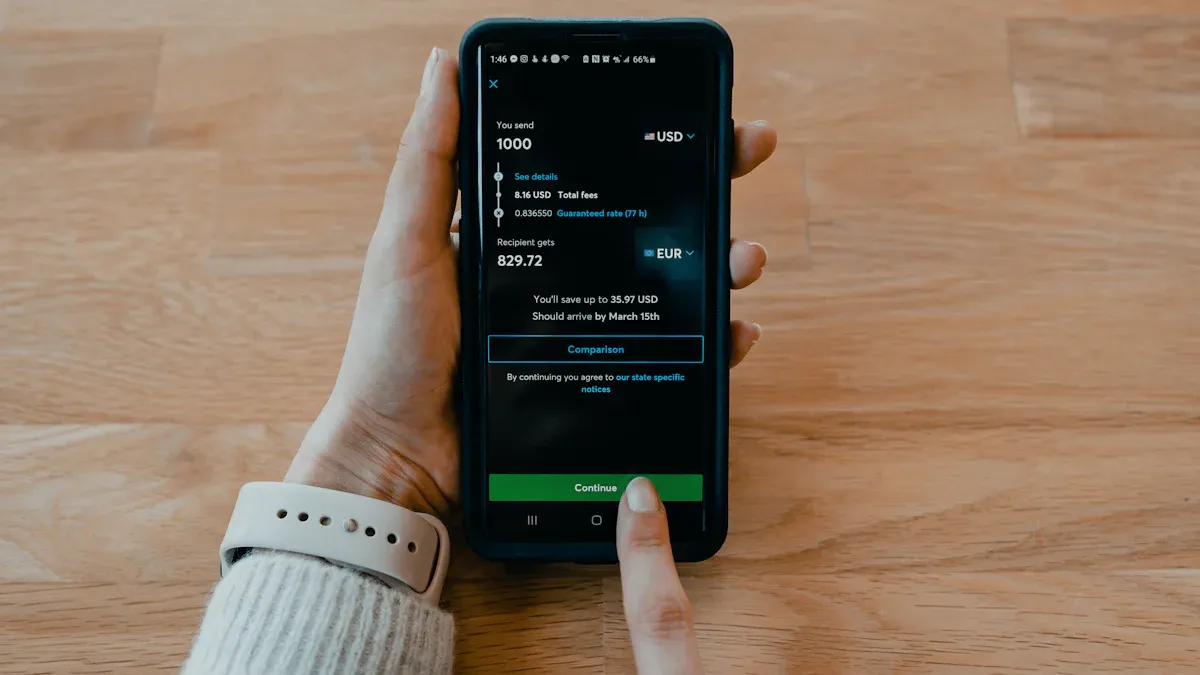
Image Source: unsplash
You can obtain real-time multi-country exchange rate data and quickly distribute funds to different accounts through automated trade forex settlement. AI assistants automatically monitor market changes to help you optimize every settlement operation and improve overall capital turnover efficiency. You no longer need to manually compare exchange rates or worry about distribution delays — the system automatically completes operations based on current USD rates.
Key Takeaways
- Leverage AI assistants to fetch real-time multi-country exchange rates, ensuring fund distribution is based on the latest market data and improving capital turnover efficiency.
- Intelligent fund distribution mechanisms automatically optimize allocation, helping you select the best settlement timing and reduce exchange rate risk.
- Automated monitoring tools detect transaction anomalies in real time, ensuring compliance, lowering legal risks, and protecting capital security.
- Automation reduces manual operations, significantly improving processing speed and accuracy while saving operating costs.
- Focus on data security and compliance management to ensure every transaction meets local laws and regulations and supports stable business operations.
Core Functions of Automated Trade Forex Settlement

Image Source: unsplash
Real-Time Exchange Rate Data Acquisition
In the automated trade forex settlement process, you first rely on high-quality exchange rate data. AI assistants integrate multiple technical platforms to provide you with accurate and timely rate information. For example, platforms such as Market Tracker, Datasoft FxOffice, and AI FX tools support real-time monitoring of trading activities, improving data accuracy and timeliness. You can obtain the latest exchange rates for multiple currencies through these platforms, with all transaction data transmitted via a single secure network to ensure information security and compliance.
| Technical Platform | Function Description |
|---|---|
| Market Tracker | Real-time monitoring and reporting of trading activities, multi-platform support, ensuring compliance and accuracy. |
| Datasoft FxOffice | Integrates forex and global payments, supports online payments and automated compliance, improves customer experience. |
| AI FX Tools | Uses artificial intelligence and machine learning for automatic processing, enhancing cash flow management and payment accuracy. |
In actual operations you will find that the accuracy of AI models in forex forecasting heavily depends on data quality. If there are inconsistencies between enterprise resource planning systems and banking systems, AI tools cannot reliably reconcile accounts, causing delays in financial reporting. Therefore, you need to ensure data standardization and consistency so that the automated trade forex settlement system can operate efficiently.
Intelligent Fund Distribution Mechanism
The core of automated trade forex settlement lies in intelligent fund distribution. AI assistants can automatically optimize fund allocation plans based on real-time exchange rates and market changes. You no longer need to manually compare rates across countries — the system predicts future currency movements using historical data, central bank policies, economic indicators, and market sentiment to help you choose the best settlement timing.
- AI helps banks optimize FX rates for international transfers, reducing costs and improving customer satisfaction.
- AI systems provide multinational companies with exchange rate change forecasts and optimal hedging strategy recommendations, helping you effectively manage currency risk.
- Through real-time estimation of economic indicators, AI systems provide data support that leads official statistics, improving decision-making efficiency.
The intelligent fund distribution mechanism also utilizes digital ledgers and smart contracts to reduce manual processes and increase transaction speed and accuracy. You can achieve end-to-end capital flow through automation, avoiding delays and errors caused by manual document handling in traditional credit systems. The introduction of blockchain technology has dramatically shortened transaction processing times — some bank collaboration cases show that processing cycles have been reduced from 7–10 days to 4 hours. Smart contracts automatically trigger payments when specific conditions are met, eliminating uncertainty in contract term interpretation and ensuring every fund distribution is precise and error-free.
Automated Process Monitoring
During automated trade forex settlement you must pay attention to process security and compliance. AI assistants use automated monitoring tools to detect anomalies and risks in the transaction process in real time. Automated compliance verification systems can automatically screen recipients, verify identities, monitor suspicious transaction patterns, eliminate manual compliance tasks, and reduce legal risks. All compliance checks maintain detailed audit trails for regulatory and internal review.
| Monitoring Tool | Function Description |
|---|---|
| Automated Compliance Verification System | Automatically screens recipients, verifies identity, monitors suspicious patterns, maintains audit trails, reduces legal risk. |
| Settlement Center | Manages confirmation processes, monitors anomalies, identifies optimal settlement paths, enhances transaction information, ensures compliance. |
| Settlement Hub | Automates verification, processing, and reconciliation of transactions and invoices, ensures accuracy and tax compliance, provides real-time audit trail access. |
Modern transaction monitoring tools combine rules, analytics, and machine learning to identify abnormal transaction patterns in real time. You can quickly discover issues such as duplicate submissions, information inconsistencies, and address mismatches through these tools and take timely action to prevent fraud and high-risk payments. Automated monitoring systems also screen counterparty information in real time to ensure compliance with global sanctions lists and blacklists in specific jurisdictions, significantly reducing the risk of illicit transactions.
Automated trade forex settlement helps you improve capital turnover efficiency, optimize exchange rate management, and reduce operational risk through three core mechanisms: real-time exchange rate acquisition, intelligent fund distribution, and automated process monitoring. These technologies provide solid support for your capital management in global markets.
Technology and Process Breakdown
Exchange Rate Data Sources and Updates
In the automated trade forex settlement process you must rely on high-frequency, authoritative data sources. Platforms such as BiyaPay collect real-time exchange rate information for major currencies such as USD and HKD by connecting to global mainstream forex markets. You can use these platforms to achieve real-time exchange between fiat and digital currencies (e.g. USDT) to meet capital flow needs across U.S. stocks, Hong Kong stocks, and other markets.
In practical settlement workflows, the key is not only obtaining exchange-rate data, but also connecting pricing, conversion, and fund distribution within one process. You can first use BiyaPay’s free exchange rate comparison tool to estimate settlement costs across currencies, then combine that with its remittance service for the next stage of fund distribution. This makes it easier to evaluate both efficiency and cost before execution.
From a product perspective, BiyaPay is better understood as a multi-asset wallet covering cross-border payments, trading, and fund management scenarios, with support for movement between multiple fiat and digital assets. It also operates with relevant financial registrations in jurisdictions such as the U.S. and New Zealand. For foreign trade businesses that need to balance settlement efficiency, cross-border fund routing, and compliance handling, this kind of infrastructure fits naturally into an automated distribution workflow.
High-quality data sources not only improve settlement efficiency but also reduce risks caused by delayed rates. You need to pay attention to data update frequency and accuracy to ensure every fund distribution is based on the latest market conditions. Financial institutions typically adopt automated trade matching and reconciliation systems — AI completes buyer-seller transaction verification at far greater speed than humans, greatly improving the security and compliance of capital flows.
Fund Distribution Algorithms
When distributing funds in multiple currencies you must consider exchange rate fluctuations and arbitrage risks. Platforms such as BiyaPay adopt multi-currency risk arbitrage strategies, combining real-time rates and market dynamics to automatically optimize fund allocation.
Fund distribution algorithms typically have the following characteristics:
- Identify multi-currency arbitrage opportunities and dynamically adjust positions.
- Optimize hedging strategies by incorporating the covariance structure of all currencies to reduce overall risk.
- Flexibly adjust portfolios based on market events and expected excess returns to improve capital utilization efficiency.
You can use these algorithms to manage cross-border funds for U.S. stocks, Hong Kong stocks, and other markets — the system automatically identifies hedging needs to help you maintain capital security during market volatility.
Financial institutions also utilize predictive settlement failure detection and liquidity forecasting algorithms to identify potential delays or failures in advance, dynamically optimize resource allocation, and ensure continuity and stability of fund distribution.
Risk Control and Compliance
During automated trade forex settlement you must strictly comply with laws and regulations in each market. The system automatically performs risk assessments to help you identify potential issues and prevent violations through embedded controls.
Compliance processes include:
- Understanding and complying with legal requirements in each market.
- Screening trade partners against sanctions lists to prevent illicit transactions.
- Monitoring changes in global trade policies and adjusting operations in a timely manner.
- Maintaining accurate transaction and compliance documentation for audit and regulatory purposes.
Modern digital compliance tools can automatically check all transactions, verify fund flows in real time, and alert teams when regulatory policies are updated. You can achieve compliant management of global payments & collections and international remittances through platforms such as BiyaPay — the system automatically screens high-risk transactions to ensure every fund flow meets regulatory requirements.
The table below shows the main support that financial institutions provide in innovation and compliance:
| Application Area | Description |
|---|---|
| Automated Trade Matching & Reconciliation | AI verifies and matches buyer-seller transactions at speeds exceeding human capability. |
| Predictive Settlement Failure Detection | Advanced algorithms analyze historical and market patterns to predict potential settlement delays or failures. |
| Compliance Automation | AI supports compliance through continuous monitoring, transaction screening, and data validation. |
| Real-Time Anomaly Detection | Machine learning models detect anomalies in real time to help banks identify high-risk transactions. |
Through these technical means you can significantly improve the security and compliance of automated trade forex settlement, reduce operational risk, and ensure smooth global capital flows.
Fund Distribution Process

Image Source: pexels
Process Preparation
Before starting automated fund distribution you need to complete a series of preparatory work. First, set up templates for capital call and allocation notices to ensure all notices comply with ILPA or other international investor reporting standards. You should achieve complete segregation between funds and operating accounts to guarantee the accuracy of client ledgers so that each account balance strictly matches the total trust amount. You also need to ensure all payment operations can meet court-ordered deadlines and maintain transparent records of all administrative expenses. In addition, the onboarding process for funds and investors is equally important, including reviewing legal documents, setting up accounting report structures, collecting subscription documents, verifying identities, and conducting anti-money laundering and customer due diligence checks. These preparations provide the compliance and data foundation for subsequent automated distribution processes.
Automatic Distribution Steps
When performing fund distribution on automated trade forex settlement platforms such as BiyaPay, you typically follow these steps:
- Select payment type, such as U.S. stock deposits/withdrawals or international remittances.
- Determine real-time exchange rates — the system automatically connects to global mainstream forex markets to obtain the latest rates for USD, HKD, and other currencies.
- Record detailed recipient information, including account details and identity verification materials.
- The system automatically completes payment verification to ensure the source and destination of funds are compliant.
- Initiate payment — the platform automatically executes fund transfers and supports real-time exchange between fiat and digital currencies (e.g. USDT).
- Track payment progress — the system provides real-time feedback on the status of each transaction so you can promptly track fund flows.
BiyaPay helps you efficiently complete cross-border fund distribution through automated processes, improving overall operational efficiency.
Exception Handling
During fund distribution you may encounter anomalies such as data inconsistencies, payment delays, or identity verification failures. The system automatically monitors every step and identifies abnormal transaction patterns in real time. For example, if a client ledger balance does not match the total trust amount, the system immediately issues an alert. For payment delays, the platform automatically tracks and prompts you to take remedial actions. When identity verification fails, the system pauses the payment process and requires you to provide additional materials. You can review exception handling records at any time through the audit function of the automated platform to ensure every fund distribution meets compliance requirements.
Advantages and Applications
Improved Capital Efficiency
When using automated settlement systems such as BiyaPay you can significantly improve capital turnover efficiency. The system automatically connects to global mainstream forex markets to fetch real-time rates for USD, HKD, and other currencies and completes payments and settlements automatically. The table below shows specific improvements in capital efficiency after enterprises adopted automated settlement systems:
| Improvement Metric | Specific Data |
|---|---|
| Processing Time | Reduced from days to hours |
| Manual Processing Time Reduction | 75% reduction in manual processing time |
| Accuracy | 99.2% payment calculation accuracy |
| Traditional Processing Time | Reduced from 7–14 working days to 24–48 hours |
You can achieve fast arrival of cross-border funds through automated platforms, greatly shortening funds-in-transit time and improving overall operational efficiency.
Reduced Exchange Rate Risk
Automated settlement systems help you effectively reduce risks caused by exchange rate fluctuations. The system deeply integrates forex trading with payment processes, reducing manual operations and delays and improving the speed and accuracy of high-value payments. In actual operations you will find:
- Automated settlement systems connect forex trading with payment flows, reducing manual errors and delays.
- Integrated processes improve the speed and accuracy of high-value payments and help manage currency mismatches.
- Adoption of unified payment file formats enhances the efficiency and security of cross-border payments.
You can lock in exchange rates in a timely manner through automation to reduce losses caused by market volatility.
Cost Savings
After adopting automated settlement platforms you can significantly reduce operating costs. The system automatically handles exchange rate comparison, payment verification, and compliance review, reducing manual intervention and labor costs. You no longer need to invest substantial resources in manual reconciliation and risk control — the platform uses intelligent algorithms to automatically identify the optimal settlement path, helping you save on transaction fees and conversion losses. For U.S. stocks, Hong Kong stocks, and other markets, BiyaPay supports real-time exchange between USDT and USD/HKD, further optimizing capital allocation efficiency.
Application Scenarios
You can apply automated settlement systems in various international business scenarios. For example, cross-border e-commerce companies can use BiyaPay to handle global payments & collections and international remittances to meet multi-currency settlement needs. U.S. stock and Hong Kong stock investors can use the platform’s deposit/withdrawal services to quickly complete fund transfers. Digital currency traders can flexibly respond to market changes through real-time exchange between USDT and fiat. You can also use automated systems in global procurement, supply chain settlement, and other scenarios to improve capital turnover efficiency, reduce exchange rate risk, and achieve compliant management.
Risks and Precautions
Exchange Rate Fluctuation Risk
During automated settlement you must pay close attention to risks caused by exchange rate fluctuations. Rapid changes in currency values may lead to financial losses when settling at unfavorable rates. You also face complexity in choosing settlement timing because market conditions change constantly. Regulatory differences across countries and regions also affect compliance — artificial intelligence tools can help you efficiently address these challenges. In addition, manual prediction of settlement timing is inefficient and error-prone — automated systems can significantly improve operational efficiency.
- FX volatility may cause financial losses
- Settlement timing selection is complex
- Diverse compliance requirements
- Low efficiency of manual prediction
Data Security
When handling cross-border fund distribution you must ensure the security of sensitive information. Data encryption and access control are core measures for protecting data. Encrypting sensitive data at rest and in transit keeps it confidential even if intercepted. You also need to conduct regular risk assessments to identify and mitigate potential threats. Technologies such as multi-factor authentication and firewalls can further enhance system security. The table below summarizes common data security protocols and their roles:
| Data Security Protocol | Description |
|---|---|
| Encryption | Ensures confidentiality of data at rest and in transit |
| Access Control | Restricts access to sensitive data and reduces internal threats |
| Risk Assessment | Regularly evaluates potential security risks and takes timely measures |
| Compliance | Follows relevant laws and regulations to protect sensitive information |
| Multi-Factor Authentication | Adds protection layers to prevent unauthorized access |
| Firewall | Protects system boundaries and prevents information leakage |
| Intrusion Detection | Monitors unauthorized access attempts and provides timely defense |
| Audit | Reviews activity logs to detect suspicious behavior |
| Physical Security | Protects sensitive information through access control, locks, and monitoring |
| Procedural Measures | Maintains the effectiveness of security controls through secure operations and practices |
Compliance and Policy
When adopting automated settlement systems you must closely monitor changes in regulatory policies across regions. The implementation of T+1 settlement cycles requires financial institutions to improve operational efficiency to meet new compliance requirements. The asset management industry faces increased liquidity risk and higher transaction costs in automated settlement. You need to use automated tools to manage trading volume and liquidity risk to ensure every fund distribution complies with local laws and regulations. Compliance management is not only a legal requirement but also the foundation of stable business operations.
System Stability
When selecting AI-driven settlement platforms, system stability directly affects capital security and business continuity. Platforms typically adopt clear system architectures, such as Kafka buses and high-performance query storage, to ensure high-concurrency message processing capability. Compliance design requires golden copies to be retained in mainland China and recoverable within two hours. Platforms use gradient boosting models to predict transaction failure risk and LSTM networks to learn historical failure patterns for early liquidity shortage warnings. Small GPU clusters can cluster anomalous comments and quickly assign them to the correct operations team. Report generators summarize daily settlement statistics while ensuring data does not leave the local environment. You should regularly evaluate system architecture and contingency mechanisms to ensure stable business operations.
Through automated trade forex settlement and AI assistants you can significantly improve enterprise capital management efficiency and reduce operational risk. The table below shows the effectiveness of automation in real-world applications:
| Case | Efficiency Improvement | Cost Savings |
|---|---|---|
| Hong Kong Licensed Banks | Processing time reduced by 85% | Operating costs reduced by 40% |
| Bruckner Group | Processing time shortened to hours | Cost savings of 30–40% |
| Banking Industry Data | Processing time reduced by 60% | 50% of staff released for higher-value work |
You can also promote enterprise digital transformation in the following ways:
- Automated document processing reduces cycles from days to hours.
- Digital processes lower per-transaction processing costs.
- Real-time anomaly detection reduces error and fraud risks.
You should actively adopt automation tools, continuously optimize capital flows and compliance management, and lay a solid foundation for enterprise internationalization.
FAQ
How does the automated settlement system obtain real-time exchange rate data?
You can integrate data interfaces from global mainstream forex markets — the system automatically updates rates for USD, HKD, and other currencies to ensure fund distribution is based on the latest market conditions.
How is compliance ensured during fund distribution?
You can rely on automated compliance tools — the system screens recipient identities and transaction paths in real time to ensure every fund flow complies with national legal requirements.
How to reduce risks caused by exchange rate fluctuations?
You can use AI predictive models — the system automatically identifies the best settlement timing and locks in USD rates in a timely manner to reduce losses caused by market volatility.
How does the system handle payment delays or anomalies?
You can use automated monitoring platforms — the system provides real-time alerts for abnormal transactions, automatically pauses payment processes, and prompts you to provide additional materials to protect capital security.
Which international business scenarios does the automated settlement system support?
You can apply the automated settlement system in scenarios such as global payments & collections, international remittances, real-time fiat–digital currency exchange, U.S. stock and Hong Kong stock trading deposits/withdrawals, and more.
*This article is provided for general information purposes and does not constitute legal, tax or other professional advice from BiyaPay or its subsidiaries and its affiliates, and it is not intended as a substitute for obtaining advice from a financial advisor or any other professional.
We make no representations, warranties or warranties, express or implied, as to the accuracy, completeness or timeliness of the contents of this publication.
Related Blogs of

AI Revenue Quality at IBM, Oracle, and ServiceNow: Breaking Down Subscription, Cloud, and Consulting Businesses


What Is Kevin Warsh’s Policy Framework? How It Affects the U.S. Dollar, Treasuries, and Tech Stocks


How Much Is Venmo Worth in the PayPal Acquisition Case? User Scale, Revenue, and Strategic Value


What Are IGV’s Holdings? Microsoft, Salesforce, Oracle, ServiceNow Weights and AI Risks

Choose Country or Region to Read Local Blog
 Australia
 Austria
 Belgium
 Canada
 Cyprus
 Czech Republic
 Denmark
 Estonia
 Finland
 France
 Germany
 Greece
 Hong Kong
 India
India Indonesia
 Ireland
 Italy
Italy Japan
Japan Latvia
 Lithuania
 Luxembourg
 Malaysia
 Malta
Malta Morocco
 Nepal
Nepal Netherlands
 New Zealand
 Norway
 Pakistan
 Philippines
 Poland
 Portugal
 Romania
 Singapore
 Slovakia
 Slovenia
 South Africa
 South Korea
 Spain
Spain Sweden
 Thailand
 United States
 Turkey
 United Arab Emirates
 United Kingdom
 Vietnam
Contact Us



