Avoid Sharp Currency Fluctuations: How AI Agents Automatically Close Positions to USD Before Major Macroeconomic Data Releases




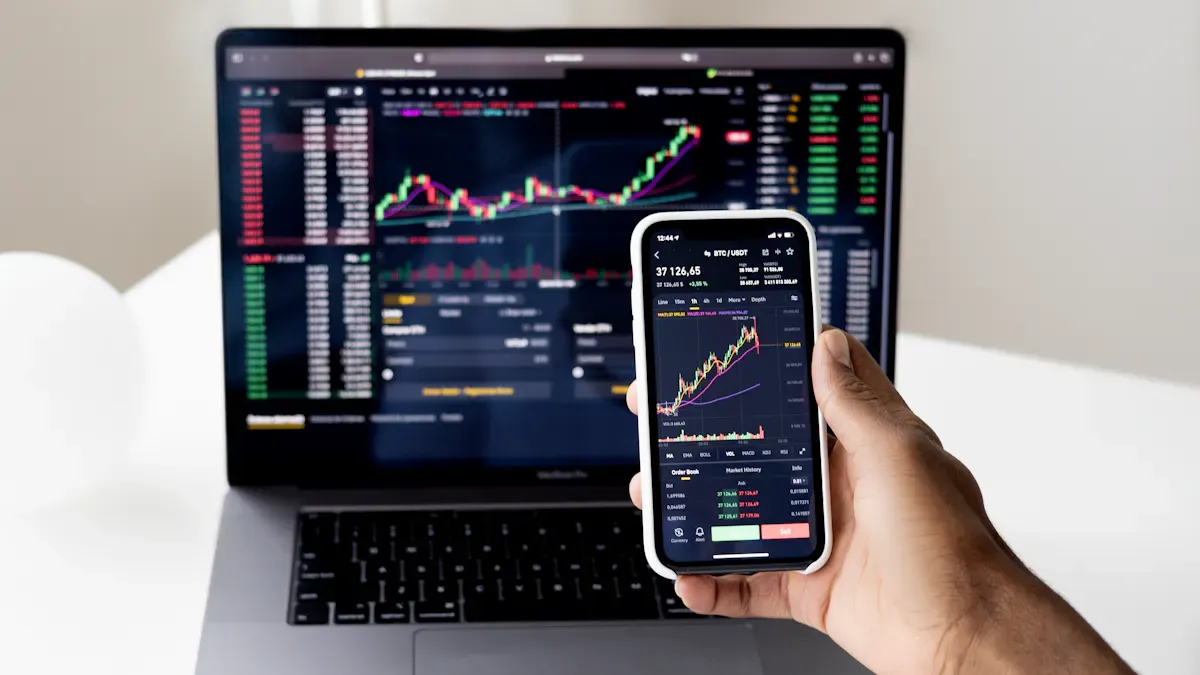
Image Source: pexels
When facing major macroeconomic data releases, you often encounter the risk of sudden and sharp currency fluctuations. Through technical means, AI agents can automatically close positions to USD before the data is released, effectively helping you avoid currency fluctuations. The table below shows that during major macroeconomic data releases, both trading volume and volatility rise significantly:
| Evidence Type | Description |
|---|---|
| Trading Volume | Trading volume shows a clear peak during major macroeconomic data releases. |
| Volatility | Volatility increases significantly after data releases and remains at elevated levels for a period of time. |
| Data Surprise | There is a systematic relationship between the surprise component of data releases and exchange rate levels, though this relationship is relatively weak. |
You can leverage AI agents to improve reaction speed and flexibility, gaining the following advantages:
- AI systems can adapt to new market conditions, detect patterns that are not explicitly defined, and achieve faster decision-making and execution.
- AI agents can handle thousands of financial instruments simultaneously, completing orders in milliseconds.
This allows you to manage risk more calmly and avoid losses caused by sudden market changes.
Key Takeaways
- AI agents can automatically close positions before major macroeconomic data releases, helping you avoid currency fluctuation risks.
- Leverage the real-time data processing capabilities of AI agents to improve decision speed and accuracy, reducing potential losses.
- Choose the right AI agent platform, focusing on its level of automation and risk control mechanisms to ensure fund safety.
- Regularly monitor and optimize AI agent strategies, combining them with your own needs to enhance risk management capabilities.
- When using AI agents, avoid over-reliance and combine personal judgment to ensure flexibility in trading strategies.
AI Agent Principles
Macroeconomic Data and Currency Fluctuations
In the forex market, you often pay attention to release times of major macroeconomic data such as U.S. Non-Farm Payrolls and CPI. Once these data are published, market trading volume and volatility rise rapidly, causing sharp short-term changes in exchange rates. Through technical means, AI agents can help you identify these key moments in advance and take timely measures to avoid currency fluctuations.
You can learn about the main technical mechanisms behind AI agents:
| Technical Mechanism | Description |
|---|---|
| Multi-Agent Coordination | Multiple specialized agents work collaboratively to provide comprehensive market insights. |
| Real-Time Processing Pipeline | The system architecture supports real-time data processing, with a distributed computing framework ensuring optimal performance. |
| Data Ingestion and Processing Layer | Continuously collects and processes market data from multiple sources to ensure comprehensive coverage. |
| Analysis and Pattern Recognition Layer | Machine learning algorithms identify trends, anomalies, and emerging patterns in market data, applying techniques such as sentiment analysis and topic modeling. |
You can see that AI agents achieve all-round market monitoring through a multi-layer architecture. This approach allows you to obtain timely and accurate information before and after data releases, thereby more effectively avoiding currency fluctuations.
Data Identification and Automatic Response
AI agents not only monitor macroeconomic data but can also automatically identify market risk signals and respond accordingly. You can rely on AI agents to complete the following tasks:
- Data Collection and Processing: AI agents continuously scrape and analyze data from multiple channels, including financial reports, news articles, and social media.
- Real-Time Insights: The system can provide you with timely market insights to help you grasp market dynamics.
- Enhanced Predictive Analytics: Machine learning algorithms identify hidden market patterns and trends, improving decision accuracy.
- Risk Management: AI agents combine historical and current market performance to identify and mitigate potential risks.
- Sentiment Analysis: By scanning social media and news sources, AI agents provide you with an overall view of market sentiment.
- Automatic Reporting: The system automatically generates reports covering key trends and insights, improving your decision-making efficiency.
You will find that many AI-driven trading signals have accuracy rates exceeding 50%, and long-term signals even show over 90% outperformance against benchmarks for stocks. This efficient data identification and response capability gives you greater initiative in avoiding currency fluctuations.
However, you also need to be aware of the limitations of AI agents:
- AI systems rely on data quality; inaccurate data can affect analysis results.
- AI lacks flexible judgment and struggles to handle sudden events or irrational market behavior.
- High-quality AI systems require significant technical and maintenance investment.
- Over-automation may lead to high risks, requiring reasonable settings for trading instructions.
- The decision-making process lacks transparency, and some traders may doubt AI execution results.
- The current regulatory framework is not yet perfect, involving ethical issues such as transparency and accountability.
When using AI agents to avoid currency fluctuations, you should combine your own needs and actual market conditions, reasonably configure system parameters, and enhance risk management capabilities.
Automatic Position Closing Process

Image Source: pexels
Monitoring and Early Warning Mechanism
In the forex market, you often need to monitor the dynamics of macroeconomic data releases in real time. AI agents can scan economic calendars, news sources, and market data streams 24/7, automatically identifying upcoming major data releases. The system issues early warnings in advance based on historical volatility patterns and market sensitivity, helping you adjust positions in a timely manner.
You can refer to the following research findings to understand the actual effectiveness of AI-driven early warning mechanisms in reducing losses from currency fluctuations:
| Evidence Source | Main Findings |
|---|---|
| Gartner | Using predictive analytics can help reduce risk by up to 30% and improve forecast accuracy by up to 25%. |
| McKinsey | Companies using predictive analytics are more likely to outperform peers in revenue growth and profitability. |
| McKinsey | Companies leveraging real-time data and analytics are more likely to outperform peers by 2.5 times the speed. |
You will find that AI agents not only improve the speed of risk identification but also help you react before market fluctuations through data-driven early warning mechanisms. This approach makes it easier for you to avoid potential losses caused by currency fluctuations.
Position Closing Execution Logic
When an AI agent detects that a major macroeconomic data release is imminent, the system automatically initiates the position closing process. You do not need to operate manually; the AI agent intelligently determines the optimal closing timing based on preset rules and real-time market data.
The position closing execution logic of AI agents mainly includes the following aspects:
- AI agents can perform ruthless execution, providing an advantage in millisecond-level markets.
- AI agents can analyze all data faster and more comprehensively, surpassing the capabilities of any individual or team.
- AI agents can dynamically adapt to market changes, adjusting input weights and strategies.
- AI agents optimize trading decisions by intelligently adjusting positions, setting contextual stop losses, using options to hedge directional deviations, and monitoring tail risk events.
You can see that the automated execution of AI agents is not only fast but also highly accurate. The system closes positions in batches or all at once based on market liquidity and order book depth, minimizing slippage and transaction costs to the greatest extent. When avoiding currency fluctuations, you can achieve higher execution efficiency and lower risk exposure.
Closing to USD Method
In actual operations, you often need to automatically close multi-currency assets held to USD. AI agents can seamlessly integrate with mainstream trading platforms and API interfaces to automatically complete the entire process from signal acquisition to order execution.
You can achieve closing to USD through the following methods:
- AI agents achieve division of labor and collaboration through multi-agent systems, with specialized agents responsible for signal acquisition, execution, and risk management.
- The trading workflow includes every step from idea generation to execution, ensuring automation and compliance of trades.
- Using no-code platforms, traders can deploy trading robots without writing code, lowering the technical barrier.
- Risk control measures such as kill switches and position limits ensure portfolio protection during market fluctuations.
During the process of closing to USD, you can flexibly choose market orders, limit orders, or algorithmic orders. The system automatically optimizes execution methods based on market depth and liquidity. AI agents also monitor trading progress in real time to ensure all positions are converted to USD assets before data releases. This way, you can effectively avoid currency fluctuations and improve overall risk management levels.
If your goal is not to let a system make decisions for you, but to verify multi-currency exposure, conversion cost, and related market movement before reducing risk, it is often safer to place manual checks ahead of any automated workflow. For example, you can first use BiyaPay’s exchange rate comparison tool to review the cost of switching different currencies into USD, then use its stock information page to check relevant market prices before acting near a data release window.
From a product-positioning perspective, BiyaPay is better understood as a multi-asset wallet covering cross-border payments, investing, trading, and fund management scenarios. When the discussion turns to account safety, fund transfers, or platform reliability, it also makes sense to verify the service scope and compliance disclosures shown on the official website, so that execution stays within a controlled process rather than leaving conversion, position closing, and fund movement to a single path.
AI Strategies for Avoiding Currency Fluctuations
Image Source: pexels
Application Cases
In actual forex trading, you often face sudden market fluctuations. Many international financial institutions have already adopted AI agents to enhance risk management capabilities. The table below shows how two representative institutions use AI technology to mitigate currency risk:
| Case | Application | Description |
|---|---|---|
| JPMorgan Chase | Forex Trading | Uses AI for forex trading and risk management, significantly reducing currency risk. |
| LOXM | Trade Execution | Through machine learning and reinforcement learning techniques, the LOXM platform analyzes market data, predicts price movements, and executes trades. |
You can see that JPMorgan Chase uses AI agents to automatically monitor market data, identify risk signals in advance, and adjust positions promptly. The LOXM platform continuously optimizes trading strategies through reinforcement learning, improving trade execution speed and accuracy. These cases demonstrate that AI agents have become an important tool for mainstream international financial institutions to avoid currency fluctuations.
When selecting AI agents, you can focus on the platform’s level of automation, data processing capabilities, and risk control mechanisms. For example, BiyaPay provides multi-currency asset management and automated trading tools for Chinese-speaking users, helping you automatically close positions to USD before major data releases and reduce losses from currency fluctuations. You can quickly deploy trading robots through no-code platforms and achieve automated operations without complex programming.
In actual operations, you should prioritize AI agent platforms that have regulatory qualifications, support multi-currency and USD settlement, to ensure fund safety and trading efficiency.
Risk Mitigation Effectiveness
You may be concerned about how effective AI agents are in actually avoiding currency fluctuations. Statistical data shows that after adopting AI and machine learning technologies, financial institutions’ losses can be reduced by up to 20% (data source: McKinsey). The table below further illustrates the risk management advantages brought by AI strategies:
| Statistic | Description |
|---|---|
| Loss Reduction | Using AI and machine learning can reduce losses by up to 20% |
| Market Risk Cost | The average annual market risk cost for a typical financial institution exceeds $100 million |
You can see that AI agents not only improve the speed of risk identification and response but also significantly reduce overall market risk costs. Compared to traditional manual trading, AI agents perform better in responding to market structural changes and sudden events. The table below compares the performance of AI agents and traditional manual trading:
| Trading Method | Performance |
|---|---|
| AI Agent | Best performance in academic trading challenges, showing resilience in volatile markets. |
| Traditional Manual Trading | Poor ability to adapt to market structural changes, underperforming compared to AI agents. |
When using traditional indicator systems, you often find it difficult to adapt to rapid changes in market structure. After switching to AI agents, you can achieve better trading results and higher fund security. AI agents can complete data analysis and trade execution in milliseconds, helping you avoid currency fluctuations at critical moments and improve overall investment returns.
When choosing AI strategies, you should combine your own needs and platform capabilities, reasonably configure automatic position closing parameters, and ensure the system converts assets to USD in a timely manner before major data releases. This way, you can minimize currency risk to the greatest extent and achieve stable asset management goals.
Risks and Optimization
Challenges of Automatic Position Closing
When using AI agents for automatic position closing, you often encounter multiple challenges. During high-volatility periods, fixed stop-loss settings may fail, and market makers sometimes target stop-loss clusters with high trading volume, leading to liquidity hunting. Traditional risk management frameworks struggle to cope with the complexity introduced by AI systems. You also need to pay attention to risks from technical errors and misjudgments. AI systems sometimes make incorrect judgments based on insignificant information, and biases in training data may cause models to underperform in specific market environments. For example, Amazon’s Rekognition tool has a higher misjudgment rate when identifying people of color, and the COMPAS tool shows predictive bias across different groups, all illustrating the important impact of data quality and diversity on AI decisions. In actual operations, you will also encounter issues such as information silos, system fragmentation, and inconsistent user experience. Regulatory compliance is another major challenge, with 69% of financial services companies believing that accelerated AI deployment will introduce new compliance issues in the next 12 months, and 65% of companies citing regulatory uncertainty as a major risk.
Strategy Optimization Suggestions
You can optimize AI agents’ automatic position closing strategies through the following methods to improve system reliability and effectiveness:
- Clearly define goals and policies, set key performance indicators (such as slippage reduction, response time), and establish risk and compliance safeguards.
- Centrally manage market data, account data, and event logs, regularly perform data quality checks, and use historical trades to label market states for easy backtesting and optimization.
- Choose appropriate technical architectures, such as broker APIs, FIX access, or MT4/MT5 bridging, combined with machine learning frameworks and monitoring systems.
- Start with a single currency pair and specific use cases (such as execution optimization), gradually expand, increase conversational supervision, and improve human-machine collaboration levels.
- Conduct backtesting and stress testing on years of historical data, covering extreme market conditions and compliance boundary scenarios.
- Adopt controlled rollout: first paper trading, then gradually introduce low-risk live trading, and finally expand to more currency pairs and client groups.
- Continuously monitor key indicators, retrain models with new data, dynamically adjust strategies, and improve system adaptability.
When selecting AI models, you should focus on their automation level, risk control capabilities, and adaptability. The table below compares the performance of different AI models in forex automatic position closing:
| Feature | Competitor EA | OXSECURITIES Hybrid Model |
|---|---|---|
| Automation | Basic EA, rigid rules | Advanced EA, combined with machine learning |
| Management | User-managed, no supervision | Daily trader supervision |
| Risk Control | Limited, prone to blow-up | Diversified, stop-loss, manual intervention |
| Returns | 5-10%, high volatility | 10-15%, low volatility |
You can significantly improve the system’s resilience and return performance under extreme market conditions by introducing diversified risk controls and manual intervention mechanisms.
By using AI agents to automatically close positions to USD, you can effectively avoid sharp currency fluctuations during major macroeconomic data releases. In actual operations, AI agents improve workflow efficiency, automation levels, and real-time operational insights, with specific advantages as follows:
| Advantage | Description |
|---|---|
| Workflow Efficiency Improvement | AI agents coordinate tasks, reduce delays, and enhance overall execution speed. |
| Process Automation Optimization | Automatically handle repetitive tasks, reduce manual intervention, and ensure standardized output. |
| Real-Time Operational Insights | Track key indicators, identify deviations in a timely manner, and assist in quick decision-making. |
You need to pay attention during use:
- Avoid over-reliance on AI suggestions, and customize in combination with your own strategies.
- Pay attention to data latency to ensure real-time response.
- Future AI agents will place greater emphasis on risk control and human supervision, with continuous improvements in system transparency and integration.
You can reasonably utilize AI agents based on your own risk preferences and trading needs to enhance forex risk management capabilities and achieve more stable asset allocation.
FAQ
Which users is AI agent automatic position closing suitable for?
You can use the AI agent automatic position closing function if you need to manage multi-currency assets or want to reduce currency fluctuation risks before major macroeconomic data releases.
How do AI agents ensure data security?
When using AI agents, the platform adopts encrypted transmission and multi-factor authentication to protect your account and transaction data security and prevent information leakage.
What fees are incurred during automatic position closing?
During the automatic position closing process, you usually only need to pay standard transaction fees. Specific fees are subject to the platform’s public disclosure, and all amounts are denominated in USD.
Which trading platforms do AI agents support?
You can integrate AI agents on mainstream international trading platforms or through API interfaces. Some platforms support no-code deployment, making it easy for you to quickly launch automated strategies.
Can AI agents completely replace human decision-making?
You can rely on AI agents to improve efficiency, but it is recommended to combine your own judgment and risk preferences, reasonably set parameters, and avoid complete dependence on automated systems.
*This article is provided for general information purposes and does not constitute legal, tax or other professional advice from BiyaPay or its subsidiaries and its affiliates, and it is not intended as a substitute for obtaining advice from a financial advisor or any other professional.
We make no representations, warranties or warranties, express or implied, as to the accuracy, completeness or timeliness of the contents of this publication.
Related Blogs of

HBM/DRAM, NAND, and HDD in AI Storage: A Comparison of Elasticity, Cycles, and Risks


Why Is Western Digital’s Gross Margin Changing? Nearline HDDs, Long-Term Pricing, and Cloud Customer Demand


How Should You View Shanghai Fudan’s Non-Volatile Memory Business? Application Scenarios, Competition, and Risks


How Does NAND Price Increase Affect SanDisk? Enterprise SSDs, Consumer Storage, and Margin Leverage
Choose Country or Region to Read Local Blog
 Australia
 Austria
 Belgium
 Canada
 Cyprus
 Czech Republic
 Denmark
 Estonia
 Finland
 France
 Germany
 Greece
 Hong Kong
 India
India Indonesia
 Ireland
 Italy
Italy Japan
Japan Latvia
 Lithuania
 Luxembourg
 Malaysia
 Malta
Malta Morocco
 Nepal
Nepal Netherlands
 New Zealand
 Norway
 Pakistan
 Philippines
 Poland
 Portugal
 Romania
 Singapore
 Slovakia
 Slovenia
 South Africa
 South Korea
 Spain
Spain Sweden
 Thailand
 The United States
 Turkey
 United Arab Emirates
 United Kingdom
 Vietnam
Contact Us




BIYA GLOBAL LLC is registered with the Financial Crimes Enforcement Network (FinCEN), an agency under the U.S. Department of the Treasury, as a Money Services Business (MSB), with registration number 31000218637349, and regulated by the Financial Crimes Enforcement Network (FinCEN).
BIYA GLOBAL LIMITED is a registered Financial Service Provider (FSP) in New Zealand, with registration number FSP1007221, and is also a registered member of the Financial Services Complaints Limited (FSCL), an independent dispute resolution scheme in New Zealand.