- More
- Download
Breaking Through Alipay's International Remittance 500,000 Limit: Recommended Channels for Multinational Companies to Pay Year-End Bonuses to Overseas Employees





Image Source: pexels
When using Alipay international remittance, you will find that the remittance limit is strictly restricted. The maximum per transaction can only reach 5,000 USD, with an annual total limit of 50,000 USD. Please refer to the table below for specific regulations:
| Type | Limit |
|---|---|
| Per-transaction limit | US$5,000 |
| Annual transaction cap | US$50,000 |
These limits create bottlenecks for Chinese enterprises when distributing year-end bonuses to overseas employees. You need to consider more efficient and compliant channels to successfully complete large cross-border payments.
Core Points
- Alipay international remittance has strict limit restrictions: maximum 5,000 USD per transaction and 50,000 USD annually. Enterprises need to plan remittance schemes in advance.
- SWIFT international wire transfer is suitable for large cross-border payments and can complete year-end bonus distribution to multiple employees at once — high security but higher fees.
- Third-party payment platforms such as Wise and BiyaPay offer flexible fund transfer methods, support multi-currency, fast arrival, and transparent fees.
- Payroll outsourcing services help enterprises distribute year-end bonuses compliantly, reduce operational pressure, and are suitable for global employee management.
- When selecting international remittance channels, consider enterprise size, employee distribution, and compliance requirements to ensure efficient and secure fund flow.
Alipay International Remittance Limits and Limitations

Image Source: pexels
Limit Regulations
When using Alipay international remittance, you must comply with strict limit restrictions. The maximum per transaction is 5,000 USD, with an annual cumulative cap of 50,000 USD. The table below helps you quickly understand these regulations:
| Remittance Type | Per-transaction Limit (USD) | Annual Limit (USD) |
|---|---|---|
| Alipay international remittance | 5,000 | 50,000 |
These restrictions stem from China's foreign exchange management policies, aimed at preventing abnormal fund flows. You need to plan remittance schemes in advance to avoid payment interruptions due to insufficient quota.
Impact on Corporate Year-End Bonus Distribution
If your enterprise needs to distribute year-end bonuses to overseas employees, Alipay international remittance limits become the main obstacle. For example, a U.S. subsidiary has multiple employees, each with a 10,000 USD year-end bonus. You cannot complete all payments through a single account and must operate in batches or find other channels. The quota restriction increases operational complexity and may affect employees receiving bonuses on time.
Compliance Risks
During cross-border payments, you must attach great importance to compliance risks. China's State Administration of Foreign Exchange requires enterprises to strictly declare and operate according to regulations. If you attempt to circumvent Alipay international remittance limits, it may be deemed non-compliant, leading to fund freezes or penalties. You should choose compliant channels to ensure transparent fund flows and avoid legal risks. It is recommended to regularly monitor policy changes and adjust remittance strategies in a timely manner.
SWIFT International Wire Transfer
Applicable Scenarios
You can choose SWIFT international wire transfer to handle large cross-border payments, especially suitable for enterprises that need to distribute year-end bonuses to overseas employees. The SWIFT network provides secure and efficient fund transfer services for global enterprises. Many companies use SWIFT for cash management and international trade finance — these functions help you better manage global financial transactions, including employee bonus payments. Compared with Alipay international remittance, SWIFT is suitable for enterprises with larger amounts and wide employee distribution.
- Enterprises and companies use the SWIFT network for secure and efficient financial operations
- SWIFT helps enterprises with cash management and international trade finance
- Enterprises can more effectively manage global financial transactions, including employee bonus payments
Operation Process
You need to follow these steps to complete a SWIFT international wire transfer:
- Contact your bank and provide detailed information such as recipient name, bank name, account number, amount, currency, etc.
- Fill out the SWIFT transaction form provided by the bank, including information of the transaction initiator and beneficiary, transfer amount, and involved currency.
- Make payment and transfer funds from your account to the bank account.
- Wait for bank confirmation of the fund transfer — usually takes several hours to several days, depending on the number of banks involved and transaction complexity.
Pros and Cons
SWIFT international wire transfer has the following advantages and disadvantages:
Advantages: You can complete large payments at once, suitable for distributing year-end bonuses to multiple employees across multiple countries. High fund security and broad global bank network coverage.
Disadvantages: The operation process is relatively complex, arrival time is longer — usually 1 to 5 business days. Fees are higher, and additional handling fees may be incurred when multiple banks are involved.
- SWIFT payments usually take 1 to 5 business days
- Domestic payments are faster; cross-border transactions take longer
Compliance and Fees
When using SWIFT international wire transfer, you must strictly comply with compliance requirements. Banks perform anti-money laundering (AML) and know-your-customer (KYC) reviews to ensure transactions are legal and transparent. You need to provide detailed information such as the recipient’s full name, bank account number, and bank identifier code. Banks conduct transaction verification before processing to prevent fraud and violations.
| Compliance Requirement | Description |
|---|---|
| Anti-Money Laundering (AML) | Ensure transactions do not involve money laundering — requires identity verification and transaction review |
| Know Your Customer (KYC) | Verify customer identity and ensure recipient information is accurate |
| Recipient Information | Includes recipient full name, bank account number, bank identifier code, etc. |
| Transaction Verification | Conduct verification checks before processing to confirm compliance and prevent fraud |
You need to pay attention to bank handling fees — SWIFT wire transfer fees are usually high. Hong Kong licensed banks generally charge fixed handling fees, and cross-border transactions may incur additional charges. Fund arrival time depends on the number of banks involved and transaction complexity — usually 1 to 5 business days. You can choose SWIFT or Alipay international remittance and other channels based on enterprise size and employee distribution to ensure efficient and compliant year-end bonus distribution.
Third-Party Cross-Border Payment Platforms
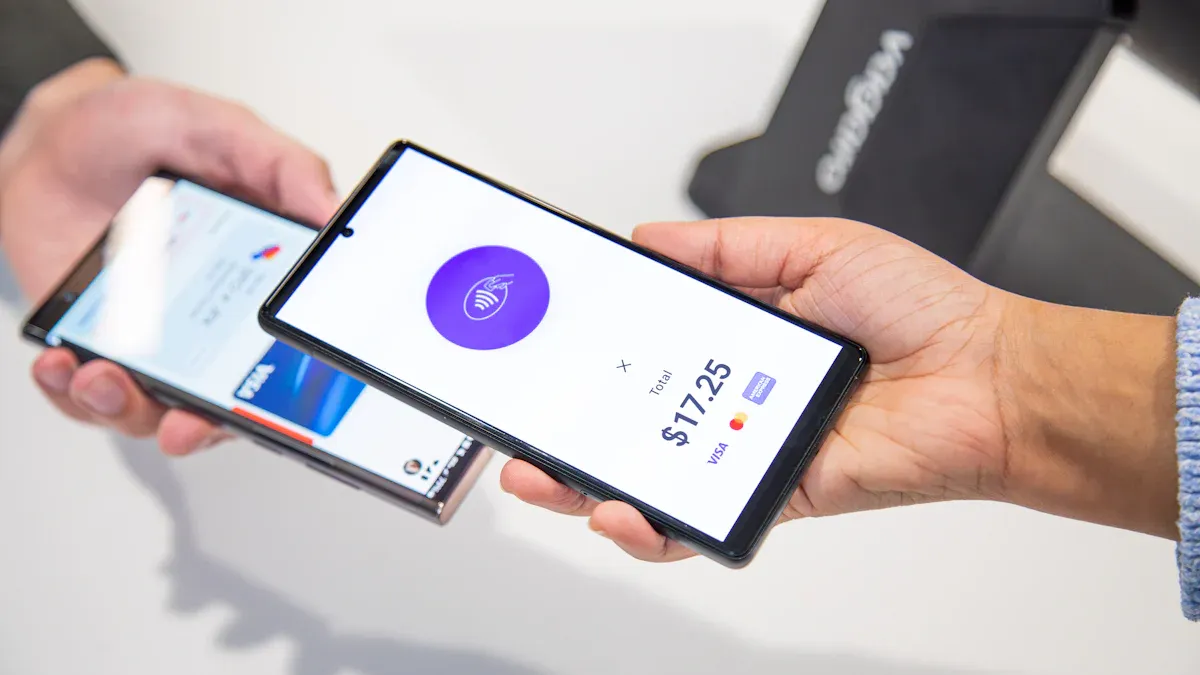
Image Source: unsplash
Advantages of Platforms Like Wise
You can choose third-party cross-border payment platforms such as Wise and BiyaPay to break through Alipay international remittance quota limits. Compared with traditional bank wire transfers, these platforms provide enterprises with more flexible fund transfer methods.
If a company is not only concerned about transfer limits but also wants a clearer view of conversion and payout costs before sending overseas bonuses, it can first use the BiyaPay website and its exchange rate comparison tool, then align the payout schedule with its international remittance service. This is more suitable for teams handling multi-currency bonuses, phased payouts, or broader treasury coordination.
From a product-positioning perspective, BiyaPay is a multi-asset wallet covering cross-border payments, fund conversion, and multi-currency management, and it also discloses relevant compliance registrations such as U.S. MSB and New Zealand FSP. In the context of year-end bonus distribution, it fits more naturally as a supplemental channel option for improving exchange-rate transparency and cross-border fund movement efficiency.
- Wise’s infrastructure supports 63% of payments arriving instantly, greatly improving fund turnover efficiency.
- You can enjoy a transparent fee structure — the platform displays exchange rates and handling fees in real time, avoiding hidden costs.
- Wise and BiyaPay reduce cross-border transaction fees by directly connecting to global multi-payment systems.
- The platforms hold payment licenses in multiple countries, enhancing compliance capabilities and suitable for distributing bonuses to employees across multiple countries.
Operation Process
You need to first register a corporate account on the platform and submit company and beneficiary information. The platform will require you to exchange RMB into USD or HKD before initiating transfers. Due to China’s foreign exchange controls, Wise does not support direct RMB transfers from Chinese bank accounts. You can transfer funds to supported currency accounts through intermediary services, then complete international payments via the platform. BiyaPay provides multi-currency receiving and payment services tailored for Chinese-speaking users, simplifying the operation process.
- Register corporate account
- Submit company and employee information
- Exchange RMB for USD
- Initiate international transfer
- Platform performs real-time compliance checks — funds arrive quickly
Pros and Cons
Advantages: You can break through Alipay international remittance annual limits, with fast fund arrival, transparent fees, and simplified operation process. The platforms support multi-currency and multi-country employees, suitable for globalizing enterprises.
Disadvantages: You cannot directly use RMB for international payments — funds must first be exchanged into supported currencies. Some platforms have account opening and source-of-funds restrictions for Chinese users — advance planning is required.
Compliance and Fees
When using platforms such as Wise and BiyaPay, they execute strict compliance standards, including the EU Payment Services Directive 2 (PSD2), Financial Action Task Force (FATF) guidelines, etc. The platforms perform real-time compliance checks to ensure fund safety.
- Wise and BiyaPay follow international compliance frameworks to ensure transaction transparency
- Fee structures are clear and usually lower than traditional bank wire transfers
- High fund arrival efficiency, suitable for large corporate bonus distributions
You can select the appropriate third-party platform based on enterprise size and employee distribution to ensure efficient and compliant year-end bonus distribution.
Payroll Outsourcing Services
Applicable Scenarios
You can choose payroll outsourcing services to address compliance and efficiency challenges faced by multinational companies when distributing year-end bonuses to overseas employees. Platforms such as ADP and Deel hold significant positions in global payroll management — Deel already serves over 130 countries and is trusted by more than 37,000 companies. Payroll outsourcing suits different types of enterprises:
- Full payroll outsourcing: suitable for enterprises seeking complete peace of mind.
- Partial (DIY) payroll outsourcing: suitable for enterprises that want more control and lower costs.
- Payroll and HR services outsourcing: suitable for enterprises that want to outsource multiple administrative functions.
You can select the appropriate outsourcing model based on enterprise size and management needs to improve the flexibility and compliance of payroll distribution.
Operation Process
When using payroll outsourcing services to distribute year-end bonuses, you need to follow a standardized process:
- Ensure compliance with local laws, especially when making international year-end bonus payments.
- Establish structured systems to adapt to regulations in each country.
- Designate clear contacts in each region and document workflows.
- Regularly verify payroll accuracy, for example through monthly audits or year-end reviews.
- Ensure tax rates and social security contribution levels are updated.
- Use automated reminders to track key compliance dates.
You can follow these steps to ensure efficient and compliant payroll distribution and avoid risks caused by policy changes or operational errors.
Pros and Cons
Payroll outsourcing services bring you multiple advantages but also have certain limitations:
Advantages: You can leverage professional platforms to achieve compliant distribution of salaries and bonuses for employees across multiple countries, reducing operational pressure. The platforms offer wide coverage and are suitable for enterprises in markets such as the United States. You do not need to worry about Alipay international remittance limits — fund flow is smoother.
Disadvantages: You need to bear certain service fees, and some outsourcing models may reduce enterprise control over payroll processes. The platforms’ adaptability to regulations in different countries varies — advance assessment is required.
Compliance and Fees
Payroll outsourcing services have significant advantages in compliance. You can refer to the table below to understand the main compliance benefits:
| Compliance Advantage | Description |
|---|---|
| Compliance with local laws | Global payroll outsourcing ensures adherence to regulations in every country, avoiding legal issues. |
| Reduced errors | Professional compliance knowledge lowers error rates in payroll processing. |
| Time and resource savings | Outsourcing saves company time and resources on compliance matters. |
| Management of specific compliance obligations | Global payroll solutions properly manage country-specific compliance obligations. |
| Monitoring legal changes | Efficient global payroll partners monitor changes in data privacy laws and employment compliance. |
| Simplified operations | Outsourcing reduces the need to find and hire local legal and tax firms. |
When choosing payroll outsourcing services, you need to pay attention to the platform’s fee structure. Typically, service fees include base management fees and per-employee charges. By comparing pricing and service content across different platforms, you can select the solution best suited to your enterprise needs. Platforms such as BiyaPay provide multi-currency payroll distribution services for Chinese-speaking users, helping you break through the restrictions of traditional payment channels and improve fund turnover efficiency.
Comparison of Alipay International Remittance and Other Channels
Applicable Enterprise Types
When selecting international remittance channels, you should first consider enterprise scale, employee distribution, and management needs. Different channels suit different types of enterprises:
- Small enterprises or startups: If you manage a limited number of employees and year-end bonuses are small, Alipay international remittance can meet basic needs. Lower quota limits make it suitable for occasional small-amount bonus payments.
- Medium-sized enterprises: You need to balance compliance and efficiency. Third-party cross-border payment platforms such as BiyaPay and Wise support multi-currency and multi-country employees — suitable for enterprises in the process of globalization. BiyaPay provides convenient multi-currency receiving and payment services for Chinese-speaking users, helping you break through traditional channel quota bottlenecks.
- Large multinational enterprises: You need to handle large-amount, multi-batch year-end bonus distributions. SWIFT international wire transfers and payroll outsourcing services (such as ADP, Deel) are more suitable for large-scale operations. Payroll outsourcing can also help you centrally manage global employee salaries and reduce compliance risks.
You can flexibly combine multiple channels based on actual enterprise needs to achieve efficient global payroll management.
Compliance and Risks
When selecting international payment channels, compliance and risk control are core considerations. Different channels have varying compliance requirements and risk profiles:
- Alipay international remittance: You must strictly comply with China’s foreign exchange management policies — quotas are limited and compliance reviews are relatively strict. Attempting to circumvent limits may result in fund freezes or legal risks.
- SWIFT international wire transfer: You need to complete KYC and AML reviews through banks — banks conduct detailed checks on every large transaction. High compliance but complex process — sufficient documentation must be prepared.
- Third-party cross-border payment platforms: Platforms such as BiyaPay and Wise perform real-time compliance checks based on international standards (such as FATF, PSD2). You can enjoy higher transparency and security — platforms hold payment licenses in multiple countries and are suitable for multi-country employee bonus distribution.
- Payroll outsourcing services: You can outsource compliance responsibilities to professional institutions. Platforms continuously monitor regulatory changes in each country to help you reduce risks from policy adjustments.
When making decisions, focus on the following factors:
- Transparent pricing
- Fast and reliable settlement
- Regulatory compliance
- Global coverage and local payments
- Seamless integration with existing tools
- Enterprise-grade security
- Responsive customer support
By evaluating these elements, you can select the international remittance channel best suited to your enterprise and ensure safe, compliant year-end bonus distribution.
Fees and Efficiency
In actual operations, fees and arrival efficiency directly affect enterprise costs and employee experience. Different channels have significantly different fee structures and processing times:
| Payment Method | Fee Range | Processing Time |
|---|---|---|
| SWIFT wire transfer | $30–$50 per transaction | 2 to 4 days |
| Stablecoin settlement | 0.5%–3.0% | Seconds to minutes |
| Alipay international remittance | Lower fees — some banks may charge small handling fees | 1 to 3 days |
| Third-party platforms | Transparent fees — usually lower than bank wire transfers | Most arrive same day |
| Payroll outsourcing services | Charged based on employee count and service content | 1 to 3 days |
You can see that SWIFT wire transfers have higher fees and are suitable for large payments but arrive more slowly. Stablecoin settlement and third-party platforms like BiyaPay offer lower fees and fast arrival — suitable for enterprises needing high-frequency, rapid bonus distribution. Alipay international remittance has lower fees but quota limits — suitable for small payments. Payroll outsourcing services have flexible fee structures — suitable for enterprises needing centralized global payroll management.
When selecting channels, combine enterprise scale, employee distribution, compliance requirements, and cost budget to comprehensively evaluate the pros and cons of each channel. For Chinese-speaking users, third-party platforms such as BiyaPay can effectively improve fund turnover efficiency and reduce operational difficulty. Large multinational enterprises can prioritize payroll outsourcing services to achieve global compliant management.
You can flexibly choose or combine multiple international remittance channels based on actual enterprise conditions to ensure efficient, safe, and compliant year-end bonus distribution.
When selecting international remittance channels, combine enterprise scale, employee distribution, and compliance needs. Alipay international remittance suits small-amount, low-frequency payments, while SWIFT wire transfers and third-party platforms suit large-amount, global operations. You need to monitor changes in labor laws across countries, regularly review compensation strategies to prevent compliance risks. It is recommended to collaborate with legal advisors to design localized benefits packages and maintain transparent communication with employees to ensure safe and smooth year-end bonus distribution.
FAQ
How Can Enterprises Compliantly Break Through Alipay International Remittance Quota Limits?
You can choose SWIFT international wire transfers, third-party cross-border payment platforms, or payroll outsourcing services. These methods help you compliantly exceed Alipay’s annual limits and meet large year-end bonus distribution needs.
Is It Safe to Use Third-Party Cross-Border Payment Platforms?
When using platforms such as Wise and BiyaPay, they execute international compliance standards. You need to ensure enterprise information is authentic — the platforms monitor transactions in real time to safeguard fund safety.
How Long Does It Generally Take for SWIFT International Wire Transfers to Arrive?
Through SWIFT international wire transfers, funds usually arrive in 1 to 5 business days. Specific arrival time depends on the number of banks involved and transaction complexity.
What Advantages Does Choosing Payroll Outsourcing Services Offer for Enterprises?
You can centrally manage salaries for global employees and reduce compliance risks. Outsourcing service providers continuously track regulatory changes in each country to help you efficiently and compliantly distribute year-end bonuses.
*This article is provided for general information purposes and does not constitute legal, tax or other professional advice from BiyaPay or its subsidiaries and its affiliates, and it is not intended as a substitute for obtaining advice from a financial advisor or any other professional.
We make no representations, warranties or warranties, express or implied, as to the accuracy, completeness or timeliness of the contents of this publication.
Related Blogs of

Understanding Net Interest Margin and Provision Changes Through JPM, BAC, and Citi


IBM Plunges While ASML Rises: Is Capital Rotating from Software to AI Hardware?


AI Revenue Quality at IBM, Oracle, and ServiceNow: Breaking Down Subscription, Cloud, and Consulting Businesses

What Are IGV’s Holdings? Microsoft, Salesforce, Oracle, ServiceNow Weights and AI Risks
Choose Country or Region to Read Local Blog
 Australia
 Austria
 Belgium
 Canada
 Cyprus
 Czech Republic
 Denmark
 Estonia
 Finland
 France
 Germany
 Greece
 Hong Kong
 India
India Indonesia
 Ireland
 Italy
Italy Japan
Japan Latvia
 Lithuania
 Luxembourg
 Malaysia
 Malta
Malta Morocco
 Nepal
Nepal Netherlands
 New Zealand
 Norway
 Pakistan
 Philippines
 Poland
 Portugal
 Romania
 Singapore
 Slovakia
 Slovenia
 South Africa
 South Korea
 Spain
Spain Sweden
 Thailand
 United States
 Turkey
 United Arab Emirates
 United Kingdom
 Vietnam
Contact Us



