- More
- Download
Do You Still Need an Agent to Open a Hong Kong Bank Account in 2026? Full Guide to Online Opening of Virtual Overseas Digital Bank Accounts Without Physical Presence





Image Source: pexels
As of the latest update of this article, opening a bank account in Hong Kong has indeed become more digital than before. However, whether you still need an agent cannot be answered in one sentence. It depends on whether you are applying for a traditional bank or a digital bank account, what type of applicant you are, and what the target bank’s current account opening requirements are.
Based on currently available public information, some Hong Kong digital banks allow eligible Hong Kong residents or visitors to complete an application through an app. However, whether the application is approved still depends on factors such as applicant category, document validity, mobile number, address information, whether the applicant is physically in Hong Kong, and the bank’s real-time review outcome. For example, ZA Bank has publicly listed eligibility requirements for visitor account opening, while WeLab Bank clearly distinguishes between Hong Kong residents and Mainland visitors currently in Hong Kong.
Before submitting your application, it is best to check the latest official account opening requirements on the target bank’s website rather than assuming that “everything can be opened remotely” or “no agent is needed at all.”
| Statistic Type | Value |
|---|---|
| Mobile banking penetration rate | 80% |
Key Takeaways
- As of the current update, different Hong Kong banks have different account opening requirements for non-permanent Hong Kong residents, Hong Kong residents, and visiting travelers. Some digital banks separately list eligibility requirements and required documents for different applicant groups, including whether the applicant must be physically in Hong Kong, whether a Hong Kong or Mainland China mobile number is required, and whether entry and exit records are needed.
- Choosing to open an account online by yourself can save both time and cost. It is suitable for applicants with some English ability and can help avoid intermediary service fees.
- Some Hong Kong digital banks support submitting account opening applications through an app, but their eligibility requirements, document requirements, review time, and physical location requirements are not the same. Based on public information, WeLab Bank states that the process can be started in as fast as 5 minutes, while Mox emphasizes that the process takes only a few minutes and lists its eligibility requirements. However, the actual review speed will still depend on the completeness of the documents, applicant category, network environment, and the bank’s real-time review decision.
- Agent services may suit users who are unfamiliar with the process or need special support, but they should be chosen carefully to avoid the risk of information leakage.
- After opening an account, regularly check your account information and enable two-factor authentication to protect your funds and reduce potential risks.
Do You Still Need an Agent to Open a Bank Account in Hong Kong in 2026?
Policy Changes and Trends
As of the latest update of this article, different Hong Kong banks have clear differences in their account opening arrangements for non-local residents, Hong Kong residents, and visiting travelers. These differences are especially visible in whether remote applications are supported, whether the applicant must be physically present in Hong Kong, whether Mainland China mobile numbers are accepted, and whether entry and exit records are required.
For applicants from Mainland China, the most important thing is not to ask whether opening an account is “easy” or “difficult,” but to first confirm whether the target bank currently accepts this type of applicant and whether all required documents can be prepared in one go.
Public information shows that the main changes include the following:
Different banks have different requirements regarding applicant eligibility, required documents, whether a Hong Kong address is needed, whether a Hong Kong or Mainland China mobile number is required, and whether the applicant must be physically in Hong Kong. For example, ZA Bank currently lists detailed requirements for visitor account opening, including age, application while in Hong Kong, valid documents, a Mainland China mobile number, a Mainland China bank card, and entry and exit records. WeLab Bank also clearly distinguishes between the requirements for Hong Kong residents and Mainland visitors currently in Hong Kong. Mox publicly states that applicants must hold a Hong Kong identity card, a valid Hong Kong residential address, and a mailing address, and be at least 18 years old. Therefore, it would be inaccurate to assume that all digital banks are suitable for all non-local applicants.
As for whether traditional banks require appointments, interviews, additional proof of address, or explanations of fund usage, this can also vary depending on the bank, account type, and applicant background. The final requirements are always subject to the bank’s real-time review.
These policy changes have pushed forward the transformation of how bank accounts are opened in Hong Kong. You may choose self-service online account opening, which reduces reliance on intermediaries. The rise of digital banks provides a more convenient option, especially for users who hope to complete the process remotely.
Self-Application vs. Agent Assistance
When opening a bank account in Hong Kong, you generally face two major options: applying by yourself or using an intermediary. Self-application is suitable for most individual users, especially applicants with some English ability who can prepare documents independently. You only need to follow the bank’s instructions and submit identity documents, proof of address, and other required materials online. Some digital banks support application submission through an app, but whether the account can be opened without traveling to Hong Kong cannot be generalized. Based on currently available public information, both ZA Bank and WeLab Bank clearly state that some application types require the applicant to be physically present in Hong Kong, so you should first check the target bank’s current official rules before applying.
The advantages of self-application include:
- Lower costs, since there is no need to pay extra intermediary service fees.
- Higher personal information security, because documents are submitted only through official bank channels.
- A simpler online process, with some banks supporting fully remote procedures.
However, you should also note that traditional banks still maintain strict requirements for non-resident account opening. You may face the following challenges:
- Banks may conduct more stringent due diligence and require detailed explanations of the source and use of funds.
- Many banks prefer to serve customers with a real business presence in Hong Kong.
- In some cases, the bank may require a face-to-face interview, and the compliance review period may be relatively long.
Agent services are more suitable for users who are unfamiliar with the process, have difficulties preparing documents, or need special business support. Agents can help with making bank appointments, organizing documents, answering questions, and even arranging remote video interviews. However, you will need to pay service fees and bear the risk of information leakage.
Which Situations Are Better for Self-Application, and Which Require More Careful Eligibility Checks First?
If you are applying for a Hong Kong digital bank account that supports online onboarding, and you have already confirmed that you meet the publicly stated requirements of the target bank, such as age, document type, mobile number, address information, and whether you must be physically present in Hong Kong, then it is usually better to follow the official application process first rather than automatically turning to an agent.
If you are applying for a traditional bank account, or your case involves cross-border payments and collections, complex explanations of fund usage, multiple tax identities, a company-related business background, or you are not even sure whether the target bank accepts your type of applicant, then a more prudent approach is not to find an agent first, but to check the bank’s official requirements one by one and, if necessary, consult the bank’s official customer service.
What is especially important is that an agent may help you organize documents and explain the process, but cannot replace the bank’s final review and certainly cannot guarantee account approval. For most ordinary users, it is more important to first determine “Do I meet the official eligibility requirements?” than to ask “Do I need an agent?”
Situations Where an Agent May Still Be Worth Considering
Although reliance on intermediaries for opening a bank account in Hong Kong has been greatly reduced in 2026, you may still consider intermediary services in the following special situations:
- If you cannot temporarily travel to Hong Kong in person, but the target bank currently requires applicants to be physically present in Hong Kong at the time of application, or if your application involves cross-region, cross-identity, or cross-tax-jurisdiction complexities, then what you need most is to first confirm the official eligibility requirements and, if necessary, consult the bank’s official customer service or a compliance adviser, rather than assuming that any agent can replace the review process.
- You are engaged in international trade or cross-border business and need multi-currency accounts and more complex fund flow services.
- You are not familiar with bank compliance requirements, have difficulty preparing documents, or have limited English communication ability.
- You want to shorten the account opening cycle and reduce repeated requests for additional documents caused by incomplete preparation or unfamiliarity with the process.
Tip: When choosing an agent, make sure to verify its qualifications to avoid information leakage and fraud risks. Give priority to formal service providers with an official cooperation background with Hong Kong banks.
Overall, the mainstream trend for opening a bank account in Hong Kong in 2026 is self-service online application. You only need to weigh the pros and cons of self-application and intermediary support based on your actual needs and circumstances, and then choose the method that suits you best.
Ways to Open a Bank Account in Hong Kong
In-Person Branch Account Opening Process
You may choose to open a bank account at a physical branch in Hong Kong. First, you need to decide which bank to target. Common options include HSBC, Standard Chartered, Bank of China (Hong Kong), and Hang Seng Bank. You should consider factors such as minimum deposit requirements, bank reputation, global coverage, available services, and fees. After preparing the relevant documents, you can visit a branch and submit your application. For personal accounts, banks generally require a passport copy, proof of address, proof of income, and sometimes even a bank reference letter. For business accounts, you may need company registration documents, a business license, business plans, shareholder and director information, proof of business activities, and source-of-funds documents. After submission, the bank will conduct due diligence. Some banks support online appointments or preliminary applications by email, but the final review is still often completed at the branch.
Banks That Support Online Account Opening
As digitalization continues to advance, some Hong Kong digital banks already support submitting account opening applications through an app, but there are major differences in who they accept and what they require. The table below shows some banks that support online account opening and their requirements:
| Bank Name | Supports Online Account Opening | Main Requirements |
|---|---|---|
| HSBC | Yes | Hold a Mainland Travel Permit for Hong Kong and Macao, use a China mobile number, activate within 90 days, no need to visit a branch in person |
| Bank of China (Hong Kong) | Yes | Identity and address proof, additional documents may be required, processing time may take up to two weeks |
| BOCHK | Yes | China mobile number, address, valid email address, and tax identification number (TIN) |
| China Construction Bank (Asia) | Yes | Chinese residents with valid identity documents may apply remotely without proof of employment |
| Airstar Bank | Yes | Apply via mobile app, requires China ID card and Mainland Travel Permit for Hong Kong and Macao, phone location must be in Hong Kong |
You should note that some banks require applicants to be physically present in Hong Kong at the time of application, or require a mobile number, address details, and identity documents that are fully consistent with the submitted application. As for whether there are minimum deposit requirements, minimum balance requirements, or specific account restrictions, it is best to check the latest official information on the target bank’s website. For example, ZA Bank’s public FAQ includes a dedicated visitor account opening page listing eligibility conditions and a separate question about minimum balance requirements (such as Airstar Bank requiring an initial deposit of HKD 10,000).
Traditional banks usually have stricter anti-money laundering requirements and often require additional verification steps.
Domestic Agency Services and the Needs of Digital Nomads
If you cannot travel to Hong Kong in person, you may consider domestic agency services or remote account opening through digital banks. Digital nomads and remote workers often have special banking needs. They value flexibility, global access, low transaction fees, multi-currency support, and seamless international transfers. You can choose banks that support multi-currency accounts and offshore banking services to facilitate international transactions and asset management.
For users who frequently make cross-border collections and payments, work remotely, or need multi-currency usage, choosing a bank should not depend only on whether an account can be opened. You should also evaluate follow-up convenience in receiving funds, currency conversion, transfers, and day-to-day account usage. Some digital banks offer more convenient daily account management, but whether they accept certain applicant categories, what services are available after account opening, and how practical they are for cross-border usage can still differ significantly.
Tip: When choosing a way to open a bank account in Hong Kong, you should decide between branch application, online application, or digital banking services based on your own needs, preparation level, and usage scenarios.
Analysis of Digital Bank Account Opening
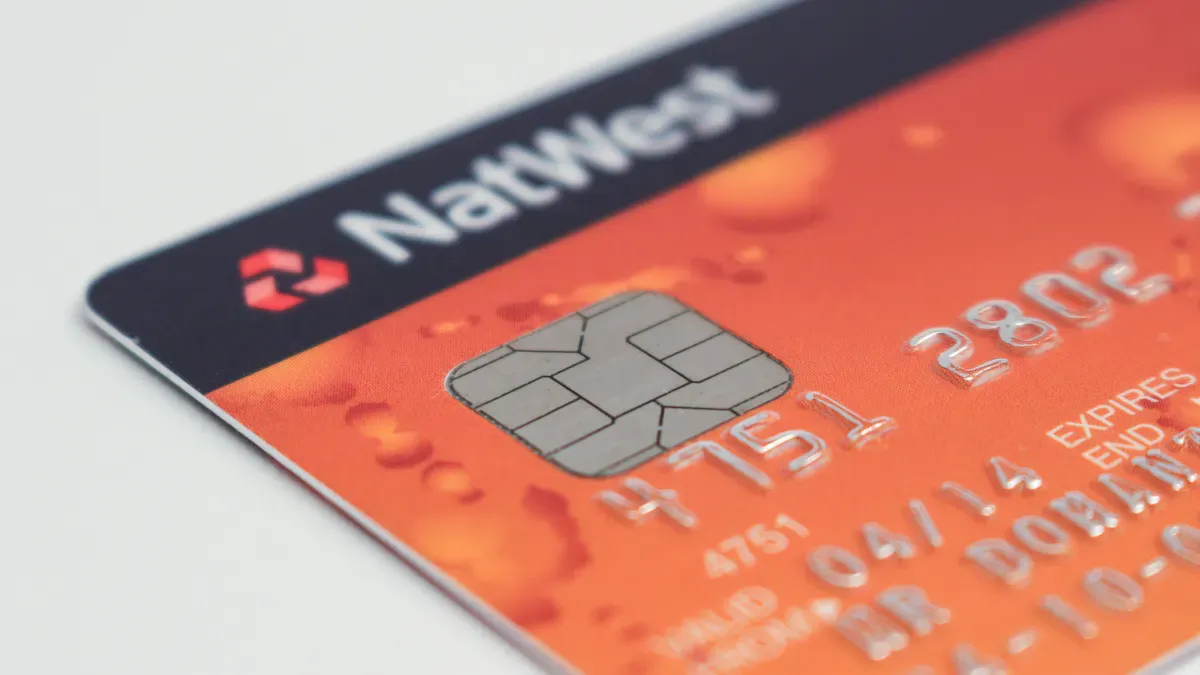
Image Source: pexels
What Are Digital Banks and Which Platforms Are Mainstream?
You can use digital banks to access fully online financial services. Digital banks usually do not have physical branches. Instead, they rely on mobile apps and artificial intelligence technology to provide savings accounts, checking accounts, credit cards, personal loans, and investment products. When opening a bank account in Hong Kong, you may also encounter neobanks such as Bunq, Tomorrow, and Revolut, which are known for convenience, innovation, and user-friendly design. The market for digital banks is highly competitive. When choosing a digital bank, the most valuable factors are not unverified market share figures, but the bank’s publicly stated account opening eligibility, supported account functions, fee structure, whether it offers physical or virtual cards, and its follow-up capabilities for transfers and multi-currency services. Mox currently states publicly that applicants must hold a Hong Kong identity card, have a valid Hong Kong residential and mailing address, and be at least 18 years old.
| Bank Name | Deposit Market Share | Loan Market Share | User Scale |
|---|---|---|---|
| Mox Bank | 30% | 34% | Second largest user base |
Account Opening Process and Required Documents
The account opening process for digital banks is generally simpler than applying at a traditional branch. Applicants usually submit identity information, contact details, address details, and tax-related documents through an app. However, review time is not standardized. Whether the process can be completed quickly depends on the applicant type, completeness of documents, image recognition success, and the bank’s real-time review decision. According to WeLab Bank’s public page, the account opening process can start in as little as 5 minutes.
The required documents differ depending on the applicant type:
| Identity Category | Required Documents |
|---|---|
| Hong Kong Resident | 1. Valid Hong Kong Identity Card |
| 2. Proof of Address (e.g., utility bill or tenancy agreement) | |
| Non-resident | 1. Passport with valid visa or entry permit |
| 2. Proof of Address (can be from home country) | |
| New Arrivals / Foreign Nationals | 1. Passport with valid visa or entry permit |
| 2. Proof of Address (can be from home country or temporary address in Hong Kong) | |
| 3. Proof of Income or Employment (e.g., employment contract or payslip) | |
| 4. Additional Proof of Identity (if required) |
You should note that different banks have different requirements for document types, address information, mobile numbers, and geographical presence. For example, WeLab Bank lists separate conditions for Hong Kong residents and Mainland visitors currently in Hong Kong, while Mox publicly requires applicants to hold a Hong Kong identity card and a valid Hong Kong residential and mailing address.
Pros, Cons, and Suitable User Groups
Digital bank accounts bring you many advantages:
- Digital convenience, allowing you to manage your account anytime and anywhere
- Lower fees and charges
- Innovative features that suit startups and digital nomads
- Flexibility across different scenarios and a faster registration process
But you should also understand their limitations:
- Limited services, with some traditional banking functions not available
- Digital banks do not mean “unregulated.” In Hong Kong, licensed banks fall under the regulation of the Hong Kong Monetary Authority, and eligible deposits may also be protected by the Hong Kong Deposit Protection Scheme. What is typically protected is eligible bank deposits, not all financial products or virtual assets.
Digital banks are best suited to tech-savvy users and people seeking convenience. If you prefer digital operations or hope to complete transactions quickly, digital banking can be an ideal option.
Comparing Traditional Banks and Digital Banks
Image Source: pexels
Convenience and Process
When opening an account in Hong Kong, the differences in convenience between traditional banks and digital banks are obvious. Traditional banks usually require you to visit a branch in person, and the process is relatively cumbersome. In particular, applicants from Mainland China may need to provide multiple supporting documents and attend scheduled interviews. Digital banks usually offer a more convenient online application process, but whether they are suitable for non-permanent residents, visitors, or other non-local applicants depends on each bank’s publicly stated eligibility rules. Different banks have different requirements regarding document type, address, mobile number, and whether the applicant must be physically present in Hong Kong.
The table below compares the convenience and process of the two:
| Bank Type | Convenience | Application Process |
|---|---|---|
| Traditional bank | Requires in-person visits, documents are cumbersome | Complex and time-consuming, with multiple verification steps |
| Digital bank | Fully online, fast and convenient | Simpler, more suitable for remote handling |
If you choose a digital bank, the application process is usually faster than applying through a traditional branch, but the actual review time is not standardized. Different banks, different applicant backgrounds, and different levels of document completeness can all affect the review speed. By comparison, traditional banks usually involve more document checks and manual review, so the overall process is often longer, though the actual timing still depends on the bank’s real-time processing situation.
Fees and Services
Digital banks rely on technological innovation and therefore generally have lower operating costs, allowing them to offer lower fees. You may also enjoy a range of financial services including savings, checking accounts, credit cards, personal loans, and investment products. Digital banks improve user experience through mobile applications and artificial intelligence. Traditional banks, on the other hand, may offer face-to-face services for more complex needs such as mortgages and wealth planning, which can better suit users with more advanced financial requirements.
- Digital banks: lower fees, diverse services, and a more user-friendly digital experience
- Traditional banks: higher fees, broader business coverage, and face-to-face services
Risks and Security
When choosing a bank, security is an important factor. Digital banks in Hong Kong operate under Hong Kong Monetary Authority regulation and follow the same operating standards as traditional banks. You can improve deposit protection through features such as “Money Safe,” and all eligible deposits are protected. Digital banks also deploy facial recognition, multi-factor authentication, and real-time risk monitoring to protect account security.
When evaluating the security of digital banks, it is more useful to focus on three key areas: whether the bank is a licensed Hong Kong bank, whether relevant deposits are protected by the Hong Kong Deposit Protection Scheme, and whether the account offers security measures such as two-factor verification, facial recognition, or real-time risk monitoring. WeLab Bank publicly states that it is regulated by the Hong Kong Monetary Authority and that eligible deposits are protected by the Deposit Protection Scheme. The Hong Kong Monetary Authority also publicly explains the scope of the Deposit Protection Scheme.
Tip: No matter which type of bank you choose, it is advisable to monitor account security regularly, enable multi-factor authentication, and stay alert to financial scams.
Recommendations for Choosing a Bank
When choosing a bank, you should combine your own needs with your actual usage scenarios. Traditional banks are more suitable for users who need complex financial services or place value on face-to-face communication. Digital banks are more suitable for users who want convenience, remote operation, and lower fees. You should pay attention to account type, accessibility, and the account opening process, and then choose the bank that fits you best. If you also need global payments, remittance, or crypto conversion, you may consider platforms such as BiyaPay, which focus on global financial services and support diversified asset management and cross-border transactions.
If your needs go beyond simply opening an account and also include cross-border collections and payments, currency exchange, and multi-currency fund management after the account is opened, then it is worth evaluating these extended capabilities when choosing a bank. For example, you can visit the BiyaPay official website to learn about its multi-asset account system, and use the exchange rate query and comparison tool to estimate the cost of converting between different currencies. BiyaPay is positioned as a multi-asset trading wallet covering scenarios such as cross-border payments, fund conversion, and multi-currency management. It also discloses relevant compliance information such as U.S. MSB and New Zealand FSP registrations. It is more suitable as a supporting fund management tool after a Hong Kong bank account has been opened, rather than as a substitute for an account opening intermediary.
Account Opening Precautions
5 Things to Confirm Before Applying
Before formally submitting your application, it is recommended that you first confirm these five things.
- Whether the target bank currently accepts your applicant identity. Different banks have different requirements for Hong Kong residents, non-permanent residents, visiting travelers, and other applicant groups.
- Whether the bank requires you to be physically present in Hong Kong at the time of application. Some digital banks support app-based applications, but that does not mean you can complete the process from anywhere.
- Whether you have the type of mobile number and address information required by the bank. Some banks require a Hong Kong mobile number and Hong Kong address, while others may accept a Mainland China mobile number or other address documents under certain conditions.
- Whether your identity documents are still valid and fully consistent with the information in your application. Differences in name spelling, document number, address, or tax information can all increase the risk of additional document requests or rejection.
- Whether you have already thought through how the account will be used after opening. Opening the account is only the first step. Whether you later need multi-currency payments and collections, foreign exchange, cross-border transfers, or asset management will also affect whether a traditional bank or digital bank is more suitable for you.
If any one of these five items is still unclear, it is better not to rush into submitting your application. Instead, first go to the target bank’s website and check its latest requirements.
Document Preparation and Common Misunderstandings
For applicants from Mainland China, whether the document requirements are strict depends mainly on which bank you are applying to, what type of account you are opening, and whether you are classified as a Hong Kong resident, a visiting traveler, or another type of applicant. Different banks have different requirements regarding documents, addresses, mobile numbers, entry and exit records, and tax information. Therefore, you should compare the target bank’s latest official requirements item by item before applying.
In general, you should prepare identity documents, proof of address, income records, and related materials in advance. Many applicants fall into the following common misunderstandings during document preparation:
- An unclear or inconsistent business story. You need to clearly explain your business model so the bank can understand the use of your funds.
- Lack of genuine business substance. The bank may require you to provide proof of real business activity, such as contracts or invoices. Simply registering a company may not be enough.
- A complex ownership structure. You must clearly show the information of the ultimate beneficial owner to avoid triggering anti-money laundering alerts.
You should check the required documents in advance based on the bank’s latest policies and make sure the files are genuine, complete, and logically consistent. Adequate preparation can effectively shorten the review cycle and reduce the risk of additional document requests.
The 5 Most Common Friction Points in Real Applications
Many people assume that “online account opening” means “anyone can pass remotely,” but the real situation is often much more complicated. Even with digital banks that support online applications, different applicants may still be asked to provide additional documents or may even be rejected because of applicant category, location, mobile number, document consistency, address details, entry and exit records, or failed facial recognition.
Based on the most common issues seen in real applications, the points where people most often get stuck usually include the following:
- Inconsistencies between identity documents and application details, such as name spelling, document number, address details, or tax information.
- Mobile number, correspondence address, or residential address not meeting the bank’s requirements.
- The applicant sees that “online account opening is supported” but overlooks that the bank may also require the applicant to be physically present in Hong Kong or that the policy applies only to specific applicant types.
- Account purpose, professional information, or source and use of funds being described too vaguely for the bank to complete its review efficiently.
- Mistakenly assuming that because some digital banks support online applications, all Hong Kong banks can be handled in the same way.
So for most ordinary users, instead of first asking “Do I need an agent?”, it is more useful to first confirm what type of applicant you are, whether the target bank accepts this category, and whether you can prepare all documents correctly in one go.
Fraud Prevention and Compliance Risks
If a third-party service promotes itself using phrases such as “guaranteed approval,” “guaranteed account opening,” or “no need to check bank rules,” you should be especially cautious. Whether the bank approves the application ultimately depends on your documents, identity qualifications, and the bank’s compliance review result. A safer approach is to first review the account opening instructions on the bank’s official website or app, and then decide whether you need third-party help in organizing materials. You should also prioritize opening accounts through the official channels of licensed Hong Kong banks and avoid handing your personal information to unknown institutions. Banks strictly enforce anti-money laundering and compliance reviews, and any false document may result in account closure. You should pay attention to policy changes, adjust your application strategy in time, and make sure everything is handled in a compliant way.
Tip: You can use the bank’s official website or official app to check the latest account opening policies and avoid being misled by online rumors.
Account Management Suggestions
After your account is successfully opened, you should manage it scientifically to protect your funds. You may refer to the following suggestions:
- Notify the bank in time of any changes to your personal information to avoid account freezes or service restrictions.
- Use the bank’s app or online portal to update your address details and keep your records accurate.
- Enable two-factor authentication (2FA) to improve account security.
You can also review your transaction records regularly and contact the bank immediately if you notice anything unusual. For users with cross-border payment and multi-currency management needs, Chinese-speaking users may also consider global payment platforms such as BiyaPay, which support real-time exchange and asset management. Scientific account management can improve the efficiency of fund circulation and reduce security risks.
You may choose to open an account offline through a licensed Hong Kong bank or remotely through a digital bank. Offline methods are more complex and often more expensive, making them more suitable for users who need comprehensive financial services. Digital bank account opening is more convenient and lower cost, which suits users who pursue efficiency and global payment flexibility. With policies becoming stricter in 2026, you need to pay close attention to document preparation and compliance requirements. It is best to choose the account opening method based on your real needs, avoid intermediary traps, and protect your personal information security.
FAQ
Can I apply for a Hong Kong digital bank account without going to Hong Kong?
Whether you can apply cannot be generalized. It depends on which bank you are applying to, what type of applicant you are, and whether that bank currently requires applicants to be physically present in Hong Kong when opening the account.
Based on currently available public information, ZA Bank clearly states on its visitor account opening page that the applicant must be in Hong Kong when applying. WeLab Bank also states in its account opening guidance for Hong Kong residents and Mainland visitors currently in Hong Kong that the applicant must be physically present in Hong Kong. Mox publicly lists eligibility requirements including holding a Hong Kong identity card and a valid Hong Kong residential and mailing address, and does not describe itself as a solution for “any non-local applicant to open remotely.”
So instead of asking whether Hong Kong digital banks can be opened remotely in general, the safer way is to first check whether the target bank currently accepts your type of applicant and whether it requires you to complete the application in Hong Kong.
Are digital banks and traditional banks the same thing?
No, they are not the same.
Both may belong to Hong Kong’s licensed banking system, but their account opening methods, service models, and practical use cases are often different. Digital banks place more emphasis on app-based account opening and daily operations, making them suitable for users who value convenience and want to reduce offline handling. Traditional banks, by contrast, may offer stronger support for complex business needs, offline services, and face-to-face communication.
For ordinary users, the biggest difference is not simply whether the bank has branches, but rather the account opening eligibility rules, document requirements, follow-up services, and what you actually want to use the account for. If your goal is mainly convenience in account management, a digital bank may be more suitable. If you have more complex needs, such as business accounts or strong reliance on offline service, a traditional bank may be a better match.
Can using an agent improve my approval rate?
An agent may help you understand the process, organize documents, and remind you what files to prepare, but it cannot replace the bank’s review and should not be understood as a way to “guarantee approval.”
Whether the bank approves your application still mainly depends on your applicant identity, document completeness, consistency of information, explanation of account purpose, and the bank’s real-time compliance review.
If a third-party institution promotes itself with claims such as “guaranteed approval,” “no need to check rules,” or “no need to confirm eligibility,” you should be more cautious instead. For most users, reviewing the bank’s official eligibility requirements first and then deciding whether third-party help is needed is usually more important than finding an agent first.
Which documents are most likely to lead to additional requests or rejection?
The most common reasons for additional document requests or rejection are usually not that you “didn’t use an agent,” but that your documents themselves do not match the bank’s requirements.
Common issues include:
- Your identity document is still valid, but has too little validity left.
- Inconsistencies in name spelling, document information, address details, or tax information.
- Mobile number, residential address, or correspondence address does not meet the bank’s requirements.
- The applicant overlooked conditions such as “must be physically present in Hong Kong” or “only applies to specific applicant categories.”
- The explanation of account purpose, source of funds, or occupation information is too vague.
So what really affects approval rate is usually the consistency and suitability of your documents, not whether you used third-party assistance. Before applying, it is best to compare your documents against the target bank’s public requirements item by item.
*This article is provided for general information purposes and does not constitute legal, tax or other professional advice from BiyaPay or its subsidiaries and its affiliates, and it is not intended as a substitute for obtaining advice from a financial advisor or any other professional.
We make no representations, warranties or warranties, express or implied, as to the accuracy, completeness or timeliness of the contents of this publication.
Related Blogs of

ASML Q2 2026 Earnings Analysis: What Signals Did Orders, EUV Demand, and Full-Year Guidance Release?


Under the IBM Shock, Which Has the Highest Enterprise IT Budget Exposure: NOW, CRM, ADBE, or ORCL? A Risk Ranking


Where Will IBM Stock Go After Q2 Earnings? Three Scenarios Based on Revenue, Red Hat, and Free Cash Flow


Which AI Hardware Stocks Benefit More Under IBM’s Warning? Comparing the Sensitivity of NVDA, DELL, MU, and HPE

Choose Country or Region to Read Local Blog
 Australia
 Austria
 Belgium
 Canada
 Cyprus
 Czech Republic
 Denmark
 Estonia
 Finland
 France
 Germany
 Greece
 Hong Kong
 India
India Indonesia
 Ireland
 Italy
Italy Japan
Japan Latvia
 Lithuania
 Luxembourg
 Malaysia
 Malta
Malta Morocco
 Nepal
Nepal Netherlands
 New Zealand
 Norway
 Pakistan
 Philippines
 Poland
 Portugal
 Romania
 Singapore
 Slovakia
 Slovenia
 South Africa
 South Korea
 Spain
Spain Sweden
 Thailand
 United States
 Turkey
 United Arab Emirates
 United Kingdom
 Vietnam
Contact Us



