Travel Fund Wealth Management: Deposit Your Exchanged USD into a Multi-Asset Wallet to Earn Current Interest Before Watching the Games





Image Source: unsplash
When planning travel fund wealth management, you can effectively improve fund liquidity and security by exchanging to USD and depositing it into a multi-asset wallet. Multi-asset wallets allow you to flexibly manage multiple currencies and reduce exchange rate losses. Data shows that mobile wallet usage grew 30% in 2024, with mobile bookings accounting for 37% and expected to rise to 44% by 2029. The table below reflects growth trends in the travel fund wealth management related market:
| Indicator | Value |
|---|---|
| Forecast Compound Annual Growth Rate (CAGR) | 12.9% |
| Forecast Growth Period | 2025-2033 |
| Main Driving Factors | E-commerce, cross-border transactions, adoption of cryptocurrencies |
Core Key Points
- Choose compliant currency exchange channels to ensure fund safety and avoid legal risks.
- Use multi-asset wallets to manage multiple currencies, improving fund liquidity and security.
- Reasonably allocate USD fixed deposits and current wealth management products to ensure funds can both preserve and increase value while remaining available for travel changes at any time.
- Pay attention to exchange rate fluctuations and fees, plan fund usage in advance, and reduce unnecessary losses.
- Regularly check account security settings, enable two-factor authentication, and protect fund safety.
USD Exchange Process
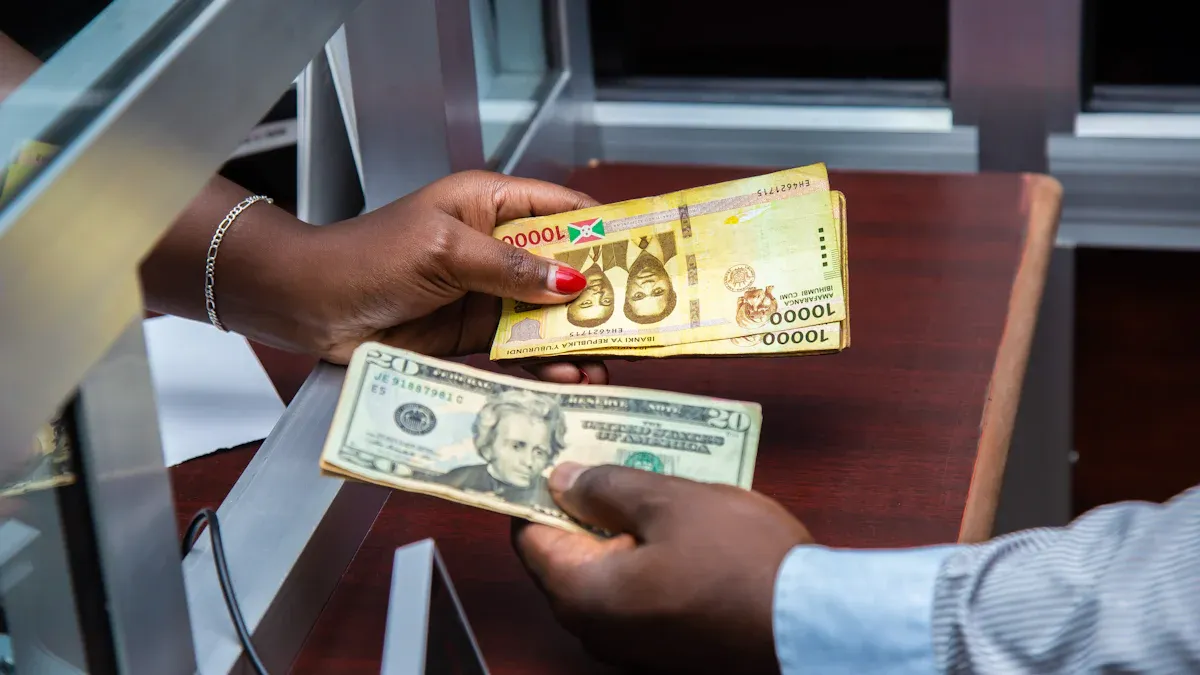
Image Source: pexels
Exchange Channels and Steps
You can complete USD exchange through multiple channels. Common methods include bank counters, cross-border payment platforms, international transfer services, and prepaid travel cards provided by travel and tourism companies. The basic steps for exchange are as follows:
- Research the destination’s currency policies and exchange options, and understand your USD conversion needs in advance.
- Order USD from a bank or formal financial institution before departure to avoid high-fee locations such as airports or hotels.
- Use credit cards with no foreign transaction fees for international spending to reduce fee expenses.
- Avoid dynamic currency conversion and high-fee exchange points; choose transparent and compliant channels.
In actual operations, it is recommended to prioritize Hong Kong licensed banks or international payment platforms to ensure fund safety and compliance.
Exchange Rate and Fee Considerations
During the exchange process, you need to pay attention to exchange rate fluctuations and fee structures. Main fees include:
- Fixed fees: Some exchange institutions charge a fixed fee per transaction, suitable for large-amount exchanges.
- Percentage fees: Most institutions charge a percentage of the exchange amount, usually between 1% and 3%.
- ATM withdrawal fees: Using ATMs abroad may incur additional fees, depending on the bank and ATM network.
- Foreign transaction fees: International spending on credit or debit cards usually incurs 1% to 3% foreign transaction fees.
You should plan fund usage in advance, arrange exchange timing reasonably, and avoid losses due to exchange rate fluctuations or excessive fees.
Compliance and Security Safeguards
When exchanging currency and depositing into a multi-asset wallet, you must comply with relevant regulations. Main compliance requirements include:
- Financial institutions must collect, verify, and transmit originator and beneficiary information, including name, account number, address, date of birth, etc.
- Single transactions exceeding USD 10,000 require financial institutions to submit complete reports to ensure transparent fund sources and purposes.
- Non-custodial wallets allow you to manage crypto assets independently, but you must pay attention to compliance declarations and fund security.
The table below shows main national regulations regarding USD exchange:
| Regulation | Description |
|---|---|
| 4 FAM 363 | Regarding U.S. currency sales, specifies circumstances such as travel where USD may be exchanged |
| 4 FAM 364 | Allows purchase or repurchase of foreign currency when off post; prohibits transactions that violate policy |
During operations, you must choose formal channels to ensure fund safety and avoid legal risks due to non-compliant actions.
Multi-Asset Wallet Selection
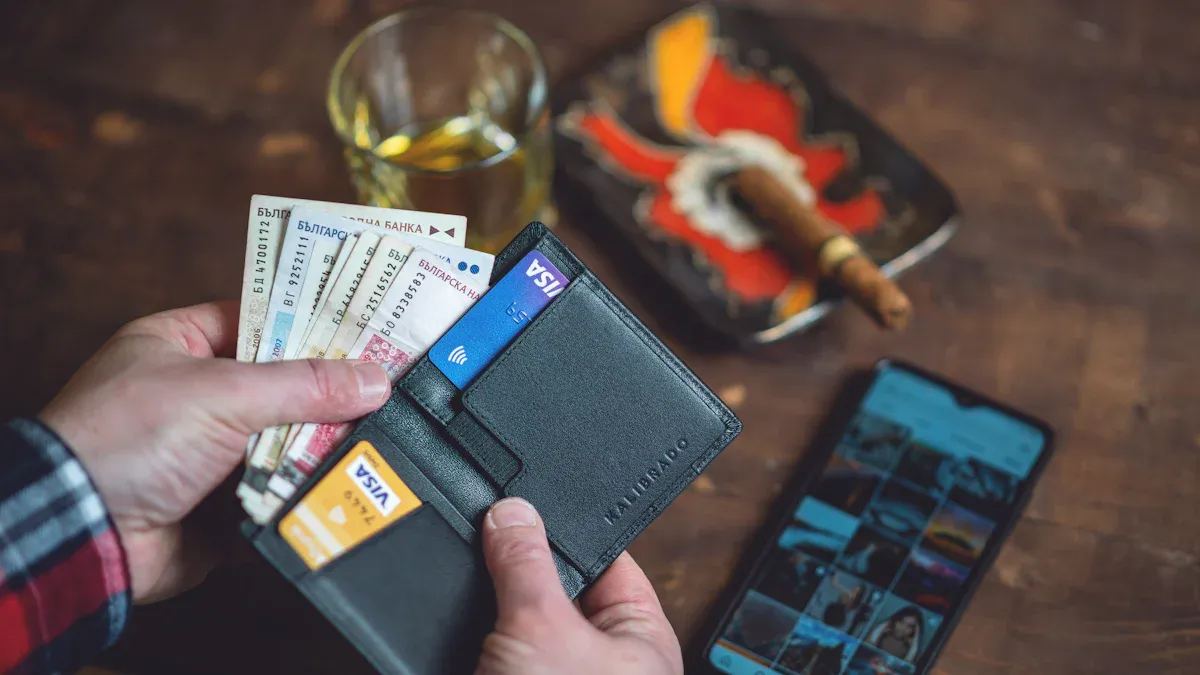
Image Source: pexels
Wallet Types and Features
When managing travel funds, you can choose multi-asset wallets to improve fund management flexibility. Multi-asset wallets support multiple currencies, allowing you to easily switch between different currencies and securely store funds in each currency. You can send and receive payments in different currencies through these wallets to meet cross-border payment and travel finance needs. Multi-asset wallets also integrate transaction history, helping you track fund flows at any time. Compared with traditional digital wallets, multi-asset wallets eliminate the complexity of maintaining multiple accounts. During travel, you can directly switch between mainstream currencies such as USD and EUR, reducing high currency exchange fees. The real-time exchange rate feature helps you seize the best conversion timing and optimize fund usage efficiency.
Wallet Opening Process
When opening a multi-asset wallet, you usually need to complete the following steps:
- Select the appropriate wallet type and confirm it supports the currencies you need.
- Submit personal identification information and complete real-name authentication.
- Set account security measures, such as password and two-factor authentication.
- Bind a bank card or other payment methods to facilitate fund top-up and withdrawal.
- After completing account activation, you can immediately perform multi-currency management and cross-border transfers.
Throughout the process, ensure information is entered accurately to avoid audit delays due to incomplete materials. The account setup process for multi-asset wallets is simpler than traditional bank accounts, and transaction processing speed is faster.
Wallet Security Analysis
When using multi-asset wallets, security is the most important consideration. Multi-asset wallets adopt multiple security measures to protect your funds:
- Multi-signature configuration: Even if some keys are lost, you can still access the account with the remaining keys, improving fund recovery capability.
- Encryption technology: All sensitive information is encrypted, and only authorized users can decrypt it, preventing unauthorized access.
- Two-factor authentication: You need to pass two identity verification methods to log in, further securing the account.
- Hardware security module: Prevents others from illegally accessing, withdrawing, or tampering with your funds.
- Multi-party computation technology: Distributes private key storage to reduce single-point failure risk.
When choosing a wallet, prioritize these security features to ensure full protection of travel funds throughout the wealth management process. Multi-asset wallets have clear advantages in digital convenience, fees, and innovative features, but you must also choose formal platforms to ensure fund safety.
Travel Fund Wealth Management Asset Allocation
USD Fixed Deposits and Current Wealth Management
When conducting travel fund wealth management, it is very important to reasonably allocate USD fixed deposits and current wealth management products. USD fixed deposits are suitable when you have a clear travel plan and funds will not be used in the short term. You can lock part of the funds in fixed deposits to earn relatively higher interest returns. Current wealth management provides higher flexibility, allowing you to deposit and withdraw funds at any time to meet sudden expenses during travel.
You can allocate assets by usage frequency and region based on actual travel needs. For example, if you plan 60% of spending in the U.S. and 40% in Europe, you can allocate 60% of funds to USD and 40% to EUR. This reduces risk from exchange rate fluctuations and improves fund usage efficiency. You can also flexibly adjust the proportion of fixed and current deposits based on your travel schedule to ensure funds both preserve and increase value while remaining available for various travel changes.
When allocating assets, prioritize commonly used currency accounts to reduce unnecessary conversion losses. A reasonable asset allocation structure helps you efficiently manage travel funds in different countries and regions.
Interest Returns and Withdrawal Methods
When selecting travel fund wealth management products, interest returns and withdrawal methods are two key factors. USD fixed deposits usually offer higher annualized rates but cannot be withdrawn freely before maturity. Current wealth management has slightly lower rates but allows deposits and withdrawals at any time to meet flexible travel needs.
You can view interest returns in real time through multi-asset wallets; some wallets also support automatic compounding to let your funds continue growing. For withdrawals, multi-asset wallets usually support multi-currency withdrawals; you can directly transfer USD or other currencies to local bank accounts or achieve fund movement through international transfer services.
When withdrawing, pay attention to fees and arrival time. Some platforms support fast withdrawals with low fees, suitable for emergency use. You can also choose the optimal withdrawal path based on your travel destination to reduce unnecessary costs.
| Wealth Management Method | Annualized Rate (USD) | Liquidity | Withdrawal Method | Applicable Scenario |
|---|---|---|---|---|
| USD Fixed Deposit | 3.5%–5.0% | Low | One-time withdrawal upon maturity | Long-term travel / fund preservation |
| Current Wealth Management | 2.0%–3.0% | High | Withdraw anytime | Short-term travel / emergency spending |
You can flexibly choose different wealth management methods based on your travel plan, ensuring both fund safety and overall return improvement.
Fund Liquidity and Security
During travel fund wealth management, fund liquidity and security are equally important. USD deposits in multi-asset wallets usually have higher liquidity than traditional bank accounts; you can perform transfers, conversions, and withdrawals at any time. This high liquidity allows you to handle sudden situations during travel more calmly, but you must also note that fund volatility is relatively high, especially during periods of market stress when fund value may fluctuate significantly.
You can monitor and manage travel fund wealth management assets through multiple methods. For example, AI and machine learning technology can automatically detect abnormal transaction behavior to secure accounts. Blockchain analysis tools can track fund flows and prevent money laundering and fraud risks. You can also use geographic location analysis to understand fund flow sources and destinations in real time and promptly detect high-risk regional exposures.
When choosing a wealth management platform, prioritize wallets with multiple security measures such as multi-signature, encrypted storage, and two-factor authentication. These measures can effectively reduce the risk of account theft or fund loss. You should also regularly check account activity, establish personal behavior baselines, and promptly detect abnormalities to ensure the security of travel fund wealth management.
If you care more about how travel funds connect across storage, allocation, and later use, it may also help to review BiyaPay’s multi-asset wallet and fund management capabilities on the official website. It is better understood as a multi-asset wallet covering cross-border payments, investment, trading, and fund management scenarios; during trip preparation, you can first use its exchange rate comparison tool to estimate conversion costs, then decide how much to keep liquid in the account and how much to reserve for later spending or transfers, making the overall funding path easier to manage.
- Multi-asset wallets offer high liquidity, suitable for frequent withdrawals and cross-border use.
- Fund volatility is relatively high; reasonably allocate fixed and current proportions.
- Improve fund security through AI monitoring, blockchain analysis, and geographic tracking.
Throughout the entire travel fund wealth management process, only by scientifically allocating assets, focusing on returns and liquidity, and strengthening security measures can you maximize the value of funds during global travel.
Operation Process and Common Questions
Complete Process of Exchanging to Wallet
When conducting travel fund wealth management, you can follow these steps to complete the process of exchanging currency to a multi-asset wallet:
- Choose a compliant currency exchange channel to convert RMB or other local currencies to USD. It is recommended to prioritize Hong Kong licensed banks or international payment platforms to ensure fund safety.
- Deposit the exchanged USD into your multi-asset wallet. You can complete the deposit via bank transfer, international remittance, or third-party payment services.
- Manage currencies within the wallet. You can flexibly convert to other currencies based on travel needs to achieve multi-currency asset allocation.
- Use the wallet’s transfer function to send funds to overseas accounts or directly for payments. Some wallets also support generating payment links for receiving transfers from others.
- After travel ends, you can withdraw remaining funds to a local bank account at any time or continue using them for subsequent wealth management.
This process enables efficient fund circulation and flexible management to meet fund needs in different countries and regions.
Operation Precautions
During operations, common errors mainly include:
- Missing, incomplete, or duplicate receipts, which easily lead to rejected reimbursement applications.
- Inaccurate expense categorization, affecting the accuracy of financial reports and potentially causing reimbursement delays.
- Submitting expenses exceeding policy limits, leading to delayed or rejected reimbursement.
- Delayed expense submission, increasing management difficulty and error probability.
- Errors in foreign currency conversion calculations or lack of relevant vouchers, affecting fund accounting.
You can effectively avoid these problems by standardizing receipt management, timely categorizing expenses, strictly following policies, submitting applications on time, and accurately recording exchange rate information.
It is recommended to save electronic receipts promptly after each operation and regularly check account statements to ensure clear and traceable fund flows.
Risk Prevention Recommendations
When managing travel funds, adopt multiple measures to ensure fund safety:
- Keep funds in reputable banks or compliant wallet platforms, prioritizing regulated financial institutions.
- Purchase relevant insurance products to provide additional protection for funds and reduce uncontrollable risks.
- Understand depositor compensation plans to ensure reasonable compensation in extreme cases.
- Regularly check account security settings, such as enabling two-factor authentication and periodically changing passwords, to prevent account theft.
- Avoid operating wallets on public networks to reduce information leakage risk.
Through these measures, you can significantly improve the security and stability of travel funds, making fund management more reassuring and efficient.
In travel fund wealth management, you should rationally divide cash, optimize asset allocation in combination with market conditions. You can set up automatic transfers to savings accounts and adopt the 50/30/20 budgeting method to improve savings efficiency. Pay attention to compliance risks of multi-asset wallets and choose safe channels for deposits and withdrawals. After travel, it is recommended to review wealth management strategies and continuously optimize fund management based on feedback.
FAQ
How to choose a compliant currency exchange channel?
You can prioritize Hong Kong licensed banks or international payment platforms. This ensures fund safety and avoids legal risks. Understand relevant policies in advance to ensure operations comply with mainland China regulations.
Is a multi-asset wallet safe?
You can enhance security by enabling two-factor authentication, encrypted storage, and multi-signature. Choose regulated platforms and regularly check account activity to ensure funds are not threatened.
How to withdraw USD after depositing it into a multi-asset wallet?
You can transfer USD directly to a local bank account through the wallet’s multi-currency withdrawal function. Some platforms support fast arrival with transparent fees, making it convenient to use funds anytime.
What fees should be considered during currency exchange?
You need to pay attention to fixed fees, percentage handling fees, and ATM withdrawal fees. Compare fee standards of different channels in advance, arrange exchange timing reasonably, and reduce unnecessary fund losses.
How to optimize asset allocation for travel fund wealth management?
You can reasonably allocate fixed and current proportions based on your travel plan. Prioritize commonly used currencies, combine liquidity and security, and improve overall returns and usage efficiency.
*This article is provided for general information purposes and does not constitute legal, tax or other professional advice from BiyaPay or its subsidiaries and its affiliates, and it is not intended as a substitute for obtaining advice from a financial advisor or any other professional.
We make no representations, warranties or warranties, express or implied, as to the accuracy, completeness or timeliness of the contents of this publication.
Related Blogs of

How to View HBM Advanced Packaging Equipment Stocks? ASMPT’s Opportunities and Cyclical Risks


Why Can’t HBM Exist Without Advanced Packaging? The Role of TSV, CoWoS, and Packaging Equipment


How to Read Pure Storage and NetApp Earnings? ARR, Cloud Revenue, Gross Margin, and Cash Flow Metrics


Why Is Western Digital’s Gross Margin Changing? Nearline HDDs, Long-Term Pricing, and Cloud Customer Demand

Choose Country or Region to Read Local Blog
 Australia
 Austria
 Belgium
 Canada
 Cyprus
 Czech Republic
 Denmark
 Estonia
 Finland
 France
 Germany
 Greece
 Hong Kong
 India
India Indonesia
 Ireland
 Italy
Italy Japan
Japan Latvia
 Lithuania
 Luxembourg
 Malaysia
 Malta
Malta Morocco
 Nepal
Nepal Netherlands
 New Zealand
 Norway
 Pakistan
 Philippines
 Poland
 Portugal
 Romania
 Singapore
 Slovakia
 Slovenia
 South Africa
 South Korea
 Spain
Spain Sweden
 Thailand
 The United States
 Turkey
 United Arab Emirates
 United Kingdom
 Vietnam
Contact Us




BIYA GLOBAL LLC is registered with the Financial Crimes Enforcement Network (FinCEN), an agency under the U.S. Department of the Treasury, as a Money Services Business (MSB), with registration number 31000218637349, and regulated by the Financial Crimes Enforcement Network (FinCEN).
BIYA GLOBAL LIMITED is a registered Financial Service Provider (FSP) in New Zealand, with registration number FSP1007221, and is also a registered member of the Financial Services Complaints Limited (FSCL), an independent dispute resolution scheme in New Zealand.