China Passport Visa-Free Mexico Soccer Trip: How to Hedge Peso Exchange Rate Losses with Digital Assets?





Image Source: pexels
With a Chinese passport, you can enter Mexico visa-free and easily watch matches. The peso continues to depreciate, causing significant losses with traditional currency exchange methods. Digital asset hedging has become a preferred solution for Chinese-speaking users facing exchange rate fluctuations. When you focus on fund safety and costs, digital asset operations are simple and can effectively help you reduce travel expenses.
Key Takeaways
- A Chinese passport allows visa-free entry to Mexico, saving visa time and costs while offering flexible travel planning.
- Pay attention to changes in Mexico’s entry policies; prepare passport copies and necessary documents in advance to ensure smooth entry.
- Traditional currency exchange methods may lead to fund losses; it is recommended to calculate fees in advance to avoid budget shortfalls.
- Digital asset hedging can reduce exchange rate losses; choose compliant platforms to ensure fund safety and compliance.
- When paying with digital assets, confirm merchant acceptance, monitor real-time exchange rates and fees, and plan fund usage reasonably.
Convenience and Risks of China Passport Visa-Free Entry to Mexico
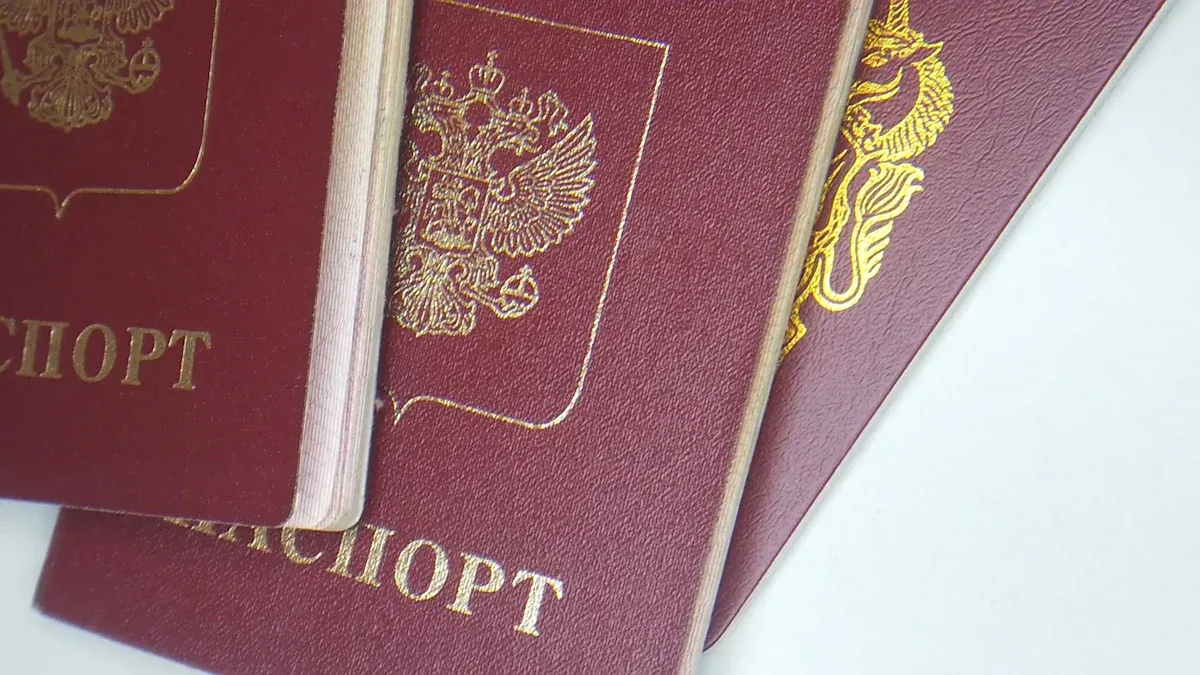
Image Source: pexels
Visa-Free Policy Overview
The Chinese passport visa-free policy for Mexico brings great convenience to Chinese-speaking users. You can directly purchase tickets and plan your itinerary without applying for a visa in advance. This not only saves time but also reduces visa application costs. For soccer fans and tourists, this policy allows more flexible arrangements for watching games and travel plans. You can adjust your travel schedule anytime based on match timings and personal needs.
Main benefits of the visa-free policy include:
- Saving visa application time
- Reducing travel costs
- Simplifying travel procedures
- Increasing travel flexibility
You need to note that Mexico’s entry rules may change due to political, security, or health factors. For example, during the global pandemic, some countries temporarily adjusted entry policies. After Russia’s invasion of Ukraine, multiple EU countries restricted visa-free entry for Russian citizens. This shows that before traveling, you must check Mexico’s latest official entry regulations to avoid itinerary disruptions due to policy changes.
Entry Precautions and Passport Backup
While enjoying the convenience of visa-free entry to Mexico with a Chinese passport, you must also prioritize entry safety. It is recommended to prepare passport copies and visa page copies in advance. If your passport is lost, you can quickly seek help from the local Chinese embassy or consulate. You can also store passport scans in a secure cloud for easy access anytime.
Upon entry, Mexican immigration may require you to present a return ticket, hotel booking, or proof of funds. You should prepare these materials in advance to pass immigration smoothly. It is recommended to store important documents separately to avoid total loss.
- Passport copies and visa page copies
- Return ticket and hotel booking
- Proof of funds (e.g., USD cash or bank statements)
- Cloud backup of important documents
During your trip in Mexico, stay vigilant and monitor the local security situation. In case of emergencies, contact the Chinese embassy or consulate in Mexico promptly. The Chinese passport visa-free policy to Mexico provides convenience, but you need thorough preparation to ensure personal safety and smooth travel.
Peso Exchange Rate and Currency Exchange Losses

Image Source: unsplash
Peso Depreciation Trend
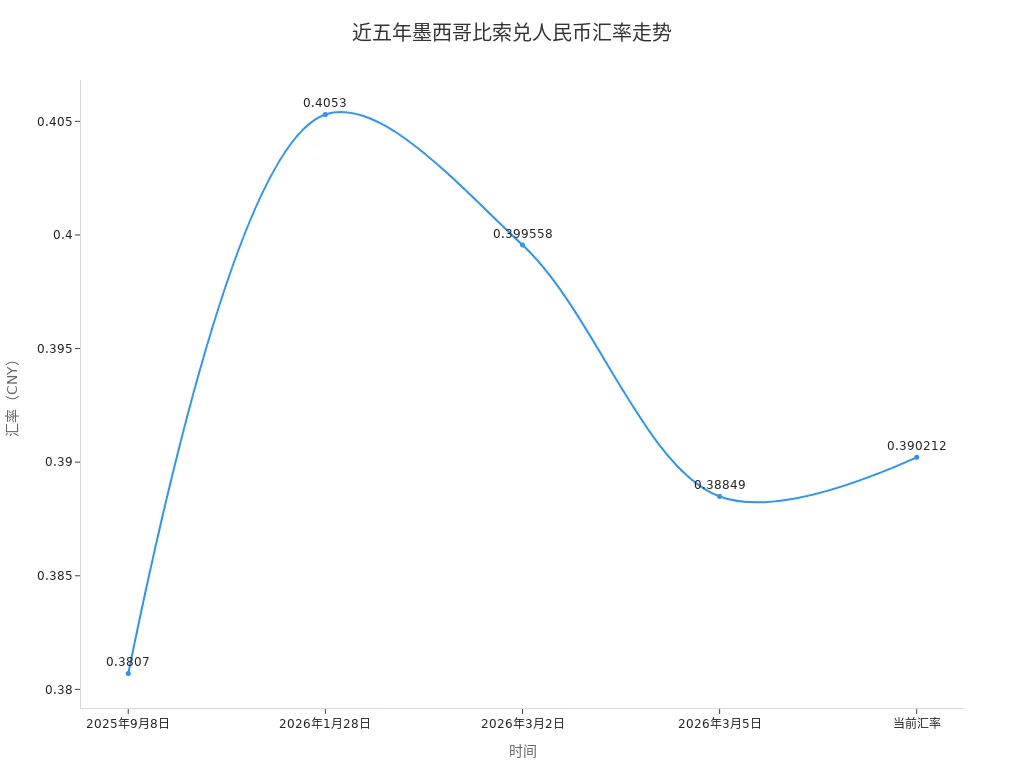
When traveling in Mexico, exchange rate fluctuations directly affect your actual spending costs. Over the past five years, the Mexican peso-to-Chinese yuan exchange rate has shown significant volatility. The table below shows exchange rate changes at selected key dates:
| Date | Rate |
|---|---|
| January 28, 2026 | 0.4053 CNY |
| September 8, 2025 | 0.3807 CNY |
| March 2, 2026 | 0.399558 CNY |
| March 5, 2026 | 0.38849 CNY |
| Current Rate | 0.390212 CNY |
You can see that the peso exchange rate has fluctuated significantly in the short term. Influencing factors include Mexico’s economic policies, global USD trends, international trade environment, etc. The chart below visually shows the peso-to-CNY exchange rate trend over the past five years:
Economic Losses from Traditional Currency Exchange
When using traditional currency exchange methods, you typically need to go through banks or offline exchange counters. Banks charge service fees, while offline counters add markups to the rate. Assume you exchange USD in mainland China via a licensed Hong Kong bank and then convert to pesos in Mexico — the entire process involves multiple conversions and fees. Each step may cause fund losses. For example, a 2% bank service fee plus a 3% offline markup results in a significantly lower actual received amount than the theoretical value.
Tip: When traveling to Mexico visa-free with a Chinese passport, if using traditional exchange methods, calculate all fees and exchange rate losses in advance to avoid budget shortfalls.
If you want a clearer view of real exchange costs before departure, you can use the BiyaPay exchange rate comparison tool to evaluate different conversion paths, such as “local currency → USD → peso,” instead of relying only on bank quotes. This helps you understand the actual cost after spreads and fees. Platforms like this are positioned more as multi-asset wallets, covering cross-border payments, asset conversion, and fund management in one place, allowing you to prepare and adjust funds within a single account. For travel scenarios where exchange timing and flexibility matter, this kind of setup can make it easier to manage costs and reduce exposure to rate fluctuations.
Exchange Case Comparison
You can understand the cost difference between traditional exchange and digital asset hedging through specific cases. Assume you need to exchange 1000 USD for consumption in Mexico:
| Exchange Method | Actual Received Amount (USD) | Total Cost (USD) |
|---|---|---|
| Traditional Bank Exchange | 950 | 50 |
| Offline Exchange Counter | 930 | 70 |
| Digital Asset Hedging | 980 | 20 |
Using digital asset hedging can effectively reduce fees and exchange rate losses. Digital asset platforms typically charge lower service fees and offer rates closer to market prices. When traveling to Mexico visa-free with a Chinese passport, digital asset hedging becomes a preferred cost-reduction solution for Chinese-speaking users.
Principles and Advantages of Digital Asset Hedging
Digital Asset Hedging Mechanism
When traveling in Mexico and facing peso exchange rate fluctuations, you can hedge through digital assets. The core principle of digital asset hedging is: you first purchase mainstream stablecoins (such as USDT) on a digital asset platform (e.g., Biyapay) to convert funds from USD to digital assets. You can transfer globally anytime with fast arrival and low fees. After arriving in Mexico, you can convert digital assets to pesos or use them directly for consumption through platforms like Biyapay, avoiding multiple exchanges and high fees. This allows you to lock in rates and reduce the risk of fund losses.
Advantages Compared to Traditional Exchange
Using digital asset hedging can significantly lower costs. Traditional exchange usually goes through licensed Hong Kong banks or offline counters, with each step involving service fees and exchange rate losses. The table below compares the main differences between the two methods:
| Exchange Method | Service Fee (USD) | Rate Transparency | Arrival Speed | Fund Flexibility |
|---|---|---|---|---|
| Traditional Bank/Exchange Counter | 30–70 | Low | Slow | Limited |
| Digital Asset (Biyapay) | 10–20 | High | Fast | High |
Through digital asset platforms like Biyapay, you can complete fund transfers at lower service fees with rates closer to market prices and arrival times usually within a few minutes. You can also flexibly choose exchange timing to improve fund utilization efficiency.
Applicable Scenarios and Limitations
When traveling to Mexico visa-free with a Chinese passport, digital asset hedging suits Chinese-speaking users who need large-amount exchanges and focus on cost and efficiency. You can use it for hotel payments, tickets, dining, and more. However, note that some Mexican merchants have not widely adopted digital asset payments, and some platforms require KYC for new users. You should understand platform rules in advance to ensure fund safety. While mainstream assets are stablecoins, extreme market conditions may still cause de-pegging or liquidity issues. You need to choose hedging methods reasonably based on your needs and risk tolerance.
Practical Process for Digital Asset Hedging
Purchase and Transfer Process
As a Chinese-speaking user planning to hedge peso exchange rate losses with digital assets, you can choose mainstream platforms such as Biyapay for operation. You first need to register an account on Biyapay and complete identity verification (KYC) to ensure fund safety and compliance. You can recharge USD to your Biyapay account through a licensed Hong Kong bank. After recharging, you can directly purchase stablecoins such as USDT; the platform displays real-time rates and fees, typically 10–20 USD — far lower than traditional bank exchange.
After purchase, you can transfer digital assets anytime to local Mexican partner platforms or personal wallets. Biyapay supports global transfers with fast arrival, usually completed within minutes. You only need to enter the recipient’s wallet address or phone number, confirm the amount and fee, and the system automatically completes the transfer. You can view transaction records anytime to ensure transparent fund flow. If funding needs change, you can flexibly adjust transfer amounts and timing to improve fund utilization efficiency.
Tip: During operation, always verify recipient information to avoid asset loss due to address errors. Digital asset transactions are irreversible; fund safety must be highly prioritized.
Mexico Conversion and Payment Methods
After arriving in Mexico, you can convert digital assets to pesos or use them directly for consumption in various ways. Biyapay supports integration with local Mexican banks and payment platforms; you can choose the following methods:
- Cash: Convert digital assets to USD cash, then exchange to pesos locally in Mexico — suitable for cash payment scenarios.
- Credit Card: Some platforms support topping up credit cards with digital assets, convenient for consumption at Mexican merchants.
- Buy Now Pay Later (BNPL, meses sin intereses): Apply for installment payments through digital asset platforms to improve fund flexibility.
- Bank Transfer (SPEI): Convert digital assets to pesos and transfer to Mexican bank accounts via the SPEI system — suitable for large payments such as hotels and tickets.
- Debit Card Payment: Bind digital assets to a debit card for direct POS consumption in Mexico.
Digital payments in Mexico have grown year by year since 2017. You can use cash at OXXO convenience stores to pay for online orders, combining digital assets with traditional payment methods. Mexican banks have launched Dimo and CoDi mobile payment platforms, allowing real-time transfers via phone number or QR code to improve fund flow efficiency. When traveling to Mexico visa-free with a Chinese passport, digital asset hedging provides more payment options and reduces exchange rate losses.
Fund Safety and Compliance Recommendations
When using digital assets for hedging, prioritize fund safety and compliance. Mexican law requires digital service providers to register with tax authorities and designate a legal representative. Platforms must collect and remit 16% VAT, and sensitive data must be stored and processed locally in Mexico. When choosing platforms, prioritize those with compliant operations and robust data security measures.
| Key Consideration | Description |
|---|---|
| Registration Requirement | Digital service providers must register with Mexican tax authorities and designate a legal representative. |
| VAT | Must collect and remit 16% VAT. |
| Data Localization | Sensitive data must be stored and processed in Mexico. |
During operation, guard against the following common security risks:
- Cryptographic malware and ransomware: These may infect trading platforms; it is recommended to download apps only from official channels and avoid suspicious websites.
- Third-party software risk: Establish an application whitelist and avoid using unverified tools.
- Phishing attacks: Attackers may impersonate legitimate sources to obtain your private keys or personal information; use secure email gateways for identity verification.
- Account security: Set strong passwords and enable multi-factor authentication to enhance account safety.
- User confusion: Digital asset operations are complex; study platform operation guides to improve self-protection.
- Custody and security: Blockchain transactions are irreversible; if a wallet is attacked, assets may be permanently lost. Choose platforms with strong security controls.
Recommendation: Before each operation, carefully verify platform qualifications, transaction processes, and security measures. If in doubt, consult platform customer service or professionals promptly to ensure fund safety and compliance.
Common Digital Assets and Platform Selection
Mainstream Digital Asset Recommendations
When traveling in Mexico, choosing the right digital assets is crucial. Mainstream stablecoins such as USDT, USDC, and DAI circulate globally, pegged to USD with low volatility. You can purchase these stablecoins through platforms like Biyapay to lock in rates and reduce fund loss risks. USDT is the top choice for Chinese-speaking users due to its strong liquidity and high trading volume. USDC offers transparent audit mechanisms, suitable for users focused on fund safety. DAI uses decentralized collateral mechanisms, ideal for those wanting to avoid single-platform risks. When selecting digital assets, pay attention to liquidity, platform support, and transaction fees. The table below compares three mainstream stablecoins:
| Digital Asset | Liquidity | Transparency | Fee (USD) |
|---|---|---|---|
| USDT | High | Medium | 10–20 |
| USDC | High | High | 10–20 |
| DAI | Medium | High | 15–25 |
Tip: Before exchanging, monitor real-time rates and fees, plan fund allocation reasonably, and improve fund utilization efficiency.
Platform Selection Key Points
When choosing a digital asset platform, prioritize fund safety, compliance, and user experience. Biyapay, as a mainstream platform, supports global transfers, real-time rate display, and low fees — suitable for cross-border fund needs of Chinese-speaking users. During platform registration, complete identity verification to ensure account safety. The platform should have multiple security measures such as multi-factor authentication, cold wallet storage, and real-time risk control. Also check whether the platform supports integration with Mexican local banks and payment systems to improve fund liquidity. Licensed Hong Kong bank recharge channels provide higher fund protection. When selecting a platform, refer to the following key points:
- Platform compliance qualifications and regulatory status
- Fund safety measures and user protection mechanisms
- Real-time rate transparency and fee levels
- Support for multi-currency conversion and Mexican local payment methods
- Customer service response speed and user reputation
Recommendation: Before operation, thoroughly understand platform rules and service terms to avoid fund risks due to information asymmetry. If in doubt, consult platform customer service or professionals promptly to ensure fund safety.
Risk Warnings and Prevention
Price Fluctuation Risk
When using digital assets to hedge peso exchange rates, although mainstream stablecoins such as USDT and USDC are pegged to USD, extreme market conditions may still cause de-pegging or liquidity tightness. You should monitor market conditions and avoid large exchanges during sharp fluctuations. It is recommended to operate in batches, locking rates at different time points to reduce single-point risk. You can also follow platform announcements to stay updated on asset prices and liquidity changes and plan fund arrangements reasonably.
Platform Security and Legal Risks
When choosing a digital asset platform, prioritize platform security and compliance. Historically, the collapse of FTX exchange led to approximately USD 415 million in cryptocurrency being stolen, exposing exchange security vulnerabilities. Causes of cryptocurrency disappearance include hacker attacks, internal theft, and mismanagement. Stolen funds often mean attackers gained unauthorized access to exchange wallets or internal systems. You should prioritize platforms with compliant qualifications, fund isolation, and multiple security measures. It is recommended to change passwords regularly, enable multi-factor authentication, and avoid storing large amounts of assets long-term on exchanges. You also need to monitor digital asset regulatory policies in Mexico and related countries to ensure legal and compliant fund flows.
Anti-Fraud Advice
During cross-border travel and digital asset operations, stay vigilant against various financial scams. In 2025, synthetic identity fraud, service-based fraud, and social engineering fraud became major threats. Scammers may combine real and fake information, use generative AI to simplify account opening and fraud processes, or impersonate trusted individuals to obtain sensitive information. Financial institutions and platforms enhance protection through anti-fraud networks, machine learning algorithms, and real-time fraud detection systems. You should strengthen identity verification, protect personal information, and beware of strangers requesting transfers or verification codes. The table below summarizes common scam types and prevention strategies:
| Scam Type | Prevention Strategy |
|---|---|
| Investment Scam | Use scenario-driven intelligence and behavioral pattern recognition for risk detection |
| Short-Term Fraud | Monitor patterns of rapid trust exploitation and detect anomalies promptly |
| Account Takeover & Authorized Payment | Mitigate impact through multi-layered communication, education, and technical measures |
Before operating, it is recommended to learn more anti-scam knowledge and contact platform customer service promptly if suspicious situations arise to protect fund and information safety.
Real Case Sharing
Soccer Fan Hedging Experience
As a Chinese-speaking user planning to watch international soccer events in Mexico, you chose to exchange funds into USDT in advance through a digital asset platform to hedge peso exchange rate fluctuations. You completed USD recharge via a licensed Hong Kong bank, then purchased USDT on the platform. After arriving in Mexico, you found that some hotels and large malls supported digital asset payments. You settled accommodation and part of consumption directly with USDT, saving multiple exchange fees. You also converted part of the USDT to pesos through the platform and transferred to a local bank account for daily transportation and dining. You monitored fund flows throughout, checked rates in real time, and flexibly adjusted exchange timing. You concluded that digital asset hedging not only reduced costs but also improved fund usage flexibility and safety.
Common Issues and Solutions
When using digital assets in Mexico, you often encounter the following issues:
- Cash still dominates daily transactions; many small merchants and markets do not accept digital payments.
- Bank service coverage is limited; less than half the population has bank accounts, and digital payment penetration is low in some areas.
- Credit and debit card usage is lower outside major cities, limiting fund circulation.
You can adopt the following effective solutions:
- Use OXXO Pay to pay for online orders with cash at OXXO convenience stores nationwide, solving the need to convert digital assets to cash.
- Utilize Mexico government-promoted CoDi and SPEI systems to convert digital assets to pesos and achieve real-time transfers through local bank accounts, improving fund flow efficiency.
- Combine digital assets with traditional cash payments to flexibly handle different consumption scenarios and ensure sufficient funds during travel.
Through these methods, you can effectively address challenges in Mexico’s local payment environment and ensure fund safety and consumption experience.
When traveling to Mexico visa-free with a Chinese passport, digital asset hedging can effectively reduce exchange rate losses. You need to pay attention to risks and compliance, especially since virtual assets are not considered legal tender, financial entities are not authorized to operate them, and non-compliant actions may face penalties.
| Risk/Compliance Issue | Description |
|---|---|
| Virtual assets not legal tender | In Mexico, virtual assets are not considered legal tender or foreign currency. |
| Financial entities not authorized | Financial entities are not authorized to operate virtual assets. |
| Penalties | Unauthorized operations may face high fines and imprisonment. |
You should use secure devices, encrypted communication tools, dedicated VPNs, and carry only necessary equipment to protect fund safety. Choose the best method based on your needs and risk tolerance, operate rationally, and never follow blindly.
- Use secure devices, avoid carrying devices with sensitive data.
- Use encrypted communication tools such as Signal instead of insecure SMS services.
- Always use a dedicated VPN on all mobile devices.
- Carry only necessary equipment and manage files with hardware-encrypted portable USB devices.
FAQ
Is digital asset hedging safe for peso exchange rate losses?
Choosing compliant platforms and enabling multiple security measures can effectively protect fund safety. You should avoid storing large amounts of assets long-term on exchanges; it is recommended to use cold wallets or hardware wallets for asset management.
How to choose a suitable digital asset platform?
You should prioritize platform compliance qualifications, fund safety measures, and user reputation. You can refer to the following points:
- Real-time rate transparency
- Fee levels
- Whether it supports integration with Mexican local banks
What are common ways to convert digital assets to pesos?
You can convert digital assets to USD cash through platforms and then exchange to pesos in Mexico. You can also choose bank transfers, debit card payments, or cash payments at OXXO convenience stores to flexibly handle different consumption scenarios.
What precautions should be taken when paying with digital assets?
You should confirm in advance whether merchants support digital asset payments. Also monitor real-time rates and fees and plan exchange timing reasonably. During operation, always verify recipient information to prevent asset loss.
Is digital asset hedging suitable for all Chinese-speaking users?
If you focus on fund safety, cost, and efficiency, digital asset hedging is very suitable. You need basic digital asset operation skills and must accept certain price fluctuations and compliance risks. Choose rationally based on your own needs.
*This article is provided for general information purposes and does not constitute legal, tax or other professional advice from BiyaPay or its subsidiaries and its affiliates, and it is not intended as a substitute for obtaining advice from a financial advisor or any other professional.
We make no representations, warranties or warranties, express or implied, as to the accuracy, completeness or timeliness of the contents of this publication.
Related Blogs of

What Are NOR Flash, SLC NAND, and EEPROM? Why They Help Explain Hong Kong-Listed Memory-Related Stocks


How Should SSDs and HDDs Work Together in AI Data Centers? Performance, Capacity, Cost, and Hot vs. Cold Data Compared


Is SMIC 0981.HK a Memory Chip Stock? The Relationship Between Foundry Manufacturing and the Memory Supply Chain


What Is the Difference Between DRAM Contract Price and Spot Price? Which Indicator Should Investors Watch?

Choose Country or Region to Read Local Blog
 Australia
 Austria
 Belgium
 Canada
 Cyprus
 Czech Republic
 Denmark
 Estonia
 Finland
 France
 Germany
 Greece
 Hong Kong
 India
India Indonesia
 Ireland
 Italy
Italy Japan
Japan Latvia
 Lithuania
 Luxembourg
 Malaysia
 Malta
Malta Morocco
 Nepal
Nepal Netherlands
 New Zealand
 Norway
 Pakistan
 Philippines
 Poland
 Portugal
 Romania
 Singapore
 Slovakia
 Slovenia
 South Africa
 South Korea
 Spain
Spain Sweden
 Thailand
 The United States
 Turkey
 United Arab Emirates
 United Kingdom
 Vietnam
Contact Us




BIYA GLOBAL LLC is registered with the Financial Crimes Enforcement Network (FinCEN), an agency under the U.S. Department of the Treasury, as a Money Services Business (MSB), with registration number 31000218637349, and regulated by the Financial Crimes Enforcement Network (FinCEN).
BIYA GLOBAL LIMITED is a registered Financial Service Provider (FSP) in New Zealand, with registration number FSP1007221, and is also a registered member of the Financial Services Complaints Limited (FSCL), an independent dispute resolution scheme in New Zealand.