Football Club Listed Stocks Overview: Manchester United (MANU) and Juventus (JUVE) Investment Analysis





Image Source: pexels
Listed football clubs bring unique opportunities for investors. Manchester United (MANU) and Juventus (JUVE), the two clubs, show clear differences in capital market performance. Data shows Manchester United’s current market cap is approximately $2.6 billion, with analysts assigning an “Outperform” rating and a target price of $22.37, but the 2026 net profit margin is -5.7% and return on equity is -29.9%. Juventus holds 69 official championship titles, with analysts recommending “Hold” and a target price of €2.70. Investors need to focus on earnings volatility and market risks while reasonably assessing investment expectations.
Key Takeaways
- Listed football clubs provide investors with a new way to participate in the sports industry; investors can share in club growth returns by purchasing stocks.
- Manchester United and Juventus each have distinct investment value: Manchester United benefits from strong brand influence and commercial monetization capabilities, while Juventus stands out in the Italian market.
- Investors should pay attention to the club’s financial performance, on-field results, and management changes—these factors directly affect stock prices and investment returns.
- High-risk-tolerant investors can consider football club stocks as part of a diversified portfolio and allocate reasonably based on their risk preferences.
- In the future, both Manchester United and Juventus have opportunities to achieve sustained growth through optimized management and market expansion; investors should closely monitor industry developments.
If your first concern with this kind of sports asset is simply how to get the basics clear, you can start with BiyaPay stock information lookup to review the ticker, market details, and basic price information. For assets such as Manchester United or Juventus, where brand value, match results, and market sentiment can all affect valuation, it is usually better to understand the underlying listing first and think about allocation second.
As a multi-asset wallet, BiyaPay covers common scenarios such as cross-border payments, fund management, and trading. In this context, it fits more naturally as a preparation tool for basic lookup and confirmation, rather than as a substitute for your own judgment on club finances, sporting performance, and risk-return expectations.
Football Club Listing Overview

Image Source: unsplash
Listed football clubs provide investors with a new avenue to participate in the sports industry. Globally, more and more football clubs choose to list on stock exchanges, attracting capital market attention. Investors can directly participate in club operations and development by purchasing club stocks and share in returns from brand growth.
Manchester United Listing Details and Ticker
As one of England’s most historic football clubs, Manchester United is listed on the New York Stock Exchange with the ticker MANU. After listing, Manchester United has attracted significant attention from international investors. The table below shows Manchester United’s listing information:
| Club | Ticker | Exchange |
|---|---|---|
| Manchester United | MANU | New York Stock Exchange |
Manchester United’s listing has not only enhanced brand influence but also brought more funding support to the club. Investors can directly experience the integration of sports and capital markets by participating in Manchester United’s operations through the stock market.
Juventus Listing Details and Ticker
Juventus is one of Italy’s most influential football clubs. The club is listed on the Milan Stock Exchange with the ticker JUVE. After listing, Juventus has attracted investors from Europe and around the world. The table below shows Juventus’s listing information:
| Club | Ticker | Exchange |
|---|---|---|
| Juventus | JUVE | Milan Stock Exchange |
Juventus’s listing has brought capital support to the club and promoted its brand internationalization. Investors can experience the unique investment value of the sports industry by participating in Juventus’s growth through the stock market.
Globally, football club listings have become an industry trend. Major listed clubs include:
- Borussia Dortmund (Frankfurt Stock Exchange, Germany)
- AFC Ajax (Amsterdam Stock Exchange)
- Olympique Lyonnais Groupe (Paris Stock Exchange)
- S.S. Lazio (Milan Stock Exchange, Italy)
- Parken Sport – FC Copenhagen (Danish Stock Exchange)
- Celtic (London Stock Exchange)
- Manchester United (New York Stock Exchange)
- Juventus (Milan Stock Exchange, Italy)
- Futebol Clube do Porto (Portuguese Stock Exchange)
- Sport Lisboa e Benfica (Portuguese Stock Exchange)
- Sporting Clube de Portugal (Portuguese Stock Exchange)
- Sporting Clube De Braga (Portuguese Stock Exchange)
- Brera Holdings PLC (Nasdaq Stock Exchange)
- Bali United (Indonesia Stock Exchange)
Football club listings not only promote the integration of the sports industry with capital markets but also offer investors diversified investment choices. Investors can select different club stocks based on their risk preferences and participate in the development of the global sports industry.
Manchester United Investment Analysis

Image Source: pexels
Fundamental Analysis
As a globally renowned listed football club, Manchester United possesses a strong financial foundation and brand influence. According to the latest financial report, Manchester United reported net income of $4.2 million, total revenue of $190.3 million, annual revenue forecast range of $640–660 million, and annual profit forecast of $180–200 million. Club debt stands at $295.7 million, with cash and cash equivalents at $44.4 million. The table below shows Manchester United’s main financial indicators:
| Metric | Value |
|---|---|
| Net Income | $4.2 million |
| Total Revenue | $190.3 million |
| Debt Level | $295.7 million |
| Cash & Cash Equivalents | $44.4 million |
| Annual Revenue Forecast | $640–660 million |
| Annual Profit Forecast | $180–200 million |
Manchester United also leads in brand value and global influence. Data shows Manchester United’s brand value is $6.6 billion, with global revenue of $834 million, second only to Real Madrid. Manchester United has a vast global fan base, with brand influence spanning five continents. The table below compares Manchester United with other top clubs in brand value and revenue:
| Club | Country | Value (USD) | Revenue (USD) |
|---|---|---|---|
| Manchester United | UK | $6.6 billion | $834 million |
| Real Madrid | Spain | $6.75 billion | $1,129 million |
| Barcelona | Spain | $5.65 billion | $821 million |
| Liverpool | UK | $5.4 billion | $773 million |
| Manchester City | UK | $5.3 billion | $901 million |
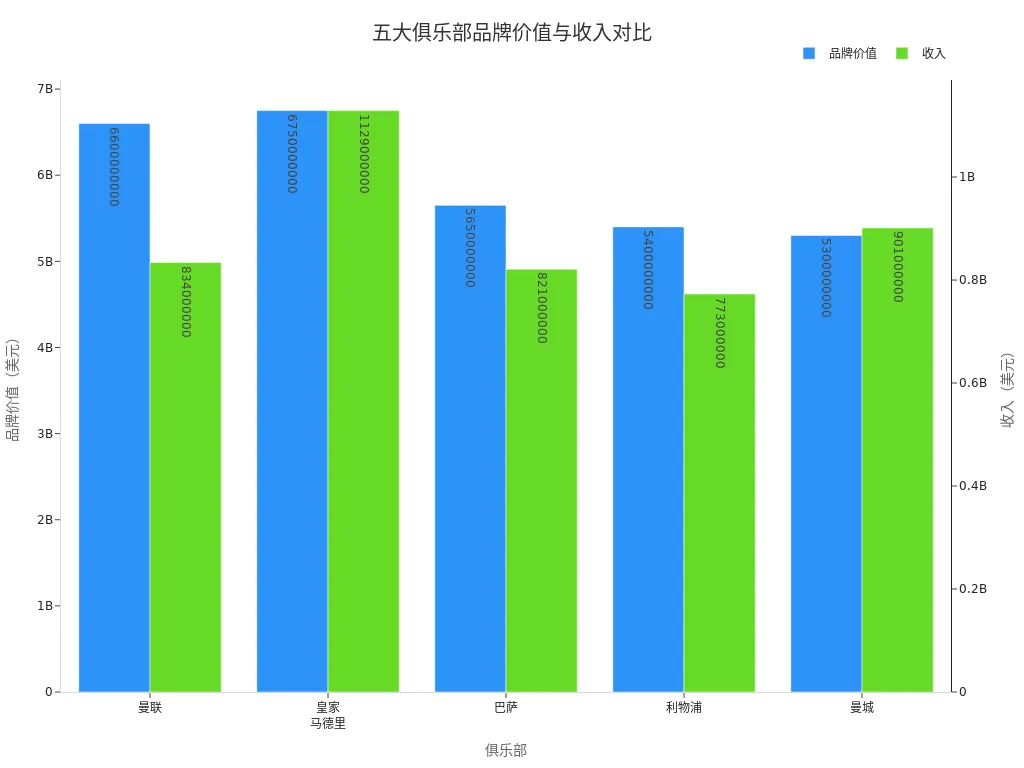
Manchester United’s brand value and revenue-generating capability provide a solid foundation among listed football club enterprises.
Stock Performance
Since its initial listing on the London Stock Exchange in 1991, Manchester United’s stock has experienced multiple major fluctuations. During the 2008 global financial crisis, despite stable team performance, the stock price fell due to economic uncertainty. In 2012, Manchester United relisted on the New York Stock Exchange, attracting high investor attention and seeing a significant price surge. The table below highlights key historical points in Manchester United’s stock performance:
- 1991 London Stock Exchange listing—team performance drove price increases
- 2008 global financial crisis—stock price declined due to economic impact
- 2012 New York Stock Exchange relisting—investor confidence drove price increases
Manchester United’s stock overall shows high volatility, significantly influenced by team performance, global economic environment, and trends in the listed football club sector.
Risks and Opportunities
As a listed football club enterprise, Manchester United faces multiple risks. Ongoing financial losses and high debt levels pose challenges to the club’s financial health. Poor resource management, massive transfer spending, and wage bills may lead to declining profitability. On-field performance directly affects revenue and stock value; poor results will erode investor confidence. Additionally, Manchester United must comply with profit and sustainability rules to ensure operational compliance.
Main risks include:
- Ongoing financial losses
- High debt levels
- Poor resource management
- Impact of performance on revenue generation
- Need to comply with profit and sustainability rules
- Massive transfer spending and wage bills
- Risk to financial stability and stock value from poor on-field performance
Manchester United also has significant growth opportunities. Despite a decline in commercial revenue, the club maintains an annual revenue forecast of $640–660 million, indicating market stability. Over the next three years, Manchester United can increase revenue and market share through international market expansion, enhanced commercial development, and optimized event operations. The table below shows Manchester United’s main revenue sources and changes for 2025–26:
| Revenue Source | 2025–26 Revenue (USD) | Change |
|---|---|---|
| Commercial Revenue | $78.5 million | Down $6.6 million from last year |
| Sponsorship Revenue | $37.2 million | Down 13.5% from last year |
| Merchandise Sales Revenue | $41.3 million | Down 1.9% from last year |
| Matchday Revenue | $49.5 million | Down $2.5 million from last year |
| Annual Revenue Forecast | $640–660 million | Unchanged |
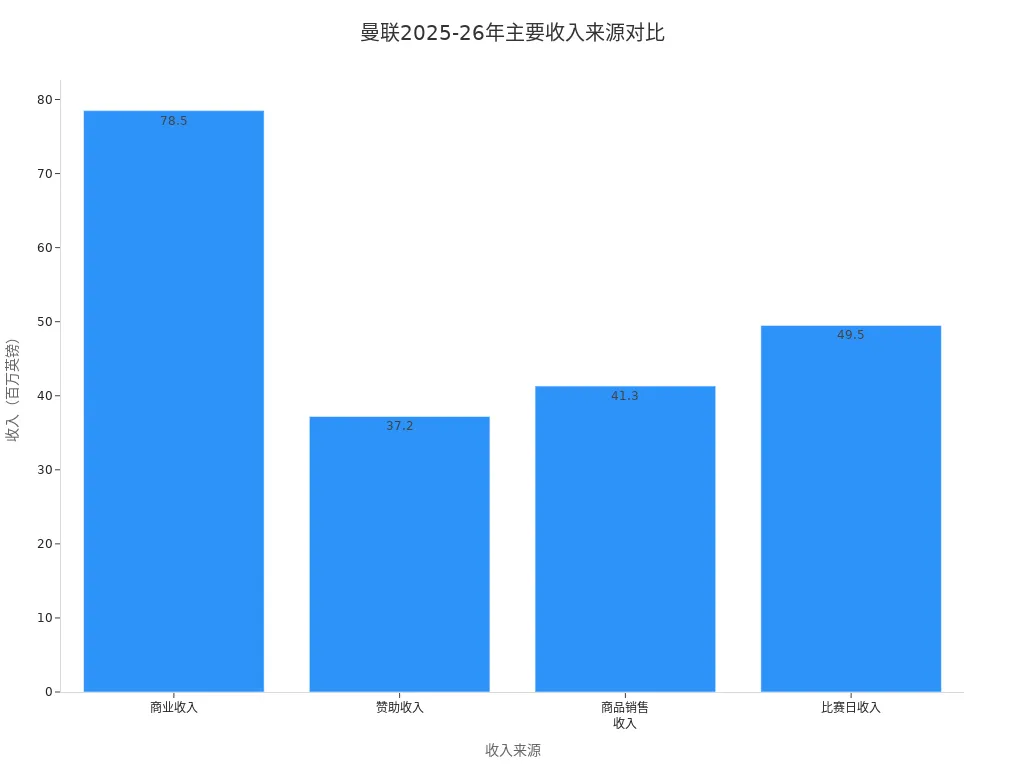
Manchester United remains highly competitive in the listed football club sector.
Future Outlook
In the future, Manchester United is expected to achieve sustained growth through diversified revenue channels and global strategies. The club can strengthen partnerships with international brands, expand digital media and content licensing businesses, and enhance commercial development capabilities. Improved on-field performance will further strengthen brand appeal and drive sponsorship and merchandise sales growth. Manchester United can also leverage its listed platform to attract more international capital, optimize its financial structure, and increase overall valuation.
However, Manchester United must also address ongoing financial pressure and market competition. High debt and transfer spending may impact profitability, while team performance volatility will introduce uncertainty. Management needs to continuously optimize resource allocation, improve operational efficiency, and ensure the club maintains a leading position in the listed football club market.
Juventus Investment Analysis
Fundamental Analysis
As one of Italy’s oldest and most historic football clubs, Juventus has long maintained a top-tier status in Europe. The club’s financial condition is influenced by multiple factors. In the 2023–24 fiscal year, Juventus achieved revenue of approximately $395 million, down from previous years. Net debt stands at $280 million—lower than five years ago but still high overall. Missing European competitions caused Juventus’s revenue to decline, significantly affecting broadcasting and matchday income. The club relies on additional shareholder funding to sustain operations.
| Metric | Value |
|---|---|
| Revenue | $395,000,000 |
| Net Income | N/A |
| Debt Level | $280,000,000 |
Juventus ranks 11th globally among football clubs in brand value, with a brand value of $2.05 billion. Although it lags behind top clubs like Manchester United and Real Madrid, it retains strong influence in the Italian and European markets. The club has a large international fan base, with brand reach covering Europe, Asia, and the Americas.
| Club | Brand Value ($ billion) | Rank |
|---|---|---|
| Juventus | 2.05 | 11 |
Stock Performance
Juventus is listed on the Milan Stock Exchange with the ticker JUVE. Over the past five years, Juventus’s stock price has experienced multiple fluctuations. In the 2023–24 fiscal year, club revenue was about $395 million, down from previous years, mainly due to missing European competitions and reduced broadcasting and matchday income. Historical data shows Juventus revenue once grew from $439.76 million to $497.04 million, a 13.03% increase, indicating some recovery capability.
Analysts rate Juventus stock as “Hold,” with a target price range of $2.35–$3.05, average target price of $2.583 (14.81% upside from the current closing price of $2.25). The highest target price implies 35.56% upside potential, while the lowest target price still offers 4.44% growth.
| Metric | Value |
|---|---|
| Average Consensus Rating | HOLD |
| Number of Analysts | 3 |
| Last Closing Price | $2.25 |
| Average Target Price | $2.583 |
| Potential Upside | 14.81% |
| Highest Target Price | $3.05 |
| Highest Target Upside | 35.56% |
| Lowest Target Price | $2.35 |
| Lowest Target Upside | 4.44% |
Market capitalization is $1.05 billion. Analysts generally believe Juventus has basically stabilized its financial position, and a return to European competitions is expected to drive commercial and broadcasting revenue recovery.
Risks and Opportunities
Juventus faces multiple risks among listed football club enterprises. First, financial health heavily depends on strict financial discipline. The club plans to complete a capital increase by 2027, with the CEO’s strategy emphasizing a combination of sustainability and competitiveness. Returning to the UEFA Champions League is critical to financial health, but “significant resources” invested also carry management risks. Effective management of player transfers, especially potential developments related to key players, can have a significant financial impact. For example, proper handling of player transfers is expected to generate a positive financial impact of $10 million per season.
Main risks include:
- High financial discipline requirements; capital increase plan must be strictly executed
- Large impact of on-field performance fluctuations on revenue; missing European competitions directly affects commercial and broadcasting income
- Italian macroeconomic pressures may affect sponsorship and consumer markets
- Need for efficient player transfer and wage management to avoid resource waste
On the opportunity side, Juventus has gradually stabilized its financial position through optimized management and cost control. A future return to European competitions is expected to drive revenue recovery and enhance brand appeal. The club can further improve profitability and market competitiveness through international market expansion, enhanced commercial development, and strengthened digital media operations.
Future Outlook
Over the coming years, Juventus will continue to advance its financial stability and sustainable development strategy. Analysts expect commercial and broadcasting revenue to rise significantly after the club returns to European competitions. Management will focus on optimizing capital structure, controlling costs, and improving resource allocation efficiency. The CEO’s strategic goals emphasize achieving financial health while maintaining competitiveness, with plans to complete a capital increase by 2027 to lay the foundation for long-term development.
Juventus must also address challenges from performance volatility and changing market conditions. On-field results directly affect revenue and stock value; management needs to continuously optimize squad building and operational strategies. In the future, Juventus is expected to consolidate its position among listed football club enterprises and achieve long-term value growth through diversified revenue channels, international brand operations, and efficient management.
Comparative Analysis
Investment Value Comparison
Manchester United and Juventus, as listed football clubs, each have distinct investment value. Manchester United benefits from its global brand influence and vast fan base, offering strong commercial monetization capabilities. Juventus stands out in the European market with stable sponsorship and event resources; although its brand value is lower than Manchester United’s, it performs strongly in the Italian domestic market. When focusing on the sports industry, investors often compare traditional club stocks with emerging fintech platforms such as Biyapay. Biyapay provides diversified asset allocation channels for Chinese-speaking users by improving cross-border payment efficiency and reducing transaction costs. Compared with football club stocks, fintech platforms emphasize technological innovation and service experience, with clearly different return models.
Risk and Return Comparison
The main risks for Manchester United and Juventus stem from performance volatility, financial management pressure, and market environment changes. Manchester United’s high debt and ongoing losses increase financial uncertainty, while Juventus faces revenue pressure from missing European competitions. Both clubs’ returns heavily depend on commercial development and on-field performance, with high volatility. Fintech platforms like Biyapay are influenced by regulatory policies, technical security, and market competition, presenting a different risk structure from the sports industry. When selecting assets, investors should balance the high volatility of the sports industry with the innovation potential of fintech based on their risk tolerance.
Market Performance Comparison
Manchester United is listed on the New York Stock Exchange with high liquidity and attracts global investor attention. Juventus performs steadily on the Milan Stock Exchange and is more influenced by the European market. Both stocks’ price movements are closely tied to team performance and industry trends. Fintech platforms like Biyapay enhance market competitiveness through technological innovation and continuously expand their user base. Compared with traditional sports assets, fintech companies exhibit greater growth potential and flexibility in market performance. Investors can flexibly allocate sports and technology assets based on market conditions and personal needs to achieve diversified investment goals.
Investment Recommendations
Recommendations by Investor Type
Investing in football club stocks suits various investor types.
- Investors seeking asset diversification can include football club stocks in a broader portfolio, leveraging the low correlation between the sports industry and traditional economic cycles to reduce overall risk.
- Investors with deep knowledge of the sports industry can capture price fluctuation opportunities based on event dynamics, transfer news, and other information.
- High risk-tolerance investors can indirectly participate in sports franchise investments through private equity firms, helping reduce the volatility of single assets.
- Investors bullish on long-term growth in the sports industry—driven by expanding global fan bases and rising demand for football-related products—can also consider allocating to related stocks.
Investors should select direct or indirect participation methods based on their risk tolerance and expertise, treating sports assets as part of an alternative investment strategy.
Key Factors to Monitor
When investing in football club stocks, closely monitor the following core factors:
- Financial performance: Changes in key indicators such as revenue, debt levels, and player transfer profits directly affect stock prices.
- Team performance and honors: League rankings, event results, player transfers, and other dynamics significantly influence market expectations.
- Management changes: Changes in head coaches or executives may trigger market volatility. For example, Manchester United’s stock fell 6% shortly after dismissing its manager in 2018.
- Sponsorship and broadcasting rights: Signing new sponsorship contracts or losing major sponsors can impact club revenue and valuation.
- Scandals and controversies: Negative incidents involving players, coaches, or management can cause sharp stock price fluctuations.
Investors should continuously track the above elements, combine industry trends and club strategies, dynamically adjust investment decisions, improve returns, and control potential risks.
Manchester United possesses global brand influence and strong commercial monetization capabilities with high stock liquidity. Juventus relies heavily on broadcasting rights revenue, with financial stability significantly affected by on-field performance and market conditions. COVID-19, legal issues, and absence from the UEFA Champions League caused Juventus to report a net loss of nearly €200 million. Its business model overly depends on match results, highlighting the importance of diversified revenue. Investors should reasonably assess sports asset allocation based on their risk tolerance and market dynamics, paying attention to changes in club financial health and revenue structure.
FAQ
What conditions are required to invest in Manchester United or Juventus stocks?
Investors need a US stock or European stock trading account. Some brokers support online account opening. The investment threshold is low, with single-share prices denominated in USD, suitable for diversified asset allocation.
What factors mainly influence football club stock prices?
Team performance, financial condition, management changes, sponsorship contracts, and macroeconomic environment all affect stock prices. Major event results often trigger short-term volatility.
Do Manchester United and Juventus regularly pay dividends?
Both clubs typically do not pay regular dividends. Most profits are used for operations, transfers, and infrastructure investment. Investors should refer to annual financial reports for disclosure.
How do football club stocks differ from traditional industry stocks?
Football club stocks exhibit higher volatility and are significantly influenced by on-field performance. Traditional industry stocks rely more on macroeconomic and sector cycles, with relatively lower volatility.
*This article is provided for general information purposes and does not constitute legal, tax or other professional advice from BiyaPay or its subsidiaries and its affiliates, and it is not intended as a substitute for obtaining advice from a financial advisor or any other professional.
We make no representations, warranties or warranties, express or implied, as to the accuracy, completeness or timeliness of the contents of this publication.
Related Blogs of

How Is China’s Memory Supply Chain Different from Overseas Memory Leaders? A Comparison with Micron, SanDisk, Western Digital, and Seagate


Why Can’t HBM Exist Without Advanced Packaging? The Role of TSV, CoWoS, and Packaging Equipment


How to Read Pure Storage and NetApp Earnings? ARR, Cloud Revenue, Gross Margin, and Cash Flow Metrics


How Does NAND Price Increase Affect SanDisk? Enterprise SSDs, Consumer Storage, and Margin Leverage

Choose Country or Region to Read Local Blog
 Australia
 Austria
 Belgium
 Canada
 Cyprus
 Czech Republic
 Denmark
 Estonia
 Finland
 France
 Germany
 Greece
 Hong Kong
 India
India Indonesia
 Ireland
 Italy
Italy Japan
Japan Latvia
 Lithuania
 Luxembourg
 Malaysia
 Malta
Malta Morocco
 Nepal
Nepal Netherlands
 New Zealand
 Norway
 Pakistan
 Philippines
 Poland
 Portugal
 Romania
 Singapore
 Slovakia
 Slovenia
 South Africa
 South Korea
 Spain
Spain Sweden
 Thailand
 The United States
 Turkey
 United Arab Emirates
 United Kingdom
 Vietnam
Contact Us




BIYA GLOBAL LLC is registered with the Financial Crimes Enforcement Network (FinCEN), an agency under the U.S. Department of the Treasury, as a Money Services Business (MSB), with registration number 31000218637349, and regulated by the Financial Crimes Enforcement Network (FinCEN).
BIYA GLOBAL LIMITED is a registered Financial Service Provider (FSP) in New Zealand, with registration number FSP1007221, and is also a registered member of the Financial Services Complaints Limited (FSCL), an independent dispute resolution scheme in New Zealand.