Recommended US Virtual Credit Cards Supporting Direct Crypto Spending in 2026





Image Source: pexels
In the US market, you can choose from multiple virtual credit cards that support cryptocurrency spending, including the Nexo Card, DogPay, Ether.fi Cash Card, Xapo Bank, Coinbase, Crypto.com, Bybit, Bitget, Wirex, and Redotpay. These cards offer the following advantages:
- Virtual credit cards allow you to instantly convert cryptocurrency to USD for convenient spending at traditional merchants.
- They support multiple currencies, offer fast transaction processing, low fees, and are suitable for international payment scenarios.
- They provide reward programs, high security, and allow you to fully control spending and transaction history.
You can quickly apply for these cards based on your needs and experience efficient, convenient, and secure cryptocurrency spending.
Core Key Points
- Choose virtual credit cards that support multiple cryptocurrencies to enhance spending flexibility and convenience.
- Focus on the card’s fee structure and cashback rewards; select transparent cards with high cashback to reduce spending costs.
- Ensure the card is available in your commonly used regions; prioritize cards with wide coverage for easy international payments.
- When using virtual credit cards, enable multi-factor authentication and set spending limits to protect fund safety.
- Regularly monitor transaction history and promptly detect unusual spending to ensure the protection of personal information and fund privacy.
Recommended List of Virtual Credit Cards for Crypto Spending

Image Source: pexels
Mainstream Card List
In the US market, you can choose the following mainstream virtual credit cards that support cryptocurrency spending:
- Nexo Card
- DogPay
- Ether.fi Cash Card
- Xapo Bank
- Coinbase
- Crypto.com
- Bybit
- Bitget
- Wirex
- Redotpay
- Cryptomus
- Trustee Card
- Ledger Card
When applying for these virtual credit cards, you need to meet the following basic requirements:
- You need to fill out the application form, submit personal information.
- The issuer will perform a hard inquiry on your credit report to determine your eligibility.
- You usually need to have a good to excellent credit score.
Reasons for Recommendation
When choosing a virtual credit card for cryptocurrency spending, you can focus on the following core advantages:
| Card Name | Unique Features | Fee Structure |
|---|---|---|
| Cryptomus | Allows you to use stablecoins anywhere Visa and Mastercard are accepted; supports biometric authentication and 3DS verification. | Issuance fee $4, top-up fee 3.2%, transaction fee $0.10-$0.25, withdrawal free. |
| Trustee Card | Integrated with Binance Pay, allows zero-commission USDT top-ups; provides up to €50,000 monthly spending limit. | Issuance fee $10 (promotional $5 for Binance users), transaction fee 0.5%. |
| Ledger Card | Automatically converts cryptocurrency to fiat currency, avoiding price fluctuation risk. | N/A |
You can choose cards that support multiple currencies, offer high cashback, low fees, and wide international applicability based on your cryptocurrency spending needs. Some cards like Cryptomus support stablecoin spending, suitable for daily payments in the US market. Trustee Card offers high limits and low transaction fees, while Ledger Card helps you avoid price volatility risks. When applying, prioritize transaction processing speed, fee transparency, and security authentication methods to enhance the overall user experience. Virtual credit cards for cryptocurrency spending bring you convenient, efficient, and transparent payment methods suitable for multiple scenarios.
How Virtual Credit Cards Work with Crypto Spending
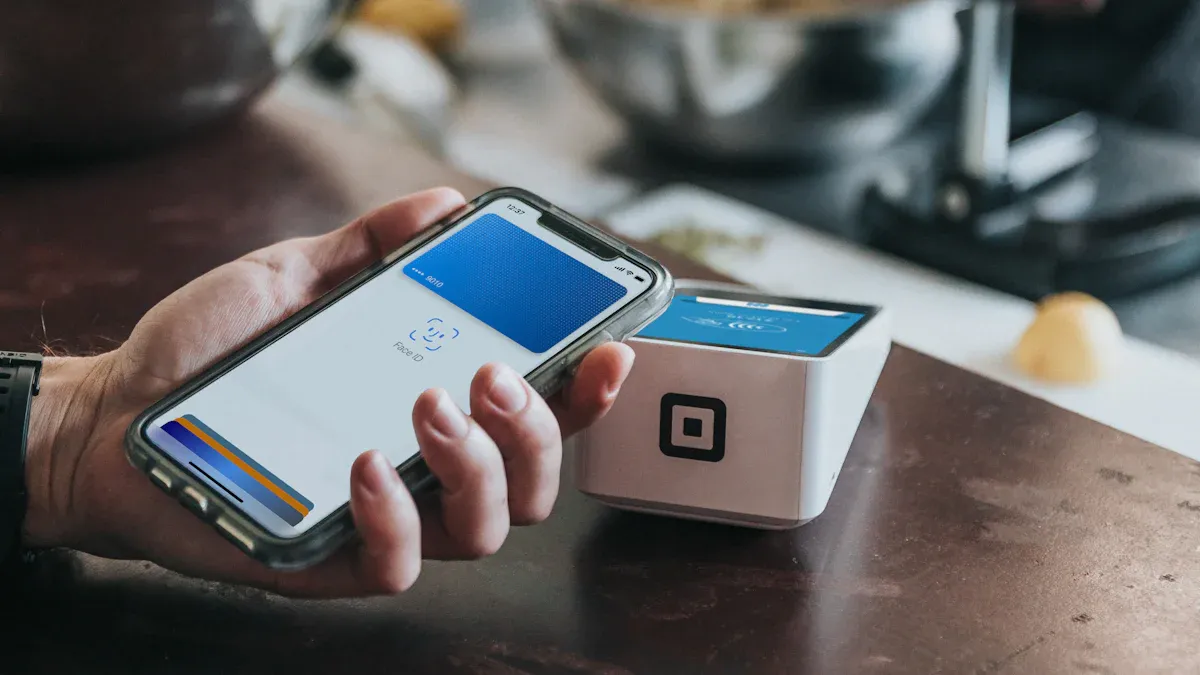
Image Source: unsplash
Definition of Virtual Credit Card
You can think of a virtual credit card as the digital version of a regular credit card. It exists only electronically and typically includes a 16-digit card number, CVV, and expiration date. Virtual credit cards have no physical card and are mainly used for online or remote payments. When applying, you can generate a virtual card number through fintech platforms or banking apps and set spending limits and expiration dates. Virtual credit cards are widely used in cryptocurrency spending scenarios, helping you achieve fast and secure payment experiences.
If your focus is not only whether a card can be used for spending, but also whether the application process is simple and the payment flow is easy to manage afterward, BiyaPay Virtual Card application can also be viewed as a supplementary option. It fits more naturally into the context of online payments and cross-border spending management: prepare a usable virtual card first, then decide how you want to arrange the actual funding method.
From a practical use perspective, BiyaPay works as a multi-asset wallet covering common scenarios such as cross-border payments, fund management, and trading. For users who often deal with subscriptions, online checkouts, or temporary card replacement, having one more virtual card entry ready in advance is usually more practical than looking for an alternative at the payment page.
Crypto Spending Process
When using a virtual credit card for cryptocurrency spending, you usually need to complete the following steps:
- Log in to your bank or fintech app.
- Navigate to the “Cards” or “Virtual Cards” section.
- Generate a virtual credit card.
- Set spending limits, usage purpose, and expiration date.
- Use it immediately for online shopping or payments.
You can use virtual credit cards on major e-commerce platforms, subscription services, and international payment scenarios in the US market. Some virtual credit cards support automatic multi-currency conversion, helping you quickly convert cryptocurrency to USD and improve transaction efficiency. You don’t need to worry about physical card loss or fraud risks, making the transaction process more secure.
Differences from Traditional Credit Cards
When choosing a virtual credit card for cryptocurrency spending, you can focus on the core differences from traditional credit cards:
| Feature | Virtual Credit Card | Traditional Credit Card |
|---|---|---|
| Security | Dynamic card numbers reduce fraud risk | Static card numbers are vulnerable to attacks |
| Transaction Processing | Online-only payments, fast and convenient | Can be used for both offline and online payments, longer processing time |
| Risk Management | One-time numbers expire after transaction, preventing data theft | Card number theft may lead to financial loss |
You can see that virtual credit cards use dynamic card numbers and one-time number mechanisms to significantly improve security. Traditional credit cards, due to static card numbers, are more prone to theft and higher risk. Virtual credit cards are mainly used for online payments with fast transaction processing, making them suitable for cryptocurrency spending scenarios. In actual use, you can choose the more suitable payment tool based on your needs to ensure fund safety.
Card Breakdown
Nexo Card
When using the Nexo virtual credit card in the US market, you can enjoy different cashback rates based on membership tiers. Nexo supports BTC and NEXO cashback options, with rates increasing with membership level. At the base membership level, you get 0.1% BTC cashback or 0.5% NEXO cashback; Platinum members get 0.5% BTC cashback or 2% NEXO cashback. The Nexo Card charges a 0.2% conversion fee for EEA, UK, or Swiss currency transactions and 2% for other currencies. You can refer to the table below for the specific cashback structure:
| Membership Tier | BTC Cashback | NEXO Cashback |
|---|---|---|
| Base | 0.1% | 0.5% |
| Silver | 0.2% | 0.7% |
| Gold | 0.3% | 1% |
| Platinum | 0.5% | 2% |
You can visually compare the cashback rates across membership tiers through the chart below:
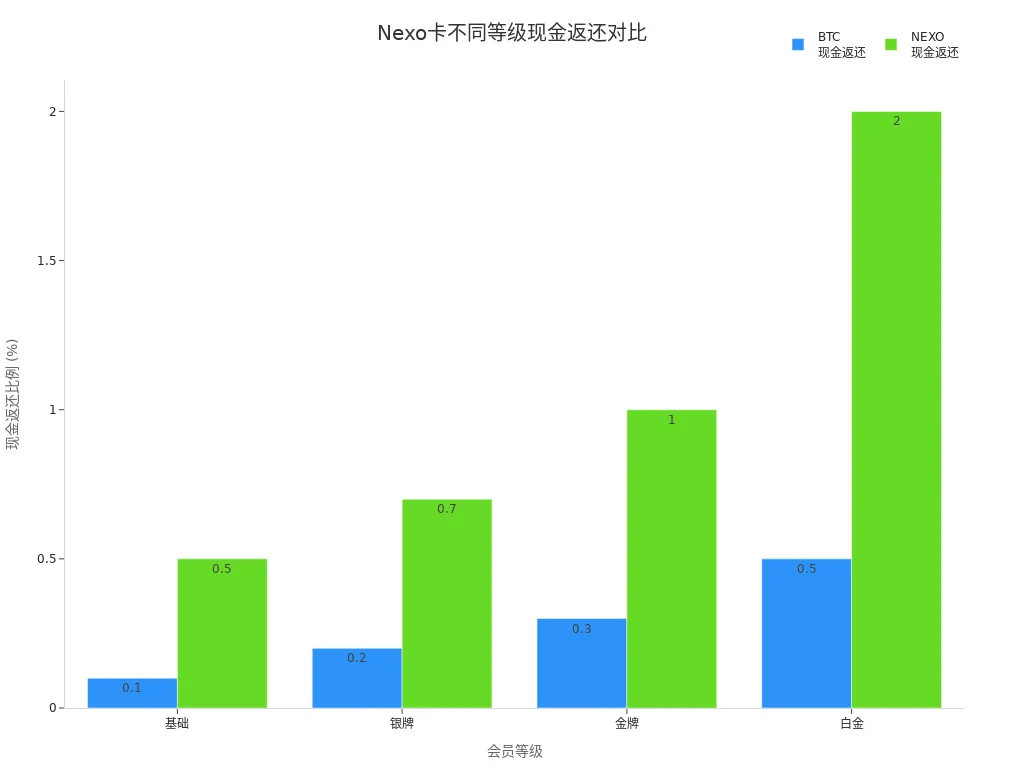
The Nexo Card supports multi-currency spending with a transparent cashback structure, suitable for users pursuing high cashback and low fees in cryptocurrency spending scenarios.
DogPay Dog Card
You can choose the DogPay Dog Card for cryptocurrency spending, especially suitable for users who like DOGE. DogPay supports major coins such as DOGE, BTC, and ETH, automatically converting to USD at the time of spending. You don’t need to worry about price volatility as the system locks the exchange rate in real time. The DogPay card has a simple application process, supports online generation of virtual card numbers, and is suitable for e-commerce, subscriptions, and daily payments in the US market. You can manage card limits and transaction history through the DogPay app to enhance fund security.
Ether.fi Cash Card
The Ether.fi Cash Card provides you with high limits and flexible spending experience. You can enjoy different daily spending limits and fiat ↔ crypto transfer limits based on tier. Core tier offers a $30,000 daily spending limit, Luxe $50,000, Pinnacle $100,000, and VIP allows custom limits. ATM withdrawals are capped at $250 per transaction with a maximum of 3 attempts per 24 hours. You can refer to the table below for specific limits:
| Limit Type | Amount |
|---|---|
| Daily spending limit | Core: $30,000 Luxe: $50,000 Pinnacle: $100,000 VIP: Custom limit |
| ATM withdrawal limit | $250 per withdrawal; maximum 3 attempts per 24 hours |
| Fiat ↔ crypto transfer limit | Core: $10K/month Luxe: $50K/month Pinnacle: $200K/month VIP: Custom limit |
The Ether.fi Cash Card is supported in regions including Hong Kong, South Korea, Taiwan, Thailand, Brazil, Argentina, UAE, and Switzerland. Some US states are restricted, and some countries are completely prohibited. When applying, you need to pay attention to regional policies to ensure compliant use. The card is suitable for high-frequency spending and large transfer needs with flexible management and is ideal for international payment scenarios.
Xapo Bank Card
When using the Xapo Bank virtual credit card, you can enjoy multiple layers of security protection. Xapo Bank adopts multi-factor authentication and transaction alerts to protect your card security. You can easily freeze, replace, and manage cards through the Xapo Bank app. The platform uses advanced multi-signature technology and offline cold storage to protect Bitcoin assets, with geographic distribution of assets reducing theft or loss risks. During cryptocurrency spending, your fund security is fully protected, making it suitable for users with high security needs.
- Multi-factor authentication and transaction alerts
- In-app freeze, replace, and manage cards
- Multi-signature technology and offline cold storage
- Geographic distribution of assets reduces risk
Coinbase Card
You can apply for a virtual credit card through the Coinbase platform with a clear and efficient process. You need to register an account on Coinbase.com or the mobile app and complete KYC identity verification (passport, address, selfie). Go to the “Card” section, click “Apply Now” or “Join Waitlist.” Once approved, you can immediately receive a virtual card, with the physical card delivered within 10 days in the US. You need to fund the account by adding funds via bank transfer or other methods. Finally, activate the card through the app or web interface. The Coinbase Card supports multi-currency spending and is suitable for US market users. The application process is as follows:
- Register an account and complete KYC identity verification
- Go to the “Card” section to apply
- Receive virtual card after approval
- Fund the account
- Activate the card
You can quickly complete the application and enjoy convenient cryptocurrency spending experience.
Crypto.com Card
The Crypto.com virtual credit card provides you with a transparent fee structure and multiple benefits. There are no annual or monthly fees, and no transaction fees for in-store, online, or contactless purchases. Foreign currency transactions enjoy interbank exchange rates by tier, with 0.5% charged beyond limits. Monthly free ATM withdrawal limits range from $200–$1,000, with 2% charged beyond that. The first card is issued free, and replacement cards may incur fees. You can refer to the table below for specific fee details:
| Fee Type | Details |
|---|---|
| Annual/monthly fee | None |
| Transaction fee | None |
| Foreign currency fee | None; 0.5% charged beyond limit |
| ATM withdrawal fee | Monthly free withdrawal limit; 2% beyond limit |
| Card issuance fee | First card free |
| Hidden fees | Inactivity fee after 12 months in some regions |
The Crypto.com Card is suitable for users seeking low fees and high benefits, supports multi-currency spending, offers flexible management, and is ideal for international payments and daily spending scenarios.
Bybit Card
You can choose the Bybit virtual credit card for cryptocurrency spending. The Bybit Card supports major coins such as BTC, ETH, and USDT, automatically converting to USD at the time of spending. You don’t need to worry about exchange rate fluctuations as the platform provides real-time conversion. The Bybit Card has a simple application process and supports online generation of virtual card numbers, making it suitable for e-commerce, subscriptions, and daily payments in the US market. You can manage card limits and transaction history through the Bybit app to enhance fund security. The Bybit Card is suitable for users with high-frequency spending and multi-currency needs.
Bitget Card
The Bitget virtual credit card provides you with multi-currency support and flexible management features. You can use major coins such as BTC, ETH, and USDT for spending, with the platform automatically converting to USD. The Bitget Card supports online generation of virtual card numbers with an efficient application process. You can set spending limits and manage transaction history through the Bitget app to ensure fund safety. The Bitget Card is suitable for users seeking high efficiency and multi-currency spending, applicable to the US market and international payment scenarios.
Wirex Card
The Wirex virtual credit card provides you with a global cryptocurrency spending experience. There is no annual fee, and forex fees are zero. Up to $200 of free ATM withdrawals per month, with 2% charged beyond that. Conversion from cryptocurrency to fiat incurs a 1% fee. You can refer to the table below for the specific fee structure:
| Item | Details |
|---|---|
| Annual fee | No annual fee |
| Forex fee | No forex fee |
| Free ATM withdrawal | Up to $200 per month; 2% beyond limit |
| Crypto conversion fee | 1% |
| Geographic restrictions | Services and features vary by country |
| Customer support | Customer support response is slow and needs improvement |
| Hidden fees | Crypto conversion spread fee approximately 1% |
The Wirex Card supports multi-currency spending with a transparent fee structure, suitable for international payments and travel scenarios. You can manage the card through the Wirex app, monitor balances and transaction history in real time.
Redotpay Card
The Redotpay virtual credit card provides you with multi-currency support and global acceptance. You can use four major cryptocurrencies—BTC, ETH, USDT, and USDC—with automatic conversion to local fiat currency at the time of spending to ensure stability. After completing KYC, you can get an instant virtual card, and the physical card is suitable for in-store shopping, ATM withdrawals, and travel. Redotpay requires no pre-funding and allows you to spend directly from a linked crypto wallet. As a Mastercard, Redotpay is accepted at millions of merchants worldwide, suitable for frequent travelers and digital nomads. You can check balances, track transactions, and control the card (freeze or unfreeze) in real time through the Redotpay app. The platform enforces KYC and AML verification, integrates two-factor authentication (2FA), and protects payment data through network encryption. In cryptocurrency spending scenarios, your fund security and management experience are fully protected.
| Feature | Description |
|---|---|
| Multi-currency support | BTC, ETH, USDT, USDC; automatic conversion to local fiat |
| Virtual and physical card options | Instant virtual card after KYC; physical card for in-store, ATM, and travel |
| No pre-funding required | Spend directly from crypto wallet |
| Global acceptance | Mastercard accepted at millions of merchants worldwide |
| Flexible mobile app management | Real-time balance check, transaction tracking, card control |
| Security features | Mandatory KYC and AML verification, two-factor authentication, network encryption |
You can choose the virtual credit card that suits your needs to enhance the convenience and security of cryptocurrency spending.
Pros and Cons Comparison (Crypto Spending Perspective)
Currency Support and Spending Methods
When choosing a virtual credit card, currency support and spending methods are core considerations. Mainstream cards such as Binance Card, Wirex Card, and Nexo Card all support multiple cryptocurrencies, meeting your diversified payment needs in the US market. Some cards allow direct spending from crypto wallets, while others use automatic conversion mechanisms. The table below shows the currencies and spending methods of major cards:
| Card Name | Supported Cryptocurrencies | Spending Method |
|---|---|---|
| Binance Card | Multiple digital assets | Direct spending from Binance wallet |
| Wirex Card | Multiple cryptocurrencies | Physical and virtual card spending |
| Nexo Card | BTC, NEXO, etc. | Credit mode and debit mode |
You can see that Binance Card suits users seeking direct cryptocurrency spending, Wirex Card balances physical and virtual scenarios, and Nexo Card offers flexible credit and debit modes suitable for different spending needs.
Cashback and Fees
Cashback rewards and fee structures directly affect your cryptocurrency spending costs. Nexo Card offers up to 2% cashback, Trustee Card has an issuance fee of USD10 (promotional USD5), with a daily spending limit of USD5,000 and monthly limit of USD50,000. Wirex Card has no issuance fee and offers cashback rewards in the form of Cryptoback. You can refer to the table below for comparison:
| Card Name | Cashback Rate | Issuance Fee | Daily Spending Limit | Monthly Spending Limit |
|---|---|---|---|---|
| Nexo Card | Up to 2% | N/A | N/A | N/A |
| Trustee Card | N/A | USD10 (promotional USD5) | USD5,000 | USD50,000 |
| Wirex Card | N/A | N/A | N/A | N/A |
When actually choosing, prioritize cards with high cashback rates and transparent fees to enhance the overall payment experience.
Regional Coverage and Withdrawal Features
Regional coverage and ATM withdrawal features determine whether you can use virtual credit cards smoothly worldwide. Crypto.com Visa Card covers more than 200 countries and supports ATM withdrawals. BitPay Crypto Debit Card is accepted at over 100 million merchants and supports ATM withdrawals. Wirex Visa Card covers over 61 million locations and also supports ATM withdrawals. You can refer to the table below:
| Virtual Credit Card | Regional Coverage | ATM Withdrawal Option |
|---|---|---|
| Crypto.com Visa Card | Over 200 countries | Supports ATM withdrawals |
| BitPay Crypto Debit Card | Over 100 million merchants | Supports ATM withdrawals |
| Wirex Visa Card | Over 61 million locations | Supports ATM withdrawals |
In the US market and international travel scenarios, prioritize cards with wide regional coverage and comprehensive ATM functions to ensure fund liquidity.
User Experience and Security
In the cryptocurrency spending process, user experience and security are equally important. Mainstream virtual credit cards generally adopt multi-factor authentication, dynamic card numbers, real-time transaction alerts, and other security measures. You can manage card limits, freeze cards, and monitor transaction history in real time through mobile apps. Some cards like Nexo Card and Wirex Card support automatic conversion and cashback rewards, improving payment convenience. In actual operation, pay attention to the platform’s KYC and AML compliance requirements to ensure fund safety. Overall, virtual credit cards bring you efficient, convenient, and transparent cryptocurrency spending experiences, but you need to be cautious of exchange rate fluctuations and platform security risks and plan fund usage reasonably.
Selection Recommendations (Crypto Spending Needs)
Currency Preference
When choosing a virtual credit card, first focus on the types of cryptocurrencies supported. Different cards vary in the number of supported currencies and reward mechanisms. For example, the Gemini Credit Card supports over 50 cryptocurrencies, suitable for users with diverse asset holdings, and offers 3-4% high rewards. The Crypto.com Prepaid Card suits high-net-worth users, requiring staking funds, with rewards up to 5-8% and additional benefits such as airport lounge access. The Bybit Card requires no staking and offers rewards up to 8-10%, suitable for high-spending users. You can prioritize cards that support your held coins and offer rich rewards based on your asset holdings and spending habits.
Region and Use Case
You need to confirm whether the card is available in your commonly used regions. Mainstream virtual credit cards in the US market, such as Gemini Card, Wirex Card, and Crypto.com Visa Card, all support global spending, suitable for international payments and travel scenarios. Some cards like Bleap Mastercard and MetaMask Card have different fees and ATM policies in different regions. You should choose cards with wide coverage and multiple applicable scenarios based on your travel and spending needs to ensure smooth cryptocurrency spending.
Fees and Rewards
When comparing virtual credit cards, be sure to focus on fee structures and reward mechanisms. The table below shows fees and rewards for some mainstream cards:
| Card | Type | Main Rewards | Fee Overview | Notes |
|---|---|---|---|---|
| MetaMask Card | Debit card | 3% cashback at Metal tier | No monthly fee for virtual, $199 annual for Metal | Integrated with MetaMask wallet, global benefits |
| Bleap Mastercard | Debit card | Stablecoin cashback | No monthly fee for core; forex and ATM vary by region | MPC model, stablecoin rewards |
| Gemini Card | Credit card | Category rewards | No annual fee | US market credit card, paid via custodial exchange |
| Crypto.com Visa Card | Prepaid card | Tiered rewards | Forex and card fees by tier and region | Multi-tier staking platform token |
| Nexo Card | Collateralized credit line | Single cashback | Interest and fees vary by LTV and loyalty tier | Crypto collateral to draw credit line |
You can prioritize cards with high rewards, transparent fees, and no hidden costs to enhance the overall payment experience.
Personalized Needs
When selecting a card, also consider personalized factors, including supported cryptocurrencies, fee structure, geographic availability, and security features. Ensure the card supports your held digital assets and carefully review issuance fees, monthly maintenance fees, and forex transaction fees. Check whether the card provider operates in your country or region. Prioritize cards with multi-factor authentication, dynamic card numbers, real-time transaction alerts, and other security measures. You can customize the most suitable virtual credit card solution based on your asset structure, spending scenarios, and security needs to achieve efficient and convenient cryptocurrency spending.
Security Considerations and Usage Tips
Risk Prevention
When using virtual credit cards for cryptocurrency spending, you must prioritize risk prevention. Virtual credit cards effectively reduce the impact of merchant data leaks by limiting the exposure of real payment credentials. Each virtual card has a unique number, significantly reducing data breach and unauthorized charge risks. You can isolate each transaction to make building personal profiles and exploiting fraud less useful, enhancing overall security. Virtual credit cards are usually linked to verified identities and comply with KYC and AML rules to ensure transaction compliance. The table below shows major security features and their importance:
| Feature | Description | Importance |
|---|---|---|
| Limiting exposure of real payment credentials | Virtual credit cards protect users by limiting exposure of real payment credentials. | Reduces impact of merchant leaks |
| Transaction isolation | Aims to make each transaction less useful for building personal profiles and exploiting fraud. | Improves privacy and security |
| KYC/AML rules | Virtual credit cards are usually linked to verified identities, limiting anonymity. | Compliance with Know Your Customer and Anti-Money Laundering |
You can effectively reduce security risks in the cryptocurrency spending process through these measures.
Privacy Protection
In cryptocurrency spending scenarios, privacy protection is especially important. The following measures can help you enhance transaction privacy:
- Use privacy coins, which provide transaction anonymity by default.
- Choose self-custody wallets to ensure you control private keys, enhancing security and privacy protection.
- Understand the transparency of cryptocurrencies and avoid using transparent blockchain coins for private transactions.
Virtual credit cards offer additional privacy features, suitable for separating purchases from your main bank or credit card statements. You can reduce data breach risks and protect personal information through independent virtual card numbers.
Safe Usage Tips
When actually using virtual credit cards, you can adopt the following safety tips:
It is recommended to regularly replace virtual card numbers and avoid long-term use of the same number. You can set spending limits to prevent large amounts from being stolen. Enable multi-factor authentication to enhance account security. Monitor transaction history in real time through mobile apps to promptly detect unusual spending. Understand the platform’s KYC and AML requirements to ensure all operations are compliant. When spending cryptocurrency in the US market, be sure to choose safe and reliable platforms to avoid fund losses due to platform vulnerabilities.
You can improve the security and user experience of virtual credit cards through these methods and protect the safety of funds and privacy.
When choosing virtual credit cards in the US market, prioritize cards that support multiple currencies, offer high cashback, transparent fees, and global applicability. Nexo Card, Wirex Card, and Crypto.com Card stand out in terms of security, reward mechanisms, and user experience, suitable for multi-scenario cryptocurrency spending. You need to rationally select the most suitable card based on your asset structure, spending regions, and fund flow needs. This article’s recommended list provides authoritative references to help you make efficient decisions. You should continuously monitor platform security measures to ensure fund safety.
FAQ
What materials are required to apply for a virtual credit card?
You need to prepare valid ID documents, proof of address, and an email address. Some platforms require you to upload a selfie to complete KYC verification. Ensure all information is authentic and valid to pass the review smoothly.
How do virtual credit cards for cryptocurrency spending ensure fund safety?
You can enhance security by enabling multi-factor authentication, setting spending limits, and monitoring transactions in real time. Mainstream platforms use encrypted transmission and dynamic card number technology to effectively prevent information leaks and fraud.
Which currencies do mainstream virtual credit cards in the US market support?
You can choose virtual credit cards that support major coins such as BTC, ETH, USDT, and USDC. Some platforms support even more currencies; refer to the official announcement for details. Choose the appropriate card based on your asset structure.
Are there handling fees for virtual credit card spending?
When using virtual credit cards for spending, some platforms charge 1% to 3% cryptocurrency conversion fees. Some cards offer free quotas, with fixed percentage handling fees charged beyond that. Carefully read the fee schedule.
Can virtual credit cards be used globally?
You can use most mainstream virtual credit cards worldwide, especially those with Visa or Mastercard branding. Some regions and countries have restrictions; check the applicable scope in advance.
*This article is provided for general information purposes and does not constitute legal, tax or other professional advice from BiyaPay or its subsidiaries and its affiliates, and it is not intended as a substitute for obtaining advice from a financial advisor or any other professional.
We make no representations, warranties or warranties, express or implied, as to the accuracy, completeness or timeliness of the contents of this publication.
Related Blogs of

How Is China’s Memory Supply Chain Different from Overseas Memory Leaders? A Comparison with Micron, SanDisk, Western Digital, and Seagate


How to Read Pure Storage and NetApp Earnings? ARR, Cloud Revenue, Gross Margin, and Cash Flow Metrics


Why Is Western Digital’s Gross Margin Changing? Nearline HDDs, Long-Term Pricing, and Cloud Customer Demand


How Does NAND Price Increase Affect SanDisk? Enterprise SSDs, Consumer Storage, and Margin Leverage
Choose Country or Region to Read Local Blog
 Australia
 Austria
 Belgium
 Canada
 Cyprus
 Czech Republic
 Denmark
 Estonia
 Finland
 France
 Germany
 Greece
 Hong Kong
 India
India Indonesia
 Ireland
 Italy
Italy Japan
Japan Latvia
 Lithuania
 Luxembourg
 Malaysia
 Malta
Malta Morocco
 Nepal
Nepal Netherlands
 New Zealand
 Norway
 Pakistan
 Philippines
 Poland
 Portugal
 Romania
 Singapore
 Slovakia
 Slovenia
 South Africa
 South Korea
 Spain
Spain Sweden
 Thailand
 The United States
 Turkey
 United Arab Emirates
 United Kingdom
 Vietnam
Contact Us




BIYA GLOBAL LLC is registered with the Financial Crimes Enforcement Network (FinCEN), an agency under the U.S. Department of the Treasury, as a Money Services Business (MSB), with registration number 31000218637349, and regulated by the Financial Crimes Enforcement Network (FinCEN).
BIYA GLOBAL LIMITED is a registered Financial Service Provider (FSP) in New Zealand, with registration number FSP1007221, and is also a registered member of the Financial Services Complaints Limited (FSCL), an independent dispute resolution scheme in New Zealand.