How Much Cash to Bring for a 2026 Trip to the US to Watch Sports Events? Large Cash Entry Declaration and Alternatives




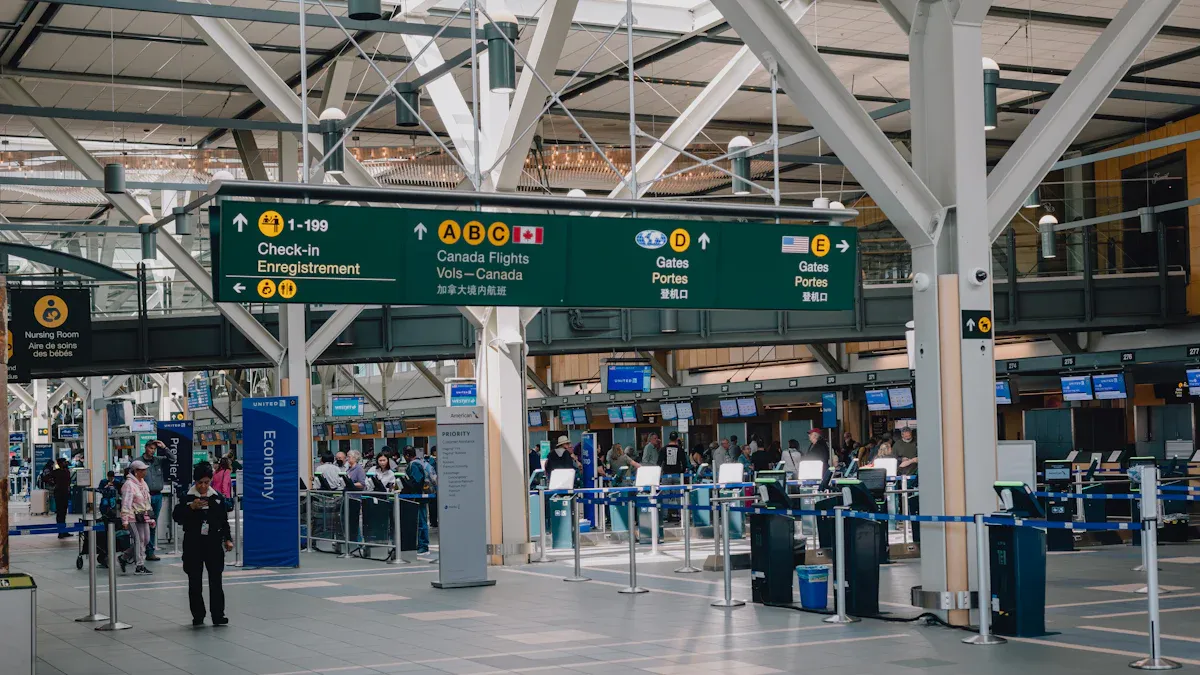
Image Source: unsplash
You are preparing for a trip to the US to watch sports events, and wondering how much cash is appropriate to bring? It is generally recommended to carry between USD 3,000 and USD 8,000 to cover daily expenses and emergency needs. If you are departing from mainland China, carrying cash exceeding USD 10,000 requires proactive declaration to U.S. Customs. This ensures the safety of your funds and complies with U.S. entry regulations. You can also consider alternative options to improve travel convenience.
Key Points
- It is recommended to carry USD 3,000 to USD 8,000 in cash to meet daily consumption and emergency needs while reducing the risks associated with carrying large amounts of cash.
- When carrying cash exceeding USD 10,000, you must proactively declare it to U.S. Customs to avoid risks of fines or cash confiscation.
- Understand the definitions of cash and monetary instruments to ensure all carried funds fall within the declaration scope and avoid legal issues.
- Consider alternatives such as UnionPay cards, credit cards, traveler’s checks, and prepaid cards to enhance fund safety and convenience.
- Plan your fund structure in advance and prepare relevant supporting documents to ensure smooth customs clearance and a worry-free trip.
Cash Carrying Recommendations for a Trip to the US to Watch Sports Events
Reasonable Cash Carrying Range
You are planning a trip to the US to watch sports events, and wondering how much cash is reasonable to carry? In fact, there is no absolute standard for the cash carrying range, but you can estimate it based on your personal spending habits and itinerary. Generally speaking, USD 3,000 to USD 8,000 can meet the daily consumption needs of most sports-watching trips, including dining, transportation, tickets, and some shopping. This range ensures flexible payment in the US market while reducing the risks of carrying large amounts of cash. If you plan to use cash for payments in the US market, it is recommended to plan your daily budget in advance to avoid unnecessary security risks from carrying excessive cash.
Professional advice: You can distribute cash in multiple locations to avoid centralized carrying and improve fund security. The US market widely supports bank cards and electronic payments, so cash is mainly used for small transactions or emergency situations.
If you are departing from mainland China, you also need to consider relevant Chinese regulations for outbound travel. Upon entry to the US, cash exceeding USD 10,000 must be declared. You can reasonably arrange the proportion of cash to other payment methods based on your needs to ensure both convenience and compliance with legal requirements.
Declaration Threshold and Recommendations
When traveling to the US to watch sports events, you must pay attention to U.S. Customs regulations regarding cash declaration. U.S. Customs explicitly requires all inbound travelers carrying cash and monetary equivalents exceeding USD 10,000 to proactively declare them. During declaration, you need to fill out the customs declaration form and specify the types and amounts of currency carried. If you fail to declare truthfully, you may face penalties such as fines, cash confiscation, or even entry prohibition.
- U.S. Customs regulations are as follows:
- All travelers entering the United States must declare cash and monetary equivalents exceeding USD 10,000 or equivalent foreign currency.
- Declaration requires filling out the customs declaration form, stating the types and amounts of currency carried.
- Failure to declare truthfully may result in fines, cash confiscation, or entry prohibition.
If you carry more than USD 10,000 in cash without declaration, the risk is extremely high. U.S. Customs has the authority to confiscate all undeclared cash, and in severe cases, you may face civil or criminal prosecution. Many people misunderstand the declaration rules, resulting in unnecessary legal consequences. When traveling to the US to watch sports events, be sure to understand the declaration process in advance, proactively comply with regulations, and protect your fund safety.
Friendly reminder: The declaration process is not complicated. As long as you fill out the form truthfully and cooperate with the inspection, you can clear customs smoothly and ensure the safety of your funds.
If the amount of cash you are carrying is close to the declaration threshold, it is recommended to proactively declare it to avoid violations due to amount discrepancies or exchange rate fluctuations. When traveling to the US to watch sports events, compliant declaration is not only a legal requirement but also key to protecting your own rights. You can flexibly choose a combination of cash and other payment methods based on actual needs to ensure a smooth journey.
Entry Cash Regulations
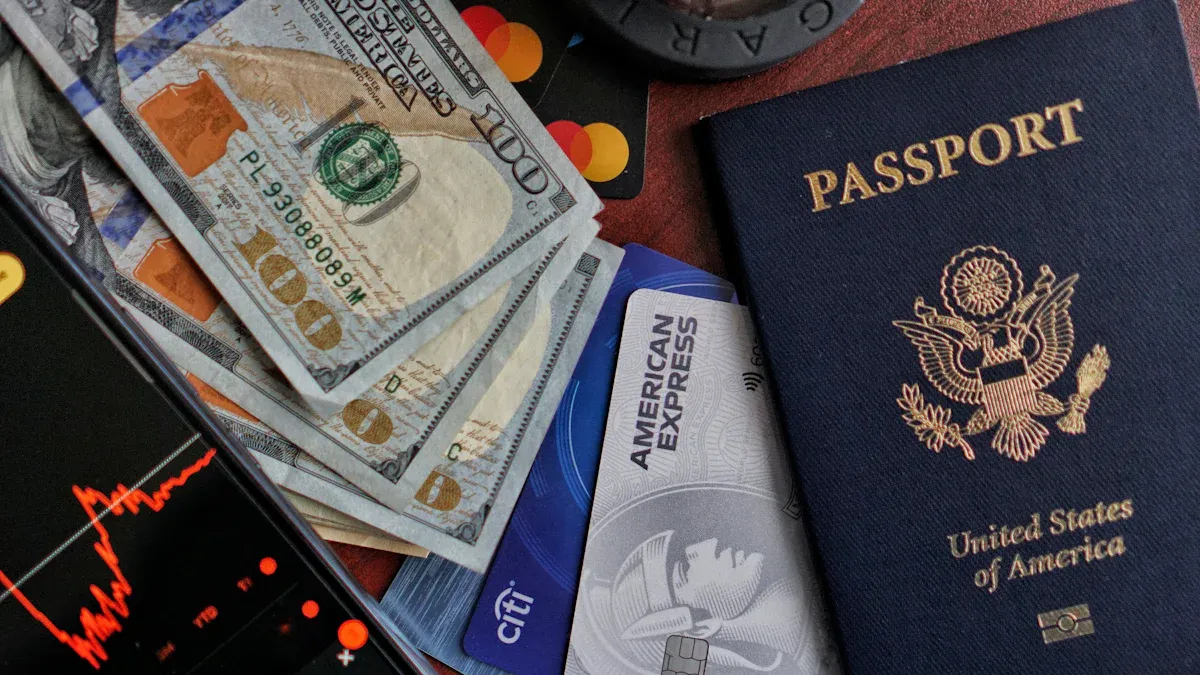
Image Source: pexels
Definitions of Cash and Monetary Instruments
When preparing for a trip to the US to watch sports events, you should first understand U.S. Customs definitions of cash and monetary instruments. U.S. Customs requires declaration not only of cash but also of various financial instruments. Specifically, these include:
- Cash: Coins and banknotes of the United States or other countries, as long as they circulate as legal tender, fall within the declaration scope.
- Traveler’s checks: Traveler’s checks in any form must be included in the total amount.
- Negotiable instruments: Such as promissory notes, bearer bonds, bills of exchange, bank drafts, and cash checks.
- Precious metals and coins: Rare or valuable coins, as well as precious metals considered as currency.
- Securities or stocks: Securities or stocks held in bearer form.
- Incomplete instruments: Such as signed but payee-unsigned checks and promissory notes.
- Certain types of prepaid access devices, such as preloaded debit cards.
Upon entry, the total value of all the above items must be calculated and none may be omitted.
Scope of Application of the Declaration Threshold
U.S. Customs regulations state that when an individual or group carries cash and monetary instruments totaling more than USD 10,000, they must declare truthfully. This declaration threshold applies not only to cash but also to all equivalent foreign currency and financial instruments. You need to fill out FinCEN Form 105 and report the carried amount and types to Customs. You cannot evade the declaration requirement by splitting cash among different individuals. U.S. Customs explicitly prohibits such behavior to prevent money laundering and other illegal activities.
If you fail to declare truthfully, the consequences are very serious. Customs has the authority to confiscate all undeclared funds and may impose high fines or even criminal charges. Your Global Entry program status may also be revoked as a result. When traveling to the US to watch sports events, be sure to understand and comply with these regulations in advance to avoid unnecessary losses.
Tip: The declaration process is not complicated. As long as you fill out the form truthfully and cooperate with the inspection, you can clear customs smoothly and ensure the safety of your funds.
Declaration Instructions for Families/Groups
If you are traveling to the US to watch sports events with family or friends, note that the declaration threshold is calculated based on the total group amount, not per individual. As long as the total cash and monetary instruments carried by all group members exceeds USD 10,000, declaration is required. During declaration, one person should represent the group to fill out FinCEN Form 105 and prepare to undergo Customs inspection.
- The declaration threshold applies to the combined total for families or groups
- Declaration cannot be evaded by distributing among individuals
- The declaration process is unified, and materials must be filled out truthfully
As long as you prepare the relevant materials in advance and proactively declare, you can smoothly pass through U.S. Customs and enjoy your sports-watching trip with peace of mind.
Declaration Process and Precautions
Declaration Form and How to Obtain It
When planning a trip to the US to watch sports events and carrying large amounts of cash, you should first understand how to obtain and fill out FinCEN Form 105. U.S. Customs requires any traveler carrying more than USD 10,000 or equivalent monetary instruments to submit FinCEN Form 105 to Customs officers upon entry or departure. You have three convenient ways to obtain and complete this form:
- You can fill out and submit the form online through the U.S. Customs and Border Protection (CBP) official website’s FinCEN Form 105 site.
- You can also download and print FinCEN Form 105 in advance, complete it beforehand, and submit it directly to Customs officers upon arrival in the US.
- If you have not prepared in advance, you can obtain a paper form on-site at the CBP office at the airport or port of entry, fill it out, and submit it.
Regardless of which method you choose, it is recommended to familiarize yourself with the form’s content in advance to ensure accurate information. The form mainly includes your personal information, details of the carried currency or monetary instruments, source and purpose of funds, etc. Filling it out truthfully can greatly improve customs clearance efficiency and reduce unnecessary trouble.
Tip: If you are unsure whether declaration is required, it is recommended to proactively consult Customs officers to avoid violations due to oversight.
Declaration Steps
When actually declaring, you can follow these steps:
- Fill out FinCEN Form 105
You need to completely fill out FinCEN Form 105 before entering or departing the United States. The form includes your name, contact information, types and amounts of carried currency or monetary instruments, source and purpose of funds, etc. You can choose to fill it out online, print a paper form in advance, or complete it on-site at the port of entry. - Prepare relevant supporting documents
It is best to carry materials proving the source of funds, such as bank withdrawal slips, financial institution certification letters, etc. These materials can help you smoothly explain the source of funds and reduce Customs inquiries. - Proactively declare at the port of entry
Upon arrival in the US, you need to proactively submit FinCEN Form 105 to CBP officers at the Customs inspection point. Officers may inquire about relevant details or request you to present cash and supporting documents. - Cooperate with Customs inspection
You must truthfully answer questions from Customs officers and cooperate with cash inspection. As long as your materials are complete and declaration is truthful, the entire process is usually very smooth. - Complete declaration and properly retain receipts
After declaration, Customs will stamp or issue a receipt on your form. You should properly retain it for future verification.
As long as you follow the above process, you should encounter no major issues. U.S. Customs officers are professionally trained and will assist you in completing the entire declaration process.
Common Issues and Risks
During the declaration process, common issues and risks mainly fall into the following categories:
- Many people mistakenly believe that no declaration is needed as long as each person carries less than USD 10,000, resulting in attempts to evade the threshold by distributing cash. U.S. Customs explicitly prohibits this behavior; the total amount for families or groups exceeding USD 10,000 must be declared.
- Some people fill out the form inaccurately or deliberately underreport amounts. Once discovered, Customs has the authority to confiscate all cash and may impose high fines or even criminal charges.
- If you do not prepare proof-of-funds materials, Customs may require additional explanations, affecting clearance efficiency.
- During declaration, never change the declared amount or conceal part of the cash at the last minute. U.S. Customs is extremely strict in inspecting cash declarations, and any false declaration may bring serious consequences.
Note: You must truthfully declare cash or monetary instruments exceeding USD 10,000 upon entry or departure. Violations not only lead to fund confiscation but may also affect your eligibility for future entry into the United States.
If this is your first trip to the US to watch sports events, it is recommended to familiarize yourself with the declaration process in advance and prepare all materials. As long as you comply with regulations, the entire declaration process is actually very simple. You can view declaration as a necessary step to protect your own rights rather than a burden.
Alternatives for Funds When Traveling to the US to Watch Sports Events

Image Source: unsplash
Use of UnionPay Cards and Credit Cards
When watching sports events in the US, UnionPay cards and international credit cards (such as Visa and Mastercard) are the most commonly used payment tools. UnionPay cards have an acceptance rate exceeding 80% in major U.S. cities and large commercial areas, but coverage remains limited in some small merchants and remote regions. Visa and Mastercard are accepted almost everywhere, performing particularly well at sports venues, hotels, and online ticketing platforms. If you hold a Visa card, you can also enjoy priority access during 2026 World Cup ticket presales, providing great convenience for ticket purchasing.
If you want to reduce the amount of cash you carry even further, a more practical setup is usually a combination of limited cash, an international card, and one backup payment tool. Before departure, you can use BiyaPay’s exchange rate comparison tool to review your USD conversion cost, then reserve budget for hotel pre-authorizations, match tickets, transport, and incidental spending. In many cases, this is easier to manage than relying too heavily on cash alone.
For payment preparation, you can also review options such as applying for a virtual card as an additional tool for cross-border online payments or emergency backup use. BiyaPay is positioned as a multi-asset wallet covering cross-border payments, asset conversion, and fund management, which makes it suitable for pre-trip budgeting and payment planning. Once you actually enter the U.S., however, compliance with declaration rules, split storage of funds, and a clear payment path should still remain the priority.
| Type | Advantages | Disadvantages |
|---|---|---|
| UnionPay Card | Low fees, RMB settlement, chip security | Limited coverage, some merchants do not accept, poor online payment compatibility |
| Visa Card | High global coverage, convenient online payments, multi-currency support | Higher overseas consumption fees, exchange rate fluctuation risk |
You can consider binding UnionPay cards through third-party payment platforms such as Biyapay to achieve broader online and offline payment coverage and enhance fund flexibility and security.
Traveler’s Checks and Prepaid Cards
Traveler’s checks and prepaid cards provide alternatives to traditional cash. Traveler’s checks help you avoid exchange rate fluctuations and protect your main account, suitable for users with strict budget management. Prepaid cards support multi-currency top-ups, making flexible consumption in the US market convenient. You can use multi-currency prepaid cards issued by Hong Kong licensed banks to lock in exchange rates in advance and reduce fund management difficulty.
| Advantages | Disadvantages |
|---|---|
| Avoid exchange rate fluctuations | May incur fees |
| Multi-country acceptance | ATM withdrawal fees |
| Account security | Limited coverage |
| Easy expense tracking | Limited support for certain currencies |
When selecting prepaid cards, it is recommended to focus on fee structures and ATM withdrawal policies and plan usage scenarios reasonably.
International Remittances and Third-Party Payments
If you need to allocate large amounts of funds, you can choose international remittances or third-party payment platforms. Platforms such as Biyapay support real-time multi-currency arrival, suitable for temporary fund replenishment or emergency needs. Mainstream international remittance platforms such as Remitly, OFX, Skrill, and WorldRemit all support cash pickup, bank arrival, and mobile operations. You can also enjoy lower fees and higher transparency through cross-border remittance services from Hong Kong licensed banks.
| Platform | Advantages | Disadvantages |
|---|---|---|
| Remitly | Cash pickup, fast arrival, 24/7 customer service | Limited payment countries, exchange rates vary by service type |
| OFX | No transfer fees, favorable rates, 24/7 support | High minimum transfer amount, third-party bank fees unclear |
| Skrill | Peer-to-peer receipts, prepaid cards, personal/merchant accounts | Multiple fees, lengthy verification process |
| WorldRemit | Multiple transfer methods, online operation | Not all services available in all locations |
| PayPal | Widely accepted, buyer/seller protection | High international transfer and currency conversion fees |
When selecting a platform, you should consider arrival speed, fee structure, and service coverage to ensure efficient and secure fund allocation.
Comparison of Alternatives
When traveling to the US to watch sports events, choosing the right fund carrying and payment methods is crucial. UnionPay cards and Visa cards are suitable for daily consumption and ticket purchases, prepaid cards and traveler’s checks are suitable for budget management and account security, and international remittances and third-party payment platforms are suitable for large fund allocation and emergency needs. New payment platforms such as Biyapay can provide you with comprehensive solutions featuring multi-currency support, low fees, and high security.
It is recommended that you flexibly combine multiple payment methods based on your needs. Use credit cards and prepaid cards for daily consumption and supplement large amounts through international remittances or third-party platforms. This not only ensures fund safety but also improves travel convenience, allowing you to enjoy your US sports-watching trip without worries.
Risks of Non-Compliance and Common Misconceptions
Legal Consequences of Non-Declaration
If you fail to truthfully declare carried cash or monetary instruments, the risks far exceed your expectations. U.S. Customs imposes extremely strict penalties for non-declaration. You may face confiscation of all undeclared cash, high fines, and even criminal liability. Many people mistakenly believe that declaration is unnecessary as long as each person carries less than USD 10,000, resulting in attempts to evade the threshold by distributing cash. U.S. Customs explicitly prohibits this behavior; the total amount for families or groups exceeding USD 10,000 must be declared.
| Event Type | Details |
|---|---|
| Daily cash confiscation total | Approximately USD 300,000 |
| Proportion of undeclared cash | Approximately 25% of total confiscated amount |
| Fines | Up to the full amount of undeclared funds |
| Criminal fines | USD 250,000 to USD 500,000 |
| Imprisonment | 5 to 10 years |
Once discovered and confirmed as non-declaration, you will lose all cash in minor cases and face criminal prosecution in severe cases, affecting personal credit and future entry eligibility.
Cash Seizure and Fines
U.S. Customs frequently inspects undeclared cash. If violations are found, all undeclared cash is usually confiscated immediately. Civil fines can reach up to 100% of the carried amount, while criminal fines range from USD 250,000 to USD 500,000, with severe cases possibly resulting in 5 to 10 years of imprisonment. You not only lose funds but may also leave a negative record, affecting future entry and financial activities.
- Civil fines: Confiscation of the full amount
- Fines: Up to the full amount of undeclared funds
- Criminal fines: USD 250,000 to USD 500,000
- Imprisonment: 5 to 10 years
You must attach great importance to cash declaration and never take chances.
Compliance Recommendations
To avoid non-compliance risks, you can follow these compliance suggestions:
- Understand the rules: You must clearly understand that the USD 10,000 declaration threshold applies to the total amount for individuals and groups and cannot be evaded by distribution.
- Plan in advance: You should calculate the total carried cash in advance, reasonably arrange each person’s carrying amount, and prepare for declaration.
- Consider alternatives: You can choose traveler’s checks, prepaid cards, or international remittances to reduce risks associated with carrying large amounts of cash.
- Carry supporting documents: You should carry proof of fund sources and purposes for timely explanation during Customs inspection.
As long as you strictly comply with regulations, proactively declare, and reasonably plan your fund structure, you can effectively avoid risks, protect fund safety, and smoothly begin your US sports-watching journey.
When planning a trip to the US to watch sports events in 2026, carrying cash reasonably is very important. It is recommended to keep cash between USD 3,000 and USD 8,000 to meet daily needs while reducing risks. As long as the total cash and monetary instruments you carry exceeds USD 10,000, you must proactively declare and follow U.S. Customs procedures. You can also combine multiple methods such as UnionPay cards, credit cards, prepaid cards, and international remittances to enhance fund safety and convenience. Compliant operations can effectively avoid legal risks and ensure a smooth trip. You should flexibly choose the most suitable fund management plan based on your own needs.
FAQ
How much cash is most appropriate to bring for a trip to the US to watch sports events?
You can consider carrying USD 3,000 to USD 8,000 in cash to meet daily consumption and emergency needs. Bank cards and electronic payments are widely accepted in the US market, so cash is mainly used for small payments or special scenarios.
How to declare cash exceeding USD 10,000?
You need to proactively fill out FinCEN Form 105 upon entry into the US and truthfully declare all cash and monetary instruments. The declaration process is simple; cooperate with Customs inspection to clear smoothly.
Are UnionPay cards and credit cards convenient in the US?
Visa and Mastercard credit cards are the most convenient for use in the US market. UnionPay cards have high acceptance in major cities and commercial areas, but some small merchants may not accept them.
What are the consequences of inaccurate cash declaration?
If you fail to declare truthfully, Customs has the authority to confiscate all cash and may impose high fines or criminal penalties. Compliant declaration can effectively protect your fund safety and entry rights.
What are some safe fund alternatives?
You can choose credit cards, prepaid cards, traveler’s checks, or international remittances. These methods are safe and convenient, reducing the risks of carrying large amounts of cash and suitable for various consumption scenarios in the US market.
*This article is provided for general information purposes and does not constitute legal, tax or other professional advice from BiyaPay or its subsidiaries and its affiliates, and it is not intended as a substitute for obtaining advice from a financial advisor or any other professional.
We make no representations, warranties or warranties, express or implied, as to the accuracy, completeness or timeliness of the contents of this publication.
Related Blogs of

How to Read NAND Contract Prices and Spot Prices? Why Enterprise SSDs and Consumer SSDs Do Not Move in Sync


Why Can’t HBM Exist Without Advanced Packaging? The Role of TSV, CoWoS, and Packaging Equipment


How Should You View Seagate’s HAMR Technology? Nearline HDD Capacity Upgrades and the Supply-Demand Cycle


How Does NAND Price Increase Affect SanDisk? Enterprise SSDs, Consumer Storage, and Margin Leverage

Choose Country or Region to Read Local Blog
 Australia
 Austria
 Belgium
 Canada
 Cyprus
 Czech Republic
 Denmark
 Estonia
 Finland
 France
 Germany
 Greece
 Hong Kong
 India
India Indonesia
 Ireland
 Italy
Italy Japan
Japan Latvia
 Lithuania
 Luxembourg
 Malaysia
 Malta
Malta Morocco
 Nepal
Nepal Netherlands
 New Zealand
 Norway
 Pakistan
 Philippines
 Poland
 Portugal
 Romania
 Singapore
 Slovakia
 Slovenia
 South Africa
 South Korea
 Spain
Spain Sweden
 Thailand
 The United States
 Turkey
 United Arab Emirates
 United Kingdom
 Vietnam
Contact Us




BIYA GLOBAL LLC is registered with the Financial Crimes Enforcement Network (FinCEN), an agency under the U.S. Department of the Treasury, as a Money Services Business (MSB), with registration number 31000218637349, and regulated by the Financial Crimes Enforcement Network (FinCEN).
BIYA GLOBAL LIMITED is a registered Financial Service Provider (FSP) in New Zealand, with registration number FSP1007221, and is also a registered member of the Financial Services Complaints Limited (FSCL), an independent dispute resolution scheme in New Zealand.