Can a U.S. Stock Account Be Used as Proof of Funds for a U.S. Tourist Visa (B1/B2) Application?




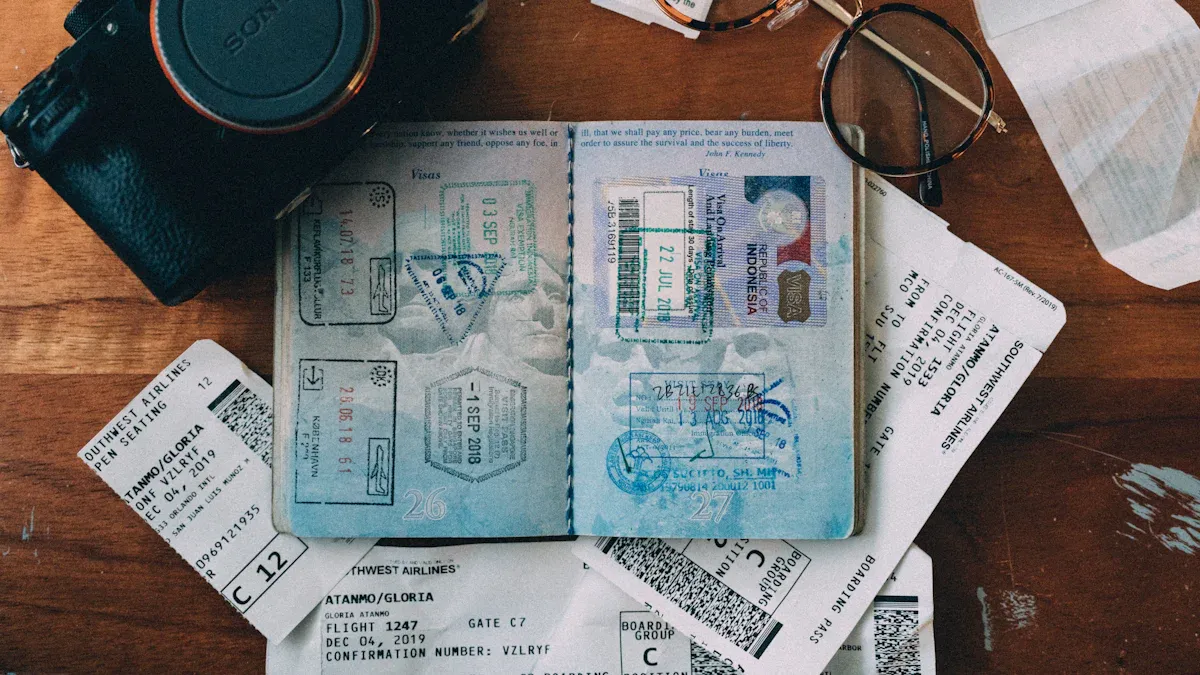
Image Source: unsplash
When preparing for a U.S. tourist visa application, you can use a U.S. stock account as one form of proof of funds. Consulates place greater emphasis on the stability and liquidity of assets. Submitting a U.S. stock account alone carries the risk of being questioned. It is recommended that you also prepare bank deposits and other types of asset proof at the same time. This approach allows you to more comprehensively demonstrate your financial capacity and increases the persuasiveness of your materials.
Key Takeaways
- A U.S. stock account can serve as proof of funds for a U.S. tourist visa, but it should not be used alone. It is recommended to provide bank deposits and other asset proofs simultaneously to strengthen persuasiveness.
- Proof of funds should clearly show the source and amount of money, ensuring it can cover all travel expenses. It is generally recommended to have assets of at least USD 7,000 to demonstrate financial strength.
- When submitting a U.S. stock account, provide statements for the past six months along with account holder information to ensure the materials are standardized and avoid being questioned due to incomplete information.
- Visa officers focus on the stability and liquidity of assets. It is recommended to provide multiple types of asset proof, highlighting the diversity of fund sources to reduce the risk of denial.
- Ensure all documents are authentic and clear, with certified translations when necessary. Well-prepared materials help improve the approval rate for a U.S. tourist visa application.
U.S. Tourist Visa Proof of Funds Requirements
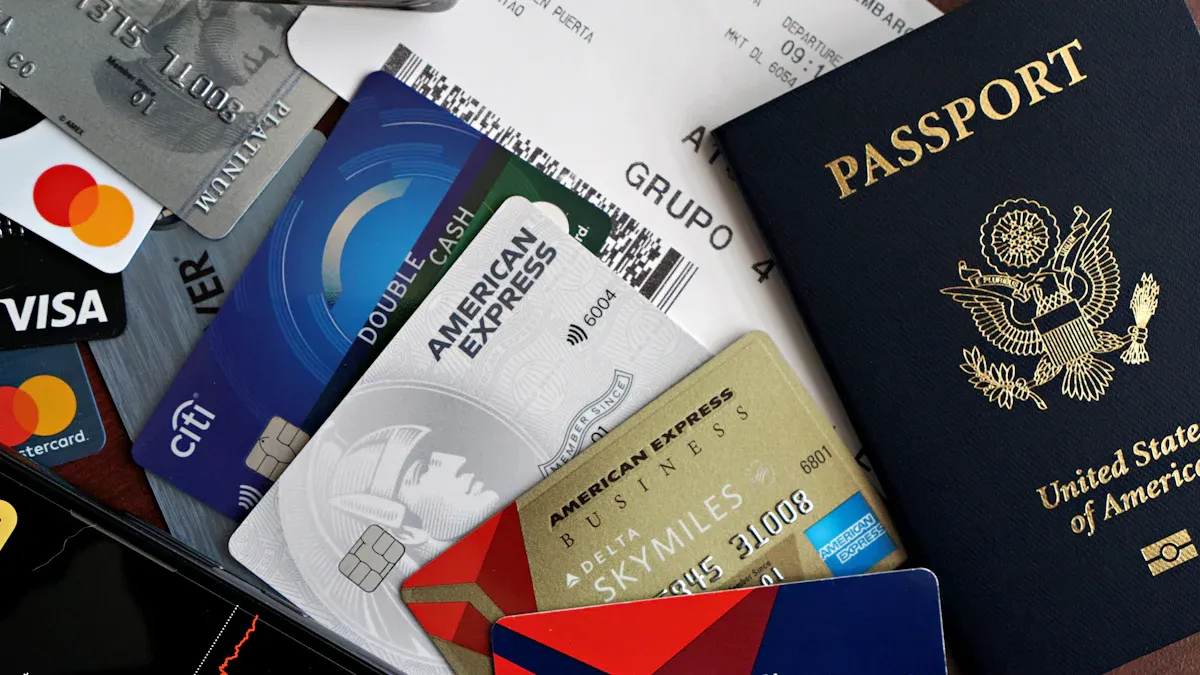
Image Source: pexels
Basic Standards for Proof of Funds
When applying for a U.S. tourist visa, proof of funds is an important material to demonstrate your financial ability. Consulates generally prefer bank deposits and bank statements as the primary forms of asset proof. You may supplement with a U.S. stock account, wealth management products, or other assets, but these usually carry less weight than bank deposits. You need to prepare materials that prove you can cover all travel expenses. It is generally recommended to have assets of at least USD 7,000 to better demonstrate your financial strength. You can also provide information about real estate, vehicles, or other assets, but note that these have lower liquidity and relying on them alone may not sufficiently prove your ability to pay.
The asset proof documents you submit should clearly indicate the location, ownership, and value of the assets. You also need to state whether each asset has any liens or encumbrances. This allows the visa officer to fully understand your financial situation.
Key Focus Areas of Consulate Review
When reviewing proof of funds, consulates focus on the following aspects:
- Whether you have the ability to pay all expenses required for the U.S. tourist visa.
- Whether you can prove strong ties to China, such as stable employment, family relationships, etc.
- Whether the submitted proof of funds is authentic, standardized, and clearly reflects ownership and amounts.
- If you cannot independently cover all expenses, you may supplement with proof of sponsorship from another person.
When preparing materials, it is recommended to mainly use bank deposits and bank statements, with a U.S. stock account as a supplement. This approach improves the completeness and persuasiveness of the materials and reduces the risk of being questioned.
Suitability of a U.S. Stock Account as Proof of Funds
Advantages and Limitations of a U.S. Stock Account
When preparing proof of funds for a U.S. tourist visa, you can consider including a U.S. stock account as supplementary material. A U.S. stock account has certain advantages. First, funds in a U.S. stock account are denominated in USD, directly reflecting your foreign currency holdings. By managing your U.S. stock account through platforms like Biyapay, you can check account balances and position details at any time, making it easy to produce standardized statements. U.S. stock accounts offer relatively high liquidity, allowing you to liquidate stock assets at any time to meet short-term funding needs.
However, U.S. stock accounts also have limitations. Submitting a U.S. stock account alone as proof of funds may not fully meet the consulate’s requirements for asset stability and source of funds. The value of assets in a U.S. stock account is significantly affected by market fluctuations, and visa officers may worry that your assets could shrink due to a short-term drop in stock prices. Statements issued by some U.S. brokers may have inconsistent formats and insufficiently standardized information, which can affect the persuasiveness of the materials. You also need to note that some U.S. stock accounts may not clearly show account ownership or lack holder information, increasing review difficulty.
When preparing materials, it is recommended to submit the U.S. stock account together with bank deposits, bank statements, and other asset proofs. This provides a more comprehensive demonstration of your financial strength and reduces the risk of being questioned. You can export the past six months of U.S. stock account statements through platforms like Biyapay and combine them with USD deposit certificates from licensed Hong Kong banks to enhance the standardization and authority of the materials.
If your U.S. stock holdings have been managed through a cross-border funds tool over time, it also helps to keep the supporting documents focused on three points: clear account ownership, continuous statements, and an explainable funding path. A service like the BiyaPay official website, positioned as a multi-asset wallet, can be useful when organizing stock-account records, conversion history, and position details, but in a visa file the key issue is still whether the officer can clearly see that the assets genuinely belong to you.
In practice, it is better to place the stock-account statements together with bank deposits and recent bank statements so the documents can support each other. If you need an additional reference for the holdings shown, you may also attach the relevant stock information lookup page. The purpose is not to prove trading ability, but to make the asset structure and source of funds easier to understand and verify.
Tip: You should ensure that all proof of funds materials are authentic, clear, and sufficient in amount to cover all expenses required for the U.S. tourist visa.
Possible Concerns from Visa Officers
When submitting a U.S. stock account as proof of funds, visa officers may have the following concerns:
- Whether you can stably hold the assets in the U.S. stock account, or whether there is short-term speculation or frequent trading.
- Whether the submitted U.S. stock account statements are standardized and clearly reflect the account balance, position details, and account ownership.
- Whether you can prove the legitimate source of funds in the U.S. stock account, and whether there are large unusual transfers or short-term fund movements.
- Whether you have sufficient liquid assets to pay for U.S. tourist visa-related expenses at any time.
You can reduce the risk of being questioned by taking the following measures:
- Submit bank deposits, bank statements, and other primary asset proofs at the same time, highlighting the stability and liquidity of assets.
- Provide U.S. stock account statements for the past six months, showing account balances and position details, with English translations attached when necessary.
- Explain the source of funds in the U.S. stock account, such as salary income, investment returns, etc., ensuring clear fund flow.
- Choose standardized statements exported from reputable U.S. brokers or platforms like Biyapay to improve the professionalism of the materials.
By reasonably combining multiple types of asset proof materials, you can effectively improve the approval rate of your U.S. tourist visa application.
Preparing U.S. Stock Account Materials

Image Source: unsplash
Required Materials Checklist
When preparing proof of funds using a U.S. stock account, you need to collect the following documents. For Chinese-speaking users, standardized materials can be exported through the Biyapay platform as an example. You should ensure the materials are complete and clear for easy review by the visa officer.
- U.S. stock account statements for the past six months (recommended to cover the most recent records within 30 to 90 days before the application date)
- Account holder information page (showing name, account number, account opening date, etc.)
- Account balance and position details (including stocks, cash, and other assets)
- Explanation of source of funds (such as salary income, investment returns, etc.)
- Transaction history (explanation required for any large fund movements)
- Account management platform proof (such as official certification documents issued by Biyapay)
You can refer to the table below to understand the timeliness requirements for documents:
| Document Type | Recency Requirement |
|---|---|
| Financial documents | Issued within 30 to 90 days before the application date |
Tip: You do not need to submit originals; clear photocopies are sufficient. All non-English documents must be accompanied by complete English translations.
Document Standardization and Translation
When submitting U.S. stock account materials, pay attention to document standardization and translation requirements. U.S. tourist visa review has strict requirements for authenticity and standardization of materials. Follow these best practices:
- All non-English documents require certified translations. The translator must certify their ability and confirm translation accuracy.
- The certified translation format should include the certifier’s name, signature, address, and certification date.
- Materials should clearly show account ownership, asset amounts, and source of funds.
- English translations must match the original content exactly, avoiding omissions or mistranslations.
- Photocopies must be clear and readable, avoiding blurriness or missing pages.
You can entrust a professional translation agency to provide certified translations to enhance the authority of the materials. Submitting standardized and complete U.S. stock account materials helps improve the approval rate of your U.S. tourist visa application.
Comparison of Proof of Funds Types
Bank Deposits vs. U.S. Stock Accounts
When applying for a U.S. tourist visa, bank deposit certificates are usually the most persuasive. Bank deposits show both liquidity and stability of funds, allowing visa officers to directly assess your ability to cover travel expenses. You can choose USD accounts at licensed Hong Kong banks and provide statements and deposit certificates for the past six months. A U.S. stock account is suitable as supplementary material. Statements exported through platforms like Biyapay can demonstrate your USD asset holdings and investment capacity. While U.S. stock accounts offer high liquidity, they are more affected by market fluctuations, so their persuasiveness is slightly lower than bank deposits when used alone. Reasonably combining both types of asset proof can improve the overall completeness and credibility of your materials.
Real Estate, Wealth Management, and Other Assets
You can also provide proof of real estate, company equity, wealth management products, and other assets. Real estate and business assets are non-liquid assets, and visa officers pay more attention to ownership and liquidation ability. You need to prepare ownership certificates, sale agreements, transfer records, and related bank statements. Wealth management products, funds, and other non-bank-managed assets are usually not recognized by U.S. consulates as primary proof of funds. You should prioritize bank deposits and U.S. stock account materials, using real estate and wealth management only as supplements.
| Asset Source Type | Proof Document Requirements |
|---|---|
| Sale of real estate, business, or other assets | Provide documents on ownership, sale process, and proceeds, including purchase agreements, transfer records, and bank records. |
| Proceeds from securities, IPOs, or business exits | Show brokerage account statements, sale contracts, and transfer records. |
Whether Supplementary Materials Are Needed
When preparing proof of funds, it is recommended to diversify the material structure. You can submit bank deposits, U.S. stock accounts, real estate, and multiple types of asset proof at the same time, highlighting the diversity and stability of fund sources. You should also ensure that all proof of funds includes detailed explanations to confirm the materials are authentic and standardized. For large fund movements, supplement with explanations of fund sources to avoid raising doubts from the visa officer. Reasonably combining various types of asset proof helps improve the approval rate of your U.S. tourist visa application.
Common Misconceptions and Precautions
Common Issues with U.S. Stock Accounts
When submitting a U.S. stock account as proof of funds for a U.S. tourist visa, several common mistakes can occur. Please pay attention to the following issues:
- Insufficient funds: Account balance cannot cover all travel expenses, easily seen as insufficient financial capacity.
- Unexplained large deposits: Sudden large amounts without reasonable source explanation may be considered loans or temporary transfers.
- Incomplete bank history: Submitting only partial statements fails to show financial stability.
- Reliance on non-liquid assets: Although stock holdings have value, short-term liquidation ability is limited and cannot fully replace bank deposits.
- High liabilities: Accounts showing excessive debt affect overall financial condition.
- Confusing or contradictory documents: Inconsistencies between application forms and asset proof easily cause trust issues.
- Poor cash liquidity: Large cash deposits lacking audit trail make source of funds hard to prove.
- Budget inconsistent with purpose: Travel budget does not match actual asset proof, easily raising doubts.
- Failure to consider accompanying persons’ funds: Inability to prove sufficient funds to support travel companions.
- Near-zero balance after travel: Extremely low balance after travel indicates unsustainable finances.
- Lack of financial ties: Absence of stable employment or family responsibilities increases visa officer doubts.
You should avoid submitting only a U.S. stock account as proof of funds. Reasonably explaining the source of funds and supplementing with bank deposits, statements, and other materials can effectively reduce the risk of denial.
Suggestions to Improve Approval Rate
You can take the following measures to increase the approval rate of your U.S. tourist visa application materials:
- Show stable balances. Consistent account balances are more persuasive than sudden large deposits.
- Submit statements covering multiple months. It is recommended to prepare three to six months of U.S. stock account and bank statements to demonstrate financial habits and stability.
- Avoid negative balances. Ensure all accounts remain in good standing during the statement period.
- Provide detailed explanations of fund sources. Record all investment transactions and prepare bank statements, transfer documents, and asset ownership proof.
- If funds come from gifts or loans, attach legal documents such as gift letters or loan agreements explaining the nature of the funds.
- Provide proof of account control, including business registration documents, stock certificates, or partnership agreements.
- All documents must be clear and standardized. Avoid confusion or contradictions to enhance credibility.
- If necessary, entrust a professional translation agency for certified translations to ensure English materials are accurate.
- Chinese-speaking users can export standardized U.S. stock account statements through platforms like Biyapay and combine them with USD deposit certificates from licensed Hong Kong banks to enhance material authority.
- Consider consulting professionals to help sort out fund flows and material preparation, ensuring proof of funds is authentic and complete.
Submitting accurate and standardized proof of funds documents helps build trust with the visa officer and improves the approval rate of your U.S. tourist visa application.
You can use a U.S. stock account as part of your U.S. tourist visa proof of funds, but using it alone has limitations. Reasonably combining bank deposits, real estate, and other asset materials allows you to better demonstrate your financial strength. You need to ensure the materials are standardized, amounts are sufficient, and sources of funds are clear. Transparency of fund sources directly affects the visa officer’s judgment of your financial situation:
- Clear proof of funds enhances application credibility.
- Unclear sources of funds may lead to negative impressions.
- Consulates assess your financial preparedness to ensure you can be self-supporting.
You can refer to the following professional resources to scientifically prepare materials:
- Documents such as employment proof, family responsibilities, property ownership, community involvement, and travel history.
Prepare materials according to your actual situation and consult professionals when necessary to help improve your visa approval rate.
FAQ
Does a U.S. stock account proof of funds need to be translated?
You need to translate U.S. stock account statements into English. U.S. consulates require all non-English materials to be accompanied by certified translations, and the translation content must be accurate.
How should the source of funds in a U.S. stock account be explained?
You can provide explanations of sources such as salary income, investment returns, etc. You need to prepare related bank statements or transaction records to ensure clear fund flow.
Is there a minimum amount requirement for U.S. stock account assets?
It is recommended that U.S. stock account assets be no less than USD 7,000. You need to ensure total assets can cover all expenses required for the U.S. tourist visa to improve approval chances.
How long a period should the U.S. stock account statements cover?
You should submit U.S. stock account statements for the past three to six months. Showing account balances and position details helps prove financial stability.
Can I use only a U.S. stock account as proof of funds?
It is not recommended to use only a U.S. stock account. You should combine it with bank deposits, real estate, and other asset materials to comprehensively demonstrate financial strength and reduce the risk of being questioned.
*This article is provided for general information purposes and does not constitute legal, tax or other professional advice from BiyaPay or its subsidiaries and its affiliates, and it is not intended as a substitute for obtaining advice from a financial advisor or any other professional.
We make no representations, warranties or warranties, express or implied, as to the accuracy, completeness or timeliness of the contents of this publication.
Related Blogs of

HBM/DRAM, NAND, and HDD in AI Storage: A Comparison of Elasticity, Cycles, and Risks


How Should You View Seagate’s HAMR Technology? Nearline HDD Capacity Upgrades and the Supply-Demand Cycle


Why Can’t HBM Exist Without Advanced Packaging? The Role of TSV, CoWoS, and Packaging Equipment


Why Is Western Digital’s Gross Margin Changing? Nearline HDDs, Long-Term Pricing, and Cloud Customer Demand

Choose Country or Region to Read Local Blog
 Australia
 Austria
 Belgium
 Canada
 Cyprus
 Czech Republic
 Denmark
 Estonia
 Finland
 France
 Germany
 Greece
 Hong Kong
 India
India Indonesia
 Ireland
 Italy
Italy Japan
Japan Latvia
 Lithuania
 Luxembourg
 Malaysia
 Malta
Malta Morocco
 Nepal
Nepal Netherlands
 New Zealand
 Norway
 Pakistan
 Philippines
 Poland
 Portugal
 Romania
 Singapore
 Slovakia
 Slovenia
 South Africa
 South Korea
 Spain
Spain Sweden
 Thailand
 The United States
 Turkey
 United Arab Emirates
 United Kingdom
 Vietnam
Contact Us




BIYA GLOBAL LLC is registered with the Financial Crimes Enforcement Network (FinCEN), an agency under the U.S. Department of the Treasury, as a Money Services Business (MSB), with registration number 31000218637349, and regulated by the Financial Crimes Enforcement Network (FinCEN).
BIYA GLOBAL LIMITED is a registered Financial Service Provider (FSP) in New Zealand, with registration number FSP1007221, and is also a registered member of the Financial Services Complaints Limited (FSCL), an independent dispute resolution scheme in New Zealand.