- More
- Download
Breaking Through the USD 50,000 Foreign Exchange Quota Limit: Several Legitimate Channels for Large Cross-Border Remittances




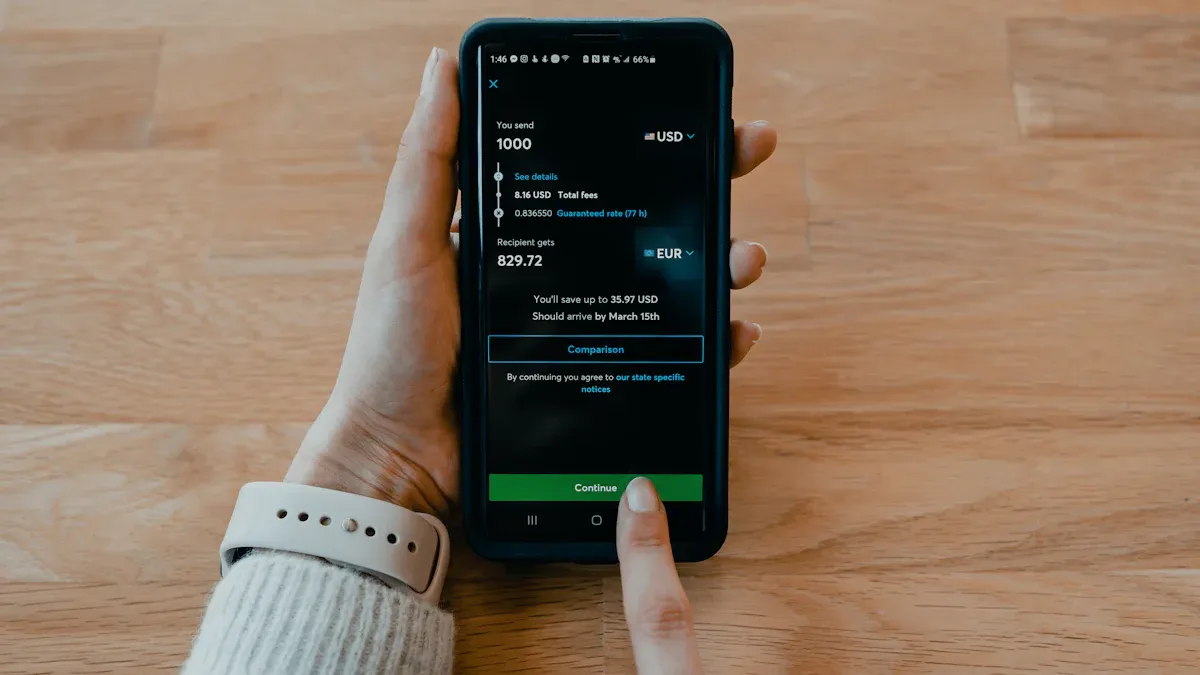
Image Source: unsplash
China's individual annual foreign exchange quota is limited to USD 50,000. You will find that a large number of users each year are unable to complete large cross-border remittances due to quota restrictions. You need to focus on compliant operations, because when exceeding the quota, banks must see written approval from the State Administration of Foreign Exchange and require submission of legitimate supporting documents. The following methods can break through the quota: family quota sharing, special approval applications, entrusting others, third-party payment platforms, etc. You should be vigilant, as regulatory authorities may freeze accounts or restrict payment channels.
- Each person has an annual foreign exchange quota of USD 50,000 (equivalent to approximately about 345,000 RMB).
- Exceeding the quota requires applying for written approval and submitting supporting materials.
- Using personal quotas for transactions may trigger regulatory investigations.
Key Points
- Each person has an annual foreign exchange quota of USD 50,000; exceeding it requires applying for written approval and submitting supporting materials.
- Family quota sharing allows combining multiple individuals' foreign exchange quotas, suitable for family joint funding needs.
- Special approval applications require providing detailed contracts and tax proofs, applicable to large funding needs.
- Choosing compliant third-party payment platforms can simplify cross-border remittance processes and ensure fund security.
- Pay attention to compliance risks, ensure all remittance records are authentic and complete, and avoid account freezes.
Main Legitimate Channels to Break Through Foreign Exchange Quota Restrictions

Image Source: pexels
In actual operations, you will find that breaking through foreign exchange quota restrictions is not without legitimate channels. Chinese authorities recognize multiple compliant methods to help you complete large cross-border remittances. The following are the main methods:
Family Quota Sharing
You can share the annual foreign exchange quota with immediate family members, combining multiple people's quotas to remit a larger amount at once. This method is suitable for scenarios where family members have joint funding needs.
Special Approval Application
You can apply to the State Administration of Foreign Exchange for special approval to obtain legitimate remittance eligibility exceeding the annual foreign exchange quota limit. This method usually requires providing detailed supporting materials such as contracts, invoices, and tax proofs.
You need to prepare the following documents:
- Contracts
- Notarized and legalized documents
- Tax proofs
- Payment request letters
- Housing lease contracts
- Medical or tuition invoices
- Expense invoices
- Supporting documents
- Tax records
Entrusting Others
You can entrust others to handle foreign exchange purchases and remittances on your behalf. Banks will require you and the entrusted party to provide relevant legal documents and supporting materials.
| Required Documents | Description |
|---|---|
| Account Opening Application | Application form that needs to be filled out and stamped, including business seal and legal representative seal |
| Seal Card | Must match the account name |
| Business License | Issued by the administration for industry and commerce |
| Materials Required for Foreign Exchange Management | Provided as required by the State Administration of Foreign Exchange |
| Enterprise Standard Code Certificate | Issued by the State Bureau of Technical Supervision |
| Other Bank Materials | Other relevant materials that the bank may require |
Third-Party Payment Platforms
You can choose compliant third-party payment platforms for cross-border remittances. Some platforms help you complete large fund transfers through compliant channels and usually require you to submit proofs of fund sources and purposes to ensure compliance with foreign exchange quota restriction policies.
In this type of scenario, the value of a platform lies more in documentation handling and process transparency than in replacing bank review or regulatory approval itself. For example, you can first review the service path on the BiyaPay official website or check the remittance page to understand supported currencies, document requirements, and the operating flow. As a multi-asset wallet, BiyaPay covers cross-border remittance, fund management, and broader multi-asset use cases, and operates under relevant regulatory frameworks in jurisdictions such as the United States and New Zealand. In this context, it works better as a compliant execution tool when you already have a genuine source of funds and a clear purpose of remittance.
Fund Company Special Investment Plans
You can transfer funds legally to overseas investment accounts through special investment plans launched by fund companies. Some investment plans have lower thresholds and are suitable for individual investors.
| Investment Plan Name | Minimum Investment Threshold |
|---|---|
| Monthly Investment Fund Plan | USD 64 |
Remittances with Overseas Permanent Residency
If you have obtained overseas permanent residency, you can apply to break through the foreign exchange quota limit with relevant supporting materials and remit funds legally. This method is suitable for users with immigration needs or those who have obtained overseas status.
Wire Transfers and Tri-Party Remittance Tools
You can choose wire transfers or tri-party remittance tools to complete large fund transfers. Wire transfers have strict compliance requirements, requiring detailed transaction information, usually cleared within minutes with fast settlement. Tri-party remittance tools like ACH transfers require less information but may take longer to process.
| Feature | Wire Transfer | ACH Transfer |
|---|---|---|
| Transaction Speed | Usually cleared within minutes, settled within 1 business day | May take hours to days |
| Compliance Requirements | Requires detailed transaction records and identity information | Less information required, higher risk |
| Cancellation Policy | Irrevocable after clearing | Can be withdrawn or disputed under certain conditions |
You need to choose the most suitable compliant method based on your actual situation to ensure fund security and policy compliance.
Operation Process
Image Source: unsplash
Family Quota Sharing Process
You can first communicate with immediate family members to confirm each member's annual foreign exchange quota. You need to prepare identity proofs and relationship proofs for all participants. Go to a bank counter in mainland China and fill out the foreign exchange purchase and remittance application form. The bank will review all materials and confirm the fund sources and purposes. After approval, the bank will combine multiple quotas and remit uniformly to the designated overseas account. You should note that all fund flows and purposes must be authentic and compliant.
Special Approval Application Process
You need to submit a special approval application to the State Administration of Foreign Exchange. Prepare supporting materials such as contracts, invoices, and tax proofs. The bank will assist you in submitting materials and conduct preliminary review. The table below shows common document types and descriptions:
| Document Type | Description |
|---|---|
| Foreign Exchange Account Opening | Foreign-invested enterprises can open foreign exchange accounts without prior approval. |
| Profit and Dividend Remittances | Need to submit a series of documents to the designated bank for review and approval; review time is usually one to two business days. |
| Interest and Principal Remittances for Private External Debt | Need to submit application, external debt agreement, and principal/interest repayment notice; bank checks if repayment amount is within repayable principal range. |
| Copyright and Management Fee Remittances | Need to submit relevant contracts and invoices, but no specific remittance rules. |
After obtaining approval, the bank will assist you in completing large remittances.
Entrusting Others Process
You can choose trusted relatives, friends, or professional institutions as the entrusted party. You need to prepare power of attorney, identity proofs for both parties, fund purpose explanations, etc. Go to the bank to handle entrustment procedures; the bank will verify the identities and authenticity of materials of both parties. After approval, the entrusted party can handle foreign exchange purchase and remittance on your behalf. You should ensure all entrustment actions have written records to avoid subsequent disputes.
Third-Party Payment Platform Process
You can register and complete real-name authentication on a compliant third-party payment platform account. The platform will require you to submit proofs of fund sources and purposes. You need to complete the following steps:
- Monitor and route payments
- Payment approval process
- Verify customer identity and financial activity
- Assess risks to reduce money laundering and fraud risks
- Implement anti-money laundering and know-your-customer programs
- Ensure payment information security, following Payment Card Industry Data Security Standards
After platform approval, you can initiate large cross-border remittances.
Fund Company Investment Process
You can contact fund companies with cross-border investment qualifications to learn about special investment plans. You need to submit identity proofs, fund source explanations, investment agreements, etc. The fund company will assist you in opening overseas investment accounts. After approval, you can remit funds to the designated account to complete the investment.
Overseas Permanent Residency Remittance Process
You need to prepare overseas permanent residency proofs, identity proofs, fund source explanations, etc. Go to a bank in mainland China and fill out the foreign exchange purchase and remittance application form. The bank will review your identity and materials; after confirmation, it will assist you in breaking through the annual quota and remitting funds legally.
Wire Transfer and Tri-Party Tool Process
You can choose wire transfers or tri-party remittance tools. You need to provide detailed payee information, fund purpose explanations, transaction contracts, etc. The bank will verify all information to ensure compliance. Wire transfers are usually completed within 1 business day, while tri-party tools like ACH transfers may take longer. You should keep all transaction vouchers for subsequent compliance checks.
Pros and Cons Analysis
Pros and Cons of Family Quota Sharing
You can break through foreign exchange quota restrictions through family quota sharing.
Advantages:
- Compliant operation with lower risk.
- After quota combination, large amounts can be remitted at once.
- Suitable for joint family needs.
Disadvantages:
- Requires cooperation from all family members; material preparation is cumbersome.
- Fund purposes must be authentic; bank review is strict.
- Quota limited by number of family members and cannot be expanded indefinitely.
Pros and Cons of Special Approval
When applying for special approval, you can obtain super-quota remittance eligibility.
Advantages:
- Strong compliance, suitable for special needs such as property purchase, medical treatment, tuition, etc.
- Can break through annual quota to meet large funding needs.
Disadvantages:
- Strict material requirements and longer review cycle.
- Requires detailed contracts, invoices, tax proofs, etc.
- Approval is not guaranteed and has uncertainty.
Pros and Cons of Entrusting Others
When entrusting others to handle foreign exchange remittances, you need to pay attention to legal risks and benefits.
| Risk/Benefit | Description |
|---|---|
| Legal Risk | If funds are entrusted to unlicensed money transmitters, clients may face risk of fund loss. |
| Legal Benefit | Through Lockbox solutions, client funds are only received after payment to the beneficiary, reducing risk of fund loss. |
Advantages:
- Can utilize others' quotas for flexible operations.
- Suitable for urgent or special scenarios.
Disadvantages:
- Higher legal risks; need to choose compliant trustees.
- Fund security requires additional safeguards to avoid disputes.
Pros and Cons of Third-Party Payment Platforms
When using third-party payment platforms, you need to pay attention to fees and compliance risks.
- Anti-money laundering measures increase compliance burden, and platforms pass costs to users.
- Emerging technologies like blockchain have potential to reduce compliance costs and remittance fees.
- Different platforms have varying transaction fee structures, affecting overall costs.
Advantages:
- Convenient operation, suitable for large cross-border remittances.
- Some platforms support fast arrival.
Disadvantages:
- High compliance requirements; need to submit fund source and purpose proofs.
- Fees may be high; need to understand charging standards in advance.
Pros and Cons of Fund Company Investment
When transferring cross-border funds through fund company investment plans, you need to pay attention to investment risks and returns.
- Mutual funds underperform when increasing H-share holdings, with information asymmetry affecting investment results.
- Fund managers may prioritize fund inflows, leading to suboptimal strategies.
- Management fees account for a large proportion of fund income.
- International investments face exchange rate risks and global political/economic instability.
Advantages:
- Compliant channel, suitable for long-term investment needs.
- Can achieve legal fund transfer to overseas accounts.
Disadvantages:
- Investment returns are uncertain and require bearing market risks.
- High management fees affect actual returns.
Pros and Cons of Overseas Permanent Residency
After obtaining overseas permanent residency, you can break through foreign exchange quota restrictions.
Advantages:
- High compliance, suitable for immigration or overseas status users.
- Can remit large amounts at once.
Disadvantages:
- Requires obtaining overseas status in advance; process is complex.
- Strict material review and longer cycle.
Pros and Cons of Wire Transfers and Tri-Party Tools
When choosing wire transfers or tri-party remittance tools, you need to pay attention to security and compliance.
| Evidence Type | Description |
|---|---|
| ISO 20022 Standard | This standard aims to enhance fraud detection, improve data quality, and simplify compliance processes, especially for large transactions. |
| Security | Reliability and security of international electronic transfers are crucial for businesses handling large funds. |
- Global reachability: Electronic transfers can send funds to bank accounts worldwide, suitable for international payments.
- Supports large payments: suitable for high-value transactions.
- Security and auditability: regulated bank network with identity verification and screening at every step.
Advantages:
- Fast settlement, suitable for large fund transfers.
- High security with complete compliance processes.
Disadvantages:
- Strict information requirements and need for detailed transaction records.
- Some tri-party tools have longer processing times and higher risks.
Risks and Precautions
Compliance Risk Alerts
When conducting large cross-border remittances, you must attach great importance to compliance risks. In recent years, China's foreign exchange management policies have undergone multiple adjustments, with tightening regulation. The table below shows major policy changes:
| Change Type | Description |
|---|---|
| Exchange Rate Mechanism Adjustment | The People's Bank of China changed the RMB reference pricing mechanism against the USD, making it more influenced by market forces. |
| RMB Depreciation | In August 2015, the RMB depreciated by 1.9% against the USD. |
You need to monitor policy changes and adjust remittance plans promptly. Regulatory authorities require identity verification for any remittance exceeding USD 1,000; financial institutions must not provide services to unidentified individuals. If you ignore compliance requirements, it may lead to account freezes, fund returns, or even legal risks.
Tip: Before submitting applications, narrow down evidence scope to avoid invalid communication and application rejections. Do not submit evidence directly to foreign judicial authorities; communicate with relevant departments first to ensure compliance.
Precautions Under Foreign Exchange Quota Restrictions
In operations, you must strictly comply with foreign exchange quota restrictions. Each person can remit up to USD 50,000 per year at most; exceeding requires special approval. You should prepare authentic and complete proofs of fund sources and purposes. Banks will verify all materials to ensure legitimate fund flows. If breaking through quotas via family quota sharing, entrusting others, etc., ensure all participants' identities are authentic and materials complete. Do not use false information or anonymous accounts to avoid triggering regulatory investigations.
- Understand policies in advance and plan fund transfers reasonably.
- Keep all remittance records for subsequent compliance checks.
- Maintain communication with banks and the State Administration of Foreign Exchange to obtain the latest policy information promptly.
Anti-Money Laundering and Regulatory Policies
Chinese regulatory authorities implement strict anti-money laundering measures for cross-border remittances. During remittances, you need to cooperate with banks for comprehensive identity checks, including name, account number, ID documents, residential address, and ultimate beneficiary information. The table below summarizes main anti-money laundering requirements:
| Anti-Money Laundering Measure | Specific Requirement |
|---|---|
| Lower Transaction Threshold | Any remittance exceeding USD 1,000 requires sender identity verification |
| Comprehensive Identity Check | Must confirm and maintain accuracy of name, account number, ID documents, residential address, and ultimate beneficiary information |
| Prohibition of Anonymous Accounts | Financial institutions must not provide services to unidentified individuals or allow accounts with false names |
| Stricter Rules for Payment Providers | Anonymous prepaid cards sold exceeding USD 2,000 require registration |
You also need to comply with counter-terrorism financing, data protection, and other compliance requirements. Some remittances require filing or registration with the State Administration of Foreign Exchange or People's Bank of China. If you fail to cooperate as required, it may lead to remittance failure or investigation. Choose compliant channels to ensure fund security and avoid irregular operations.
You can select the most suitable cross-border remittance method based on your needs. The table below shows remittance methods under different scenarios and their advantages and challenges:
| Remittance Method | Advantages | Challenges |
|---|---|---|
| Bank Wire Transfer | Safe and reliable, suitable for large transactions | High fees, long processing time |
| Digital Wallet | User-friendly, convenient for payments | Limited platform usage |
| Global ACH | Low cost, suitable for specific countries | Slow speed, limited coverage |
| Cryptocurrency | Fast speed, low cost | Regulatory uncertainty, high volatility |
To ensure fund security, it is recommended to adopt the following measures:
- Implement fraud protection systems
- Comply with anti-money laundering and customer due diligence requirements
- Implement real-time monitoring to identify high-risk transactions
You should continuously monitor policy changes, plan fund transfers reasonably, ensure compliant operations, and avoid risks caused by foreign exchange quota restrictions.
FAQ
How to Legally Break Through China's Individual Annual USD 50,000 Foreign Exchange Quota?
You can legally break through the annual limit through methods such as family quota sharing, special approval applications, entrusting others, and third-party payment platforms. Each method requires preparing authentic materials to ensure legitimate fund sources.
What Materials Are Needed for Remitting to a U.S. Bank Account?
You need to provide identity proofs, fund source explanations, purpose proofs, and payee account information. The bank will review materials to ensure compliance. In some cases, contracts or invoices need to be submitted.
How Does a Third-Party Payment Platform Like Biyapay Ensure Fund Security?
When using Biyapay, the platform adopts multi-factor identity verification, real-time monitoring, and anti-money laundering measures. You need to submit fund source and purpose proofs; the platform strictly reviews every transaction.
How Will Banks Handle Your Remittance Application After Exceeding the Annual Quota?
Banks will require you to submit special approvals and relevant supporting materials. If you fail to provide compliant documents, the bank will reject the remittance or freeze the account. You need to prepare all materials in advance.
What Is the Difference Between Cross-Border Remittances via Licensed Hong Kong Banks and Chinese Banks?
When handling cross-border remittances through licensed Hong Kong banks, the process is more flexible with fewer quota restrictions. Chinese banks must strictly comply with annual quotas and regulatory policies. You can choose the suitable channel based on your needs.
*This article is provided for general information purposes and does not constitute legal, tax or other professional advice from BiyaPay or its subsidiaries and its affiliates, and it is not intended as a substitute for obtaining advice from a financial advisor or any other professional.
We make no representations, warranties or warranties, express or implied, as to the accuracy, completeness or timeliness of the contents of this publication.
Related Blogs of

AMAT, LRCX, or KLAC: Which Company Benefits Most from the Semiconductor Equipment Cycle? How ASML’s Guidance Transmits Across the Supply Chain


What Does ASML’s Guidance Upgrade Mean for TSMC, Nvidia, and U.S. Semiconductor Equipment Stocks?


ASML Q2 2026 Earnings Analysis: What Signals Did Orders, EUV Demand, and Full-Year Guidance Release?

Which Software Stocks Could IBM’s Selloff Drag Down? Comparing ServiceNow, Salesforce, Adobe, and Oracle

Choose Country or Region to Read Local Blog
 Australia
 Austria
 Belgium
 Canada
 Cyprus
 Czech Republic
 Denmark
 Estonia
 Finland
 France
 Germany
 Greece
 Hong Kong
 India
India Indonesia
 Ireland
 Italy
Italy Japan
Japan Latvia
 Lithuania
 Luxembourg
 Malaysia
 Malta
Malta Morocco
 Nepal
Nepal Netherlands
 New Zealand
 Norway
 Pakistan
 Philippines
 Poland
 Portugal
 Romania
 Singapore
 Slovakia
 Slovenia
 South Africa
 South Korea
 Spain
Spain Sweden
 Thailand
 United States
 Turkey
 United Arab Emirates
 United Kingdom
 Vietnam
Contact Us



