The Ultimate Real-Time Data Test Google vs Yahoo Finance




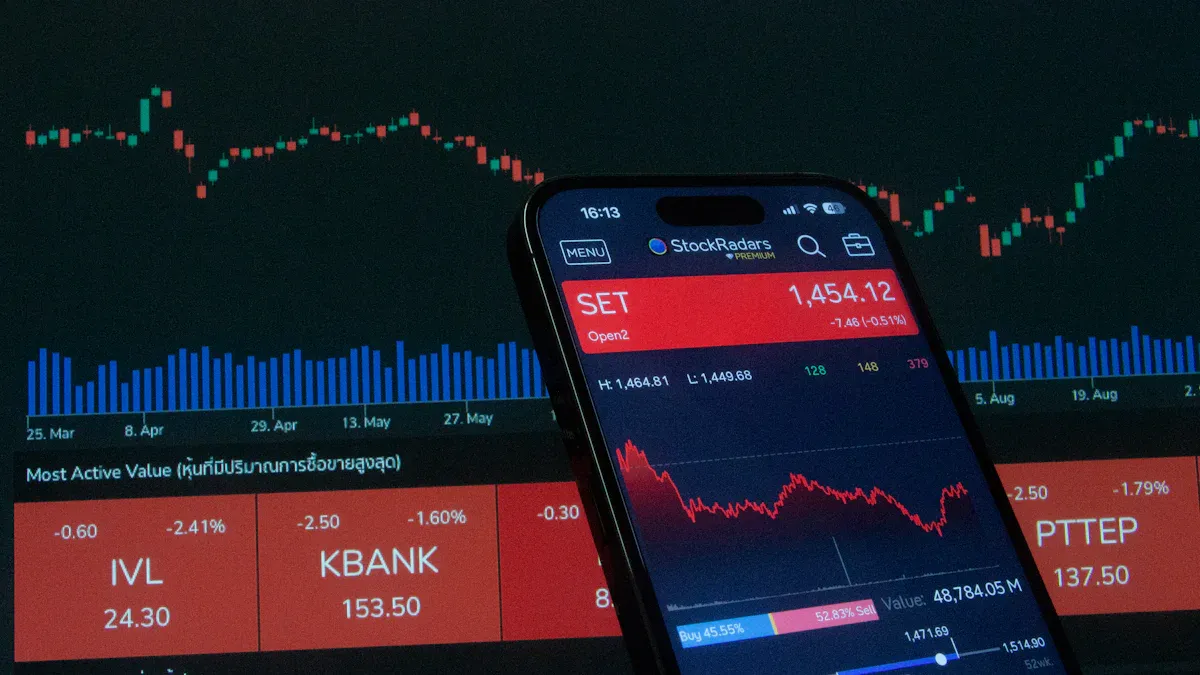
Image Source: pexels
Investors seeking the best real-time data will find Yahoo Finance is the superior platform. Google Finance offers strengths in simplicity and basic portfolio tracking. However, Yahoo’s speed and depth give it a clear advantage for active decision-making. This analysis tests the specific real-time features of both financial platforms.
It will prove why Yahoo excels at delivering up-to-the-minute stock market information. The platform’s integration of news and financial information helps users track stocks in real time effectively.
Key Takeaways
- Yahoo Finance gives faster stock updates than Google Finance. This helps active traders make quick decisions.
- Yahoo Finance offers more detailed charts and news. This helps investors understand market changes better.
- Google Finance is good for beginners. It has a simple design and is easy to use for basic tracking.
- Yahoo Finance has a strong mobile app. It provides many features for investors who are on the go.
- Choose Yahoo Finance for serious investing. Use Google Finance for simple checks.
Data Speed and Accuracy
Image Source: unsplash
An investor’s success often depends on the speed and precision of market data. A delay of even a few seconds can change the outcome of a trade. This section directly compares Google Finance and Yahoo Finance on data speed, refresh rates, and overall reliability. The analysis reveals significant differences in how each platform delivers critical stock market information.
Ticker Refresh Rate Comparison
Yahoo Finance consistently leads in ticker refresh speed. Its platform provides near-instantaneous updates for major exchanges, making it the preferred choice for active traders. Stock quotes on Yahoo reflect market movements with minimal delay, allowing users to act on information as it becomes available.
Google Finance, in contrast, aggregates its data from various sources. This process can introduce noticeable latency. While sufficient for casual observation, it presents a risk for time-sensitive decisions. The platform itself acknowledges potential delays.
The ‘price’ attribute provides ‘real-time price quote with up to 20 minutes delay’ for Google Finance.
This potential lag makes Yahoo Finance the more dependable source for genuine real-time data.
Pre-Market and After-Hours Data
The trading day does not begin at the opening bell or end at the close. Pre-market and after-hours sessions are critical periods when companies release earnings and major news breaks. Yahoo Finance excels in this area, offering comprehensive and timely data for these extended sessions. Users can easily track price movements and volume outside of standard market hours.
Google Finance offers some pre-market and after-hours information, but it is often less detailed and slower to update compared to Yahoo. For investors who need to react quickly to overnight developments, Yahoo’s robust extended-hours coverage provides a clear advantage.
Tracking Stocks in Real Time
Both platforms allow users to create watchlists to monitor specific assets. However, their approaches cater to different user needs. Google Finance offers a straightforward method for building a list and even integrating it with other Google products.
Users can set up a Google Finance watchlist with a few simple steps:
- Navigate to Google Finance and sign into your account.
- Click on “Watchlist” and then select “+ New Watchlist” to create and name your list.
- Search for an investment by its name or ticker symbol.
- Click on the desired investment to add it to your list.
For more advanced tracking, users can pull live stock prices into Google Sheets using the =GOOGLEFINANCE() function. While powerful, this separates the data from the main interface. Yahoo Finance integrates this functionality directly into its dashboard, making it easier to track stocks in real time within a single window.
If your goal isn’t only “faster quotes,” but also a tighter path from checking to acting, it helps to pair a watchlist with a direct lookup and execution flow. With BiyaPay, you can use the Stock info lookup to jump to a ticker page for key figures and updates, then use the fiat FX converter & comparison tool to translate prices and sanity-check conversion costs across currencies. When you’re ready to move from monitoring to execution, the same-domain trading entry provides an action point. If you don’t have an account yet, start from registration and reference the official site for the relevant feature notes. BiyaPay is positioned as a multi-asset wallet spanning investing and funds management, operating under compliance frameworks such as U.S. MSB and New Zealand FSP—useful context when you want “data → cost check → action” in one continuous workflow.
Global and Crypto Data Latency
For investors with global portfolios, data latency across different international exchanges is a major concern. Google Finance provides a mix of real-time and delayed stock market information for European markets. While some exchanges offer real-time stock quotes, many others operate on a 15-minute delay.
| Exchange | Delay (minutes) |
|---|---|
| London Stock Exchange | Realtime |
| Deutsche Börse XETRA | 15 |
| Euronext Paris | 15 |
| SIX Swiss Exchange | 15 |
| Borsa Italiana Milan | Realtime |
| Bolsas y Mercados Españoles | 15 |
This inconsistency can complicate global investment strategies. Yahoo Finance generally offers more uniform data accuracy and reliability across a wider range of international markets. When it comes to cryptocurrencies, both platforms provide coverage, but Yahoo’s reputation for speed gives it an edge in the volatile crypto space. Ultimately, superior data accuracy and reliability are essential, and Yahoo’s performance is more consistent.
Real-Time Investor Features
Beyond raw data speed, the tools that help investors interpret and act on that data are what separate great financial platforms from good ones. This section evaluates the key features that empower investors, from charting and news integration to alerts and mobile performance. Yahoo Finance’s comprehensive toolset again proves more robust for active market participants.
Live Charting and Technical Tools
Interactive charts are the canvas on which traders and analysts paint their strategies. Yahoo Finance offers a powerful, full-screen charting experience packed with technical indicators, drawing tools, and event overlays like earnings dates and stock splits. Users can compare multiple stocks on a single chart and save their customized chart layouts for future analysis. This depth makes it a one-stop shop for technical analysis.
Google Finance provides clean and simple charts that are excellent for a quick overview of price history. While it includes basic indicators like moving averages and Bollinger Bands, it lacks the extensive library and customization options found on Yahoo. For investors who rely on detailed technical analysis to make decisions, Google’s offering is elementary.
Breaking News Feed Integration
Access to timely financial news is critical for understanding market movements. Yahoo Finance excels by integrating a real-time, curated news feed directly into its stock pages. It pulls from a wide range of sources, including its own in-house reporting, providing immediate context for price fluctuations. This seamless integration allows users to connect breaking stories with market reactions instantly.
Google Finance also provides a news feed, but its connection to market events can be less immediate. The platform’s reliance on aggregated data means that market-moving news reflected through metrics may experience a delay. Google Finance itself states it provides “15-minute delayed stock quotes and financial metrics,” which suggests that the impact of news on its displayed data is not instantaneous. This lag can be a significant disadvantage when trying to track stocks in real time.
Price and News Alert Customization
Alerts are an investor’s early warning system. Yahoo Finance offers a highly customizable alert system that helps users monitor specific market updates without being glued to their screens. Users can set up detailed notifications for changes in stock prices.
For example, an investor can set an alert for when a stock reaches a specific price target. Yahoo provides multiple notification methods and frequencies to suit different needs.
- Price Alerts: Get notified when a stock reaches a specific price target.
- Notification Methods: Choose between email, text, or both.
- Alert Frequency: Set alerts to occur once or on a recurring basis.
Google’s approach is less integrated. While Google Finance itself does not have a robust, built-in alert system for price targets, users can leverage the broader Google ecosystem. To receive news alerts, an investor must set them up through Google Alerts.
This process involves a few steps:
- Go to the Google Alerts service.
- Enter a company name or stock symbol, like
'Tesla stock'or'TSLA'. - Customize the frequency, sources, and delivery email.
- Create the alert to receive relevant news articles.
Users can also create alerts for specific terms, such as 'buy rating + [stock name]' or 'earnings report + [symbol]'. While functional, this system is separate from the main Google Finance interface, making it a less streamlined experience compared to Yahoo’s all-in-one solution.
Mobile App Performance
For investors on the go, a powerful mobile app is non-negotiable. The Yahoo Finance app mirrors the comprehensive functionality of its desktop counterpart. It offers advanced charting, real-time data, news feeds, and portfolio management in a well-designed mobile interface. The app is known for its stability and speed, delivering reliable stock market information directly to a user’s fingertips.
The Google Finance experience on mobile is primarily web-based, as there is no dedicated standalone app. While the mobile site is clean and functional for checking watchlists and basic stock quotes, it lacks the advanced features and native app performance of Yahoo. For serious investors who need to execute trades or conduct in-depth analysis from their phones, the Yahoo Finance app is the clear winner.
User Experience and Interface

Image Source: pexels
A platform’s design directly impacts an investor’s ability to find and analyze information. Google Finance and Yahoo Finance present two fundamentally different philosophies in user experience. One prioritizes simplicity, while the other focuses on comprehensive data delivery. The choice between these financial platforms depends entirely on an investor’s individual needs and goals.
Google’s Minimalist Dashboard
Google Finance offers a clean, minimalist dashboard that is easy to navigate. Its design removes clutter, allowing users to quickly check their watchlist or view basic stock quotes. The interface integrates smoothly with other Google products like Sheets, which appeals to users already invested in the Google ecosystem. This simplicity makes it an excellent starting point for beginners or for investors who only need a quick market snapshot.
Yahoo’s Comprehensive Layout
In contrast, Yahoo Finance provides a dense, newsroom-style layout. The dashboard is packed with information, including detailed charts, breaking news, and extensive market data. While this can feel overwhelming to new users, it offers a powerful, customizable experience for serious investors. Users can arrange modules and access a vast amount of data without leaving the main screen, making it ideal for in-depth analysis.
Choosing Between Financial Platforms
The best platform depends on the user’s goals. A student learning about markets may prefer Google’s simplicity, while a seasoned investor will likely need Yahoo’s detailed tools. The right choice balances ease of use with the required depth of information.
| Feature | Google Finance User Persona | Yahoo Finance User Persona |
|---|---|---|
| Interface | Beginners who prefer a minimal design and Google ecosystem integration. | Users wanting a newsroom feel with deep, customizable features. |
| Data Depth | Users who need clean charts and basic news for quick checks. | Investors who require advanced charts and comprehensive news feeds. |
| Target Audience | Students and casual observers. | Active traders and serious investors. |
Real-Time Portfolio P&L Updates
A common pain point for investors is the manual process of tracking portfolio performance. Without an effective tool, an investor might:
- Check dozens of stocks individually each morning.
- Guess at market context based on incomplete news.
- Feel behind the market and miss important signals.
While Yahoo Finance excels at providing real-time data for individual assets, it does not offer real-time, tick-by-tick P&L updates for an entire portfolio. The platform’s developers deemed this feature unnecessarily complex and expensive to implement for most users. Instead, it focuses on delivering precise data for individual stocks, empowering users to make informed decisions without the distraction of constant portfolio fluctuations.
The Future: AI and Platform Evolution
The financial data landscape is constantly changing, driven by technological innovation. Both Google and Yahoo are evolving to meet new investor demands. The future of these platforms will likely be defined by artificial intelligence, data integration, and the sophistication of their analytical tools.
Google’s Upcoming AI Upgrades
Google is leveraging its powerful AI capabilities to transform Google Finance. The company plans to integrate its Gemini models to provide investors with deeper, more contextual insights. This upgrade aims to move beyond simple data delivery and offer a sophisticated research assistant.
Key upcoming features powered by Gemini AI will allow users to ask complex financial questions in a conversational way. The platform will break down queries, search credible sources, and deliver clear, cited summaries.
Future enhancements include:
- A Deep Search feature for conversational financial research.
- Integration of prediction market data from sources like Kalshi and Polymarket.
- Live earnings call streams with real-time transcriptions and AI-generated summaries.
These upgrades signal Google’s ambition to become a major player in AI-driven financial analysis.
Yahoo’s Established Credibility
While Google focuses on future AI integration, Yahoo Finance stands on a foundation of proven reliability. It is a long-standing leader in the financial data space. Experts recognize the Yahoo Finance API as a pioneering force that revolutionized how developers and users accessed market data, moving the industry beyond inefficient file downloads. This history has built significant trust. For decades, investors have relied on Yahoo for accurate daily stock statistics and comprehensive market news, establishing its credibility as a go-to source.
Advanced Charting Tool Developments
The competition extends beyond just Google and Yahoo. The entire industry is advancing, especially in charting technology. Specialized platforms are setting a high bar for what investors can expect from analytical tools. Companies like TradingView and TrendSpider offer features that are becoming the new standard. These include automated technical analysis, advanced pattern recognition, and extensive customization options. As these tools grow in popularity, both Google and Yahoo will face pressure to enhance their own charting capabilities to remain competitive for serious analysts.
This analysis confirms Yahoo Finance excels with its superior data refresh speed, advanced charting, and immediate news integration. It is the definitive winner for any investor who relies on up-to-the-minute stock market information to track stocks in real time. The choice between these financial platforms ultimately depends on an investor’s specific needs.
Final Recommendation
- Use Google Finance for simple, at-a-glance portfolio tracking.
- Turn to Yahoo Finance for serious, real-time analysis and deep financial information.
FAQ
Which platform is better for beginners?
Google Finance is generally better for beginners. Its minimalist design and simple interface make it easy to navigate. New investors can track stocks and view basic charts without feeling overwhelmed by too much data, making it an excellent starting point for learning about the market.
Are Google Finance and Yahoo Finance free to use?
Yes, both platforms offer their core services for free. Users can access real-time data, create watchlists, and use charting tools without a subscription. Yahoo Finance also offers a premium subscription, Yahoo Finance Plus, for more advanced features and in-depth analysis.
Can I trust the real-time data on both platforms?
Yahoo Finance has a stronger reputation for near-instantaneous data, especially for active trading. Google Finance aggregates data, which can sometimes lead to minor delays.
For time-sensitive decisions, investors often prefer Yahoo Finance for its proven speed and reliability. ⏱️
Which app is better for mobile users?
The Yahoo Finance mobile app is superior for serious investors. It provides a comprehensive, feature-rich experience with advanced charting and news integration. Google Finance does not have a dedicated app; its mobile experience is web-based and offers more limited functionality for on-the-go analysis.
*This article is provided for general information purposes and does not constitute legal, tax or other professional advice from BiyaPay or its subsidiaries and its affiliates, and it is not intended as a substitute for obtaining advice from a financial advisor or any other professional.
We make no representations, warranties or warranties, express or implied, as to the accuracy, completeness or timeliness of the contents of this publication.
Related Blogs of

Why Is HDD Supply and Demand Tightening? AI Data Centers, Long-Term Agreements, and Western Digital/Seagate Pricing Power


What Is the Difference Between HBM3E and HBM4? What Do They Mean for Micron and AI Servers?


AI Storage Supply Chain Map: Chips, HDDs, SSDs, Packaging Equipment, and Enterprise Storage Systems


What Is the Difference Between DRAM Contract Price and Spot Price? Which Indicator Should Investors Watch?
Choose Country or Region to Read Local Blog
 Australia
 Austria
 Belgium
 Canada
 Cyprus
 Czech Republic
 Denmark
 Estonia
 Finland
 France
 Germany
 Greece
 Hong Kong
 India
India Indonesia
 Ireland
 Italy
Italy Japan
Japan Latvia
 Lithuania
 Luxembourg
 Malaysia
 Malta
Malta Morocco
 Nepal
Nepal Netherlands
 New Zealand
 Norway
 Pakistan
 Philippines
 Poland
 Portugal
 Romania
 Singapore
 Slovakia
 Slovenia
 South Africa
 South Korea
 Spain
Spain Sweden
 Thailand
 The United States
 Turkey
 United Arab Emirates
 United Kingdom
 Vietnam
Contact Us




BIYA GLOBAL LLC is registered with the Financial Crimes Enforcement Network (FinCEN), an agency under the U.S. Department of the Treasury, as a Money Services Business (MSB), with registration number 31000218637349, and regulated by the Financial Crimes Enforcement Network (FinCEN).
BIYA GLOBAL LIMITED is a registered Financial Service Provider (FSP) in New Zealand, with registration number FSP1007221, and is also a registered member of the Financial Services Complaints Limited (FSCL), an independent dispute resolution scheme in New Zealand.