Mastering the Pulse of AI Hardware Upgrades: Analyzing Key Potential Sectors in Taiwan Stocks for 2026




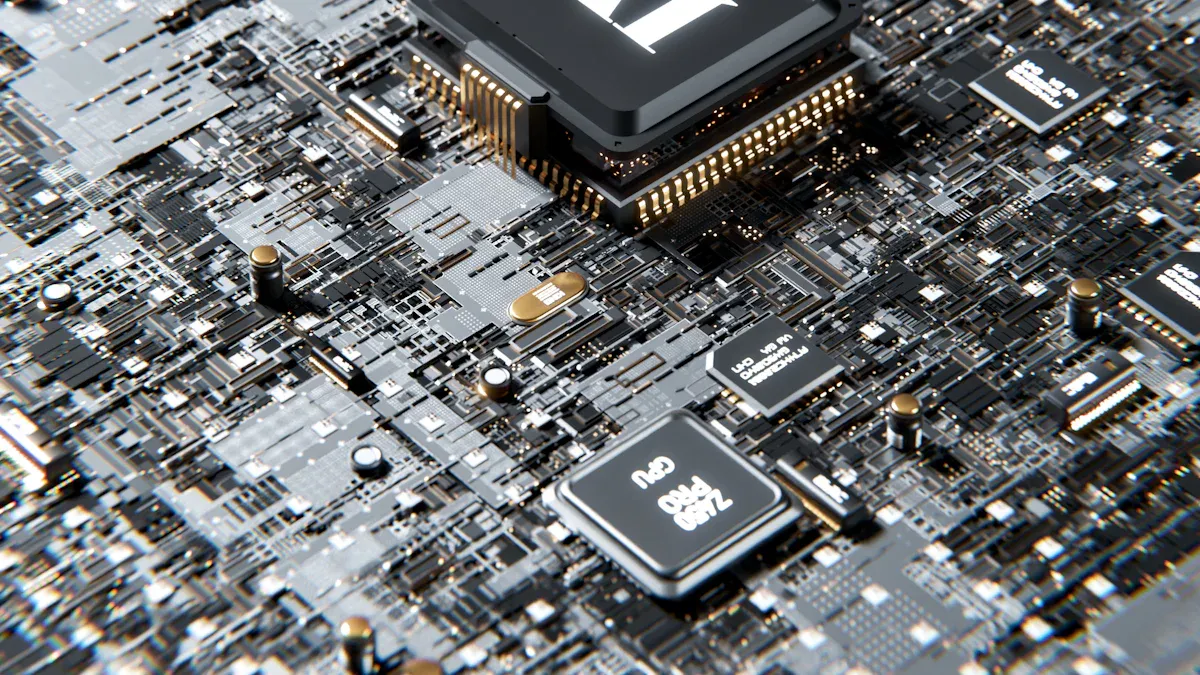
Image Source: unsplash
Looking ahead to 2026, the AI hardware technology upgrade cycle becomes the key engine driving Taiwan stock market trends. This transformation revolves around NVIDIA’s new generation platform, bringing huge opportunities to the related supply chain.
The global AI hardware market size is expected to grow from $86.79 billion in 2024 to $115.4 billion in 2025, showing strong growth momentum.
The core beneficiaries of this hardware feast are precisely the Taiwanese manufacturers with strong manufacturing capabilities. Investors should focus on the following four potential sectors, which constitute the key links in the AI value chain:
- AI Servers and Core Components: Hon Hai, Quanta, Delta Electronics
- Semiconductor Advanced Packaging: TSMC
- Efficient Cooling Solutions: Auras
- High-Speed Transmission Technology
Key Takeaways
- The 2026 AI hardware upgrade is the key driver of Taiwan stock growth; investors should focus on the related supply chain.
- AI servers, advanced packaging, efficient cooling, and high-speed transmission are the four major potential sectors in Taiwan stocks.
- Taiwanese companies like TSMC, Delta Electronics, and Auras play important roles in AI hardware upgrades.
- Liquid cooling technology will become the mainstream for AI server cooling, replacing traditional air cooling.
- AI hardware upgrades will open a decade-long investment cycle, bringing sustained growth opportunities.
If you want to turn a “theme” into an actionable watchlist, keep it simple: anchor the global compute roadmap (e.g., NVIDIA platform cycles), then map Taiwan’s supply chain into four tracking buckets—server build, packaging, cooling, and interconnect—with only 2–3 leaders plus 1–2 higher-beta names per bucket to avoid information overload. For daily monitoring, you can quickly sanity-check the global bellwethers (e.g., NVDA) and headline flow via BiyaPay’s stock market page, then validate whether Taiwan-linked signals (capacity expansion, spec upgrades, order visibility) are confirming the same direction.
If you’re allocating across markets, log FX separately with the currency converter so FX noise doesn’t distort your hardware thesis. To keep everything in one workflow, you can also start from the registration entry and build a consistent “read → verify → track” routine for disciplined execution.
2025 Market Review and 2026 Taiwan Stock Market Outlook
Reviewing 2025, global economic and geopolitical uncertainties brought significant volatility to the market. However, Taiwan stocks showed strong resilience amid the fluctuations, laying a solid foundation for 2026 trends. Investors need to understand the market dynamics of the past year to better grasp future investment patterns.
2025 Market Volatility: Digesting Negatives and Showing Resilience
In the first half of 2025, the market faced multiple tests. The new tariff policy announced by the US once triggered global risk aversion, leading to a sharp pullback in the Taiwan Weighted Index in April. At the same time, new AI models released by mainland Chinese tech companies also briefly raised market concerns about supply chain demand. These factors combined to put considerable pressure on Taiwan stock trends in the second quarter.
However, the market quickly digested the negatives in the second half. Boosted by optimistic AI industry sentiment and partial tariff exemptions, the Taiwan Weighted Index (TWSE) hit a historical high of 28,554.61 points in November 2025, demonstrating extremely strong fundamental support.
This trend clearly indicates that AI-driven industry upgrades are the core force supporting Taiwan stocks through cyclical fluctuations. Every market pullback provides long-term investors with opportunities to deploy high-quality assets.
Fed Rate Cut Expectations and Capital Flow Analysis
Looking ahead to 2026, the macro environment is expected to be more favorable. The market widely anticipates that the US Federal Reserve will start a rate cut cycle in the first half. This move will guide global capital from safe government bonds to risk assets. As USD interest rates decline, international capital seeking higher returns will turn to emerging markets with strong fundamentals and clear growth prospects, with Taiwan market being one of the standout performers.
When global investors seek to allocate to Taiwan stocks and other overseas assets, efficient cross-border fund transfers become key. For example, digital payment platforms like Biyapay provide convenient solutions, simplifying the process for international investors to convert and invest funds from their local bank accounts (such as through Hong Kong-licensed banks) into target markets, accelerating global capital flows.
AI Monetization Year One: Starting Point of a Decade-Long Investment Cycle
2026 is not only a turning point in the macro environment but also the “monetization year one” for the AI industry. In the past few years, market discussions on AI mostly stayed at the conceptual and expectation level. Entering 2026, with the landing of NVIDIA’s Rubin and other new generation platforms, the commercial value of AI applications will be realized on a large scale. Enterprises’ huge demand for computing power will directly translate into certain orders for the hardware supply chain.
This transformation driven by technology upgrades marks the official start of a decade-long AI investment mega-cycle. For investors, future Taiwan stock trends will no longer be driven solely by liquidity but defined by solid industry fundamentals. Grasping the main line of hardware upgrades means seizing the most certain growth opportunities in the coming years.
AI Servers and Core Components: Top of the Value Chain
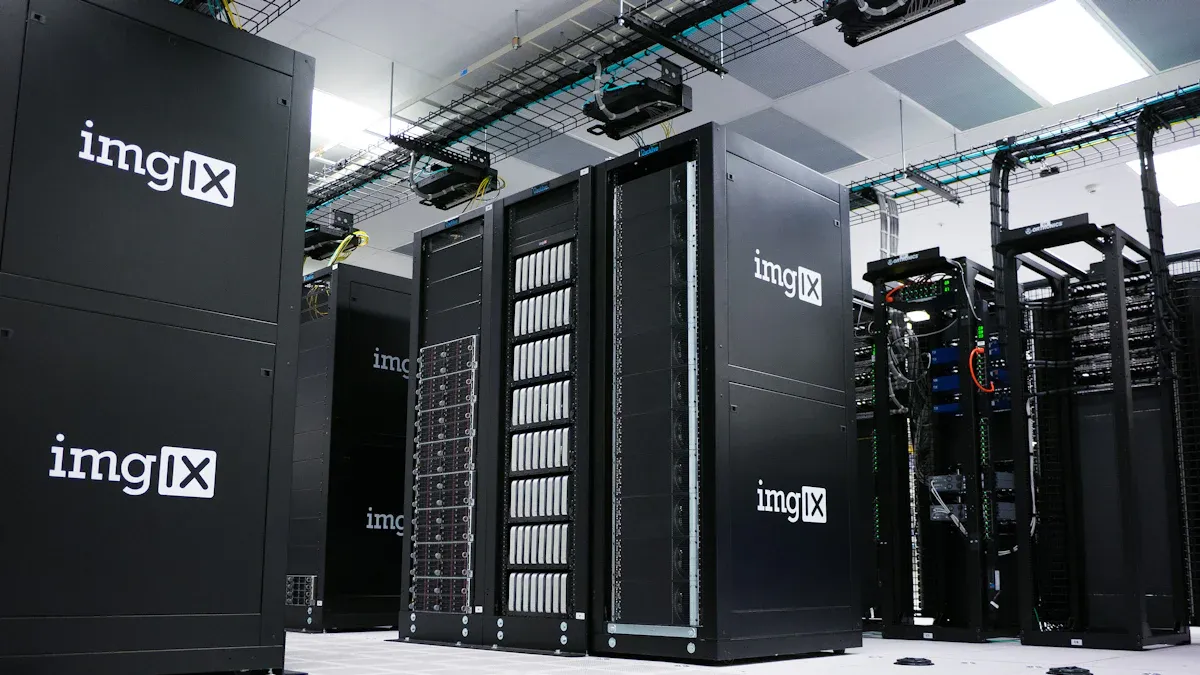
Image Source: unsplash
AI servers are the core of the entire hardware upgrade cycle and the largest value segment in the chain. With the launch of NVIDIA’s Rubin and other new platforms, from complete systems to every internal key component faces comprehensive technological innovation, creating huge value growth space for Taiwanese manufacturers like Hon Hai, Quanta, and Delta Electronics.
AI Server ODM: Orders and Margin Outlook
AI server ODM is a traditional strength area for Taiwanese manufacturers. Entering 2026, as cloud service giants (CSPs) and large enterprises accelerate deployment of new generation AI infrastructure, ODM giants like Hon Hai, Quanta, and Wistron will welcome certain orders. Although chip designers occupy the top of the value chain, massive shipment volumes still bring considerable revenue to ODMs.
NVIDIA’s outlook for fiscal 2026 clearly demonstrates its strong pricing power. The company expects non-GAAP gross margin to reach 72.0%, striving to reach the mid-70% range later in the fiscal year. This reflects the high value of upstream chips and ensures sustained strong downstream hardware demand.
High-Layer PCBs and ABF Substrates: Specification and Value Upgrade
The performance improvement of new generation AI chips poses unprecedented requirements for printed circuit boards (PCBs) and Ajinomoto Build-up Film (ABF) substrates carrying the chips. Technology upgrades directly drive product unit price increases. Key upgrades include:
- Increased Layers: ABF substrates support higher stacking layers than traditional PCBs to accommodate more complex circuit designs.
- Finer Line Width and Spacing: To achieve high-speed data exchange between chip and memory, finer wiring must be adopted.
- Material Changes: Using new materials like Ajinomoto Build-up Film (ABF) with low dielectric constant and high thermal stability becomes necessary for high-performance computing.
High-Power Power Supplies: Efficiency and Power Race
The surge in computing power brings astonishing energy consumption. AI server rack power demand is exploding, posing severe challenges to power supply units (PSUs) in power and conversion efficiency.
| NVIDIA GPU Generation | Rack Model | Power Consumption (kW) |
|---|---|---|
| Blackwell | GB200 NVL72 | 120 |
| Rubin (Expected) | NVL72 | 180 |
In this race, Delta Electronics demonstrates absolute leadership. The company already held 28% of global AI server power market revenue share in 2023. Its launched 120 kW power shelf, integrating twenty-four 5 kW power units internally, is precisely a solution designed for such high-power AI servers, with extremely high technical barriers.
Semiconductor Advanced Packaging: Key Bottleneck for Chip Performance
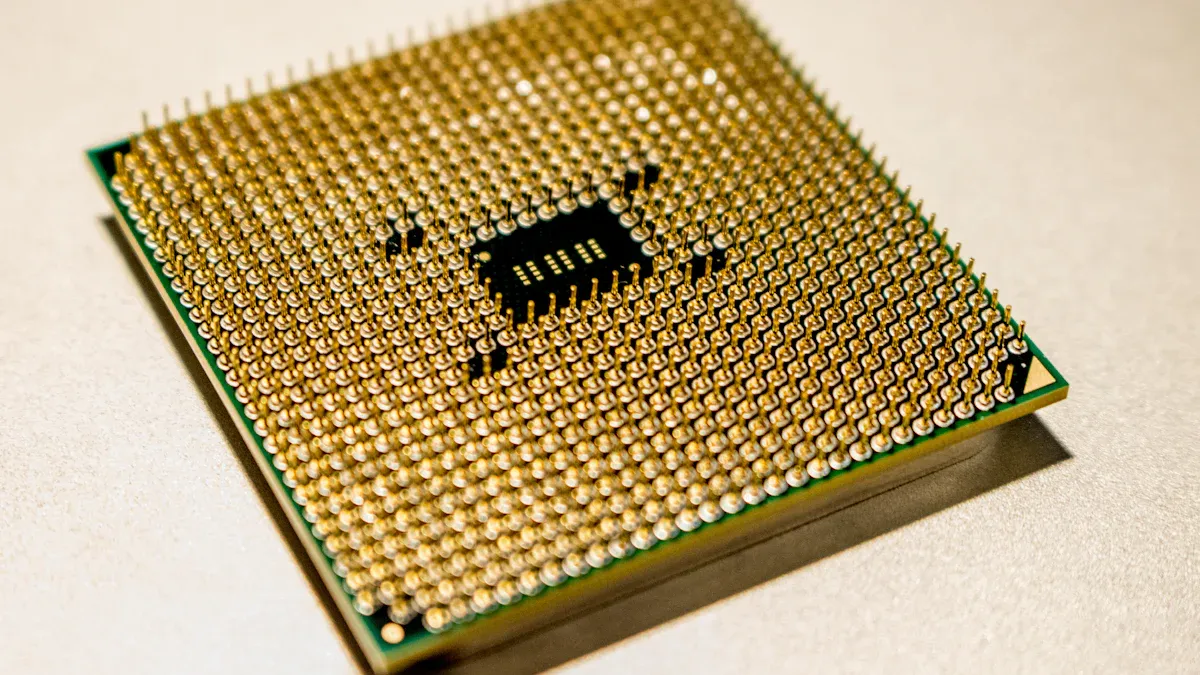
Image Source: pexels
If AI servers are the skeleton, high-performance chips are the heart. To make this heart beat stronger, semiconductor advanced packaging technology has become key to breaking performance bottlenecks. As chip designs grow increasingly complex, traditional packaging methods can no longer meet demands, and TSMC-led CoWoS (Chip-on-Wafer-on-Substrate) and other advanced technologies have emerged, bringing new opportunities to the entire industry chain.
CoWoS Packaging: TSMC Capacity and Supply Chain Opportunities
CoWoS (Chip-on-Wafer-on-Substrate) is the current mainstream solution for AI chip packaging, integrating GPUs, high-bandwidth memory, and other chips on the same substrate for high-speed interconnection. Massive demand for AI chips directly makes CoWoS capacity a scarce resource. To this end, industry leader TSMC is fully expanding capacity to cope with future order waves.
Capacity expansion plans clearly reveal the strength of demand:
- TSMC’s 2024 CoWoS monthly capacity target is approximately 35,000 wafers.
- Expected to leap significantly to over 90,000 wafers monthly by 2026.
This huge capacity growth will drive performance of related equipment and material suppliers, such as providers of packaging substrates, testing equipment, and related chemicals, all benefiting from this wave.
High-Bandwidth Memory (HBM): Storage Technology Revolution
AI computing needs to process massive data, posing extremely high requirements on memory bandwidth. High-Bandwidth Memory (HBM) dramatically increases data transfer rates through vertical stacking of memory chips, becoming standard for AI chips. Technology is rapidly moving from HBM3e to HBM4, bringing another performance leap.
HBM4 achieves doubled bandwidth growth by doubling interface width to 2048 bits, providing powerful data support for next-generation AI platforms.
This technological evolution is significant not only for memory giants like SK Hynix and Samsung but also creates new business growth points for Taiwanese firms handling back-end packaging and testing.
Co-Packaged Optics (CPO): Future Transmission Solution
As data volume within data centers explodes, traditional electrical signal transmission’s power consumption and bandwidth bottlenecks become increasingly prominent. Co-Packaged Optics (CPO) technology, also known as silicon photonics, becomes the future direction to solve this problem. CPO integrates optical components with switch chips, using optical signals to replace electrical signals for short-distance transmission.
This change brings two core advantages:
- Significant Power Reduction: Compared to traditional pluggable optical modules, CPO shortens electrical signal paths, reducing power consumption by up to 30%.
- Bandwidth Density Improvement: CPO achieves higher integration, providing ultra-high bandwidth in minimal space.
Currently, multiple Taiwanese networking and semiconductor manufacturers are actively deploying CPO technology, striving to seize the initiative in next-generation data center transmission solutions.
Efficient Cooling Solutions: Calm Foundation for Computing Power Growth
AI chip power consumption (thermal design power) continues to rise, bringing severe cooling challenges to data centers. Powerful computing must have equally powerful cooling systems as support. Traditional air cooling technology has gradually reached physical limits, unable to meet new generation high-density server needs. Therefore, a paradigm shift in cooling technology is inevitable; liquid cooling solutions are shifting from optional to mandatory, becoming the calm foundation supporting computing power growth.
Technology Paradigm Shift: From Air Cooling to Liquid Cooling
AI server power density far exceeds traditional servers; relying solely on fans and heatsinks is no longer sufficient. Liquids have thousands of times the thermal conductivity of air, efficiently removing heat from chip surfaces. This physical property determines liquid cooling as the inevitable choice for future hundred-kilowatt rack power consumption. Market forecasts clearly show this technology shift trend, with liquid cooling penetration rate rapidly increasing in coming years.
| Cooling Method | 2023 AI Server Penetration Rate | 2026 AI Server Penetration Rate |
|---|---|---|
| Liquid Cooling | 23% | 57% |
| Air Cooling | 77% | 43% |
Liquid Cooling Core Components: Auras and Shuang Hong’s Technology Positioning
The core of liquid cooling systems lies in key component technology levels, mainly including cold plates in direct chip contact and manifolds for liquid distribution. In this field, Taiwanese firms Auras and Shuang Hong, with years of technical accumulation, have successfully positioned in the supply chain core, mastering key technologies from design to manufacturing. However, direct-to-chip liquid cooling adoption still faces challenges.
Direct-to-chip liquid cooling requires high investment. It needs special cooling fluids, leak detection, pumps, heat exchangers, and other hardware, increasing upfront costs and maintenance complexity. High costs may slow adoption by some enterprises.
Despite cost barriers, as technology matures and scales, these issues will gradually resolve.
Rack-Level Liquid Cooling: Ultimate Data Center Cooling Solution
As single rack power moves from tens to over a hundred kilowatts, cooling focus has expanded from individual servers to entire racks. Rack-level liquid cooling, especially immersion cooling, is seen as the ultimate data center cooling solution. This immerses entire servers in non-conductive liquid, achieving the most thorough and efficient cooling. It not only handles extremely high power density but significantly reduces data center energy consumption (power usage effectiveness), the development direction for future green data centers. Manufacturers mastering rack-level overall solutions will occupy absolute advantages in the next competition round.
High-Speed Transmission Interfaces: Neural Network for Data Flow
If AI chips are the data center brain, high-speed transmission interfaces are the neural network connecting everything. To allow massive data to flow unimpeded between GPUs, memory, and servers, interface technology upgrades are crucial. This trend brings clear growth opportunities for PCI Express standards, high-speed connectors, and optical communication modules.
PCI Express Standard Evolution: From Gen5 to Gen6/7
PCI Express is the bus standard connecting all key server internal components. As AI models’ data throughput demand grows exponentially, PCI Express standard iteration speed accelerates. The leap from PCI Express Gen5 to Gen6 means direct bandwidth doubling, clearing transmission bottlenecks for next-generation AI accelerators.
| Feature | PCI Express Gen5 | PCI Express Gen6 |
|---|---|---|
| Per-Lane Data Rate | 32 GT/s | 64 GT/s |
| Max Bandwidth in x16 Configuration | 128 GB/s | 256 GB/s |
| Encoding Method | NRZ | PAM-4 (Pulse Amplitude Modulation 4-Level) |
| Error Correction | None | Forward Error Correction (FEC) |
This performance leap benefits from key technologies like PAM-4 signaling, doubling data rate without increasing clock frequency. Meanwhile, the industry has looked to the future; PCI Express Gen7 standard is expected to be finalized in 2025, continuing to push hardware performance limits.
High-Speed Connectors and Cables: Opportunities for ASpeed and JCE
Higher transmission rates pose stringent challenges to physical connections. Signal attenuation in copper wires becomes more severe, creating huge demand for high-speed connectors, cables, and retimer chips.
Signal integrity becomes key to high-speed transmission. To ensure stable, accurate transmission of 256 GB/s massive data flows, every detail from connector materials to PCB layout must be redesigned.
In this field, Taiwanese firms demonstrate strong competitiveness. ASpeed’s PCI Express retimer chips reshape and enhance high-speed signals, ensuring long-distance transmission stability. Connector manufacturers like JCE, with deep accumulation in precision manufacturing and high-frequency materials, become indispensable partners for new generation standards.
Optical Communication Module Upgrades: Toward 800G and 1.6T
When data transmission demand exceeds server rack scope, optical communication technology is needed. As AI cluster scales expand, east-west traffic within and between data centers explodes, pushing optical modules from 800G to 1.6T and higher.
This upgrade trend brings huge business opportunities to Taiwan’s optical communication industry chain. For example, Taiwanese manufacturer Centera Photonics Inc. has launched the world’s first 1.6 Tbps optical transceiver module, demonstrating leadership in photonic integration technology. These manufacturers mastering core technologies will become key forces supporting future AI computing network construction.
AI hardware upgrades are the most certain growth main line for future Taiwan stock trends. Investors should focus on four major sectors: AI servers, advanced packaging, cooling, and high-speed transmission to build resilient portfolios.
Investment Strategy Suggestions
- Conservative: Focus on leading enterprises like TSMC and Delta Electronics. Analysts are optimistic about TSMC prospects.
Company Name Consensus Analyst Rating 12-Month Average Price Target TSMC Strong Buy $333.33
- Growth-Oriented: Focus on companies like Auras and ASpeed with advantages in emerging fields for higher upside.
Despite clear trends, investors must remain vigilant to changes in customer capital expenditure, high valuations, and geopolitical risks impacting Taiwan stock trends, dynamically adjusting strategies.
FAQ
How Long Will This AI Hardware Upgrade Cycle Last?
This technology iteration-driven cycle is expected to last several years. Chip giants like NVIDIA have planned product roadmaps beyond 2027. As long as AI application demand continues growing, hardware upgrades will not stop, providing long-term order visibility for the supply chain.
Will High Liquid Cooling Technology Costs Affect Its Adoption Speed?
Yes, initial investment cost is the main challenge for liquid cooling adoption. However, as AI server power exceeds 100kW, liquid cooling becomes inevitable. Scaled production will gradually reduce costs, and technology penetration rate is expected to accelerate, especially in large data centers.
Besides NVIDIA Supply Chain, What Other Potential Opportunities Exist?
Investors can focus on ecosystems of other AI chip designers (like AMD, Intel). These companies are actively developing their own hardware platforms. Related supply chain manufacturers gaining diversified orders will have stronger risk resistance and growth potential.
What Are the Main Risks Investing in These AI Hardware Sectors?
Investors need to be vigilant to several risks:
- Demand Fluctuations: Cloud service giants’ capital expenditure plans may adjust anytime.
- Technology Iteration: Technology path changes may eliminate some manufacturers.
- Overvaluation: Some popular stocks prices already reflect years of future growth expectations.
*This article is provided for general information purposes and does not constitute legal, tax or other professional advice from BiyaPay or its subsidiaries and its affiliates, and it is not intended as a substitute for obtaining advice from a financial advisor or any other professional.
We make no representations, warranties or warranties, express or implied, as to the accuracy, completeness or timeliness of the contents of this publication.
Related Blogs of

Pure Storage PSTG vs NetApp NTAP: Which Enterprise Storage Brand Has Greater AI Growth Elasticity?


SMIC 0981.HK vs Hua Hong Semiconductor 1347.HK: The Relationship Between Foundry Stocks and the Memory Supply Chain


NetApp NTAP Stock Analysis: Enterprise Storage, Cloud Data Management, and Cash Flow


Pure Storage PSTG Stock Analysis: All-Flash Arrays, Enterprise Storage, and AI Data Platforms
Choose Country or Region to Read Local Blog
 Australia
 Austria
 Belgium
 Canada
 Cyprus
 Czech Republic
 Denmark
 Estonia
 Finland
 France
 Germany
 Greece
 Hong Kong
 India
India Indonesia
 Ireland
 Italy
Italy Japan
Japan Latvia
 Lithuania
 Luxembourg
 Malaysia
 Malta
Malta Morocco
 Nepal
Nepal Netherlands
 New Zealand
 Norway
 Pakistan
 Philippines
 Poland
 Portugal
 Romania
 Singapore
 Slovakia
 Slovenia
 South Africa
 South Korea
 Spain
Spain Sweden
 Thailand
 The United States
 Turkey
 United Arab Emirates
 United Kingdom
 Vietnam
Contact Us




BIYA GLOBAL LLC is registered with the Financial Crimes Enforcement Network (FinCEN), an agency under the U.S. Department of the Treasury, as a Money Services Business (MSB), with registration number 31000218637349, and regulated by the Financial Crimes Enforcement Network (FinCEN).
BIYA GLOBAL LIMITED is a registered Financial Service Provider (FSP) in New Zealand, with registration number FSP1007221, and is also a registered member of the Financial Services Complaints Limited (FSCL), an independent dispute resolution scheme in New Zealand.