- More
- Download
Kioxia FY2026 Q1 Earnings Preview: NAND Prices, BiCS10, and SanDisk Partnership Benefits




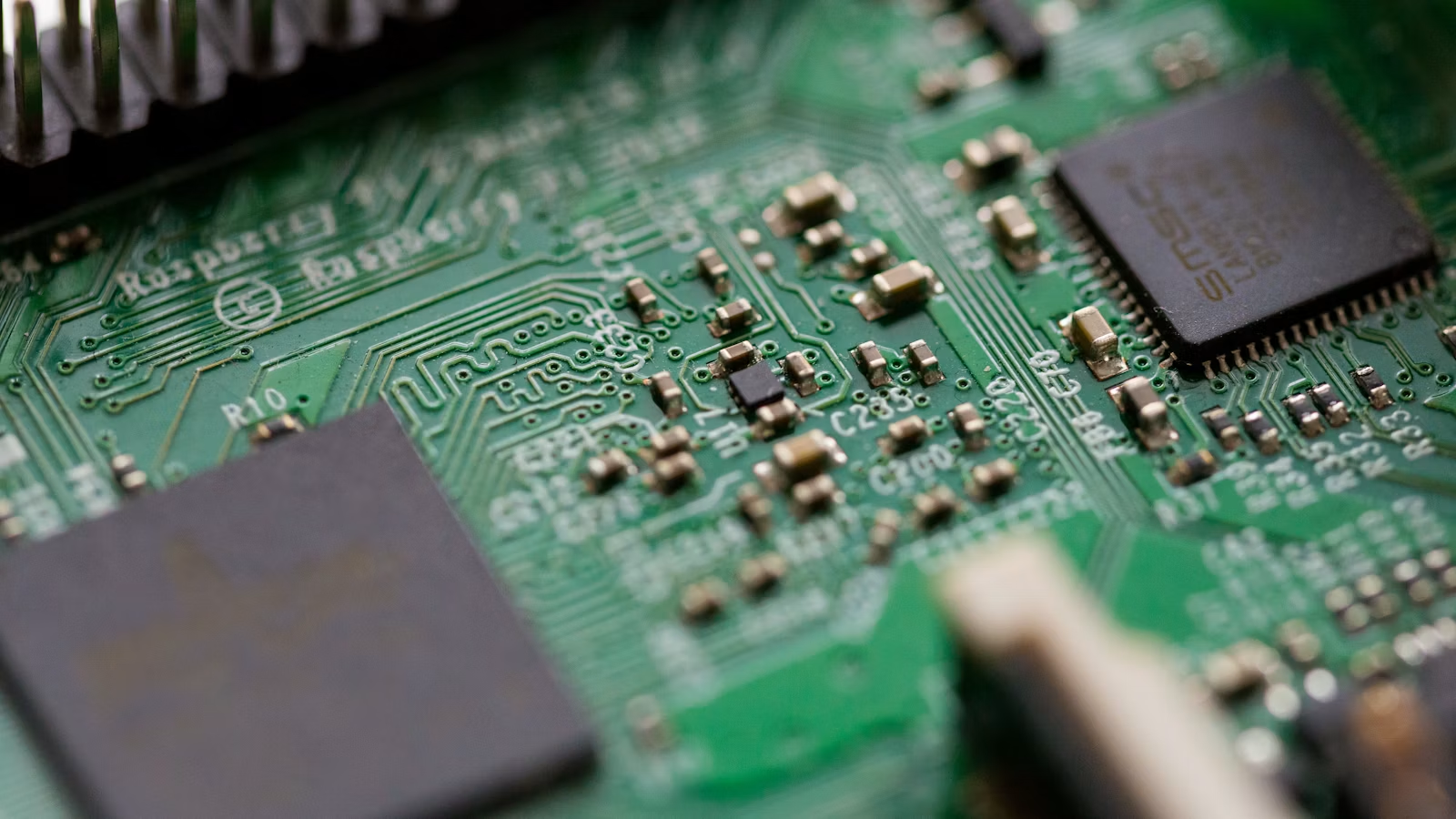
Ahead of Kioxia FY2026 Q1 earnings, the market's key question is straightforward: after the sharp rise in NAND prices, how much of the cycle tailwind can Kioxia turn into profit? Over the past year, the storage industry narrative has shifted from "consumer electronics destocking" to "AI data centers competing for storage capacity." DRAM, HBM, enterprise SSDs, QLC NAND, and high-capacity data center storage are all seeing price strength, and Kioxia, as a major global NAND Flash supplier, has naturally become a key company to watch in this cycle recovery.
NAND is a highly cyclical industry. Rising prices can amplify margins, but they also test customer affordability, inventory strategy, capital spending discipline, and product mix. More importantly, Kioxia is advancing 10th-generation BiCS FLASH, Kitakami Fab2, and SanDisk partnership capacity. If these technology and capacity milestones land smoothly, the market's view of Kioxia will not be limited to short-term pricing benefits; it can be repriced from cyclical recovery toward technology share and high-value SSD demand.
Key Takeaways
- Kioxia FY2026 Q1 earnings are scheduled for July 31, 2026, at 15:30 JST, covering the quarter from April 1 to June 30, 2026.
- Kioxia FY2025 revenue was JPY 2.3376 trillion, up 37.0% year over year, and profit attributable to owners of parent was JPY 554.5 billion, up 103.6%.
- TrendForce expects 2Q26 NAND Flash contract prices to rise 70%-75% quarter over quarter, with AI and data center demand as the core drivers.
- Enterprise SSD is the key to Kioxia Q1 margin elasticity, as AI agents, long-context inference, and high-capacity SSD demand are changing the NAND value chain.
- Kioxia has started shipping samples of 10th-generation BiCS FLASH 1Tb TLC devices, using 332 layers, 4.8Gb/s interface speed, and 59% higher bit density than the 8th generation.
- SanDisk's long-term partnership with Kioxia, Kitakami Fab2, and BiCS10 ramp progress are crucial to judging whether Kioxia can move through the NAND cycle.
When Will Kioxia Report Q1 Earnings: Which Numbers Should the Market Watch First?

According to Kioxia IR News, Kioxia FY2026 Q1 financial results are scheduled for July 31, 2026, at 15:30 JST. The fiscal-year definition matters: Kioxia FY2026 Q1 refers to the period from April 1 to June 30, 2026, not the first calendar quarter. Kioxia IR Calendar also shows that the company's disclosure schedule follows Japan's fiscal-year structure.
The previous FY2025 full-year results set a high comparison base for Q1. The FY2025 financial results listed on Kioxia IR News showed that the fiscal year ended March 31, 2026 benefited from NAND cycle recovery and AI data center demand. Kioxia At a Glance disclosed FY2025 consolidated revenue of JPY 2.3376 trillion. The Kioxia FY2025 full-year results filed through SGX also showed profit attributable to owners of parent of JPY 554.5 billion, up 103.6% year over year.
The first layer of Q1 earnings is revenue, gross profit, operating profit, profit attributable to owners of parent, and free cash flow. The second layer is NAND ASP, bit shipment, enterprise SSD, client SSD, smartphone / PC NAND, inventory, and capital spending pace. The third layer is management's view of FY2026 demand, especially AI data center orders, Q2/Q3 contract prices, long-term customer agreements, and Fab2 ramp.
| Earnings Metric | Why It Matters | Positive Signal |
|---|---|---|
| Revenue | Directly reflects NAND ASP and shipments | Pricing and bit shipment improve together |
| Operating profit | Reflects cycle profit elasticity | Margin and expense leverage are released together |
| Gross margin | Shows low-cost inventory and product mix | Above expectations with clear explanation |
| Free cash flow | Measures whether pricing turns into cash | Inventory and capex do not consume profits |
| Inventory | Tracks customer pull-in and pricing risk | Healthy inventory, not revenue pushed by stockpiling |
| Guidance / outlook | Determines cycle sustainability | AI and enterprise SSD demand remain strong |
The biggest question for Kioxia Q1 is whether FY2025's strong profits can continue into the new fiscal year. If revenue growth comes from enterprise SSDs, AI data centers, and high-value NAND rather than low-end consumer restocking, the market will be more willing to assign a high-quality profit judgment. If revenue is strong but cash flow and inventory deteriorate, the short-term price-increase narrative will be discounted.
Summary: The first layer of Kioxia Q1 earnings is whether revenue and profit continue benefiting from NAND price increases. The second layer is whether inventory, cash flow, and product mix remain healthy. Only when pricing, shipments, and enterprise SSD demand improve together will the market view profit recovery as sustainable.
How Much Margin Elasticity Can NAND Price Increases Bring: Contract Prices, Inventory, and Product Mix

NAND pricing is the biggest tailwind for Kioxia Q1. In its 2Q26 memory contract price outlook, TrendForce expects NAND Flash contract prices to rise 70%-75% quarter over quarter in 2Q26, noting that the NAND Flash market remains led by AI and data center demand, with enterprise SSD allocation becoming a higher priority while consumer applications reduce specifications under pricing pressure. This period covers most of Kioxia FY2026 Q1.
For Kioxia, margin elasticity from NAND price increases depends on three variables. The first is inventory cost: if earlier inventory costs were lower, price increases can expand gross margin more quickly. The second is product mix: if enterprise SSD and high-capacity NAND account for a higher share, margin improvement will be stronger than in ordinary client SSD and smartphone NAND. The third is bit shipment: if prices surge but customers reduce purchases, revenue and profit elasticity will be offset by lower shipment volume.
This is why investors cannot look only at ASP. A 70%-75% increase in NAND contract prices sounds strong, but if consumer electronics customers reduce capacity configurations due to cost pressure, or smartphone and PC customers delay orders, Kioxia's growth quality will depend more heavily on data center products. The same TrendForce report also warns that PC and smartphone makers may reduce product capacity to suppress NAND demand, meaning high prices themselves can reduce some end-market appetite.
| NAND Price Variable | Impact on Kioxia Revenue | Impact on Margin | Reverse Signal |
|---|---|---|---|
| Contract price increase | Higher ASP directly lifts revenue | Low-cost inventory releases margin elasticity | Customers reduce purchases |
| Higher enterprise SSD share | More high-value orders | Product mix improves | Customer certification is slower than expected |
| Client SSD price increase | Short-term revenue benefits | Consumer affordability is limited | PC demand is revised down |
| Smartphone NAND | Flagship configurations still support demand | Low-end models face more pressure | Smartphone makers reduce specs |
| Inventory cost | Low-cost inventory lifts margins | Gross margin elasticity is stronger | High-priced replenishment compresses future profit |
| Long-term agreements | Improve order visibility | Smooth price volatility | Limit short-term upside from price increases |
The ideal Q1 earnings combination is higher ASP, resilient bit shipment, a higher enterprise SSD share, healthy inventory, and improved cash flow. If Kioxia only shows ASP improvement while bit shipment and inventory worsen, the market will worry that the company is merely benefiting from the late stage of the pricing cycle. For NAND makers, the biggest risk is expanding capacity and inventory too quickly during a high-price phase, then seeing demand cool and profit elasticity reverse.
Summary: NAND contract price increases are Kioxia's biggest Q1 tailwind, but margin elasticity depends on inventory cost, enterprise SSD share, and customer acceptance. If rising prices come with weaker consumer shipments, the market will focus more on product-mix quality than ASP alone.
Enterprise SSD and AI Data Centers: Can Kioxia Capture High-Value Demand?
Enterprise SSD is the most important quality indicator in Kioxia Q1 earnings. AI data centers need not only GPUs, HBM, and networking, but also high-capacity, reliable, low-power SSDs to support training datasets, inference caches, vector databases, logs, checkpoints, model versions, and long-context workloads. As AI agents and multimodal applications expand, storage is no longer just a back-end warehouse; it has become infrastructure that affects computing efficiency and system throughput.
TrendForce said in its Enterprise SSD supply crunch report that AI agent adoption and strong CSP procurement pushed revenue for the top five enterprise SSD brands to $18.46 billion in 1Q26, up 86.1% quarter over quarter, while enterprise SSD contract prices rose about 80% in the quarter. The report also noted that Kioxia benefited from 218-layer products gaining certification and volume at North American customers, as well as higher server OEM share, with quarterly revenue of about $2.22 billion.
The implication for Kioxia Q1 is clear: the market wants to see whether Kioxia continues to win high-value AI storage orders, not simply follow the broader NAND price cycle. If enterprise SSD shipments grow, customer certifications progress, and large-capacity QLC / TLC product mix improves, Kioxia's valuation logic will look more like an AI data center supply-chain company than a traditional consumer NAND cycle stock.
| Enterprise SSD Variable | Positive Signal | Cautious Signal |
|---|---|---|
| CSP orders | Long-term agreements and large-capacity orders increase | Orders are concentrated in a few customers |
| Server OEM | Certification and share improve | Certification cycles lengthen |
| QLC products | High-capacity SSDs ramp | Yield or reliability validation is insufficient |
| TLC products | Data center and enterprise orders remain stable | Diluted by low-end consumer demand |
| ASP | Pricing converts into operating profit | Contracts limit short-term elasticity |
| Bit shipment | Shipment growth improves at the same time | Price rises without volume growth |
Kioxia also faces competition. Samsung, SK hynix / Solidigm, Micron, and SanDisk are all competing for high-value enterprise SSD demand. Kioxia's strengths include NAND technology depth, its joint manufacturing system with SanDisk, North American customer certification, and high-capacity SSD product lines. Its risks include capacity ramp, customer concentration, QLC validation, and capital spending pace. If management only emphasizes industry price increases in Q1 without explaining enterprise SSD customer and product progress, the story will feel less solid.
Summary: AI data centers are turning NAND from a consumer electronics cycle product into part of compute infrastructure. If Kioxia Q1 proves enterprise SSD shipments, pricing, and customer certification are improving together, the market will be more willing to upgrade its view of earnings quality.
What to Watch in BiCS10 Progress: 332 Layers, 4.8Gb/s, and Low Power
BiCS10 is the key for Kioxia to turn cyclical profits into long-term competitiveness. In its announcement on 10th-generation BiCS FLASH sample shipments, Kioxia said it had started shipping samples of 1Tb TLC memory devices using 10th-generation BiCS FLASH 3D flash memory technology. The products are mainly intended for enterprise and data center SSDs to meet AI storage needs for high performance, high capacity, and low power.
The technical parameters are the core of this news. Kioxia said BiCS10 uses CBA and OPS technologies to achieve 4.8Gb/s NAND interface speed, up 33% from the 8th generation; bit density is 59% higher than the 8th generation; write and read power efficiency improve 18% and 30%, respectively. SanDisk's announcement on BiCS10 1Tb TLC sampling also mentioned 332 memory layers, 4.8Gb/s interface speed, and higher bit density.
These parameters matter for earnings not because they will immediately contribute all Q1 revenue, but because they shape Kioxia's product roadmap. AI data center customers care about more than price per TB. They also care about power, speed, reliability, density, yield, and supply stability. If BiCS10 can pass customer certification smoothly and enter enterprise SSD product lines, Kioxia can pursue higher ASP and better margins in high-capacity data center storage.
| BiCS10 Metric | Technical Meaning | What to Ask in Earnings |
|---|---|---|
| 1Tb TLC | Targets high-capacity SSDs | Customer certification timeline |
| 332 layers | Raises capacity and density | Yield and cost curve |
| 4.8Gb/s interface | Improves data transfer speed | Whether it enters enterprise SSDs |
| Bit density +59% | Improves area economics | Cost advantage after volume production |
| Power efficiency | Lowers data center power use | Whether it becomes a customer selling point |
| Fab2 production | Supports future scaling | Ramp speed and capital spending |
In the short term, Q1 earnings commentary on BiCS10 should focus on samples, certification, production plans, and customer feedback. In the medium term, the focus is Kitakami Fab2 ramp speed, yield, and cost. Over the long term, the question is whether BiCS10 can help Kioxia gain share in enterprise SSDs, AI storage, and high-capacity NAND. If the technology node lands smoothly, the NAND upcycle can become a product-upgrade window.
Summary: BiCS10 is central to Kioxia turning the NAND upcycle into long-term competitiveness. In the near term, investors should watch samples and customer certification; later, Fab2 volume production, yield, cost curve, and enterprise SSD product deployment matter more than the technical parameters alone.
Where Are the SanDisk Partnership Benefits: Joint R&D, Fab2, and Cost Sharing
The SanDisk partnership is a variable that must be analyzed separately when comparing Kioxia with other NAND makers. Kioxia's cooperation with SanDisk is not only about capacity; it is also long-term joint technology development, capital-spending sharing, and manufacturing collaboration. In their Kitakami Fab2 production announcement, Kioxia and SanDisk said they had started production of 10th-generation 3D Flash memory technology at Kitakami Plant Fab2 and would expand production scale as 10th-generation products are introduced.
The significance of Fab2 is that it connects technology roadmap with manufacturing capability. The facility began operations in September 2025, first producing 8th-generation 3D flash memory products before introducing 10th-generation products. The announcement also said the joint venture framework had been extended to December 2034, and both sides would continue strengthening collaboration and competitiveness through joint development of 3D flash memory and capital investment. This shows that the SanDisk partnership is not a one-off project, but part of Kioxia's long-term capacity and technology roadmap.
The partnership creates three main benefits. First, it shares R&D and capital spending, reducing the pressure on a single company to carry new process and new fab investment. Second, it aligns technology routes, making it easier for BiCS10, CBA, QLC / TLC products, and enterprise SSD adoption to reach scale. Third, it improves customer and supply-chain coordination. When AI data center customers require stable supply, joint capacity can strengthen delivery credibility.
| Cooperation Dimension | Benefit for Kioxia | What to Watch |
|---|---|---|
| Joint R&D | Shares BiCS10 development investment | Technology execution is complex |
| Fab2 volume production | Provides advanced-node capacity | Ramp speed affects profit release |
| Capital spending | Reduces one-sided investment pressure | Depreciation pressure remains if the cycle weakens |
| Customer certification | Speeds high-end product introduction | Certification timing is hard to control |
| Supply stability | Strengthens long-term agreement credibility | Coordination costs can rise |
| SanDisk as a U.S. stock | Provides a U.S.-market storage-chain observation window | Stock reaction is not the same as Kioxia results |
But partnership benefits do not mean immediate profit release. Fab2 ramp takes time, BiCS10 needs customer certification, yield needs to climb, and the pricing cycle can change. If NAND high prices stimulate excessive capacity expansion, a later supply-demand reversal could amplify depreciation and inventory pressure. Therefore, in Q1 earnings, the key question about the SanDisk partnership is not whether management says the cooperation is good, but whether it discloses concrete progress on production, customers, cost, and capacity timing.
Summary: The value of the SanDisk partnership lies in joint technology development, capacity coordination, and investment sharing. But benefits depend on BiCS10 production, customer certification, and the NAND price cycle. In Q1 earnings, management's description of Fab2 ramp and partnership contribution should be watched closely.
How to Judge Kioxia After Earnings: NAND Cycle, BiCS10 Execution, and Storage-Chain Trading Framework
After earnings, judging Kioxia should not stop at whether NAND prices have risen. A steadier order is to first check whether Q1 revenue and operating profit continue FY2025 strength; then whether gross margin, free cash flow, and inventory are healthy; then whether NAND ASP and bit shipment improve together; and finally management's commentary on enterprise SSD, BiCS10, Fab2 ramp, the SanDisk partnership, and Q2/Q3 pricing outlook.
If Q1 shows a combination of higher ASP, better bit shipment, strong enterprise SSD, clear BiCS10 progress, and healthy cash flow, the market will view Kioxia as a higher-quality beneficiary of the NAND upcycle. If earnings rely only on price increases while inventory, customer certification, or capital spending pressure emerges, the valuation logic will look more like a short-cycle rebound. Kioxia's real test is whether it can turn a pricing cycle into technology share and high-value customer stickiness.
Kioxia is listed in Tokyo under stock code 285A, so investors also need to consider Japan trading hours, yen exchange rates, liquidity, industry valuation, and Japanese market rules. U.S. stock investors watching the storage chain can also observe NAND / SSD-related names such as SanDisk, Micron, and Western Digital, but these companies' business structures, customer mixes, and stock reactions are not fully synchronized with Kioxia.
If Kioxia is treated as a core NAND-cycle reference point, the U.S. side can be compared with SanDisk, Micron, Western Digital, and other storage-chain names to see whether price increases, enterprise SSD demand, and AI data center demand confirm each other across companies. For this kind of U.S. stock monitoring or trade preparation, investors can first use biya's U.S. stock list to confirm tradable names, then combine earnings timing, order types, and position limits into a plan. For mobile access, they can also download the app.
biya supports multi-asset trading across U.S. stocks, Hong Kong stocks, and cryptocurrencies, making it useful for comparing storage-chain stocks, technology stocks, and digital assets within one observation framework. On fees, biya's U.S. stock commission is $0. Platform fees, external institution fees, exchange rates, order prices, and other applicable costs should be checked against the biya fee page, order-page display, and platform rules. Post-earnings trading should also account for storage-cycle volatility, after-hours liquidity, bid-ask spreads, limit-order versus market-order differences, and the maximum drawdown each investor can tolerate.
| Post-Earnings Signal | Positive Combination | Cautious Combination |
|---|---|---|
| NAND ASP | Continues rising with customer acceptance | Price increases cause shipment contraction |
| Bit shipment | Improves together with ASP | Price rises without volume growth |
| Enterprise SSD | Customer orders and certification strengthen | Consumer NAND share is too high |
| BiCS10 | Sample, certification, and production timing are clear | Technology rollout is slow |
| Fab2 | Ramp progresses as planned | Depreciation and capex pressure rise |
| Cash flow | Profit converts into cash | Inventory and capex consume profit |
The easiest mistake for ordinary investors is to treat NAND price increases as an unconditional positive. The storage industry has strong cycle elasticity: profits improve quickly when prices rise, but they can also pull back quickly when prices fall. Kioxia Q1's high-quality signal should be simultaneous improvement in pricing, shipments, product mix, technology nodes, and cash flow, not one isolated number beating expectations.
Summary: After earnings, the key to judging Kioxia is not whether NAND prices have risen, but whether pricing converts into margins, cash flow, and technology share. If BiCS10, enterprise SSD, and the SanDisk partnership progress together, the valuation logic will be stronger than a simple cyclical rebound.
FAQ
When Will Kioxia Report FY2026 Q1 Earnings?
Kioxia FY2026 Q1 earnings are scheduled for July 31, 2026, at 15:30 JST, covering quarterly performance from April 1 to June 30, 2026.
What Are the Most Important Kioxia Q1 Metrics?
Prioritize revenue, operating profit, gross margin, free cash flow, NAND ASP, bit shipment, enterprise SSD demand, inventory, and next-quarter pricing outlook.
What Is BiCS10?
BiCS10 is Kioxia's 10th-generation 3D NAND technology. Kioxia has started shipping 1Tb TLC samples using 332 layers, with interface speed reaching 4.8Gb/s and bit density 59% higher than the 8th generation.
What Is the Value of the SanDisk Partnership for Kioxia?
The SanDisk partnership can help Kioxia share R&D and manufacturing investment, accelerate BiCS10 product introduction, and improve capacity and supply-chain coordination. But benefits still depend on production yield, customer certification, and the NAND price cycle.
Are NAND Price Increases Always Positive for Kioxia?
Not necessarily. NAND price increases can raise ASP and margin elasticity, but if consumer demand is pressured by high prices, inventory strategy goes wrong, or capital spending moves too fast, profit improvement may fall short of market expectations.
*This article is provided for general information purposes and does not constitute legal, tax or other professional advice from BiyaPay or its subsidiaries and its affiliates, and it is not intended as a substitute for obtaining advice from a financial advisor or any other professional.
We make no representations, warranties or warranties, express or implied, as to the accuracy, completeness or timeliness of the contents of this publication.
Related Blogs of

Can Silicon Motion Still Be Bought After Rising Over 300% in a Year? Watch SSD Share, Valuation, and 2027 Growth in Earnings


The Three Questions Palantir Earnings Must Answer: AIP Growth, Government Contracts, and Valuation Risk

Eaton Q2 Earnings: How Much Growth Can Data Center Power Distribution, Liquid Cooling Acquisition, and Grid Bottlenecks Contribute?


Will Amazon Keep Raising AI Capital Spending? AWS, Free Cash Flow, and the \$200 Billion Investment Plan

Choose Country or Region to Read Local Blog
 Australia
 Austria
 Belgium
 Canada
 Cyprus
 Czech Republic
 Denmark
 Estonia
 Finland
 France
 Germany
 Greece
 Hong Kong
 India
India Indonesia
 Ireland
 Italy
Italy Japan
Japan Latvia
 Lithuania
 Luxembourg
 Malaysia
 Malta
Malta Morocco
 Nepal
Nepal Netherlands
 New Zealand
 Norway
 Pakistan
 Philippines
 Poland
 Portugal
 Romania
 Singapore
 Slovakia
 Slovenia
 South Africa
 South Korea
 Spain
Spain Sweden
 Thailand
 United States
 Turkey
 United Arab Emirates
 United Kingdom
 Vietnam
Contact Us



