- More
- Download
Eaton Q2 Earnings: How Much Growth Can Data Center Power Distribution, Liquid Cooling Acquisition, and Grid Bottlenecks Contribute?





The core question for Eaton Q2 earnings is not whether the AI data center theme is still hot, but whether power infrastructure demand can keep turning into orders, backlog, margins, and cash flow. Over the past year, AI investment bottlenecks have expanded from GPU supply to power, interconnection, distribution, cooling, transformers, switchgear, and power quality. Eaton is not an AI chip company, but it sits in a critical part of the path from data center planning to energization: customers need to obtain power faster, deliver it reliably into the facility, and remove heat effectively.
This is also where Eaton differs from Vertiv. Vertiv is more of a dedicated data center power and thermal management company, while Eaton covers a broader electrification chain: utility, commercial, industrial, data center, aerospace, and mobility. Q2 earnings need to show whether high orders and backlog in Electrical Americas are continuing, whether the Boyd Thermal acquisition has strengthened grid-to-chip capability, and whether grid bottlenecks are merely delaying projects in the short term or increasing the value of Eaton's equipment and solutions over the medium to long term.
Key Takeaways
- Eaton Q2 2026 earnings will be released before the U.S. market opens on July 31, 2026, with a conference call at 11:00 a.m. ET.
- Eaton Q1 sales were $7.5 billion, up 17% year over year, with organic sales growth of 10% and adjusted EPS of $2.81.
- Electrical Americas Q1 sales were $3.6 billion, up 20% year over year, and 12-month rolling average organic order growth reached 42%.
- Electrical sector backlog rose 48% year over year, showing that data center, industrial electrification, and grid-related demand is still converting into executable orders.
- Eaton has completed the Boyd Thermal acquisition, adding liquid cooling capability and aiming to offer grid-to-chip solutions for data center customers.
- The Q2 question is whether data center power distribution and liquid cooling can keep driving organic growth without materially pressuring segment margin and free cash flow.
When Will Eaton Report Q2 Earnings: Which Numbers Should the Market Watch First?

According to Eaton's official announcement, the company will report Q2 2026 earnings before the U.S. market opens on July 31, 2026, and will hold a conference call at 11:00 a.m. ET. Because Eaton is a core name in the industrial and electrification chain, the results will not only affect ETN itself; they may also lead the market to reassess Vertiv, Schneider Electric, GE Vernova, ABB, nVent, and other AI power infrastructure-related companies.
Q1 set a high bar for Q2. Eaton disclosed in its Q1 2026 results that sales were $7.5 billion, up 17% year over year, while organic sales growth was 10%, above the previous 5%-7% guidance range. Adjusted EPS was $2.81; operating cash flow was $507 million, and free cash flow was $314 million, up 245% year over year. These figures show that Eaton's growth is not only a valuation story; it is already visible in revenue, orders, and cash flow.
Q2 guidance is also clear. The company expects Q2 organic growth of 9%-11%, segment margin of 22.6%-23.0%, and adjusted EPS of $3.00-$3.10. If Q2 results come close to or exceed the high end of guidance, the market will continue to view Eaton as a high-quality beneficiary of AI power, industrial electrification, and grid upgrades. If organic growth meets expectations but segment margin is below expectations, investors will turn to concerns about acquisition integration, expansion costs, and supply-chain pressure.
| Q2 Metric | Market Focus | Positive Signal |
|---|---|---|
| Sales | Whether growth continues Q1 strength | Above guidance midpoint |
| Organic growth | Whether it holds 9%-11% | Near or above the high end |
| Segment margin | Whether orders convert into profit | Within the 22.6%-23.0% range |
| Adjusted EPS | Whether earnings are delivered | Above $3.00-$3.10 guidance |
| Free cash flow | Whether growth quality is healthy | Not consumed by inventory and capex |
| Backlog | Future revenue visibility | Electrical backlog keeps growing strongly |
The first market reaction may come from EPS and guidance, but orders and backlog will determine the durability of ETN's move. Eaton is no longer treated as a low-growth industrial name. The market gives it a higher valuation because AI data centers, electrification, and grid investment are steepening its long-term growth curve. If Q2 proves that these orders are not short-term pull-forward demand, the valuation logic becomes more stable.
Summary: The first layer of Eaton Q2 earnings is whether sales, organic growth, segment margin, and adjusted EPS meet guidance. The second layer is whether orders, backlog, and data center demand continue supporting full-year growth. If growth and margins are delivered together, the market will be more willing to accept ETN's electrification valuation premium.
How Much Growth Can Data Center Power Distribution Still Contribute: Electrical Americas Orders and Backlog
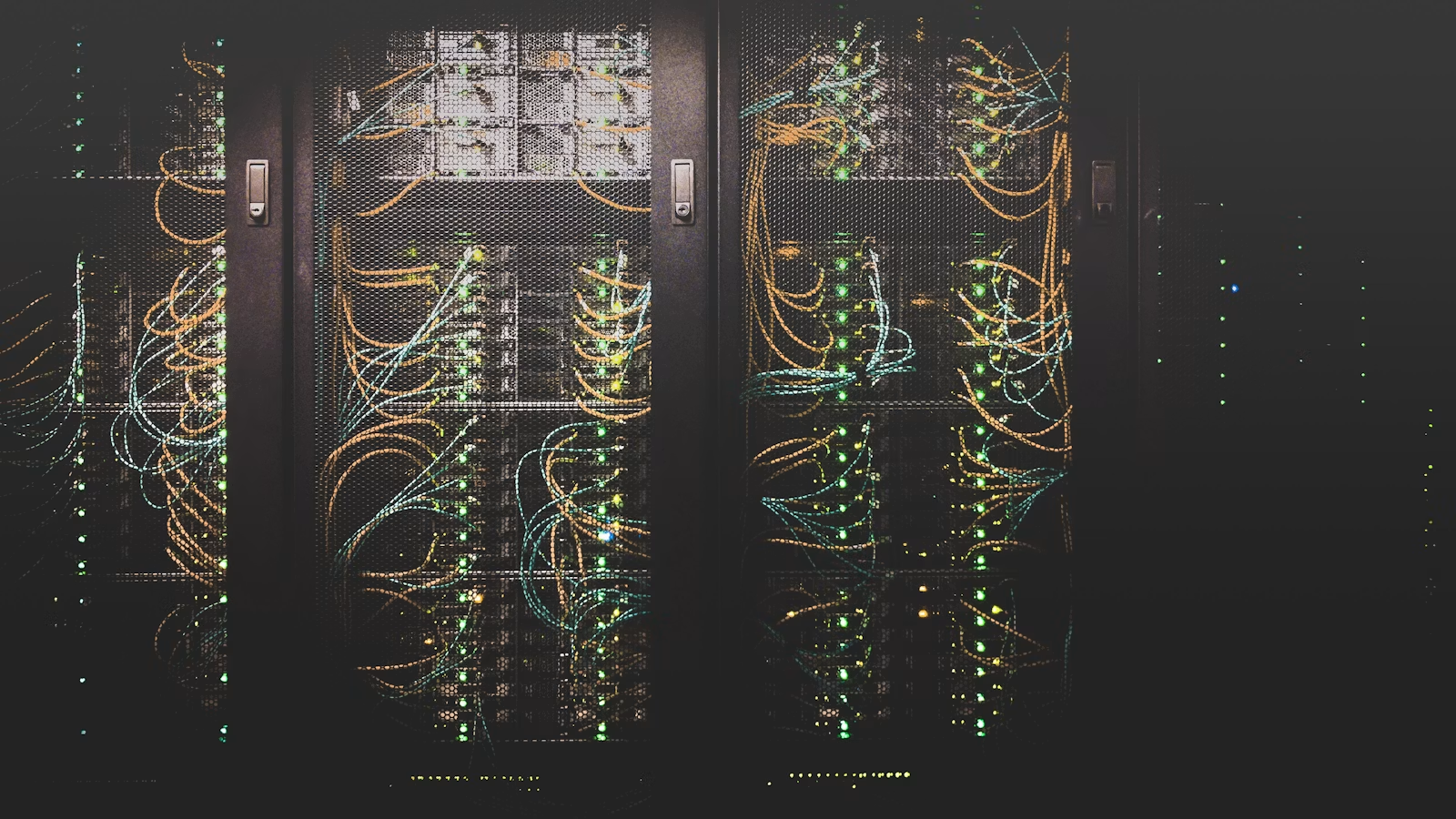
Data center power distribution remains Eaton's most important Q2 growth source. Q1 Electrical Americas sales reached $3.6 billion, up 20% year over year, with organic sales growth of 14%. Twelve-month rolling average organic order growth reached 42%, and total backlog rose 44% year over year. These figures show that AI data center demand is no longer just customer planning language; it is turning into real orders for medium- and low-voltage distribution, switchgear, power quality, UPS, busway, breakers, and power monitoring.
Eaton's value lies in solving time to power. After AI data center customers buy GPUs, they still need grid access, substation and distribution capacity, reliable power, backup power, power quality, and in-facility power distribution. The higher the rack power density, the more coordination is needed between early-stage electrical design and equipment delivery. Eaton does not directly determine the number of GPUs, but it affects whether a data center can be energized on schedule, operate reliably, and expand later.
Order quality in Electrical Americas matters more than single-quarter revenue. Data center, industrial electrification, and utility equipment often have longer delivery cycles: orders enter backlog first, then gradually convert into revenue. If Q2 backlog continues to grow strongly, it suggests customer buildout schedules have not meaningfully slowed. If revenue is strong but order growth decelerates, the market may worry that Q1's strong demand was pulled forward.
| Data Center Power Link | Eaton Capability | Revenue Contribution | Earnings Verification |
|---|---|---|---|
| Medium- and low-voltage distribution | Switchgear, switchboards | Equipment orders and project delivery | Electrical Americas sales |
| Power quality | UPS, monitoring, protection equipment | High-reliability demand | Orders / backlog |
| In-facility distribution | PDU, busway, breakers | Rack-level power expansion | Data center commentary |
| Grid interconnection | Utility-side equipment and control | Interconnection and expansion projects | Utility orders |
| Modular power | Prefabricated, standardized systems | Shorter deployment cycle | Time-to-power commentary |
| Service and maintenance | Digital monitoring and lifecycle service | Recurring / aftermarket | Margin and service revenue |
But data center orders also carry risk. If grid interconnection queues, transformer shortages, land and water approvals, or transmission expansion slow projects, some equipment delivery may be delayed. Eaton's advantage is that demand spans both utility and data center sides, so even if some projects are delayed, medium- to long-term electrical equipment investment can still increase. The risk is that the market may overestimate near-term growth if it treats all backlog as immediately recognizable revenue.
Summary: Data center power distribution remains Eaton's most important Q2 growth source. If Electrical Americas orders and backlog keep growing strongly, AI data center buildout is converting into executable electrical equipment demand. But investors should separate order visibility from short-term revenue recognition timing.
Boyd Thermal Liquid Cooling Acquisition: Can Eaton Expand From Distribution to Grid-to-Chip?
The Boyd Thermal acquisition is a key upgrade to Eaton's data center story. Eaton announced in March 2026 that it had completed the acquisition of Boyd Thermal, saying Boyd Thermal's liquid cooling capability would help the company offer integrated grid-to-chip solutions for data center customers. As AI rack power density rises, power distribution and thermal management are increasingly difficult to design separately. Through the acquisition, Eaton extends power management into thermal management.
The deal is large. In its 2025 acquisition agreement announcement, Eaton said it would acquire Boyd Thermal for $9.5 billion, valuing the company at 22.5 times Boyd Thermal's estimated 2026 adjusted EBITDA. Boyd Thermal was expected to generate 2026 sales of $1.7 billion, including $1.5 billion from liquid cooling. Boyd also confirmed the $9.5 billion sale price in its transaction completion announcement.
The strategic logic is clear: high-power AI servers need direct-to-chip cooling, cold plates, manifolds, CDUs, thermal interface materials, and facility water-loop coordination. Eaton already had a strong position on the data center power side. With Boyd Thermal added, it can participate earlier in customer architecture design and bundle power distribution, power conversion, protection equipment, liquid cooling, and lifecycle services into a more complete solution.
| Boyd Thermal Variable | Meaning for Eaton | What to Watch in Q2 |
|---|---|---|
| Liquid cooling | Adds cooling for high-power AI racks | Order synergy and customer feedback |
| Grid-to-chip | Creates a full solution from grid to chip | Whether it becomes a sales and contract advantage |
| Aerospace thermal | Strengthens aerospace thermal management | Synergy with Aerospace segment |
| $9.5 billion price | Shows revaluation of liquid cooling assets | Return on investment and integration cost |
| 2026 sales outlook | Provides an incremental revenue base | Consolidation timing and growth rate |
| Year-two accretion | Management's earnings contribution target | Whether accretion timeline is maintained |
Short-term risks should not be ignored. After Boyd Thermal is included in Electrical Global, it may bring intangible asset amortization, integration costs, supply-chain coordination, customer contract transitions, and margin-mix effects. If Q2 revenue contribution is clear but margin is pressured, the market will ask whether Eaton paid too much for a liquid cooling entry point. If management can explain order synergy, customer cross-selling, and the year-two accretion path, the acquisition will be easier to view as long-term value additive.
Summary: The Boyd Thermal acquisition expands Eaton's data center story from power distribution equipment to grid-to-chip solutions. In the short term, integration costs, order synergy, and margin impact matter. Over the long term, investors should watch whether liquid cooling raises customer stickiness and gets Eaton earlier into AI data center architecture design.
Why Grid Bottlenecks Can Help Eaton: Time to Power, Interconnection Queues, and Power Quality
Grid bottlenecks are a double-edged sword for Eaton. In the short term, interconnection queues, transformer supply, transmission and distribution expansion, and approval timelines can slow data center energization. Over the medium to long term, these bottlenecks force utilities, data center owners, and regulators to increase investment in distribution, interconnection, power quality, energy storage, digital controls, and modular power systems. Eaton's opportunity comes from both sides upgrading at the same time.
In its utility challenges report, Eaton said global data center electricity demand is expected to grow 12%-16% annually from 2025 to 2030, with global data center electricity consumption projected to reach 1,550 TWh by 2030. Hyperscale data centers and AI factories may require up to 1GW of power. The report also notes that utilities and data centers face shared challenges including interconnection timelines, grid reliability, T&D bottlenecks, power quality, and dynamic loads.
Another Eaton article on balancing grid demands cites IEA estimates that global data center electricity consumption was about 415 TWh in 2024 and could rise to about 945 TWh by 2030. It also says U.S. data centers are expected to account for nearly half of electricity demand growth from now to 2030. In other words, AI data centers are no longer only an IT department issue; they are utility planning, regional grid, capacity allocation, and reliability issues.
| Grid Bottleneck | Short-Term Impact | Medium- to Long-Term Opportunity for Eaton |
|---|---|---|
| Interconnection queue | Project energization delayed | More interconnection equipment and planning services |
| Transformer shortage | Delivery timelines stretch | Higher visibility for distribution equipment demand |
| T&D bottlenecks | Regional capacity constrained | More transmission and distribution upgrade investment |
| Power quality | High-density loads become more sensitive | More UPS, protection, and power-quality equipment |
| Dynamic loads | AI rack loads change faster | Higher value for digital monitoring and control systems |
| Sustainability mandates | Project design becomes more complex | More storage, microgrid, and flexible-load solutions |
In Q2 earnings, investors should listen for how management describes time to power. If Eaton only says demand is strong, the market may find the information insufficient. If it can explain how customers are placing orders earlier, how utility projects are being scheduled, and how data center and grid equipment jointly drive backlog, grid bottlenecks can shift from a risk into a measurable growth opportunity.
Summary: Grid bottlenecks are a double-edged sword for Eaton. In the short term, they may delay data center energization and equipment delivery. Over the medium to long term, they drive investment in distribution, interconnection, power quality, automation, and grid upgrades, raising the strategic value of Eaton's solutions in the AI infrastructure chain.
What to Watch in Q2 Margins: Can Strong Orders Offset Acquisition, Expansion, and Supply-Chain Costs?
Eaton Q2 should not be judged only by whether orders are strong; investors also need to see whether orders convert into margins. Q1 segment margins were 22.7%, above the guidance range but down 120 basis points year over year. Electrical Americas operating margin was 25.6%, while Electrical Global operating margin was 19.2%. This shows Eaton's electrification business remains highly profitable, but expansion, acquisitions, product mix, and supply-chain costs have become important variables in margin analysis.
Q2 guidance sets segment margin at 22.6%-23.0%, while full-year segment margin guidance is 24.1%-24.5%. If Q2 segment margin falls below the range, the market will worry that Boyd Thermal consolidation, intangible asset amortization, integration expenses, expansion investment, and supply-chain costs are pressuring earnings. If margins meet or exceed expectations, it will suggest Eaton's pricing power, capacity utilization, and order quality are strong enough to offset costs.
Boyd Thermal also makes Electrical Global margin more important. Eaton's Q1 2026 Form 10-Q shows that the company acquired Boyd Thermal on March 12, 2026, for about $9.55 billion net of cash acquired and included it in the Electrical Global business segment. Q2 will be the quarter in which the market can observe Boyd's consolidated impact more fully.
| Margin Variable | Positive Signal | Cautious Signal |
|---|---|---|
| Electrical Americas margin | Remains high | Expansion and supply-chain costs drag |
| Electrical Global margin | Stable after Boyd consolidation | Integration and amortization pressure is clear |
| Pricing power | Can pass through material and capacity costs | Strong orders but insufficient pricing |
| Capacity expansion | Capacity release improves efficiency | Capex and startup costs are high |
| Free cash flow | Earnings convert into cash | Inventory and receivables increase |
| Adjusted EPS | Meets or exceeds guidance | Revenue strong but earnings lag |
Eaton's valuation is not low, so the market will not reward revenue growth alone. The investment logic for the AI power chain is "strong demand, visible orders, stable margins, and cash flow delivery." If Q2 shows strong orders but weak margin and cash flow, investors will worry that growth is becoming too expensive. If orders, margins, and free cash flow are all stable, ETN's quality premium will be easier to maintain.
Summary: Eaton Q2 is not just about whether orders are strong, but whether orders convert into margins and cash flow. If data center demand is strong but acquisition integration, expansion, and cost pressure drag on margin, the market may not fully reward revenue growth.
How to Judge ETN After Earnings: Full-Year Guidance, Liquid Cooling Synergy, and Valuation Risk
After earnings, ETN can be judged through six questions. First, did Q2 sales and adjusted EPS meet or beat guidance? Second, is organic growth near the high end of the 9%-11% range? Third, are Electrical Americas orders and backlog still strong? Fourth, does Boyd Thermal show order synergy or customer feedback? Fifth, are segment margin and free cash flow stable? Sixth, is full-year guidance raised, or is there room for a later raise?
If most of these questions lean positive, Eaton's AI power infrastructure logic remains intact. If only revenue and orders are strong while Boyd integration, margins, cash flow, or grid project delivery show pressure, the market may reassess ETN's valuation. Investors currently give Eaton a premium because it combines growth, visibility, and earnings quality, not because it simply carries an "AI infrastructure" label.
Full-year guidance is the second-layer catalyst in this framework. Eaton already raised the midpoint of its 2026 organic growth guidance from 8% to 10% in Q1 and gave full-year adjusted EPS guidance of $13.05-$13.50. If Q2 Electrical Americas, Electrical Global, and Aerospace all come in stronger than expected, full-year organic growth may still have room to move higher. But whether adjusted EPS is raised also depends on whether Boyd Thermal integration, intangible asset amortization, restructuring costs, Mobility separation preparation, and capital spending offset revenue upside.
The Mobility spin-off will also affect the valuation lens. Eaton plans to separate Mobility into an independent public company in Q1 2027. If progress stays on track, the market may evaluate the remaining business more through electrification, data center, and aerospace logic. In other words, Q2 is not only about orders and EPS; it is also about whether Eaton continues moving toward a more focused electrification platform.
If ETN is treated as a way to observe the AI power infrastructure chain, it can be compared with Vertiv, GE Vernova, Schneider Electric ADR, and other companies to confirm whether data center power, liquid cooling, grid, and industrial electrification demand are validating each other. When using biya for U.S. stock monitoring or trading preparation, users can first confirm tradable names through the U.S. stock list, then set a plan based on earnings timing, order types, and position limits. For mobile access, they can also download the app.
biya supports multi-asset trading across U.S. stocks, Hong Kong stocks, and cryptocurrencies, making it useful for comparing electrification, AI infrastructure, technology stocks, and risk assets within one framework. On fees, biya's U.S. stock commission is $0. Platform fees, external institution fees, exchange rates, order prices, and other applicable costs should be checked against the biya fee page, order-page display, and platform rules. Post-earnings trading should also account for ETN's elevated valuation, pre-market / intraday volatility, bid-ask spreads, limit-order versus market-order differences, and the maximum drawdown each investor can tolerate.
| Judgment Dimension | Positive Combination | Cautious Combination |
|---|---|---|
| Organic growth | Reaches high end of guidance | Below the 9%-11% range |
| Electrical orders | Americas and Global both strong | Order growth slows |
| Backlog | Continues growing strongly with good quality | High backlog but delayed delivery |
| Boyd Thermal | Clear order synergy | Integration costs pressure margin |
| Segment margin | Meets or exceeds expectations | Revenue strong but margin weak |
| Full-year guidance | Organic growth or EPS raised | Costs and delivery limit upside |
| Free cash flow | Earnings convert smoothly into cash | Inventory and capex pressure rises |
For ordinary investors, the biggest risk after ETN earnings is equating data center enthusiasm directly with stock upside. Eaton's logic is more solid, but its valuation is also more demanding: orders, margins, cash flow, and guidance need to validate each other. If investors only see strong AI demand while ignoring grid interconnection delays, acquisition integration, and valuation level, post-earnings volatility may be larger than expected.
Summary: After earnings, the key to judging ETN is not whether the AI data center concept is popular, but whether Electrical orders, backlog, Boyd Thermal synergy, margins, free cash flow, and full-year guidance validate each other. If these signals line up, Eaton's electrification valuation logic becomes steadier.
FAQ
When Will Eaton Report Q2 2026 Earnings?
Eaton Q2 2026 earnings will be released before the U.S. market opens on July 31, 2026, with a conference call at 11:00 a.m. ET.
What Is Eaton's Most Important Q2 Business?
The focus is Electrical Americas and Electrical Global, especially data center power distribution, grid interconnection, power quality, industrial electrification, and Boyd Thermal liquid cooling synergy.
What Does the Boyd Thermal Acquisition Mean for Eaton?
Boyd Thermal adds liquid cooling capability, allowing Eaton to provide grid-to-chip power and thermal management solutions for data center customers. In the short term, investors still need to watch integration costs, order synergy, and margin impact.
Are Grid Bottlenecks Positive or Negative for Eaton?
In the short term, they may delay some data center energization and project delivery. Over the medium to long term, they drive investment in distribution, interconnection, automation, power quality, and grid upgrades, which is more favorable for Eaton's solution demand.
What Should Investors Watch Most After ETN Earnings?
Prioritize organic growth, Electrical Americas orders, backlog, segment margin, free cash flow, Boyd Thermal integration progress, and whether full-year guidance is raised.
*This article is provided for general information purposes and does not constitute legal, tax or other professional advice from BiyaPay or its subsidiaries and its affiliates, and it is not intended as a substitute for obtaining advice from a financial advisor or any other professional.
We make no representations, warranties or warranties, express or implied, as to the accuracy, completeness or timeliness of the contents of this publication.
Related Blogs of

The Three Questions Palantir Earnings Must Answer: AIP Growth, Government Contracts, and Valuation Risk


Apple Fiscal 2026 Q3 Earnings Preview: iPhone, Services, China Revenue, and Guidance

Will Rising Memory Prices Pressure Apple's Margins? iPhone Pricing, Supply Chain, and Earnings Impact


Will Amazon Keep Raising AI Capital Spending? AWS, Free Cash Flow, and the \$200 Billion Investment Plan

Choose Country or Region to Read Local Blog
 Australia
 Austria
 Belgium
 Canada
 Cyprus
 Czech Republic
 Denmark
 Estonia
 Finland
 France
 Germany
 Greece
 Hong Kong
 India
India Indonesia
 Ireland
 Italy
Italy Japan
Japan Latvia
 Lithuania
 Luxembourg
 Malaysia
 Malta
Malta Morocco
 Nepal
Nepal Netherlands
 New Zealand
 Norway
 Pakistan
 Philippines
 Poland
 Portugal
 Romania
 Singapore
 Slovakia
 Slovenia
 South Africa
 South Korea
 Spain
Spain Sweden
 Thailand
 United States
 Turkey
 United Arab Emirates
 United Kingdom
 Vietnam
Contact Us



