
What Would Stripe Buying PayPal Mean for Visa, Mastercard, and Block?





If Stripe ultimately buys PayPal, the impact will go far beyond a simple “who acquired whom” headline. It could change how the payments industry prices merchant access, consumer wallets, transaction data, and network-layer moats. Visa and Mastercard are unlikely to be directly replaced in the short term because they still control global card networks and clearing infrastructure. Block faces a more direct comparison pressure because Square and Cash App map closely to the merchant and consumer sides of the market. The key is not the M&A headline itself, but whether the deal is signed, how regulators respond, and whether payment-company valuation anchors shift from transaction volume to control over payment entry points.
Key Takeaways
- Stripe buying PayPal would be more about infrastructure plus wallet access.
- Visa and Mastercard’s card-network moats remain solid in the short term.
- Block faces two-sided comparison pressure across Square and Cash App.
- Venmo, Braintree, and PayPal Checkout are core strategic assets.
- Regulatory focus may fall on merchant choice and platform effects.
- Investment analysis should combine deal progress, earnings, and valuation reset.
Why Would Stripe Want to Buy PayPal? The Strategic Logic Is Not Just Scale

The core logic behind Stripe acquiring PayPal is not simply adding two payment volumes together. It is about building a closed loop across “merchant payment infrastructure + consumer wallet + branded checkout access.” Stripe is strong in developers, merchant processing, platform businesses, and financial infrastructure. PayPal is strong in consumer accounts, PayPal Checkout, Venmo, Braintree, and global market coverage. If the two are combined, payment competition could shift from processing transactions to controlling checkout decision points.
According to public reports, Reuters said Stripe and Advent made an offer of $60.50 per share, valuing the transaction at more than $53 billion. However, PayPal’s board reportedly viewed the offer as insufficient and was also concerned about financing and regulatory obstacles. A more accurate framing is therefore “if the deal moves forward,” rather than treating the acquisition as already completed.
Stripe’s strength sits on the merchant side. Its 2025 annual update said businesses using Stripe generated $1.9 trillion in business volume in 2025, equivalent to 1.6% of global GDP. That shows Stripe is already a major underlying tool for global internet commerce, but it lacks PayPal’s long-standing consumer brand and wallet account network.
PayPal’s strategic value comes from its two-sided network. According to PayPal’s 2025 Form 10-K, the company had 439 million active accounts at the end of 2025, covered about 200 markets, and processed $1.79 trillion in annual TPV. For Stripe, this would not be merely buying another company. It would mean acquiring consumer access, transaction data, and global payment-localization capability.
| PayPal Asset | Value to Stripe | Impact on the Payments Industry |
|---|---|---|
| PayPal Checkout | Adds branded checkout access | Competes more directly with Apple Pay and Shop Pay |
| Venmo | Strengthens U.S. consumer wallet use cases | Reopens the monetization story around P2P payments |
| Braintree | Strengthens large-merchant processing | Creates overlap with Stripe’s core business |
| Global account network | Expands cross-border and local payment reach | Improves multi-sided platform bargaining power |
| Risk and transaction data | Improves authorization and anti-fraud capabilities | Raises regulatory attention |
This is why Visa, Mastercard, and Block would all be re-examined by the market. Visa and Mastercard represent the network layer. Stripe-PayPal would represent a stronger merchant and wallet access layer. Block looks like the closest “smaller two-sided ecosystem”: Square sits on the merchant side, while Cash App sits on the consumer financial-app side. If the acquisition closes, investors will compare each company’s ability to control payment decision points.
Summary: Stripe’s strategic logic in buying PayPal is not about stacking payment volume, but about combining Stripe’s merchant infrastructure with PayPal’s consumer wallet, Venmo, Braintree, and global account network. PayPal is a strategic asset because it connects both consumers and merchants, not because it only processes transactions. As long as the deal remains in the offer-and-negotiation stage, the analysis should stay conditional. Even if the transaction ultimately fails, the market will continue discussing PayPal’s asset value, the consolidation potential of the payments industry, and who can control the next generation of checkout access.
For Visa and Mastercard: The Threat Is More Long-Term Bargaining Pressure Than Short-Term Replacement

The short-term impact of Stripe buying PayPal on Visa and Mastercard would likely be limited, because these companies are not ordinary payment apps. They are global open-loop card networks connecting issuers, acquirers, merchants, and consumers. Their revenue foundation comes from payment volume, cross-border transactions, data processing, and value-added services. The real question is long-term bargaining pressure: could a stronger Stripe-PayPal weaken the card networks’ growth narrative through merchant routing, wallet access, and risk-management services?
Visa remains massive. Its fiscal 2025 data showed total volume of $16.7 trillion, payments volume of $14.2 trillion, 257.5 billion transactions processed on Visa’s network, and nearly 4.9 billion payment credentials. That kind of network scale is difficult for a single wallet or acquiring platform to replace quickly.
Mastercard has a similar network advantage. Mastercard’s 2025 Form 10-K showed GDV of $10.6 trillion and 175.5 billion switched transactions. More importantly, Mastercard does not rely only on traditional transaction switching. It emphasizes the reinforcing relationship between its payment network and value-added services: the more transaction data it processes, the more valuable its risk, identity, data analytics, and network services can become.
The challenge from Stripe-PayPal to Visa and Mastercard would more likely appear around three boundaries. The first is merchant routing: large merchants will keep looking for lower-cost and higher-authorization payment paths. The second is wallet access: if PayPal, Venmo, or Stripe Link gains more prominent placement on checkout pages, consumer payment choice may be shaped by the front end. The third is value-added services: if Stripe and PayPal combine their data, they could compete more directly with card networks in fraud prevention, authorization optimization, and identity verification.
| Impact Dimension | Visa / Mastercard Strength | Potential Stripe-PayPal Challenge | Key Question |
|---|---|---|---|
| Global acceptance network | Broad coverage and mature rules | Hard to bypass in the short term | Moat remains solid |
| Merchant payment cost | Stable network and broad acceptance | Routing and authorization optimization | Does bargaining pressure rise? |
| Cross-border payments | Strong card-network rules | Wallets and local payments as complements | Does partial substitution expand? |
| Data value-added services | Long history of transaction data | More complete merchant and wallet data | Pricing power in value-added services |
| Consumer access | Relies on issuers and wallet partners | PayPal/Venmo directly reach users | Changes in front-end share |
That said, Visa and Mastercard are not necessarily harmed. Many digital wallet transactions still rely on linked cards. PayPal and Venmo funding sources also often pass through card networks or bank accounts. If Stripe-PayPal improves online payment success rates, reduces failed transactions, and increases merchant conversion, total electronic payment volume may continue growing, leaving card networks with room to benefit from overall market expansion. In its 2025 CEO message, Visa noted that Visa Direct transactions had grown about eightfold since 2019 and that value-added services revenue approached $11 billion, showing how card networks are expanding from traditional card payments into money movement and service layers.
Summary: For Visa and Mastercard, Stripe-PayPal would not be an immediate replacement threat. It would be a potential source of long-term bargaining pressure. The card networks’ global reach, issuer ecosystem, cross-border rules, and transaction-processing capabilities remain strong. However, if Stripe-PayPal controls more merchant routing, checkout buttons, wallet access, and anti-fraud data, the market may reassess the long-term growth ceiling of card networks. Investors should not ask whether Visa or Mastercard will disappear. The better question is whether payment volume, cross-border revenue, value-added service growth, and merchant bargaining power show marginal changes.
For Block: Cash App and Square Would Be Compared Against a Stronger Benchmark
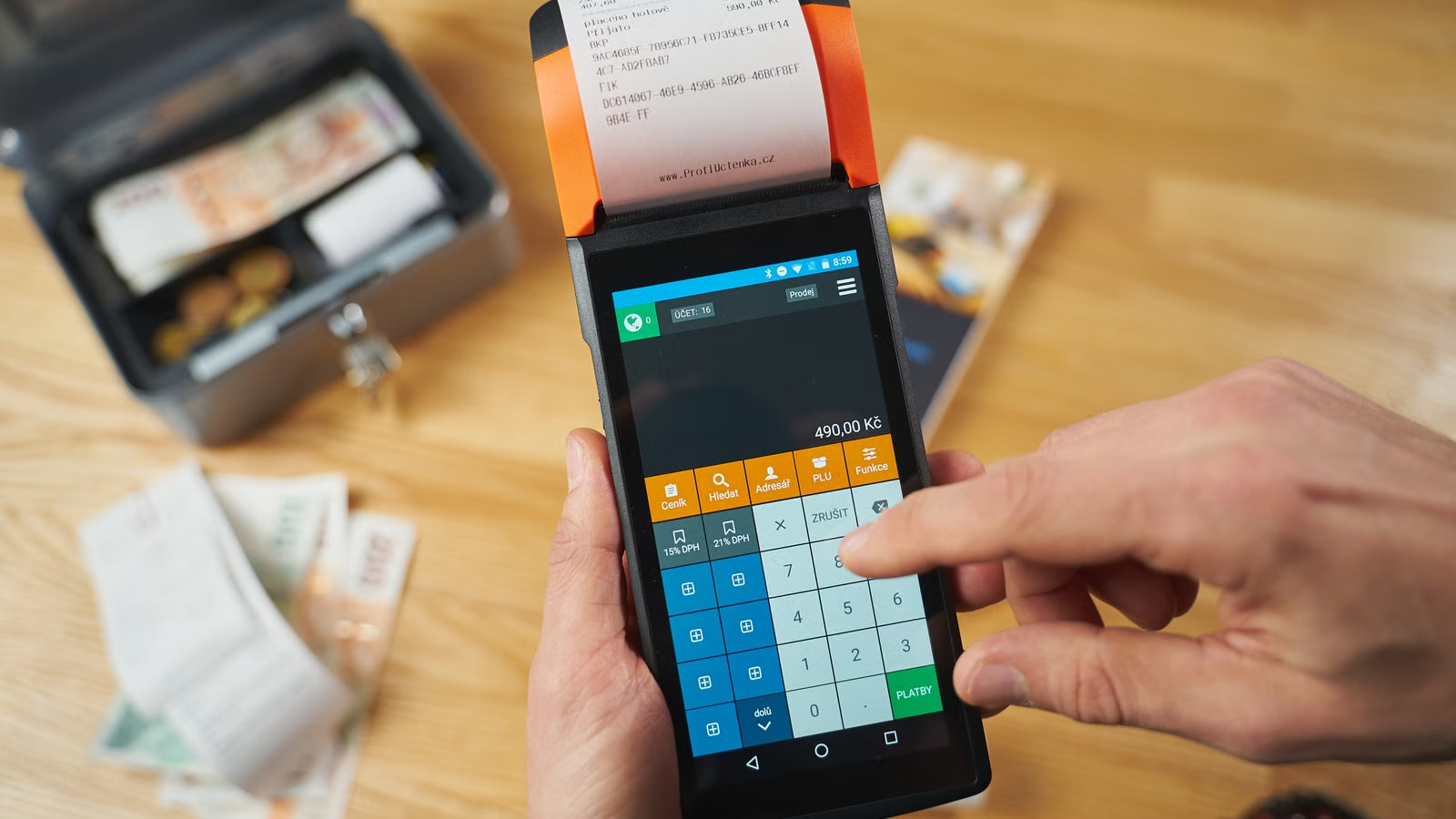
Stripe buying PayPal would have a more direct impact on Block because Block owns both the Square merchant ecosystem and the Cash App consumer wallet. That makes it structurally similar to a potential Stripe-PayPal combination. Visa and Mastercard sit closer to the network layer, so the impact on them is more indirect. Block would be compared more closely across merchant services, wallet engagement, BNPL, small-business financial services, and consumer-finance stickiness.
Block’s growth is not weak. According to Block’s Q1 2026 shareholder letter, the company generated $2.91 billion in gross profit, up 27% year over year. Cash App gross profit was $1.91 billion, up 38%, while Square gross profit was $982 million, up 9%. Square GPV grew 13% year over year. These numbers show Block still has growth momentum, but its competitive benchmark could become stricter.
Square faces the merchant-side question. It has long been strong in small merchants, offline POS, restaurants, retail, and integrated hardware-software solutions. Stripe is strong in developers, online payments, platform businesses, and complex merchant use cases. Braintree has long served large merchants and enterprise payment processing. If Stripe gains both Braintree and PayPal’s merchant resources, the market will ask whether it can move from online and large merchants into Square’s core territory.
Cash App faces the consumer-side question. Cash App and Venmo are both central assets in the U.S. consumer wallet market, but their monetization paths differ. Cash App’s strengths include Cash App Card, direct deposits, lending, investing, and broader financial-service stickiness. Venmo’s strengths include its social-payment mindshare and potential for merchant conversion within the PayPal system. If Stripe-PayPal reactivates Venmo monetization, Cash App’s active users, gross profit per user, and financial-product penetration will be compared more frequently.
| Comparison Dimension | Block | Potential Stripe-PayPal Combination | Investor Focus |
|---|---|---|---|
| Merchant services | Square is strong in small merchants and offline use cases | Stripe/Braintree are strong in online and enterprise use cases | Square GPV and mid-market penetration |
| Consumer wallet | Cash App has deeper financial services | PayPal + Venmo has larger account scale | Active users and gross profit per user |
| BNPL | Afterpay | PayPal credit and checkout scenarios | Risk cost and conversion rate |
| Data loop | Merchant and consumer ecosystems | Infrastructure plus wallet accounts | Cross-selling efficiency |
| Internationalization | Still has room to expand | PayPal covers about 200 markets | Overseas growth speed |
Block’s opportunity lies in differentiation. If Square continues improving penetration among larger sellers and Cash App keeps increasing direct deposit, card spending, and lending-product usage, Block can still prove the efficiency of its own ecosystem loop. Reuters reported that after Q1, Block raised its 2026 gross profit outlook to $12.33 billion, reflecting management’s confidence in the growth of Cash App and Square. But if future growth relies more heavily on credit expansion or higher-risk financial services, investors will also watch credit losses and regulatory boundaries.
Summary: Block is unlikely to be directly crushed by Stripe-PayPal, but it would become the payments stock most easily compared side by side. The reason is that Block’s Square and Cash App map closely to the merchant and consumer sides of a Stripe-PayPal combination. If Block can prove that Square still has unique advantages in small merchants and offline use cases, and that Cash App can keep improving consumer-finance monetization, valuation pressure may ease. If growth slows or risk costs rise, the market may rotate more quickly toward larger payment platforms with more complete asset combinations.
For the Payments Industry: Merchant Acquiring, Wallet Access, and Data Capabilities Would Be Reordered
Stripe buying PayPal would push the payments industry from “who processes more transactions” toward “who controls more payment decision points.” These decision points include merchant onboarding, checkout buttons, payment-method ranking, authorization rates, consumer wallets, risk data, and cross-border localization. Payment-company valuation may increasingly depend not only on TPV, transaction count, or GMV, but also on whether a platform can connect the merchant side, consumer side, and data services.
Merchant-side competition would likely change first. In the past, payment processors competed heavily on rates, reliability, payment-method coverage, and settlement speed. Now large merchants care more about authorization rates, checkout conversion, fraud losses, multi-currency capability, subscription billing, and embedded finance. Stripe’s product language already centers on developers and business infrastructure. If PayPal is integrated, Stripe would gain a stronger consumer-trust layer, account system, and wallet access.
Wallet access would also become more important. PayPal, Venmo, Cash App, Apple Pay, Shop Pay, and Stripe Link are not just payment methods. They are gateways into consumer identity, risk signals, loyalty, installment payments, marketing, and financial services. Whoever appears more prominently on the checkout page may influence payment choice, merchant conversion, and long-term data accumulation.
Regulatory risk would rise as well. The U.S. FTC has HSR Act merger notification and waiting period requirements for large deals, while the DOJ and FTC’s multi-sided platform merger guidance emphasizes that platform mergers may affect competition between platforms, within platforms, and from alternative platforms trying to enter. In Europe, EU merger procedures usually begin with Phase I and may move into a longer Phase II if concerns are complex. For a platform-style transaction covering merchants, wallets, and data, a Stripe-PayPal deal would likely be reviewed through more than a single market-share lens.
| Industry Layer | Past Competitive Focus | Potential New Focus After the Deal |
|---|---|---|
| Card networks | Payment volume, cross-border transactions, rules | Data value-added services and wallet partnerships |
| Acquiring and processing | Fees, reliability, payment-method coverage | Authorization optimization and merchant conversion |
| Wallets | P2P, balances, linked cards | Checkout access and financial services |
| Merchant software | POS, orders, inventory management | Embedded finance and AI tools |
| Cross-border payments | Local payment coverage | Multi-currency, fund flows, and compliance capability |
For investors, this industry shift would show up in valuation metrics. Visa and Mastercard would still be judged by payment volume, cross-border transactions, and value-added services. Block would be judged by Square GPV, Cash App gross profit, active users, and financial-product risk. PayPal would be judged by TPV, active accounts, Venmo monetization, and Braintree asset quality. Stripe would be judged by merchant growth, enterprise clients, internationalization, and penetration of new financial tools.
If you follow payment-stock opportunities, you need to look beyond industry narratives and include actual trading costs. Biya charges $0 commission for U.S. stock trading, while platform fees, external institutional fees, and other charges are subject to Biya U.S. stock trading fees and the order display. For highly watched U.S. stocks such as Visa, Mastercard, Block, and PayPal, a single fee may not determine the investment direction, but frequent rebalancing, event-driven trades, and short-term volatility trades are all affected by cost structure.
Summary: A potential Stripe-PayPal combination would shift payments competition from “transaction processing capability” toward a broader contest over payment access, merchant software, wallet accounts, and data intelligence. Visa and Mastercard remain core network-layer companies, while Block still has the dual ecosystem of Square and Cash App. But the market would care more about who can influence the payment choice on the checkout page, who can improve merchant authorization rates, and who can convert wallet data into financial-service revenue. The future valuation logic for payment companies may tilt more toward access control and data capability, not just transaction scale.
How Should Investors Watch the Share-Price Reactions of Visa, Mastercard, and Block?
If the Stripe-PayPal deal continues to move forward, the share-price reactions of Visa, Mastercard, and Block should not be judged only by one-day moves. They should be observed across five stages: deal confirmation, regulatory review, business overlap, earnings validation, and valuation reset. The impact on Visa and Mastercard is more indirect, with the focus on network transaction volume and value-added services. The impact on Block is more direct, with the focus on whether Square and Cash App are repriced against a stronger combined platform.
The first stage is whether the deal is signed. As long as PayPal’s board has not accepted the offer, all industry impact remains conditional. If the buyers raise the offer and sign a definitive agreement, the payments sector may be repriced. If negotiations fail, the market may shift back to PayPal’s standalone valuation and the possibility of asset separation.
The second stage is the regulatory path. If regulators focus on overlap between Braintree and Stripe in merchant processing, asset divestiture discussions may emerge. If regulators focus on wallets, data, and platform access, the review could become more complex. Visa and Mastercard may not necessarily fall directly during this stage, while Block could see more volatility because its merchant and wallet comparability is stronger.
The third stage is earnings validation. Payment companies still need operating data to prove their case. These are the key indicators to track:
| Company | Key Metrics | Why They Matter |
|---|---|---|
| Visa | Payments volume, processed transactions, cross-border volume | Shows whether card networks still benefit from electronic-payment growth |
| Mastercard | GDV, switched transactions, value-added services | Shows resilience in network revenue and service monetization |
| Block | Square GPV, Cash App gross profit, monthly transacting actives | Shows whether merchant and wallet ecosystems are being squeezed |
| PayPal | TPV, active accounts, Venmo, Braintree | Shows the quality and bargaining power of the acquisition assets |
| Stripe | Merchant scale, internationalization, platform clients, AI commerce payments | Shows whether the infrastructure story keeps strengthening |
The fourth stage is valuation reset. If the market sees Stripe-PayPal as a new benchmark for “infrastructure plus wallet access,” Block may face a valuation discount or repricing. If Visa and Mastercard continue proving strength in cross-border transactions and value-added services, card-network valuations may remain resilient. If the acquisition fails but the market rediscovers PayPal’s asset value, the payments sector may diverge rather than move uniformly higher or lower.
A practical way to watch the industry is to divide payment companies into three layers. Visa and Mastercard are the network layer. Stripe and Braintree are the merchant infrastructure layer. PayPal, Venmo, and Cash App are the consumer wallet and financial-services layer. The meaning of Stripe buying PayPal is that the second and third layers could become more tightly connected. The question is not whether one company “definitely benefits” or “definitely loses,” but whether its bargaining position across these three layers has changed.
Summary: The share-price reactions of Visa, Mastercard, and Block cannot be simplified into winners and losers. For Visa and Mastercard, the core question is whether card networks are being bypassed and whether value-added service pricing power is being weakened. For Block, the core question is whether Square and Cash App can still prove the efficiency of a dual ecosystem. Payments M&A news often changes the valuation narrative first, and earnings data validates or rejects that narrative later. You need to analyze deal progress, regulatory outcomes, key operating indicators, and valuation changes together, rather than trading on a single acquisition headline.
If you are following payment stocks such as Visa, Mastercard, Block, and PayPal, it is better to put deal news, earnings metrics, regulatory progress, and fee structure into the same observation framework. Biya is a global multi-asset trading wallet that supports U.S. stocks, Hong Kong stocks, and digital asset trading. Subject to local laws and regulations, identity verification results, and platform rules, you can use Biya to follow U.S. market opportunities and track related tickers through Biya U.S. stock search. If you need to monitor market changes on mobile, you can also use the Biya App. This content only introduces publicly available market information, trading rules, and fee structures. It does not constitute investment advice. Service availability depends on the user’s location, verification status, platform rules, and applicable laws and regulations.
FAQ
Would Stripe Acquiring PayPal Directly Threaten Visa and Mastercard?
Not in the short term, but it could create long-term bargaining pressure. Visa and Mastercard still control global card networks, issuer ecosystems, and cross-border rules. Stripe-PayPal would more likely compete through merchant routing, wallet access, and value-added services.
What Would Stripe Buying PayPal Mean for Block’s Cash App?
Cash App would face a stronger wallet monetization comparison. The market would compare Cash App with Venmo and PayPal Wallet across active users, gross profit per user, card spending, lending products, BNPL, and financial-service penetration.
Why Is PayPal’s Braintree a Key Asset in a Stripe Acquisition?
Braintree is an important PayPal asset for large merchants and enterprise payment processing. It could strengthen Stripe’s enterprise merchant capabilities, but it also overlaps with Stripe’s core business, making it both strategically valuable and potentially central to antitrust review or asset-divestiture discussions.
Which Would Be More Affected: Visa, Mastercard, or Block?
Block has stronger business comparability and may face greater short-term repricing pressure. Visa and Mastercard sit closer to the network layer, so the impact is more indirect. Block owns both Square’s merchant ecosystem and Cash App’s consumer wallet, making it easier to compare against Stripe-PayPal.
Could Stripe Acquiring PayPal Change Digital Payments Valuation Logic?
It could, but the effect depends on whether the deal is signed and how regulators respond. If the transaction moves forward, payment-company valuation may shift from pure TPV and transaction count toward wallet access, merchant conversion, data capability, cross-border efficiency, and financial-service monetization.
*This article is provided for general information purposes and does not constitute legal, tax or other professional advice from BiyaPay or its subsidiaries and its affiliates, and it is not intended as a substitute for obtaining advice from a financial advisor or any other professional.
We make no representations, warranties or warranties, express or implied, as to the accuracy, completeness or timeliness of the contents of this publication.
Related Blogs of

Crypto Exchange Fees Comparison: Trading Fees, Spreads, and Withdrawals


Online Bank-to-Bank Transfers: Account Linking, Steps, and Limits





Choose Country or Region to Read Local Blog
 Australia
 Austria
 Belgium
 Canada
 Cyprus
 Czech Republic
 Denmark
 Estonia
 Finland
 France
 Germany
 Greece
 Hong Kong
 India
 Indonesia
 Ireland
 Italy
 Japan
 Latvia
 Lithuania
 Luxembourg
 Malaysia
 Malta
 Morocco
 Nepal
 Netherlands
 New Zealand
 Norway
 Pakistan
 Philippines
 Poland
 Portugal
 Romania
 Singapore
 Slovakia
 Slovenia
 South Africa
 South Korea
 Spain
 Sweden
 Thailand
 United States
 Turkey
 United Arab Emirates
 United Kingdom
 Vietnam