Nasdaq 100 vs S&P 500: From Components to Future Outlook in One Article




Image Source: pexels
Investment decisions should align closely with personal goals. Investors seeking outstanding growth and able to tolerate high market volatility typically focus on the tech-heavy Nasdaq Index. In contrast, those seeking steady overall market returns and preferring risk diversification are better suited to the broader S&P 500 Index, which represents the breadth of the U.S. economy.
Key Takeaways
- The Nasdaq 100 Index primarily invests in tech companies, pursuing high growth but with significant volatility.
- The S&P 500 Index includes large companies across U.S. industries, pursuing stable returns with better risk diversification.
- The Nasdaq 100 Index has higher long-term returns but can experience larger drawdowns during market declines.
- Conservative investors suit the S&P 500; aggressive investors suit the Nasdaq 100.
- Investors can combine both indices, using the S&P 500 as the core and Nasdaq 100 as a satellite allocation to balance risk and return.
Core Differences: Components and Sector Distribution
The most fundamental differences between the two indices stem from their selection criteria and component composition, which directly determine their sector focus and risk-return characteristics.
Sector Composition: Tech Concentration vs Comprehensive Coverage
The S&P 500 Index aims to be a microcosm of the U.S. economy, covering approximately 500 large listed companies and encompassing all major economic sectors. Its selection process is managed by a dedicated committee that requires companies to achieve profitability in the past four quarters, ensuring the quality and representativeness of components.
In contrast, the Nasdaq 100 Index has a narrower and more distinctive scope.
- Nasdaq 100 Index Selection Criteria:
- Eligible securities must be listed on the Nasdaq exchange.
- All financial companies are explicitly excluded.
- The largest 100 non-financial companies are selected by market capitalization.
This screening mechanism results in the Nasdaq Index being highly concentrated in innovation-driven sectors like technology, communication services, and consumer sectors, making it the benchmark for measuring U.S. tech sector performance.
| Index Name | Number of Companies | Sector Coverage |
|---|---|---|
| Nasdaq 100 | About 100 | Concentrated in tech and non-financial sectors |
| S&P 500 | About 500 | Covers all major U.S. economic sectors |
Weighting Impact: Giant Effect and Diversification Level
Although both indices use market-cap weighting, their vastly different number of companies and composition lead to distinct weight distributions.
The “giant effect” in the Nasdaq 100 Index is very pronounced. A few tech giants’ market caps account for a huge proportion of the index, meaning their stock price movements have a decisive impact on the entire index.
Tip: The top 10 companies in the Nasdaq 100 Index typically account for over 50% of the total weight. This high concentration is both the engine of its high growth and the source of its high volatility.
In contrast, the S&P 500 Index, with 500 companies, has a more dispersed weight distribution. Although top companies are also tech giants, their overall influence on the index is relatively smaller, providing investors with better risk diversification.
Historical Performance: Return and Risk Comparison
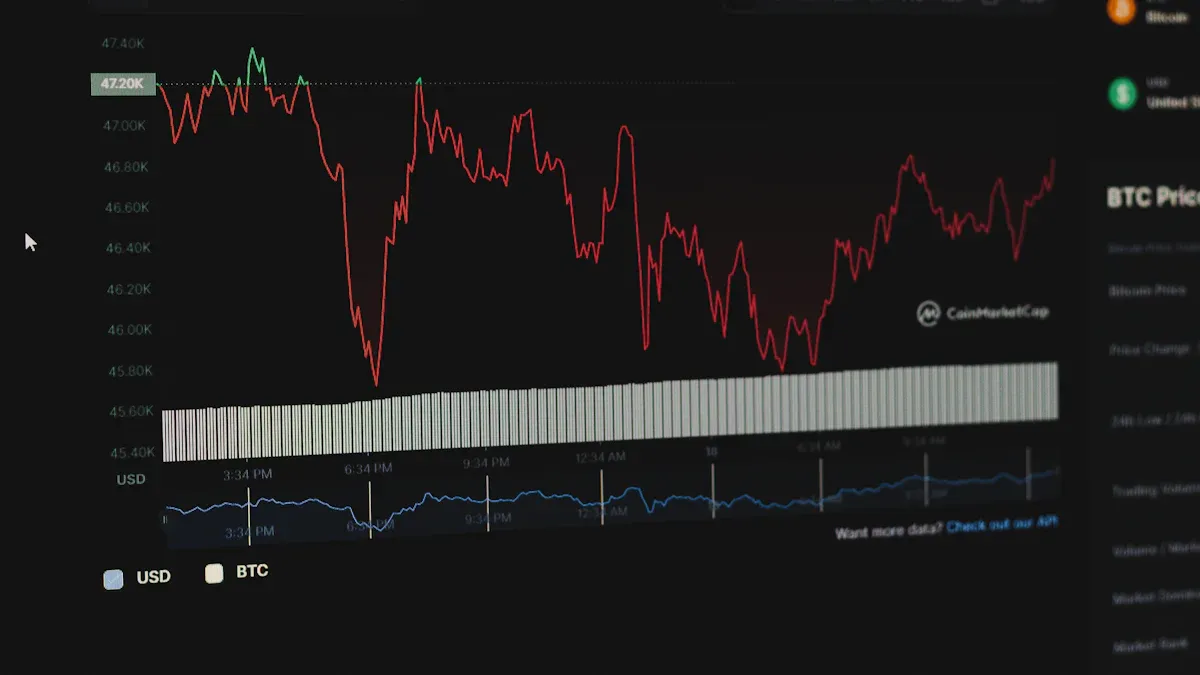
Image Source: unsplash
Historical data is the most intuitive benchmark for evaluating investment vehicles. By reviewing the past, investors can better understand the return potential and risks of the two indices.
Long-Term Returns: Nasdaq Index Shows Greater Explosive Power
In terms of long-term returns, the Nasdaq 100 Index has demonstrated astonishing growth capability. This is mainly due to the strong performance of tech giants in its components. Over the past decade, technological innovation and the digital wave have driven these companies to achieve excess growth, directly translating into high returns for the index.
Historical data clearly illustrates this. The following is a comparison of annualized returns for the two indices over the past decade:
| Index Name | Annualized Return (%) |
|---|---|
| Nasdaq 100 | 16.65 |
| S&P 500 | 9.92 |
This return difference highlights the Nasdaq 100’s characteristics as a high-growth investment vehicle.
Risk Characteristics: Volatility and Drawdown Resilience Analysis
High returns often come with high volatility. This is the reality investors must face when choosing the Nasdaq Index.
Core Trade-Off: The Nasdaq 100’s high concentration brings greater return elasticity but also means its price swings are usually more dramatic than the S&P 500. Investors enjoy its rapid upside potential while preparing for deeper pullbacks.
During market downturns, both indices experience declines. For example, during the initial market turmoil triggered by COVID-19 in 2020, the S&P 500 Index saw a rapid drop of about 12%. Typically, due to tech stocks’ higher sensitivity to market sentiment and future expectations, the Nasdaq 100 may experience more significant drawdowns in bear markets. However, its high elasticity also allows it to rebound faster during market recoveries, regaining lost ground.
Future Outlook: Opportunities and Potential Risks

Image Source: pexels
Looking ahead, the two indices have different growth paths and potential risks. Investors’ decisions need to be based on judgments of future trends.
Growth Drivers: Technological Innovation vs Overall Economy
The future growth of the Nasdaq Index is primarily driven by the technological innovation wave led by its components, especially in the artificial intelligence (AI) field.
- Accelerating AI Investment: Tech giants are pouring about 60% of operating cash flow into AI, with capital expenditures nearly tripling in the past two years.
- Enterprise Adoption Spreading: Currently, only a few U.S. companies apply AI in production, but Goldman Sachs expects this proportion to reach 50% next year, signaling huge productivity improvement potential.
In comparison, the S&P 500’s growth momentum is more synchronized with the overall health of the U.S. economy.
- Economic Indicator Correlation: From historical data, the strength of macroeconomic indicators like U.S. GDP growth and retail sales data typically foreshadows the S&P 500 Index’s direction. During economic expansion, corporate earnings and consumer spending increase, benefiting the stock market.
- Economic Cycle Impact: The S&P 500 usually rebounds during economic recovery; recessions may lead to declines, reflecting its role as an economic barometer.
Valuation Levels and Potential Risk Warnings
Currently, both indices are at historically high valuation levels. This means future investment returns may come more from actual earnings growth rather than further valuation expansion. Investors may need to appropriately lower expectations for future yields.
Risk Warning: High valuations also come with potential risks, especially for the highly concentrated tech sector.
- Regulation and Geopolitics: Multinational tech companies face varying regulatory standards worldwide, such as planned U.S. chip production rules that may increase operational costs and uncertainty.
- High Compliance Costs: Complying with regulations on data protection and sharing across regions imposes huge compliance cost pressures on companies.
- Cybersecurity Threats: Global economic and political uncertainty heightens cybersecurity risks, a continuous challenge for tech companies.
How to Choose: Building Your Investment Strategy
After understanding the differences between the two indices, investors can formulate suitable investment strategies based on their financial goals, risk tolerance, and investment horizon. The choice is not black-and-white but finding the most appropriate allocation plan.
Aggressive Investors’ Choice
Aggressive investors seeking high capital appreciation and able to tolerate significant market volatility typically view the Nasdaq 100 Index as the top choice. Their goal is to achieve returns above the market average and are willing to bear higher risk for it.
Strategy Core: Maximize growth potential. By concentrating on companies leading technological innovation, capture the dividends from explosive industry growth.
Historical data supports this strategy. Since 1990, the Nasdaq Index has delivered average returns of up to 281% in bull markets. However, high returns come with high volatility. During market downturns, drawdowns are also quite significant. For example, during the 2008 global financial crisis, the index fell as much as -41.7%. Therefore, investors choosing this strategy must have strong psychological resilience and a long-term investment vision to withstand potential short-term massive losses.
How to Implement: Investors can execute this strategy through exchange-traded funds (ETFs) or mutual funds tracking the Nasdaq 100 Index. These financial products offer convenient and relatively low-cost investment channels. For example, investors can use a comprehensive investment platform like Biyapay to easily buy related products listed in markets like the U.S. and Canada.
| Region/Country | Product Type | Product Name |
|---|---|---|
| United States | ETF | Invesco QQQ Trust |
| United States | ETF | Invesco Nasdaq-100 ETF (QQQM) |
| Canada | ETF | BMO Nasdaq-100 Equity Index Series Units ETF (ZNQ) |
| Canada | Mutual Fund | TD Nasdaq Index Fund (TDB908) |
| Brazil | ETF | Trend ETF Nasdaq-100 (NASD11) |
When selecting specific products, expense is an important consideration. For example, some direct investment products may have annual advisory fees around 0.12%, while most index ETFs have expense ratios typically between 0.03% and 0.15%.
When translating an “index view” into an actual position, it helps to add one more layer of execution checks: verify the instrument details against reliable market data, and quantify funding/conversion friction so returns are not quietly diluted by costs. You can use BiyaPay’s stock lookup to cross-check basic quote context and identifiers for ETFs or index-linked products, and the FX converter & comparison tool to gauge conversion differences and potential costs across currencies. If you also want to observe spot/derivatives pricing alongside equities within the same workflow, the trading entry can be used for price/depth reference, while any execution should remain aligned with your own risk tolerance.
As a multi-asset wallet spanning cross-border payments, investing, trading, and fund management, BiyaPay operates with relevant financial registrations in jurisdictions such as the United States (MSB) and New Zealand (FSP). In this context, compliance is best treated as a reliability signal for the tool layer, not a substitute for independent analysis of the underlying indices.
Conservative Investors’ Choice
For conservative investors with lower risk preference seeking stable capital growth and long-term wealth accumulation, the S&P 500 Index is a more ideal choice. Its broad sector coverage provides natural risk diversification, effectively smoothing shocks from individual industries or companies.
Strategy Core: Capture benchmark market returns for steady asset appreciation. By broadly diversifying across leading U.S. economic companies, share in overall economic growth dividends.
The appeal of the S&P 500 lies not only in its stability but also in its consistent dividend-paying ability. As of June 2025, the S&P 500’s 12-month dividend yield is about 1.28%, significantly higher than the Nasdaq 100’s 0.72%. This dividend portion provides investors with stable cash flow, acting as a buffer during market sideways or downturns.
How to Implement: There are currently over 30 ETFs tracking the S&P 500 Index, offering investors rich choices. Competition among these products has also driven down management fees. When choosing, investors can focus on assets under management and total expense ratio (TER).
Expense differences can directly affect long-term returns. Taking two well-known S&P 500 ETFs as examples:
- Vanguard S&P 500 ETF: Expense ratio of 0.03%.
- SPDR S&P 500 ETF Trust: Expense ratio of 0.09%.
This means that for every $10,000 invested, investors pay $3 annually for the Vanguard S&P 500 ETF versus $9 for the SPDR S&P 500 ETF Trust. Through platforms like Biyapay, investors can conveniently compare and invest in these low-cost index funds to build their conservative portfolios.
Portfolio Allocation: Core-Satellite Strategy
For most investors, the “core-satellite” strategy that combines offense and defense is a more balanced and effective choice. This approach aims to balance stability and excess return potential through structured allocation.
- Core: The cornerstone of the portfolio, usually taking a larger proportion (e.g., 70%-80%). This portion pursues stability to capture benchmark market returns. Low-cost ETFs tracking the S&P 500 Index are ideal core choices.
- Satellite: The enhancer of the portfolio, taking a smaller proportion (e.g., 20%-30%). This portion invests in higher risk and return potential areas to create excess returns (alpha). ETFs tracking the Nasdaq 100 Index are typical satellite allocations.
Strategy Advantage: Core positions provide portfolio stability and performance foundation, while satellite positions inject growth vitality. Even if the satellite portion underperforms, its smaller proportion won’t devastate the overall portfolio.
This way, investors can share in overall U.S. economic growth without missing huge opportunities from technological innovation. Building and managing such a diversified portfolio has never been simpler. Investors can use platforms like Biyapay to hold ETFs tracking both the S&P 500 and Nasdaq 100 in one account, easily achieving core-satellite asset allocation and dynamically adjusting based on market changes and personal goals.
There is no absolute right or wrong in investment choices. The Nasdaq Index represents the “sharpness” and high growth of investing, while the S&P 500 symbolizes the “breadth” and stability of the market. Although the S&P 500 has broad coverage, its highest market cap companies like Apple, Microsoft, and Nvidia are also closely tied to the tech sector.
Professional Advice: Most investors can consider the S&P 500 as the core position, paired with a portion of Nasdaq 100 as a “satellite” allocation. This strategy balances risk and return, sharing overall U.S. economic growth while capturing opportunities from technological innovation. Some Wall Street strategists predict that an AI-driven bull market may continue, adding positive expectations for the future of both indices.
FAQ
Which index is more suitable for beginners?
For investment beginners, the S&P 500 Index is usually a more suitable starting point. It broadly covers all major U.S. economic sectors, providing good risk diversification. This stable characteristic helps beginners smoothly start their investment journey, avoiding excessive pressure from violent market swings.
How much money do I need to invest in these two indices?
The investment threshold can be very low. Investors do not need to directly buy all component stocks but can invest through exchange-traded funds (ETFs) or mutual funds tracking the indices. Usually, starting an investment requires only the price of one ETF share, for example, the price of one Invesco QQQ Trust or Vanguard S&P 500 ETF share, around a few hundred dollars.
Does the Nasdaq 100 only include tech stocks?
This is a common misconception. Although the Nasdaq 100 Index is dominated by tech companies, it also includes companies from consumer, healthcare, and industrial sectors. The core screening criterion of the index is to exclude financial companies, not to select only tech companies.
Should I only invest in one of the indices?
Most professional advice leans toward combined investment. Using the S&P 500 as the core position with a certain proportion of Nasdaq 100 as satellite allocation is an effective strategy to balance risk and return. This approach shares overall market growth while capturing technological innovation potential.
*This article is provided for general information purposes and does not constitute legal, tax or other professional advice from BiyaPay or its subsidiaries and its affiliates, and it is not intended as a substitute for obtaining advice from a financial advisor or any other professional.
We make no representations, warranties or warranties, express or implied, as to the accuracy, completeness or timeliness of the contents of this publication.
Related Blogs of

Tap and Go A Beginner's Guide to Cardless ATM Withdrawals


What Are the Daily Limits for Chase Accounts?


Why Is Canada's Country Code 1


Zelle Wire Transfer or ACH? Clearing Up the Confusion
Choose Country or Region to Read Local Blog
 Australia
 Austria
 Belgium
 Canada
 Cyprus
 Czech Republic
 Denmark
 Estonia
 Finland
 France
 Germany
 Greece
 Hong Kong
 India
India Indonesia
 Ireland
 Italy
Italy Japan
Japan Latvia
 Lithuania
 Luxembourg
 Malaysia
 Malta
Malta Morocco
 Nepal
Nepal Netherlands
 New Zealand
 Norway
 Pakistan
 Philippines
 Poland
 Portugal
 Romania
 Singapore
 Slovakia
 Slovenia
 South Africa
 South Korea
 Spain
Spain Sweden
 Thailand
 The United States
 Turkey
 United Arab Emirates
 United Kingdom
 Vietnam
Contact Us




BIYA GLOBAL LLC is a licensed entity registered with the U.S. Securities and Exchange Commission (SEC No.: 802-127417); a certified member of the Financial Industry Regulatory Authority (FINRA) (Central Registration Depository CRD No.: 325027); regulated by the Financial Industry Regulatory Authority (FINRA) and the U.S. Securities and Exchange Commission (SEC).
BIYA GLOBAL LLC is registered with the Financial Crimes Enforcement Network (FinCEN), an agency under the U.S. Department of the Treasury, as a Money Services Business (MSB), with registration number 31000218637349, and regulated by the Financial Crimes Enforcement Network (FinCEN).
BIYA GLOBAL LIMITED is a registered Financial Service Provider (FSP) in New Zealand, with registration number FSP1007221, and is also a registered member of the Financial Services Complaints Limited (FSCL), an independent dispute resolution scheme in New Zealand.