2025 Ultimate Guide to Family Remittances: How to Use USDT




Image Source: pexels
Do you want to remit to family? The core operation using USDT is actually very simple, requiring only three steps: buy USDT, cross-border transfer, then sell to exchange for money.
This method is far superior to traditional banks. Traditional wire transfers not only take three to five business days, fees are often between 25-45 USD. In contrast, USDT transfers take only minutes, with fees usually less than 5 USD.
The most convenient part is that the receiving family does not even need a bank account; a smartphone can complete all operations. This article provides a nanny-level tutorial from scratch to ensure your funds safely reach home.
Key Takeaways
- Using USDT for family remittances is faster and cheaper than traditional banks.
- Choose reliable trading platforms and complete identity verification to ensure fund safety.
- When transferring, be sure to confirm the receiving address and network (TRC20) are correct.
- Conduct a small test first to confirm family can receive funds before large transfers.
- After family receives USDT, they can exchange for local currency via C2C trading or compliant Apps.
Preparation Before Remittance
Before starting the remittance, you need to complete several simple preparation steps. These steps are the foundation for ensuring your fund safety and smooth transactions.
1.1 Choose a Reliable Cryptocurrency Exchange
Your first step is to choose a safe and reliable platform. The exchange is the online marketplace where you buy and sell USDT; its reliability directly affects your fund safety. It is recommended to prioritize platforms with long operation history, large user base, and good reputation.
For example, platforms like Kraken and Coinbase, established over ten years, are highly trusted for their strong security records and beginner-friendly interfaces. Choosing such mature exchanges provides a more reassuring starting point for your remittance journey.
1.2 The Necessity of Completing Identity Verification (KYC)
After choosing an exchange, you need to complete identity verification, known as KYC (Know Your Customer). This is a standard financial security process. Exchanges verify your identity to prevent fraud and money laundering and other illegal activities, ensuring only legitimate users can use their services. This is both regulatory compliance and an important measure to protect your account safety.
Usually, you need to prepare the following information:
- Your full name
- Date of birth
- Residential address
- Government-issued ID (such as passport or driver’s license)
1.3 How to Buy USDT: C2C Trading Explained
One of the most common ways to buy USDT is C2C trading, meaning “user-to-user” trading. You can directly buy USDT from other users in the exchange’s C2C market. The process is simple: you select a reputable seller, pay according to their accepted method (such as bank transfer), and after the seller confirms receipt, the exchange transfers USDT to your account.
Although many exchanges do not charge fees for C2C trading itself, the real cost is reflected in the bid-ask spread. Additionally, understanding different platforms’ fee structures is helpful.
After completing the above preparations, you successfully own USDT for remittance.
Core Operations for Executing USDT Family Remittance
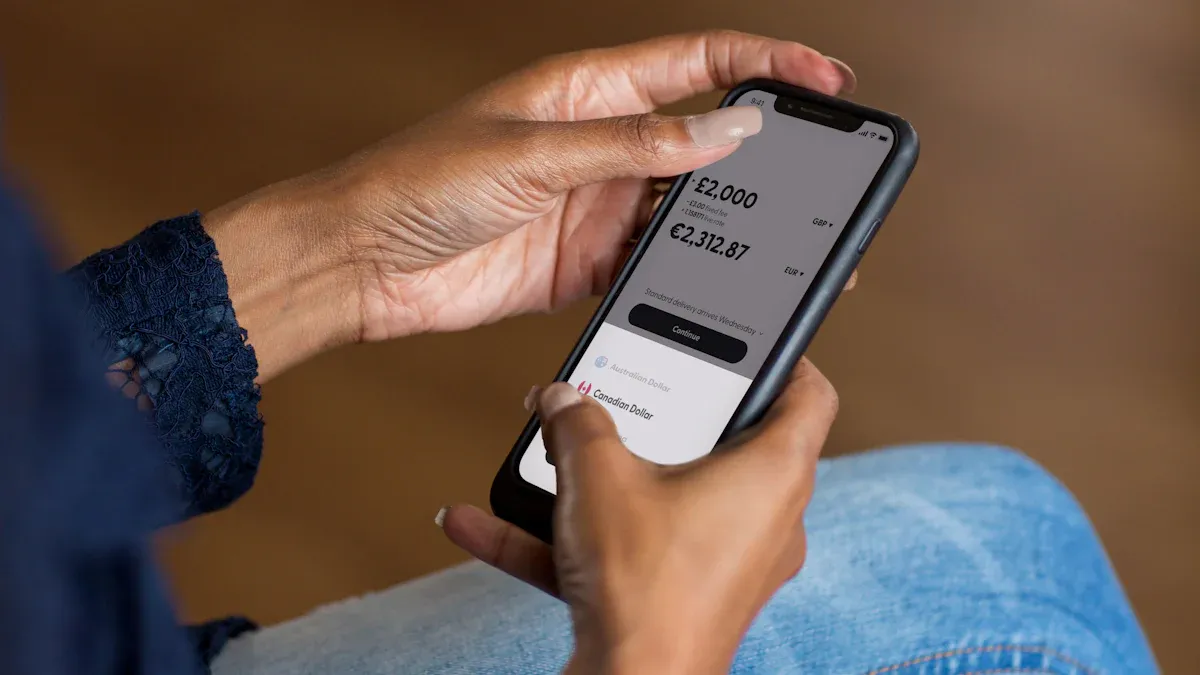
Image Source: unsplash
Once you have USDT ready, you enter the actual operation phase. This process is like sending an email with attached funds; the key is accuracy. Completing these four steps basically succeeds in your family remittance task.
2.1 Obtain Family’s Receiving Address
First, you need your family to provide a USDT receiving address. This address is a unique string of characters, functioning like a bank account. Your family can generate this address in their chosen exchange or wallet app.
Operation Guide for Family:
- Download and log in to a cryptocurrency wallet or exchange App.
- In the App, find the “Wallet” or “Assets” section.
- Select “Deposit” or “Receive” function.
- Choose token as
USDT.- Choose network as
TRC20(this is crucial; we will explain in detail later).- The App will automatically generate a receiving address and corresponding QR code.
- Copy this full address string and send it to you.
Safety Tip: To avoid any errors, have family use the App’s “Copy” button directly instead of manual input. A single character error will cause permanent fund loss.
2.2 Choose the Correct Transfer Network (TRC20)
USDT exists on multiple blockchain networks, like money in different banks. Choosing different networks results in huge differences in speed and fees. For small or regular family remittances, we strongly recommend using the TRC20 network.
TRC20 is USDT running on the Tron network. Correspondingly, there is ERC20 running on the Ethereum network.
- Address Format Different: TRC20 addresses usually start with uppercase
T. ERC20 addresses start with0x. - Cost and Speed Advantage: TRC20 transfer speed is extremely fast, transactions usually complete in 3 minutes, while ERC20 may take 15 minutes or longer. More importantly, fees: TRC20 transfer fees are usually 1-2 USD, while ERC20 can reach 30-35 USD during network congestion.
The chart below clearly shows the huge differences in speed and fees.
| Feature | TRC20 USDT | ERC20 USDT |
|---|---|---|
| Network | Tron | Ethereum |
| Average Speed | 3-5 minutes | 15 minutes |
| Typical Fee | $1-2 | $30-35 |
| Security Level | High | Very High |
Core Point: The network you choose for transfer must exactly match the network of the address provided by family. If you send ERC20 USDT to a TRC20 address, funds will be lost. Be sure to choose
TRC20.
2.3 Withdraw and Transfer from Exchange
After obtaining the address and confirming the network, you can “withdraw” from your exchange account.
The basic withdrawal process is as follows:
- Log in to your exchange account and go to the “Assets” or “Wallet” page.
- Find your USDT balance and click “Withdraw.”
- On the withdrawal page, paste the receiving address sent by family.
- Choose withdrawal network as
TRC20. Please confirm again; this step must not be wrong. - Enter the USDT amount you want to transfer.
- The system will display estimated fees and the amount family will actually receive.
- After confirming all information is correct, click “Withdraw.”
For security, exchanges require multiple verifications when processing withdrawals. This usually includes:
- SMS Code: Code sent to your phone.
- Email Code: Code sent to your registered email.
- Google Authenticator (2FA): Dynamic 6-digit code generated by the authenticator App.
Security Enhancement Feature: Many exchanges offer “Withdrawal Address Whitelist” function. You can pre-add family’s address to this security list. After enabling, your account can only withdraw to addresses on the list, effectively preventing hackers from transferring funds to their own addresses after stealing your account.
2.4 Conduct Small Test for Safety
When transferring to family’s new address for the first time, it is strongly recommended to conduct a small test. This is a simple yet extremely effective safety measure.
You can first transfer a very small amount, such as 10 USDT. The purpose of this small amount is to verify the entire process is smooth: whether the address is correct, network matches, and family can receive smoothly.
How to Confirm Test Success?
- Wait for Arrival: TRC20 network is fast; family should see the 10 USDT in their account within minutes.
- Family Confirmation: The most direct way is to have family log in to their App and check if USDT balance increased.
- Use Blockchain Explorer: You can also find the transaction ID (usually called
TxID) in withdrawal records. Copy this ID to the TRC20 blockchain explorer (such as TRONSCAN) to query; you can see all transaction details, including whether confirmed successful.
After confirming small test arrival, you can confidently transfer the remaining large amount using the same operation. Although this costs a negligible fee, the peace of mind it brings is priceless.
Family Receipt and Exchange for Local Currency

Image Source: pexels
When USDT arrives in your family’s account, the remittance process is 90% complete. The final and most critical step is to safely exchange these digital dollars into local currency they can use daily. This step mainly has two mainstream methods; you can choose based on family’s specific situation and preference.
3.1 How to Confirm USDT Arrival
Before any exchange operation, the first step is to confirm funds have safely arrived. The simplest method is to have family directly log in to their exchange or wallet App and check if USDT balance has increased.
If you want to go further, you can verify like a professional using a blockchain explorer. This provides tamper-proof public records.
Pro Tip: Use TRONSCAN to Confirm Transaction After withdrawal, you get a transaction ID, also called transaction hash (TxID). Family can use this ID to query transaction status on TRONSCAN (official explorer for TRON network).
- Open TRONSCAN website.
- In the homepage search bar, paste the transaction hash (TxID) you provided.
- Click search.
- The page will display all transaction details, including sender, recipient, amount, and most importantly—transaction result. If it shows “CONFIRMED,” the transaction is successfully recorded on the blockchain, and funds are confirmed arrived.
3.2 Method One: Sell USDT via C2C Trading
C2C (Customer-to-Customer) trading is currently the most common cash-out method. Your family can post orders to sell their USDT in the exchange’s C2C market like a merchant, waiting for buyers to pay.
This process is guaranteed by the platform as an intermediary to ensure transaction safety.
Family’s Steps to Sell USDT:
- Enter C2C Market: In the exchange App, find “C2C Trading” or “Fiat Trading” entry and select “Sell.”
- Select Buyer and Place Order: The system shows all buyers seeking USDT with their quotes and accepted payment methods (such as bank transfer). Family can choose a buyer with high completion rate and good reputation, enter the USDT amount to sell, and place order.
- Platform Locks USDT: After ordering, the exchange automatically locks the corresponding USDT in family’s account. This “escrow mechanism” prevents family from transferring coins before receiving money and prevents buyers from not receiving coins after payment.
- Confirm Receipt and Release: The buyer pays to family’s designated bank account as per order. Family must log in to their bank App, personally confirm money has arrived and amount is fully correct, then return to exchange App and click “Confirm Receipt and Release Assets.” The platform then releases locked USDT to the buyer.
Safety First: Never click “Release” before confirming actual receipt in the bank account. Some fraudsters may send fake payment screenshots or SMS notifications to deceive sellers. Always use your own bank account balance as the only judgment standard.
3.3 Method Two: Exchange and Withdraw via Compliant App
If you find C2C trading requires screening buyers and constant communication cumbersome, or you need to handle a large family remittance, using a compliant third-party financial App is a better choice. These Apps act as “On/Off-Ramp” layers.
Simply put, “On/Off-Ramp” is like a bridge connecting the crypto world and traditional finance.
- On-Ramp: Process of buying cryptocurrency with fiat (such as USD).
- Off-Ramp: Process of selling cryptocurrency and exchanging back to fiat in your bank account.
Here, we use BiyaPay, holding US MSB and other financial licenses, as an example to show how this process works. It provides users with a more direct and compliant “Off-Ramp” path than C2C.
Using BiyaPay for Receipt and Withdrawal Process:
- Deposit USDT into BiyaPay: Family generates their USDT receiving address in BiyaPay App (also choose TRC20 network), and you directly withdraw USDT from exchange to this address.
- Exchange to USD in App: After USDT arrives, family can use the “Flash Exchange” function in BiyaPay to one-click exchange USDT to USD at real-time rate. This process completes inside the App without finding buyers.
- Withdraw to Bank Account: Exchanged USD is stored in family’s BiyaPay USD balance. Then, they can withdraw this USD to their own bank account, such as Wise account or OCBC supporting USD.
This method simplifies complex C2C trading to “Transfer -> Exchange -> Withdraw” three steps, fully handled by licensed institutions, providing additional security for funds.
| Feature Comparison | Method One: C2C Trading | Method Two: Compliant App (BiyaPay Example) |
|---|---|---|
| Compliance | Depends on counterparty, peer-to-peer | Handled by licensed financial institution, compliant path |
| Operation Convenience | Needs buyer screening, communication, receipt confirmation | Standardized process, no need to communicate with people |
| Fund Safety | Risk of “dirty money” or fraud | Funds flow within compliant system, lower risk |
| Large Amount Handling | Easily triggers bank risk control, not suitable for large amounts | More suitable for large funds, clear path |
| Privacy Protection | Need to expose receipt info to stranger buyers | Only provide info to licensed platform, better privacy |
In summary, C2C trading is flexible and convenient, suitable for small amounts and users familiar with the process. Exchanging via compliant Apps like BiyaPay provides an excellent alternative for users prioritizing fund safety, operation convenience, and large amount needs.
In practice, many families do not want to juggle multiple platforms or think about Gas fees; they simply want a clear path from “buying USDT” to “local cash in the bank.” Multi-asset wallets such as the Biyapay official site package on-chain transfers and fiat settlement into guided flows, so relatives who are new to crypto can still follow step-by-step instructions to complete remittances.
BiyaPay positions itself as an integrated account for cross-border payments, investment, and treasury management, connecting stablecoins like USDT on one side and multiple fiat currencies on the other. Before arranging a family remittance, users can rely on its free FX rate converter to compare estimated costs across routes, then initiate transfers via the cross-border remittance service, where the app itemizes platform fees, network fees, and fiat on/off-ramp charges in a way that matches the fee-transparency principles discussed in this guide.
From a compliance perspective, BiyaPay operates under licenses such as a US MSB registration and New Zealand FSP authorization, using multi-jurisdiction regulatory frameworks to govern fund flows. For households that care about both lower costs and a familiar app-like experience, this model offers a pragmatic way to use stablecoins for family remittances while keeping risk, fees, and processes reasonably transparent.
Cost and Risk Analysis
Although USDT remittance is efficient and convenient, you must understand the costs and potential risks involved. Clearly recognizing these issues helps you make wiser decisions and ensure fund safety.
4.1 Cost Comparison: USDT Remittance vs Traditional Bank
One of the most attractive advantages of USDT remittance is extremely low cost. Let’s compare the cost difference of remitting 1000 USD through a specific case.
Case: Remit 1000 USD Traditional bank wire transfer total fees usually include: sender bank fee, correspondent bank fees, and exchange rate loss. For a 1000 USD transfer, total cost may reach 55 USD.
In contrast, USDT remittance cost structure is very simple.
| Remittance Method | Main Cost Components | Estimated Total Fee (Remit $1000) |
|---|---|---|
| Traditional Bank | Cable fee + Correspondent fee + Exchange loss | About $55 |
| USDT (TRC20) | Buy spread + Network fee + Sell spread | About $1 - $3 |
This comparison clearly shows USDT’s huge advantage in family remittance costs. The money you save is equivalent to an extra gift for family.
4.2 Operation Risk: Address and Network Errors
Digital currency transfer has an iron rule: once transaction is confirmed, it cannot be revoked. If you send USDT to a wrong address or choose mismatched network (e.g., sending TRC20 coin to ERC20 address), your funds may be permanently lost. This is like putting cash in the wrong envelope and mailing it out, unrecoverable.
Core Rule: Before clicking “Send,” be sure to double-check receiving address and transfer network. Conducting small test is the best practice to avoid such catastrophic errors.
4.3 Platform Risk: Exchange Selection Criteria
Your fund safety is directly related to the trading platform you choose. An unreliable exchange may face hacker attacks or operational issues. Therefore, when choosing a platform, you need to focus on its security features.
A key indicator is “Proof of Reserves” (PoR). It allows users to verify if the exchange holds enough assets to cover all customer deposits. Choosing a platform providing PoR means your funds have higher transparency and security assurance.
4.4 Trading Risk: C2C Safety Notes
When family sells USDT via C2C trading, beware of common scams. The most critical step is confirming receipt.
Safety Red Line: Never trust any screenshots or SMS notifications. Family must personally log in to their bank App, confirm funds have fully arrived, then click “Release USDT” on the exchange platform. This is the last line of defense against fraud.
4.5 Price Risk: How to Handle USDT Fluctuations
Although USDT aims for 1:1 peg with USD, it has historically experienced slight price fluctuations. Though small, you still need to note.
The best strategy is “quick in and out.” Treat USDT only as a transmission tool, not a long-term holding asset.
- You buy USDT before remittance.
- Immediately transfer to family.
- Family sells for local currency as soon as received.
By shortening USDT holding time, you can maximize avoidance of any potential impact from its price fluctuations.
In summary, USDT remittance, with its extremely low cost, near-real-time speed, and high flexibility, provides a modernized fund transfer solution. Please remember the following core safety principles:
- Choose top platforms to ensure source fund safety.
- Double-check address and network to avoid asset loss.
- Insist on small test to verify process correctness.
Although USDT operation has a learning curve, once you master the correct method, it is an efficient tool for completing family remittances. We encourage you to bravely try this new way to safely deliver funds home after understanding the risks.
FAQ
How Long Does the Entire Remittance Process Take?
Buying USDT and family selling USDT each take about 15-30 minutes. USDT transfer itself is very fast, usually completing in 5 minutes. The entire process can be done in as fast as one hour.
Is There a Minimum Amount Limit for USDT Remittance?
Theoretically no minimum amount. But you need to consider network fees. For example, transferring 10 USDT may cost 1-2 USD in fees. Therefore, it is recommended that single remittance amounts not be too small to ensure cost-effectiveness.
What If My Family Is Not Good at Using Smartphones?
Operation Suggestion: You can operate once on your phone first, then guide family step by step via video call. The entire process only requires downloading the App and a few clicks. Conducting a small test in advance can also help them familiarize with the process.
Will the Money’s Value Change During Transfer?
USDT is a stablecoin aiming for 1:1 peg with USD, with very small fluctuations. To avoid any potential risk, the best strategy is “quick in and out.” You transfer immediately after buying, and family sells as soon as received.
*This article is provided for general information purposes and does not constitute legal, tax or other professional advice from BiyaPay or its subsidiaries and its affiliates, and it is not intended as a substitute for obtaining advice from a financial advisor or any other professional.
We make no representations, warranties or warranties, express or implied, as to the accuracy, completeness or timeliness of the contents of this publication.
Related Blogs of

SoFi Checking and Savings A Deep Dive Review

Tap and Go A Beginner's Guide to Cardless ATM Withdrawals


Why Is Canada's Country Code 1

The 18 Best Apps to Earn Real Cash This Year

Choose Country or Region to Read Local Blog
 Australia
 Austria
 Belgium
 Canada
 Cyprus
 Czech Republic
 Denmark
 Estonia
 Finland
 France
 Germany
 Greece
 Hong Kong
 India
India Indonesia
 Ireland
 Italy
Italy Japan
Japan Latvia
 Lithuania
 Luxembourg
 Malaysia
 Malta
Malta Morocco
 Nepal
Nepal Netherlands
 New Zealand
 Norway
 Pakistan
 Philippines
 Poland
 Portugal
 Romania
 Singapore
 Slovakia
 Slovenia
 South Africa
 South Korea
 Spain
Spain Sweden
 Thailand
 The United States
 Turkey
 United Arab Emirates
 United Kingdom
 Vietnam
Contact Us




BIYA GLOBAL LLC is a licensed entity registered with the U.S. Securities and Exchange Commission (SEC No.: 802-127417); a certified member of the Financial Industry Regulatory Authority (FINRA) (Central Registration Depository CRD No.: 325027); regulated by the Financial Industry Regulatory Authority (FINRA) and the U.S. Securities and Exchange Commission (SEC).
BIYA GLOBAL LLC is registered with the Financial Crimes Enforcement Network (FinCEN), an agency under the U.S. Department of the Treasury, as a Money Services Business (MSB), with registration number 31000218637349, and regulated by the Financial Crimes Enforcement Network (FinCEN).
BIYA GLOBAL LIMITED is a registered Financial Service Provider (FSP) in New Zealand, with registration number FSP1007221, and is also a registered member of the Financial Services Complaints Limited (FSCL), an independent dispute resolution scheme in New Zealand.