Stablecoin Payment Guide: New Strategy for Southeast Asia Remittances to Avoid Exchange Rate Risks




Image Source: unsplash
When you remit to Southeast Asia, are you troubled by high fees and long waiting times? Exchange rate fluctuations even cause you to lose funds. Stablecoins provide an efficient solution. It acts like a digital bridge, helping you achieve low-cost, near-zero exchange loss cross-border fund transfers. This stablecoin payment guide will provide you with detailed and secure operation methods to help you easily master this new remittance strategy.
Key Points
- Stablecoin remittances are cheaper and faster than traditional bank remittances and can effectively avoid losses caused by exchange rate fluctuations.
- Using stablecoins for remittances requires four main steps: buying USDT on the P2P market, transferring USDT to the target account, selling USDT to exchange for local currency, and finally confirming receipt.
- Choosing a reliable trading platform, carefully verifying transfer addresses and networks, and being vigilant against scams in P2P transactions are all important methods to ensure fund security.
- Stablecoin remittances are suitable for individuals and businesses, especially those with high requirements for fund arrival speed and transaction costs.
- Beginners can start with small remittances to familiarize themselves with the entire operation process, which can reduce risks.
Stablecoin Remittances: Why a Better Choice?
You may wonder why stablecoins become a better choice than traditional banks. The answer is simple: it solves the core pain points of traditional remittances. This stablecoin payment guide will reveal the advantages behind it for you.
Stablecoins: Digital Dollars Pegged to Value
First, you need to understand what stablecoins are. You can think of them as “dollars in the digital world.” Taking the most mainstream stablecoin Tether (USDT) as an example, its issuer promises that behind every USDT there are real assets worth one dollar as backing, such as cash or short-term securities. This design makes its value pegged 1:1 to the dollar, avoiding drastic price fluctuations like Bitcoin.
USDT’s scale and liquidity are very large, ensuring it is widely accepted globally.
| Stablecoin | Market Cap | 24-Hour Trading Volume |
|---|---|---|
| Tether (USDT) | $183.36B | $155.02B |
In simple terms: The USDT you hold is approximately equal in value to holding the same amount of USD cash, but it exists in a digital network and can be transferred quickly.
Three Major Advantages: Save Money, Fast, Risk-Resistant
Using stablecoins for remittances, you can immediately feel three core advantages:
- Save Money 💰: Traditional wire transfer fees and intermediary bank charges can reach tens of dollars. Transferring USDT via the TRC20 network usually costs only about $1-2 per transaction. This means your funds can reach the destination almost without loss.
- Fast ⚡: Bank wire transfers to Southeast Asia usually take 3-5 business days. USDT transfers are almost instant, and under normal network conditions, funds can complete settlement in seconds, completely eliminating long waits.
- Risk-Resistant 🛡️: When you convert local currency to USDT, the fund value is pegged to the dollar. During the remittance process, you do not need to worry about sudden drops in Southeast Asian local currencies (such as Thai baht or Vietnamese dong), effectively avoiding potential losses from exchange rate fluctuations.
New Trend: New Infrastructure for Global Payments
Stablecoins are no longer tools for niche players. They are rapidly becoming the new infrastructure for global payments. Payment giants like Stripe and PayPal have begun supporting stablecoin payments. At the same time, traditional financial giants like JPMorgan Chase are exploring stablecoin technology to achieve more efficient cross-border settlements. This indicates that stablecoins are evolving from personal tools to enterprise-level financial solutions with very broad application prospects.
Stablecoin Payment Guide: Four Steps to Complete Cross-Border Remittances
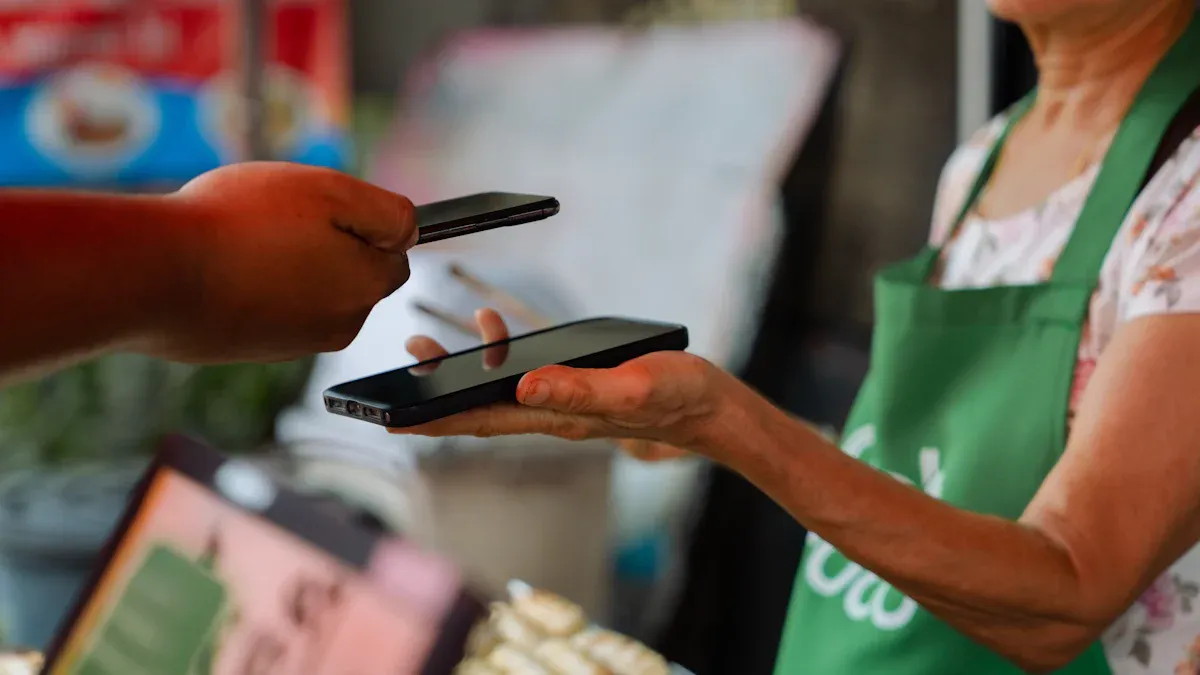
Image Source: unsplash
Now, you already understand the advantages of stablecoins. Next, this stablecoin payment guide enters the core part, providing “hand-by-hand” level operation guidance. We will take a common scenario as an example: you want to remit funds from mainland China to Thailand, completing “RMB → USDT → THB” exchange.
This process is equally applicable to Vietnamese dong (VND), Malaysian ringgit (MYR), and other Southeast Asian currencies, with exactly the same operation logic.
Preparation: Toolbox Before Starting Remittances
Before starting remittances, you need to prepare two basic tools: a reliable cryptocurrency exchange account and a valid payment method.
-
Register Exchange Account: You need to choose a mainstream cryptocurrency exchange that supports P2P (peer-to-peer) trading functions, such as Biyapay, Binance, or OKX. The registration process usually requires you to complete identity verification (KYC).
What is KYC? KYC (Know Your Customer) is a standard process used by financial institutions to verify user identities to prevent illegal activities like money laundering. You need to prepare the following information:
- Legal full name
- Date of birth
- Residential address
- Government-issued valid ID (such as ID card, passport)
- Some platforms may require facial recognition selfie
When choosing a platform, it is often more convenient to use a wallet that supports both stablecoin balances and fiat on- and off-ramps. A solution like BiyaPay works as a multi-asset wallet, so you can receive and send USDT while also holding currencies such as USD or HKD in the same account, instead of juggling several apps.
If you remit to Southeast Asia on a recurring basis, BiyaPay’s online FX converter and remittance service let you estimate costs and final amounts before you send, then settle funds directly to a linked bank account, making the “USDT in, local currency out” flow more streamlined.
BiyaPay also operates under licences such as the US MSB and New Zealand FSP, and runs in multiple regulated jurisdictions, which can be useful if you want your stablecoin-based remittance setup to fit better with ongoing compliance and audit needs for individuals and small businesses.
- Bind Payment Method: In the exchange’s P2P settings, you need to bind the payment method you plan to use to buy USDT.
Step One: Buy USDT on P2P Market
After preparation is ready, the first step is to exchange your RMB (CNY) for USDT. This is usually done on the exchange’s P2P market.
The P2P market is like an online marketplace where you can trade directly with other users, and the platform acts as a guarantor.
Operation Process:
- Enter the exchange’s P2P trading area and select “Buy” USDT.
- Screen merchants. This is a key step to ensure transaction security. You should prioritize merchants that meet the following conditions:
- High completion rate: Look for merchants with a completion rate above 98%.
- High trading volume: The more transactions, usually the more experienced the merchant.
- Certified merchants: Platform-certified merchants (usually with special marks) have higher credibility.
- Supported payment methods: Ensure the merchant supports the payment method you want to use, such as:
- Alipay
- Bank Transfer
- Place an order and pay. After selecting a merchant, enter the amount you want to buy, and the platform will automatically calculate the corresponding USDT quantity. Follow the order instructions to pay the merchant through your chosen payment method.
- Confirm receipt. After payment, click the “I have paid” button on the platform and wait for the merchant to confirm receipt. After the merchant confirms, the platform will automatically release the escrowed USDT to your exchange account.
Important Tip: Throughout the transaction process, only communicate with the merchant through the platform’s built-in chat tool. Do not accept any “off-platform transaction” proposals, as this is a common scam method.
Step Two: Transfer USDT to the Destination
Now, USDT is deposited in your exchange account. The next step is to transfer it to the exchange account or wallet you use in the destination (such as Thailand). This process is called “withdrawal.”
The most critical step in withdrawal is correctly selecting the transfer network. Different networks are like different digital highways with huge differences in fees and speeds.
| Network (Protocol) | Transaction Fee (Approx.) | Transaction Speed | Address Format Feature |
|---|---|---|---|
| TRC20 (Tron) | $1 - $2 | Very fast (seconds to minutes) | Starts with uppercase “T” |
| ERC20 (Ethereum) | $5 - $30 | Slower, prone to congestion | Starts with “0x” |
| BEP20 (BSC) | $0.1 - $1 | Faster | Starts with “0x” |
Operation Process:
- In your target exchange or wallet, find the USDT “Deposit” address and select
TRC20network. Copy this address. - Return to the exchange where your USDT is stored and select “Withdraw”.
- On the withdrawal page, paste the
TRC20address you just copied. - Be sure to select
TRC20in the “Transfer Network” option. Choosing the wrong network will cause your funds to be permanently lost. - Enter the withdrawal amount, confirm the fee, and submit. Usually, you need to enter multiple verification codes such as email, phone, or Google Authenticator to confirm the operation.
A few minutes later, this USDT will appear in your target account. This stablecoin payment guide strongly recommends prioritizing the TRC20 network because it achieves the best balance between cost and efficiency.
Step Three: Sell USDT to Exchange for Local Fiat
When USDT arrives in your destination account, the final step is to sell it and exchange for local fiat, such as Thai baht (THB). This process is exactly the opposite of step one.
Operation Process:
- Enter the target exchange’s P2P trading area and this time select “Sell” USDT.
- Similarly, you need to screen reliable buyers. Check their trading history, completion rate, and user reviews.
- Select a suitable buyer and place an order. Enter the USDT quantity you want to sell.
- Wait for the buyer to pay. The buyer will pay you through their chosen payment method (such as local bank transfer in Thailand).
- Confirm receipt before releasing. This is the most critical security link. You must log into your own bank account or e-wallet and personally confirm that the funds have arrived.
- Do not trust any payment screenshots sent by the buyer.
- Do not click the “Confirm receipt and release” button on the platform without confirming receipt.
- After confirming the funds are correct, release USDT on the platform. Transaction complete.
Through these simple four steps, you complete a low-cost, high-efficiency cross-border remittance that avoids exchange rate risks. The core of this stablecoin payment guide is to use USDT as a value-stable intermediate bridge to connect different fiat markets.
Risks and Compliance: Safely Using Stablecoins

Image Source: pexels
Although stablecoin remittances are efficient and convenient, you must recognize the risks involved. Security is always the top priority. This section will guide you on how to identify and avoid common risks in platforms, operations, and transactions to ensure your funds are safe.
Platform Risks: How to Choose a Reliable Exchange?
Your first line of defense is choosing a safe and reliable cryptocurrency exchange. A good platform not only protects your assets but also provides a smoother trading experience. You can prioritize platforms that have undergone strict audits and have strong security measures.
For example, mainstream exchanges like OKX regularly publish their security audit results and proof of reserves (PoR), and you can judge their reliability through this information.
| Audit/Rating Agency | Rating/Result | Notes |
|---|---|---|
| CertiK | No critical active risks | Independent audit confirms the platform actively manages and quickly patches vulnerabilities |
| CER.live | AAA Security Rating | Top rating in cybersecurity |
| Hacken | Verified 1:1 user fund support | PoR audit confirms user assets are fully supported |
Security Tip: When choosing an exchange, you should also pay attention to whether it provides the following security features:
- Risk Reserve Fund: The platform allocates funds from revenue to compensate users in extreme security incidents.
- Proof of Reserves (PoR): Regularly publish reports so you can independently verify whether your assets are held 1:1 by the platform.
- Anti-Phishing Code: You can set a special code in your account, and all official emails will display it to help you easily identify scam emails.
Operation Risks: Avoid Address Errors and Wrong Network Selection
Digital asset transactions are irreversible. Once sent, they cannot be revoked. Therefore, you must be extra careful in operations. The most common user errors leading to fund loss include:
- Sending to the wrong address: One more or one less character when copying the address will cause your funds to be permanently lost. Be sure to double-check.
- Choosing the wrong network: This is the most common mistake for beginners. If you withdraw from the TRC20 network but fill in an ERC20 address, the funds will be lost. Remember, the withdrawal network and deposit network must be exactly the same.
- Losing private key or mnemonic phrase: If you use a non-custodial wallet, be sure to properly store your private key or mnemonic phrase. Once lost, no one can help you recover the assets.
Transaction Risks: How to Prevent P2P “Dirty Money”?
In P2P transactions, you may encounter buyers trying to use illegal proceeds (commonly known as “dirty money”) to buy your USDT. If your bank account receives such funds, it may face freezing risks.
Therefore, when selling USDT, you need to learn to screen trading counterparts. Be alert to the following danger signals:
- The other party requires communication or trading through social software outside the platform.
- The other party urges you to release USDT without confirming bank receipt.
- The trading party’s account is newly registered, with very small trading volume or a positive rating below 95%.
- The payer’s name does not match the platform’s real-name authentication name.
Core Principle: Always log into your own banking app or payment tool first, personally confirm the money has arrived, then release your USDT on the platform. Never trust any payment screenshots sent by the other party.
Regulatory Dynamics: Insights from Singapore MAS Framework
Global regulators are establishing clearer rules for stablecoins, which is a great benefit for users. Taking the Monetary Authority of Singapore (MAS) as an example, its stablecoin regulatory framework sets a benchmark for the industry.
The framework requires stablecoin issuers to:
- Ensure Value Stability: Reserve assets must 100% cover circulating stablecoins and undergo independent audits.
- Guarantee Redemption Rights: You as a holder have the right to redeem stablecoins back to fiat at par value within 5 business days.
- Improve Transparency: Issuers must publish whitepapers clearly disclosing their stability mechanisms and related risks.
These regulations greatly enhance the security of compliant stablecoins, making you more reassured when using them. Choosing platforms that operate compliantly in these strongly regulated regions is a wise move to protect your assets.
Costs and Scenarios: Who is Most Suitable for Stablecoin Remittances?
You already understand the operation process and risk prevention of stablecoin remittances. Now, you may ask: is this method really suitable for me? Through an intuitive cost comparison and several real scenarios, you can clearly judge whether stablecoin remittances meet your needs.
Cost Comparison: Stablecoins vs Traditional Wire Transfers
To give you a more intuitive feel for the differences, we directly compare stablecoin remittances and traditional bank wire transfers in core aspects.
| Item | Traditional Wire Transfer | Stablecoin Remittance |
|---|---|---|
| Fees | Usually tens of dollars, involving multiple banks | Extremely low, usually only about $1-2 network fee |
| Arrival Time | 3-5 business days, or even longer | Within minutes, almost real-time arrival |
| Exchange Rate Risk | Exchange rate fluctuations during remittance may cause losses | Funds priced in USD, effectively avoiding exchange rate risks |
| Operation Time | Limited by bank working hours | 7x24 hours, can be done anytime |
At a Glance: In terms of cost and efficiency, stablecoin remittances show huge advantages, especially suitable for users sensitive to fund timeliness and costs.
Applicable Scenarios: From Personal Remittances to Cross-Border E-Commerce
The application scenarios for stablecoin remittances are very wide, benefiting both individuals and businesses.
You may be a freelancer working in Southeast Asia. An Indonesian designer receives payments from US clients via stablecoins. Compared to traditional platforms requiring 3-7 days for clearing, his funds arrive in five minutes with a total cost of only 0.5%. He also holds part of his income in stablecoins to hedge against rupiah exchange rate fluctuations. Similarly, gig workers in the Philippines receive USDT through platforms and easily exchange it for local pesos, withdrawing to their e-wallets.
For businesses engaged in cross-border trade, stablecoins are also powerful tools. B2B companies in Southeast Asia are using it to pay international suppliers to achieve:
- Lower Costs: Stablecoin transaction costs are far below credit card 2-3% rates or international wire transfer fees, significantly increasing profit margins.
- Faster Settlement: Funds complete cross-border settlement in minutes, unrestricted by bank hours, greatly improving enterprise cash flow.
- Higher Transparency: All transaction records are on the blockchain, publicly verifiable, simplifying reconciliation and reducing potential disputes.
- Stronger Inclusivity: Even in areas with poor banking services, businesses only need internet and digital wallets to participate in global payments, promoting trade opportunities.
This stablecoin payment guide reveals its core value in cost and speed. It is evolving from a personal tool to an enterprise-level solution, such as Stripe already supporting USDC payments, with institutions predicting the market size to reach $4 trillion by 2030. As a powerful supplement to the existing financial system, it is especially suitable for users sensitive to efficiency and costs. It is recommended that after fully understanding the risks, start with small amounts to experience its convenience.
FAQ
You may still have some questions. Here are several most common questions and answers to help you start with more peace of mind.
Is it legal for me to use stablecoin remittances in mainland China?
You need to understand that currently in mainland China, individuals holding and trading digital assets are in a legal gray area. Related policies are still developing and changing. Therefore, you must bear the responsibility of understanding and complying with local laws and regulations yourself.
Is USDT itself safe? Will it crash like other coins?
USDT’s value is pegged to the dollar, and its issuer promises sufficient reserve support. This makes it much more stable than assets like Bitcoin. But it still has operational risks from centralized institutions. You can choose multiple stablecoins issued by different institutions to diversify risks.
How do I ensure the other party is reliable in P2P transactions?
You can screen trading counterparts through several key indicators:
- Choose platform-certified merchants.
- Check the other party’s total transactions and historical positive rating (recommended above 98%).
- Verify if the payer’s name matches the platform’s real-name information.
Remember: Never release your digital assets before confirming the money has arrived in your bank account.
As a beginner, what should I pay attention to for the first operation?
We strongly recommend starting with a small amount, such as $50 or $100. This allows you to experience the entire process of buying, transferring, and selling with very low risk. After familiarizing yourself with the process, handle larger remittance amounts according to your needs.
*This article is provided for general information purposes and does not constitute legal, tax or other professional advice from BiyaPay or its subsidiaries and its affiliates, and it is not intended as a substitute for obtaining advice from a financial advisor or any other professional.
We make no representations, warranties or warranties, express or implied, as to the accuracy, completeness or timeliness of the contents of this publication.
Related Blogs of
Tap and Go A Beginner's Guide to Cardless ATM Withdrawals


The Easiest Way to Find the Code for Calling France


Why Is Canada's Country Code 1

The 18 Best Apps to Earn Real Cash This Year
Choose Country or Region to Read Local Blog
 Australia
 Austria
 Belgium
 Canada
 Cyprus
 Czech Republic
 Denmark
 Estonia
 Finland
 France
 Germany
 Greece
 Hong Kong
 India
India Indonesia
 Ireland
 Italy
Italy Japan
Japan Latvia
 Lithuania
 Luxembourg
 Malaysia
 Malta
Malta Morocco
 Nepal
Nepal Netherlands
 New Zealand
 Norway
 Pakistan
 Philippines
 Poland
 Portugal
 Romania
 Singapore
 Slovakia
 Slovenia
 South Africa
 South Korea
 Spain
Spain Sweden
 Thailand
 The United States
 Turkey
 United Arab Emirates
 United Kingdom
 Vietnam
Contact Us




BIYA GLOBAL LLC is a licensed entity registered with the U.S. Securities and Exchange Commission (SEC No.: 802-127417); a certified member of the Financial Industry Regulatory Authority (FINRA) (Central Registration Depository CRD No.: 325027); regulated by the Financial Industry Regulatory Authority (FINRA) and the U.S. Securities and Exchange Commission (SEC).
BIYA GLOBAL LLC is registered with the Financial Crimes Enforcement Network (FinCEN), an agency under the U.S. Department of the Treasury, as a Money Services Business (MSB), with registration number 31000218637349, and regulated by the Financial Crimes Enforcement Network (FinCEN).
BIYA GLOBAL LIMITED is a registered Financial Service Provider (FSP) in New Zealand, with registration number FSP1007221, and is also a registered member of the Financial Services Complaints Limited (FSCL), an independent dispute resolution scheme in New Zealand.