
If Cloud Providers Cut AI CAPEX, Which Stocks Would Be Hit First?




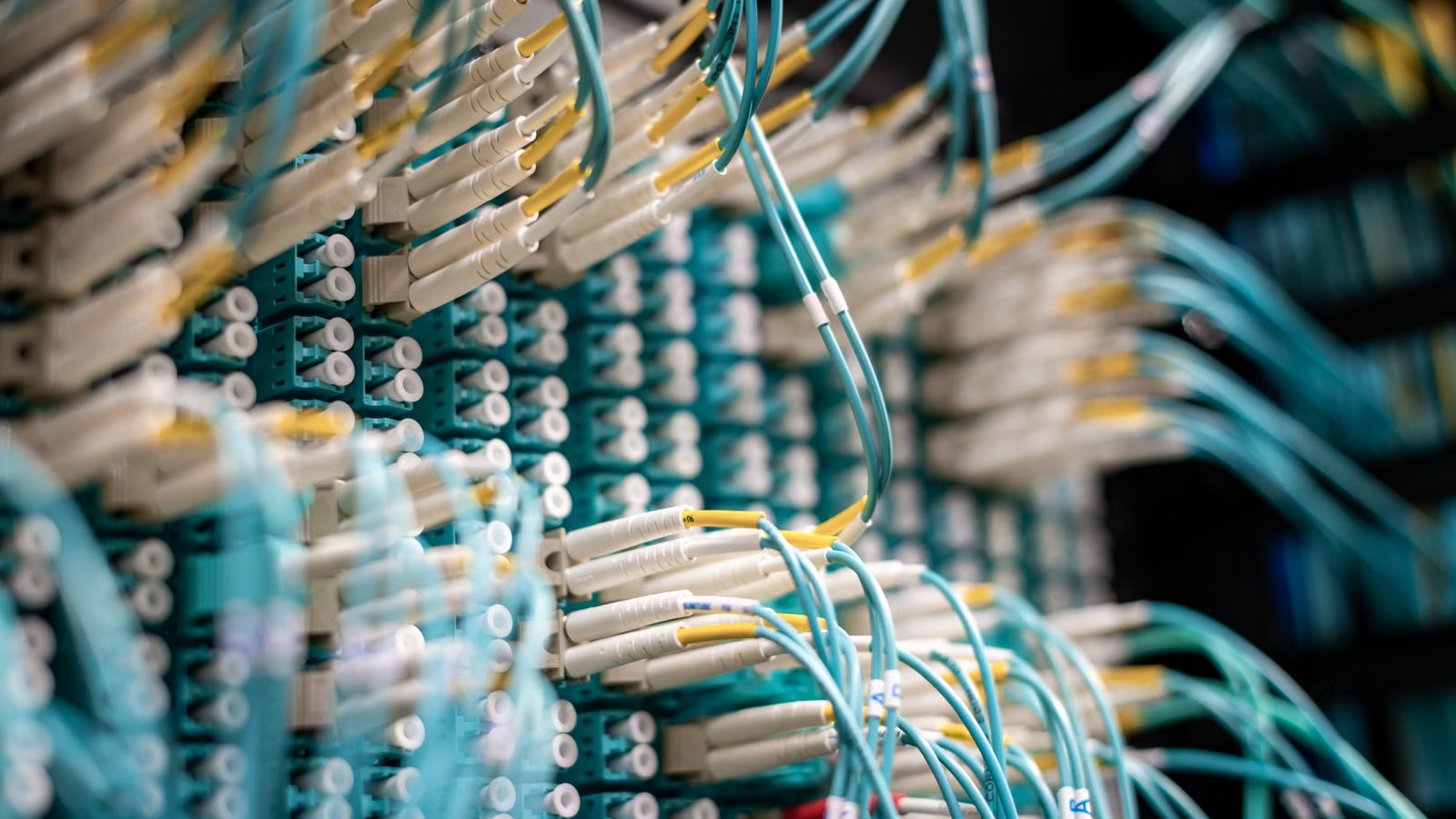
If cloud providers cut AI CAPEX, the first companies affected are usually not the cloud providers themselves, but hardware suppliers whose incremental revenue depends most directly on new AI data center orders. GPUs, custom AI chips, AI networking, server systems, HBM, power and cooling, and some semiconductor equipment companies are often repriced first by the market. When judging this risk, you should not only ask whether AI demand still exists. You also need to identify whether cloud providers are cutting training clusters, inference capacity, data center construction, or supplier procurement structures.
Key Takeaways
- An AI CAPEX slowdown first affects hardware suppliers with the highest order sensitivity.
- GPUs, ASICs, AI networking, and server systems are usually repriced first.
- HBM, SSDs, power, and liquid cooling may be affected with a slight lag.
- Cloud providers may see short-term cash-flow improvement, but their long-term growth narrative will be tested.
- Stock sensitivity depends on revenue exposure, order cycles, and valuation assumptions.
- AI CAPEX should be separated into training, inference, replacement, and expansion demand.
What Does It Really Mean When Cloud Providers Cut AI CAPEX?
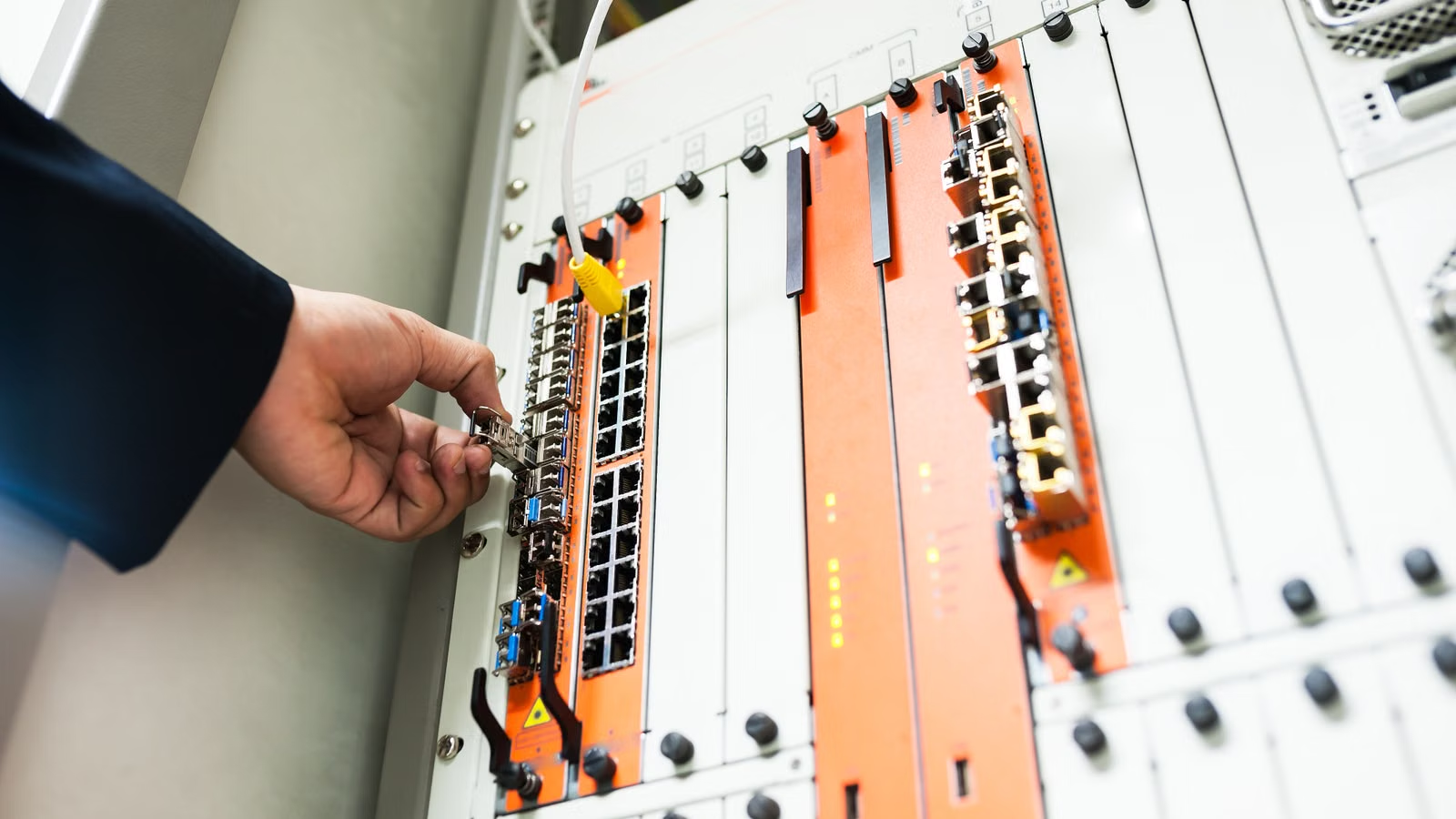
A reduction in cloud-provider AI CAPEX does not necessarily mean AI demand is disappearing. It more likely means that construction pace, procurement structure, or return-on-investment assumptions are changing. You first need to determine whether the cut is aimed at new GPU clusters, in-house chip projects, inference servers, networking equipment, or data center buildings and power-cooling projects. Different types of cuts affect stocks such as NVIDIA, Broadcom, Arista, Micron, TSMC, ASML, and Vertiv in very different sequences.
AI CAPEX is not a single spending item. It includes multiple layers: AI accelerators, GPU servers, custom ASICs, high-speed networking, optical modules, HBM, SSDs, racks, power systems, liquid cooling, land, buildings, grid connections, and operating systems. When cloud providers say they are controlling capital spending, they may only be delaying a batch of data center launches. They may also be shifting from general-purpose GPUs to in-house ASICs, or reducing training-cluster budgets while continuing to expand inference capacity.
Alphabet disclosed in its Q1 2026 results that Google Cloud revenue and backlog were supported by demand for AI products and infrastructure. Microsoft’s Microsoft Cloud gross margin also showed that AI infrastructure investment and AI product usage growth can pressure cloud gross margin. In other words, the question facing cloud providers is not simply whether to invest in AI. It is how much to invest, when to invest, which hardware to use, and whether the investment can convert into revenue.
| Type of CAPEX Change | Market Meaning | First Affected Segment | Stock Impact |
|---|---|---|---|
| Lower new budget | AI return on investment is being reassessed | GPUs, servers, AI networking | Fastest valuation compression |
| Project delay | Revenue recognition shifts later | Servers, power and cooling, racks | Order timing pressure |
| Supplier substitution | Procurement mix changes | GPUs, ASICs, networking | Greater stock divergence |
| Training to inference shift | Compute structure changes | GPUs, ASICs, memory | Not necessarily broad negative |
| Cost optimization | Unit compute becomes cheaper | High-priced hardware suppliers | Margin expectations decline |
The most important warning sign is when four signals appear at the same time: cloud providers lower CAPEX guidance, chip suppliers weaken data center revenue outlooks, server and networking companies see backlog decline, and storage or power-cooling companies report slower new orders. If only one company optimizes its construction schedule while cloud revenue, AI product usage, and long-term contracts keep growing, the market may only be seeing a temporary correction rather than a full reversal of the AI infrastructure cycle.
Summary: An AI CAPEX slowdown cannot be explained simply as “the end of AI.” You need to separate the signal into lower total budgets, project delays, supplier substitution, and a shift from training to inference. Lower total budgets directly pressure hardware-chain valuations. Project delays affect revenue recognition for servers, power-cooling systems, and networking equipment. Supplier substitution creates divergence between GPU and ASIC companies. A shift from training to inference changes the hardware mix but does not necessarily reduce total compute demand. Only when budgets, orders, backlog, shipments, and cloud revenue weaken together does systemic pressure emerge.
How Does an AI CAPEX Slowdown Transmit Through the Value Chain?

An AI CAPEX slowdown usually transmits in the order of “closest to new data center orders, highest revenue sensitivity, and highest valuation expectations.” The first layer is GPUs, custom ASICs, AI networking, and servers. The second layer is HBM, SSDs, power, cooling, and data center infrastructure. The third layer is foundry and semiconductor equipment. For cloud providers themselves, the result can be a mix of short-term cash-flow improvement and long-term growth concerns.
The first layer is the direct procurement chain. NVIDIA and AMD represent AI GPUs and accelerators. Broadcom and Marvell represent custom AI accelerators, SerDes, networking chips, and optical interconnect logic. Arista and Cisco represent AI data center Ethernet networking. Super Micro, Dell, and HPE represent server systems and rack-scale solutions. Broadcom disclosed sharply higher AI semiconductor revenue in its Q2 FY2026 results, driven by custom AI accelerators and AI networking demand. If hyperscalers slow new cluster construction, these companies are often repriced first.
The second layer is the supporting supply chain. HBM, DRAM, NAND, enterprise SSDs, power systems, UPS, liquid cooling, and power distribution equipment may not see order cancellations immediately, because these products involve certification cycles, locked-in capacity, and long-term supply arrangements. But if AI server shipment expectations are revised downward, the long-term supply-demand assumptions for Micron, SK hynix, Samsung, Vertiv, Eaton, and Schneider will be adjusted. Micron’s discussion of data center NAND demand mentions AI use cases such as vector databases, KV cache offload, and enterprise SSD demand, showing how deeply storage has become tied to AI data center expansion.
The third layer is the capital equipment chain. TSMC, ASML, Applied Materials, Lam Research, and KLA face a longer-capacity-cycle demand structure. An AI CAPEX slowdown does not immediately mean fewer EUV orders or canceled advanced packaging capacity. However, the market may revise long-term expansion confidence in advance. ASML’s Q1 2026 financial results continued to connect semiconductor growth prospects with AI infrastructure investment. If cloud providers shrink CAPEX for several consecutive quarters, forward order assumptions for equipment stocks will also be affected.
| Transmission Layer | Stock Type | Representative Companies | Speed of Impact | Key Metrics |
|---|---|---|---|---|
| First layer | GPUs / ASICs / networking / servers | NVDA, AMD, AVGO, ANET, SMCI, DELL | Fastest | Orders, revenue guidance, customer concentration |
| Second layer | HBM / storage / power and cooling | MU, SK hynix, Samsung, VRT, ETN | Moderate | Backlog, capacity, pricing cycle |
| Third layer | Foundry / equipment | TSM, ASML, AMAT, LRCX, KLAC | Lagging | Equipment orders, advanced packaging expansion |
| Cloud providers | Platforms and applications | MSFT, GOOGL, AMZN, META, ORCL | Divergent | CAPEX, cloud revenue, gross margin |
Summary: An AI CAPEX slowdown does not hit all AI stocks at the same time or to the same degree. The closer a company is to new cloud data center buildouts, the more likely it is to be affected first. The closer a company is to long-term capacity, equipment, or infrastructure, the slower the fundamental transmission tends to be, although valuation expectations may react earlier. GPUs, ASICs, AI networking, and servers are the first wave; HBM, storage, power, and liquid cooling are the second wave; foundry and semiconductor equipment are the third wave. For cloud providers, the outcome depends on cash flow, cloud revenue, and AI product monetization rather than a simple winner-or-loser label.
Which Stocks Are Hit First: GPUs, ASICs, AI Networking, and Servers

If cloud providers cut AI CAPEX, the market usually reprices NVIDIA, AMD, Broadcom, Marvell, Arista, Super Micro, Dell, and HPE first. The reason is straightforward: these companies’ growth stories depend heavily on hyperscalers continuing to build AI clusters. Once the market starts questioning new orders, delivery schedules, or customer budgets, stock prices often react before fundamentals show up in reported financials.
NVIDIA is the most obvious AI CAPEX bellwether. Its data center revenue is directly tied to cloud-provider GPU purchases, AI training clusters, inference clusters, and enterprise deployment demand. NVIDIA emphasized continued data center growth in its Q1 FY2027 results. If cloud providers revise their purchasing pace downward, the market will immediately reassess data center revenue, gross margin, and supply-tightness expectations over the next several quarters. AMD faces a similar direction of impact, although investors focus more on whether its MI series can continue gaining share.
Broadcom, Marvell, and Arista have a more complex setup. Cloud providers may reduce overall AI infrastructure orders, but they may also shift budgets from general-purpose GPUs to in-house ASICs. Reuters reported that Meta planned to put its in-house AI chip into production and work with partners such as Broadcom and TSMC, showing that cloud-provider CAPEX optimization may not mean buying less compute. It can also mean changing suppliers, chip architecture, and network solutions. For custom AI accelerator suppliers such as Broadcom, risk and opportunity can coexist.
AI networking is another sensitive chain. Large-scale training and inference clusters require high-speed switches, NICs, optical modules, and network management capabilities. Arista disclosed year-over-year revenue growth in its Q1 2026 results, supported in part by cloud and AI networking demand. If cloud providers delay cluster launches, networking equipment orders may also be pushed out. If cloud providers shift from InfiniBand to Ethernet, market share may also be redistributed among Arista, NVIDIA Networking, and Cisco.
Server system companies are even closer to project delivery schedules. Super Micro, Dell, and HPE revenue can be affected by customer acceptance, GPU availability, rack-scale integration, liquid-cooling solutions, and inventory changes. Compared with core chip companies, server system margins are usually lower. Revenue sensitivity can be high, but profit buffers are weaker. Once investors worry about order delays, inventory buildup, or customer concentration, valuation swings can be sharper.
| Stock Category | Representative Companies | Why They Are Hit First | What to Watch |
|---|---|---|---|
| AI GPUs | NVIDIA, AMD | Cloud procurement directly affects data center revenue | Data center revenue, supply guidance, customer concentration |
| Custom ASICs | Broadcom, Marvell | In-house chip projects depend on hyperscaler budgets | AI revenue, design wins, long-term contracts |
| AI networking | Arista, Cisco, NVIDIA Networking | Cluster expansion requires high-speed networks | 800G/1.6T switches, AI fabrics |
| AI servers | SMCI, Dell, HPE | Orders and delivery are closely tied to data center construction | Backlog, inventory, gross margin |
Summary: The first wave of affected stocks is not all semiconductor stocks, but the suppliers closest to new cloud-provider AI clusters. GPUs and AI servers are most easily treated by the market as CAPEX bellwethers, while AI networking and custom ASICs depend on whether the budget is shrinking or structurally shifting. NVIDIA, AMD, Broadcom, Marvell, Arista, Super Micro, Dell, and HPE share one feature: their incremental revenue, valuation expectations, and customer orders are highly tied to hyperscaler buildout schedules. When CAPEX guidance weakens, orders are delayed, or suppliers are changed, these stocks usually react first.
Which Stocks Are Hit in the Second Wave: HBM, Storage, Power and Cooling, and Semiconductor Equipment
The second wave includes HBM, DRAM, NAND, enterprise SSDs, power equipment, liquid-cooling systems, and semiconductor equipment companies. They may not show immediate fundamental deterioration on the first day of a cloud-provider CAPEX cut, because orders, capacity, and certification cycles are longer. But if AI data center construction continues to slow, the market will reassess the sustainability of tight supply, price increases, capacity expansion, and high backlog.
For HBM and storage, the key question is not whether demand exists, but whether demand can still support current pricing and expansion assumptions. AI GPUs require HBM. Inference servers require DRAM, SSDs, and high-capacity storage. Training data and model weights also drive storage needs. SK hynix emphasized the HBM-led memory supercycle in its 2026 memory market outlook. If AI accelerator shipments are revised downward, HBM order visibility and the traditional DRAM/NAND cycle will both be reassessed.
The impact on power, liquid cooling, and data center infrastructure is usually more delayed. Vertiv, Eaton, Schneider Electric, GE Vernova, Quanta Services, and similar companies benefit from high-power-density data centers, liquid-cooling retrofits, UPS, power distribution, and grid-connection demand. Signed orders and projects already under construction provide a buffer, but if new projects slow, future revenue growth expectations will be cut. For this segment, the key metrics are not only quarterly revenue, but backlog, book-to-bill, new data center projects, and customer delivery schedules.
Foundry and semiconductor equipment cycles are even longer. TSMC highlighted HPC and advanced-node demand as important growth drivers in its Q1 2026 materials, and wafer manufacturing, advanced packaging, and CoWoS capacity expansion for AI accelerators are all tied to long-term cloud compute demand. If AI CAPEX is only a short-term timing adjustment, the fundamental transmission to TSMC and ASML may be slower. If hyperscalers cut expansion plans for several quarters in a row, expectations for advanced nodes, advanced packaging, and equipment orders will be compressed.
| Second-Wave Segment | Representative Stocks | Impact Logic | Leading Indicators |
|---|---|---|---|
| HBM / DRAM | MU, SK hynix, Samsung | AI GPU shipments affect memory demand | HBM pricing, customer certification, locked capacity |
| NAND / SSD | SNDK, WDC, Samsung, Micron | Inference storage and data center construction change | Enterprise SSD demand, NAND contract prices |
| Power and cooling | VRT, ETN, Schneider | Data center project delays affect new orders | Backlog, book-to-bill, gross margin |
| Foundry | TSMC | AI accelerator and advanced packaging demand changes | HPC revenue, CoWoS capacity |
| Semiconductor equipment | ASML, AMAT, LRCX, KLAC | Customer expansion confidence changes | Net bookings, EUV/etch/deposition orders |
Summary: The risk for second-wave stocks is not that orders disappear immediately, but that the long-term tight-supply narrative weakens. HBM, storage, power-cooling, and semiconductor equipment all have order buffers and capacity cycles, but their valuations often already reflect continued AI data center expansion. If cloud providers keep lowering AI CAPEX, the market will first compress long-term growth assumptions and then watch whether orders, pricing, and capacity utilization truly weaken. For these stocks, leading indicators matter more than a single quarter of revenue.
What Happens to Cloud Providers Themselves: Short-Term Cash-Flow Improvement, Long-Term Growth Narrative Tested
A cut in AI CAPEX is not necessarily a pure negative for cloud-provider stocks. In the short term, slower CAPEX may improve free cash flow, reduce depreciation pressure, and strengthen the image of capital discipline. Over the long term, however, if the cut reflects weaker AI demand, slower cloud revenue, or lower-than-expected inference monetization, the growth narrative for Microsoft, Alphabet, Amazon, Meta, and Oracle will be reassessed.
From a cash-flow perspective, lower CAPEX is usually positive for free cash flow. Large cloud providers have been expanding data centers, servers, and power infrastructure over the past several quarters, and investors have become increasingly focused on when AI investment will become profit. Amazon continued to disclose AWS operating performance in its Q1 2026 results, and one key market focus remains the impact of AI infrastructure investment on free cash flow. If cloud providers actively slow non-core projects, that may be interpreted in the short term as improved capital discipline.
But if CAPEX slows because demand is insufficient, the meaning is completely different. Cloud-provider valuations are built heavily on the idea that AI can drive cloud revenue, enterprise software subscriptions, advertising efficiency, and application-layer monetization. Meta continued to emphasize AI infrastructure investment and future capacity needs in its Q1 2026 results. If it later shifts toward cuts, the market will ask whether the change reflects efficiency gains or weaker returns on AI investment.
| Cloud Provider | Potential Benefit From Slower CAPEX | Potential Negative | Key Metrics |
|---|---|---|---|
| Microsoft | Better free cash flow | Azure / Copilot growth questioned | Azure growth, cloud gross margin, RPO |
| Alphabet | Lower depreciation pressure | Google Cloud and AI Search returns questioned | Cloud backlog, TPU utilization |
| Amazon | FCF improvement | AWS AI growth expectations cut | AWS growth, operating profit, Trainium |
| Meta | Improved capital discipline | AI recommendation and model ROI tested | Ad revenue, AI compute capacity, MTIA |
| Oracle | More stable investment pace | AI cloud contract conversion questioned | RPO, cloud infrastructure revenue |
Cloud providers will also diverge from one another. Microsoft depends more on Azure, Copilot, and the enterprise customer ecosystem. Alphabet faces Google Cloud, TPU, in-house models, and AI transformation in search. Amazon’s key variables are AWS, Trainium/Inferentia, and major model partners. Meta is more focused on advertising recommendations, social-platform AI, and MTIA. Oracle depends more on large AI cloud infrastructure contracts. Lower CAPEX itself is not the conclusion. The conclusion comes from the combination of revenue, backlog, RPO, gross margin, and free cash flow.
Summary: For cloud providers, cutting AI CAPEX is a double-edged sword. If the market sees the cut as improved capital discipline, better construction efficiency, and lower unit compute cost, the stock may benefit in the short term. If the market sees the cut as a sign of weaker AI demand, slower cloud revenue, or lower-than-expected inference monetization, valuation pressure may increase. Microsoft, Alphabet, Amazon, Meta, and Oracle should not be judged by CAPEX declines alone. Cloud revenue, RPO, backlog, gross margin, free cash flow, and AI product usage must still validate one another.
How Can Investors Identify the AI CAPEX Stocks With the Highest Risk?
To identify which stocks face the greatest risk from an AI CAPEX slowdown, look at four dimensions: dependence on new hyperscaler procurement, order visibility and cancellation risk, growth assumptions already embedded in valuation, and whether the company can benefit from a shift from training to inference or from general-purpose GPUs to in-house ASICs. The highest-risk stocks usually combine high valuation, high customer concentration, high dependence on new orders, and limited margin buffers.
You can use a CAPEX sensitivity framework instead of putting all AI stocks into one basket. First, look at customer concentration: companies whose incremental revenue depends heavily on a few cloud providers face higher risk. Second, look at revenue sensitivity: companies driven by new orders are more sensitive than those with higher software, maintenance, or services revenue. Third, look at order cycles: short-cycle, deferrable orders with inventory risk are more vulnerable. Fourth, look at valuation assumptions: if a stock already prices in years of high growth, even a small guidance change can trigger major repricing. Fifth, look at technology substitution: general-purpose GPUs, ASICs, Ethernet, InfiniBand, HBM, and storage may all experience structural shifts.
| Scoring Dimension | High-Risk Feature | Lower-Risk Feature |
|---|---|---|
| Customer concentration | A few cloud providers drive most incremental revenue | Diversified customer base and end markets |
| Revenue sensitivity | Growth driven by new orders | Higher software, maintenance, and services mix |
| Order cycle | Short-cycle, deferrable, inventory-sensitive orders | Long contracts, non-cancelable commitments, strong backlog |
| Valuation assumption | Years of high growth already priced in | Valuation closer to mature-business levels |
| Technology substitution | Easy to shift to in-house chips or alternatives | Ecosystem and lock-in advantages |
Financial indicators can also provide early warnings. For cloud providers, watch CAPEX guidance, RPO, backlog, free cash flow, and AI product revenue. For chip companies, watch data center revenue growth, customer concentration, inventory, supply commitments, and gross margin. For networking and server companies, watch bookings, backlog, delivery cycles, and inventory turnover. For storage and power chains, watch pricing cycles, order growth, capacity utilization, and long-term customer agreements. Broadcom’s Form 10-Q disclosure of remaining performance obligations and long-term customer arrangements is one example of how investors can assess order visibility.
If you follow AI CAPEX value-chain stocks, you also need to consider actual trading costs and market volatility in addition to earnings sensitivity. US stock trading costs may include not only commissions, but also platform fees, external fees, transaction activity fees, and order-execution differences. Biya supports US stock, Hong Kong stock, and digital-asset trading. Its US stock trading fees state that US stock commissions are 0 USD, while platform fees, external fees, and other charges are subject to the fee schedule and order-page display. Service availability depends on the user’s location, identity-verification results, platform rules, and applicable laws and regulations.
Summary: To judge AI CAPEX slowdown risk, do not classify stocks simply as “AI concept stocks.” Rank them by how close their revenue recognition is to new cloud-provider construction. The riskiest combination is high customer concentration, high valuation, short order cycles, weak margin buffers, and inventory risk. The relatively more resilient combination is long-term contracts, diversified customers, maintenance or services revenue, and strong cash flow. When tracking stocks, put CAPEX guidance, data center revenue, backlog, order cycles, inventory, and valuation into one framework instead of reacting only to one-day price moves.
An AI CAPEX slowdown does not mean all AI stocks should be treated the same way. GPUs, ASICs, networking, servers, HBM, power and cooling, cloud platforms, and the application layer all have different impact sequences and sensitivities. You can use US stock information to track market data and basic information for NVIDIA, AMD, Broadcom, Arista, Micron, TSMC, ASML, and related companies, while also combining financial reports, valuation, orders, and cash flow to evaluate risk exposure. Users who meet the relevant service conditions can use account registration to learn more about multi-asset trading tools. Public-market investing involves price volatility, liquidity, exchange-rate, and policy risks. No AI value-chain theme constitutes investment advice, and investors should review fee structures, order types, and their own risk tolerance before trading.
FAQ
Would an AI CAPEX Slowdown Affect NVIDIA Stock First?
NVIDIA is usually one of the first stocks the market reprices, but the actual impact depends on data center revenue guidance, GPU supply-demand conditions, customer orders, and inference demand. If cloud providers are only shifting from training to inference, or from short-term purchases to long-term supply agreements, the impact does not necessarily mean demand is collapsing.
Is a Cloud Provider AI CAPEX Cut Bullish or Bearish for Microsoft and Alphabet?
It may improve free cash flow in the short term, but the long-term impact depends on whether AI revenue grows at the same time. If the cut reflects better capital discipline, valuation pressure may ease. If it reflects weaker AI demand, the growth narratives around Azure, Google Cloud, AI Search, and enterprise AI products may come under pressure.
Why Would an AI CAPEX Slowdown Affect HBM and Memory Chip Stocks?
AI GPUs and inference servers require large amounts of HBM, DRAM, NAND, and enterprise SSDs. HBM orders often have long cycles and may not reflect changes immediately. But if AI server shipment expectations are revised downward, the logic behind memory pricing, capacity expansion, and tight supply will also be reassessed.
Why Do AI Server Stocks React Faster Than Semiconductor Equipment Stocks?
AI servers are closer to the delivery schedule of new cloud data centers. Server orders, inventory, customer acceptance, and GPU availability cycles are shorter, so revenue is more easily affected by project delays. Semiconductor equipment is tied more to long-term capacity expansion, so fundamental transmission is usually slower.
How Can Ordinary Investors Track AI CAPEX Slowdown Risk?
Investors should track cloud-provider CAPEX guidance, chip-company data center revenue, server orders, HBM pricing, and data center backlog together. Do not rely only on stock-price moves or one quarter of procurement data. Valuation, cash flow, customer concentration, and company disclosures should also be considered.
*This article is provided for general information purposes and does not constitute legal, tax or other professional advice from BiyaPay or its subsidiaries and its affiliates, and it is not intended as a substitute for obtaining advice from a financial advisor or any other professional.
We make no representations, warranties or warranties, express or implied, as to the accuracy, completeness or timeliness of the contents of this publication.
Related Blogs of

US to Portugal Online Money Transfer Limits: Per-Transaction Caps Explained


Best Crypto Apps for Beginners: Fees, Security, and Ease of Use




Choose Country or Region to Read Local Blog
 Australia
 Austria
 Belgium
 Canada
 Cyprus
 Czech Republic
 Denmark
 Estonia
 Finland
 France
 Germany
 Greece
 Hong Kong
 India
 Indonesia
 Ireland
 Italy
 Japan
 Latvia
 Lithuania
 Luxembourg
 Malaysia
 Malta
 Morocco
 Nepal
 Netherlands
 New Zealand
 Norway
 Pakistan
 Philippines
 Poland
 Portugal
 Romania
 Singapore
 Slovakia
 Slovenia
 South Africa
 South Korea
 Spain
 Sweden
 Thailand
 United States
 Turkey
 United Arab Emirates
 United Kingdom
 Vietnam