
ASMPT vs SMIC: Where Semiconductor Equipment and Foundry Manufacturing Fit in the AI Memory Chain




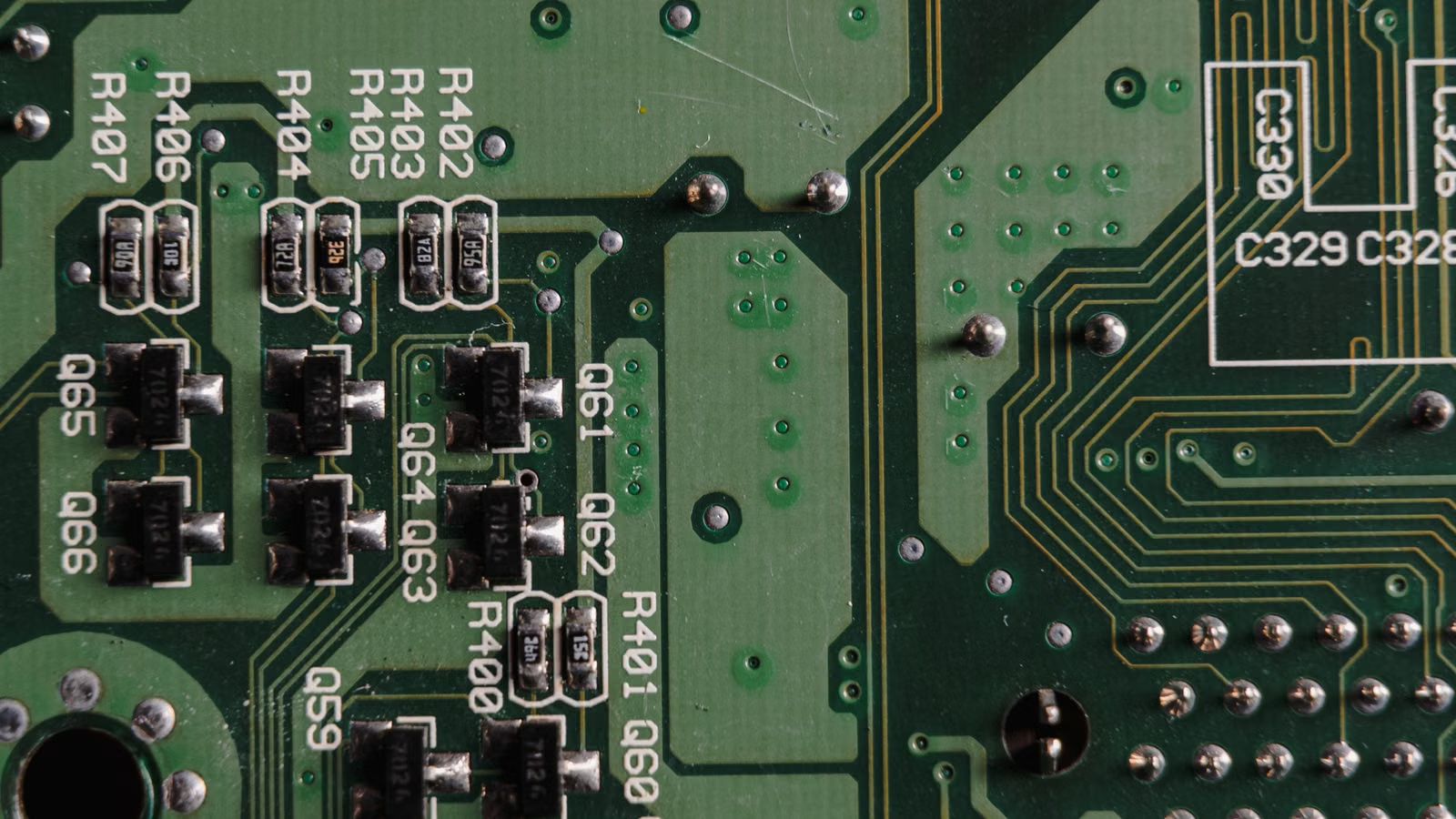
ASMPT and SMIC can both be placed within the AI semiconductor supply chain, but they should not be grouped into the same category of “AI memory stocks.” ASMPT is closer to advanced packaging equipment, TCB, Hybrid Bonding, CPO, and AI server assembly. It is an equipment-side company that helps HBM, GPUs, optical modules, and chip interconnects move into production. SMIC, by contrast, is a foundry platform focused on mature nodes, specialty processes, capacity utilization, and China’s local semiconductor manufacturing base. If you care about technical bottlenecks in the AI memory chain, ASMPT has more direct exposure. If you care about Chinese foundry capacity and supply chain localization, SMIC is the more representative company.
Key Takeaways
- ASMPT is an equipment and advanced packaging story, while SMIC is a foundry story.
- ASMPT has more direct exposure to HBM, TCB, Hybrid Bonding, and CPO.
- SMIC is more affected by mature-node demand, capacity utilization, and depreciation pressure.
- The AI memory chain is not only about HBM makers; packaging, foundry, and equipment also matter.
- Both companies can be tracked together, but they should not be valued with the same framework.
The Core Difference Between ASMPT and SMIC in the AI Memory Chain
The biggest difference between ASMPT and SMIC is that one sits in backend semiconductor equipment and advanced packaging, while the other sits in frontend wafer manufacturing and foundry services. You can think of ASMPT as an equipment supplier that enables high-precision assembly of chips, HBM, optical components, and circuit boards. SMIC, on the other hand, is a foundry platform that turns customers’ chip designs into wafers. The former is closer to the HBM packaging bottleneck, while the latter is closer to China’s domestic wafer manufacturing capability.
From a business definition perspective, ASMPT highlights SEMI and SMT as its two major growth pillars. SEMI covers advanced packaging, die bonding, thermo-compression bonding, photonics, and related equipment, while SMT is linked to electronics manufacturing and AI server assembly. SMIC’s core business is integrated circuit foundry manufacturing. In SMIC’s 2025 annual report, the key business focus is wafer revenue, capacity, capacity utilization, regional revenue, and process platforms.
This means AI memory demand reaches the two companies through different paths. For ASMPT, HBM, GPUs, AI accelerators, chiplets, and 2.5D/3D packaging usually translate into packaging equipment orders, TCB demand, customer validation, and delivery schedules. For SMIC, data centers, AI devices, server power management, control chips, display drivers, and domestic customer orders usually show up through wafer shipments, capacity utilization, pricing, and the ability to absorb depreciation.
| Comparison Dimension | ASMPT | SMIC |
|---|---|---|
| Industry Position | Semiconductor equipment, advanced packaging, SMT | Foundry, mature nodes, specialty processes |
| AI Memory Exposure | More direct exposure to TCB, HBM, Hybrid Bonding, and CPO | More visible through peripheral chips, mature nodes, and local manufacturing demand |
| Customer Logic | OSATs, IDMs, advanced packaging customers, AI server supply chain | Fabless chip designers, consumer electronics, industrial, automotive, and communications customers |
| Key Metrics | Orders, book-to-bill, advanced packaging revenue, product mix | Capacity utilization, wafer shipments, ASP, CAPEX, depreciation |
| Investment Profile | Stronger technology-upgrade and order-cycle sensitivity | Stronger heavy-asset manufacturing and localization logic |
If your question is “Which company is more directly tied to the AI memory chain?” ASMPT is the clearer answer, because HBM and AI chip performance increasingly depend on high-density interconnects, stacking, and advanced packaging. But if your question is “Which company better represents China’s semiconductor manufacturing platform?” SMIC is more representative. Its value does not come from a single HBM product, but from wafer manufacturing capability, customer structure, capacity expansion, and its role in the local supply chain.
Summary: ASMPT and SMIC are not substitutes in the same segment. They are two different nodes in the AI semiconductor value chain. ASMPT is centered on advanced packaging equipment and electronics manufacturing equipment, with its exposure closer to HBM, TCB, Hybrid Bonding, CPO, and AI server assembly. SMIC is centered on foundry manufacturing, with its exposure closer to mature nodes, specialty processes, Chinese fabless customers, and capacity absorption. When comparing the two, you should not simply ask whether they are “AI-related.” You need to identify whether AI demand is being transmitted through packaging bottlenecks, equipment orders, wafer capacity, or local supply chain migration.
Business Model Comparison: Equipment Order Leverage vs Wafer Capacity Utilization
ASMPT’s operating leverage mainly comes from orders and product mix, while SMIC’s operating leverage mainly comes from capacity utilization and depreciation absorption. When comparing the two companies, you should not only look at revenue scale or valuation multiples. Equipment companies tend to be more forward-looking and more sensitive to order cycles, while foundries depend more on capacity ramp-up, customer loading, yield, ASP, and fixed-cost absorption.
ASMPT reported revenue of US$507.9 million and bookings of US$727 million in the first quarter of 2026, with a book-to-bill ratio of 1.43. For an equipment company, a book-to-bill ratio above 1 usually means new orders are higher than recognized revenue, giving future revenue better visibility. However, investors still need to track delivery timing, customer acceptance, and product gross margin.
SMIC is different. Once a foundry builds capacity, depreciation and fixed costs continue to flow through the cost structure. In the first quarter of 2026, SMIC reported revenue of about US$2.505 billion, up 11.5% year over year. But profit performance also depends on gross margin, depreciation, operating expenses, and new fab ramp-up. For SMIC, revenue growth does not automatically mean margin expansion, because new equipment, new fabs, and capacity expansion all increase depreciation.
ASMPT’s Leverage Comes from Orders and Product Mix
ASMPT’s SEMI segment is closer to semiconductor packaging equipment, while its SMT segment is closer to electronics manufacturing and server assembly. When analyzing ASMPT, you should not only look at total revenue. You need to break down the structure of advanced packaging equipment, TCB, photonics, CPO, die bonding, and SMT. ASMPT’s advanced packaging product portfolio includes Laser Dicing & Grooving, Fan-out Bonding, Thermo-compression Bonding, Hybrid Bonding, and Ultra High Precision Die Bonding, all of which are closely tied to the rising complexity of AI chip packaging.
SMIC’s Leverage Comes from Capacity and Utilization
SMIC’s focus is not on receiving a single advanced packaging order. Its challenge is to keep fab utilization high and use reasonable pricing to cover depreciation and fixed costs. SMIC’s revenue comes from customer wafer manufacturing orders across mature nodes, specialty processes, and selected more advanced platforms. AI demand may bring orders for power management chips, control chips, communications chips, edge AI-related chips, and other peripheral devices. But this impact is usually indirect and distributed, unlike HBM equipment orders, which can be concentrated in a specific packaging equipment category.
| Metric | What to Watch for ASMPT | What to Watch for SMIC |
|---|---|---|
| Revenue | Equipment delivery, order conversion, product mix | Wafer shipments, ASP, customer loading |
| Orders | Bookings, book-to-bill, advanced packaging orders | Customer order stability and capacity commitment |
| Gross Margin | SEMI/SMT mix, share of higher-end equipment such as TCB | Utilization, depreciation, pricing pressure, yield |
| Capital Spending | R&D, equipment platform, manufacturing optimization | New fabs, new tools, capacity expansion |
| Cycle Profile | Order-led, more volatile | Longer cycle, slower profit realization |
If you track Hong Kong-listed semiconductor names through Biya, you should not rely only on one-day price moves or AI theme momentum. ASMPT and SMIC are driven by different factors. ASMPT requires close tracking of orders and packaging technology roadmaps, while SMIC requires close tracking of capacity utilization, depreciation, regional revenue, and customer mix. The comparison only becomes meaningful when each company is placed back into its own business model.
Summary: ASMPT is more of an “equipment order leverage” company, while SMIC is more of a heavy-asset manufacturing platform. ASMPT’s business changes may first appear in orders, book-to-bill, TCB demand, and advanced packaging equipment revenue. SMIC’s business changes are more dependent on wafer shipments, capacity utilization, gross margin, depreciation, and capital expenditure. If you focus on short- to medium-term AI packaging order leverage, ASMPT’s indicators are more direct. If you focus on Chinese foundry capacity and local customer demand, SMIC deserves closer tracking. Both companies can benefit from AI semiconductor expansion, but the speed of financial transmission, profit leverage, and valuation logic are very different.
AI Memory Chain Positioning: ASMPT Is Closer to HBM Packaging, While SMIC Is Closer to Manufacturing Absorption

If you focus on the AI memory chain, ASMPT has a more direct connection to HBM than SMIC. HBM is not determined only by DRAM wafers. It also depends on stacking, bonding, interconnects, testing, and packaging yield. ASMPT’s TCB, Hybrid Bonding, photonics, and CPO equipment sit close to this bottleneck. SMIC is more of a manufacturing absorption platform, mainly participating in AI hardware expansion through mature nodes and peripheral chip demand.
The AI memory chain can be divided into several layers. Upstream are materials, equipment, and wafers. The middle layer includes HBM/DRAM/NAND manufacturers, logic chips, foundries, and advanced packaging. Downstream are AI GPUs, AI servers, data centers, and edge AI devices. ASMPT does not produce HBM, but its equipment may participate in key packaging processes that connect HBM and logic chips. SMIC should also not be understood as an HBM or DRAM maker. It is closer to a wafer manufacturing platform and mature-node capacity provider.
ASMPT’s Role in HBM and Advanced Packaging
ASMPT’s advantage becomes more visible as AI chips move from monolithic large dies toward chiplets, 2.5D/3D packaging, and more complex interconnects. In 2025, ASMPT reported that its advanced packaging business generated US$532.1 million in revenue, up 30.2% year over year, while TCB revenue rose by about 146%. This shows that AI chips and HBM are not only driving memory makers; they are also driving packaging equipment and high-precision assembly equipment.
The core value of TCB is to achieve reliable connections between chip and substrate, chip and wafer, and memory and logic under higher stacking, higher I/O density, and stricter yield requirements. ASMPT’s recent AOR TCB positioning emphasizes clean interconnects, defect control, and yield improvement in the advancement of high-bandwidth memory. When you look at HBM4, HBM4E, or next-generation AI accelerators, packaging equipment becomes increasingly important.
SMIC’s Indirect Role in the AI Memory Chain
SMIC’s AI memory exposure does not mainly come from HBM stacking. It comes from the broader demand for peripheral chips created by data center and smart device expansion. PMICs, power management chips, MCUs, sensors, display drivers, networking-related chips, memory controllers, and some specialty-process chips may all use mature nodes or specialty process platforms. As AI demand increases and overseas advanced-node and high-end packaging capacity becomes tighter, some mature-node orders may shift toward Chinese manufacturing.
| AI Memory Chain Segment | Representative Content | ASMPT’s Position | SMIC’s Position |
|---|---|---|---|
| HBM/DRAM Makers | Samsung, SK hynix, Micron, CXMT | Does not produce memory chips | Not an HBM maker |
| Advanced Packaging | TCB, Hybrid Bonding, 2.5D/3D | Strong equipment exposure | Not its main positioning |
| Foundry | Logic, analog, specialty processes | Indirect beneficiary | Core business |
| AI Servers | GPUs, memory, optical modules, motherboards | Related through SMT, photonics, CPO | Related through peripheral chip manufacturing |
| Local Supply Chain | Chinese chip design, mature-node absorption | China customer and equipment demand | Stronger platform value |
The key judgment is this: ASMPT is more like an “advanced packaging equipment leverage” play within the AI memory chain, while SMIC is more like a “manufacturing platform” within the AI semiconductor chain. The former is directly affected by the complexity of HBM, chiplets, CPO, and AI server assembly. The latter is affected by AI demand spillover, mature-node supply and demand, Chinese customer orders, and capacity utilization.
Summary: ASMPT’s position in the AI memory chain is closer to HBM packaging and high-precision interconnects, while SMIC’s position is closer to wafer manufacturing and mature-node capacity absorption. If the question is “Which company is more affected by the HBM cycle?” ASMPT has the more direct exposure, because TCB, Hybrid Bonding, and CPO are all related to AI chip packaging upgrades. SMIC’s exposure is more indirect, mainly through peripheral chip demand from data centers, AI devices, and Chinese customers. Both companies matter, but neither is an HBM maker, and neither should be loosely labeled as a “memory chip company.”
Growth Drivers: Advanced Packaging Upgrades vs Local Foundry Expansion
ASMPT’s growth drivers come from rising packaging complexity, while SMIC’s growth drivers come from manufacturing scale and customer reshoring. If you are looking at the AI semiconductor theme over the next three to five years, ASMPT’s keywords are TCB, Hybrid Bonding, HBM4, CPO, photonics, and AI servers. SMIC’s keywords are capacity expansion, mature nodes, specialty processes, domestic customers, and overseas order migration back to China.
ASMPT’s growth depends more on the idea that each AI chip requires more complex, more difficult, and more valuable packaging equipment. As AI accelerators become larger, HBM stacks become taller, and optical interconnects move deeper into data center hardware architecture, packaging equipment is no longer just backend support. It becomes a core factor affecting performance, yield, and capacity. ASMPT’s second-quarter 2026 revenue guidance was US$540 million to US$600 million, with the midpoint implying about 37% year-over-year growth, mainly driven by SEMI.
SMIC’s growth relies more on China’s local wafer manufacturing demand. Reuters reported that after AI, memory, and high-bandwidth applications absorbed overseas wafer capacity, some overseas customers moved orders back to China. This AI-driven pressure on overseas capacity has become one reason for improving order momentum at SMIC. In the first quarter of 2026, SMIC added 9,000 12-inch equivalent wafers of capacity, with utilization at around 93%, showing that the company is still expanding, although new capacity also creates ramp-up pressure.
| Growth Driver | What to Watch for ASMPT | What to Watch for SMIC |
|---|---|---|
| HBM Upgrade | TCB, HBM4, Hybrid Bonding equipment orders | Indirect benefit from system and peripheral chips |
| AI Server Expansion | SMT, photonics, CPO, server assembly | PMICs, control chips, mature-node orders |
| Technology Roadmap | C2S, C2W, die-to-wafer, chiplets | Process platforms, yield, customer qualification |
| China Supply Chain | China OSAT and electronics manufacturing equipment demand | Local foundry demand and Chinese design customers |
| Profit Realization | High-end equipment mix and gross margin | Utilization, ASP, depreciation absorption |
Another growth line for ASMPT is CPO and silicon photonics. At OFC 2026, ASMPT showcased solutions related to co-packaged optics and photonic integration. This connects to the data center transition from 800G toward 1.6T and even faster interconnects. The bottleneck in data centers is not only compute chips. It also lies in memory bandwidth, packaging interconnects, and optical interconnects.
SMIC’s growth potential is more a function of scale and structure. Capacity expansion can lift the revenue ceiling, but only when customer demand is strong enough, utilization remains stable, and ASP is not heavily pressured can new capacity translate more easily into profit. Reuters also reported that SMIC expected depreciation costs to rise by about 30% in 2026. This is a reminder that foundry manufacturing is not an asset-light business. Expansion itself raises the earnings threshold.
Summary: ASMPT’s growth comes from advanced packaging upgrades, while SMIC’s growth comes from foundry expansion and customer absorption. ASMPT is more affected by HBM4, TCB, CPO, photonics, and AI server assembly. Its growth leverage may be more concentrated, but it also depends more on order conversion and technology roadmaps. SMIC is more affected by mature-node demand, capacity utilization, customer structure, and depreciation pressure. Its growth path is more scale-driven, but profit realization is slower. If you believe packaging is becoming a bottleneck for AI chips, ASMPT has the clearer logic. If you believe China’s foundry platform value will rise, SMIC fits that theme better.
Risk Comparison: Technology Roadmaps, Cycles, and Geopolitical Constraints
ASMPT’s main risks lie in technology roadmaps and order conversion, while SMIC’s main risks lie in heavy-asset expansion, mature-node competition, and external restrictions. When comparing these two companies, you should not only ask how strong AI demand is. You also need to ask whether that demand can become revenue, gross margin, and cash flow. An AI semiconductor upcycle can amplify opportunities, but it can also amplify mispricing and capacity mismatch.
For ASMPT, advanced packaging orders do not mean long-term revenue is fully secured. TCB, Hybrid Bonding, CPO, and silicon photonics are all evolving quickly. Customers may place orders ahead of time, but they may also adjust delivery schedules due to HBM specifications, packaging routes, yield validation, or downstream AI server timing. ASMPT previously disclosed orders for fifteen chip-to-substrate TCB tools, which indicates that the AI tailwind is real. Still, investors need to continue tracking revenue recognition and margins.
For SMIC, capacity expansion is not risk-free growth. Fabs require continuous capital spending, and equipment depreciation flows into costs. When utilization is high, fixed costs are spread across more output and gross margin can improve. When utilization drops, depreciation and pricing pressure can compress profits. Mature nodes also face supply expansion and peer pricing competition. When several Chinese foundries expand at the same time, order quality and product mix become more important than capacity alone.
| Risk Type | ASMPT | SMIC |
|---|---|---|
| Technology Roadmap | Timing of TCB, Hybrid Bonding, and CPO adoption | Advanced-node constraints and mature-node competition |
| Customer Demand | High base effect and delivery volatility in AI packaging orders | Consumer electronics, industrial, and automotive cycles |
| Financial Pressure | Product mix affects gross margin | CAPEX, depreciation, and fixed-cost pressure |
| Geopolitics | Global customer delivery and supply chain uncertainty | Export controls, equipment maintenance, supply chain restrictions |
| Valuation Risk | Orders may be priced in ahead of revenue | Capacity may expand faster than profit realization |
Geopolitical risk is especially important for SMIC. In 2020, the U.S. Department of Commerce added SMIC and related entities to the Entity List, creating licensing requirements for access to certain U.S. technologies, equipment, and services. Even if SMIC can continue growing through mature nodes and specialty processes, advanced-node expansion, equipment maintenance, and supply chain resilience remain affected by external policy constraints.
ASMPT also faces geopolitical and cyclical risks. Its customer base is more global, with orders potentially coming from OSATs, IDMs, advanced packaging customers, and electronics manufacturing customers across different regions. If AI server capital expenditure slows, or if customers shift from TCB to other mass-production routes, equipment orders may react first. ASMPT’s LITHOBOLT Hybrid Bonding shows its positioning for next-generation packaging, but the more advanced the technology path, the more important it is to track customer validation and commercialization timing.
Summary: ASMPT’s risk is not simply that “AI demand may fall.” Its real risks are technology roadmap changes, delayed customer validation, a high order base, and product mix volatility. SMIC’s risk is not simply that it has “less AI exposure.” Its real risks are heavy-asset expansion, rising depreciation, mature-node competition, and geopolitical constraints. If you track ASMPT, focus on TCB, Hybrid Bonding, CPO order quality, and revenue conversion. If you track SMIC, focus on utilization, CAPEX, depreciation, customer structure, and policy boundaries. The two companies have different risk profiles and should not be reduced to a single phrase such as “semiconductor cycle volatility.”
How Investors Can Choose: Advanced Packaging Leverage or Foundry Platform Value
You do not need to simply decide whether ASMPT or SMIC is “better.” You should first decide which AI semiconductor theme you are trying to track. If you are bullish on HBM, chiplets, CPO, and advanced packaging bottlenecks, ASMPT is closer to that logic. If you are bullish on Chinese foundry manufacturing, local customer reshoring, and mature-node capacity value, SMIC is closer to that logic. Both companies can be included in the same watchlist, but the indicators must be separated.
A common mistake is to compare the two companies with the same valuation framework. Looking only at PE may ignore ASMPT’s order cycle and product mix changes. Looking only at revenue scale may ignore SMIC’s depreciation burden and capacity utilization. Looking only at the “AI” label may mix together equipment, packaging, foundry, memory makers, and server hardware. A more useful approach is to define your investment thesis first, then match each company to its position in the value chain.
| Your Investment Assumption | Company to Watch More Closely | Reason |
|---|---|---|
| HBM4 and advanced packaging keep expanding | ASMPT | More direct exposure to TCB, Hybrid Bonding, and CPO equipment |
| AI server hardware complexity increases | ASMPT | Related to SMT, photonics, and packaging equipment |
| China mature-node orders migrate back locally | SMIC | Wafer capacity and domestic customer absorption matter more |
| Chinese chip manufacturing platform value rises | SMIC | Stronger foundry platform identity |
| You want order-cycle leverage | ASMPT | Equipment orders are more sensitive to cycle changes |
| You want heavy-asset manufacturing exposure | SMIC | Capacity, utilization, and depreciation are the core variables |
Follow-up tracking can be divided into three layers. The first layer is company-specific indicators: for ASMPT, bookings, book-to-bill, TCB, SEMI gross margin, AI servers, and CPO demand; for SMIC, capacity utilization, wafer shipments, ASP, depreciation, CAPEX, and regional revenue. The second layer is industry indicators: HBM supply and demand, AI server shipments, OSAT expansion, optical module upgrades, and mature-node pricing. The third layer is policy variables: export controls, equipment availability, customer reshoring, and regional supply chain changes.
If you track both Hong Kong and U.S. equities across the semiconductor value chain, you can use Biya Hong Kong stocks and U.S. stock information to screen relevant names and place ASMPT, SMIC, memory makers, server companies, and equipment suppliers into one framework. The point is not to chase themes, but to separate companies by value-chain role: equipment, foundry, memory, packaging and testing, servers, and data center infrastructure.
Trading also requires attention to fees and rules. Semiconductor stocks can be highly volatile around earnings, order rumors, and AI server capital expenditure updates. If the service is available in your region, Biya U.S. stock trading fees state that U.S. stock trading commission is US$0, while platform fees, external institutional fees, and other charges are subject to the fee schedule and order page. Public market information, trading rules, and fee structures are for research purposes only and do not constitute investment advice.
Summary: Choosing between ASMPT and SMIC is essentially a choice between “advanced packaging leverage” and “foundry platform value.” ASMPT is better for tracking HBM, TCB, CPO, AI server assembly, and packaging equipment orders. SMIC is better for tracking Chinese foundry manufacturing, domestic customers, mature-node demand, capacity utilization, and depreciation pressure. If you place both companies in the same comparison table, first define the comparison dimension instead of simply asking which one is stronger. For investors, the more disciplined framework is to identify value-chain position first, track leading indicators second, and then evaluate valuation, risk, and trading costs.
When researching ASMPT, SMIC, and other AI semiconductor companies, what you really need is an industry value-chain map, not just the label “AI memory concept.” ASMPT represents advanced packaging equipment and electronics manufacturing equipment. SMIC represents foundry manufacturing and China’s local semiconductor production platform. Memory makers, OSATs, server companies, and optical module suppliers all correspond to different profit pools. You can use Biya to track related Hong Kong and U.S. stock names, then combine company disclosures, earnings data, fee structures, and applicable rules for further research. Service availability depends on your region, identity verification result, platform rules, and applicable laws and regulations. Semiconductor stocks may be affected by earnings expectations, order timing, policy changes, and market sentiment, so you should fully understand the risks before trading.
FAQ
Is ASMPT an AI memory equipment stock?
ASMPT can be viewed as an advanced packaging equipment-related company within the AI memory chain, but it is not an HBM, DRAM, or NAND manufacturer. Its AI memory exposure mainly comes from TCB, Hybrid Bonding, CPO, photonics, and AI server assembly, which affect interconnects, stacking, and packaging yield between HBM and logic chips.
Does SMIC directly manufacture HBM memory chips?
SMIC should not be understood as a company that directly manufactures HBM memory chips. Its core business is foundry manufacturing, with value concentrated in mature nodes, specialty processes, capacity utilization, and domestic customer absorption. AI memory demand affects SMIC more indirectly through peripheral chips, control chips, and local manufacturing demand.
Is ASMPT or SMIC more affected by the HBM cycle?
ASMPT is more directly affected by the HBM cycle and advanced packaging demand. HBM stacking, TCB, Hybrid Bonding, and rising AI chip packaging complexity can all drive related equipment orders. SMIC benefits more indirectly through mature-node orders, peripheral chip demand, and domestic manufacturing absorption, so it should not be treated as a direct HBM pricing-cycle stock.
How should retail investors compare the valuations of ASMPT and SMIC?
Retail investors should compare ASMPT and SMIC by first separating their business models. For ASMPT, focus on orders, book-to-bill, advanced packaging revenue, and product mix. For SMIC, focus on capacity utilization, wafer shipments, CAPEX, depreciation, and gross margin. Comparing only PE, market value, or short-term stock moves can overlook the fact that the two companies operate in different parts of the value chain.
Why is advanced packaging important in the AI memory chain?
Advanced packaging is important because AI chip performance depends not only on GPUs or HBM themselves, but also on interconnect density, bandwidth, power efficiency, yield, and packaging capacity. As HBM stacks become taller and chiplet architectures become more complex, technologies such as TCB, Hybrid Bonding, and 2.5D/3D packaging become increasingly critical.
Can ASMPT and SMIC both be included in an AI semiconductor watchlist?
ASMPT and SMIC can both be included in an AI semiconductor watchlist, but they should be tracked from different angles. ASMPT represents advanced packaging equipment and electronics manufacturing equipment, while SMIC represents foundry manufacturing and local semiconductor production. The former should be tracked through orders and technology roadmaps; the latter through capacity, utilization, depreciation, and customer structure.
*This article is provided for general information purposes and does not constitute legal, tax or other professional advice from BiyaPay or its subsidiaries and its affiliates, and it is not intended as a substitute for obtaining advice from a financial advisor or any other professional.
We make no representations, warranties or warranties, express or implied, as to the accuracy, completeness or timeliness of the contents of this publication.
Related Blogs of

Wire Transfer Requirements: Sender and Beneficiary Details Checklist


Best Crypto Apps for Beginners: Fees, Security, and Ease of Use


Choose Country or Region to Read Local Blog
 Australia
 Austria
 Belgium
 Canada
 Cyprus
 Czech Republic
 Denmark
 Estonia
 Finland
 France
 Germany
 Greece
 Hong Kong
 India
 Indonesia
 Ireland
 Italy
 Japan
 Latvia
 Lithuania
 Luxembourg
 Malaysia
 Malta
 Morocco
 Nepal
 Netherlands
 New Zealand
 Norway
 Pakistan
 Philippines
 Poland
 Portugal
 Romania
 Singapore
 Slovakia
 Slovenia
 South Africa
 South Korea
 Spain
 Sweden
 Thailand
 United States
 Turkey
 United Arab Emirates
 United Kingdom
 Vietnam