
Micron vs Sandisk vs Kioxia: How to Tell NAND Flash Companies Apart




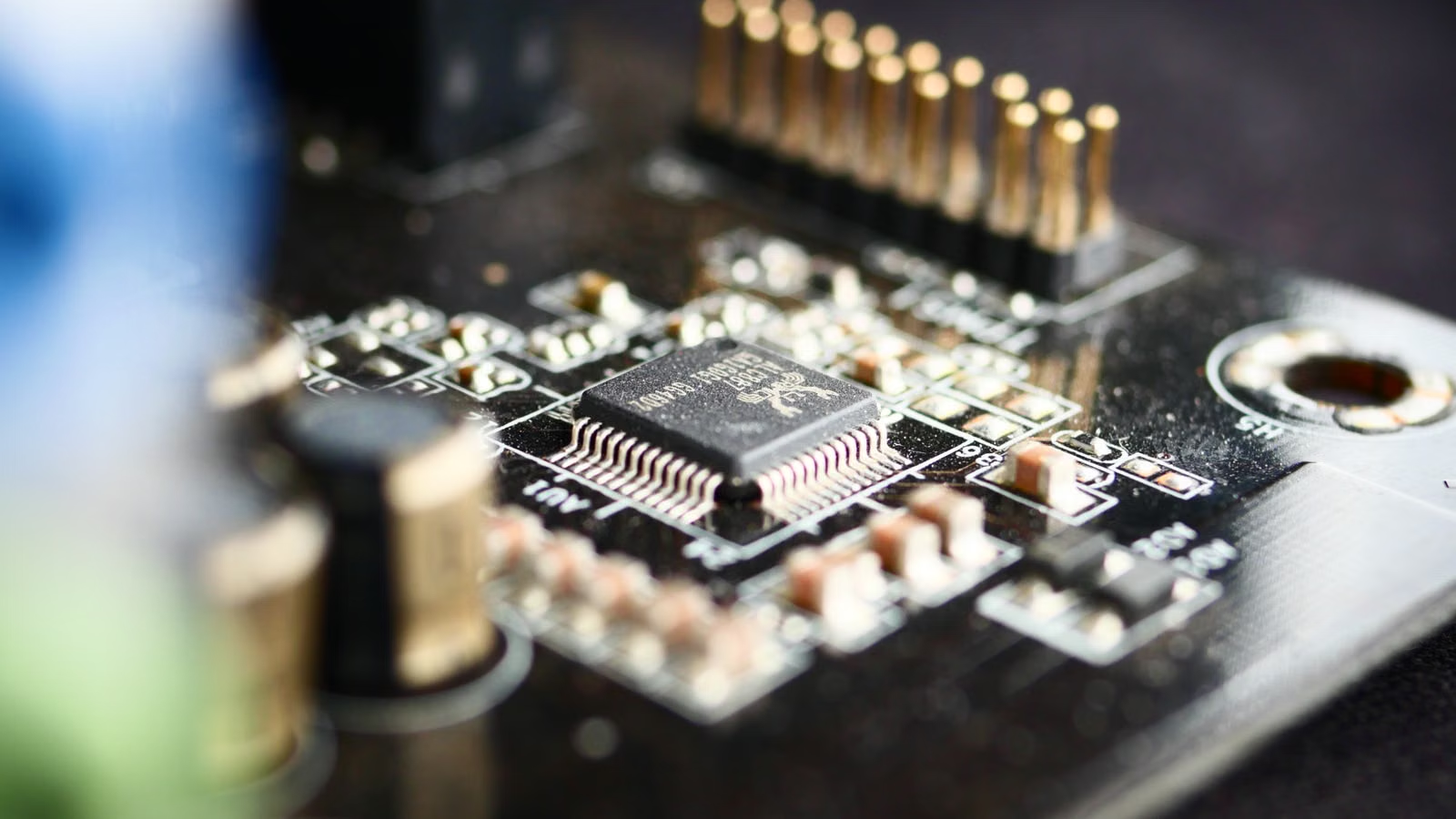
If you want to tell Micron, Sandisk, and Kioxia apart, the key is not simply that all three are related to “flash memory.” The real question is what role each company plays in the NAND Flash value chain. Micron is a diversified memory company covering DRAM, HBM, NAND, and SSDs. Sandisk is closer to a listed company with higher NAND / Flash purity. Kioxia represents Japan’s NAND technology platform and the BiCS Flash roadmap. For ordinary investors, the differences also involve trading venues, theme purity, cycle volatility, enterprise SSD exposure, and currency risk.
Key Takeaways
- NAND Flash is non-volatile storage mainly used in SSDs, smartphones, data centers, and AI storage.
- Micron is not a pure NAND company; it is a diversified memory maker across DRAM, HBM, NAND, and SSDs.
- Sandisk has higher NAND / Flash purity and is more sensitive to the NAND pricing cycle.
- Kioxia has a strong technology identity, centered on BiCS Flash, the Japanese market, and enterprise SSDs.
- NAND investing requires tracking ASP, bit shipment, inventory, capex, and enterprise SSD demand.
How Is NAND Flash Different from DRAM, and Why Shouldn’t Micron, Sandisk, and Kioxia Be Put in the Same Bucket?

The core difference between NAND Flash and DRAM is that one is designed for long-term data storage, while the other is designed for high-speed data operation. NAND is non-volatile storage, meaning data remains after power is turned off. It is widely used in SSDs, UFS, memory cards, USB flash drives, enterprise SSDs, and data center storage. DRAM is volatile memory, meaning data disappears when power is cut, and it mainly supports CPUs, GPUs, and real-time computing. Therefore, although Micron, Sandisk, and Kioxia are all related to NAND, they should not be treated as the same type of stock.
From an application perspective, NAND’s investment logic is increasingly tied to “capacity and cost.” AI data centers do not only need GPUs and HBM. They also require large amounts of SSD storage for training data, model weights, logs, retrieval data, KV cache, cold data, and warm data. As enterprise SSDs expand from traditional databases and cloud storage into AI data lakes and inference storage, NAND makers’ product mix may shift meaningfully.
| Type | Data Retained After Power-Off? | Main Uses | What Investors Should Watch |
|---|---|---|---|
| NAND Flash | Yes | SSDs, UFS, memory cards, enterprise SSDs | ASP, bit shipment, inventory |
| DRAM | No | CPU main memory, server memory | DRAM pricing, server demand |
| HBM | No | AI GPUs, ASICs, high-performance computing | Customer qualification, bandwidth, yield |
| HDD | Yes | Cold data, archive storage, cloud storage | Capacity cost, nearline demand |
| SSD | Yes | Data centers, PCs, AI storage | NAND cost, controllers, interfaces |
SLC, MLC, TLC, and QLC also matter for investment analysis. SLC stores 1 bit per cell and offers high reliability but higher cost. MLC stores 2 bits per cell. TLC stores 3 bits per cell. QLC stores 4 bits per cell and is better suited for high-capacity, lower-cost-per-bit applications. For investors, TLC and QLC are not just technical labels. They help determine whether a company can turn higher-density NAND into products that are manufacturable, profitable, and suitable for enterprise SSD adoption.
Summary: You should first understand the functional difference between NAND and DRAM, then look at each company’s business structure. Micron covers DRAM, HBM, NAND, and SSDs, so NAND is only one part of its broader memory cycle exposure. Sandisk is closer to a higher-purity NAND / Flash company. Kioxia is more closely associated with BiCS Flash, 3D NAND, enterprise SSDs, and Japan’s semiconductor technology platform. NAND investing should not stop at the phrase “flash memory company.” You need to look at product applications, technology generations, customer types, and cycle position.
Micron, Sandisk, and Kioxia Company Positioning: Who Is a Diversified Memory Company, and Who Looks More Like a Pure NAND Play?

If you want exposure to the overall memory cycle, Micron is more suitable. If you want more direct NAND / Flash exposure, Sandisk is clearer. If you want to study Japan’s NAND technology and the BiCS Flash roadmap, Kioxia is more representative. All three companies are affected by the NAND cycle, but their stock drivers differ: Micron’s NAND exposure is diluted by DRAM and HBM, Sandisk follows NAND and SSD trends more directly, while Kioxia also carries Japan market, yen, and ADS-related expectations.
Micron is a diversified memory company. It is not only a NAND maker; it also covers DRAM, HBM, data center SSDs, mobile storage, client storage, automotive, and embedded markets. In its third-quarter fiscal 2026 results, Micron reported revenue of $41.456 billion and GAAP gross margin of 84.6%, while highlighting strategic customer agreements that improve revenue predictability. When you buy MU, you are buying broad memory industry exposure, not a single NAND pricing play.
Sandisk is closer to a listed company with higher NAND / Flash purity. After Sandisk completed its separation from Western Digital, it began trading on Nasdaq under the ticker SNDK. Investors can more easily treat it as an independent Flash, NAND, SSD, and data center storage company. Its advantage is a more focused theme. Its drawback is that the NAND cycle has a more direct impact on its earnings and valuation.
Kioxia is more like a Japanese NAND technology platform. Its keywords are BiCS Flash, 3D NAND, enterprise SSDs, AI inference storage, and Japan’s semiconductor supply chain. Kioxia’s investor relations information shows that it trades as TSE Prime: 285A, with FY2026 Q1 earnings scheduled for July 31, 2026. For international investors, Kioxia is worth researching, but trading access, yen exposure, and disclosure timing require separate evaluation.
| Dimension | Micron | Sandisk | Kioxia |
|---|---|---|---|
| Core positioning | Diversified memory company | Higher NAND / Flash purity | Japanese NAND technology platform |
| Main products | DRAM, HBM, NAND, SSDs | NAND, SSDs, Flash products | BiCS Flash, NAND, SSDs |
| AI-related exposure | HBM + SSDs + data center | More direct data center SSD exposure | AI storage and enterprise SSDs |
| Trading route | Nasdaq: MU | Nasdaq: SNDK | TSE Prime: 285A |
| Main variables | Dual DRAM and NAND cycles | NAND ASP and data center demand | Technology roadmap, yen, ADS progress |
Summary: The difference between Micron, Sandisk, and Kioxia is not whether they are “NAND companies,” but how much NAND matters to each company’s value. Micron is suitable for investors looking at an overall DRAM, HBM, and NAND upcycle. Sandisk is more suitable for direct NAND Flash, SSD, and data center storage leverage. Kioxia is more suitable for investors studying BiCS Flash technology, Japan’s semiconductor revival, and enterprise SSD trends. The more purity you seek, the more cycle volatility you must be prepared to accept.
Product and Technology Roadmap Comparison: Which Matters More, 3D NAND, BiCS, QLC, or Enterprise SSDs?

Comparing NAND technology should not be reduced to “more layers are better.” What really affects competitiveness is production yield, bit density, cost per bit, power consumption, interface speed, controller design, firmware, packaging, and customer qualification. The goal of 3D NAND is to vertically stack memory cells, increasing density and reducing cost per bit. But if yield is low, power consumption is high, or customer adoption is slow, strong technical specifications may not quickly translate into profits.
The most important shared technology thread between Sandisk and Kioxia is BiCS Flash. Sandisk announced that BiCS10 1Tb TLC 3D NAND had begun sampling, citing up to 4.8Gb/s NAND interface speed, a 59% bit-density improvement versus BiCS8, and improved I/O power efficiency. TrendForce’s coverage of Kioxia BiCS 10 NAND sampling also noted that the product is based on 1Tb TLC and 10th-generation BiCS FLASH technology, with manufacturing linked to Kitakami Plant Fab 2.
Micron’s NAND roadmap looks more like a product portfolio strategy. It advances high-density QLC while integrating NAND into enterprise SSDs, PCIe Gen6 SSDs, client SSDs, and AI data center storage solutions. Micron announced that the 245TB Micron 6600 ION SSD had shipped, positioning the product for AI, cloud, enterprise, and hyperscale workloads. Micron also positions the Micron 9650 SSD as a PCIe Gen6 data center SSD designed to meet GPUs’ need for high-speed data supply.
| Technology Dimension | Investment Meaning | Micron | Sandisk | Kioxia |
|---|---|---|---|---|
| 3D NAND | Foundation for cost and capacity | Strong | Strong | Strong |
| BiCS Flash | Technology platform identity | Not a core brand | Core thread | Core thread |
| QLC NAND | High capacity and lower cost per bit | Key focus | Suitable for high-capacity SSDs | Suitable for enterprise SSDs |
| Enterprise SSD | Data center revenue leverage | Important | Very important | Very important |
| Controller / Firmware | Determines performance and customer qualification | Important | Important | Important |
Summary: When comparing NAND technology, do not focus only on layers, TLC, QLC, or BiCS10 as isolated labels. What matters is whether the technology enters sampling, moves into mass production, is adopted in enterprise SSDs, and improves ASP and gross margin. Sandisk and Kioxia share the BiCS technology thread, but their capital market logic is different. Micron focuses more on combining NAND, controllers, SSDs, and data center customer demand. For ordinary investors, a technology roadmap only changes stock value when it becomes orders and earnings.
Financial Leverage and Cycles: Why Do NAND Companies Move More Sharply Than Ordinary Tech Stocks?
NAND companies are volatile because NAND pricing, inventory, utilization, and customer orders quickly flow through to gross margin. When ASP per GB rises, revenue and profit can recover quickly. When prices fall, inventory write-downs, margin compression, and capex pressure may also intensify. Micron’s volatility comes from multiple lines, including DRAM, HBM, and NAND. Sandisk is more concentrated in the NAND cycle. Kioxia adds Japan market and technology re-rating factors.
Sandisk is a useful example of NAND cycle leverage. In its third-quarter fiscal 2026 results, it reported revenue of $5.95 billion, up 97% sequentially; Datacenter revenue of $1.467 billion, up 233% sequentially; and GAAP gross margin of 78.4%. These figures show how powerful NAND earnings leverage can be when high-value customers, better pricing, and data center demand appear at the same time.
But strong leverage also means strong risk. NAND is a capital-intensive industry, and capacity expansion, inventory cycles, and supply-demand expectations all affect profitability. If all suppliers expand at the same time while AI storage demand falls short of market expectations, pricing may come under pressure again. Reuters, in its coverage of Kioxia’s next-generation BiCS Flash sample shipments, noted that AI is driving demand for high-capacity NAND, while also mentioning the company’s plan to pursue a U.S. depositary share listing. Such developments can affect both fundamental expectations and valuation repricing.
| Metric | Why It Matters | Micron | Sandisk | Kioxia |
|---|---|---|---|---|
| NAND ASP | Determines revenue quality | Important | Extremely important | Extremely important |
| Bit shipment | Shows real demand | Important | Important | Important |
| Gross margin | Measures earnings leverage | Affected by multiple businesses | More directly reflects NAND | More directly reflects NAND |
| Capex | Indicates future supply | High | High | High |
| Customer agreements | Measures revenue stability | Strategic customer agreements | NBM agreements | Long-term customer cooperation |
Strong earnings can still be followed by a stock pullback. A common pattern in semiconductor cycle stocks is that earnings are strong, but the stock has already priced in higher ASP, higher gross margin, and tighter supply. The market then starts asking whether the next stage is near the peak. NAND stocks are especially prone to this because pricing cycles, inventory, and expectations are quickly magnified by investors.
Summary: NAND companies do not move sharply because they are “unstable.” They move sharply because the industry is highly sensitive to pricing, inventory, and utilization. Micron’s financial performance must be broken down across DRAM, HBM, and NAND. Sandisk more directly reflects NAND ASP and data center SSD demand. Kioxia requires tracking BiCS Flash mass production, enterprise SSD customers, Japanese market liquidity, and yen exposure. Ordinary investors should not only look at revenue growth. They should ask whether that growth comes from pricing, shipments, customer agreements, or temporary supply-demand mismatches.
Investor Accessibility: How Should You Choose Between MU, SNDK, 285A, ADS, and ETF Routes?
For ordinary investors choosing a NAND Flash company, the first step is not deciding which company has the strongest technology. It is confirming which markets you can actually trade. MU and SNDK both trade on Nasdaq and are relatively accessible. Kioxia mainly trades on the Tokyo Stock Exchange under the code 285A, so international investors need to confirm broker support and currency conversion costs. If you do not want single-company risk, semiconductor ETFs or AI data center hardware ETFs may offer better diversification.
Micron MU is suitable for investors seeking broad memory cycle exposure. Its advantages are trading convenience, transparent disclosures, high market attention, and exposure across DRAM, HBM, NAND, data center SSDs, and AI memory. Its drawback is that NAND purity is lower, and the stock is also influenced by HBM, DRAM, and broader U.S. semiconductor valuations.
Sandisk SNDK is more suitable for investors who want direct exposure to the NAND Flash and enterprise SSD cycle. Since its independent listing, the market can more easily view it as a NAND / Flash theme stock. Its advantages are a clear theme and more direct data center SSD leverage. Its drawback is that if NAND ASP weakens or customer agreement expectations disappoint, the stock may become more volatile.
Kioxia 285A is suitable for investors who can trade Japanese stocks and are interested in BiCS Flash and Japan’s semiconductor supply chain. Its technology identity is strong, but for ordinary international investors, trading hours, yen exposure, disclosure language, future ADS progress, and Japanese market liquidity all require additional evaluation.
| Route | Accessibility | NAND Purity | Suitable For | Main Risks |
|---|---|---|---|---|
| MU | High | Medium | Broad memory cycle | Dilution from DRAM/HBM |
| SNDK | High | High | NAND / Flash theme | More direct cycle volatility |
| Kioxia 285A | Medium | High | Japan market and technology theme | FX and trading access |
| Semiconductor ETF | High | Medium-low | Diversified investors | Less pure theme exposure |
If you follow U.S.-listed memory companies such as MU and SNDK, trading costs also matter alongside share price volatility. U.S. stock trading costs may include more than commissions. They can also include platform fees, external agency fees, trading activity fees, FX costs, and execution differences. Biya charges $0 commission for U.S. stock trades, while platform fees, external agency fees, and other charges are subject to U.S. stock trading fees and order display. Service availability depends on the user’s location, identity verification result, platform rules, and applicable laws and regulations.
Summary: From an accessibility perspective, MU and SNDK are more direct, 285A is more of a Japan-market and cross-market trading route, and ETFs are better for reducing single-company risk. Micron is suitable for broad memory cycle exposure. Sandisk is suitable for NAND / Flash theme purity. Kioxia is suitable for BiCS technology and Japan supply-chain logic. Before trading, confirm broker support, fees, spreads, FX, taxes, order types, and local regulatory requirements. Do not ignore trading conditions just because a company has strong technology.
How Ordinary Investors Should Distinguish These Three Companies: By Objective, Risk Tolerance, and Research Focus
The most practical way to distinguish Micron, Sandisk, and Kioxia is to ask yourself three questions first: do you want broad memory cycle exposure or a pure NAND theme? Can you tolerate high volatility in NAND ASP? Can you trade the Japanese market? If you want a lower learning curve, Micron is a better starting point. If you want to track NAND / Flash leverage, Sandisk is more direct. If you care about Japan’s technology roadmap and BiCS Flash, Kioxia deserves research.
If you want broad memory cycle exposure, start with Micron. Key research points include DRAM contract pricing, HBM supply, NAND ASP, data center SSDs, capex, customer agreements, and inventory. You can also use U.S. stock information search to track MU, SNDK, and related semiconductor companies, then combine earnings and industry pricing to judge cycle position.
If you want NAND / Flash purity, focus on Sandisk. Key research points include ASP per GB, datacenter revenue, NBM agreements, enterprise SSD customers, BiCS10 mass-production progress, and data center storage demand. Sandisk’s advantage is a more focused theme. The challenge is that market expectations can also become more concentrated around the NAND upcycle.
If you want Japan’s NAND technology and the BiCS platform, study Kioxia. Key research points include BiCS10 sampling and mass production, Kitakami/Yokkaichi capacity, enterprise SSD customers, yen exposure, Japanese market valuation, and potential ADS progress. It may not be suitable for every ordinary investor, but it is relevant for those willing to research cross-market semiconductor assets.
| Investment Objective | More Suitable Focus | Logic |
|---|---|---|
| Broad memory cycle | Micron | DRAM + HBM + NAND together |
| NAND theme purity | Sandisk | More direct Flash/SSD leverage |
| Japan technology roadmap | Kioxia | BiCS Flash and enterprise SSDs |
| Beginner watchlist | MU + ETF | Transparent information and lower learning cost |
| High-volatility theme | SNDK / 285A | More concentrated NAND cycle |
| Risk diversification | Semiconductor ETF | Reduces single-stock uncertainty |
Summary: The question is not whether Micron, Sandisk, or Kioxia is “absolutely better.” They suit different investment goals. Micron is suitable for broad memory cycle exposure. Sandisk is suitable for purer NAND / Flash leverage. Kioxia is suitable for BiCS technology, Japanese NAND, and enterprise SSD themes. Ordinary investors should first confirm what their account can trade, then decide whether they want trading convenience, theme purity, technology re-rating, or diversified allocation. When investing in NAND companies, the research order should be trading access, business structure, pricing cycle, financial leverage, and valuation—not simply company reputation.
After comparing the three companies, a more reasonable next step is to build a watchlist rather than place an order immediately. You can put Micron, Sandisk, Kioxia, Samsung, SK Hynix, Western Digital, Seagate, and related semiconductor ETFs into the same framework, tracking NAND ASP, enterprise SSD demand, AI storage, inventory, capex, and gross margin. If you follow the U.S.-listed NAND / Flash theme, you can use Biya to monitor MU, SNDK, and related semiconductor assets. Eligible users can also use the Biya App to manage market watchlists, account activity, and trading reviews. Public market information and trading rule explanations do not constitute investment advice. Actual fees, order rules, service availability, and compliance requirements are subject to platform display and applicable local laws and regulations.
FAQ
Is Micron Stock a Pure NAND Flash Play?
No. Micron covers DRAM, HBM, NAND, SSDs, and multiple end markets, so NAND is an important part of the company but not the only variable. MU is more suitable for investors seeking broad memory cycle exposure, not those who only want to bet on rising NAND Flash prices.
What Is the Relationship Between Sandisk SNDK and Western Digital?
Sandisk has been separated from Western Digital and listed independently, with its investment logic now more focused on Flash, NAND, and SSDs. Western Digital is more associated with HDDs and data storage devices. Specific ownership changes, trading arrangements, and corporate relationships should be checked against company announcements and exchange disclosures.
Is Kioxia Suitable for Ordinary U.S. Stock Investors to Follow?
Yes, it is worth following, but its trading route is more complex than MU and SNDK. Kioxia mainly trades in the Japanese market, so ordinary international investors need to check broker support, yen conversion costs, disclosure language, and future ADS progress before deciding whether it fits their own situation.
Why Are NAND Flash Companies Affected by AI Data Centers?
AI data centers need not only GPUs and HBM, but also large amounts of SSD storage for models, training data, inference data, logs, and retrieval data. NAND Flash enters the AI storage chain through enterprise SSDs, so it is affected by AI capex, data center expansion, and cloud customer procurement cycles.
How Do TLC NAND and QLC NAND Differ for Investment Analysis?
TLC usually offers a better balance among performance, cost, and endurance, while QLC focuses more on high capacity and lower cost per bit. Investors should not only look at the technology name. They should ask whether TLC or QLC is being adopted in data center SSDs, client SSDs, AI storage, and long-term customer orders.
Is an ETF a More Suitable Way for Ordinary Investors to Invest in NAND Flash?
An ETF can reduce single-company risk, but NAND theme purity will be lower. A semiconductor ETF may also hold GPU, equipment, foundry, software, server, and memory companies. Before investing, review holdings, expense ratio, rebalancing rules, and regional exposure, and compare them with your own risk tolerance.
*This article is provided for general information purposes and does not constitute legal, tax or other professional advice from BiyaPay or its subsidiaries and its affiliates, and it is not intended as a substitute for obtaining advice from a financial advisor or any other professional.
We make no representations, warranties or warranties, express or implied, as to the accuracy, completeness or timeliness of the contents of this publication.
Related Blogs of

Crypto Off-Ramp Services vs. Exchanges: Fees, Payouts, and Trade-Offs


Binance Hot Wallet Outflows: User Funds, Loss Coverage, and Withdrawal Updates





Choose Country or Region to Read Local Blog
 Australia
 Austria
 Belgium
 Canada
 Cyprus
 Czech Republic
 Denmark
 Estonia
 Finland
 France
 Germany
 Greece
 Hong Kong
 India
 Indonesia
 Ireland
 Italy
 Japan
 Latvia
 Lithuania
 Luxembourg
 Malaysia
 Malta
 Morocco
 Nepal
 Netherlands
 New Zealand
 Norway
 Pakistan
 Philippines
 Poland
 Portugal
 Romania
 Singapore
 Slovakia
 Slovenia
 South Africa
 South Korea
 Spain
 Sweden
 Thailand
 United States
 Turkey
 United Arab Emirates
 United Kingdom
 Vietnam