
What Is the Relationship Between Hua Hong Semiconductor and Memory Chips? Embedded Memory and Mature Nodes Explained




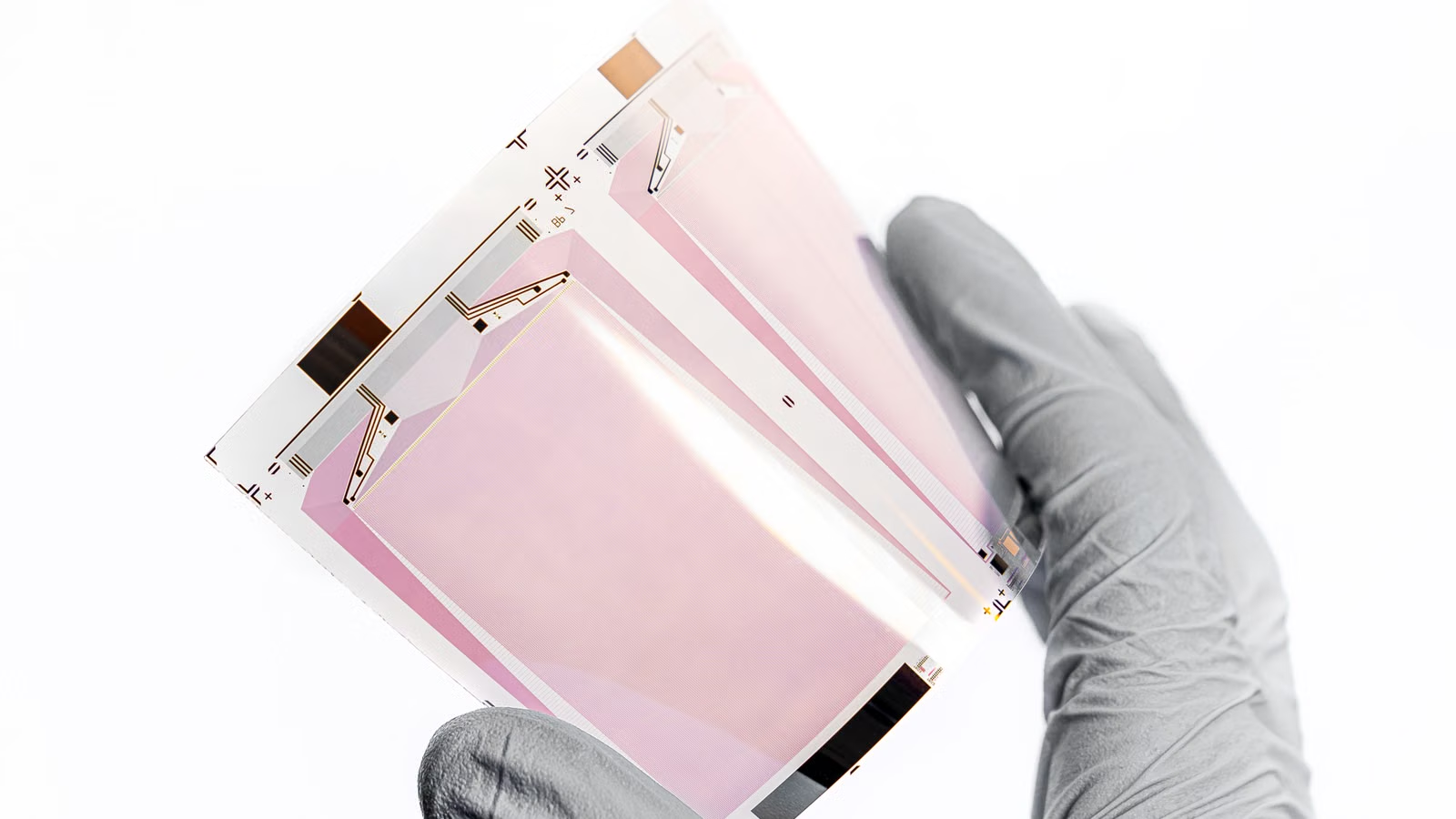
Hua Hong Semiconductor is related to memory chips, but you should not simply think of it as a “memory company” or a “flash memory manufacturer.” More accurately, Hua Hong Semiconductor is a specialty process foundry. Its memory-related exposure mainly comes from embedded non-volatile memory, or eNVM, standalone non-volatile memory, or sNVM, and the mature process platforms that support these technologies. If you are following 1347.HK, the key variables are not HBM or SSD prices, but MCU demand, smart card ICs, automotive chips, NOR Flash, EEPROM, capacity utilization, and gross margin recovery.
Key Takeaways
- Hua Hong Semiconductor is not a DRAM, NAND, or HBM memory manufacturer.
- eNVM is the core link between Hua Hong and the memory chip value chain.
- sNVM is more closely related to NOR Flash, EEPROM, and standalone memory chips.
- Mature process nodes remain essential for MCUs, automotive chips, power devices, and analog chips.
- Investors should focus on revenue mix, capacity utilization, and gross margin trends.
What Is the Relationship Between Hua Hong Semiconductor and Memory Chips?
Hua Hong Semiconductor is related to memory chips, but it does not manufacture DRAM, NAND, HBM, or consumer SSDs. A better way to understand Hua Hong is to see it as a “memory-related specialty process foundry.” Customers design the chips, while Hua Hong provides wafer manufacturing capabilities. Part of its process platform is connected to embedded memory, NOR Flash, EEPROM, smart card ICs, MCUs, and automotive chips. This relationship is more indirect than that of a traditional memory manufacturer, but it better explains Hua Hong’s actual business boundary.
Hua Hong’s memory-related business can be understood in three layers. The first layer is embedded non-volatile memory, or eNVM. This is not a standalone memory chip, but a storage unit integrated inside MCUs, smart card chips, or other SoCs. The second layer is standalone non-volatile memory, or sNVM, which includes products closer to traditional memory chips, such as certain types of NOR Flash and EEPROM. The third layer is the mature process foundry platform. Many eNVM, sNVM, power device, and analog chip products do not require the most advanced process nodes, but they do require stable manufacturing, high reliability, and controlled costs.
From the perspective of revenue mix, memory-related platforms have already become an important part of Hua Hong’s business. According to Hua Hong Semiconductor’s 2025 annual results announcement, the company generated USD 611.3 million from eNVM in 2025, accounting for 25.4% of total revenue; sNVM revenue reached USD 187.7 million, accounting for 7.8%. In its first-quarter 2026 results announcement, eNVM revenue reached USD 184.6 million, or 27.9% of revenue, while sNVM revenue reached USD 57.1 million, or 8.6%. This shows that Hua Hong is not a pure memory company, but memory-related platforms do meaningfully affect its revenue structure.
| Memory-related category | Relationship with Hua Hong | Typical applications | Investment interpretation |
|---|---|---|---|
| DRAM / NAND / HBM | Not Hua Hong’s core positioning | Memory modules, SSDs, AI accelerator cards | Should not be valued directly like a memory manufacturer |
| eNVM | Important Hua Hong platform | MCUs, smart cards, automotive chips | Reflects specialty process capability and customer stickiness |
| sNVM | Memory-related foundry service | NOR Flash, EEPROM | Closer to standalone memory chips |
| Mature process nodes | Process foundation | 65nm, 90nm, 0.18μm | Focus on utilization and gross margin |
This is also where many investors misunderstand Hua Hong. When you see “non-volatile memory,” you should not immediately think of DRAM, NAND, or HBM companies such as Micron, Samsung, or SK Hynix. Hua Hong’s core strength is not high-capacity commodity memory. Its advantage lies in combining embedded memory, power devices, analog power management, logic, and RF technologies on mature process nodes to provide stable mass-production capabilities for customers.
Summary: Hua Hong Semiconductor’s relationship with memory chips is not about directly producing memory modules or SSDs. It participates in memory-related wafer foundry through eNVM and sNVM. eNVM is more closely linked to program and parameter storage inside MCUs, smart cards, automotive chips, and industrial chips, while sNVM is closer to standalone memory chips such as NOR Flash and EEPROM. When analyzing 1347.HK, you should place it within the framework of “specialty process foundry + mature process nodes + memory-related platform growth,” rather than simply classifying it as a DRAM, NAND, or HBM memory stock.
What Is Embedded Memory, and Why Do MCUs and Automotive Chips Need It?
Embedded memory is a storage unit integrated inside a chip that can retain data even after power is turned off. It is different from an SSD, memory module, or USB drive because it is not a standalone storage product. Instead, it is “built into the chip.” MCUs, smart cards, automotive control chips, and industrial control chips need to store program code, boot information, configuration parameters, calibration data, and security keys. That is why they rely on eNVM, eFlash, and eEEPROM. This is the core connection between Hua Hong and the memory chip industry.
What Problems Do eNVM, eFlash, and eEEPROM Solve?
eNVM stands for embedded non-volatile memory. Its key feature is that data remains stored even after power is removed. eFlash is commonly used to store MCU program code, while eEEPROM is better suited for smaller pieces of data that need repeated rewriting, such as configuration parameters. Examples include automotive sensor calibration values, industrial device settings, and smart card security data.
Hua Hong’s earlier 90nm ultra-low-leakage eFlash/EEPROM process platform targeted high-capacity MCU solutions and covered applications such as IoT, wearables, industrial electronics, and automotive electronics. The platform integrated RF, eFlash, EEPROM, and other modules within one process system, showing that embedded memory is not an isolated technology, but part of a broader MCU and SoC platform.
| Technology type | Main purpose | Common applications | Meaning for Hua Hong |
|---|---|---|---|
| eNVM | Non-volatile storage inside chips | MCUs, smart cards, SoCs | Forms a specialty process platform |
| eFlash | Program code storage | Controllers, automotive MCUs | Supports more complex control functions |
| eEEPROM | Parameter and configuration storage | Industrial, automotive, authentication | Emphasizes reliability and write endurance |
| NOR Flash | Fast code reading | Consumer electronics, communications | Belongs to the sNVM-related direction |
Why Is Embedded Memory More Common on Mature Process Nodes?
Many embedded memory applications do not require extreme computing performance. They care more about long-term stability, controlled cost, low power consumption, stable yield, and clear qualification cycles. This is especially true for automotive chips, industrial control chips, and smart card ICs. These products often do not need advanced process nodes such as 3nm or 5nm, but they do need well-validated memory cells and peripheral circuits on mature nodes.
This is also why mature process nodes still matter. Hua Hong’s third-generation 90nm eFlash process platform previously highlighted 100,000 program/erase cycles and 25-year data retention, which are important indicators for MCUs, smart cards, and security products. For investors, the value of embedded memory is not about having the largest capacity. It is about whether the technology can be mass-produced reliably under low-cost, low-power, and high-reliability conditions.
Summary: Embedded memory is the core of Hua Hong Semiconductor’s memory-related business. You can think of it as a small long-term memory area inside a chip, used to store programs, parameters, and security information. MCUs, automotive chips, smart cards, and industrial control chips do not necessarily need the most advanced process nodes, but they do need reliable eNVM, eFlash, and eEEPROM. Hua Hong’s advantage lies in combining these storage units with mature nodes, analog, RF, power, and logic technologies to form specialty foundry capabilities.
Why Are Mature Process Nodes Hua Hong Semiconductor’s Main Battlefield?
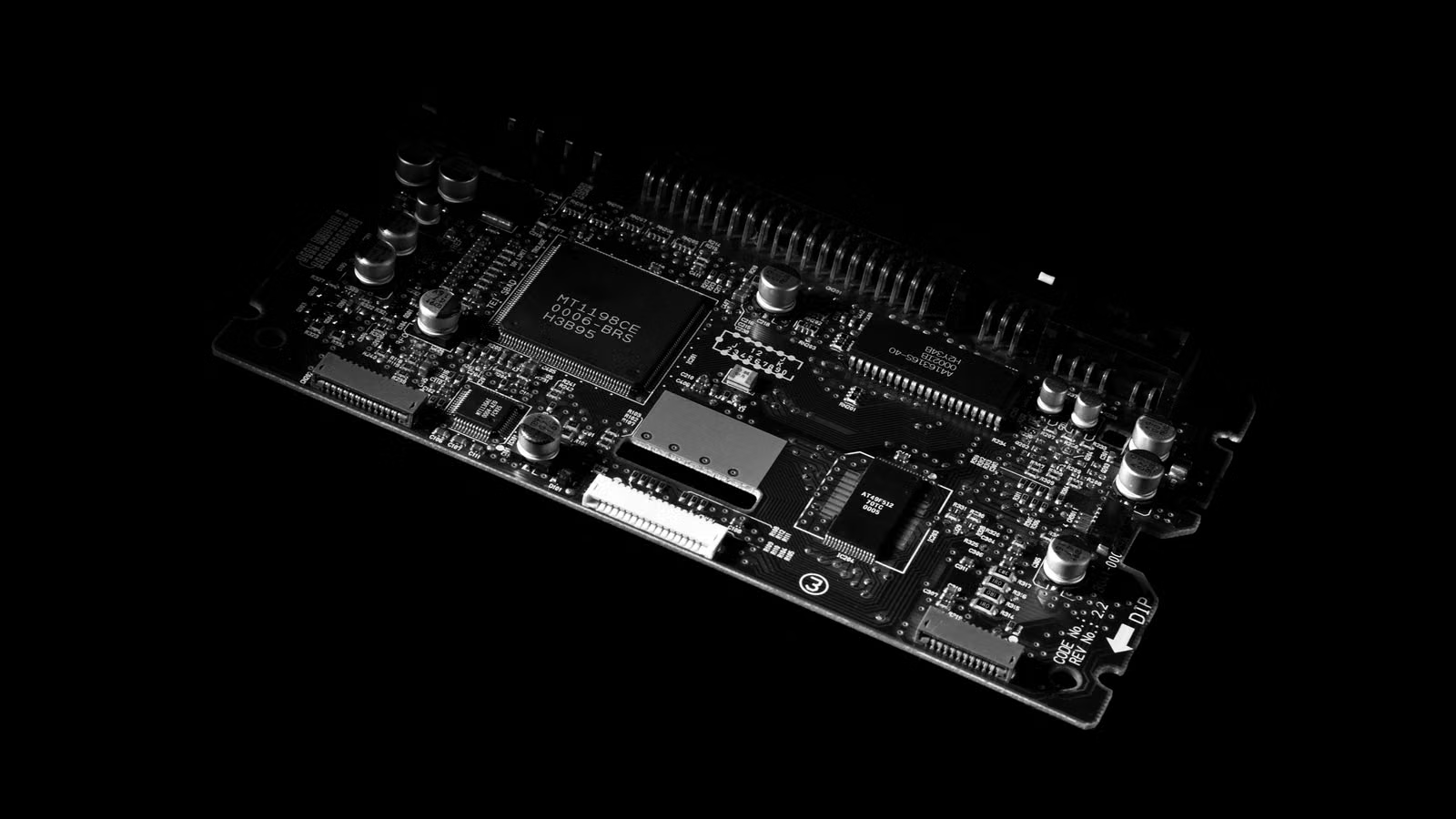
Mature process nodes are the key reason Hua Hong Semiconductor is connected to memory chips. Advanced process nodes are more commonly used in CPUs, GPUs, AI accelerators, and high-end smartphone chips. Mature process nodes, on the other hand, support a large number of MCUs, power devices, analog power management chips, smart card ICs, NOR Flash, EEPROM, and embedded memory products. When analyzing Hua Hong, you should not equate “mature process” with “outdated.” Instead, you should ask whether these nodes can deliver reliable mass production, stable customers, and reasonable gross margins.
Mature Process Does Not Mean Outdated
Specialty process technologies are evaluated differently from advanced logic processes. Advanced logic processes focus on transistor density, performance, and power efficiency. Specialty processes focus more on reliability, cost, analog characteristics, power handling, embedded memory compatibility, and long-term supply. For automotive, industrial, smart card, and power management chips, customers often care more about qualification cycles, stable yield, and supply continuity than about the smallest nanometer number.
Hua Hong’s layout in embedded and standalone non-volatile memory, power devices, analog and power management, logic, and RF platforms follows the logic of a specialty process foundry. When you look at Hua Hong’s process nodes, the key question is whether they can meet customers’ stable mass-production needs in MCUs, smart cards, automotive electronics, and industrial applications.
Understanding Hua Hong’s Process Mix from 65nm and 90nm to 0.18μm
Hua Hong’s revenue distribution also proves the importance of mature nodes. In 2025, 65nm and below accounted for 25.3% of revenue, 90nm/95nm accounted for 24.3%, and 0.35μm and above accounted for 33.7%. In the first quarter of 2026, 65nm and below accounted for 27.1%, 90nm/95nm accounted for 25.3%, and 0.35μm and above accounted for 31.5%. These nodes together form the foundation of Hua Hong’s core revenue base.
| Process node | 2025 revenue share | 2026Q1 revenue share | Meaning for memory-related business |
|---|---|---|---|
| 65nm and below | 25.3% | 27.1% | Supports higher-integration eNVM and MCUs |
| 90nm/95nm | 24.3% | 25.3% | Important node for embedded Flash and smart cards |
| 0.11/0.13μm | 10.9% | 10.7% | Suitable for many mature process products |
| 0.35μm and above | 33.7% | 31.5% | Foundation for power, analog, and mature platforms |
This structure shows that Hua Hong does not rely on a single node. Instead, it uses a multi-node and multi-platform combination to serve different customer needs. If 12-inch capacity ramps smoothly, mature-node demand improves, and eNVM and sNVM orders continue growing, Hua Hong’s revenue and gross margin may form a stronger positive feedback loop.
Summary: Mature process nodes are Hua Hong Semiconductor’s main battlefield because they support the company’s most important specialty process platforms. You should not judge Hua Hong with the same framework used for advanced-node logic foundries. Instead, you should focus on whether nodes such as 65nm, 90nm, and 0.18μm continue to support MCUs, smart cards, automotive chips, power devices, analog power management, and memory-related platforms. The investment value of mature nodes lies in stable demand, customer qualification barriers, capacity utilization, and cost control, not simply in comparing nanometer sizes.
How Important Is Memory-Related Business in Hua Hong Semiconductor’s Financials?
Hua Hong Semiconductor’s memory-related business is meaningful, but it is not the company’s only growth driver. From the perspective of revenue mix, eNVM is the most important memory-related platform, while sNVM is a supplementary direction closer to traditional memory chips. When judging whether 1347.HK has a memory-related investment logic, you should not rely only on the label “memory chip.” Instead, you need to break down the contribution of eNVM, sNVM, power devices, analog and power management, logic, and RF.
In 2025, Hua Hong generated USD 611.3 million from eNVM, up 16.2% year over year and accounting for 25.4% of total revenue. sNVM revenue reached USD 187.7 million, up 44.2% year over year and accounting for 7.8% of total revenue. During the same period, power devices accounted for 27.8% of revenue, while analog and power management accounted for 26.6%. This shows that eNVM is one of Hua Hong’s major platforms, but the company remains a multi-platform specialty process foundry.
In the first quarter of 2026, Hua Hong’s eNVM revenue reached USD 184.6 million, up 41.7% year over year; sNVM revenue reached USD 57.1 million, up 33.2% year over year. The company also disclosed that eNVM growth was mainly driven by demand for MCUs, smart card ICs, and related products, while sNVM growth was mainly driven by Flash Memory product demand. This is more useful than simply saying “memory business is growing,” because it explains the actual product drivers behind the numbers.
| Business platform | 2025 revenue share | 2025 YoY growth | 2026Q1 revenue share | Investment meaning |
|---|---|---|---|---|
| eNVM | 25.4% | +16.2% | 27.9% | Core memory-related platform |
| sNVM | 7.8% | +44.2% | 8.6% | Related to NOR Flash and EEPROM |
| Power devices | 27.8% | +24.6% | 25.9% | Important for automotive and industrial chains |
| Analog and power management | 26.6% | +36.3% | 26.3% | Related to AI infrastructure and power management |
| Logic and RF | 12.4% | +15.3% | 11.3% | Related to communications and consumer electronics |
You also need to follow platform upgrades. In 2025, Hua Hong advanced its 55nm eFlash process platform and noted that customized 40nm eFlash products had entered pre-production. In the sNVM direction, the company continued to upgrade NORD and ETOX Flash processes, while the shipment share of 48nm NOR Flash products increased significantly. For investors, these details matter more than simply comparing revenue growth rates, because they indicate whether the technology platform can continue moving forward.
However, sNVM is still smaller than eNVM, power devices, and analog power management in revenue scale. You should not treat Hua Hong as a pure NOR Flash company just because sNVM growth is strong. A more reasonable interpretation is that Hua Hong’s memory-related business is composed of both eNVM and sNVM. eNVM is the larger revenue driver, while sNVM is a growth branch closer to standalone memory chips.
Summary: Financial data shows that memory-related platforms are an important revenue source for Hua Hong Semiconductor. eNVM accounts for more than one-quarter of total revenue, while sNVM accounts for close to one-tenth. Together, they are meaningful enough to matter in investment analysis. However, Hua Hong also generates significant revenue from power devices, analog and power management, logic, and RF. When analyzing Hua Hong’s memory exposure, you should compare revenue share, year-over-year growth, process upgrades, customer demand, and product mix, rather than relying on a single “memory stock” label.
How Does Embedded Memory Affect Hua Hong Semiconductor’s Investment Logic?
Embedded memory affects Hua Hong Semiconductor’s investment logic through three main channels. First, demand for MCUs, smart cards, automotive chips, and industrial chips supports eNVM platform revenue. Second, demand for NOR Flash and EEPROM supports sNVM platform revenue. Third, capacity utilization, 12-inch line ramp-up, and gross margin trends determine earnings leverage. If you follow 1347.HK, you need to analyze both demand-side and supply-side factors.
On the demand side, end-market applications are the most important factor. In 2025, consumer electronics accounted for 63.8% of Hua Hong’s revenue, industrial and automotive electronics accounted for 22.2%, communications accounted for 12.5%, and computing accounted for 1.5%. In the first quarter of 2026, consumer electronics rose further to 67.2%, while industrial and automotive electronics accounted for 21.7%. This means that although Hua Hong’s memory-related business has MCU, automotive, and industrial exposure, the consumer electronics cycle still affects short-term revenue.
| Demand source | Related chips | Relationship with embedded memory | Impact on Hua Hong |
|---|---|---|---|
| MCU | Controllers, smart devices | Stores program code and parameters | Supports eNVM demand |
| Smart card IC | SIM cards, transport cards, security chips | Stores identity and security keys | Emphasizes reliability and security |
| Automotive electronics | Body control, sensors | Stores calibration and control programs | Depends on automotive qualification and supply cycles |
| Consumer electronics | Home appliances, wearables, IoT | Control and low-power storage | Affected by consumer demand cycles |
| AI-related infrastructure | Power management, control chips | Not core compute, but part of the supply chain | More related to mature-node demand |
On the supply side, capacity and utilization are critical. Hua Hong’s total capacity in 2025 reached 486,000 8-inch-equivalent wafers per month, with capacity utilization of 106.1%, indicating strong demand absorption. In the first quarter of 2026, the company reported capacity utilization of 99.7%, still close to full capacity.
However, high utilization does not automatically mean profits will keep rising. New line ramp-up, higher depreciation, product mix changes, and ASP volatility can all affect gross margin. Hua Hong’s gross margin was 13.0% in the first quarter of 2026. The company also issued second-quarter guidance for revenue of USD 690 million to USD 700 million and gross margin of 14% to 16%. This type of guidance is more important to track than a single quarter’s revenue because it reflects management’s combined view of demand, pricing, and cost.
If you track Hua Hong Semiconductor, you can also place it alongside U.S. semiconductor companies, memory manufacturers, and foundries in the same observation framework. By using Hong Kong stock market quotes to follow 1347.HK’s price movements, and combining that with financial data on revenue platforms, capacity utilization, and gross margin, you can build a more complete view than simply watching short-term price changes. If you also follow U.S. semiconductor names, a U.S. stock screener can help you compare different segments, including DRAM, NAND, equipment, EDA, and foundry companies.
Summary: The investment significance of embedded memory for Hua Hong Semiconductor is not that it turns Hua Hong into an HBM or NAND leader. Rather, embedded memory strengthens the company’s specialty process value in MCUs, smart cards, automotive chips, industrial chips, and consumer electronics. You need to analyze both demand and supply: on the demand side, focus on MCUs, smart cards, automotive electronics, consumer electronics, and AI-related infrastructure; on the supply side, focus on utilization, 12-inch revenue contribution, depreciation pressure, gross margin, and product mix. Only when these variables move together can memory-related platforms translate into real earnings leverage.
Common Misunderstandings About Hua Hong Semiconductor
The most common mistake investors make is to treat Hua Hong Semiconductor as a simple AI memory stock or a substitute for DRAM and NAND names. Hua Hong does have memory-related revenue, and it may benefit from mature-node recovery, MCU demand improvement, and AI-related power management demand. But it does not directly manufacture HBM, DRAM, or NAND. When analyzing Hua Hong, the key is not to chase popular labels, but to judge whether its specialty process platforms can improve revenue quality and profitability over time.
| Common misunderstanding | More accurate understanding | Indicators to track |
|---|---|---|
| Hua Hong is a memory chip leader | Hua Hong is a memory-related specialty process foundry | eNVM and sNVM revenue share |
| Hua Hong directly benefits from HBM growth | Hua Hong is more exposed to MCUs, smart cards, and mature nodes | End applications and customer mix |
| Mature process has no growth potential | Mature nodes support power, analog, MCU, and memory applications | Utilization and gross margin |
| Strong sNVM growth means pure memory logic | sNVM is only one of several platforms | Platform revenue structure |
| Revenue growth always means profit growth | Depreciation, ASP, and product mix also matter | Gross margin, expenses, depreciation |
Risks deserve equal attention. First, consumer electronics still account for a large share of Hua Hong’s revenue. If end-market recovery falls short of expectations, eNVM, analog, and power management platforms may come under pressure. Second, competition in mature process foundry is intense, and pricing and utilization may fluctuate. Third, 12-inch line ramp-up can bring scale benefits, but it can also increase depreciation pressure. Fourth, customer qualification cycles in automotive, industrial, and smart card markets are long. If product transitions slow, revenue realization may be weaker than expected. Fifth, the semiconductor supply chain involves equipment, materials, export controls, and customer regional exposure, so compliance and delivery risks cannot be ignored.
Trading costs also matter. If you follow both Hong Kong-listed 1347.HK and U.S.-listed semiconductor stocks, you should not compare price movements alone. You also need to consider commissions, platform fees, external agency fees, FX conversion, and order costs. Biya supports U.S. stocks, Hong Kong stocks, digital assets, and other multi-asset trading. For U.S. stock trading, Biya charges zero commission, while platform fees, external agency fees, and other charges are subject to the fee center and the order page. If your trading involves multiple currencies, real-time exchange rates may also affect your final transaction cost. Service availability depends on the user’s location, identity verification results, platform rules, and applicable laws and regulations.
Summary: Hua Hong Semiconductor should not be analyzed only through labels such as “memory chip,” “AI semiconductor,” or “mature process.” A more robust framework starts by recognizing that Hua Hong is not a DRAM, NAND, or HBM manufacturer. Then you can break down the revenue contribution of eNVM, sNVM, power devices, analog and power management, logic, and RF. At the same time, you should track capacity utilization, 12-inch ramp-up, depreciation, ASP, gross margin, and end-market demand. Before trading, you should also consider stock volatility, fee structure, FX conversion, and your own risk tolerance.
If you follow Hua Hong Semiconductor 1347.HK, what you really need is a framework that combines industry position, financial data, trading costs, and risk boundaries. In the semiconductor value chain, Hua Hong is closer to a specialty process foundry than a commodity memory manufacturer. In financial analysis, you need to track changes in eNVM, sNVM, power devices, and analog power management. In trading, you need to consider Hong Kong stock price volatility, order fees, FX conversion, and your own capital plan. Biya can be used as one of the tools for tracking Hong Kong stocks, U.S. stocks, and multi-asset markets, especially if you want to compare Hua Hong with global memory manufacturers, semiconductor equipment companies, and AI infrastructure-related names in one broader view. This content only discusses public market information, trading rules, and fee structures, and does not constitute investment advice. Any trading decision should be based on platform rules, order-page disclosures, local regulatory requirements, and your personal risk tolerance.
FAQ
Is Hua Hong Semiconductor a memory chip company?
Hua Hong Semiconductor is not a traditional DRAM, NAND, or HBM memory manufacturer. A more accurate description is that it is a specialty process foundry that participates in memory-related chip manufacturing through eNVM and sNVM platforms.
What types of chips use Hua Hong Semiconductor’s embedded memory?
Hua Hong Semiconductor’s embedded memory is mainly used in MCUs, smart card ICs, automotive control chips, industrial control chips, and some consumer electronics chips. Its main function is to store programs, parameters, and security information.
How is Hua Hong Semiconductor different from DRAM and NAND manufacturers?
Hua Hong Semiconductor mainly provides wafer foundry services, while customers are responsible for chip design. DRAM and NAND manufacturers usually design, manufacture, and sell memory products directly. Their business models and cycle drivers are different.
How can retail investors track Hua Hong Semiconductor’s memory-related business?
Retail investors can focus on eNVM and sNVM revenue share, year-over-year growth, MCU demand, NOR Flash shipments, capacity utilization, gross margin, and the ramp-up progress of 12-inch production lines.
Do mature process nodes limit Hua Hong Semiconductor’s growth potential?
Mature process nodes do not necessarily limit Hua Hong’s growth. MCUs, power devices, analog power chips, automotive chips, and embedded memory products still rely heavily on mature nodes. The key variables are demand, yield, and profitability.
What fees should investors consider when trading Hua Hong Semiconductor’s Hong Kong shares?
When trading Hua Hong Semiconductor’s Hong Kong shares, investors should consider commissions, platform fees, trading levies, stamp duty, FX conversion, and order rules. Actual costs should be based on the selected platform’s bill details, order page, and local regulatory requirements.
*This article is provided for general information purposes and does not constitute legal, tax or other professional advice from BiyaPay or its subsidiaries and its affiliates, and it is not intended as a substitute for obtaining advice from a financial advisor or any other professional.
We make no representations, warranties or warranties, express or implied, as to the accuracy, completeness or timeliness of the contents of this publication.
Related Blogs of

Best Crypto Apps for Beginners: Fees, Security, and Ease of Use


MACD Crypto Trading Strategy: Settings, Signals, and Risk Management




Choose Country or Region to Read Local Blog
 Australia
 Austria
 Belgium
 Canada
 Cyprus
 Czech Republic
 Denmark
 Estonia
 Finland
 France
 Germany
 Greece
 Hong Kong
 India
 Indonesia
 Ireland
 Italy
 Japan
 Latvia
 Lithuania
 Luxembourg
 Malaysia
 Malta
 Morocco
 Nepal
 Netherlands
 New Zealand
 Norway
 Pakistan
 Philippines
 Poland
 Portugal
 Romania
 Singapore
 Slovakia
 Slovenia
 South Africa
 South Korea
 Spain
 Sweden
 Thailand
 United States
 Turkey
 United Arab Emirates
 United Kingdom
 Vietnam