
What Hong Kong Advanced Packaging Equipment and OSAT Stocks Are There? A Screening Framework for the AI Memory Chain




Hong Kong-listed advanced packaging-related companies are limited, and the most direct equipment-side stock is ASMPT 00522.HK. Its business is more closely linked to TCB, die bonding, advanced packaging equipment, AI/HPC chips, and the HBM packaging chain. Other Hong Kong semiconductor names, such as SMIC, Hua Hong Semiconductor, GigaDevice, and Shanghai Fudan, are better placed in wafer foundry, chip design, or memory-related watchlists, and should not be simply described as OSAT stocks. When screening this chain, the key is not who is “AI-related,” but whether revenue, orders, technology routes, and customer capex truly correspond to advanced packaging.
Key Takeaways
- Direct Hong Kong advanced packaging stocks are scarce; ASMPT is the core equipment representative.
- OSAT stocks should be separated from wafer foundries and chip design companies.
- HBM and CoWoS increase demand for TCB, bonding, testing, and yield control.
- The AI memory chain is not only about HBM, but also packaging equipment orders.
- Screening should focus on revenue mix, orders, gross margin, and customer structure.
What Hong Kong Advanced Packaging Equipment and OSAT Stocks Are There?
Hong Kong advanced packaging equipment and OSAT stocks should not be mixed together. The most direct advanced packaging equipment stock is ASMPT 00522.HK; truly pure-play Hong Kong-listed OSAT leaders are relatively limited. SMIC 00981.HK and Hua Hong Semiconductor 01347.HK are more focused on wafer foundry; GigaDevice 03986.HK and Shanghai Fudan 01385.HK are more related to chip design or IC products. They can be included in a semiconductor watchlist, but should not be directly classified as advanced packaging equipment or OSAT stocks.
Direct Advanced Packaging Equipment Stock: ASMPT 00522.HK
ASMPT’s core value lies on the equipment side. It is not a packaging and testing service provider, but an equipment company that provides hardware and software solutions for semiconductor assembly, packaging, and electronics manufacturing. Its business covers two major segments, SEMI and SMT. SEMI is closer to semiconductor assembly and packaging equipment, while SMT is related to electronics manufacturing, AI server boards, automotive electronics, and industrial electronics demand.
In the AI memory chain, ASMPT is mainly connected through TCB, die bonding, photonics die bonders, C2S, C2W, and HBM packaging. According to ASMPT’s 2026 first-quarter results, group revenue reached USD 507.9 million, up 32.0% year over year; bookings reached USD 727 million, up 71.6% year over year, with a book-to-bill ratio of 1.43. The company also disclosed that TCB continued to receive repeat C2S orders in logic chips, while C2W also secured tool orders from advanced logic customers.
| Hong Kong ticker | Company | Value chain position | Relationship with advanced packaging | Direct OSAT stock? | Key indicators |
|---|---|---|---|---|---|
| 00522.HK | ASMPT | Packaging and SMT equipment | TCB, die bonding, advanced packaging | No, equipment side | TCB orders, SEMI margin, bookings |
| 00981.HK | SMIC | Wafer foundry | Ecosystem-related, not OSAT core business | No | Wafer revenue, utilization, process platforms |
| 01347.HK | Hua Hong Semiconductor | Specialty process foundry | Mature-node related, not an advanced packaging mainline | No | eNVM, power, analog, utilization |
| 03986.HK | GigaDevice | Memory and MCU design | NOR Flash and MCU related | No | Memory products, MCU, R&D spending |
| 01385.HK | Shanghai Fudan | IC design and testing services | Some testing capability, not advanced packaging equipment | No | FPGA, security chips, memory chips |
Related Hong Kong Semiconductor Companies That Should Not Be Misclassified
SMIC, Hua Hong Semiconductor, GigaDevice, and Shanghai Fudan are all related to the semiconductor value chain, but their revenue drivers are different. SMIC’s focus is wafer foundry. Its 2025 annual results are more suitable for observing domestic wafer manufacturing sentiment, rather than directly judging packaging equipment orders. Hua Hong Semiconductor focuses on specialty process technologies, mature nodes, eNVM, sNVM, power devices, and analog power management. Its 2025 annual report is more suitable for analyzing mature nodes and memory-related process platforms.
GigaDevice’s Hong Kong listing has a different meaning. Through 3986.HK and 603986.SH, it has formed an A+H dual listing structure, with businesses more focused on NOR Flash, MCU, DRAM, and sensors. It is related to the AI memory chain, but it is not a packaging equipment company or an OSAT service provider. Shanghai Fudan 01385.HK mainly focuses on IC design, R&D, and sales, making it more suitable for a chip design and domestic semiconductor watchlist rather than an advanced packaging equipment list.
How to Treat Filed or Non-Hong Kong OSAT Companies
If you expand the scope to “potential Hong Kong OSAT companies,” you may also look at filed companies or A-share and Taiwan-listed references, but the market category must be clearly separated. For example, Hefei Chipmore states in its filing materials that its DDIC advanced packaging and testing business focuses on display driver chip advanced packaging and testing, including bumping, CP, COG, and COF. It can be used as a packaging and testing value-chain sample, but before formal listing, it should not be written as an already listed Hong Kong OSAT stock.
Summary: Hong Kong advanced packaging-related companies should first be divided by value-chain position. You should not put all semiconductor stocks into the “advanced packaging” bucket. ASMPT is the most direct equipment-side representative in Hong Kong, and the key variables are TCB, SEMI, SMT, advanced packaging orders, and gross margin. SMIC and Hua Hong Semiconductor are more focused on wafer manufacturing; GigaDevice and Shanghai Fudan are more focused on chip design or IC products; filed companies such as Hefei Chipmore can be used as OSAT service references, but should not be mixed with listed Hong Kong stocks. The right screening method is not to start with concepts, but to first identify whether a company’s revenue comes from equipment, packaging and testing, wafer manufacturing, or chip design.
Why Does AI Memory Push Advanced Packaging to the Core of the Value Chain?
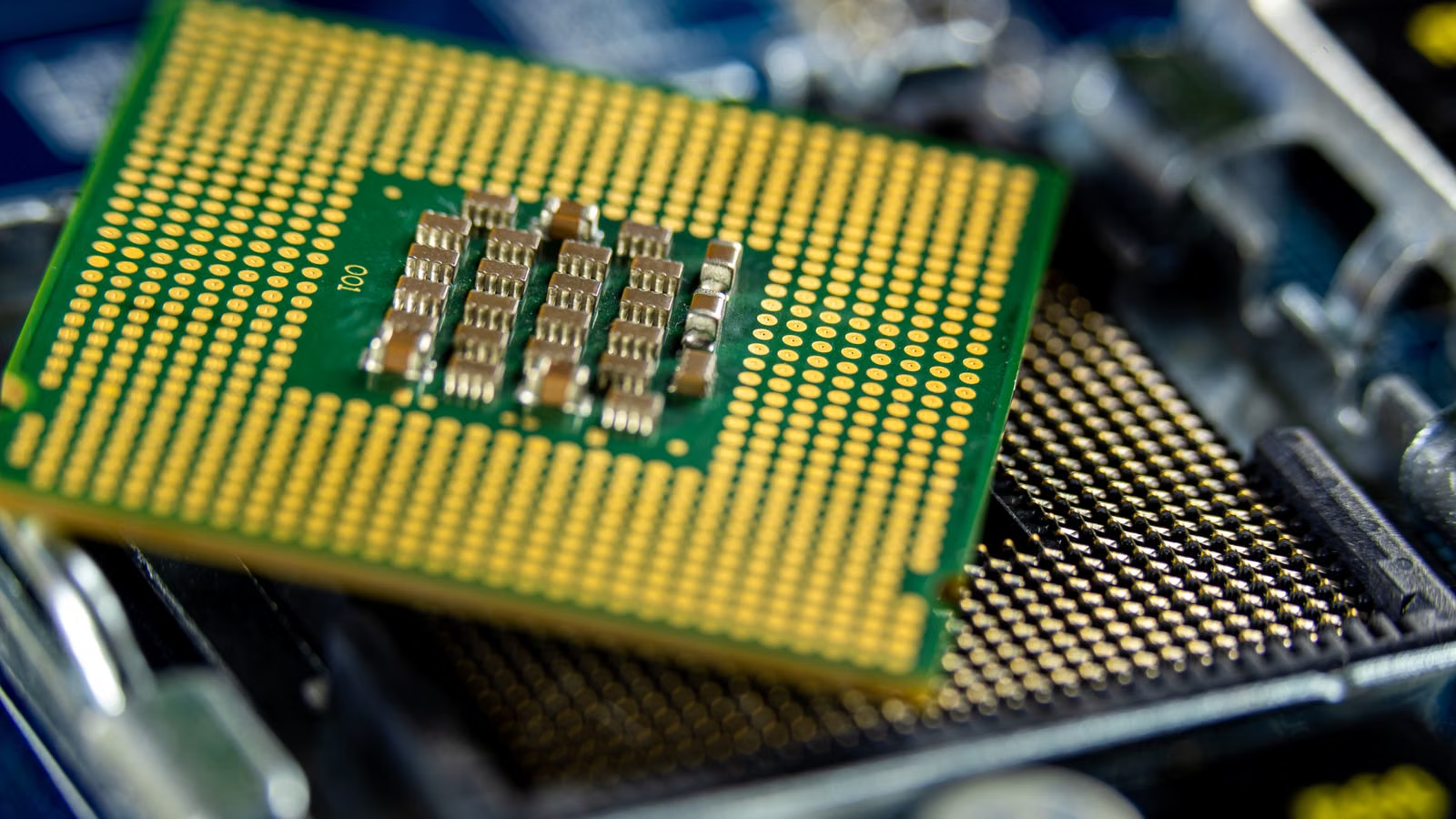
The AI memory chain appears to revolve around HBM, but the real bottleneck often lies between GPU, HBM, interposer, substrate, CoWoS, Chiplet, and testing yield. AI accelerators require high bandwidth, low latency, low power consumption, and shorter interconnect distances. Traditional packaging methods struggle to meet system-level integration requirements. Advanced packaging allows logic chips, memory stacks, and high-speed interconnects to work together within the same package structure, making it a critical part of the AI server supply chain.
Why HBM, CoWoS, and Chiplet Need Advanced Packaging
The core value of HBM is bandwidth, not simply capacity. AI GPUs need to read and write large volumes of matrix computation results to memory quickly. If memory bandwidth cannot keep up, computing power cannot be fully utilized. This is why HBM, CoWoS, 2.5D packaging, 3D packaging, and Chiplet are often discussed together in AI semiconductor analysis. In its 2025 annual report, TSMC also places advanced packaging and chip stacking solutions within its technology differentiation system, showing that packaging has evolved from a back-end support process into an essential part of high-performance computing.
ASML’s explanation of the semiconductor manufacturing process also shows that packaging is not simply “putting a shell around the chip.” In the chip manufacturing process, after wafers are cut into dies, packaging is needed to connect the chip to the outside world. In the AI chip era, packaging is not only about protecting the chip, but also about determining how chips communicate at high speed, dissipate heat, improve yield, and control system cost.
| AI chip segment | Packaging requirement | Pull-through for equipment or OSAT | Investment focus |
|---|---|---|---|
| GPU / AI ASIC | High-speed interconnect with HBM | TCB, interposer, substrate | High-end packaging equipment orders |
| HBM | Multi-layer stacking and high-bandwidth connection | Bonding, testing, yield control | HBM generation upgrades |
| Chiplet | Multi-die integration | C2W, C2S, hybrid bonding | Rising packaging complexity |
| CoWoS / 2.5D | Large package size and interposer | Advanced packaging capacity expansion | Customer capex |
| CPO / optical modules | High-speed data center networking | Photonics die bonder | 800G and 1.6T demand |
Why TCB, Hybrid Bonding, and Testing Matter
TCB stands for Thermo-Compression Bonding and is suitable for high-precision chip bonding scenarios. As AI chip package sizes increase, die counts rise, and interconnect pitches shrink, bonding accuracy, temperature control, material compatibility, and yield control all become more important. ASMPT’s disclosed 19 C2S TCB tool orders directly serve the AI chip market. These orders provide stronger evidence of advanced packaging equipment commercialization than broad statements such as “AI demand is strong.”
Hybrid bonding is more oriented toward the next stage of high-density interconnects. IDTechEx’s explanation of hybrid bonding notes that it can help improve I/O density, bandwidth, 3D vertical stacking, and power efficiency, but manufacturing complexity and cost are higher. For investors, this means the more advanced the technology route, the more important it is to track mass-production timing, inspection capability, customer qualification cycles, and whether equipment suppliers can convert technology into revenue.
Summary: The AI memory chain is not only an HBM capacity chain. GPU, HBM, CoWoS, Chiplet, interposer, substrate, TCB, hybrid bonding, and testing yield together determine whether AI chips can be mass-produced reliably. Advanced packaging has evolved from a back-end process into a key bridge between AI compute and memory bandwidth. When screening Hong Kong-related stocks, you need to expand your focus from “memory chip companies” to packaging equipment, bonding equipment, testing capability, and customer capex. This is why ASMPT is the equipment-side company most worth watching in Hong Kong.
Why Is ASMPT the Core Hong Kong Stock to Watch in the Advanced Packaging Chain?
ASMPT is the core Hong Kong stock to watch in the advanced packaging chain because it is not a broad semiconductor concept stock, but a direct provider of semiconductor assembly, packaging, and SMT equipment solutions. Compared with wafer foundries and chip design companies, ASMPT has a more direct link to TCB, die bonding, advanced packaging, and AI/HPC equipment orders. When analyzing 00522.HK, the focus should be on orders, revenue recognition, SEMI gross margin, and customer capex, not just the “AI concept.”
ASMPT’s Advanced Packaging Exposure from Its Business Structure
ASMPT’s business can broadly be divided into SEMI and SMT. SEMI is closer to semiconductor assembly and packaging equipment, including die bonding, wire bonding, TCB, and photonics. SMT is closer to electronics manufacturing equipment and is related to AI server boards, data center networking, automotive electronics, and industrial electronics demand. This structure means ASMPT can benefit from advanced packaging, while also being affected by the electronics manufacturing cycle.
According to ASMPT’s 2025 annual results, full-year revenue was USD 1.76 billion, up 10.0% year over year. SEMI revenue rose 21.8% year over year, mainly driven by TCB. Group bookings reached USD 1.86 billion, up 21.7% year over year, and year-end backlog stood at USD 792.9 million. The company also noted that AI data center power management and data transmission demand supported both SEMI and SMT mainstream businesses.
| Business segment | Product direction | Relationship with AI memory | Financial indicators to watch |
|---|---|---|---|
| SEMI | TCB, die bonder, wire bonder | Advanced packaging, AI/HPC, HBM | Revenue, gross margin, bookings |
| SMT | Surface mount equipment | AI server boards, automotive electronics | Orders, end-market demand, gross margin |
| Photonics | Photonics and CPO-related equipment | High-speed data center interconnects | 800G and 1.6T customer orders |
| TCB | C2S, C2W, HBM applications | Chiplet and high-end packaging | Tool orders, customer qualification |
How TCB Orders Map to AI/HPC Demand
TCB orders are an important signal for AI/HPC advanced packaging equipment demand. In December 2025, ASMPT disclosed that it had received orders for 19 Chip-to-Substrate TCB tools to serve the AI chip market. In June 2026, it further disclosed repeat orders for eight C2W TCB tools from a leading IDM, to support advanced client and data center CPU production. These orders show that TCB is not limited to a single AI GPU use case, but may extend to data center CPUs, Chiplet architectures, and heterogeneous integration.
However, orders are not profits by themselves. You still need to track delivery cycles, customer acceptance, revenue recognition, gross margin, product mix, and after-sales services. Advanced packaging equipment has high unit value and strong technical barriers, but customer concentration can also be high. If a major customer delays capex or changes technology routes, equipment suppliers may experience revenue timing volatility.
| Observation variable | Positive signal | Risk signal |
|---|---|---|
| TCB orders | Continuous C2S, C2W, and HBM orders | One-quarter spike without follow-up |
| SEMI gross margin | Higher share of high-end equipment | Low-margin products drag mix |
| Backlog | Stronger revenue visibility | Order cancellation or delivery delay |
| Customer structure | OSAT, foundry, and IDM demand all emerge | Excessive customer concentration |
| Technology route | TCB and hybrid bonding both covered | Technology iteration falls behind or qualification fails |
Summary: ASMPT’s core logic is not simply being “AI-related,” but having a more direct revenue path on the advanced packaging equipment side. TCB, die bonding, photonics die bonders, C2S, C2W, and HBM applications are all key clues for judging whether ASMPT is truly benefiting from the AI memory chain. A more disciplined analysis should combine orders, book-to-bill, backlog, SEMI gross margin, customer structure, and technology route. Looking only at short-term share price moves or AI headlines can easily overlook the order cycle and revenue recognition rhythm of an equipment stock.
How Should You Screen Hong Kong Advanced Packaging-Related Companies?
Screening Hong Kong advanced packaging-related companies should start with value-chain segmentation, not a simple company list. The first layer is the equipment side, where you look at whether companies such as ASMPT receive TCB, die bonding, SMT, photonics, and AI/HPC-related orders. The second layer is the packaging and testing service side, where you look at OSAT capacity, yield, customer structure, and advanced packaging revenue. The third layer is the wafer foundry and chip design side, which is more suitable for observing demand transmission and ecosystem value, rather than being directly classified as OSAT stocks.
First Layer: Equipment Side, Focus on Orders and Technology Routes
The advantage of the equipment side is that orders often lead capacity release. Before AI chip companies, foundries, or OSATs expand capacity, they need to purchase bonding, assembly, inspection, SMT, and other equipment. Therefore, companies such as ASMPT are better suited for observing advanced packaging capex than for being analyzed directly through memory chip spot price cycles.
| Screening dimension | Indicator to watch | Why it matters | Applicable companies |
|---|---|---|---|
| Advanced packaging orders | TCB, C2S, C2W, HBM tool orders | Tests real AI/HPC demand | ASMPT |
| Revenue structure | SEMI and SMT revenue shares | Distinguishes high-end equipment from cyclical business | ASMPT |
| Gross margin | SEMI adjusted gross margin | Shows product mix improvement | ASMPT |
| Customer demand | OSAT, IDM, foundry capex | Measures order sustainability | Equipment companies |
| Technology route | TCB, hybrid bonding, photonics | Shows long-term competitiveness | Advanced equipment makers |
Second Layer: Packaging and Testing Services, Focus on Capacity, Yield, and Customers
The packaging and testing service side is closer to the OSAT model. OSAT companies do not necessarily own leading-edge wafer manufacturing capacity, but they need to complete bumping, CP, COG, COF, wire bonding, flip chip, system-in-package, testing, and final delivery. For the AI memory chain, HBM, CoWoS, 2.5D/3D packaging, and Chiplet raise the requirements for yield, inspection, failure analysis, and customer qualification.
However, DDIC packaging and testing and HBM/CoWoS high-end packaging are not the same type of demand. DDIC packaging and testing mainly serves display panels, smartphones, TVs, and automotive screens. HBM/CoWoS is more related to AI GPUs, HPC, and data centers. Hefei Chipmore’s DDIC packaging and testing can be used as a “packaging and testing service” example, but it should not be directly equated with an HBM high-end packaging company.
Third Layer: Wafer Foundry and Chip Design, as Demand or Ecosystem Observations
SMIC, Hua Hong Semiconductor, GigaDevice, and Shanghai Fudan are still worth tracking, but they should be clearly classified. SMIC and Hua Hong Semiconductor reflect domestic wafer manufacturing capacity, mature-node demand, and semiconductor ecosystem activity. GigaDevice and Shanghai Fudan reflect memory, MCU, FPGA, security chip, and other design-side demand. They can help you judge the momentum of China’s semiconductor chain, but they cannot directly replace advanced packaging equipment or OSAT analysis.
If you follow multiple Hong Kong semiconductor stocks, you can use Hong Kong stock quotes to put ASMPT, SMIC, Hua Hong Semiconductor, GigaDevice, and Shanghai Fudan into the same watchlist, then compare them separately by equipment, wafer foundry, chip design, and memory-related categories. This makes it easier to avoid classification mistakes than simply looking at a broad “Hong Kong AI semiconductor concept.”
Summary: Screening Hong Kong advanced packaging stocks should follow a three-layer framework. On the equipment side, focus on orders and technology routes. On the OSAT side, focus on capacity, yield, and customer structure. On the wafer foundry and chip design side, focus on demand transmission and ecosystem value. ASMPT belongs in the first layer; filed or non-Hong Kong companies such as Hefei Chipmore can be used as second-layer references; SMIC, Hua Hong Semiconductor, GigaDevice, and Shanghai Fudan are more suitable for third-layer observation. You should first ask “where does this company’s revenue come from,” and then judge whether it truly benefits from HBM, CoWoS, and AI server capex.
What Financial Indicators Matter for Advanced Packaging Investment in the AI Memory Chain?
Advanced packaging investment should not rely only on concept momentum. The most important questions are whether AI/HPC, HBM, CoWoS, and high-end packaging demand is already showing up in revenue; whether the profit side reflects product mix improvement; and whether valuation has already priced in future order growth. You should track advanced packaging revenue, TCB orders, SEMI revenue, bookings, backlog, gross margin, R&D spending, and customer demand outlook, rather than focusing only on one quarter’s net profit.
Revenue Side: Advanced Packaging Share and Order Visibility
Equipment company revenue usually lags orders. Customers place orders first, equipment makers produce and deliver tools, and revenue is recognized after acceptance. Therefore, bookings, book-to-bill ratio, and backlog often reflect demand earlier than current-quarter revenue. ASMPT’s 2026 first-quarter bookings rose 71.6% year over year, with a book-to-bill ratio of 1.43, indicating significantly improved order visibility.
| Financial indicator | Question it answers | Positive signal | Risk signal |
|---|---|---|---|
| Bookings | Are customers really placing orders? | YoY and QoQ growth | One-quarter spike followed by decline |
| Book-to-bill | Are orders exceeding revenue? | Above 1 and sustained | Below 1 and weakening |
| Backlog | Is revenue visibility improving? | Rising backlog | Order cancellation or delay |
| SEMI revenue | Is high-end equipment contributing revenue? | YoY growth and rising share | Drag from low-end cyclical products |
| TCB orders | Is AI/HPC demand transmitting? | More C2S, C2W, and HBM orders | Slower customer qualification |
Profit Side: Gross Margin, Product Mix, and R&D Spending
Growth in advanced packaging equipment orders does not necessarily translate into immediate profit growth. A higher share of high-end products may lift gross margin, but R&D investment, delivery costs, after-sales support, FX fluctuations, and production arrangements can also affect earnings. ASMPT disclosed that in the first quarter of 2026, group adjusted gross margin was 39.5%, up 357 basis points quarter over quarter; higher SEMI contribution was one of the important reasons for the sequential gross margin improvement.
R&D spending should not be simply viewed as negative. TCB, hybrid bonding, photonics die bonding, CPO, inspection, and software control all require ongoing R&D. For equipment companies, short-term R&D expenses may weigh on profits, but if they help establish customer qualification and process-of-record status, they may strengthen long-term competitive barriers.
Valuation Side: Cyclical Equipment Stocks Should Not Be Judged by PE Alone
Advanced packaging equipment companies combine cyclicality and growth. During periods of strong AI demand, the market may price in future orders early. Once customer capex slows, technology routes shift, or deliveries are delayed, valuations may also fall quickly. Therefore, PE is only one dimension. You also need to consider EV/EBITDA, order growth, gross margin trends, R&D efficiency, cash flow, and customer concentration.
If you are also watching U.S. semiconductor equipment makers, HBM manufacturers, and Hong Kong advanced packaging stocks, a U.S. stock screener can help compare overseas equipment, memory, EDA, AI server, and wafer foundry companies. Valuation methods differ across markets, so comparing PE ratios directly can be misleading. It is better to evaluate them together with value-chain position and revenue recognition cycles.
Summary: Financial screening for the advanced packaging chain is not about one quarter of net profit, nor about how often AI appears in the news. A more useful framework is “orders—revenue—gross margin—R&D—customer demand.” Orders include bookings, book-to-bill, and backlog; revenue includes SEMI, SMT, TCB, and advanced packaging share; profit includes product mix, adjusted gross margin, and R&D spending; valuation depends on whether the market has already priced in future orders. Only when these indicators improve consistently is advanced packaging momentum more likely to translate into company fundamentals.
What Risks and Misunderstandings Should Investors Watch in Hong Kong Advanced Packaging and OSAT Stocks?
The biggest misunderstanding in Hong Kong advanced packaging is treating all semiconductor companies as packaging equipment or OSAT stocks. Wafer foundries, chip design companies, equipment suppliers, OSAT services, and electronics manufacturing belong to different parts of the value chain, with completely different revenue drivers and valuation logic. You need to first identify where a company’s revenue comes from, and then judge whether it truly benefits from HBM, CoWoS, Chiplet, and AI server capex. Misclassification can distort the investment logic from the beginning.
| Misunderstanding | Correct classification | Basis for judgment | Key caution |
|---|---|---|---|
| Treating SMIC as an OSAT stock | Wafer foundry | Revenue comes from wafer manufacturing | Watch capacity and processes, not TCB orders |
| Treating Hua Hong as an advanced packaging equipment stock | Specialty process foundry | eNVM, power, analog | Watch mature nodes, not OSAT capacity |
| Treating GigaDevice as an OSAT company | Chip design | NOR Flash, MCU, DRAM | Watch product cycle and R&D |
| Equating DDIC packaging with HBM packaging | Different OSAT segments | COG, COF, bumping | CoWoS logic cannot be directly applied |
| Equating AI news with revenue growth | Needs order validation | Bookings, backlog | Watch delivery and recognition timing |
Technology route risk also matters. TCB, hybrid bonding, CoWoS, and 2.5D/3D packaging are all evolving quickly. iNEMI’s Chiplet bonding technical material notes that TCB and hybrid bonding represent different stages of advanced die attach. This means equipment suppliers must continuously follow customer technology roadmaps. If customers move from one bonding method to another, the equipment order structure may change.
Customer concentration and order conversion should also be watched. Advanced packaging equipment customers are usually large foundries, IDMs, or OSATs, and single-customer order sizes can be large. If customer capex slows, AI chip demand expectations are revised down, qualification cycles lengthen, or deliveries are delayed, equipment companies may experience revenue volatility. On the OSAT service side, companies also face pressure from yield ramp-up, material costs, utilization, and customer qualification cycles.
Trading costs should not be ignored either. If you are following Hong Kong advanced packaging stocks and the U.S. semiconductor chain, you need to look beyond share price volatility and consider commissions, platform fees, external agency fees, trading levies, stamp duty, FX conversion, and order rules. Biya supports multi-asset trading across U.S. stocks, Hong Kong stocks, and digital assets. For U.S. stock trading, Biya charges zero commission, while platform fees, external agency fees, and other charges are subject to the fee center and order page. For Hong Kong stocks or multi-currency trading, you should also evaluate actual costs based on real-time exchange rates, platform rules, and bill details. Service availability depends on the user’s location, identity verification results, platform rules, and applicable laws and regulations.
Summary: Advanced packaging is a high-growth but high-volatility value chain. You need to control six types of risk at the same time: misclassification, weaker-than-expected order conversion, customer concentration, technology route changes, overextended valuation, and trading cost or FX volatility. ASMPT is the most direct advanced packaging equipment representative in Hong Kong, but it is still a cyclical equipment stock. SMIC, Hua Hong Semiconductor, GigaDevice, and Shanghai Fudan are also worth tracking, but they should be analyzed according to wafer foundry and chip design logic. A sound approach is to combine value-chain position, financial indicators, technology routes, and trading costs.
If you follow Hong Kong advanced packaging and the AI memory chain, you should not look only at the rise and fall of a single stock. It is more useful to build a comparison table covering equipment, OSAT, wafer foundry, memory design, and overseas leaders. ASMPT is suitable as the core Hong Kong advanced packaging equipment watchlist name; SMIC and Hua Hong Semiconductor can reflect the domestic wafer manufacturing ecosystem; GigaDevice and Shanghai Fudan can reflect memory and IC design demand; overseas HBM, equipment, EDA, and wafer foundry companies provide global cycle references. Biya can be used as one of the tools for tracking Hong Kong stocks, U.S. stocks, and multi-asset markets, helping you place semiconductor names from different markets into one framework. Public market information, trading rules, and fee structures are only a research basis and do not constitute investment advice. Any trading decision should be based on platform rules, order-page disclosures, local regulatory requirements, and personal risk tolerance.
FAQ
Which Hong Kong advanced packaging equipment stock should investors watch first?
The main Hong Kong advanced packaging equipment stock to watch is ASMPT 00522.HK. It is more directly connected to TCB, die bonding, SEMI equipment, SMT, and AI/HPC packaging demand, but investors should still evaluate orders, gross margin, and customer demand.
Are there pure-play Hong Kong OSAT service leaders?
Pure-play Hong Kong-listed OSAT leaders are relatively limited. Investors should separate listed Hong Kong stocks, filed companies, A-share OSAT leaders, and Taiwan-listed OSAT companies, rather than treating all packaging-related companies as Hong Kong-listed names.
What is the difference between ASMPT and SMIC?
ASMPT is more focused on semiconductor assembly, packaging, and SMT equipment, while SMIC is more focused on wafer foundry. ASMPT should be analyzed through equipment orders and advanced packaging capex, while SMIC should be analyzed through wafer capacity, process platforms, and utilization.
Why does the AI memory chain care about advanced packaging?
The AI memory chain cares about advanced packaging because HBM, GPU, CoWoS, Chiplet, and high-speed interconnects require more complex packaging, bonding, testing, and yield control capabilities.
How should retail investors screen Hong Kong advanced packaging concepts?
Retail investors should first identify a company’s value-chain position, then evaluate advanced packaging revenue share, TCB orders, gross margin, customer structure, capex, and valuation. They should not rely only on “AI” or “memory” labels.
What costs should investors consider when trading Hong Kong advanced packaging stocks?
When trading Hong Kong advanced packaging-related stocks, investors should consider commissions, platform fees, trading levies, stamp duty, FX conversion, liquidity, and order rules. Actual costs should follow the trading platform’s bill details and local regulatory requirements.
*This article is provided for general information purposes and does not constitute legal, tax or other professional advice from BiyaPay or its subsidiaries and its affiliates, and it is not intended as a substitute for obtaining advice from a financial advisor or any other professional.
We make no representations, warranties or warranties, express or implied, as to the accuracy, completeness or timeliness of the contents of this publication.
Related Blogs of

US to Portugal Online Money Transfer Limits: Per-Transaction Caps Explained

Crypto Trading Bots: Types, Costs, and Security Risks




Choose Country or Region to Read Local Blog
 Australia
 Austria
 Belgium
 Canada
 Cyprus
 Czech Republic
 Denmark
 Estonia
 Finland
 France
 Germany
 Greece
 Hong Kong
 India
 Indonesia
 Ireland
 Italy
 Japan
 Latvia
 Lithuania
 Luxembourg
 Malaysia
 Malta
 Morocco
 Nepal
 Netherlands
 New Zealand
 Norway
 Pakistan
 Philippines
 Poland
 Portugal
 Romania
 Singapore
 Slovakia
 Slovenia
 South Africa
 South Korea
 Spain
 Sweden
 Thailand
 United States
 Turkey
 United Arab Emirates
 United Kingdom
 Vietnam