Can USDT Buy US Stocks? First Understand That “Stablecoin Deposits” and “Buying Stocks Directly” Are Not the Same Thing





Many people searching for “Can USDT buy US stocks?” actually have more than one question in mind. You might be asking whether the USDT you hold can be converted into funds usable for buying US stocks. You might also be asking whether it’s possible to enter the US stock market without going through traditional bank wire transfers. Another common misunderstanding is conflating “buying traditional US stocks after depositing stablecoins” with “directly buying tokenized stock assets on-chain.” Recently, international brokers like Interactive Brokers have started openly supporting deposits of certain stablecoins, while U.S. regulators continue to emphasize that the structure and holder rights of tokenized securities are not inherently equivalent to traditional securities. For you, clearly distinguishing these two logics is more important than rushing to find “which platform allows it.”
Key Takeaways
- Stablecoin deposits solve the problem of “how money enters the account,” not “what you are actually buying.”
- Using USDT to deposit and then buy US stocks, versus directly buying on-chain stock tokens, are two completely different paths.
- Some international brokers now support stablecoin deposits, but they usually come with eligibility requirements and coin restrictions.
- The structure and holder rights of tokenized securities are not uniform and cannot be assumed to equal real stocks.
- If you want to enter the traditional US stock market, focus first on the funding channel, then on the final holdings.
Why the Question “Can USDT Buy US Stocks?” Is Naturally Easy to Misunderstand

What Chinese-speaking users are usually asking when they search “USDT buy US stocks”
When you type “USDT buy US stocks” in Chinese search, it may look like a simple question on the surface, but it often carries three layers of needs at once. The first layer is the funding issue: Can USDT be turned into purchasing power for buying US stocks? The second layer is the pathway issue: Can money be sent into a brokerage system without relying on traditional bank accounts and wire transfers? The third layer is the asset issue: What I ultimately buy — is it traditional US stock holdings in a brokerage account, or some kind of “stock-related product” on-chain?
These three layers mixed together are exactly where misunderstandings begin. Many people think that “I used USDT to participate in stock-related trading” means “I now directly hold US stocks.” But in the real market, the funding entry, trading channel, and final holdings are not the same thing. You first need to clarify: Are you discussing how the money gets in, or what you ultimately bought?
Why “being able to use USDT” does not equal “USDT itself is a stock purchasing tool”
In this context, stablecoins mainly act as a funding medium, account deposit tool, or settlement bridge, rather than as the carrier of the stocks themselves. Take IBKR’s stablecoin deposits page as an example. It clearly states that eligible clients can send specific stablecoins to a designated wallet, after which they are automatically converted to USD and credited to the brokerage account. The key action here is “conversion to USD and crediting,” not “stablecoins directly turning into stocks.”
This means stablecoins solve the upstream funding entry problem, not the downstream holdings definition problem. You can think of it as a more modern deposit method, similar to a new option alongside wire transfers, ACH, or local transfers. It allows money to enter the account more efficiently, but the actual stock buying still happens within the brokerage account and securities market system.
Why more and more people have been mixing these two things together in the past two years
It is not surprising that these two things get mixed up. First, market messaging has become increasingly simplified. Many contents directly say “stablecoins can buy US stocks” or “you can also buy US stocks on-chain” without further explaining which system you are actually entering. Second, related topics have been heating up in parallel over the past year: on one side, international brokers have begun openly supporting stablecoin deposits; on the other side, concepts such as tokenized securities, tokenized stocks, and on-chain US stocks continue to be discussed.
As a result, in everyday language, “using stablecoins to deposit into a traditional brokerage account to buy stocks” and “directly buying on-chain stock tokens” have been compressed into the same sentence. But from a user understanding perspective, this compression is dangerous. Because the former discusses the funding rail, while the latter discusses product structure and rights relationship — they are simply not at the same level.
This article will help you distinguish the two paths
This article will unfold around two paths. The first path is using stablecoins as a funding entry to deposit into a traditional brokerage account, and then buying US stocks within that account. The second path is directly buying on-chain stock tokens or tokenized securities products.
You will see that although both paths may involve USDT, their trading environments, regulatory constraints, risk sources, and suitable user groups are completely different. As long as you remember this main line, when you later look at various platform promotions, market statements, or social media discussions, you will be less likely to be misled by a single phrase “USDT buys US stocks.”
| Common User Question | What They Are Actually Asking |
|---|---|
| Can USDT buy US stocks? | Can stablecoins be converted into brokerage purchasing power? |
| Can I buy without wire transfer? | Can I use an alternative funding channel to enter the traditional market? |
| Does buying Apple stock on-chain count as buying US stocks? | Am I ultimately buying traditional stocks or tokenized products? |
First, Understand the First Thing: What “Stablecoin Deposit to Buy US Stocks” Means

Stablecoin deposits essentially solve the “account funding” problem
The so-called “using stablecoins to deposit and buy US stocks” does not mean you hand USDT directly to the securities market in exchange for stocks. Instead, you first send the stablecoins into a brokerage or financial system that supports this path, have them converted into fiat purchasing power in the account, and then use that account to complete the stock transaction. According to IBKR’s official explanation, after receiving stablecoins, they are automatically converted to USD and credited to the client’s brokerage account.
This point is very important. Because it directly shows that stablecoins here play the role of “deposit,” not “holdings.” The stocks you buy afterward are ordered through the brokerage account, matched in the securities market, and confirmed by the clearing and settlement system. In other words, stablecoins only participate in the first half; the actual stock ownership relationship still occurs in the traditional securities world.
Why this path has become popular
This path has gained traction not because the concept is new, but because it genuinely reduces some of the friction in traditional cross-border fund transfers. In January 2026 public information, IBKR described stablecoin deposits as 24/7 funding, emphasizing near-instant processing and lower transfer friction. For people who already hold stablecoins, this means you no longer necessarily need to route back through the traditional banking system, go through currency exchange, cross-border remittance, and wait for arrival before obtaining USD purchasing power.
From the perspective of Chinese-speaking users, this change is particularly attractive. Because for many people, the real headache is not buying stocks themselves, but “how the money gets in.” If you regularly need to switch between digital assets and fiat, then a path that connects fund conversion, cross-border transfer, and investment accounts naturally has higher practical value. Platforms like BiyaPay, which support global payments and receipts, multi-currency exchange, USDT-to-USD conversion, as well as US and Hong Kong stock trading in a multi-asset wallet, are better positioned to handle this continuous demand “from stablecoins to investment accounts.”
What you actually buy after depositing stablecoins
This is the point that needs the clearest explanation. If you complete the deposit using stablecoins through a compliant brokerage account and then buy US stocks within that brokerage, what you ultimately buy is traditional stock holdings in that brokerage system — not some “stock shadow packaged by stablecoins.” At this point, the stablecoin has completed its job: delivering your money into an investable state.
In other words, the payment method and the final holdings are not at the same level. You can use stablecoins as the funding entry, but this does not change whether what you buy is traditional stocks. Just like using bank wire, ACH, or local transfer for deposit will not change the type of securities you ultimately hold simply because the payment method is different. Many misunderstandings arise precisely from mixing up “how the money gets in” with “what I ultimately hold.”
What kind of users is this path more suitable for, and who is it not suitable for?
People who are more suitable for this path usually have several characteristics. First, you already hold USDT or other stablecoins. Second, you value cross-border funding efficiency and do not want to go through bank currency exchange and wire transfers every time. Third, what you really want to enter is the traditional US stock market, rather than simply chasing on-chain concepts.
Those who are not suitable are also clear. For example, if you think that just having stablecoins allows you to bypass brokerage eligibility, regional restrictions, fund source traceability, and account rules; or if you do not care what you are actually buying and just heard “you can also buy US stocks on-chain” and want to participate directly. For such users, stablecoin deposits will not automatically reduce the learning cost and may instead make the path more complicated.
You can do a quick self-test:
- Do you want to enter the traditional brokerage system?
- Do you understand that “deposit” and “buying stocks” are two separate steps?
- Can you accept account eligibility, scope of application, and traceability requirements?
- Does the USDT you hold actually need to be converted into USD purchasing power?
If you can answer “yes” to most of these questions, then “stablecoin deposit to buy US stocks” is closer to your real need.
| Process Layers of Stablecoin Deposit to Buy US Stocks | What You Are Doing |
|---|---|
| Step 1 | Deposit using USDT / USDC or other stablecoins |
| Step 2 | Stablecoins are converted to USD purchasing power |
| Step 3 | Place orders to buy traditional US stocks in the brokerage account |
| Step 4 | Final holdings are recorded in the traditional brokerage system |
Next, Understand the Second Thing: What “Directly Buying On-Chain Tokenized US Stocks” Means
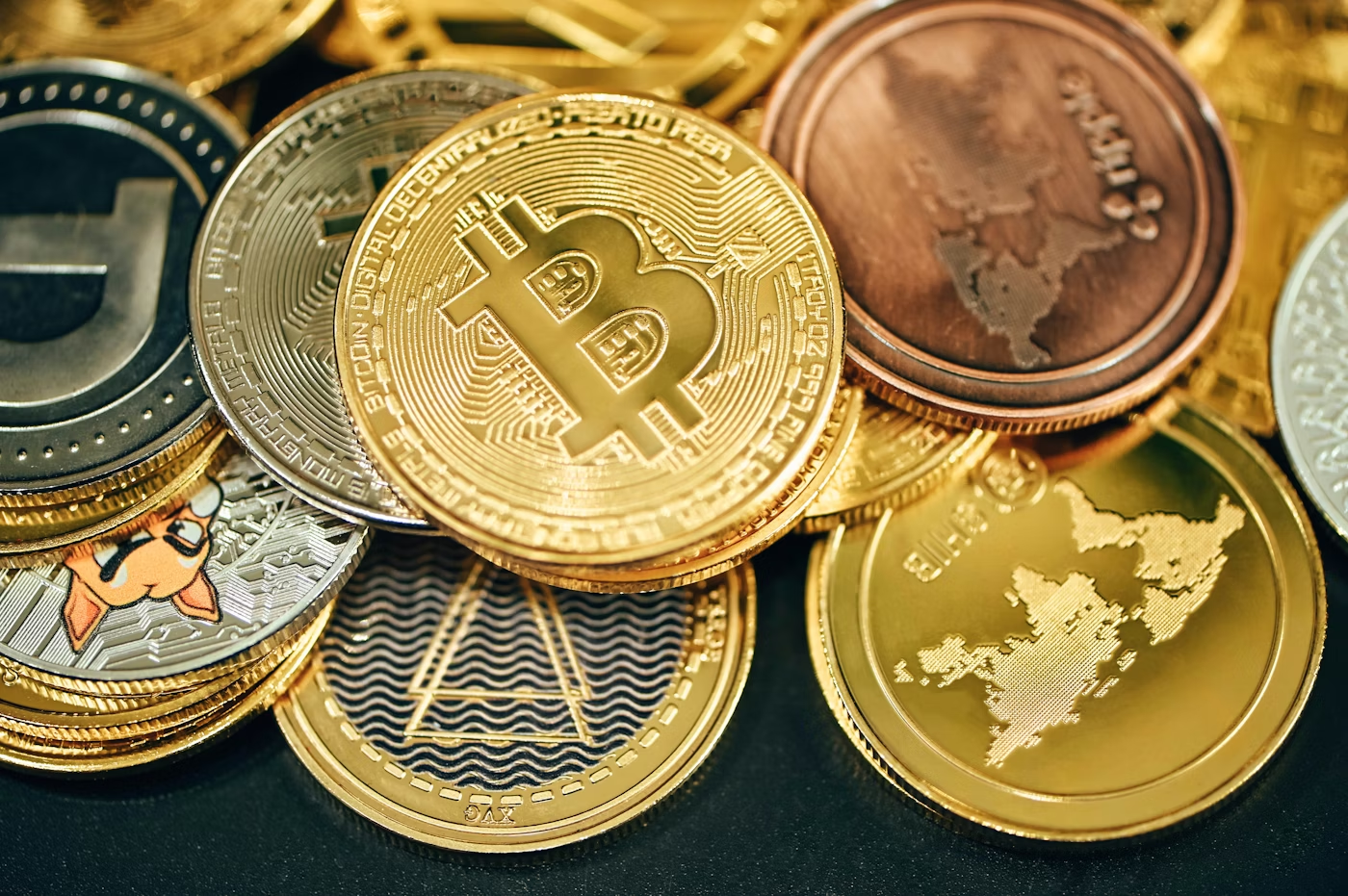
What are tokenized securities, and why they are not as simple as “moving stocks onto the blockchain”
“Tokenized securities” sound a lot like taking a stock and moving it unchanged onto the blockchain, but reality is far more complex. In its January 2026 tokenized securities statement, the U.S. Securities and Exchange Commission clearly pointed out that tokenized securities exist in multiple models, and their legal structures, operational methods, and holder rights are not consistent.
This statement is important. Because it directly breaks a common intuition: as long as an on-chain token’s name corresponds to a certain stock and its price movement appears to follow that stock, it means you bought the same thing. In reality, different tokenized products may correspond to different custody arrangements, different rights mapping methods, different redemption rules, and different legal relationships. It is not as simple as “moving stocks onto the chain.”
Why many on-chain “US stock products” are more like mappings, wrappers, or derivative exposures
Many on-chain “US stock products” are easy to misunderstand because their interfaces and promotions emphasize “you can use stablecoins to buy assets related to a well-known stock,” but in legal and economic terms, they may not equal traditional shareholder status. What you see may be price mapping, packaged income rights, on-chain certificates, or another layer of structure designed around the underlying stock.
Such products certainly may have market value and may suit certain user groups, but you cannot assume that “because it looks like a stock, it is legally a stock.” Price tracking does not equal rights equivalence; being tradable does not equal being the same as traditional stock holdings in a brokerage account. This is exactly what many beginners most easily overlook.
When directly buying on-chain stock tokens, what you should care about most is not the price chart, but the rights
If you are really ready to research a certain on-chain stock token, the first thing you should look at is not the ups and downs, but what rights it gives you. You should at least ask a few questions clearly: Do you have voting rights? Do you enjoy dividends or distribution of proceeds? Do you have direct claim rights on the underlying assets? If the issuer, custodian, or technical service provider has problems, who bears the risk? What are the redemption and liquidation arrangements?
This is also why regulators repeatedly emphasize the structural differences between different models. Because in the tokenized securities scenario, what really needs to be understood is not whether it “looks like a stock,” but “whether it is legally and economically the kind of stock relationship you think it is.” If this point is not clear, then talking about returns, liquidity, and market opportunities later can easily go off track.
Why “being able to use stablecoins to buy a certain stock-related product” still does not mean you have bought traditional US stocks
Many people say: Anyway, I used USDT to buy something tied to the price of Apple or Tesla, doesn’t that mean I bought US stocks? The problem with this statement is that it compresses three layers — payment method, trading interface, and the essence of holdings — into one conclusion. You may indeed use stablecoins to buy a “stock-related product,” but that is not necessarily the real stock holdings recorded in a traditional brokerage system.
In one sentence: Being able to pay with stablecoins does not mean what you bought is traditional stocks; looking like a stock does not mean it is legally the same thing. As long as you remember this sentence first, many concepts will naturally become clear later.
| Comparison Item | What Needs Key Confirmation for Tokenized Stock Products |
|---|---|
| Rights | Whether there are voting rights, dividend rights, claim rights |
| Structure | Is it mapping, beneficial rights, certificate, or other arrangement |
| Custody | Whether the underlying assets are custodied and by whom |
| Redemption | Whether redeemable, how to redeem, and what the restrictions are |
| Risk | How issuer, custodian, compliance, and technical risks are distributed |
Putting the Two Paths Together: What Exactly Is the Difference Between Stablecoin Deposit to Buy US Stocks and Directly Buying Stock Tokens
Difference 1: You are entering the traditional brokerage system or the on-chain asset system
This is the most fundamental difference. After depositing stablecoins to buy US stocks, you are essentially using stablecoins as a funding channel to enter the traditional securities market. Your subsequent order placement, holdings, clearing, and settlement still occur within the traditional brokerage and traditional securities market. In contrast, directly buying on-chain stock tokens means you first enter an on-chain asset system, where product logic, trading scenarios, and ownership relationships are all defined by that structure.
Therefore, the difference between the two paths is not just “different technical implementation methods,” but whether you are standing within the traditional financial framework or the on-chain product framework. One focuses on funding entry, the other on product carrier — the directions are inherently different.
Difference 2: The main types of risks you bear are completely different
If you take the path of “depositing stablecoins and then buying traditional US stocks,” what you usually need to care about most is account eligibility, regional support, coin support, same-name rules, fund source explanation, and whether the deposit path is compliant. For example, IBKR’s stablecoin deposit mechanism clearly states it is for eligible clients and not automatically applicable to all users.
If you take the path of “directly buying on-chain stock tokens,” the risk focus shifts. At this point, you should care more about issuance structure, token rights, custody arrangements, redemption rules, counterparty risk, and future regulatory definitions. The core issue of the former is “how money enters the traditional system,” while the core issue of the latter is “what structure you are actually buying.”
Difference 3: The final investment relationship you obtain is different
When you buy traditional US stocks after stablecoin deposit, what you ultimately obtain is stock holdings in a traditional securities account. The current U.S. securities market uses a T+1 settlement cycle, which shows that even if your funding entry has changed, the subsequent stock relationship still revolves around traditional market rules. You enjoy the stock holding logic within the traditional brokerage system, not the on-chain product logic.
When you directly buy on-chain stock tokens, what you ultimately obtain is some kind of on-chain rights relationship. It may be related to the underlying stock price or involve some mapping or packaging arrangement, but you cannot directly equate it to “I am a traditional shareholder” without clearly reading the product terms. This is the fundamental difference between the two paths in terms of the final investment relationship.
Difference 4: Suitable user groups and usage purposes are also different
If your goal is clear — to enter the traditional US stock market, hold traditional securities positions long-term, and accept brokerage account logic — then “buying traditional US stocks after stablecoin deposit” is more suitable for you. Its focus is on improving funding entry efficiency, not changing the nature of holdings.
If you are already active on-chain, more familiar with tokenized products, and willing to study product terms while accepting that what you buy may not be traditional stocks in the conventional sense but a kind of on-chain securities-related asset, then directly buying stock tokens is closer to your usage scenario.
You can use one simple question to judge: What you care about most — “entering the traditional market in a smoother way” or “obtaining stock-related exposure on-chain”? The former leans toward stablecoin deposits, the latter toward on-chain stock tokens.
| Dimension | Stablecoin Deposit Then Buy Traditional US Stocks | Directly Buy On-Chain Stock Tokens |
|---|---|---|
| System You Enter | Traditional brokerage and securities market system | On-chain issuance and on-chain holding system |
| Role of Stablecoins | Funding entry and deposit tool | Payment method and on-chain trading medium |
| Final Holdings | Traditional stock positions in brokerage account | Some on-chain rights, mapping, or tokenized structure |
| Main Rules | Brokerage account eligibility, deposit rules, clearing & settlement | Product structure, issuance arrangements, rights fulfillment |
| Main Risks | Account rules, compliance traceability, path restrictions | Rights uncertainty, counterparty and structure risks |
| More Suitable For | People who want to enter the traditional US stock market | People familiar with on-chain products and able to accept structural differences |
If What You Really Want to Ask Is “How Should I Understand the Relationship Between USDT and US Stocks,” You Can Use This Framework to Judge
First ask yourself: Are you trying to solve the deposit problem or the holdings problem?
This is the first layer of judgment. If what you are really anxious about is “how the money gets into the account,” then you are discussing the stablecoin deposit issue. At this point, you should look at which institutions support it, whether it suits your region and account, how funds are converted, and how purchasing power is formed after arrival. For example, IBKR’s public explanation gives a very clear example: stablecoins are first converted to USD and then credited to the brokerage account.
If what you are really anxious about is “what exactly did I buy,” then you are discussing the product structure issue. At this point, the focus is not on the funding entry but on product terms, holder rights, and underlying relationships. As long as you separate these two layers first, your judgment when looking at platforms, introductions, and market statements later will be much more stable.
Then ask yourself: Do you want to enter the traditional market or accept on-chain asset logic?
The second layer of judgment is which system you want to enter. If you value the traditional brokerage account experience, traditional stock holding relationship, and a clearer securities framework more, then what you really need is a smoother funding entry. On the contrary, if you already accept on-chain holding, 24/7 trading, product structure differences, and on-chain counterparty risk, then you may be more interested in tokenized stocks.
There is no absolute superiority or inferiority here — only whether the path matches your real needs. The question is not which method sounds more advanced, but whether it corresponds to your actual demand. Many people choose the wrong path not because they cannot operate it, but because they did not clarify from the beginning which logic they want to enter.
Finally ask yourself: Can you accept the rules, restrictions, and explanation costs?
No matter which path you take, do not assume that “as long as you have USDT, everything will be simpler.” Stablecoin deposits do not mean there are no eligibility requirements, coin restrictions, or account rules; tokenized stocks do not mean they are naturally transparent, naturally low-risk, or naturally have complete rights. The former has the boundaries of the traditional financial system, while the latter has the structural complexity of on-chain securities products.
Therefore, the truly mature way to judge is not “which path has a lower threshold,” but “which path’s complexity I am willing to bear.” Are you willing to bear the traditional brokerage deposit and rule costs, or the on-chain structure research and rights judgment costs? This question is more important than “which path is trendier.”
How to remember the final conclusion of this article
If we condense the entire article into the most accurate and least misleading sentence, it would be:
USDT can serve as a funding entry to help you enter a system where you can trade US stocks; but it does not naturally mean you have directly bought traditional US stocks with USDT.
To expand a bit more:
- If you deposit stablecoins into a brokerage account and then buy stocks within that account, what you buy is traditional US stocks.
- If you directly buy on-chain stock tokens, what you buy may be some kind of tokenized securities, mapped rights, or other structured products.
If what you really want is “how to more smoothly convert USDT into investable USD purchasing power,” then you should pay more attention to traditional investment scenarios such as BiyaPay web trading, as well as supporting tools like stock query. First confirm which market you want to enter, then decide how to enter it.
You do not need to remember all the terms first, but you must remember this relationship: Funding entry is not final holdings, and payment method is not asset definition.
FAQ
Can USDT be directly exchanged for Apple stock?
A more accurate way to say it is that you may first use stablecoins to deposit into a brokerage account that supports this path, and then use that account to buy Apple stock. Stablecoins are usually the funding entry, not the stock itself.
After stablecoin deposit, is what I buy normal US stocks?
If you deposit and place orders within a compliant brokerage account, you usually buy traditional US stock holdings in that brokerage system. The key is whether you ultimately enter the traditional securities market.
Is there a big difference between on-chain US stock tokens and real stocks?
It can be very big. The difference is not only in the trading method, but also in rights structure, claim rights, redemption arrangements, and legal relationships. Having a name like a stock does not mean it is legally the same asset.
Why has everyone been talking more about “stablecoins buying US stocks” recently?
Because some international institutions have started supporting stablecoin deposits, reducing the friction of funds entering traditional brokerage accounts; at the same time, discussions on tokenized securities and on-chain stock products are also heating up. When the two topics overlap, the expression is more easily simplified.
Does having USDT mean I can bypass brokerage rules?
No. Institutions that support stablecoin deposits usually still have eligibility scope, supported coins, process requirements, and account rules. Stablecoins can change the form of the funding entry, but they will not cancel the existing rules.
Which layer should beginners understand first?
First understand two layers: the first layer is “how the money gets in,” and the second layer is “what I ultimately hold.” As long as you distinguish these two layers, you will be much clearer when looking at platforms, processes, and products later.
*This article is provided for general information purposes and does not constitute legal, tax or other professional advice from BiyaPay or its subsidiaries and its affiliates, and it is not intended as a substitute for obtaining advice from a financial advisor or any other professional.
We make no representations, warranties or warranties, express or implied, as to the accuracy, completeness or timeliness of the contents of this publication.
Related Blogs of

What to Do When ChatGPT Card Binding Fails? Billing Address Mismatch, Card-Issuing Region, and Risk Control Explained


Is Zero-Commission U.S. Stock Trading a Gimmick? Beginners Should Understand These Fee Types


What to Do When OpenAI API Top-Up Fails? Balance, Prepaid Billing, Charges, and Credit Arrival Checks


What to Do After ChatGPT Plus Auto-Renewal Fails? Downgrade, Retry, and Resubscription Process

Choose Country or Region to Read Local Blog
 Australia
 Austria
 Belgium
 Canada
 Cyprus
 Czech Republic
 Denmark
 Estonia
 Finland
 France
 Germany
 Greece
 Hong Kong
 India
India Indonesia
 Ireland
 Italy
Italy Japan
Japan Latvia
 Lithuania
 Luxembourg
 Malaysia
 Malta
Malta Morocco
 Nepal
Nepal Netherlands
 New Zealand
 Norway
 Pakistan
 Philippines
 Poland
 Portugal
 Romania
 Singapore
 Slovakia
 Slovenia
 South Africa
 South Korea
 Spain
Spain Sweden
 Thailand
 The United States
 Turkey
 United Arab Emirates
 United Kingdom
 Vietnam
Contact Us




BIYA GLOBAL LLC is registered with the Financial Crimes Enforcement Network (FinCEN), an agency under the U.S. Department of the Treasury, as a Money Services Business (MSB), with registration number 31000218637349, and regulated by the Financial Crimes Enforcement Network (FinCEN).
BIYA GLOBAL LIMITED is a registered Financial Service Provider (FSP) in New Zealand, with registration number FSP1007221, and is also a registered member of the Financial Services Complaints Limited (FSCL), an independent dispute resolution scheme in New Zealand.