The Arrival of the Robot Era: Embodied AI (Embodied Intelligence) Concept Stocks Combined with OpenClaw




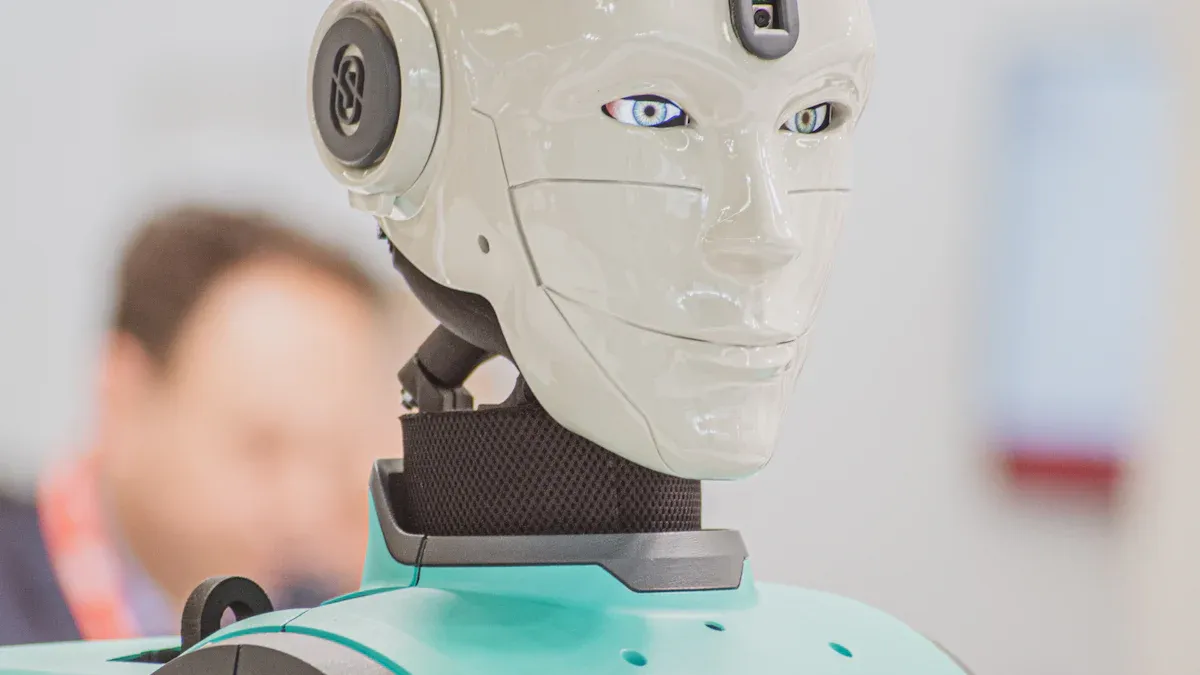
Image Source: unsplash
You are witnessing the arrival of the robot era. Breakthroughs in AI Agent and embodied intelligence technologies are driving the global market size from $2.7 billion in 2021 to rapid growth, with projections reaching $105.6 billion by 2034 and a compound annual growth rate as high as 38.5%.
OpenClaw enables localized and privatized deployment of AI Agents. You will find that OpenClaw not only allows robots to operate autonomously in physical environments but also implements a complete feedback loop from perception to action, widely applied in scenarios such as campus inspections, security management, and warehouse collaboration. You need to pay attention to the governance and security challenges brought by the commercialization of embodied intelligence, as well as the new investment opportunities arising from them.
Core Key Points
- The robot era is arriving rapidly, with the market expected to reach $105.6 billion by 2034 and a compound annual growth rate as high as 38.5%.
- OpenClaw supports localized and privatized deployment of AI agents, enhancing data security and corporate compliance.
- Embodied intelligence integrates perception and motion, enabling real-time adaptation to environmental changes in physical space and expanding AI application boundaries.
- Companies should focus on governance and security challenges, taking measures to improve the security of AI agent systems and ensure compliant management.
- When investing in embodied intelligence-related companies, core elements such as technological innovation, market potential, and data security must be considered.
The Arrival of the Robot Era and OpenClaw
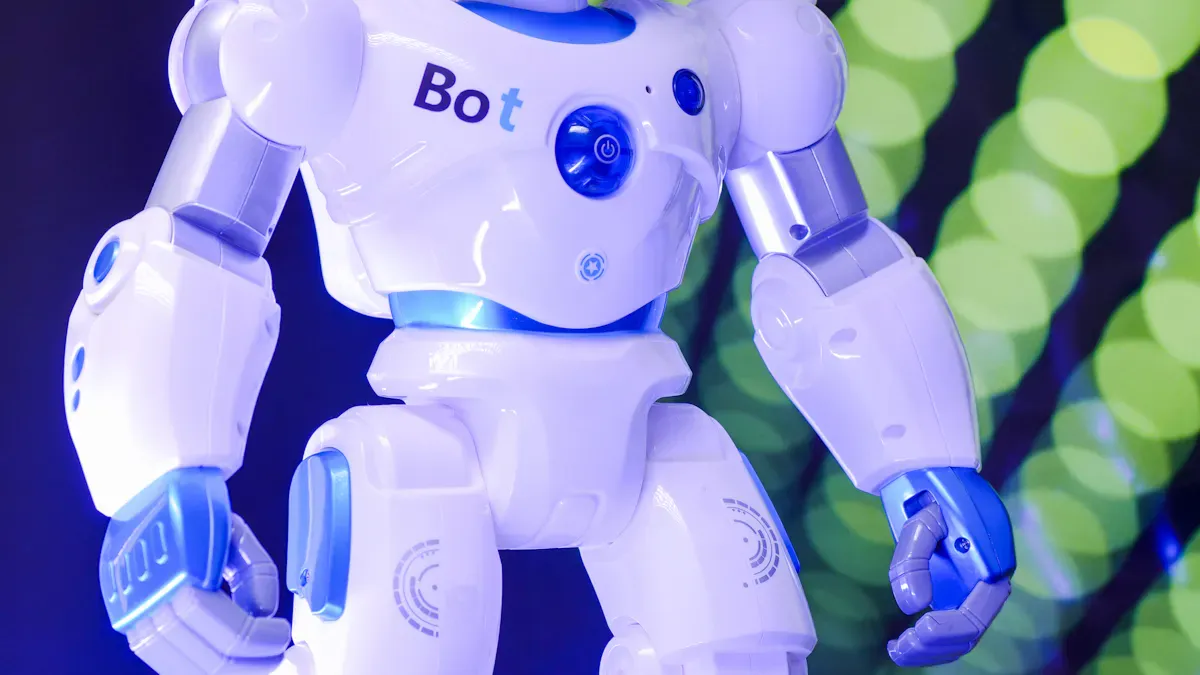
Image Source: pexels
Era Transformation and AI Agents
You are experiencing the arrival of the robot era, driven by multiple technological milestones. In 2005, Stanley, the autonomous vehicle, won the DARPA Grand Challenge, marking the beginning of the modern self-driving car era. Stanley relied on artificial intelligence and laser sensors, technologies that remain core to robot vision systems today. You can see that robotics continues to break through—from drones and remote-controlled machines, to the industrial robot Unimate, medical robots, and smart devices in daily life—robots have deeply integrated into various scenarios.
| Milestone | Description |
|---|---|
| Drones and remote-controlled machines | Military needs drove robot applications in hazardous environments |
| Unimate | Industrial robots transformed manufacturing |
| Artificial intelligence integration | Robots gained autonomous learning and decision-making |
| Medical robots | Minimally invasive surgery improved treatment outcomes |
| Robots in daily life | Smart home and automation devices became widespread |
You will find that improvements in AI Agent capabilities have greatly expanded robot application boundaries. AI agents achieve interaction with the physical world through embodiment, enhancing trust in human-machine interaction. You can send commands via instant messages, the agent parses them into robot instructions, the robot executes navigation and motion planning, and the agent manages execution details. You only need to specify intent, and the agent automatically completes complex tasks. OpenClaw integrated with Unitree G1 humanoid robot allows you to remotely control the robot, with the agent coordinating workflows and compliance constraints in medical logistics, warehouse automation, and other scenarios. The arrival of the robot era is not only reflected in technological breakthroughs but also in the continuous evolution of AI Agent capabilities and real-world application implementation.
The Role and Breakthroughs of OpenClaw
You can see that OpenClaw plays a key role in the arrival of the robot era. OpenClaw integrates multimodal perception, enabling AI to understand visual and environmental information, achieve real-time action execution, and improve interaction naturalness. You can capture visual and auditory data through Meta Ray-Ban smart glasses, process information via the VisionClaw mobile app, perform reasoning with Google Gemini Live, forming a smooth loop of observation, understanding, and action. OpenClaw adopts open-source technology, enhancing user control and adaptability, supporting localized and privatized deployment to ensure data security and corporate compliance.
OpenClaw provides a self-hosted agent runtime, connecting chat platforms with AI agents to perform real-world tasks. You can quickly install over 100 pre-configured AgentSkills, supporting digital task automation, personal productivity, web automation, and smart home integration for various real-world applications.
You need to pay attention to governance and security challenges. As OpenClaw accelerates the implementation of agent technology, security vulnerabilities and malicious skill risks have significantly increased. Data shows that the OpenClaw system has 73 security vulnerabilities, 135,000 publicly exposed instances on the internet, a 12% proportion of malicious skills, and critical vulnerabilities with CVSS scores as high as 9.4. There is a structural mismatch between global risks and local governance; a single malicious skill can affect all users, while regulatory authorities struggle to cover global-scale risks.
- Structural mismatch between global risks and local governance
- A single malicious skill affects all OpenClaw users
- Limitations of regulatory authority versus global risk contradiction
You must take seriously the governance and security challenges brought by the arrival of the robot era. OpenClaw promotes localized and privatized deployment of AI Agents and accelerates agent technology implementation, but it also requires you to strengthen security protection and compliance management during application. You can improve system reliability by continuously optimizing agent models, recording task trajectory data, and enhancing local runtime security. The arrival of the robot era is not only technological progress but also an upgrade of governance and security systems.
Embodied Intelligence and OpenClaw Technology
Core Capabilities of Embodied Intelligence
You can discover that embodied intelligence is fundamentally different from traditional AI systems. Traditional AI mainly relies on datasets for reasoning and decision-making, lacking interaction with the real environment. Embodied intelligence emphasizes the integration of perception and motion, enabling real-time adaptation to environmental changes in physical space and continuous capability improvement through interactive learning. The table below shows the core capabilities of embodied intelligence:
| Core Capability | Description |
|---|---|
| Perception-Motion Integration | The system perceives the environment through sensors (cameras, LiDAR, force sensors, IMU) and performs actions via actuators (motors, grippers, manipulators), forming a feedback loop. |
| Environmental Adaptability | AI exists and interacts in real physical space, having to cope with physical laws and environmental changes. |
| Learning Through Interaction | Learning occurs through physical interaction with the environment rather than solely relying on datasets, similar to how humans learn through practice rather than instructions alone. |
You can achieve complex spatial tasks through embodied intelligence systems, such as automated welding, medical surgery, railway inspections, or urban logistics delivery. These capabilities drive the arrival of the robot era and expand AI application boundaries.
OpenClaw Innovation System
You will see that OpenClaw promotes the implementation of embodied intelligence through software and hardware innovation. As an open-source autonomous AI agent framework, it supports multiple messaging platforms (WhatsApp, Telegram, Slack, Discord) and can interface with large language model backends to execute tools and local scripts. OpenClaw supports full self-hosting, ensuring data sovereignty and protecting user sensitive information. You can use OpenClaw to automate business processes such as scheduling, email management, and workflow optimization. It can also be deployed as part of a multi-agent system, coordinating with other agents to accomplish complex tasks. The OpenClaw innovation ecosystem focuses on open-source robot platforms, integrating advanced spatial mapping and real-time navigation capabilities, supporting 80% of OEM robots in mainland China, and processing physical space and time through LiDAR, stereo, or RGB cameras.
- Open-source robot platform adaptable to various hardware and software environments
- Integrated spatial mapping and real-time navigation to enhance physical interaction capabilities
- Supports mainland China OEM robots, demonstrating wide applicability
- Integration with multiple sensors to handle complex spatial tasks
Industry Impact
You can observe that embodied intelligence is driving industry transformation. Compared with traditional AI, embodied intelligence achieves real-time learning and adaptation through physical interaction, capable of handling complex spatial tasks and taking real actions. For example, Qianxun Intelligence has achieved implementation in scenarios such as campus inspections, security management, and warehouse collaboration in mainland China. Embodied intelligence systems perceive the environment through sensors to complete tasks such as welding, surgery, infrastructure inspection, and urban logistics. You will find that the arrival of the robot era not only improves automation levels but also brings enhancements in industry efficiency and safety.
Commercialization Implementation and Industry Transformation
Application Scenarios
You can see that OpenClaw is driving the commercial implementation of embodied intelligence across multiple industries. The arrival of the robot era brings intelligent automation to manufacturing, where real-time defect detection and predictive maintenance reduce downtime. In medical logistics scenarios, autonomous delivery robots coordinate compliance constraints and workflow logic through agents. In the financial sector, licensed banks in Hong Kong use OpenClaw to deploy AI models for risk management and fraud detection. In smart city construction, OpenClaw optimizes traffic management and public safety systems. You can also experience personalized recommendations and dynamic pricing in e-commerce. The following are typical application scenarios:
- Robots and automated production lines
- Medical logistics and patient monitoring
- Financial risk management and fraud detection
- Smart city traffic and energy management
- E-commerce personalized experiences
Privatization and Enterprise-Level Deployment
You can choose OpenClaw for privatized deployment to ensure data sovereignty and corporate compliance. Enterprises support multi-platform integration and skill sharing through self-hosted agent runtimes. Peaq Robotics SDK enables multi-robot collaboration to improve process efficiency. You can deploy OpenClaw internally to protect sensitive information and meet regulatory requirements in different jurisdictions. BiyaPay provides global payment collection and international remittance services for Chinese-speaking users, supporting real-time currency conversion of USD and U.S. stocks deposit/withdrawal, meeting enterprise cross-border payment needs.
Governance and Security Challenges
You must pay attention to governance and security challenges. The skill ecosystem is easily polluted by malicious skills, and the structural dilemma of open-source AI agents leads to widespread damage scope. The speed of technological innovation outpaces governance frameworks, and regulatory approaches vary across jurisdictions. You can adopt the following security measures:
| Security Control | Status | Priority |
|---|---|---|
| Updated to the latest version | ✓ | Critical |
| Installed ClawSec security suite | ✓ | High |
| Running as non-root user | ✓ | Critical |
| Using TLS reverse proxy | ✓ | Critical |
| Enabled authentication | ✓ | Critical |
| Configured tool permissions | ✓ | High |
| Enabled audit logging | ✓ | Medium |
You can audit skills through automated scanning tools, monitor logs for abnormal behavior, and treat AI agents as untrusted executors. 2026 is the year of industry scale-up, with the market compound annual growth rate expected to reach 35.8%. The arrival of the robot era drives economic structural transformation, and enterprises need to build collaborative networks of multiple specialized AI agents to enhance human-machine synergy.
Embodied AI Concept Stocks and Investment Logic

Image Source: pexels
Overview of Related Companies
You can focus on well-known listed companies related to embodied intelligence and OpenClaw and their business layouts. In the U.S. market, many companies have incorporated embodied intelligence and AI agent technologies into their core strategies. You will find that these companies typically have the following characteristics:
- Possess independently developed robot platforms or AI agent frameworks capable of supporting localized deployment and multimodal perception.
- Promote rapid expansion of skills and applications through open APIs and SDKs to foster third-party developer ecosystems.
- Achieve commercial implementation of embodied intelligence in manufacturing, logistics, healthcare, smart cities, and other fields.
You can review the following representative categories of companies:
| Company Type | Representative Companies | Business Layout |
|---|---|---|
| Robot Hardware & Platforms | Boston Dynamics, Unitree Robotics | Provide humanoid and quadruped robots, support AI agent integration, promote automation of physical space tasks |
| AI Agents & Open-Source Platforms | OpenClaw, Meta AI, Google DeepMind | Open-source AI agent frameworks, support localized deployment, integrate multimodal perception and action execution |
| Industrial Application & Integration | Amazon Robotics, ABB, Siemens | Deploy embodied intelligence systems in warehousing, manufacturing, healthcare, and other scenarios to improve automation and efficiency |
| Financial & Payment Technology | BiyaPay | Provide global payment collection, international remittance, real-time fiat and digital currency conversion (e.g., USDT to USD or HKD), U.S. and Hong Kong stock trading deposit/withdrawal support for Chinese-speaking users, facilitating cross-border capital flow and digital asset management for enterprises and individuals |
You can see that OpenClaw, as an open-source AI agent platform, has established cooperation with multiple robot hardware manufacturers and industry integrators, promoting the implementation of embodied intelligence across a wide range of industries. BiyaPay provides global payment collection and digital currency conversion services to offer cross-border capital flow solutions for enterprises and individuals, meeting diverse financial needs in the embodied intelligence industry chain.
You also need to pay attention to the main business models and revenue sources of these companies:
- Locally installed AI agents generate large volumes of API call traffic, bringing stable cash flow to cloud service providers.
- Enterprises use open-source AI models to reduce costs and promote increased API call frequency.
- Trajectory data generated during user interactions becomes an important resource for optimizing AI capabilities and model training.
- Continuous deployment of agent models forms high-quality data crowdsourcing, strengthening reinforcement learning capabilities.
- Trajectory data reflects real-world action logic and holds far greater value than static text data.
Investment Logic and Prospects
You can understand the investment logic of embodied AI concept stocks from the following dimensions:
- Continuous progress in robotics and artificial intelligence technologies drives leaps in AI agent and embodied intelligence system capabilities, expanding application boundaries.
- Huge market potential with rapidly increasing industry penetration, driving revenue and profit growth for related companies.
- Leading companies in the industry improve supply chain layouts and enhance competitive barriers through strategic investments and mergers & acquisitions.
- Deep integration of AI and robotics gives rise to new product categories and application scenarios, creating incremental market space.
- Intensifying industry competition and innovation drive continuous emergence of investment opportunities.
When this is translated into actual investment action, theme investing is usually less about taking a side first and finding reasons later, and more about confirming where a company sits in the value chain before entering. A product such as BiyaPay, positioned as a multi-asset trading wallet, fits more naturally into the connection between research and execution, where asset review and follow-up fund management can remain within a relatively continuous workflow.
If you are screening embodied AI or robotics-related stocks and need to compare business positioning, volatility, and trading rhythm first, you can begin with stock information lookup and then move into the relevant trading entry for the next step. For investors paying attention to cross-market allocation, that review-first, execute-second path is usually more disciplined than reacting to momentum alone.
You can refer to forecasts from authoritative market research institutions to understand the growth prospects of the embodied intelligence industry:
| Source | Projected Market Size | Forecast Year | CAGR |
|---|---|---|---|
| MarketsandMarkets™ | $23.06 billion | 2030 | 39.0% |
| Market.us | $10.75 billion | 2034 | 15.7% |
| Congruence Market Insights | N/A | 2028 | N/A |
You will find that the MarketsandMarkets™ report shows the global embodied artificial intelligence market is expected to grow from $4.44 billion in 2025 to $23.06 billion in 2030, with a compound annual growth rate of 39.0%. Market.us predicts the market size will reach $2.5 billion in 2024 and $10.75 billion in 2034, with a CAGR of 15.7%. Congruence Market Insights points out that embodied AI-driven robotic systems are expected to help automated warehouses reduce operating costs by nearly 30% before 2028.
You can see that the continuous accumulation of data crowdsourcing and trajectory data provides a solid foundation for AI model optimization and new product development. Enterprises ensure data security while improving model training efficiency through localized deployment and privatized data management. Financial technology companies such as BiyaPay provide global capital flow and digital asset management services for the embodied intelligence industry chain, further unleashing industry growth potential.
Risk Analysis
You must take seriously the investment risks associated with embodied intelligence and OpenClaw-related concept stocks. Regulatory authorities and national media continue to focus on OpenClaw security issues, especially concerns from Chinese regulators about potential risks of AI agents accessing sensitive personal data. You need to understand that violations of data protection laws may result in high fines and business restrictions for companies, requiring strict compliance measures to mitigate these risks.
You will also see that some regions, such as Wuxi Xinwu District, have explicitly required cloud platforms to prohibit access to sensitive data, with policy drafts embedding security requirements to ensure compliance. Although Shenzhen has introduced subsidy policies supporting OpenClaw, regulators have issued multiple warnings regarding its security issues.
You need to pay attention to the impact of technological and regulatory uncertainties on investment prospects. Deploying AI systems in real environments raises complex security, ethical, and regulatory issues. Governments and industry bodies are developing new robot safety standards, requiring manufacturers to ensure the completeness of safety mechanisms and human-machine interaction protocols. For small and medium-sized enterprises, high development costs and technical complexity may become investment barriers.
When investing in embodied intelligence-related companies, you must comprehensively consider technological innovation, market space, data security, compliance risks, and policy environment. Only by establishing sound governance systems and security mechanisms can companies achieve sustainable growth amid industry transformation.
You can see that OpenClaw is driving the robot era and the commercialization process of embodied intelligence, bringing innovation across multiple fields. You should pay attention to continuous progress in artificial intelligence and robotics technologies, trends in AI-human collaboration, and AI applications in autonomous driving systems. The table below shows representative robots and their applications:
| Robot Name | Main Functions | Target Application Areas |
|---|---|---|
| Moya | Imitates human movements and expressions, with 92% walking accuracy | Healthcare, education, and service industries |
You should also seize investment opportunities brought by 2026 as the year of industry scale-up, with healthcare, logistics, and manufacturing becoming key growth areas. You need to continuously monitor governance security and technological evolution to capture the window period of embodied intelligence industry transformation.
FAQ
What is embodied intelligence? How do you understand its difference from traditional AI?
You can understand embodied intelligence as the deep integration of AI with the physical world. It not only relies on data reasoning but also achieves environmental perception and real-time interaction through sensors and actuators, distinguishing it from traditional AI.
How does OpenClaw support enterprise-level localized deployment?
You can achieve localized and privatized deployment of AI agents through OpenClaw. The system supports self-hosting, ensures data sovereignty, and meets enterprises’ needs for sensitive information protection and compliance.
What core elements should you focus on when investing in embodied AI concept stocks?
You should focus on companies’ technological innovation capabilities, market application implementation, data security governance, and compliance risks. Leading companies in the U.S. market typically possess multimodal perception and localized deployment capabilities.
What advantages can BiyaPay bring to you in the embodied intelligence industry chain?
You can achieve global payment collection, international remittance, real-time fiat and digital currency conversion (e.g., USDT to USD or HKD), and U.S. and Hong Kong stock trading deposit/withdrawal through BiyaPay, meeting cross-border capital flow needs.
How can you improve the security of AI agent systems?
You can regularly update the system, install security suites, enable authentication and audit logging. You should also restrict tool permissions, adopt TLS reverse proxies, and reduce risks brought by malicious skills.
*This article is provided for general information purposes and does not constitute legal, tax or other professional advice from BiyaPay or its subsidiaries and its affiliates, and it is not intended as a substitute for obtaining advice from a financial advisor or any other professional.
We make no representations, warranties or warranties, express or implied, as to the accuracy, completeness or timeliness of the contents of this publication.
Related Blogs of

Is SMIC 0981.HK a Memory Chip Stock? The Relationship Between Foundry Manufacturing and the Memory Supply Chain


Why Does AI Compute Growth Drive Storage Demand? The Difference Between Training, Inference, and Data Retention


What Is the Relationship Between ASMPT 0522.HK and HBM? The Role of Advanced Packaging Equipment in the AI Memory Supply Chain


Why Is HDD Supply and Demand Tightening? AI Data Centers, Long-Term Agreements, and Western Digital/Seagate Pricing Power
Choose Country or Region to Read Local Blog
 Australia
 Austria
 Belgium
 Canada
 Cyprus
 Czech Republic
 Denmark
 Estonia
 Finland
 France
 Germany
 Greece
 Hong Kong
 India
India Indonesia
 Ireland
 Italy
Italy Japan
Japan Latvia
 Lithuania
 Luxembourg
 Malaysia
 Malta
Malta Morocco
 Nepal
Nepal Netherlands
 New Zealand
 Norway
 Pakistan
 Philippines
 Poland
 Portugal
 Romania
 Singapore
 Slovakia
 Slovenia
 South Africa
 South Korea
 Spain
Spain Sweden
 Thailand
 The United States
 Turkey
 United Arab Emirates
 United Kingdom
 Vietnam
Contact Us




BIYA GLOBAL LLC is registered with the Financial Crimes Enforcement Network (FinCEN), an agency under the U.S. Department of the Treasury, as a Money Services Business (MSB), with registration number 31000218637349, and regulated by the Financial Crimes Enforcement Network (FinCEN).
BIYA GLOBAL LIMITED is a registered Financial Service Provider (FSP) in New Zealand, with registration number FSP1007221, and is also a registered member of the Financial Services Complaints Limited (FSCL), an independent dispute resolution scheme in New Zealand.