
Multi-Asset Account Anti-Liquidation: How to Quickly Transfer USDT from Crypto Wallet to Supplement Margin During US Stock Crash




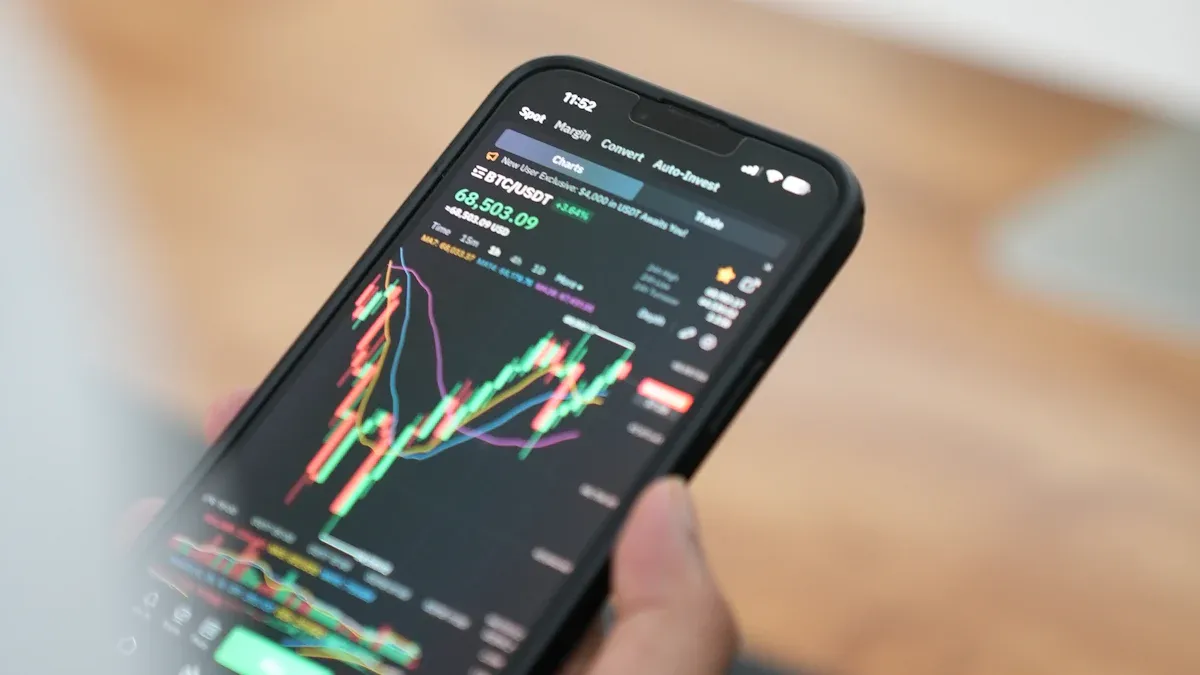
Image Source: unsplash
When US stocks experience sharp declines, you need to take swift action to prevent account liquidation. Multi-asset account anti-liquidation strategies can improve capital deployment speed. USDT, as the preferred asset for supplementing margin, features strong liquidity and high transfer efficiency. You can quickly transfer USDT from your crypto wallet to timely supplement margin and protect your trading safety.
Key Takeaways
- Establish a real-time monitoring system to promptly track account equity and margin status, reducing the risk of forced liquidation.
- Optimize account structure to ensure accurate information, minimize transfer delays, and improve capital deployment efficiency.
- Select secure and reliable crypto wallets to ensure fund safety during USDT transfers and avoid asset losses.
- When transferring USDT, always double-check the receiving address; it is recommended to perform a small test transfer first to confirm the transaction goes smoothly.
- Flexibly choose chain types, prioritizing low-fee, fast-arrival chains such as TRC20 to enhance margin supplementation efficiency.
Multi-Asset Account Anti-Liquidation Strategies
Real-Time Monitoring and Alert Settings
You need to establish a comprehensive real-time monitoring system to effectively respond to risks during US stock crashes. The core of multi-asset account anti-liquidation lies in promptly grasping account equity and margin status. Many brokerage platforms provide integrated dashboards that display margin balances and available buying power in real time. You can use these tools to monitor overall risk exposure at any moment. Automatic notification features will alert you when account equity falls below a certain percentage of maintenance margin, helping you take action in advance. You can also set alerts on multiple devices, including mobile phones, computers, and tablets, to ensure you receive risk notifications immediately. Regularly checking accounts and timely adjusting trading plans can reduce the probability of forced liquidation. Continuously monitoring market dynamics and staying updated with information helps you make wiser decisions in multi-asset account anti-liquidation.
Account Structure Optimization
Optimizing account structure can improve capital deployment efficiency and reduce transfer delays. You should enhance account verification to ensure information is accurate and error-free, avoiding invalid requests. Automated checks help prevent erroneous transfers. You need to maintain communication with advisors and update account information promptly to reduce rejections caused by incomplete information. Adopting more flexible approaches, such as fuzzy matching logic, can avoid rejections due to minor discrepancies in names, etc. Using clear and specific rejection codes helps you quickly locate issues and make corrections. Supporting market standards and complying with industry regulations promotes smooth fund transfers. Transparent communication of fee information avoids transfer failures due to unclear charges. Multi-asset account anti-liquidation not only depends on capital deployment speed but also requires you to formulate trading plans, set risk management strategies, protect trading positions, and implement timely stop-losses. Through these measures, you can ensure the account always maintains sufficient margin and reduce the risk of forced liquidation.
Brokerage Account and Crypto Wallet Preparation
Brokerage Account Preparation
You need to prepare your brokerage account in advance to ensure smooth receipt of USDT transfers. The minimum requirements for a brokerage account include the following:
- Crypto wallet holding USDT
- Verified account on a crypto exchange or payment processor
- An active local bank account that accepts payments from crypto providers
You can choose Hong Kong licensed banks as receiving accounts to enhance fund safety and arrival efficiency. Brokerage account information must be complete and accurate to avoid transfer failures due to mismatches. You should regularly verify account status to ensure the account remains active and ready to receive funds at any time. Multi-asset account anti-liquidation strategies require you to prepare fund channels in advance so you can quickly supplement margin during US stock crashes.
Crypto Wallet Preparation
You need to select a secure and reliable crypto wallet to safeguard funds during USDT transfers. Wallet security features directly impact the smoothness and safety of fund transfers. The table below summarizes common security features and preventive measures:
| Security Feature | Preventive Measure |
|---|---|
| Network mismatch | Always confirm network compatibility between sender and receiver. |
| Missing MEMO or tag | Ensure MEMO or tag is included when required. |
| Phishing scams | Use only trusted platforms and carefully check URLs. |
| Insufficient fees | Ensure sufficient gas fees for the transaction. |
You can use physical backups by writing down wallet seed phrases on paper and storing them in fireproof and waterproof safe locations. It is recommended to create 2–3 physical copies and store them in different places. Never photograph seed phrases or store them on electronic devices or cloud services. You can also consider engraving seed phrases on steel plates for enhanced disaster resistance. Wallet security is the foundation of fund transfers; any negligence may lead to asset loss.
Account Binding and Verification
You need to complete the binding and verification process between your brokerage account and crypto wallet. During binding, you must confirm that the USDT receiving network matches the wallet network. You should repeatedly verify the receiving address, preferably by copy-pasting and carefully comparing the beginning and end characters. For first-time or large transfers, it is recommended to perform a small test transfer first to ensure funds arrive smoothly. After transfer, you can use a blockchain explorer to track transaction status in real time and confirm arrival. The account binding and verification process not only improves capital deployment efficiency but also reduces operational risks. You should regularly check binding status to ensure account information is correct and provide assurance for subsequent fund transfers.
USDT Transfer Process
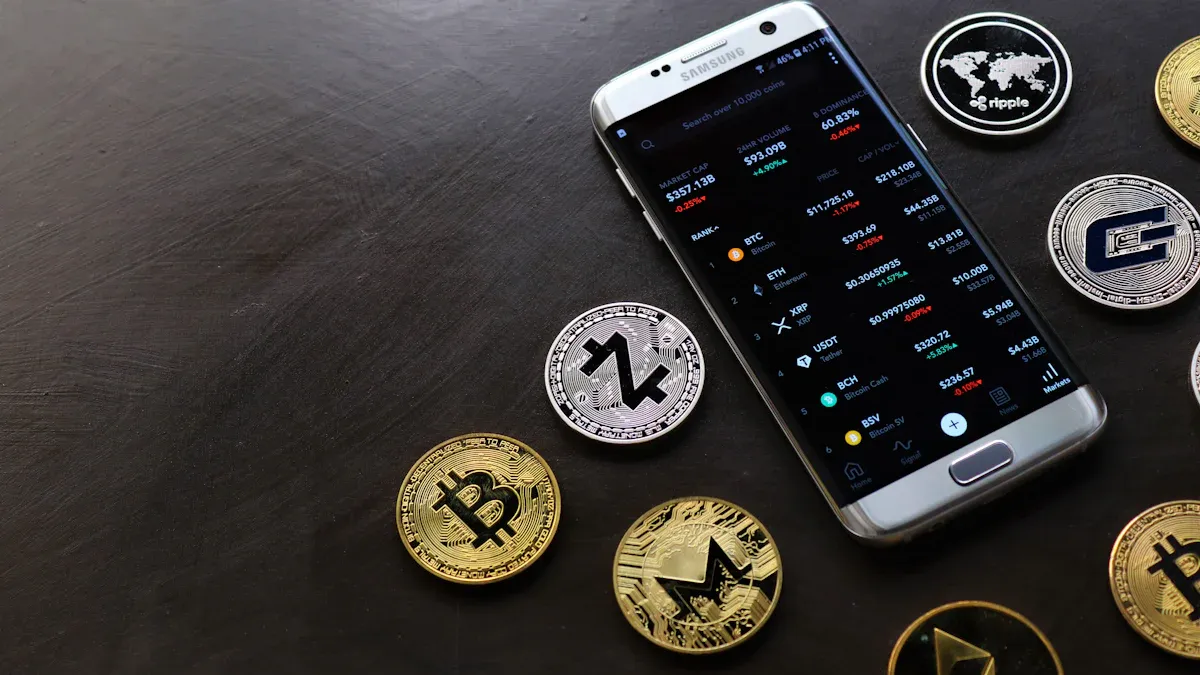
Image Source: pexels
Obtaining Receiving Address
You need to first obtain the USDT receiving address for your brokerage account. The operation process typically includes the following steps:
- Log in to your brokerage account, for example Capital.com.
- Go to the “Deposit” page and select “Cryptocurrency” as the deposit method.
- Read and accept the relevant terms and conditions.
- Follow the prompts to set up two-factor authentication to enhance account security.
- The system will generate a unique wallet address; you can copy the address or scan the QR code.
- Use your crypto wallet to send USDT to this receiving address.
- Wait for blockchain confirmation; once funds arrive, they will be automatically credited to your trading account.
You should carefully verify the receiving address to avoid permanent fund loss due to address errors. It is recommended to perform a small test transfer first to confirm the process is smooth. Brokerage account receiving addresses usually support multiple chain types; you should confirm supported chains in advance for subsequent operations.
Choosing Chain Type
You need to select the appropriate blockchain network for USDT transfers based on actual conditions. Different chain types affect transfer speed and fees. Common chains include Ethereum (ERC20), Tron (TRC20), and BSC (BEP20). Choosing a faster chain can improve arrival efficiency. For example, TRC20 offers faster transfers and lower fees, making it suitable for urgent margin supplementation. Although ERC20 provides high security, it may experience congestion during peak times and has higher fees. You can refer to the following suggestions:
- Prioritize fast-speed, low-fee chain types.
- When transferring on the Ethereum network, increasing gas fees can accelerate processing.
- Avoid peak market activity periods to reduce delays caused by chain congestion.
- Use exchanges or payment platforms with faster processing policies, such as Biyapay, to improve overall transfer efficiency.
- If node connection is abnormal, switching to another RPC endpoint can resolve the issue.
You need to flexibly select based on the chains supported by your brokerage and your own needs to ensure funds arrive in time and support the implementation of multi-asset account anti-liquidation strategies.
If your main concern at this stage is how the transfer connects to the next step after arrival, it helps to split the path into two parts: first confirm the chain type, arrival efficiency, and address accuracy, then use BiyaPay’s exchange rate comparison tool to review conversion cost, while checking relevant service details and compliance disclosures on the official website when needed. The practical advantage is that you are not looking only at on-chain speed while overlooking the difference between gross transferred value and funds that are actually usable afterward. BiyaPay is positioned as a multi-asset trading wallet covering cross-border payments, investing, and fund management scenarios, which makes it useful as a reference point when thinking about broader multi-asset allocation and fund deployment.
Initiating Transfer from Wallet
You can initiate USDT transfers from your crypto wallet. Specific steps are as follows:
- Open your crypto wallet and select the USDT asset.
- Enter the receiving address provided by your brokerage account.
- Select the corresponding chain type (such as TRC20, ERC20, etc.).
- Enter the transfer amount; it is recommended to calculate in USD units for verification.
- Check fee information to ensure wallet balance is sufficient to cover fees.
- Confirm transaction information is correct and click “Send.”
- Wait for blockchain network confirmation; a transaction hash (TxID) will usually be displayed, which you can query in real time via a blockchain explorer.
You should pay attention to wallet security and avoid operating on untrusted platforms. It is recommended to use physical backups to save wallet seed phrases and prevent asset loss. During transfers, maintain stable network connection to avoid transaction failures due to network interruptions.
Fees and Arrival Time
USDT transfer fees and arrival times are influenced by chain type, network congestion, and platform processing speed. You can refer to the table below for typical fees and arrival times of common chain types:
| Chain Type | Average Fee (USD) | Average Arrival Time (minutes) |
|---|---|---|
| ERC20 | 5–20 | 10–60 |
| TRC20 | 1–2 | 2–10 |
| BEP20 | 1–3 | 5–15 |
You can shorten arrival time by increasing gas fees on the Ethereum network. Choosing the TRC20 chain usually provides faster arrival and lower fees. You should avoid peak market periods to reduce delays caused by chain congestion. Some platforms like Biyapay offer accelerated arrival services, suitable for Chinese-speaking users to urgently supplement margin during US stock crashes. You need to monitor arrival status in real time to ensure funds enter the brokerage account promptly and prevent liquidation risks.
Tip: You can prepare multi-chain USDT assets in advance and flexibly choose transfer paths to improve capital deployment efficiency. Multi-asset account anti-liquidation strategies require you to focus on arrival speed and fees during transfers and rationally plan fund transfer arrangements.
Arrival Confirmation and Margin Supplementation

Image Source: unsplash
Arrival Confirmation
After USDT transfer, you need to confirm arrival to the brokerage account as soon as possible. Brokerage platforms usually send notifications via SMS, email, or app push once funds arrive. You can also log in to the brokerage backend and check the fund details page to verify changes in USDT balance.
If the brokerage supports blockchain explorer queries, you can copy the transaction hash (TxID) and track the transaction status in real time on a blockchain explorer. When the status shows “Completed” or “Confirmed,” it means the funds have safely arrived in the brokerage account.
It is recommended to record the time, amount, chain type, and TxID of each transaction during transfers for subsequent verification and reconciliation. For large or urgent transfers, you can proactively contact brokerage customer service to confirm arrival progress and ensure funds can be used for margin supplementation in time.
Tip: Some brokerage platforms have a fund arrival buffer period, usually 5–30 minutes. You need to wait patiently and continue monitoring arrival notifications to avoid repeated operations due to temporary delays.
Margin Supplementation
Upon arrival, you should immediately transfer USDT to the margin account to prevent liquidation due to insufficient margin. Most brokerages support automatic crediting of incoming USDT to available margin without manual operation. You can check the margin balance on the account assets page to see if it has increased.
If the brokerage requires manual transfer, you need to select the “Transfer” or “Supplement Margin” function on the fund management page to move USDT from the funding account to the margin account. The operation process generally includes:
- Select USDT asset
- Enter transfer amount
- Confirm transfer to margin account
- Submit application and wait for system processing
You should ensure the transferred amount covers current maintenance margin requirements and leave some buffer to prevent new risks from market fluctuations.
The core of multi-asset account anti-liquidation lies in efficient and timely capital deployment. You can further reduce liquidation risk by setting up automatic margin supplementation in advance. Some platforms like Biyapay support one-click margin supplementation, suitable for Chinese-speaking users to respond quickly during US stock crashes.
Handling Delays
In extreme market conditions, on-chain congestion or payment channel delays may extend USDT arrival time. You need to prepare contingency plans in advance to reduce liquidation risk caused by delays.
Common countermeasures include:
- Pre-reserve some USDT in the brokerage account as emergency margin
- Choose faster transfer chain types (such as TRC20) and avoid peak periods
- Increase on-chain fees to accelerate block confirmation
- Use third-party service platforms that support accelerated arrival, such as Biyapay, to improve arrival efficiency
- Proactively contact brokerage customer service, explain the emergency situation, and request temporary leniency or risk alerts
You can also set multiple arrival reminders to detect anomalies immediately and take remedial action promptly. For on-chain delays, you can monitor transaction status in real time via a blockchain explorer and determine whether to add fees or re-initiate the transfer.
If extreme delays occur, it is recommended to assess existing position risks, appropriately reduce positions or adjust leverage to avoid forced liquidation due to insufficient margin.
Note: Any abnormality during fund transfer may affect arrival efficiency. You need to stay calm, troubleshoot step by step, and prioritize fund safety and account stability.
Risk Warnings and Emergency Measures
Address Errors and Fund Safety
When transferring USDT, you must attach great importance to the accuracy of the receiving address. An incorrect address will result in permanent fund loss with no recovery possible. You can use copy-paste to avoid risks from manual entry. It is recommended to verify the beginning and end characters of the address before each transfer and perform a small test transfer.
Fund safety depends not only on operational details but also on the regulatory environment. Different regions have varying compliance requirements for crypto asset transfers. You need to understand relevant regulations, especially anti-money laundering rules. In the UK, for example, digital wallet services are regulated under anti-money laundering laws; service providers control wallet access, and users must request the provider to settle transactions on their behalf.
You can refer to the table below for key regulatory considerations when cross-border transferring USDT:
| Regulatory Aspect | Description |
|---|---|
| Cross-border fragmentation | Regulatory landscape is fragmented due to varying compliance requirements across jurisdictions. |
| Licensing and compliance costs | International crypto firms face rising costs for compliance in each market. |
| Rule inconsistencies | Subtle differences in reserve, redemption, and disclosure requirements pose challenges for global stablecoin arrangements. |
You need to choose trusted platforms and Hong Kong licensed banks as receiving accounts to enhance fund safety. You should also regularly back up wallet seed phrases using physical methods to prevent asset loss from device failure or cyberattacks.
Chain Congestion and Delays
Chain congestion can cause USDT transfer delays and affect margin supplementation efficiency. You need to monitor on-chain status in real time and choose faster chain types, such as TRC20. You can increase fees to accelerate block confirmation.
Some platforms like Biyapay offer accelerated arrival services for Chinese-speaking users, suitable for urgent margin supplementation during US stock crashes. You can avoid peak periods and pre-reserve some USDT in the brokerage account to reduce delay risks.
You should also pay attention to regulatory requirements in different regions. You need to comply with local anti-money laundering regulations to ensure compliant transfer processes. You can query transaction status in real time via a blockchain explorer and take remedial action promptly if anomalies are found.
- You can prepare multi-chain USDT assets in advance and flexibly choose transfer paths.
- You can proactively contact brokerage customer service, explain the emergency, and request temporary leniency.
- You can assess position risks, appropriately reduce positions or adjust leverage to prevent liquidation.
Switching Between Spot and Contract Markets
During US stock crashes, you can flexibly switch between spot and contract markets to reduce liquidation risk. Spot markets carry lower risk, and funds can directly supplement margin after transfer. Contract markets have high leverage and strict margin requirements; transfer delays can easily lead to forced liquidation.
You can adjust trading strategies based on fund arrival speed and market volatility. You can temporarily hold assets in the spot market and enter the contract market after funds arrive. You can also set automatic stop-loss and risk alerts to protect account safety.
You need to understand fund deployment rules for different markets. You can learn your brokerage’s margin supplementation process in advance to ensure transferred funds can be used for trading promptly. You should also regularly review operational processes, optimize capital deployment efficiency, and improve overall anti-liquidation capabilities.
Tip: Stay calm, troubleshoot step by step, and prioritize fund safety and account stability. Through multi-asset accounts and efficient transfer strategies, you can flexibly respond to risks brought by US stock crashes.
Efficient Operation Recommendations
Accelerated Arrival Techniques
You can improve USDT transfer arrival speed through various methods. Prioritize the TRC20 chain, which usually completes transfers in 2 to 10 minutes. Avoid peak periods such as around US stock market open to reduce delays from chain congestion. You can increase fees in wallet operations to prompt faster blockchain confirmation. Some platforms like Biyapay offer accelerated arrival services for Chinese-speaking users, suitable for urgent margin supplementation during US stock crashes. You can also prepare multi-chain USDT assets in advance and flexibly switch transfer paths to ensure efficient capital deployment. It is recommended to communicate with brokerage customer service before transfer to confirm supported chain types and arrival processes and avoid delays due to miscommunication.
Fee Optimization
You can adopt multiple strategies to effectively reduce USDT transfer fees. First, prioritize lower-fee chain types such as TRC20 or BEP20, typically costing 1 to 3 USD per transfer. You can adjust fee parameters in the wallet to reasonably control costs. Some platforms dynamically adjust fees based on network congestion; it is recommended to monitor on-chain status in real time.
- Before any important cryptocurrency transfer, send a small test amount first to confirm transaction correctness.
You can avoid large fund losses due to operational errors through small test transfers. You can also compare fee policies across platforms and choose more cost-effective service providers. It is recommended to regularly review transfer processes, optimize capital deployment strategies, and improve overall cost control capabilities.
Fund Safety Recommendations
You need to attach great importance to fund safety and ensure no risks during USDT transfers. Always use trusted wallets and platforms, and avoid operating on unknown websites or third-party apps. You can use physical methods to back up wallet seed phrases and store them in fireproof and waterproof safe locations. It is recommended to change wallet passwords regularly to enhance account security. You can also choose Hong Kong licensed banks as receiving accounts to improve fund safety and compliance.
Before each transfer, verify the receiving address using copy-paste to avoid manual entry errors. For large transfers, it is recommended to operate in batches to reduce single-transaction risk. You should also monitor the international regulatory environment to ensure transfers comply with local legal requirements. Through these measures, you can effectively safeguard fund safety and reduce liquidation risks during US stock crashes.
You can effectively improve capital deployment efficiency through multi-asset account anti-liquidation strategies. Proactive preparation and real-time monitoring help you anticipate risks in time and optimize decision-making. You need to focus on arrival speed and fund safety, using automated processes to seamlessly manage margin supplementation.
- Proactive preparation makes operations more efficient
- Real-time monitoring helps you respond quickly to market volatility
Recommendation: Flexibly adjust fund transfer paths, reasonably use USDT to supplement margin, and ensure account stability.
FAQ
How to choose the chain type for USDT transfers?
You can prioritize the TRC20 chain. TRC20 offers low fees and fast arrival. ERC20 provides high security but may experience congestion during peak times. You need to flexibly choose based on brokerage support and fund urgency.
How to ensure fund safety during USDT transfers?
You need to verify the receiving address using copy-paste. It is recommended to perform a small test transfer first. Use trusted wallets and regularly back up seed phrases to avoid asset loss.
How to accelerate margin supplementation during US stock crashes?
You can prepare multi-chain USDT assets in advance. Choose the TRC20 chain and increase fees. Use platforms like Biyapay that support accelerated arrival. You can also proactively contact brokerage customer service to explain the emergency.
What to do if delays occur during transfer?
You can monitor transaction status in real time. Increase fees to accelerate block confirmation. Pre-reserve some USDT in the brokerage account. Assess position risks and reduce positions or adjust leverage as appropriate to avoid liquidation.
How to optimize USDT transfer fees?
You can prioritize TRC20 or BEP20 chains. Monitor network congestion in real time and adjust fees reasonably. Compare policies across platforms and choose more cost-effective service providers.
*This article is provided for general information purposes and does not constitute legal, tax or other professional advice from BiyaPay or its subsidiaries and its affiliates, and it is not intended as a substitute for obtaining advice from a financial advisor or any other professional.
We make no representations, warranties or warranties, express or implied, as to the accuracy, completeness or timeliness of the contents of this publication.
Related Blogs of

Cheapest Way to Transfer Money Internationally: Small vs. Large Transfers


US to Portugal Online Money Transfer Limits: Per-Transaction Caps Explained



Choose Country or Region to Read Local Blog
 Australia
 Austria
 Belgium
 Canada
 Cyprus
 Czech Republic
 Denmark
 Estonia
 Finland
 France
 Germany
 Greece
 Hong Kong
 India
India Indonesia
 Ireland
 Italy
Italy Japan
Japan Latvia
 Lithuania
 Luxembourg
 Malaysia
 Malta
Malta Morocco
 Nepal
Nepal Netherlands
 New Zealand
 Norway
 Pakistan
 Philippines
 Poland
 Portugal
 Romania
 Singapore
 Slovakia
 Slovenia
 South Africa
 South Korea
 Spain
Spain Sweden
 Thailand
 United States
 Turkey
 United Arab Emirates
 United Kingdom
 Vietnam