What to Do When Alipay 'Flash Receipt' Limit Is Exceeded? New Channels for Large USD Remittances to China





Image Source: pexels
When using Alipay for cross-border receipts in China, you often encounter the Flash Receipt limit issue. The maximum per transaction is RMB 50,000, with an annual cumulative limit of RMB 300,000 and a maximum of 5 receipts per month. The table below clearly shows these restrictions:
| Transaction Type | Limit |
|---|---|
| Per-transaction limit | RMB 50,000 |
| Annual cumulative limit | RMB 300,000 |
| Maximum transactions per month | 5 times |
Many users find traditional channels restricted when handling large USD remittances to China and urgently need more efficient new channels. You need to understand these rules to plan fund flows reasonably.
Key Takeaways
- Understand Alipay Flash Receipt limit rules: maximum RMB 50,000 per transaction, RMB 300,000 annual cumulative, and plan fund flows accordingly.
- When receiving salary or family support funds, provide relevant supporting documents to ensure smooth declaration and avoid receipt failure due to incomplete materials.
- Monthly receipt limit is 5 times; arrange receipt frequency reasonably and consolidate multiple payments to improve efficiency and avoid system alerts.
- When the limit is exhausted or receipt fails, check whether materials are complete, consider applying for a limit increase, or choose other compliant channels.
- When selecting channels for large USD remittances to China, focus on fees, arrival speed, and compliance to ensure safe and efficient fund repatriation.
Flash Receipt Limits and Rules
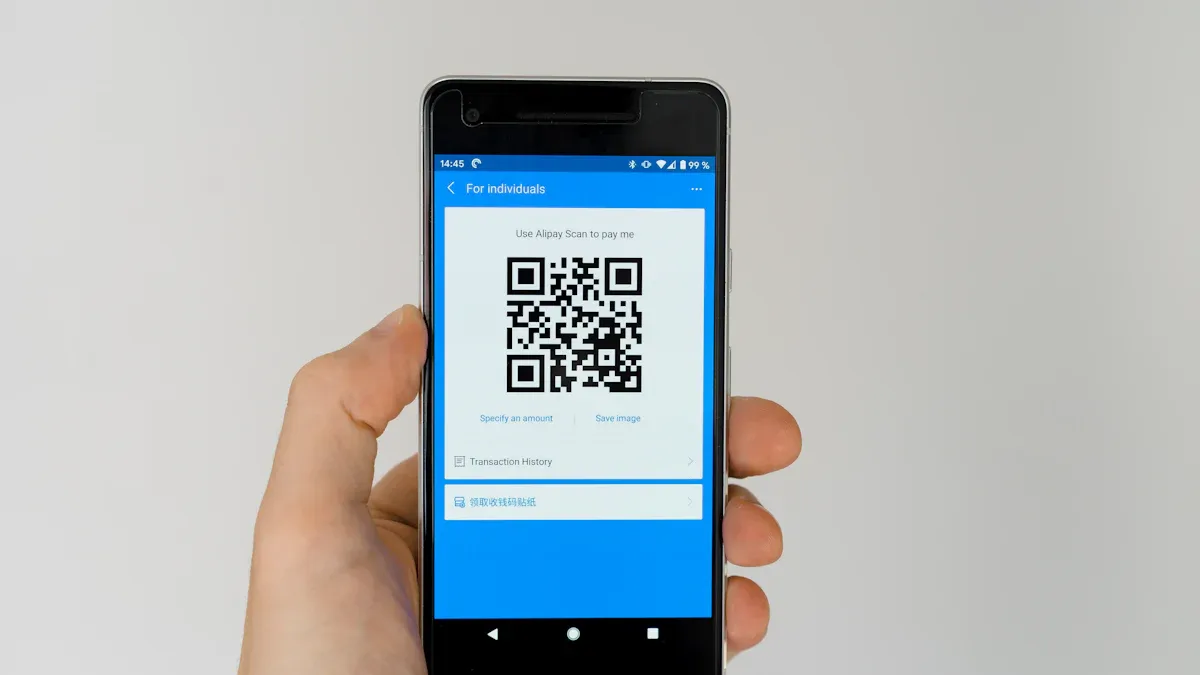
Image Source: pexels
Per-Transaction and Annual Cumulative Limits
When using Alipay for cross-border receipts in China, you must pay attention to the specific standards of the Flash Receipt limit. The maximum per-transaction receipt amount is RMB 50,000. The annual cumulative receipt amount must not exceed RMB 300,000. This limit applies to most cross-border personal receipt scenarios. If you frequently receive overseas funds, you can easily reach the annual cumulative cap.
You need to plan fund flows in advance to avoid receipt failure due to exhausted limits.
The table below shows the per-transaction and annual cumulative limits:
| Receipt Type | Per-Transaction Limit | Annual Cumulative Limit |
|---|---|---|
| Flash Receipt | RMB 50,000 | RMB 300,000 |
If your receipt amount exceeds the above standards, the system will automatically block the transaction. You need to wait for the next annual limit reset or consider other channels.
Salary and Family Support Limits
If you are receiving overseas salary or family support funds, the Flash Receipt limit has different rules. Salary and family support belong to special-purpose receipts, and regulatory authorities require you to provide relevant supporting documents.
- Salary receipts: You need to submit labor contracts, pay slips, and other materials to prove the legitimacy of the fund source.
- Family support receipts: You need to provide proof of family relationship, explanation of fund purpose, and other materials.
When declaring salary or family support, the annual cumulative limit is usually the same as for ordinary receipts, but in some cases you can apply for a limit increase. You must ensure all materials are complete to avoid declaration failure due to insufficient documentation.
If your materials do not meet the requirements, the Flash Receipt limit will not be increased, and funds cannot be successfully credited.
Monthly Receipt Count Limit
When using Alipay Flash Receipt in mainland China, you can receive funds a maximum of 5 times per month. This count limit applies to all cross-border receipt types. If you receive funds frequently, you can easily trigger a system alert.
- After reaching the monthly receipt count limit, the system automatically suspends your receipt function.
- You need to wait until the next month’s limit resets to continue receiving funds.
When planning fund repatriation, you must reasonably arrange receipt frequency. You can consolidate multiple payments into one to reduce the number of receipts and improve fund efficiency.
The system automatically monitors risk based on your receipt frequency and amounts. Abnormal operations may require you to submit additional declaration materials.
After understanding the Flash Receipt limits and rules, you can better plan fund flows and avoid impacts on fund safety due to limit restrictions.
Reasons for Flash Receipt Limit Restrictions
Common Scenarios Triggering Regulation
When using Alipay for cross-border receipts in China, you can easily trigger regulation in various scenarios. Common situations include multiple large-amount inflows in a short time, unclear receipt purpose, or funds source not matching declared information. Regulatory authorities focus on users who frequently receive overseas funds, especially when fund flows do not match personal identity or occupation. If you reach the Flash Receipt limit multiple times in a short period, the system will automatically issue an early warning or even suspend the receipt function.
Declaration and Material Requirements
When your limit is restricted, you usually need to submit additional declaration materials. During declaration, submit different proofs according to the fund purpose. For example, salary receipts require labor contracts and pay slips; family support requires proof of family relationship and remittance purpose explanation. Materials must be genuine and complete; the system conducts strict review. If materials are non-compliant, the declaration will be rejected and funds cannot be credited. It is recommended to prepare relevant documents in advance to ensure smooth declaration.
Impact After Limit Exhaustion
When you exhaust the annual Flash Receipt limit, the system automatically rejects new receipt requests. You cannot continue receiving overseas funds through this channel and must wait for the next annual limit reset. Some users fail to plan in time, causing funds to remain stuck overseas and affecting liquidity. You can assess annual receipt needs in advance, allocate limits reasonably, or choose other compliant channels for large-amount fund repatriation.
Solutions for Flash Receipt Limit Restrictions
Official Limit Increase Methods
When using Alipay for cross-border receipts in mainland China and finding the annual limit is about to be exhausted, you can attempt to apply for an official limit increase. Alipay provides limit increase services for certain special purposes, mainly for compliant fund flows such as salary and family support. You need to log in to the Alipay APP, go to the “Flash Receipt” page, and click the “Increase Limit” option. The system will require you to submit relevant supporting materials, including labor contracts, pay slips, proof of family relationship, etc.
If your materials are complete and meet regulatory requirements, Alipay will appropriately increase your annual limit. You must ensure all documents are genuine and valid to avoid review failure due to non-compliance. After the limit increase, you can continue receiving overseas funds but must still comply with China’s foreign exchange management policies.
Tip: Limit increases apply only to specific purposes; ordinary cross-border receipts cannot be applied for arbitrarily. You should plan fund purposes in advance and make reasonable use of official channels.
Declaration Process and Notes
When applying for a limit increase or encountering receipt restrictions, you must follow the official declaration process. First, prepare proof of fund source and purpose explanation. Next, log in to the Alipay APP, go to the “Flash Receipt” declaration page, and upload relevant materials. The system will automatically review your declaration information and usually provide feedback within 1–3 business days.
During the declaration process, pay attention to the following points:
- Materials must be genuine and complete; avoid forgery or omission.
- Fund purpose must be clear; special purposes such as salary and family support are more likely to pass review.
- Declaration information must match the actual receipt purpose; otherwise, the system will reject the application.
- You can check declaration progress in the APP anytime and supplement materials promptly.
Professional advice: Prepare all supporting documents in advance to avoid affecting declaration efficiency due to incomplete materials. If the review is rejected, you can supplement materials or re-declare based on feedback.
Solutions for Receipt Failure
When using Alipay Flash Receipt in mainland China, receipt failure may occur due to exhausted limits, non-compliant materials, frequent receipts, etc. When receipt fails, you can take the following measures:
- Check whether the annual limit has been exhausted; if insufficient, wait for the next annual reset or apply for a limit increase.
- Verify whether declaration materials are complete and resubmit after supplementing relevant proofs.
- Reasonably arrange receipt frequency to avoid multiple large-amount inflows in a short period.
- If official channels cannot resolve the issue, consider other compliant channels such as international wire transfers or UnionPay Speed Remittance.
When encountering receipt failure, stay calm. You can troubleshoot step by step based on the failure reason and select the appropriate solution.
Professional tip: Regularly monitor changes in Flash Receipt limit policies, adjust fund planning promptly, and ensure safe and compliant fund repatriation to China.
Mainstream Channels for Large USD Remittances to China

Image Source: unsplash
International Wire Transfer Process and Pros & Cons
When conducting large USD remittances to China, international wire transfer is the most common traditional channel. You need to initiate the remittance through an overseas bank, fill in recipient information, bank account, and SWIFT code. Funds usually arrive within 3 to 5 business days, but may take longer if intermediary banks are involved.
The main pros and cons of international wire transfers are as follows:
- Advantages: High security, suitable for large cross-border payments, wide global bank network coverage.
- Disadvantages: Long processing time, higher fees, lack of transparency. Bank holidays, time zone differences, and daily cut-off times all affect arrival speed.
When choosing international wire transfers, pay attention to the bank’s working days and time zone differences, and plan fund arrival time reasonably.
UnionPay Speed Remittance Applicable Scenarios
UnionPay Speed Remittance provides a relatively convenient cross-border remittance method. You can quickly remit USD to a mainland China bank card through overseas partner banks or digital platforms. UnionPay Speed Remittance is suitable for small to medium-amount repatriation with relatively fast arrival, usually completed within 1–2 business days.
When using UnionPay Speed Remittance, pay attention to per-transaction and annual limits; it is suitable for daily living expenses, tuition fees, etc. Some banks support online operations with simple procedures, but large amounts may be restricted.
Risks of Third-Party Exchange Platforms
You may come across some third-party exchange platforms that usually claim simple procedures and favorable rates. You need to exercise extreme caution when choosing them. Third-party platforms carry compliance risks; some lack financial regulatory licenses, making fund safety difficult to guarantee.
In recent years, regulatory authorities have strengthened real-name verification requirements for cross-border exchange. If you operate through non-compliant channels, you may face risks such as fund freezes or account restrictions. It is recommended to prioritize banks or licensed financial institutions to ensure safe and compliant fund repatriation.
OCBC Overseas Chinese Bank New Channel Introduction
OCBC Overseas Chinese Bank provides an innovative USD repatriation channel to China. You can use the Visa Direct function in the OCBC mobile app to instantly transfer USD to WeChat Pay or Alipay accounts in mainland China. This service supports second-level arrival, significantly shortening the 2–5 day waiting time of traditional wire transfers.
You can transfer up to CNY 50,000 per day, with an annual limit of CNY 300,000. You only need to provide the recipient’s Chinese ID name and mobile number—no complicated materials required—and the service is free.
With the popularity of digital platforms and mobile wallets, new channels from banks like OCBC bring you more efficient and low-cost cross-border fund repatriation experiences. When choosing, flexibly match the most suitable channel based on fund size, arrival speed, and compliance requirements.
Advantages and Practical Suggestions of New Channels
New Channel Operation Process
When using new cross-border payment channels (such as Biyapay or digital payment services from Hong Kong licensed banks) for large USD repatriation to China, you can follow the standard process below:
- You first receive an invoice from the supplier or partner and carefully verify all details to ensure the amount, currency, and recipient information are accurate.
- You select the appropriate transfer method, including bank wire, digital payment system, or compliant trading platform. Taking Biyapay as an example, the platform supports multi-currency settlement, making it convenient for Chinese-speaking users to operate flexibly.
- You prepare necessary documents, such as invoices and contracts, to ensure all materials meet compliance requirements.
- You initiate payment through a bank branch or online platform; the system automatically validates information, and some new channels support real-time arrival, greatly improving fund flow efficiency.
New channels usually simplify the operation process, reduce intermediary links, and improve fund arrival speed. You can track progress in real time through the platform backend, enhancing transparency in fund management.
Key Points for Channel Selection
When selecting channels for large USD repatriation to China, focus on the following aspects:
- Transfer fees: Fee structures vary significantly across channels. Compare percentage handling fees and fixed fees to choose the most cost-effective option.
- Arrival speed: New channels usually support real-time or T+1 arrival, significantly faster than traditional bank wire transfers. Select reasonably based on fund urgency.
- Security: Prioritize platforms with good security records; Hong Kong licensed banks and compliant fintech platforms generally offer higher security assurance.
- Compliance: Understand China’s foreign exchange management policies and ensure all operations meet regulatory requirements to avoid fund restrictions due to non-compliance.
If your priority is to compare cost structures before switching channels, it also helps to use BiyaPay’s free fiat exchange rate converter as a reference point. You can check live rates, spreads, and conversion costs first, then evaluate the total transfer expense more objectively. For users managing cross-border funds across multiple scenarios, the same platform also provides access to remittance services and stock information lookup; as a multi-asset trading wallet covering cross-border payments, trading, and fund management, BiyaPay operates under compliance frameworks including U.S. MSB and New Zealand FSP, so it fits naturally as a comparison benchmark when reviewing channel options.
You can compare Biyapay with traditional banks, UnionPay Speed Remittance, etc., in terms of fees, speed, and compliance, and make the optimal choice based on your needs.
Compliance and Risk Prevention
During cross-border transfers, compliance and risk prevention are crucial. China’s State Administration of Foreign Exchange stipulates that individuals can remit up to USD 50,000 per year, and foreign exchange purchase policies are also limited to USD 50,000. When handling large-amount fund repatriation, pay attention to the following points:
- Understand KYC and AML regulations to ensure the identity authenticity of all transaction parties and prevent illegal activities.
- Understand China’s capital control policies; large transactions require complete materials and are subject to bank and platform compliance review.
- Avoid cooperating with underground banks or unlicensed platforms to prevent fund freezes or regulatory investigations.
- You can collaborate with professional fintech platforms that use automated compliance tools and real-time monitoring to reduce operational risks.
You should continuously monitor policy changes, regularly update compliance knowledge, and ensure safe and compliant fund repatriation to China.
Pros & Cons of Each Channel and Selection Suggestions
Scheme Recommendations for Different Needs
When selecting channels for large USD repatriation to China, make professional judgments based on your own needs. Different channels have advantages in fees, speed, compliance, and convenience. The table below summarizes applicable scenarios for mainstream channels:
| Provider | Best For | Fee Structure | Payment Methods | Speed |
|---|---|---|---|---|
| Wise | Transparency | Fixed fee + percentage | Bank deposit, Alipay, WeChat | 1–2 days |
| Panda Remit | Digital wallets & rates | Low fixed fee + rate spread | Alipay, WeChat, UnionPay | Minutes to 1 day |
| Western Union | Cash pickup | Rate markup | Cash, bank, Alipay | Minutes (cash) |
| Remitly | Speed options | Tiered fees | Alipay, WeChat, bank | Instant to 3 days |
| Traditional banks | Ultra-large amounts (USD 100,000+) | Wire fees + high rate markup | SWIFT bank transfer | 3–5 days |
If you pursue high efficiency and low costs, choose digital payment services from Biyapay or Hong Kong licensed banks. These platforms support multi-currency settlement, suitable for flexible operations by Chinese-speaking users. If you need cash pickup or special scenarios, Western Union and Remitly offer diverse speed options. For ultra-large amounts, traditional bank wire transfers remain the safest channel.
Professional tip: Select the most suitable channel based on fund size, arrival speed, and compliance requirements.
Fund Planning and Policy Monitoring
During cross-border transfers, you must pay attention to policy changes and annual limits in mainland China. Mainland China residents can remit out up to USD 50,000 per year, and foreign exchange purchase policies are similarly limited to USD 50,000. If you are not a Chinese national, plan fund flows reasonably based on your legal taxable income. The table below summarizes key policy points:
| Topic | Details |
|---|---|
| Transfer limits | Mainland China residents can remit out up to USD 50,000 per year; foreigners in China are subject to limits based on their legal taxable income. |
| Foreign exchange purchase policy | Chinese nationals can purchase or exchange up to USD 50,000 in foreign currency per year; non-Chinese nationals are subject to this limit when exchanging foreign currency. |
| Wise app | The Wise app can be used to manage funds and conduct transfers; users can complete identity verification and transfers within the app without visiting a bank. |
You should plan annual fund flows in advance, allocate limits reasonably, and avoid funds remaining stuck overseas due to policy adjustments or exhausted limits. You can use digital payment platforms to track transfer progress in real time, improving fund management transparency. Continuously monitor policy changes and adjust fund strategies promptly to ensure safe and compliant repatriation to China.
When using Flash Receipt in China, pay attention to channel limits, arrival speed, and compliance. Mainstream channels each have pros and cons: traditional banks are secure but slow; new channels are efficient but require strict identity verification.
- The U.S. Financial Crimes Enforcement Network requires reporting of large transactions with identity proof and fund source documents. China’s State Administration of Foreign Exchange has an annual limit of USD 50,000; excess amounts require supplementary materials. Tax reporting and transfer restrictions are equally important.
| Policy Change | Specific Content |
|---|---|
| Lower transaction threshold | Remittances exceeding RMB 5,000 require identity verification |
| Comprehensive identity checks | Name, account, ID, address, and beneficiary information must be accurate |
| Prohibition of anonymous accounts | Financial institutions must not provide services to unidentified individuals |
| Stricter payment rules | Anonymous prepaid cards exceeding RMB 10,000 require registration |
| Impact | Splitting large transfers becomes difficult and more costly |
You should select appropriate channels based on fund needs, continuously monitor policy changes, and ensure safe and compliant repatriation to China.
FAQ
Can I continue receiving funds after the Alipay ‘Flash Receipt’ limit is exhausted?
You cannot continue receiving funds through this channel. You need to wait for the next annual limit reset or choose other compliant cross-border receipt channels.
What materials are required when applying to increase the Flash Receipt limit?
You need to provide labor contracts, pay slips, proof of family relationship, etc., to prove the legitimacy and compliance of the fund source and purpose; incomplete materials will fail review.
What are the main risks of using third-party exchange platforms?
You may face risks such as fund freezes, account restrictions, and compliance investigations. It is recommended to prioritize banks or licensed financial institutions to ensure fund safety.
How to choose a suitable channel for large USD repatriation to China?
You should comprehensively consider fees, arrival speed, security, and compliance. Different channels suit different scenarios; plan reasonably based on your own needs.
*This article is provided for general information purposes and does not constitute legal, tax or other professional advice from BiyaPay or its subsidiaries and its affiliates, and it is not intended as a substitute for obtaining advice from a financial advisor or any other professional.
We make no representations, warranties or warranties, express or implied, as to the accuracy, completeness or timeliness of the contents of this publication.
Related Blogs of

How Should You View Seagate’s HAMR Technology? Nearline HDD Capacity Upgrades and the Supply-Demand Cycle


How Should You View Shanghai Fudan’s Non-Volatile Memory Business? Application Scenarios, Competition, and Risks


How Does NAND Price Increase Affect SanDisk? Enterprise SSDs, Consumer Storage, and Margin Leverage


How to Read Pure Storage and NetApp Earnings? ARR, Cloud Revenue, Gross Margin, and Cash Flow Metrics
Choose Country or Region to Read Local Blog
 Australia
 Austria
 Belgium
 Canada
 Cyprus
 Czech Republic
 Denmark
 Estonia
 Finland
 France
 Germany
 Greece
 Hong Kong
 India
India Indonesia
 Ireland
 Italy
Italy Japan
Japan Latvia
 Lithuania
 Luxembourg
 Malaysia
 Malta
Malta Morocco
 Nepal
Nepal Netherlands
 New Zealand
 Norway
 Pakistan
 Philippines
 Poland
 Portugal
 Romania
 Singapore
 Slovakia
 Slovenia
 South Africa
 South Korea
 Spain
Spain Sweden
 Thailand
 The United States
 Turkey
 United Arab Emirates
 United Kingdom
 Vietnam
Contact Us




BIYA GLOBAL LLC is registered with the Financial Crimes Enforcement Network (FinCEN), an agency under the U.S. Department of the Treasury, as a Money Services Business (MSB), with registration number 31000218637349, and regulated by the Financial Crimes Enforcement Network (FinCEN).
BIYA GLOBAL LIMITED is a registered Financial Service Provider (FSP) in New Zealand, with registration number FSP1007221, and is also a registered member of the Financial Services Complaints Limited (FSCL), an independent dispute resolution scheme in New Zealand.