Can Mainland China Residents Open a US Domestic Securities Account? Zero-Threshold US Stock Account Opening Review





Image Source: pexels
You can open a US domestic securities account using mainland China identity. Some compliant licensed online brokers support zero-threshold online account opening, requiring only identity documents and an overseas bank card to complete the process. You can participate in the US market at low cost and enjoy a convenient account opening experience. The following process details, fee structures, and pros and cons of brokers will help you better understand the selection details.
Core Points
- Mainland China residents can open a US securities account online through compliant brokers, requiring only an ID card and an overseas bank card.
- Choosing zero-threshold brokers offers a simple account opening process and low trading fees, suitable for first-time investors.
- Ensure all identity materials provided are genuine and valid; some brokers may require proof of overseas residence or work.
- Prioritize licensed brokers regulated by the US or Hong Kong to protect fund security and investor rights.
- Carefully compare the fee structures of different brokers before opening an account to avoid hidden costs impacting investment returns.
Feasibility of Opening a US Domestic Securities Account with Mainland China Identity
Feasibility Conclusion
You can open a US domestic securities account using mainland China identity. US brokerage firms allow mainland China residents to complete account opening through online processes. You need to prepare identity proof and proof of overseas residence or work. The United States has not joined the CRS system but instead implements the Foreign Account Tax Compliance Act (FATCA), which provides mainland China investors with higher privacy protection in terms of tax information sharing. Many mainland China investors choose US domestic securities accounts to avoid certain tax regulations on offshore investments.
Note: There is no absolute restriction on mainland China residents opening US domestic securities accounts, but you must provide genuine and valid identity materials. Some brokers require submission of proof of overseas residence or work from the last three months to ensure compliance.
You can complete account opening through compliant licensed internet brokers or Hong Kong brokers. Some platforms support direct account opening with a mainland China ID card, while others require an overseas bank card or Hong Kong bank card as the funding channel. The overall process is simple with low barriers, making it suitable for mainland China investors who want to participate in the US market.
Overview of Implementation Methods
You can choose different types of brokers to open a US domestic securities account. Mainstream brokers include US-licensed internet brokers and Hong Kong-licensed brokers. The table below shows the account opening conditions, market coverage, and main advantages and disadvantages of several common brokers:
| Broker Name | Eligible Applicants | Minimum Deposit | Tradable Markets | Advantages | Disadvantages |
|---|---|---|---|---|---|
| IBKR | Mainland China residents, requires proof of overseas work or residence | $0 | US stocks, Hong Kong stocks, A-shares, ETFs, options, futures | Strict regulation, low margin rates, broad global market coverage | Highly professional platform, slower customer service response |
| Firstrade | Mainland China residents, requires China ID card and valid bank card | $0 | US stocks, ETFs, options, funds | Zero commission, friendly Chinese interface, no minimum balance requirement | Only supports US stocks, relatively basic platform features |
| Chief Securities | Mainland China residents, requires valid China ID card | $1,300 | Hong Kong stocks, US stocks, A-shares | Licensed by Hong Kong SFC, supports Chinese service, accepts China ID card | Outdated platform interface, lower international recognition |
You can select the most suitable broker based on your preparation of materials and investment needs. Some brokers require proof of overseas residence, while others only need a China ID card and bank card. The account opening process typically includes identity verification, funding channel binding, and a risk assessment questionnaire. Using a Hong Kong licensed bank account as the funding channel can enhance fund security and compliance.
Tip: During the account opening process, ensure all materials are genuine and valid. Some brokers require uploading proof of overseas residence or work from the past three months as an important part of identity verification.
US domestic securities accounts provide mainland China investors with low-threshold, low-cost access to the US market. You can flexibly choose the account opening method based on your own situation and enjoy the convenience of global asset allocation.
Mainstream Broker Types and Selection
Compliant Licensed Brokers
When choosing a US domestic securities account, you should first focus on the broker’s compliance. Compliant licensed brokers usually hold financial licenses in the US or Hong Kong and are subject to strict regulation. US-licensed brokers must comply with both US and Chinese relevant laws. For example, due to requirements from the China Securities Regulatory Commission, some brokers have stopped actively promoting services to mainland China residents. Some platforms have higher requirements for account opening materials, such as requiring proof of permanent overseas residency.
| Source | Main Content |
|---|---|
| ComplianceOne | US-licensed brokers must comply with US and Chinese regulations and may not actively promote to mainland China investors without consent. |
| Financial Post | China Securities Regulatory Commission requires some brokers (such as Futu, UP Fintech) to stop soliciting new business from mainland China clients. |
| Webull | Brokers like Futu and Tiger have tightened account opening requirements, needing proof of permanent overseas residency. |
In actual account opening, you will find that some brokers no longer accept direct account opening with a mainland China ID card or require supplementary proof of overseas residence. You need to prepare relevant materials in advance to ensure a smooth account opening process.
- Futu and UP Fintech have stopped soliciting new business from mainland China clients in accordance with China Securities Regulatory Commission requirements.
- Futu Securities now requires mainland China clients to hold proof of permanent overseas residency to open an account.
Choosing compliant licensed brokers provides higher fund security and investor rights protection. US domestic brokers usually offer SIPC insurance to protect account assets. Hong Kong licensed brokers are regulated by the Hong Kong SFC, offering transparent compliance and suitable for users who want to invest long-term in US stocks.
Zero-Threshold Broker Features
If you pursue low account opening barriers and a simple process, you can focus on zero-threshold brokers. These platforms usually support fully online account opening with more flexible material requirements. Some brokers have optimized the account opening process for Chinese-speaking users, offering Chinese interfaces and customer service to reduce language barriers. Taking Biyapay as an example, the platform provides simplified identity verification for Chinese users, supports binding of various overseas bank cards, requires no minimum deposit, and is suitable for users new to US stock investing.
The main features of zero-threshold brokers include:
- Simple online account opening process, usually completed in minutes.
- Flexible material requirements; some platforms only need an ID card and overseas bank card.
- Low trading commissions; some platforms offer zero-commission US stock trading.
- Support for multi-currency deposits, convenient for Chinese-speaking users to transfer via Hong Kong licensed banks.
Choosing zero-threshold brokers allows you to quickly enter the US market and experience convenient investment services. Before opening an account, pay attention to the platform’s compliance and fund security measures, and prioritize licensed brokers regulated by the US or Hong Kong to ensure investment safety.
If you are still comparing platforms and want to confirm whether the US stocks you care about are searchable and whether the funding path will be practical later on, you can first review the relevant names on BiyaPay’s stock lookup page, then use its exchange rate comparison tool to estimate conversion costs before funding. In this kind of cross-border account-opening scenario, checking the product and the money path first is often more useful than looking at the application link alone.
BiyaPay is better understood as a multi-asset wallet, with common use cases covering currency conversion, cross-border payments, and unified management across US stocks, Hong Kong stocks, and digital assets. If you want to understand supported scope in more detail, you can also review its official website or trading entry page first, then decide the next step alongside the broker’s identity-verification and compliance requirements.
US Domestic Securities Account Opening Process
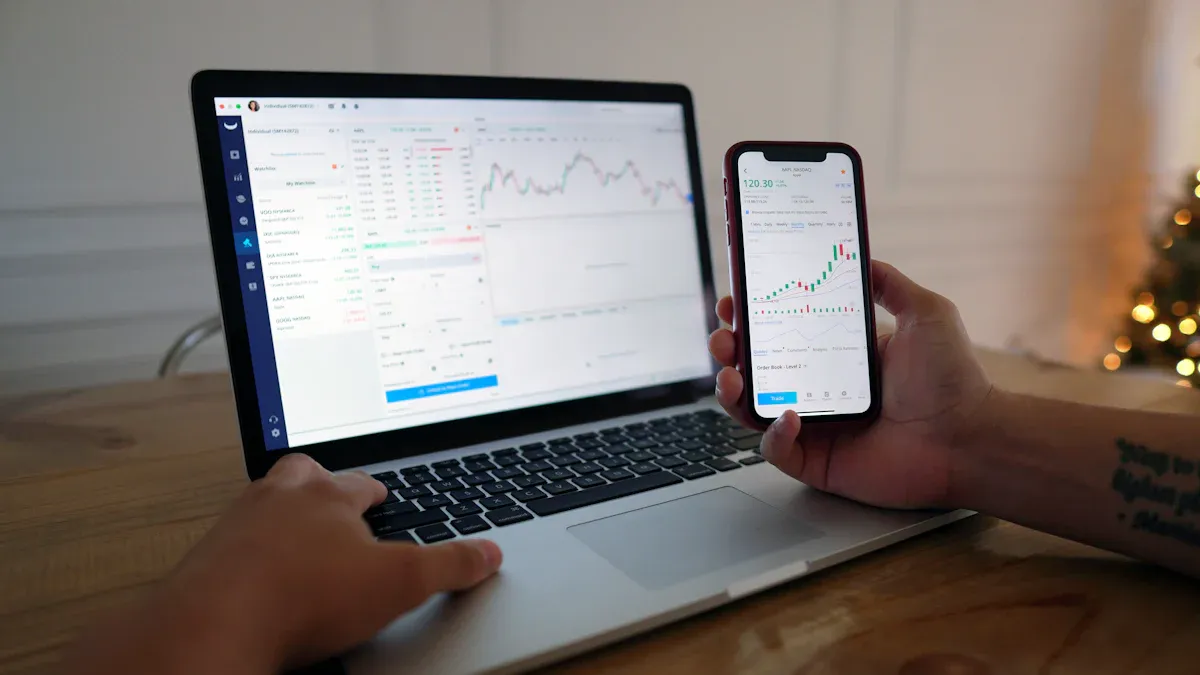
Image Source: unsplash
Required Materials
When applying for a US domestic securities account, you need to prepare relevant materials in advance. Different brokers have slightly different material requirements, but they generally include the following categories:
| Document Type | Description |
|---|---|
| Identity Proof Documents | Must provide Chinese identity proof documents |
| Proof of Overseas Residence or Work | Must provide proof of overseas residence or work from the past three months |
| Permanent Residency Proof | Some brokers require permanent residency proof from other countries |
| Overseas Bank Card | Recommended to use a Hong Kong licensed bank account for easy fund movement |
You should ensure all materials are genuine and valid to avoid account opening failure due to mismatches.
Online Account Opening Steps
The online account opening process for US domestic securities accounts is relatively simple. Taking mainstream platforms like Biyapay as an example, it usually includes the following steps:
- Submit the online account opening application and fill in basic personal information.
- Upload identity proof, proof of overseas residence or work, and other materials.
- Bind an overseas bank card; a Hong Kong licensed bank account is recommended.
- Complete the risk assessment questionnaire to confirm investment preferences.
- Wait for the broker to review the materials; the account will be activated after approval.
- Download the broker-specified mobile application for subsequent operations.
- Fill out the W-8BEN form to meet US tax compliance requirements.
The entire process is mostly online, and some platforms support Chinese interfaces and customer service to enhance the account opening experience.
Precautions
When applying for a US domestic securities account, pay attention to the following common issues:
| Broker | Policy Change Description |
|---|---|
| Futu Securities | Requires proof of permanent overseas residency to open an account. |
| Tiger Brokers | No longer accepts applications from Chinese residents with only overseas work or residence proof; only accepts clients with non-Chinese identity proof. |
| Interactive Brokers | Since August 2022, stricter requirements for Chinese residents; app removed from Chinese app stores. |
| Longbridge Securities | Stopped allowing Chinese users to open accounts with existing residence proof; app no longer searchable or downloadable. |
You should closely monitor broker policy changes and prepare required materials promptly. Some platforms have tightened account opening policies for Chinese residents, increasing difficulty. It is recommended to prioritize compliant licensed brokers and use Hong Kong licensed bank accounts for fund operations to ensure fund security and compliance.
Fee Structure and Service Experience

Image Source: unsplash
Trading and Transfer Fees
When choosing a broker, focus first on trading and transfer fees. Zero-threshold brokers usually offer highly competitive trading rates. For example, Biyapay has launched zero-commission US stock trading services for Chinese-speaking users, greatly lowering the investment barrier. You can refer to the table below to understand the trading fee differences among different brokers:
| Broker | Fees |
|---|---|
| Biyapay | US stock trading $0 commission, transfers $0 |
| Tiger Brokers | Minimum $0.01 per share, minimum trading fee $2.99 |
| Scottrade | $7 per trade |
| BOC International | Minimum $25 per trade |
You can see that zero-threshold brokers like Biyapay have clear advantages in trading and transfer fees. Using a Hong Kong licensed bank account for fund transfers usually also enjoys lower transfer costs.
Margin Rates
During US stock investing, you may use margin trading services. Zero-threshold brokers generally offer margin rates lower than traditional brokers. Biyapay provides users with margin services at an annualized rate as low as 4.5%, far below the 7%-9% level of some traditional US stock brokers. When choosing a broker, pay attention to the transparency of margin rates and actual annualized costs to avoid high rates eroding investment returns.
Other Hidden Costs
During account opening and trading, you should also pay attention to other hidden costs. For example, some brokers charge account management fees, withdrawal handling fees, or small account maintenance fees. Biyapay does not charge account management fees or set minimum account balance requirements, making it suitable for Chinese-speaking users new to the US stock market. You should carefully read the broker’s fee explanations to avoid increasing investment costs due to overlooked hidden fees.
Tip: Before opening an account, it is recommended to compare the fee structures of various brokers in detail and prioritize platforms with transparent fees and no hidden charges to protect your interests.
Broker Pros, Cons, and Applicability Recommendations
Account Security and Compliance
When choosing a broker, security and compliance should be the top considerations. When US brokers provide services to mainland China clients, they usually take the following measures:
- Implement strict account opening rules, requiring proof of overseas residence.
- Mandate tax identity verification to ensure compliance with the US Foreign Account Tax Compliance Act (FATCA).
- Maintain detailed transaction records for tax compliance.
- Require submission of the W-8BEN form during account opening to specify the country of tax residence.
Some brokers, such as Interactive Brokers (IBKR), have strengthened account opening reviews for mainland China clients, requiring proof of overseas residence. Singapore-based Longbridge Securities has suspended account opening applications that cannot provide relevant proof. Some Hong Kong licensed brokers have also tightened account opening policies due to compliance requirements. Choosing compliant brokers provides access to investor protection mechanisms like SIPC, offering higher fund security.
Operational Convenience
In actual operations, you will find differences among brokers in account opening process, interface friendliness, and Chinese language support. Taking Biyapay as an example, the platform provides a full Chinese interface and customer service for Chinese-speaking users, with a simplified account opening process and flexible material requirements. You only need to prepare identity proof and an overseas bank card to complete the online application in minutes. Some traditional brokers like IBKR, while feature-rich, have professional interfaces, strict material requirements, and longer review cycles. If you value operational convenience and Chinese support, it is recommended to prioritize platforms optimized for Chinese-speaking users.
User Type Recommendations
You should choose the appropriate broker type based on your own needs:
- If you pursue extremely high fund security and compliance protection, choose US or Hong Kong licensed brokers. Although they require more materials, they offer more comprehensive investor protection.
- If you value low account opening barriers, convenient operations, and Chinese service, consider platforms optimized for Chinese-speaking users like Biyapay, suitable for users new to US stock investing or with smaller capital.
- If you have strong investment experience and are willing to accept more complex interfaces and stricter material reviews, choose fully featured international large brokers.
When choosing a US domestic securities account, comprehensively consider security, convenience, and service experience, and make the best decision based on your material preparation and investment goals.
You can successfully open a US domestic securities account using mainland China identity. You only need to prepare identity proof and an overseas bank card, and choose a compliant licensed broker to experience zero-threshold account opening. During the process, pay attention to the authenticity of materials and broker compliance. After comparing various platforms, prioritize brokers that are compliant, transparent in fees, and convenient in service. US domestic securities accounts provide you with an efficient channel for global asset allocation.
FAQ
Can mainland China residents directly open a US domestic securities account using a China ID card?
You can use a China ID card to apply for some US domestic securities accounts. Some brokers require proof of overseas residence or work. You need to prepare relevant materials in advance to ensure smooth account opening.
Is it mandatory to use a Hong Kong licensed bank account for account opening?
You do not necessarily have to use a Hong Kong licensed bank account. Some brokers accept other overseas bank cards. Using a Hong Kong licensed bank account can improve fund security and compliance.
How is fund security guaranteed with zero-threshold brokers?
When you choose compliant licensed brokers, account funds are usually protected by investor protection mechanisms such as SIPC. Prioritize platforms regulated by the US or Hong Kong to ensure fund safety.
Can I deposit funds directly in RMB after account opening?
You cannot directly deposit RMB into a US domestic securities account. You need to convert RMB to USD through a Hong Kong licensed bank or other overseas bank before depositing.
Do zero-commission platforms have other hidden fees?
When using zero-commission platforms, pay attention to hidden costs such as account management fees and withdrawal handling fees. Carefully read the fee explanations to avoid increasing investment costs due to overlooked details.
*This article is provided for general information purposes and does not constitute legal, tax or other professional advice from BiyaPay or its subsidiaries and its affiliates, and it is not intended as a substitute for obtaining advice from a financial advisor or any other professional.
We make no representations, warranties or warranties, express or implied, as to the accuracy, completeness or timeliness of the contents of this publication.
Related Blogs of

Remitly vs Wise: Fees, Limits, Exchange Rates and Best Use Cases


The Quiet Architects of Borderless Money: An Honest Look at What BiyaPay Is Actually Building


Why Beginners Shouldn't Look Only at "Zero Commission" Before Buying U.S. Stocks


How Do Zero-Commission U.S. Stock Trading Platforms Make Money? Fees and Service Models Explained
Choose Country or Region to Read Local Blog
 Australia
 Austria
 Belgium
 Canada
 Cyprus
 Czech Republic
 Denmark
 Estonia
 Finland
 France
 Germany
 Greece
 Hong Kong
 India
India Indonesia
 Ireland
 Italy
Italy Japan
Japan Latvia
 Lithuania
 Luxembourg
 Malaysia
 Malta
Malta Morocco
 Nepal
Nepal Netherlands
 New Zealand
 Norway
 Pakistan
 Philippines
 Poland
 Portugal
 Romania
 Singapore
 Slovakia
 Slovenia
 South Africa
 South Korea
 Spain
Spain Sweden
 Thailand
 The United States
 Turkey
 United Arab Emirates
 United Kingdom
 Vietnam
Contact Us




BIYA GLOBAL LLC is registered with the Financial Crimes Enforcement Network (FinCEN), an agency under the U.S. Department of the Treasury, as a Money Services Business (MSB), with registration number 31000218637349, and regulated by the Financial Crimes Enforcement Network (FinCEN).
BIYA GLOBAL LIMITED is a registered Financial Service Provider (FSP) in New Zealand, with registration number FSP1007221, and is also a registered member of the Financial Services Complaints Limited (FSCL), an independent dispute resolution scheme in New Zealand.