
Investing in International Stocks: Direct Shares, Depositary Receipts, and ETFs





Investing in stocks across markets can involve buying company shares directly, holding depositary receipts, or using ETFs to gain exposure to a portfolio of stocks. These routes change more than where you place an order: they affect your rights, costs, and ongoing responsibilities. The meaning of “international stocks” depends on your reference market. U.S. sources generally mean stocks outside the United States; other readers need to identify their target countries and regions explicitly. Start by deciding whether you want exposure to a specific company or a broader market, then compare account access, total costs, and portfolio risk.
Key Takeaways
- Identify your target company or market before choosing direct shares, depositary receipts, or ETFs.
- Direct share ownership usually involves brokers and custodians; it does not necessarily mean registration in your own name.
- Check a depositary receipt’s share ratio, depositary fees, and arrangements for exercising rights.
- ETF investors own fund shares, rather than directly holding each underlying company’s stock.
- A U.S. dollar quote identifies the trading currency, not the investment’s full currency exposure.
- Compare costs across buying, holding, receiving distributions, and exiting—not just commissions.
What Do You Own Through Each Investment Route?

Direct investing gives you selected company shares. Depositary receipts represent interests in underlying shares through a depositary arrangement. ETFs invest through a fund portfolio. The first two routes can provide exposure to the same company; the third typically serves market, regional, or sector allocation goals. To assess a route, first identify the security that will appear in your account and how its returns connect to the company or market you want to hold.
| Comparison | Direct Shares | Depositary Receipts | International Stock ETFs |
|---|---|---|---|
| What you hold | A particular company’s stock and share class | Receipts representing interests in underlying shares | Fund shares |
| Investment scope | Companies you select | Companies with an applicable depositary program | The portfolio defined by the fund |
| Access requirements | Your account supports the market and security | Your account supports the receipt’s market and the specific security | Your account permits purchases of the fund |
| How rights are handled | Through brokers, custodians, and related arrangements | Through the depositary and intermediaries | The fund generally exercises underlying shareholder rights |
| Main responsibilities | Company research, position sizing, and corporate actions | Company research, share ratios, and depositary terms | Index scope, portfolio concentration, and fund operations |
“Direct” distinguishes company share ownership from exposure through a fund or depositary structure. Shares in a brokerage account may still be registered through a nominee or custodian, with voting, dividend, and rights-issue notices passed through intermediaries. Your beneficial interest and the way the securities are registered are separate considerations.
Your choice also changes the distribution of risk. A company’s ordinary shares and depositary receipts primarily expose you to that company’s business and valuation. A broadly diversified stock ETF can reduce the influence of a single company, but it can still fall with its markets. A single-country, sector, or highly concentrated fund may offer relatively limited diversification.
Direct Shares: When Is Accessing the Target Stock Market Worthwhile?
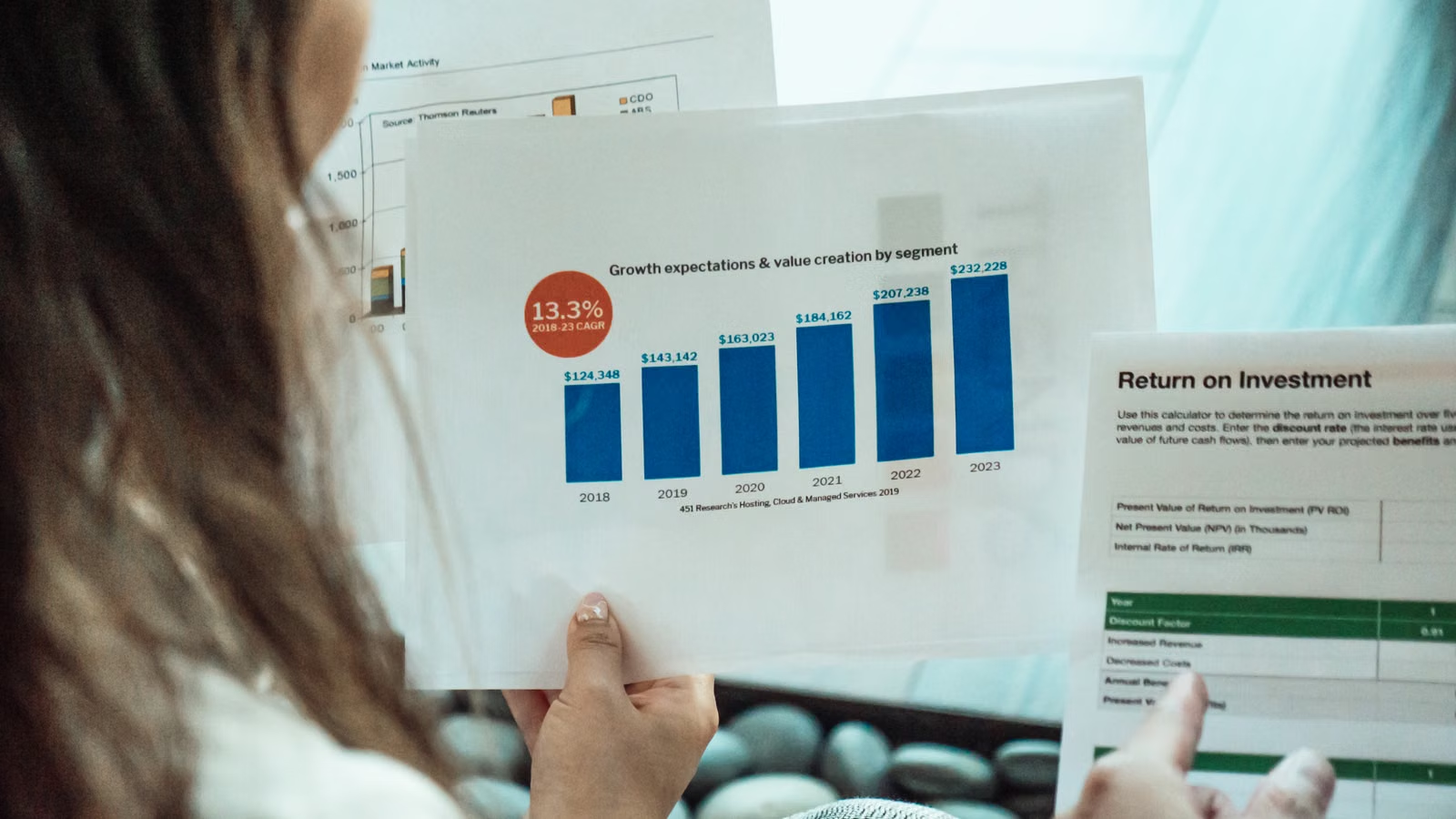
Direct shares fit more closely when your investment case concerns specific companies and you want to choose share classes, quantities, and portfolio weights yourself. In return, you take responsibility for the target market’s trading rules, funding arrangements, and ongoing research. For smaller portfolios spread across several markets, this work may matter more to the experience than an individual commission charge.
How Much Control Do You Have Over Companies and Share Classes?
Direct investing lets you hold only the companies you have researched and adjust their weights according to your assessment. When selecting a security, check its full name, exchange, share class, and identifying information. Ordinary shares, preferred shares, and classes with different voting rights can have different dividend and voting entitlements. A company’s securities listed in different markets may not be freely interchangeable.
Ongoing responsibilities include reading financial reports, monitoring share issuance and acquisitions, and responding to dividend elections and voting notices. Intermediaries may set response deadlines earlier than the issuer’s. If a particular shareholder right matters to you, confirm how your account supports it before buying.
What Additional Management Does Market Access Require?
A broker’s coverage of a market does not mean every account can buy every security listed there. Residence, account type, investor classification, and product eligibility can affect access. Trading hours, lot sizes, order types, and settlement arrangements also vary by market.
Cash management needs planning too. You may need the local settlement currency to buy shares, then receive small dividend balances in that currency. Converting every payment back into your main spending currency can repeatedly incur minimum charges and exchange-rate markups. The costs and risks of investing across markets identified in U.S. investor education materials include currency conversion, market liquidity, and differences in disclosure. Apply those dimensions to your own target markets.
Following announcements in multiple languages, maintaining several currency balances, and handling separate corporate actions adds work as the number of markets grows. A strong need to select individual companies is generally what makes these additional responsibilities worthwhile.
Depositary Receipts: What Changes When the Same Company Trades in Another Market?

Depositary receipts provide interests in a company’s underlying shares through another market. Trading currencies and hours can change, while the company’s business risks remain. American depositary receipts are commonly called ADRs. Documents also use ADS, or American depositary share, for the corresponding unit of interest. When comparing ordinary shares with depositary receipts, first match the underlying share exposure, then examine prices, fees, and rights.
Check the Share Ratio Before Comparing Prices
A depositary receipt may represent one share, several shares, or a fraction of an underlying share. Comparing the price of one receipt with one ordinary share can therefore be misleading. For example, TSMC’s ordinary shares trade on the Taiwan Stock Exchange under code 2330, while its U.S. ticker is TSM. The ADS ratio in its 2025 annual report is five ordinary shares per ADS.
Suppose an ordinary share costs NT$1,000 and the exchange rate is NT$32 per U.S. dollar. The translated value of the shares represented by one ADS would be:
1,000 × 5 ÷ 32 = US$156.25.
| Hypothetical Holding | Underlying Ordinary Shares | Value at the Assumed Prices |
|---|---|---|
| 100 ordinary shares | 100 shares | NT$100,000, equivalent to US$3,125 |
| 20 ADSs | 100 shares | US$156.25 each, totaling US$3,125 |
These prices and exchange rates are hypothetical. Actual quotes also reflect trading hours, supply and demand, liquidity, and conversion restrictions. When a price difference appears, compare executable quotes at the same point in time. Conversion charges and processing times affect whether the difference can be used in practice.
How Do Dividends, Voting, and Holding Fees Pass Through the Depositary?
Dividends on underlying shares generally undergo applicable tax processing before conversion and distribution through the depositary arrangement. The amount you receive may also have depositary service fees and other applicable charges deducted. Some depositary fees can be collected separately, so an account charge may arise even without a dividend that period.
Voting, rights issues, and other corporate actions depend on the deposit agreement and intermediary support. Procedures, deadlines, and available elections can differ from those for ordinary shares. Depositary receipts reduce the operational need to access another market directly, while adding legal and service arrangements to understand.
Dollar pricing does not remove the company’s currency exposure. The currencies of its revenue, costs, and assets, together with exchange-rate movements between the underlying share market and the dollar, can affect receipt prices and the dividends you actually receive.
International Stock ETFs: How Do Fund Shares Differ From Company Shares?
Stock ETFs place security selection, portfolio maintenance, and some corporate-action responsibilities at the fund level. Investors buy fund shares. For readers seeking exposure to several markets without researching each company, this changes the division of work. Your research instead focuses on the fund’s investment scope, replication approach, concentration, and ongoing costs.
How Do ETF Shares Provide Stock Exposure?
In an ETF that holds stocks, company shares sit within the fund’s portfolio. Investors participate in changes in portfolio value and distributable income through their fund shares. The fund generally handles voting and similar matters under its policies. Buying an ETF does not give you a separate direct shareholding in every constituent company.
Funds can build portfolios through full replication, sampling, or other approaches; check the fund documents for the actual holdings and method. Even products tracking the same index can deliver different returns because of expenses, cash balances, tax treatment, and portfolio adjustments. Management expenses are generally reflected in net asset value on an ongoing basis. The absence of a separate brokerage-account debit does not mean you avoid those costs.
Distribution dates and amounts also depend on fund policy. Dividends received from portfolio companies may not be passed on immediately or in full. Accumulating share classes generally retain income within the fund for reinvestment. Consider your cash-flow needs alongside the share class you select.
What Do “International,” “Global,” and “Single-Country” Cover?
The reference market in a fund’s name can significantly change its scope. Global equities may include the United States, while ex-U.S. equities exclude it. Developed-market, emerging-market, and single-country funds each have their own boundaries. For example, Vanguard Total International Stock ETF (VXUS) covers developed and emerging stock markets outside the United States. Its use of “international” takes the U.S. market as the reference point.
Check the listing exchange, fund domicile, trading currency, and investment regions separately. A U.S.-listed fund traded in dollars can invest primarily in other countries. Whether currency exposure is hedged is another question, determined by the share class and investment policy.
Beyond the number of holdings, country weights, sector weights, and the top ten positions help reveal concentration. Two ETFs with different names can overlap substantially. Holding more fund tickers does not necessarily add exposure to new markets.
Buying, Holding, and Exiting: How Do Total Costs Compare?
Use a consistent budget, holding period, and expected trading frequency before estimating costs at each stage. For ordinary shares and depositary receipts in the same company, match the number of underlying shares. For individual stocks and ETFs, recognize that the portfolios differ. A lower-cost instrument that changes your intended risk exposure is not a straightforward substitute for the same investment.
| Cost Stage | Direct Shares | Depositary Receipts | International Stock ETFs |
|---|---|---|---|
| Buying | Commissions, market charges, currency conversion, spreads, and slippage | Commissions, applicable market charges, currency conversion, spreads, and slippage | Commissions, applicable market charges, currency conversion, spreads, and premiums or discounts to NAV |
| Holding | Possible custody and account fees | Possible depositary service and account fees | Ongoing fund expenses and applicable account fees |
| Income distributions | Dividend withholding tax and collection or conversion charges | Tax on underlying dividends, depositary charges, and conversion deductions | Fund-level taxes and expenses, plus applicable investor-level taxes |
| Exiting | Selling charges, currency conversion, and fund-transfer fees | Applicable selling, cancellation, or conversion charges | Selling charges, spreads, and fund-transfer fees |
In the hypothetical TSMC example, 100 ordinary shares and 20 ADSs represent the same number of underlying shares. List buying and selling charges, conversion costs, and holding deductions over one year for each route, then compare total expenses. Minimum commissions or fixed depositary charges can take a larger share of a smaller budget. With frequent adjustments, recurring spreads and transaction charges matter more.
ETF expenses need a separate estimate. Suppose you invest US$5,000 in a fund with a 0.20% annual expense ratio and the investment value remains unchanged throughout the year. That corresponds to approximately US$10 in annual fund expenses, in addition to trading and account charges. Actual expenses change with asset value. When comparing fund returns with an index, also check whether the index includes dividends and which tax convention it uses, so that the benchmarks are consistent.
Exchange rates affect the final return. If a stock rises 10% in its local currency while that currency falls 8% against your reporting currency, the translated return is approximately 1.10 × 0.92 − 1 = 1.2%, before fees and taxes. Ordinary shares, depositary receipts, and unhedged funds all require an assessment of the underlying currency exposure. The currency used to place the order is only one part of that assessment.
Tax treatment depends on your tax residence, the source of income, the fund’s domicile, and applicable treaties. Withholding on dividends from directly held shares can differ from the treatment when a fund receives dividends and subsequently distributes income to investors.
When preparing funds across markets with Biya, include the conversion and outgoing-transfer costs associated with cross-border transfers, and check which funding routes the receiving institution accepts. For available stock assets, use the Biya fee center to assess commissions, platform fees, external institution fees, and other applicable charges. Avoid counting a spread or slippage twice when it is already reflected in the execution price used in your calculation.
How Can You Combine the Three Routes Around Your Investment Goals?
When your target is a specific business, focus on comparing ordinary shares and depositary receipts. When it is a region or group of markets, an ETF is generally closer to the allocation objective. Start with the exposure you want, identify securities your account actually permits, and then compare costs and ongoing work.
| Main Objective | Routes to Compare First | What to Check Before Deciding |
|---|---|---|
| Research and hold a particular company over the long term | Direct shares and depositary receipts | Share class, underlying share ratio, rights, and holding costs |
| Gain company exposure without direct access to its underlying share market | Available depositary receipts | Program terms, liquidity, and conversion conditions |
| Allocate to one country or several stock markets | Stock ETFs with the relevant coverage | Index boundaries and country and sector weights |
| Reduce company-by-company maintenance | Broadly diversified stock ETFs | Concentration, ongoing expenses, and distribution policy |
| Add a few individual companies to an existing portfolio | ETFs combined with ordinary shares or depositary receipts | Total exposure to the same companies and sectors |
When combining routes, look through security names to calculate actual concentration. Suppose 10% of your portfolio is directly invested in a company, while another 50% is in an ETF that has an 8% weight in that company. Together, those positions create approximately 14% exposure to the company. Buying its depositary receipts as well would add to the same exposure.
Check exit arrangements in advance. Transferring ordinary shares, canceling depositary receipts, and selling ETF shares involve different processes, receiving institutions, and charges. If you need regular cash withdrawals, consider distribution frequency, sale settlement, and outgoing transfers together.
If you follow several stock markets, first organize your existing assets by company, country, sector, and currency, then identify the exposure you want to add. Biya’s global multi-asset wallet can be used for U.S. and Hong Kong stock management and related asset-management needs. When reviewing available securities in your account, keep records of their full names, listing markets, and instrument types so that individual shares, depositary receipts, and funds remain distinguishable. For currency conversion and cross-market cash movements, combine funding costs with holding costs. The ability to find a quote, buy a security, transfer it in, and process its corporate actions involves separate account capabilities that need individual confirmation. Service availability depends on your location, identity verification results, platform rules, and applicable laws and regulations.
Frequently Asked Questions
Can You Convert a Company’s Ordinary Shares Into ADRs, or Vice Versa?
Some depositary programs permit conversion, usually through brokers and depositaries that support the process. Conversion depends on the share ratio, the ability to deliver the shares, and relevant market restrictions. Cancellation, issuance, custody, or transfer fees may apply. Confirm the receiving account, processing time, and full charges before proceeding.
Does Holding Both Ordinary Shares and ADRs in the Same Company Improve Diversification?
It generally does not improve company-level diversification because both positions expose you to the same business. Different markets can change liquidity, fees, and operational arrangements. When assessing concentration, combine the positions using the underlying share ratio, then evaluate that exposure alongside your other company and sector holdings.
Does an International Stock ETF’s Listing Location Identify Where It Invests?
No. The listing location identifies where the fund’s shares trade. A fund can list in one country while investing in stocks across several others. Check its investment objective, index, and holdings to establish market coverage. Assess fund domicile, trading currency, and currency hedging separately.
How Do International Stock ETF Distributions Differ From Dividends on Directly Held Shares?
ETF cash distributions follow the fund’s and share class’s policies, so their timing and amounts generally differ from individual portfolio-company dividends. Taxes and operating expenses may affect income received by the fund, while accumulating classes generally reinvest it. If you need regular cash income, check distribution frequency, share class, and tax treatment.
Do ADR Holders Immediately Lose Their Company Interests After a Delisting?
An ADR delisting generally does not immediately eliminate the underlying share interest, but it can make trading and disposal harder. If the depositary program also terminates, notices may provide for conversion into ordinary shares, sale, or cash distribution. Review deadlines, account support, and charges promptly to preserve your available options.
Can an ETF Provide Exposure to a Stock Market Your Broker Does Not Support Directly?
Potentially, provided your account permits purchases of an ETF covering that market. The fund establishes its portfolio through its own investment arrangements, so your account may not need direct access to every underlying market. Coverage may be limited to certain companies or company sizes; check actual weights, eligibility, and investment scope.
*This article is provided for general information purposes and does not constitute legal, tax or other professional advice from BiyaPay or its subsidiaries and its affiliates, and it is not intended as a substitute for obtaining advice from a financial advisor or any other professional.
We make no representations, warranties or warranties, express or implied, as to the accuracy, completeness or timeliness of the contents of this publication.
Related Blogs of

Paying for Claude with USDT: Payment Options, Fees, and Limitations


Stock Investing Apps for Research: Screeners, Financials, and Analyst Reports Compared





Choose Country or Region to Read Local Blog
 Australia
 Austria
 Belgium
 Canada
 Cyprus
 Czech Republic
 Denmark
 Estonia
 Finland
 France
 Germany
 Greece
 Hong Kong
 India
 Indonesia
 Ireland
 Italy
 Japan
 Latvia
 Lithuania
 Luxembourg
 Malaysia
 Malta
 Morocco
 Nepal
 Netherlands
 New Zealand
 Norway
 Pakistan
 Philippines
 Poland
 Portugal
 Romania
 Singapore
 Slovakia
 Slovenia
 South Africa
 South Korea
 Spain
 Sweden
 Thailand
 United States
 Turkey
 United Arab Emirates
 United Kingdom
 Vietnam