
Bank Transfer vs USDT Funding for US Stocks: Fees, Speed, and Trade-Offs





Whether a bank transfer or USDT funding makes more sense starts with where your money is now. If you already hold dollars in a bank account, buying USDT and converting it back into dollars may add steps. If you already hold USDT, withdrawing to a bank before sending money to a broker may add costs. Compare both routes from the same starting balance through to the dollars available in your stock account, including the full processing time and conditions for getting your money back. The amount, funding frequency, and your need for cash can all change the choice.
Key Takeaways
- Start with your existing funds and compare the dollars ultimately available for stock orders.
- For bank transfers, check outgoing charges, intermediary deductions, and any necessary currency conversion.
- For USDT, include any purchase, transfer, conversion, and internal funds transfer costs.
- Blockchain confirmation is one stage; measure the full time until funds are available to trade.
- Trading and withdrawal availability may have different conditions, affecting your access to cash.
What Should You Check Before Comparing Bank Transfers and USDT Funding?

First, confirm that both funding routes are available to your account and lead to the same type of securities product. A bank route might involve a dollar wire, a transfer in another supported currency, or a local bank transfer. A USDT route involves a specific network, conversion arrangements, and transfers into a stock account. The service entity, your place of residence, and your account permissions directly affect which options you can complete.
Bank funding should not be priced solely against one international wire option. If your account accepts a local transfer, its fees and processing time may differ. Where the account accepts another currency, compare the net result of converting at your bank with converting after the money arrives. Your bank's available payment methods and the securities account's funding instructions determine the routes you can actually compare.
USDT funding also requires a complete view. Some platforms accept USDT for conversion and subsequent internal transfer; some stock accounts accept only fiat money. Other brokers receive specified stablecoins through partner institutions. Stablecoin support does not automatically include USDT, and being able to deposit on a platform does not establish that your securities account permissions are active.
Product differences also matter. If bank funding buys shares in a traditional securities account while another platform offers stock CFDs, the comparison involves different products and service relationships. A CFD provides contractual exposure to price movements without ownership of the underlying shares, and may involve leverage and overnight costs.
Tokenized securities require closer examination too. Investor.gov's classification of tokenized securities distinguishes issuer-sponsored, custodial, and synthetic structures, whose shareholder rights may differ. Establish the rights you would hold, custody arrangements, and available securities before deciding which funding route fits.
Which Route Costs Less? Start With the Same Source of Funds
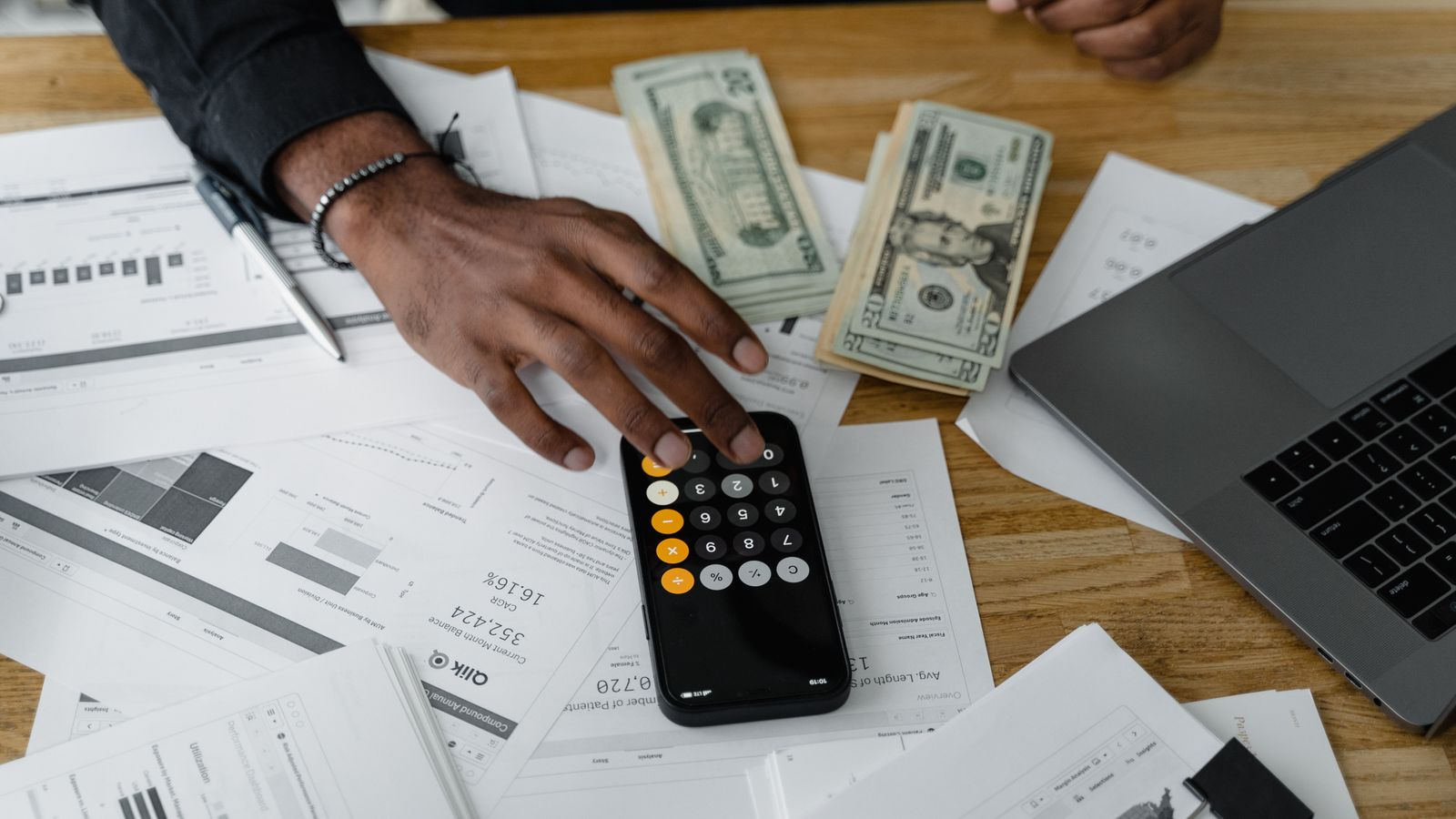
Total cost depends on the fees and conversions between your money's current location and its destination. Dollars in a bank account and USDT you already hold need separate starting points. For the same budget, calculate the dollars available in the stock account after deductions, and add any separately paid fees to your total outlay. This shows whether a low charge at one stage is offset elsewhere.
Money Still in the Bank: Include the Cost of Buying USDT
Suppose you have $5,000 in a bank account. You could send it directly to a stock account, or buy USDT and use a supported route to obtain dollar funding. The following costs are hypothetical teaching examples, all deducted from the same budget. Stock transaction costs are excluded at this stage.
| Item | Direct Bank Funding | Buy USDT, Then Fund |
|---|---|---|
| Starting budget | $5,000 | $5,000 |
| USDT purchase fees and pricing impact | Not applicable | $20, leaving 4,980 USDT |
| Outgoing bank fee | $25 | Not applicable |
| Intermediary and other deductions | $5 | Not applicable |
| USDT transfer deduction | Not applicable | 5 USDT, leaving 4,975 USDT received |
| Dollar conversion cost | Already in dollars; no conversion needed | 0.2% of the amount received, approximately $9.95 |
| Dollars available | $4,970 | Approximately $4,965.05 |
Under these assumptions, the bank route costs $30 and the USDT route approximately $34.95. Although the USDT transfer deduction is lower, purchase and conversion costs change the final result. Recalculate if bank charges fall, the purchase quote changes, or the receiving service imposes another fee.
If your starting balance is in another currency, include the necessary exchange costs. A bank route may involve conversion into dollars before sending, or transferring a supported currency and converting after arrival. A USDT purchase quote may also contain a markup relative to a reference exchange rate. Comparing net proceeds captures costs embedded in quotes as well as separately itemized fees.
A broker's waiver of incoming fees covers only its own charges. For example, Schwab's pricing guide for individual investors lists no charge for incoming wires, while charges from the sending bank and other participating institutions require separate checks. Match the total amount spent with what actually reaches the account.
Already Holding USDT: Compare Additional Costs From Your Current Balance
If you already hold 5,000 USDT, the purchase has happened. Start the new comparison with that balance. One route converts it directly into stock account funding; another converts it, withdraws to a bank, and then sends a payment to the broker. Include all costs incurred from this point onward under each route.
Continuing with hypothetical figures, suppose both routes deduct 5 USDT for the transfer and apply a 0.2% conversion cost, producing approximately $4,985.01. If the direct internal transfer has no further deductions, that amount reaches the stock account. If the bank route adds a $10 fiat withdrawal fee, a $25 outgoing bank fee, and $5 in other deductions, approximately $4,945.01 remains.
The difference here comes from the additional banking stages. Actual services may use different transfer and payment structures, so enter the amounts for each available route. Keep the historical purchase cost in your asset and tax records without deducting it again as a new expense for this funding decision.
If both routes lead to the same account and securities, stock order costs can be listed separately. If they lead to different platforms, also compare commissions, platform fees, applicable external charges, spreads, and slippage. When managing these assets with Biya, use the Cost Center alongside order details to check these items and assess costs beyond funding alone.
Which Route Is Faster? Compare Time Until Funds Are Tradable

Measure speed from when you can begin the process to when the stock account balance can fund your intended order. Bank transfers involve payment cutoffs, bank processing, and identification of incoming funds. USDT may require purchase, transfer, blockchain confirmation, platform crediting, conversion, and an internal funds transfer. Comparing bank transfer time with blockchain confirmation alone leaves out waiting at either end.
People who already hold USDT may avoid the purchase stage and any wait before it becomes transferable. Those starting with bank funds need to include both. A completed purchase does not necessarily mean the balance is ready to send. Even on the same blockchain network, the sending platform's processing and the receiving platform's confirmation requirements can produce different overall times.
Bank routes also vary. A wire submitted before the cutoff with complete recipient details may take several processing days less than one that misses the cutoff or requires additional documentation. Supported local transfers have their own arrangements, so the slowest cross-border route is not representative of every bank option.
As of November 6, 2026, IBKR's dollar funding and funds availability information lists processing time, trading availability, and withdrawal holds separately:
| Method in IBKR's Documentation | Processing or Channel Availability | Trading Availability | Withdrawal Hold |
|---|---|---|---|
| Bank wire | Listed as 1–4 business days | Available to trade after funds arrive at IBKR | Listed as 3 business days |
| Stablecoin funding, headed USDC | Channel available around the clock, including weekends and holidays | Available to trade after funds arrive at IBKR | Listed as 30 business days |
The stablecoin channel is for eligible IBKR LLC clients; accepted assets and compatible networks must be checked against account instructions. Around-the-clock access describes when the channel is available. It does not provide one completion time from every possible funding source through to tradable stock account funds. USDT holders need to check their supported route separately.
These arrangements also show how earlier trading access and quick access to withdrawals serve different needs. If you might change plans shortly after funding, the withdrawal hold affects your cash planning. Compare when funds become tradable, when they become withdrawable, and the trading hours supported for your intended stock order.
What Other Trade-Offs Matter Beyond Fees and Speed?
Risks arise at specific points: identifying payments, changes in the amount received, handling problems, and moving money out. Bank routes depend heavily on account names, recipient instructions, and payment identification. USDT adds asset networks and blockchain addresses. Familiarity with the process, available source-of-funds records, and responsibility for resolving problems all affect the experience.
| Comparison | Bank Route | USDT Route |
|---|---|---|
| Payment identification | Ownership of the paying account, beneficiary, and payment reference | Asset, network, address, and amount received |
| Certainty of the amount received | Exchange quotes, intermediary deductions, and receiving charges | Purchase quote, stablecoin price, and dollar conversion |
| Handling problems | Payment tracing, return times, and fees | Recovery conditions for an incorrect address or network |
| Records | Bank statements, payment purpose, and source of funds | Purchase source, blockchain records, and conversion receipts |
| Future flexibility | Withdrawal accounts, currencies, and restrictions | Convertible balances, transfer networks, and withdrawal conditions |
Incorrect bank transfer information may trigger an inquiry, a request for further documents, or a returned payment. Whether tracing or recalling a payment is possible depends on how far it has progressed, and charges may continue to accrue. Alongside low fees, check support channels and the documents needed to investigate a problem, reducing the need to collect records afterward.
Once a blockchain transfer has been sent, you generally cannot reverse it yourself. Recovery after an incorrect address or network depends on the receiving service and technical circumstances. A low transfer fee offers little benefit if assets are sent incorrectly. Confirm the network, address, and amount to be received after deductions, and retain the transaction hash.
Amount uncertainty also arises at different stages. Converting a non-dollar bank balance exposes you to changing exchange quotes. A USDT route requires attention to its purchase price, dollar value while held, and subsequent conversion quote. Spending longer in an intermediate asset means more time tracking prices and service conditions.
Source-of-funds requirements apply throughout both routes. Using a relative's paying account, accepting an unsupported third-party payment, or lacking purchase records may lead to additional checks. Switching funding channels does not automatically resolve account eligibility or missing documentation.
Finally, check whether the exit route meets your cash needs. Settlement after selling US stocks, internal funds transfers, dollar withdrawals, and conversion into USDT each have conditions. Convenient funding can still lead to higher costs later if withdrawal currencies, accounts, or waiting periods do not suit your plans.
How Should Your Existing Funds and Investment Schedule Shape the Choice?
Fix the starting source of funds, then compare amount, frequency, time available, and withdrawal needs. If you hold dollars in a bank account, begin by assessing direct funding. If you already hold USDT, compare a supported direct route into dollar funding with the additional stages involved in using a bank. Your choice should fit the net proceeds, completion time, and access to funds your plan requires.
| Funds and Intended Use | What to Compare First |
|---|---|
| Existing dollar bank balance | Direct funding charges versus the added steps of buying and reconverting USDT |
| Existing bank balance in another currency | Net proceeds from bank conversion, conversion within the receiving account, and a USDT purchase route |
| Existing USDT balance | A supported direct route versus the additional bank fees and processing time |
| Small, frequent contributions | Fixed charges per transfer, minimum fees, and minimum funding amounts |
| A specific date for using the money | Estimated time for the entire route and a processing buffer |
| A possible near-term need for cash | Withdrawal holds, receiving accounts, and further conversion costs |
Fixed fees have a particularly strong effect on smaller contributions. Suppose a route costs a fixed $30 each time: that represents 6% of a $500 budget, compared with 0.6% of a $5,000 budget. Used monthly, the charge totals $360 a year. Changing transfer frequency changes this cost, along with when money arrives and how long it remains in cash, so assess it against your existing contribution plan.
For routes priced as a percentage, check minimum charges and actual quotes at different amounts. Higher USDT net proceeds at one amount do not establish the same outcome for a larger transfer, lower bank charges, or different conversion terms. Keep three figures for each comparison: total starting outlay, dollars available in the stock account, and when the money can be withdrawn.
If you already hold digital assets and plan to manage stock holdings, review Biya's stock account funding transfers to check whether conversion and internal transfer are available in your account, then compare the result with your bank route. Matching available dollars to records from each stage shows which steps have been reduced and which charges remain.
When managing US stocks and crypto assets with Biya, you can also plan a cash reserve around the source and intended use of your funds, rather than moving the full balance into the stock account at once. Establish the planned amount, timing, and withdrawal needs, then choose a route that accommodates them. Service availability depends on your location, identity verification results, platform rules, and applicable laws and regulations.
Frequently Asked Questions
Why Can Less Money Arrive When My Broker Says Bank Deposits Are Free?
The broker's waiver covers its own incoming charges. Sending banks, intermediary institutions, receiving arrangements, and exchange quotes may still affect the amount credited. Reconcile your total outlay, the amount actually sent, and the dollars available in the stock account. Also distinguish fees deducted from the transfer principal from charges paid separately.
If I Already Have Dollars in a Bank Account, Is It Worth Converting to USDT First?
Assess whether the additional purchase and conversion stages provide enough practical value. If direct bank funding already meets your cost, timing, and account requirements, buying USDT first may increase expenses. If other channel conditions or cash needs matter, calculate net proceeds and completion time for the full route.
Is Bank Transfer or USDT More Economical for Small Monthly Stock Contributions?
Calculate costs using your planned amount and actual frequency, paying particular attention to fixed and minimum fees. Bank routes may have fixed transfer charges; USDT routes may also involve transfer deductions and minimum conversion fees. Combining contributions can reduce how often some charges apply, while changing when your money enters the market.
Does Sending USDT Over the Weekend Guarantee Funds Will Be Ready Before Monday's US Market Open?
No. Beyond blockchain confirmation, the process may require platform crediting, dollar conversion, an internal transfer, and review. Check the stock account's available balance and the conditions for your intended order, allowing a processing buffer. A deposit channel that operates around the clock does not mean money is instantly tradable.
Can a Friend or Relative Send Dollars or USDT to Fund My Stock Account?
Acceptance depends on the account's funding and source-of-funds requirements. A personal relationship does not automatically satisfy rules about who may send payments. Check the requirements for both bank payments and digital asset transfers, including the evidence needed, before arranging funding to avoid requests for further records or returned funds.
After Funding by Bank Transfer, Can I Withdraw USDT When I Sell My Stocks?
Check this separately: the funding method does not automatically establish access to other withdrawal options. After a sale, review settlement, transferable balances, dollar conversion, and digital asset withdrawal conditions, then confirm the receiving network and fees. If you expect to withdraw USDT later, examine that exit route when choosing how to fund the account.
*This article is provided for general information purposes and does not constitute legal, tax or other professional advice from BiyaPay or its subsidiaries and its affiliates, and it is not intended as a substitute for obtaining advice from a financial advisor or any other professional.
We make no representations, warranties or warranties, express or implied, as to the accuracy, completeness or timeliness of the contents of this publication.
Related Blogs of
Paying for Claude with USDT: Payment Options, Fees, and Limitations


Can You Buy Crypto with a Prepaid Card? Acceptance, Fees, and Limits




Choose Country or Region to Read Local Blog
 Australia
 Austria
 Belgium
 Canada
 Cyprus
 Czech Republic
 Denmark
 Estonia
 Finland
 France
 Germany
 Greece
 Hong Kong
 India
 Indonesia
 Ireland
 Italy
 Japan
 Latvia
 Lithuania
 Luxembourg
 Malaysia
 Malta
 Morocco
 Nepal
 Netherlands
 New Zealand
 Norway
 Pakistan
 Philippines
 Poland
 Portugal
 Romania
 Singapore
 Slovakia
 Slovenia
 South Africa
 South Korea
 Spain
 Sweden
 Thailand
 United States
 Turkey
 United Arab Emirates
 United Kingdom
 Vietnam