
Why Could SMCI Gross Margin Rise to 15%-17%? Customer Mix, Product Mix, and Liquid-Cooled Server Contribution





SMCI's gross margin may rise to 15%-17%, but the core explanation is not as simple as "servers suddenly became more expensive." The more important drivers are customer mix, product mix, liquid-cooled rack solutions, and project delivery structure. For investors, the real question is whether this margin jump is a one-time mix improvement or a structural uplift from AI data center infrastructure solutions.
Key Takeaways
- The 15%-17% gross margin is far above the prior 8.2%-8.4% guidance range.
- Management attributed the improvement to favorable customer and product mix.
- Liquid cooling, rack-scale systems, and DCBBS may increase value per project.
- Large customers can bring high-value projects, but they can also create pricing pressure.
- Costs, inventory write-downs, and delivery complexity will affect profit quality.
- After earnings, FY2027 gross margin guidance matters more than Q4 alone.
Where Is the Upside if SMCI Gross Margin Moves From Around 8% to 15%-17%?

The upside in SMCI's gross margin is meaningful because the magnitude is far above the prior outlook. In its FY2026 Q4 preliminary business update, the company disclosed that Q4 revenue is expected near the low end of the prior $11.0 billion to $12.5 billion guidance range, while GAAP and non-GAAP gross margins are expected to reach 15%-17%. That is far above the prior 8.2%-8.4% gross margin guidance, mainly due to a more favorable customer and product mix.
The contrast is large. Revenue is not expected to reach the top end of the guidance range, yet gross margin may nearly double from the prior guide. That means the market should not interpret Q4 only through "weaker revenue." A more reasonable reading is that the revenue recognized in Q4 may have included higher-value customer projects, more complex liquid-cooled rack solutions, or a more favorable combination of cost and pricing.
| Quarter / Metric | GAAP Gross Margin | Non-GAAP Gross Margin | Key Background | Investment Implication |
|---|---|---|---|---|
| Q2 FY2026 | 6.3% | Not disclosed in the same section | Low-margin pressure was clear | Market worried about AI server competition and cost |
| Q3 FY2026 | 9.9% | 10.1% | Gross margin started to recover | DCBBS and product mix improvement gained attention |
| Prior Q4 FY2026 guidance | 8.2%-8.4% | 8.2%-8.4% | Management was still cautious | Market expected margins to stay low |
| Q4 FY2026 preliminary disclosure | 15%-17% | 15%-17% | Favorable customer and product mix | Valuation logic may shift from revenue scale to profit quality |
In its FY2026 Q3 earnings release, SMCI reported Q3 net sales of $10.2 billion, down from $12.7 billion in Q2, but gross margin rose from 6.3% in Q2 to 9.9% in Q3. That means margin recovery had already started before Q4; the 15%-17% preliminary Q4 range simply magnifies the speed of that recovery.
One detail matters: both GAAP and non-GAAP gross margins are expected to be 15%-17%. This means the improvement is unlikely to be driven mainly by adjustment items. It is more likely tied to the underlying revenue and cost structure. That is why investors should ask which revenue became higher value, which costs became lighter, and which projects were recognized, rather than looking only at final EPS.
Still, 15%-17% remains preliminary. The company also warned that the unaudited figures may change as closing procedures and financial statements are completed. In the formal report, investors should check three things: whether the final gross margin lands inside the range; whether management continues to cite customer and product mix; and whether Q1 FY2027 or full-year margin guidance can extend the improvement.
Summary: SMCI's gross margin upside is not a small beat; it is a move from around 8% to 15%-17%. That suggests Q4 revenue quality may have improved sharply, but the final number, explanation, and forward guidance still need confirmation.
How Does Customer Mix Affect SMCI Gross Margin?

Customer mix affects SMCI's gross margin, but it should not be reduced to "large customers always mean lower margins" or "smaller customers always mean higher margins." The real drivers are project complexity, customization, delivery services, pricing terms, and bargaining dynamics. A large cloud customer may have strong pricing power, but it may also buy higher-value rack-scale and liquid-cooled solutions. An enterprise customer may place a smaller order, but require more integration and service work.
SMCI is moving from a standard server supplier toward an AI and data center infrastructure solution provider, and that changes how customer mix affects margins. If customers buy standard server configurations, margins are more exposed to hardware price competition. If customers buy packaged solutions that include racks, liquid cooling, networking, power, management software, and field deployment, SMCI can capture more engineering delivery value.
| Customer Type | Possible Margin Effect | Positive Factor | Risk Factor |
|---|---|---|---|
| Large cloud provider | Large scale, but strong bargaining power | Better order visibility and replicable projects | Pricing pressure, acceptance timing, and schedule changes matter |
| AI platform company | Sensitive to GPU cluster deployment speed | May pay for faster deployment and validation capability | Funding plans and project timing can fluctuate |
| Enterprise customer | Customization and service needs may be higher | Integration, deployment, and support value are clearer | Smaller project size and longer sales cycle |
| Sovereign AI or research/HPC project | Complex configuration and high project value | Strong liquid cooling, networking, and system validation needs | Policy, budget, and compliance processes may take longer |
| Channel or standard hardware customer | Efficient shipment | Fast turnover and standardized configurations | Direct price competition |
Customer mix also affects revenue recognition timing. High-value customer projects often include more milestones: design confirmation, integration testing, on-site deployment, customer acceptance, and support. SMCI's rack integration process also shows stages such as design, quote confirmation, assembly, burn-in testing, delivery, on-site deployment, and support services. These projects may generate better margins, but revenue recognition and cost settlement also become more complex. If Q4 margin improvement came from the recognition of a few high-value customer projects, the market needs to judge whether those projects can repeat in FY2027.
Customer concentration can also complicate the margin explanation. In its FY2026 Q3 10-Q, SMCI noted that as it increasingly targets large customers and large sales opportunities, its customer base may become more concentrated, and sales predictability, cost, and gross margin may be affected. This does not mean large customers are bad. It means one large customer project can change a quarter's revenue mix and margin profile.
If management only says "customer mix was favorable" without explaining customer type, project form, or repeatability, investors may discount the 15%-17% margin. If management can show that high-value customer demand remains consistent, order diversification is improving, and pricing terms are stable, the margin improvement becomes more convincing.
Summary: Customer mix affects gross margin through customization, delivery services, bargaining power, and project repeatability, not simply through customer size. If Q4 improvement came from repeatable high-value customer projects, margin is more likely to last. If it came from a few projects recognized together, sustainability deserves a discount.
Why Might Product Mix Matter More Than Revenue Scale?
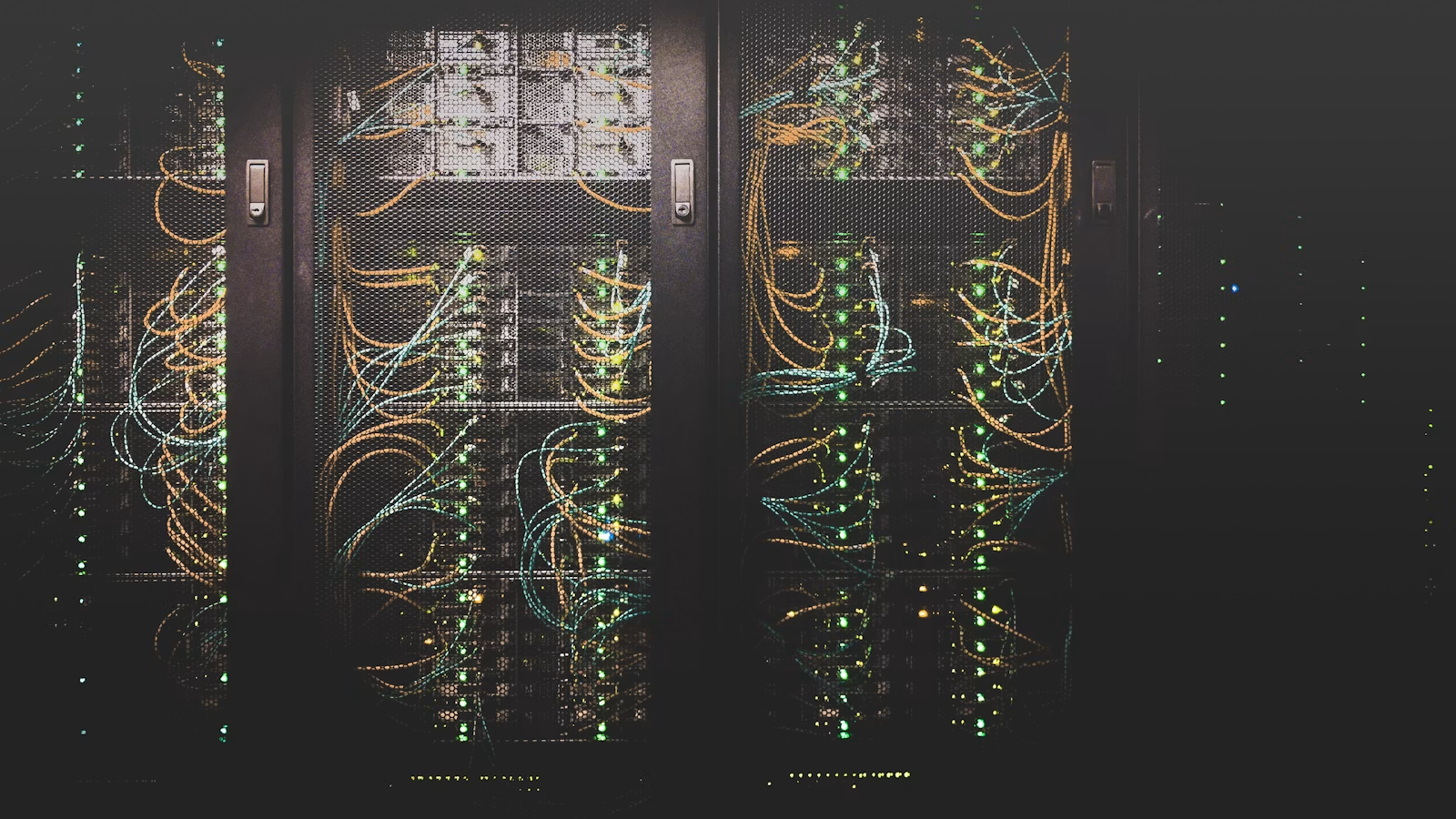
For SMCI, the same $10 billion of revenue can produce very different gross margins depending on product mix. Standard servers, GPU servers, rack-scale systems, liquid-cooled racks, network switches, power components, management software, and field services do not carry the same value per dollar of revenue. One core explanation for a possible move to 15%-17% gross margin is that Q4 revenue may have shifted toward higher-value solutions rather than simple hardware shipments.
Supermicro DCBBS makes this product mix shift fairly clear. The solution covers GPUs, network switches, complete racks, site infrastructure, management software, and professional services. In other words, SMCI is not only selling individual servers. It is participating in more stages of AI data center deployment. The more stages it participates in, the greater the theoretical opportunity to improve project-level gross margin.
| Product / Solution Type | Revenue Feature | Possible Gross Margin Feature | What to Verify in Earnings |
|---|---|---|---|
| Standard server | More standardized configuration and faster shipment | More exposed to price competition | ASP, unit cost, and shipment volume |
| GPU server | Higher value and more complex supply chain | Margin depends on GPU and configuration cost | GPU supply, customer demand, and pricing terms |
| Rack-scale system | Large project size and high integration requirements | May capture system integration premium | Rack-level delivery and acceptance timing |
| Liquid cooling solution | More cooling, power, and field deployment involvement | May improve value add, but also costs more | Liquid cooling mix, rework, and warranty cost |
| Management software and services | Linked to deployment and operations | Theoretically better margin profile | Software/service revenue share and renewals |
| Site infrastructure | Covers cooling towers, cabling, power, and more | Complex projects with more project-based revenue | Cost control and delivery capability |
Product mix also explains the tension between revenue near the low end and high gross margin. If lower-margin standard server revenue declined while rack-scale, liquid-cooled, and high-value projects increased as a share of Q4 revenue, total revenue may not be maximized, but gross margin can rise sharply. For a hardware company, this kind of "slightly less revenue but higher-quality revenue" mix change can matter more than simply maximizing top-line sales.
But product mix improvement has limits. The AI server market is highly competitive, and cloud customers and AI platform customers compare pricing, delivery speed, and configuration capability across suppliers. If rack-scale and liquid-cooled solutions become more standardized, customers may gain bargaining power and margins may decline. If SMCI can maintain differentiation through faster delivery, lower PUE, more complete validation, and field deployment capability, product mix improvement becomes more sustainable.
SMCI's DCBBS expansion announcement emphasized that these solutions can be customized around customer power budgets and performance targets. This is why investors should look for more product mix details after the formal report: whether DCBBS share is rising, whether liquid-cooled projects are moving from pilots to volume deployments, whether rack-scale delivery is being standardized, and whether software and services are starting to contribute more stable revenue.
Summary: SMCI's margin improvement may not come from higher revenue, but from more valuable revenue. If racks, liquid cooling, networking, power, software, and services gain share, margins can beat prior expectations even if revenue stays near the low end of guidance.
What Can Liquid-Cooled Servers and DCBBS Contribute to Gross Margin?
Liquid-cooled servers and DCBBS may be important sources of SMCI's margin upside because they move the company from standard hardware supply toward data center infrastructure integration. NVIDIA's GB200 NVL72 is a representative example of AI systems shifting toward rack-scale liquid-cooled architecture. Liquid cooling is not just cold plates or tubing; it is a system capability that includes servers, racks, CDUs, CDMs, RDHx, networking, power, testing, and on-site deployment.
In Supermicro's liquid cooling solutions, the company says system-level and in-rack solutions include cold plates, coolant distribution manifolds, hose kits, in-rack CDUs, high-performance coolant, and rear-door heat exchangers. Rack-level solutions can reach up to 250kW and capture up to 98% of system heat. For high-density AI and HPC racks, this capability is one reason customers may buy complete solutions.
| Liquid Cooling / Rack Component | Customer Value | Value for SMCI | Gross Margin Risk |
|---|---|---|---|
| Cold plate | Directly removes heat from GPUs, CPUs, DIMMs, and other components | Increases participation in system design | High design and compatibility requirements |
| CDM / hose kit | Distributes coolant to each server | Adds rack-level integration content | Installation, leak testing, and maintenance complexity |
| In-rack CDU | Supports high power density within a rack | Increases value per rack solution | CDU supply and redundancy design cost |
| In-row CDU | Supports multi-rack cluster deployment | Moves SMCI into data center-level cooling | Highly dependent on customer facility water loops |
| RDHx rear-door heat exchanger | Improves cooling in high-density environments | Useful for retrofit and hybrid sites | Data center layout limitations |
| SuperCluster / L11/L12 testing | Reduces customer launch risk | Adds validation and service value | Testing cycle and rework cost |
DCBBS further expands the margin logic. SMCI's DCBBS page states that in-row CDUs can provide up to 1.8MW of cooling capacity for multi-rack deployments, Liquid-to-Air Sidecar can provide up to 200kW of standalone cooling, and SuperCluster systems are validated through L11/L12 testing before shipment. These capabilities place SMCI in the question of how a customer AI data center goes live, rather than only which server a customer buys.
Liquid cooling can contribute to margin in three ways. First, it increases value per project because customers buy not just compute nodes, but cooling, power, networking, and deployment capability. Second, it raises delivery barriers, giving end-to-end suppliers a better chance to capture solution premiums. Third, it may increase customer stickiness because once customers deploy around a liquid cooling architecture, future expansions often consider compatibility and operational consistency.
Still, liquid cooling should not be treated as automatically high margin. Liquid cooling projects require more engineering design, testing, site adaptation, and after-sales responsibility. If projects are delayed, require rework, create warranty claims, or face higher-than-expected component costs, margins can be eroded. As AI rack power density continues to rise, small design issues can become significant delivery-cost problems.
Summary: The value of liquid cooling and DCBBS is that they expand SMCI revenue from standalone hardware into systems, racks, cooling, networking, software, and field services. They may lift gross margin, but they also increase project complexity. The final outcome still depends on cost control and repeatable delivery.
Could Cost and Inventory Factors Distort the Gross Margin Read?
Cost factors can meaningfully distort how investors read SMCI's gross margin. Gross margin is not determined only by selling price. It is also shaped by GPUs, memory, networking, power supplies, liquid cooling components, logistics, tariffs, inventory write-downs, warranty, and rework costs. As high-performance networking such as NVIDIA's Spectrum-X Ethernet platform enters AI clusters, network and system validation costs can also affect rack-scale project margins. If Q4 margin improvement mainly came from one-time cost settlement or low-cost inventory being used in higher-priced projects, sustainability would be weaker than the headline suggests.
SMCI disclosed in its Q3 earnings that inventory was about $11.103 billion, net accounts receivable were about $8.413 billion, and operating cash flow used $6.6 billion in Q3 as of March 31, 2026. These figures are mainly about cash flow and working capital, but they also have margin implications. When inventory is large, component purchase prices, inventory write-downs, product transitions, and matching inventory to customer orders all affect future gross margins.
| Cost Factor | How It Affects Gross Margin | Good Signal | Risk Signal |
|---|---|---|---|
| GPU and networking component cost | Sets the cost base for high-value systems | Costs are locked in and matched to customer pricing | Costs rise while contract prices are fixed |
| Memory, power, and liquid cooling components | Affect rack-scale solution cost | Scale purchasing creates cost advantages | Shortages or premium purchases for key parts |
| Inventory write-downs | Directly reduce gross margin | Inventory turnover improves and write-down pressure declines | Older-spec inventory builds up |
| Logistics and tariffs | Increase delivery cost | Supply chain planning is stable | Cross-border costs rise or lead times are disrupted |
| Warranty and rework | Erode project profit | L11/L12 testing reduces rework | High-density liquid cooling issues increase |
| Customer pricing terms | Determine whether costs can be passed through | Pricing adjusts with configuration | Large customer bargaining compresses profit |
Inventory requires particular caution. AI server technology changes quickly. If inventory is tied to clear customer orders with short delivery cycles, it can help the company recognize revenue faster. If inventory does not match customer configurations, or if the transition to new GPUs, networking, and liquid cooling designs moves too quickly, the company may face reconfiguration, discounts, or write-down pressure. Whether 15%-17% gross margin can last depends in part on whether inventory continues to support high-value orders.
Costs also influence the product mix explanation. Suppose liquid-cooled rack revenue rises, but liquid cooling components are tight, on-site tuning costs increase, and customer acceptance cycles lengthen. In that case, the nominal product mix may improve, but actual gross margin may not remain stable. Conversely, if SMCI reduces delivery cost through standardized design, factory validation, and scale purchasing, liquid-cooled and rack-scale solutions are more likely to become structural profit sources.
In the formal report, investors should check whether gross margin and expense items confirm each other. If gross margin is high but warranty, inventory write-downs, logistics, or project costs rise in later quarters, the Q4 margin may be repriced. If management can show that cost improvement comes from scale effects, product standardization, and repeatable delivery rather than one-time project settlement, the market may be more willing to raise SMCI's medium-term margin assumptions.
Summary: SMCI gross margin cannot be judged only through customers and products; costs matter just as much. If 15%-17% comes from inventory, procurement, or one-time project settlement, it may fall back. If it comes from standardized liquid-cooled racks, scale purchasing, and delivery efficiency, it is more sustainable.
Can the 15%-17% Gross Margin Last, and What Should Investors Watch After Earnings?
Whether the 15%-17% gross margin can last cannot be answered by one Q4 quarter. After earnings, the most important items are management's Q1 FY2027 and full-year gross margin guidance, and whether that guidance is consistent with product mix, customer mix, liquid cooling delivery, inventory cost, and operating cash flow. If forward guidance stays well above prior lows, the market is more likely to see Q4 as structural improvement.
| Validation Signal | Bullish Read | Cautious Read | Valuation Impact |
|---|---|---|---|
| Q1 FY2027 gross margin guidance | High margins continue and mix improvement is repeatable | Q4 was mainly project concentration | Decides whether the market raises long-term margin assumptions |
| FY2027 full-year gross margin target | Structural improvement enters management planning | Management avoids a clear range | Affects valuation multiple |
| Liquid cooling / rack-scale mix | High-value solutions scale | Demand is strong but delivery is slow | Affects revenue quality assessment |
| DCBBS progress | Shift from product sale to solution delivery | Still mostly concept or a few projects | Affects differentiation |
| Customer mix | High-value customer projects are repeatable | A few customers distort the quarter | Affects margin stability |
| Inventory and warranty | Cost control is strong | Write-down, rework, or warranty pressure rises | Affects profit credibility |
For users observing SMCI after earnings, the gross margin headline should be reviewed together with after-hours liquidity, bid-ask spreads, order types, and fees. You can use biya to follow relevant available securities and use the U.S. stock list to check market classification. On fees, the biya pricing page currently lists a $0 commission for U.S. stocks, while platform fees, external institution fees, FX costs, bid-ask spreads, and other applicable charges are subject to the pricing page, order page, and latest platform rules. Service availability depends on the user's location, identity verification result, platform rules, and applicable laws and regulations.
It is also worth noting that margin improvement does not automatically mean the stock must rise. If revenue remains near the low end, order conversion timing is unclear, and inventory and receivable pressure stays high, the market may treat gross margin as a short-term bright spot. If revenue guidance, liquid cooling delivery, customer mix, and cash flow all improve together, 15%-17% becomes stronger evidence that SMCI's valuation logic is changing.
Ultimately, whether the market recognizes SMCI's margin improvement depends on whether management can explain "favorable customer and product mix" in a verifiable way. Investors do not need only a summary phrase. They need a bridge: which customers, which products, which costs, and which project milestones pushed margin higher, and whether that structure can continue in FY2027.
Summary: Whether 15%-17% can reshape SMCI's valuation depends on whether it is a one-time mix improvement or a structural margin uplift from liquid cooling, rack-scale systems, and high-value customer projects. After earnings, Q1 and FY2027 gross margin guidance are the key checks.
FAQ
Why Could SMCI Gross Margin Suddenly Rise to 15%-17%?
The main reason is a more favorable customer and product mix. SMCI preliminarily disclosed that Q4 GAAP and non-GAAP gross margins are expected to be 15%-17%, far above the prior 8.2%-8.4% guidance range, mainly due to favorable customer and product mix. The final report still needs to confirm the figure.
Does Higher SMCI Gross Margin Mean Revenue Quality Is Definitely Better?
Not necessarily. Margin improvement is usually a positive signal, but investors still need to check revenue recognition, cost settlement, inventory write-downs, warranty expense, and cash flow. If margins are high while cash flow and inventory deteriorate, the market may still question growth quality.
Are Liquid-Cooled Servers Always Higher Margin Than Ordinary Servers?
Not necessarily. Liquid-cooled servers and rack-scale solutions increase customer value and project complexity, which may raise SMCI's value per project. But liquid cooling also brings engineering, testing, rework, and on-site deployment costs. Final margin depends on pricing and cost control.
How Does SMCI Customer Mix Affect Gross Margin?
Different customers have different bargaining power, customization needs, and service requirements. High-value customer projects may lift gross margin, but large customers can also create pricing pressure and acceptance-timing volatility. The key is whether the customer mix is repeatable.
Which Gross Margin Metric Matters Most After SMCI Earnings?
Q1 FY2027 and full-year gross margin guidance matter most, not just the preliminary 15%-17% Q4 figure. If forward guidance remains high, the improvement is more likely to last. If guidance falls sharply, Q4's high margin may have been more one-time in nature.
*This article is provided for general information purposes and does not constitute legal, tax or other professional advice from BiyaPay or its subsidiaries and its affiliates, and it is not intended as a substitute for obtaining advice from a financial advisor or any other professional.
We make no representations, warranties or warranties, express or implied, as to the accuracy, completeness or timeliness of the contents of this publication.
Related Blogs of

Cheapest Way to Transfer Money Internationally: Small vs. Large Transfers


US to Portugal Online Money Transfer Limits: Per-Transaction Caps Explained


Wire Transfer Requirements: Sender and Beneficiary Details Checklist


Choose Country or Region to Read Local Blog
 Australia
 Austria
 Belgium
 Canada
 Cyprus
 Czech Republic
 Denmark
 Estonia
 Finland
 France
 Germany
 Greece
 Hong Kong
 India
 Indonesia
 Ireland
 Italy
 Japan
 Latvia
 Lithuania
 Luxembourg
 Malaysia
 Malta
 Morocco
 Nepal
 Netherlands
 New Zealand
 Norway
 Pakistan
 Philippines
 Poland
 Portugal
 Romania
 Singapore
 Slovakia
 Slovenia
 South Africa
 South Korea
 Spain
 Sweden
 Thailand
 United States
 Turkey
 United Arab Emirates
 United Kingdom
 Vietnam